






What Airtable does well — and where teams outgrow it
Airtable is a remarkable piece of engineering. The grid-meets-database UX it pioneered is now the genre standard, the Interface Designer is genuinely best-in-class for building lightweight internal apps, and the Sync feature into Salesforce/Jira/Stripe is a moat very few competitors have matched.
For most teams under ~10 people who don't need to self-host, Airtable's cloud product is still a reasonable choice. This article is for the teams who've outgrown that fit, usually for one of four reasons:
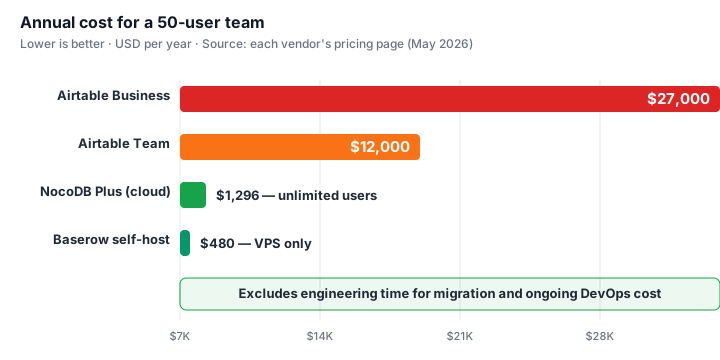
1. The per-seat economics stop scaling. Pricing is $20/user/month on Team and $45/user/month on Business airtable.com/pricing. For a 50-person team that's $12,000–$27,000/year, and the model charges the same for occasional viewers as for power editors. Several recurring r/Airtable threads (search "per user pricing", "scaling cost effectively") describe teams building elaborate workarounds — Softr portals, read-only shares, single shared accounts — to keep view-only users off the bill. That friction is what drives most evaluations of alternatives.
2. Row caps tighten faster than expected. Free is 1,000 records, Team is 50,000, Business is 125,000. Inventory catalogs, CRMs, and event-tracking workloads cross these thresholds quickly, and the upgrade path is by tier (more users) rather than by data (just more rows).
3. Compliance or data-residency requirements. Airtable Enterprise offers regional hosting, but not on-prem. EU GDPR-heavy workflows, healthcare, and government work often need self-hosting — that's a structural gap, not a criticism of the product.
4. AI usage is metered separately. Airtable AI sits behind a credit add-on (~$120–150/month). Self-hosted alternatives let you wire your own LLM (Ollama, OpenAI, Claude) and pay only for tokens, which gets cheaper than Airtable AI above ~5,000 generations/month.
If two or more of the above match your team, the rest of this article is worth reading. If none of them do, stay on Airtable — the engineering and DevOps cost of switching isn't justified by the savings.
NocoDB vs Baserow vs Teable: how the three leaders differ
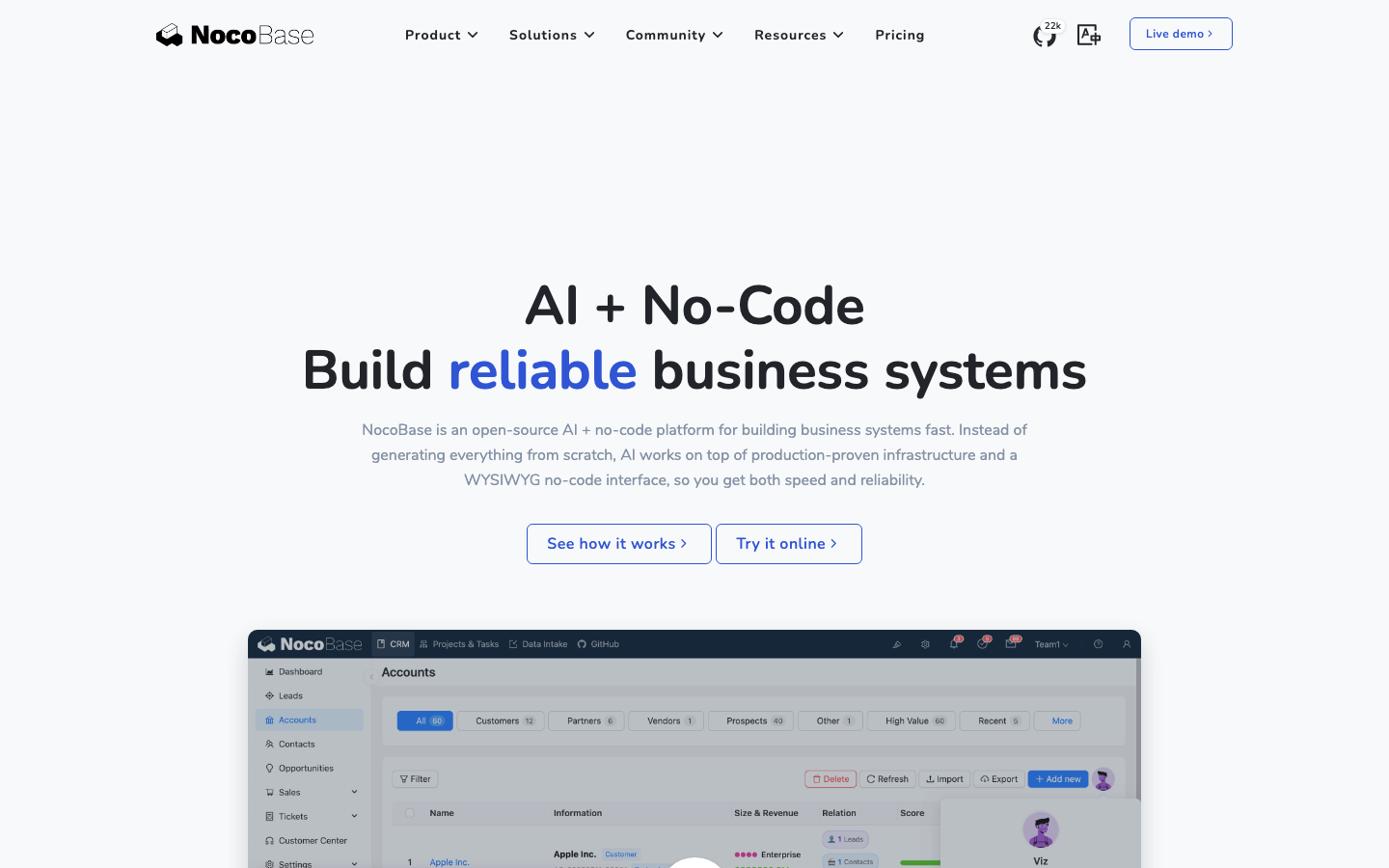
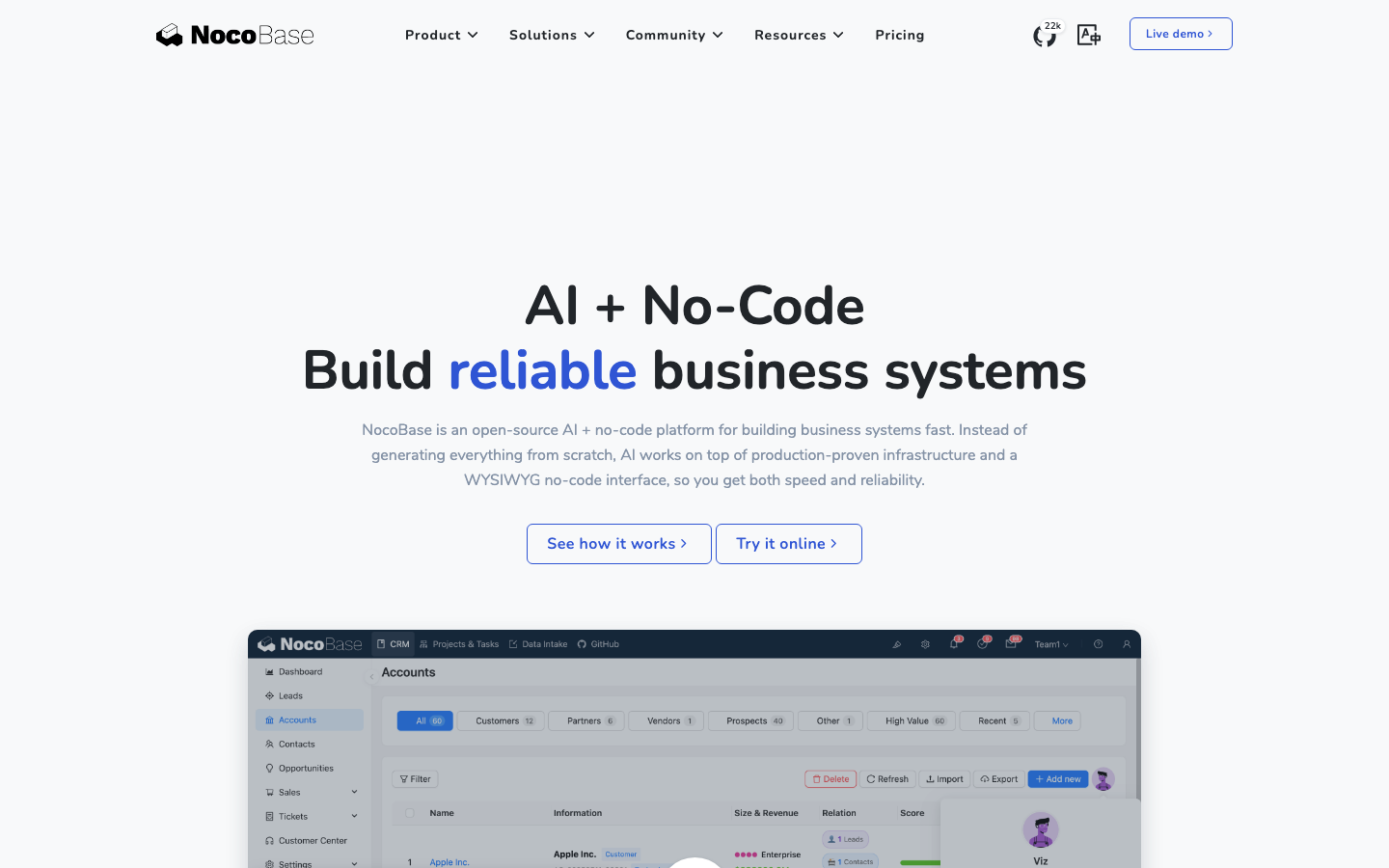
We track 10 open source Airtable alternatives in our database. Three of them — NocoDB, Baserow, and Teable — lead the rest by GitHub stars, recent commit velocity, and feature breadth. They're not interchangeable; each has a clear "best fit" team profile:
| Feature | NocoDB | Baserow | Teable |
|---|---|---|---|
| GitHub stars | 62.8k | 4.7k | 21.2k |
| License | AGPL-3.0 | MIT | AGPL-3.0 |
| Self-host difficulty | Easy (Docker, single command) | Easy (Docker Compose) | Medium (needs Postgres) |
| Cloud free tier | 3 users / 1,000 rows | Unlimited DBs / 3,000 rows | 1,000 rows |
| Cloud paid (per user) | $12/seat | $10/seat | $10/seat |
| Cloud unlimited-user cap | ✅ $108/month flat | ❌ scales linearly | ❌ scales linearly |
| Max rows (paid cloud) | 250k | 250k | 1,000,000 |
| Native Postgres | Optional | ❌ (own DB) | ✅ Built-in |
| MySQL support | ✅ Best-in-class | ❌ | ❌ |
| AI / LLM integration | Limited | ✅ Kuma AI assistant | ✅ AI fields + chat |
| Mobile experience | Web responsive | Web responsive | Web responsive |
| Active maintenance | 🔥 Daily commits | 🔥 Daily commits | 🔥 Daily commits |
A note on the pricing structure: NocoDB Plus charges for the first 9 seats and then includes additional users at no extra cost, with the bill capped at $108/month for unlimited seats (nocodb.com/pricing). For a 50-user team that's roughly $1,296/year. Baserow and Teable use traditional per-seat pricing. The right choice depends on your usage shape — collaboration-heavy teams (lots of light users) lean NocoDB; small teams of power users may find Baserow or Teable's per-seat model fine.
Pick NocoDB if...
You're connecting to an existing MySQL or Postgres database and want to put a no-code UI on top. NocoDB started as a MySQL-first tool and remains the best at this — point it at your production replica and you have a working internal tool in 10 minutes. Also pick it if cost matters more than anything else: the $108 unlimited-user plan is genuinely unbeatable.
Pick Baserow if...
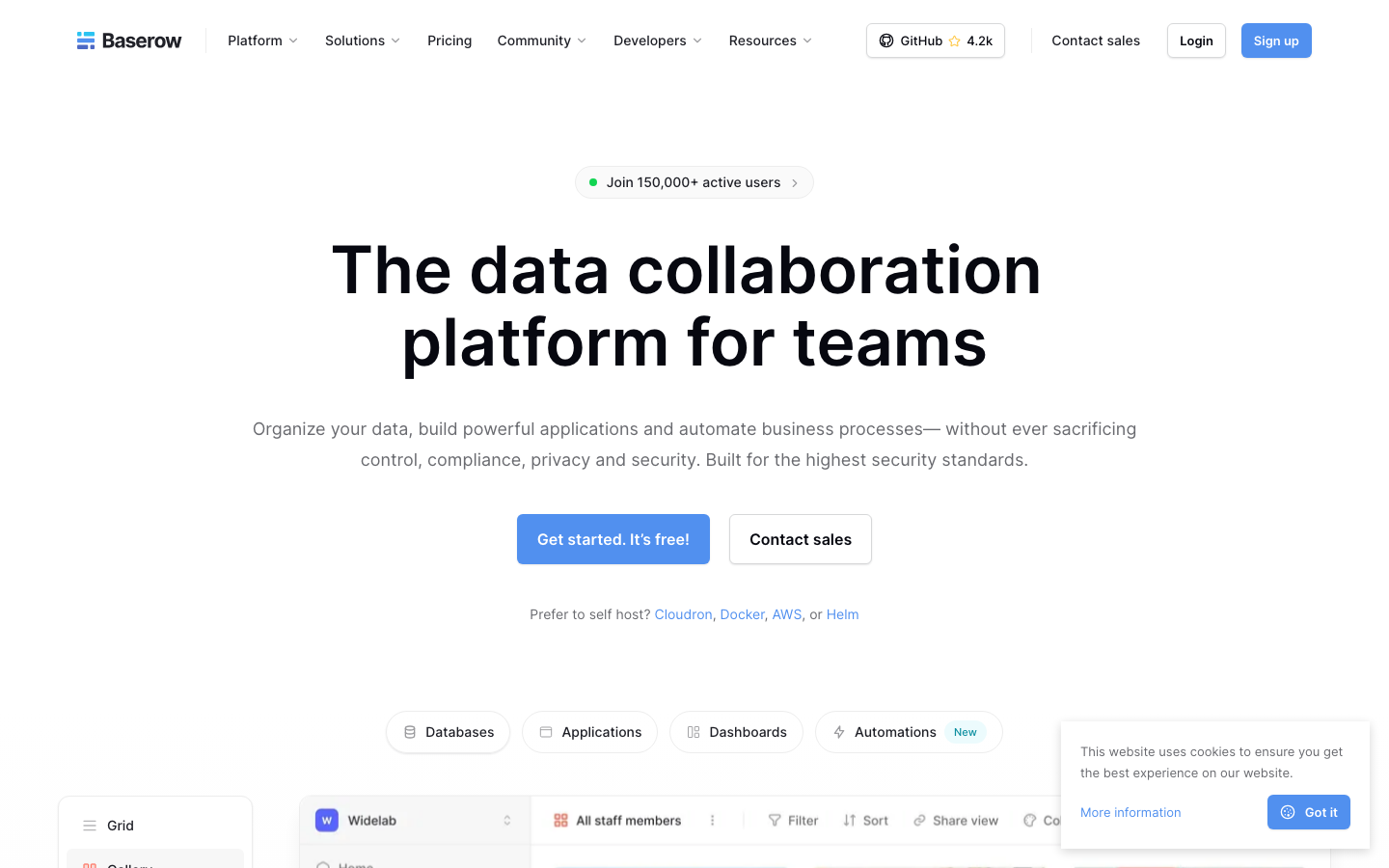
You want a drop-in Airtable clone under a permissive license. Baserow's UI is the closest to Airtable's of the three, and the MIT license means you can fork, white-label, or embed it in a commercial product without AGPL obligations. The trade-off: smallest GitHub star count of the three (4.7k), so the community plugin ecosystem is less mature.
Pick Teable if...
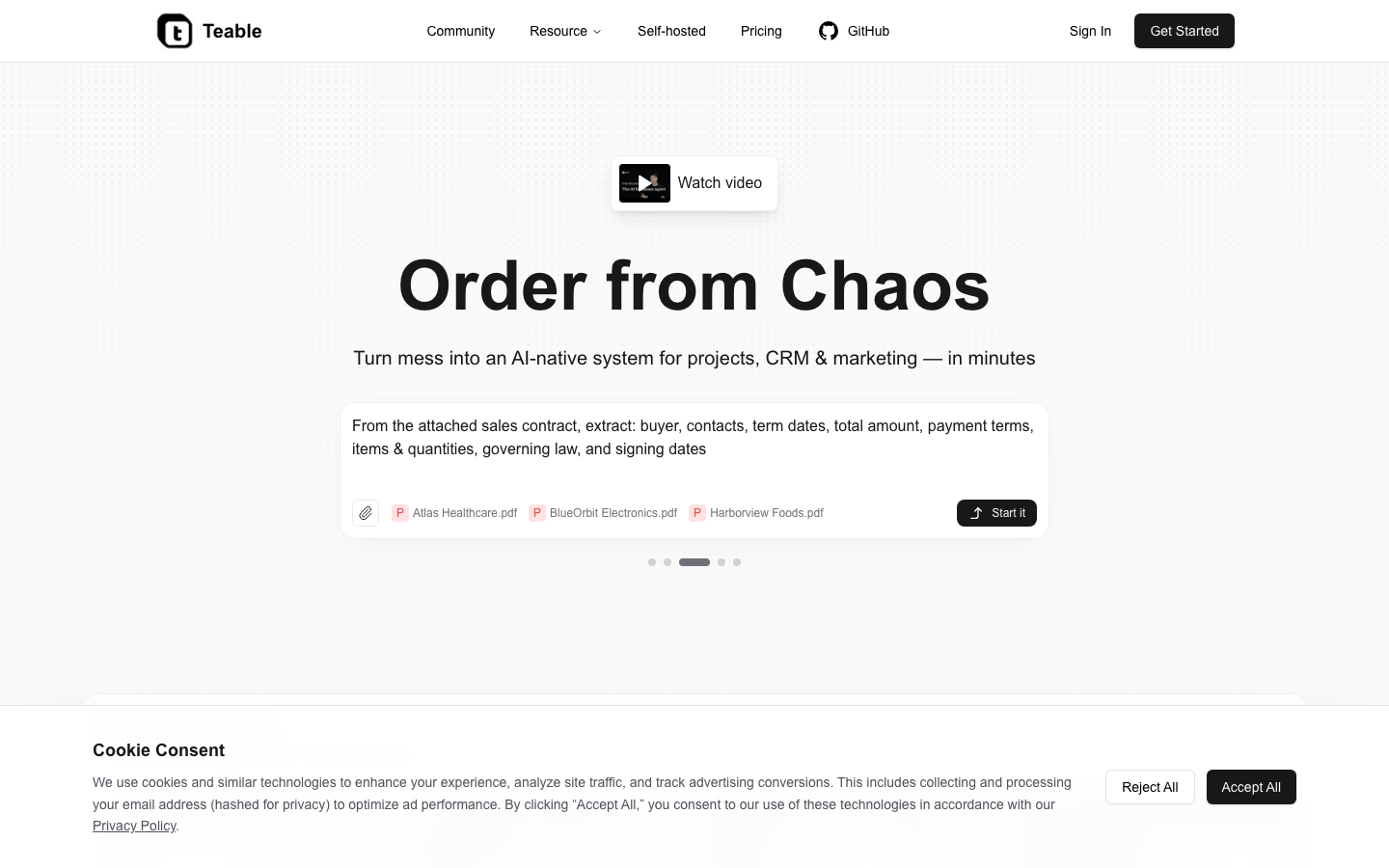
You're at scale (500k+ rows) or you want a Postgres-native architecture. Teable is built directly on Postgres rather than abstracting it — every base is a real Postgres database you can query with SQL, hook into BI tools, or extend with extensions like pgvector for embeddings. The Business tier supports 1M rows per space, the highest in this category.
How to migrate from Airtable: 4-step playbook
Step 1: Export everything you have
In Airtable: Workspace settings → Export generates CSVs for every table. Critical caveat: this exports data only. Formulas, link-to-record relationships, automations, and Interface Designer apps are not included in the export — you'll need screenshots and notes for those.
For a 5,000-record workspace expect a 5-minute export. For 50,000+ records the export queues up and arrives via email within an hour.
Step 2: Spin up your chosen alternative
The fastest path is Docker. Here's the one-liner for NocoDB on a fresh Ubuntu VPS:
docker run -d --name nocodb \
  -v "$(pwd)"/nocodb:/usr/app/data/ \
  -p 8080:8080 \
  nocodb/nocodb:latest
Visit http://your-server:8080, create an admin account, done. Baserow and Teable each have similar docker-compose setups documented in their repos.
For production deployment, plan on these add-ons:
- Reverse proxy with HTTPS (Caddy or Nginx + Let's Encrypt)
- Daily Postgres dumps to object storage (R2, S3, B2)
- A managed Postgres if you don't want to babysit a database (Neon, Supabase, RDS)
Step 3: Import + reconnect relations
CSV import covers grid data. What you'll manually rebuild:
- Link-to-record fields: import each table separately, then create lookup relationships through the UI
- Formula fields: rewrite using your tool's formula syntax (similar functions, different naming)
- Automations: rebuild as workflow triggers (NocoDB has webhooks; Baserow/Teable have native automation builders)
- Views: re-create grid filters, sorts, and Kanban groupings — these don't survive CSV export
Budget 2–4 hours per base for typical workspaces. A 10-base CRM took us about 2 days end-to-end including testing.
Step 4: Run both in parallel for 2 weeks
Don't cancel Airtable on day 1. Run both systems in parallel for one full work cycle (2 weeks for most teams). Watch for:
- Edge cases your team relied on (a specific filter, a specific automation)
- Performance differences at your actual data volume
- Mobile UX gaps if your team uses Airtable on phones
After the parallel period, freeze writes on Airtable, do one final CSV sync, and downgrade to Airtable Free as a read-only archive for 30 days before fully canceling.
Common pitfalls
- Don't migrate during a busy week. Even with a perfect plan, expect 2–3 days of "where did the X view go?" Schedule the cutover for a slow week.
- AGPL matters if you're a SaaS vendor. NocoDB and Teable are AGPL-3.0. If you fork them and resell as a hosted service, you must open-source your modifications. For internal company use, this is irrelevant — but read the license before building a product on top.
- Self-hosting means you own backups. Set up automated Postgres dumps on day one, not day 30. We've seen teams lose 2 weeks of data because they assumed Docker volumes "just persisted."
- Don't expect Airtable Sync parity. None of the three has Airtable's 2-way sync with external sources (Salesforce, Jira, Stripe) at the same maturity. If your workflow depends on this, plan a Make.com / n8n bridge.
- AI features are catching up but not equivalent. Baserow's Kuma AI and Teable's AI fields are useful but lag behind Airtable AI's "generate a project plan" capability. For pure AI-heavy workflows, you may need to wire your own LLM.
Verdict
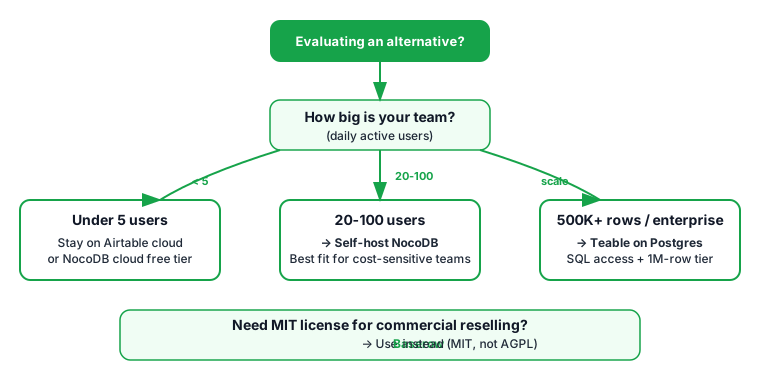
If you're under 10 people on Airtable cloud and not hitting row caps, stay where you are. The engineering time to migrate (1–2 weeks) and the retraining cost outweigh any savings at that scale. This is a real recommendation, not a hedge.
If you're a 20–100 person team running into per-seat costs or row limits, self-hosting NocoDB or Baserow becomes a sensible engineering project. The trade you're making: ~1 week of migration work + ongoing DevOps responsibility, in exchange for substantial recurring savings and full control over your data. That trade is good for most teams in this range, but it's still a trade — don't let cost savings alone drive the decision if your team has no Postgres operational experience.
If you're at enterprise scale (500K+ rows, BI integrations, compliance requirements), Teable on managed Postgres gives you the most architectural headroom. The Postgres-native foundation means SQL queries, pgvector embeddings, and standard backup tooling all work without abstraction layers. You can also run Airtable and Teable side-by-side for high-stakes data, using each where its strengths apply.
Browse all 10 open source Airtable alternatives we track, or jump to the project pages for NocoDB, Baserow, and Teable for current GitHub activity, screenshots, and recent releases.
Sources & methodology
All pricing and feature data was collected directly from each vendor's official pages on May 4, 2026. We re-verify these numbers quarterly — if you spot a discrepancy, the canonical sources below take precedence.
Pricing pages:
- Airtable plans and AI add-ons: airtable.com/pricing
- NocoDB plans (incl. the $108/month unlimited-user cap): nocodb.com/pricing
- Baserow plans (cloud + self-host): baserow.io/pricing
- Teable plans: teable.io/pricing
GitHub stars (snapshot as of May 4, 2026):
- NocoDB: github.com/nocodb/nocodb
- Baserow: github.com/baserow/baserow
- Teable: github.com/teableio/teable
User pain points referenced were aggregated from public Reddit threads on r/Airtable and r/selfhosted (search: "airtable per user pricing", "airtable alternative", "scaling airtable cost effectively") accessed May 2026. Direct linking is omitted because Reddit's policy on third-party indexing is restrictive.
License verification:
- MIT (Baserow): github.com/baserow/baserow/blob/master/LICENSE
- AGPL-3.0 (NocoDB, Teable): each repo's
LICENSEfile linked above
About this comparison: OpenSourceProjects.cc tracks 70+ self-hostable projects across 10+ commercial software categories. Our editorial methodology is documented in our about page. We don't accept paid placement; ranking reflects GitHub activity, license clarity, and our own deployment testing.