


TL;DR
- Need cross-platform reach without sacrificing decentralization? Chitchatter runs in the browser and requires no server infrastructure, making it ideal for teams mixing devices and OS versions.
- Building a friend-to-friend network with strong social graph integration? RetroShare layers encrypted file sharing and forums on top of P2P messaging, suited for communities that need more than chat alone.
- Integrating a messaging protocol into your own application? c-toxcore provides a battle-tested, modular P2P stack in C, designed for developers who want to embed decentralized comms rather than run a standalone app.
Why teams leave Briar
Briar's biggest friction point is platform lock-in: Android-only, with no iOS support and a beta desktop client. In mixed-team environments—the norm in most organizations—this forces users onto a separate messaging silo or abandons the tool entirely. The reason is architectural: Apple's restrictions on background processes make Briar's Tor-routed, peer-to-peer model technically impossible on iOS, a constraint no amount of engineering can overcome without compromising the security model.
Beyond platform reach, Briar's security-first design creates operational drag. Messages only sync while the app is open, battery drain is measurable (maintaining Tor connections and direct peer links is expensive), and adding contacts deliberately requires in-person exchange to prevent enumeration attacks. For activists and high-threat users, this friction is the point. For teams trying to adopt Briar as a daily driver—especially across mixed devices—it becomes a blocker. Group image sharing is limited, spontaneous conversation is hard, and there is no self-hosted server option to reduce dependency on Tor infrastructure or to customize the network for a closed team.
People evaluating alternatives typically want one or more of: iOS or browser support, easier contact discovery, lower battery overhead, or the ability to run on owned infrastructure without relying on external relay networks.
Quick comparison
| Name | License | Self-Hosted | API / Extensibility | Stack / Language | Best For |
|---|---|---|---|---|---|
| c-toxcore | GPL-3.0 | Yes (protocol) | Embedded SDK, protocol-level | C | Protocol integration, app developers |
| Chitchatter | GPL-2.0 | Yes | Web-based, client-side encryption | TypeScript | Browser-first teams, zero-server deployments |
| RetroShare | License not declared | Yes | Plugin architecture, F2F network | C++ | Communities needing file sharing + messaging |
Top open-source alternatives to Briar
c-toxcore
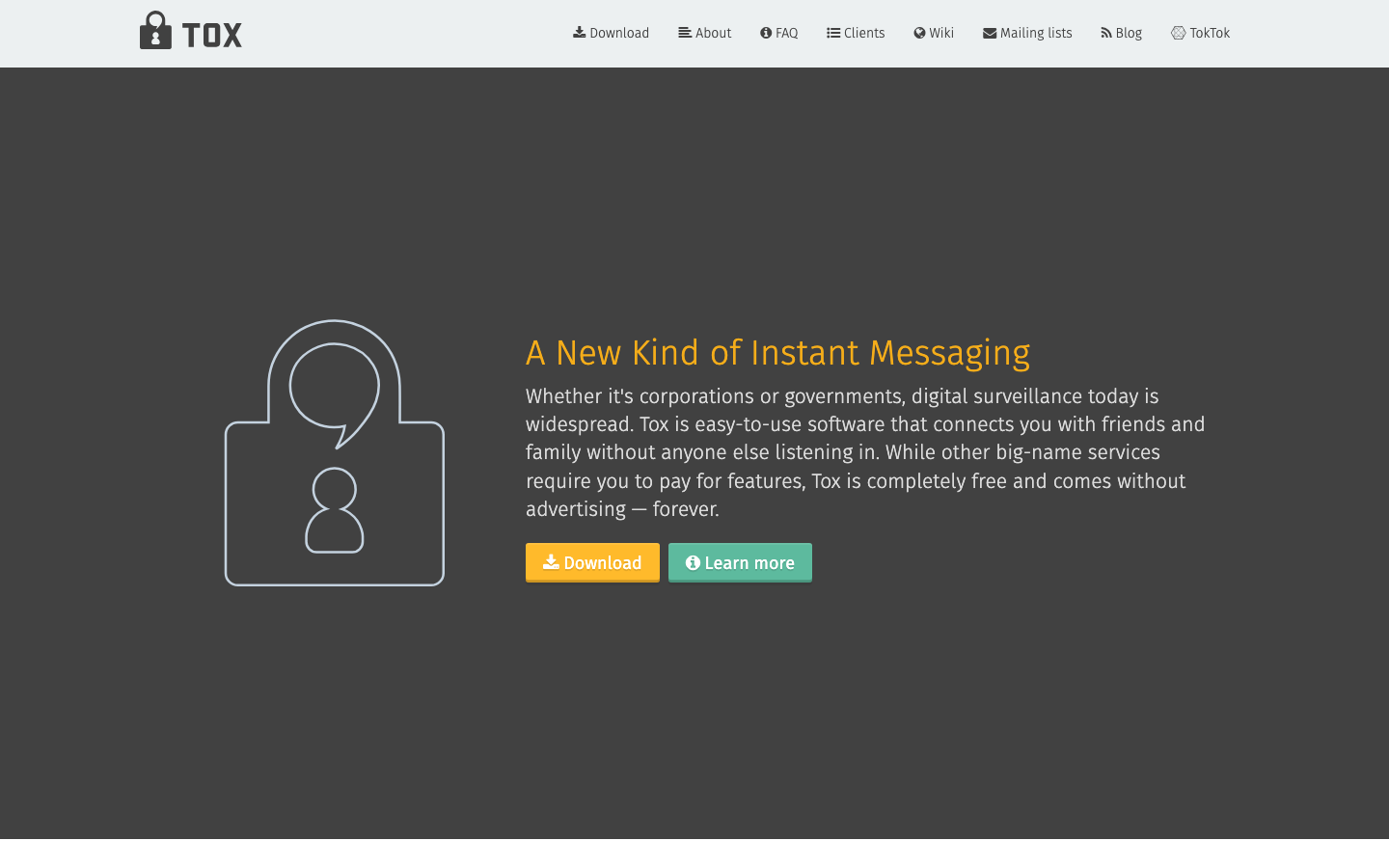
c-toxcore is a peer-to-peer messaging protocol and reference implementation designed for developers who want to embed encrypted, decentralized comms into custom applications. It handles DHT-based peer discovery, end-to-end encryption, and direct or relayed connections—all without a central server. Unlike Briar, which is an opinionated finished product, c-toxcore is a modular stack that lets you build your own UX and control exactly what features you expose.
Pros:
- Protocol-level flexibility; embed into any app rather than adopt a standalone tool
- Proven in production across multiple Tox-compatible clients (mobile, desktop, web frontends exist)
- No dependency on Tor or any external relay infrastructure; peers connect directly or via community-run bootstrap nodes
Cons:
- Steeper learning curve for integration; requires C knowledge or language bindings
- Ecosystem is fragmented across multiple client implementations, so feature parity is inconsistent
Chitchatter
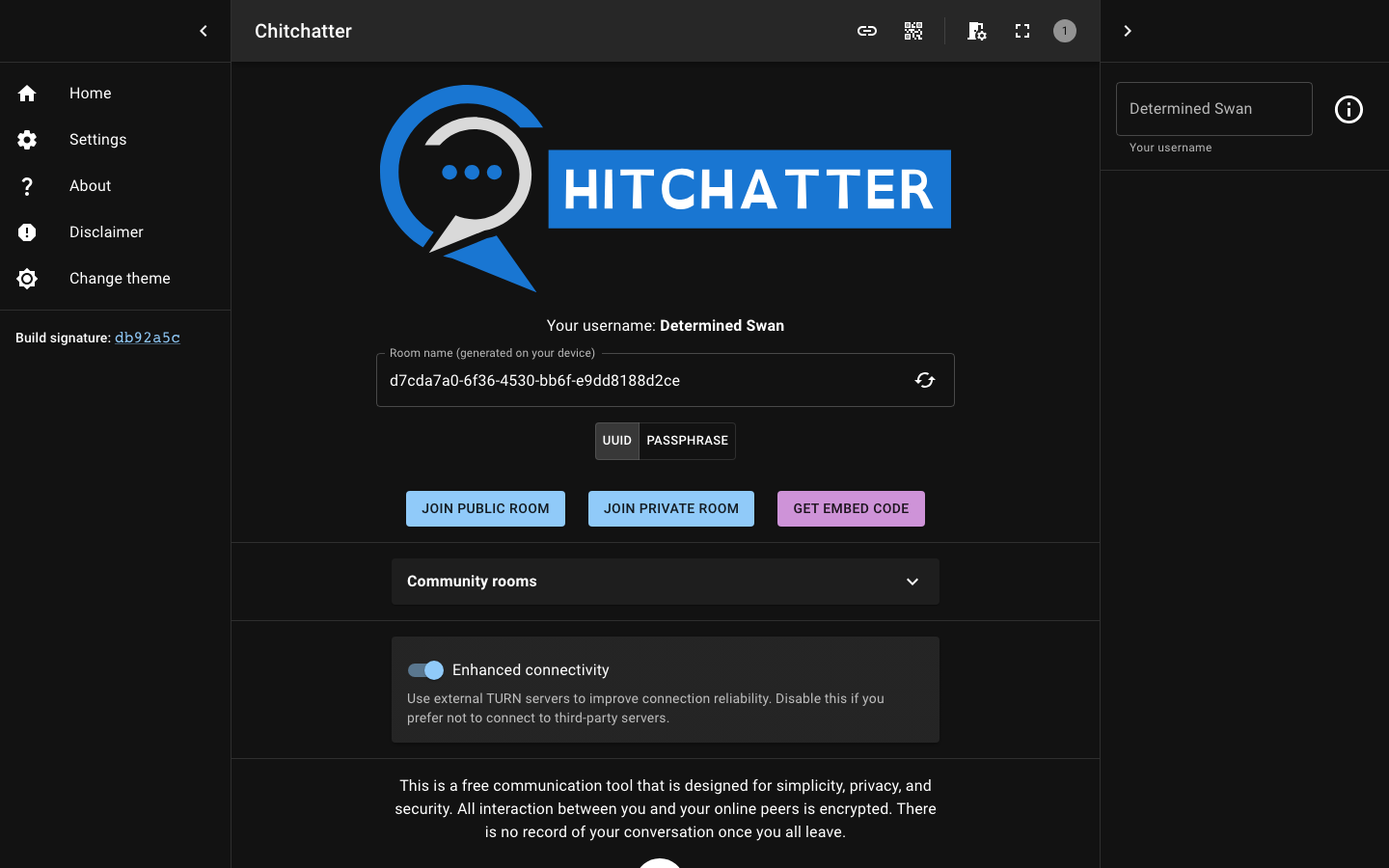
Chitchatter is a serverless, browser-based peer-to-peer chat that encrypts messages client-side and routes them via WebRTC or a public signaling server. It requires no installation, no account, and no backend—users generate a shareable link and chat directly. Messages are ephemeral by default and exist only in memory.
Pros:
- Works on any device with a modern browser (iOS, Android, desktop, no app store friction)
- Genuinely serverless; can be self-hosted on a static host, or used publicly with zero account overhead
- Low barrier to entry; share a link and start talking immediately
Cons:
- Ephemeral-only design means no message history or offline sync (suitable for sensitive conversations, limiting for teams needing archives)
- Relies on WebRTC, which can struggle behind restrictive corporate firewalls or with symmetric NAT
RetroShare
RetroShare is a friend-to-friend (F2F) platform that combines encrypted messaging, file sharing, forums, and channels over a decentralized social graph. It is cross-platform (Linux, Windows, macOS) and does not depend on a central server; your data stays on your machine and syncs only with peers you explicitly trust.
Pros:
- Rich feature set beyond chat: file sharing, forums, and channels reduce tool sprawl for communities
- Strong social graph model; you control who can see what, and trust is explicit and auditable
- Mature codebase with active cross-platform support (no iOS limitation like Briar)
Cons:
- Steeper setup and UX learning curve; not a lightweight chat app, more of a platform
- Lower activity in recent years compared to more focused projects; community and update cadence are smaller
How to choose
Choose c-toxcore if you are building a custom application and want a proven, embeddable P2P protocol without the overhead of running Briar or managing a server. Choose Chitchatter if your team needs zero friction, cross-platform instant access, and does not require message persistence; it is ideal for sensitive ad-hoc conversations or teams already comfortable with ephemeral comms. Choose RetroShare if you need a complete platform (chat + files + forums) and your team is primarily on desktop; it offers the richest feature set but the highest setup cost. For mixed Android/iOS teams seeking Briar's security without its platform lock-in, Chitchatter is the fastest path; for protocol-level control and custom UX, c-toxcore is the right foundation.