















TL;DR
- Community managers on tight budgets should evaluate flarum or NodeBB—both are lightweight, self-hosted, and require minimal operational overhead compared to Discourse's steep managed pricing.
- Teams building internal knowledge bases or Q&A workflows will find answer purpose-built for that job, whereas Discourse forces you to adapt a general forum to specialized needs.
- Organizations prioritizing data sovereignty and decentralization should explore lemmy, which offers federation by design and eliminates vendor lock-in entirely.
Why teams leave Discourse
A community manager watches her Discourse bill climb from $100 to $300 per month as her forum grows. She hasn't added features—just more members. The platform itself is open source, yet the hosted version charges per-user-tier, and the plugins that unlock moderation, analytics, and customization are gated behind higher pricing tiers. When she asks about exporting her community's data to self-host instead, she discovers the operational lift: Discourse demands Docker, Linux comfort, and ongoing maintenance of upgrades, backups, and email deliverability. The trade-off is brutal: pay the SaaS tax indefinitely, or absorb the engineering work yourself.
This is the structural tension at Discourse's core. The software is free, but the path of least resistance—managed hosting—becomes expensive fast, especially for growing communities. Self-hosting saves money (a capable VPS runs $5–$15/month) but trades recurring cost for operational responsibility. There's no middle ground. For teams without DevOps capacity or budget, this creates vendor lock-in: you're either committed to the platform's pricing or forced into a technical migration that feels riskier than staying put.
Quick comparison
| Name | License | Self-Hosted | Federation | E2E Encryption | Best For |
|---|---|---|---|---|---|
| flarum | MIT | ✓ | — | — | Lightweight forums, small-to-mid communities |
| answer | Apache-2.0 | ✓ | — | — | Q&A platforms, help centers, knowledge bases |
| NodeBB | GPL-3.0 | ✓ | — | — | Modern forums with real-time features |
| lemmy | AGPL-3.0 | ✓ | ✓ | — | Decentralized communities, federation-first |
| humhub | License not declared | ✓ | — | — | Enterprise social networks, internal collaboration |
| Misago | GPL-2.0 | ✓ | — | — | High-performance forums, scalable deployments |
| loomio | AGPL-3.0 | ✓ | — | — | Collaborative decision-making, structured discussion |
| Artalk | MIT | ✓ | — | — | Self-hosted comment systems, lightweight discussions |
Top open-source alternatives to Discourse
flarum
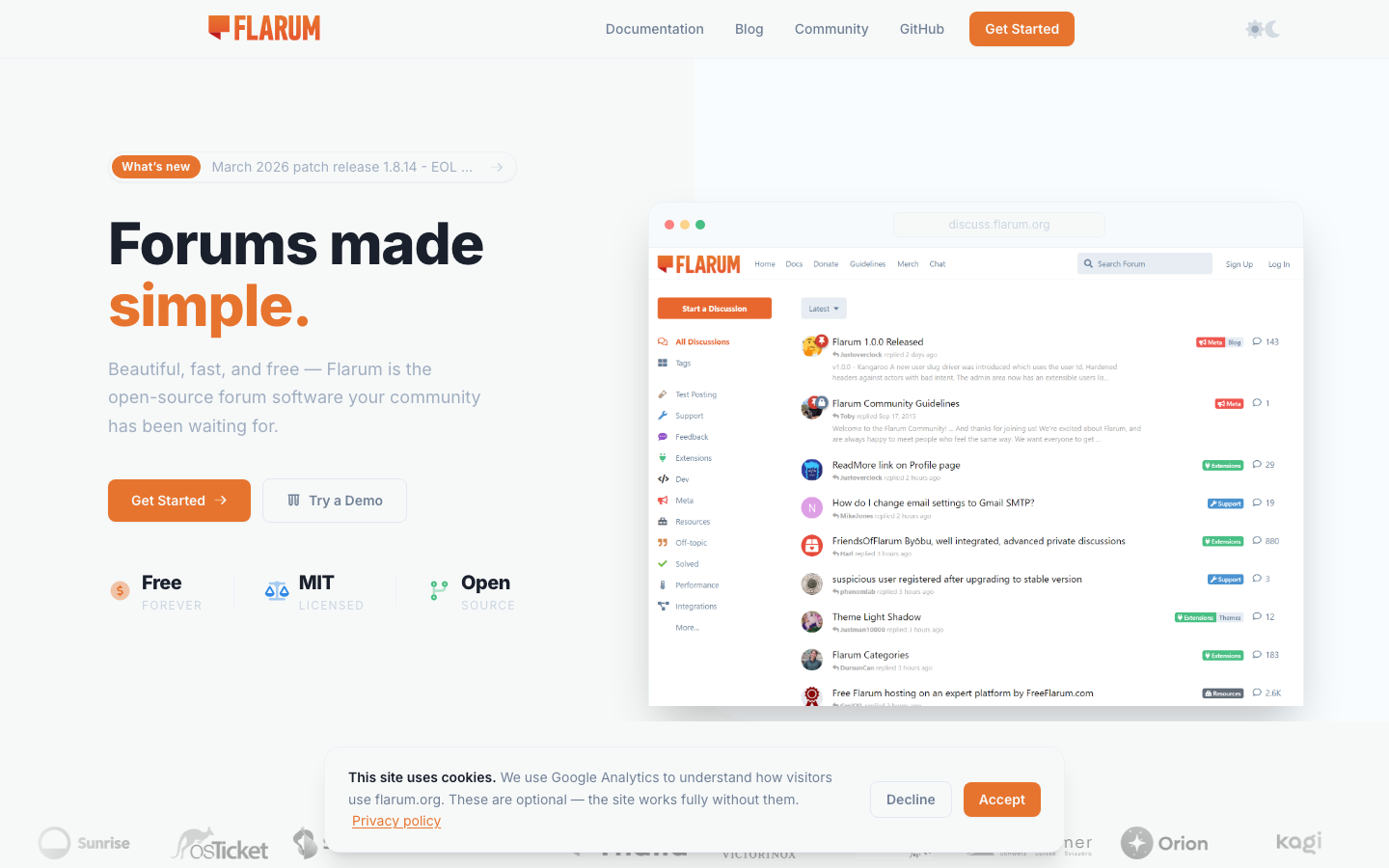
Flarum is a lightweight, modern forum built on PHP with a clean interface and minimal footprint. It's designed for communities that want Discourse's feel without the complexity or cost. The project prioritizes simplicity: installation is straightforward, the admin panel is intuitive, and the extension ecosystem is growing.
Pros:
- Dead-simple setup and maintenance; runs on any shared hosting
- Tiny resource footprint—ideal for small-to-mid communities
- Active extension marketplace for common customizations
Cons:
- Smaller ecosystem than Discourse; fewer third-party plugins
- Less mature feature set (e.g., advanced moderation tools may require custom work)
answer
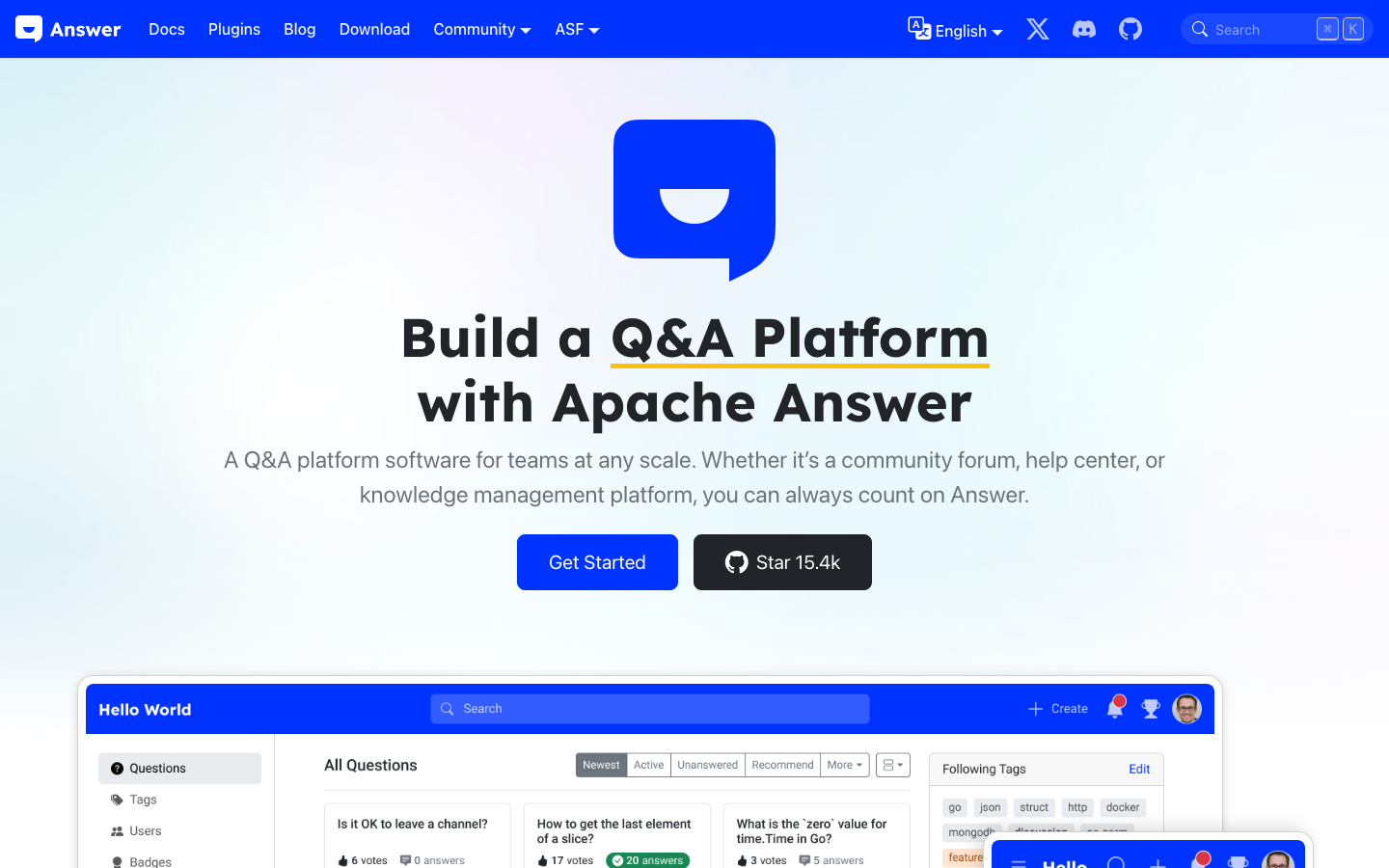
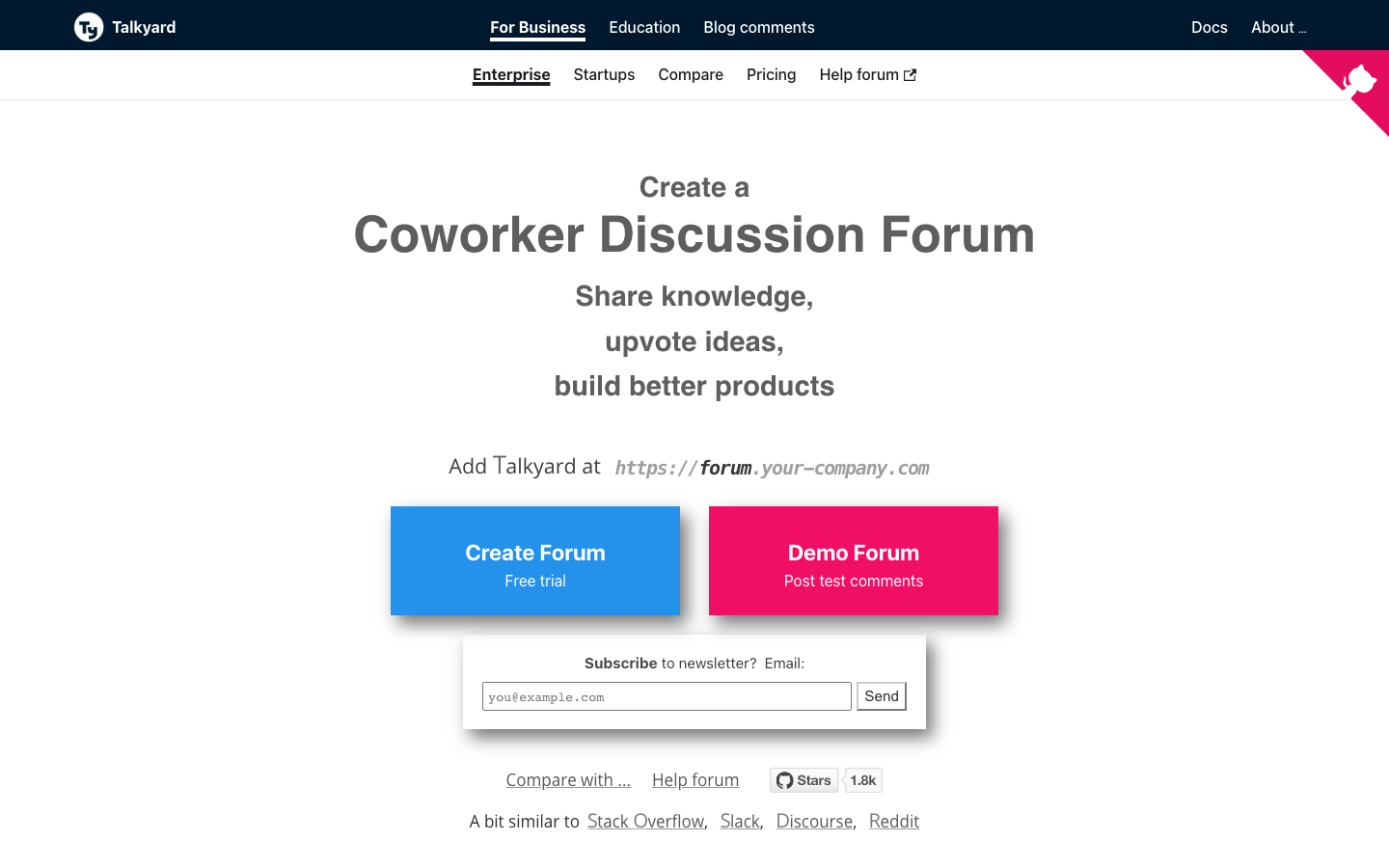
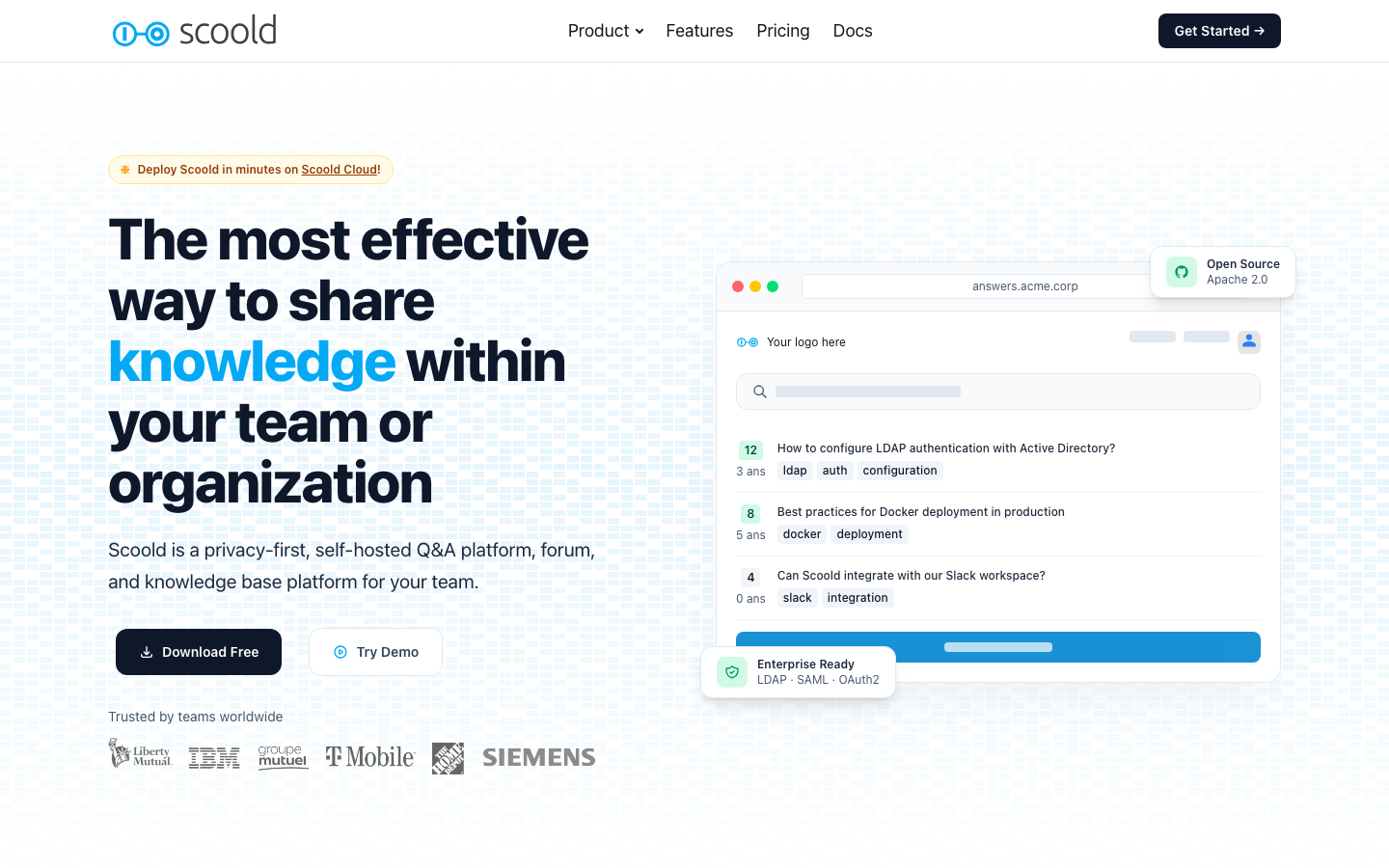
Answer is a Q&A platform designed specifically for teams and communities that need structured question-and-answer workflows. Unlike Discourse, which treats all discussion as equal, Answer optimizes for knowledge capture, voting, and answer acceptance—making it ideal for help centers and internal knowledge bases.
Pros:
- Purpose-built for Q&A; no shoehorning a forum into a support tool
- Clean, modern UX focused on finding answers fast
- Lightweight and easy to self-host
Cons:
- Narrower use case than a general forum; not ideal if you need open-ended discussion
- Smaller community and fewer integrations than Discourse
NodeBB
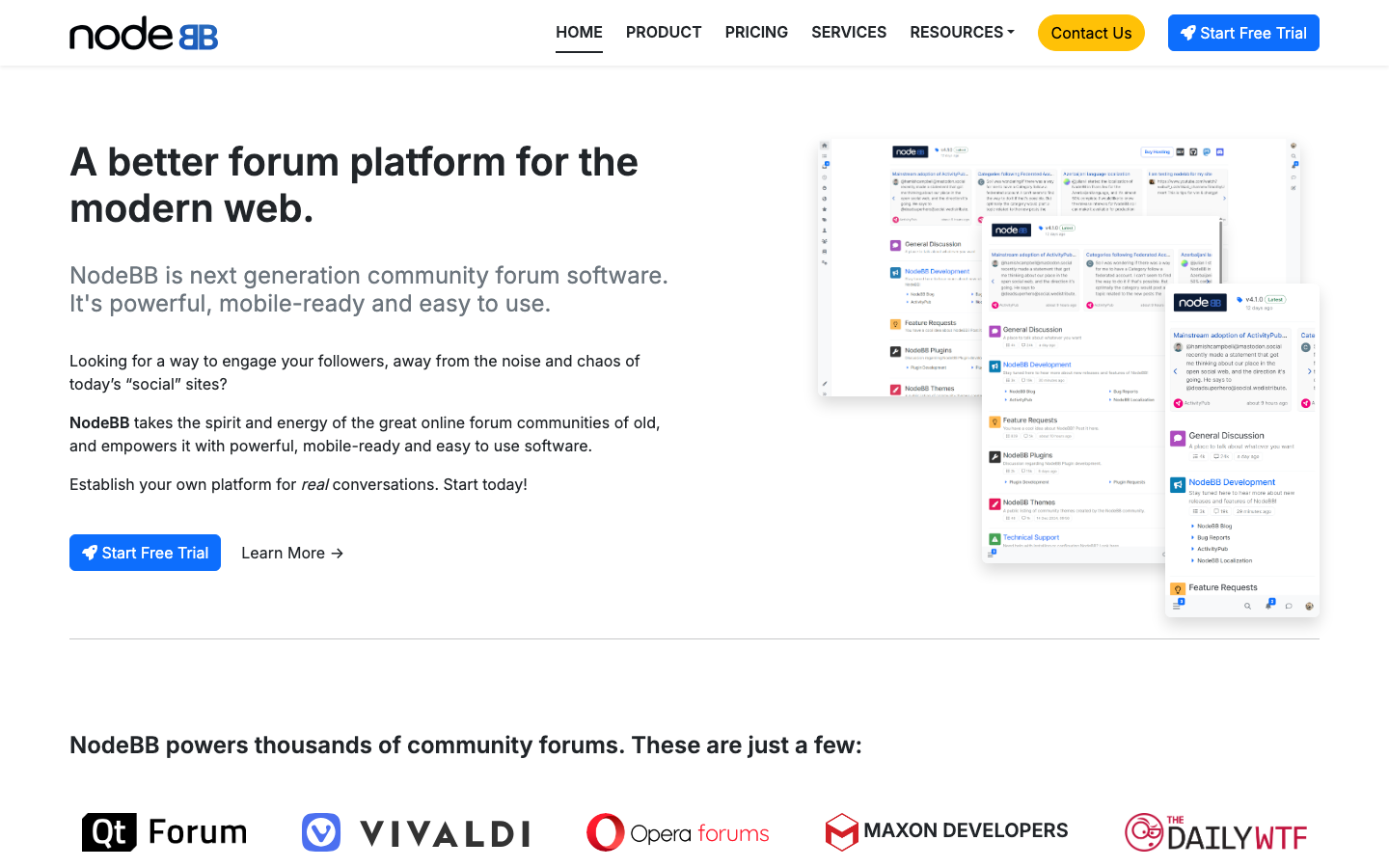
NodeBB is a Node.js-powered forum platform built for the modern web, with real-time notifications, responsive design, and a developer-friendly architecture. It sits between Flarum's simplicity and Discourse's feature density.
Pros:
- Real-time updates and responsive design out of the box
- Strong JavaScript ecosystem; easy to customize for developers
- Solid plugin marketplace and active community
Cons:
- Requires Node.js hosting; more DevOps overhead than PHP-based alternatives
- Smaller than Discourse but more complex than Flarum
lemmy
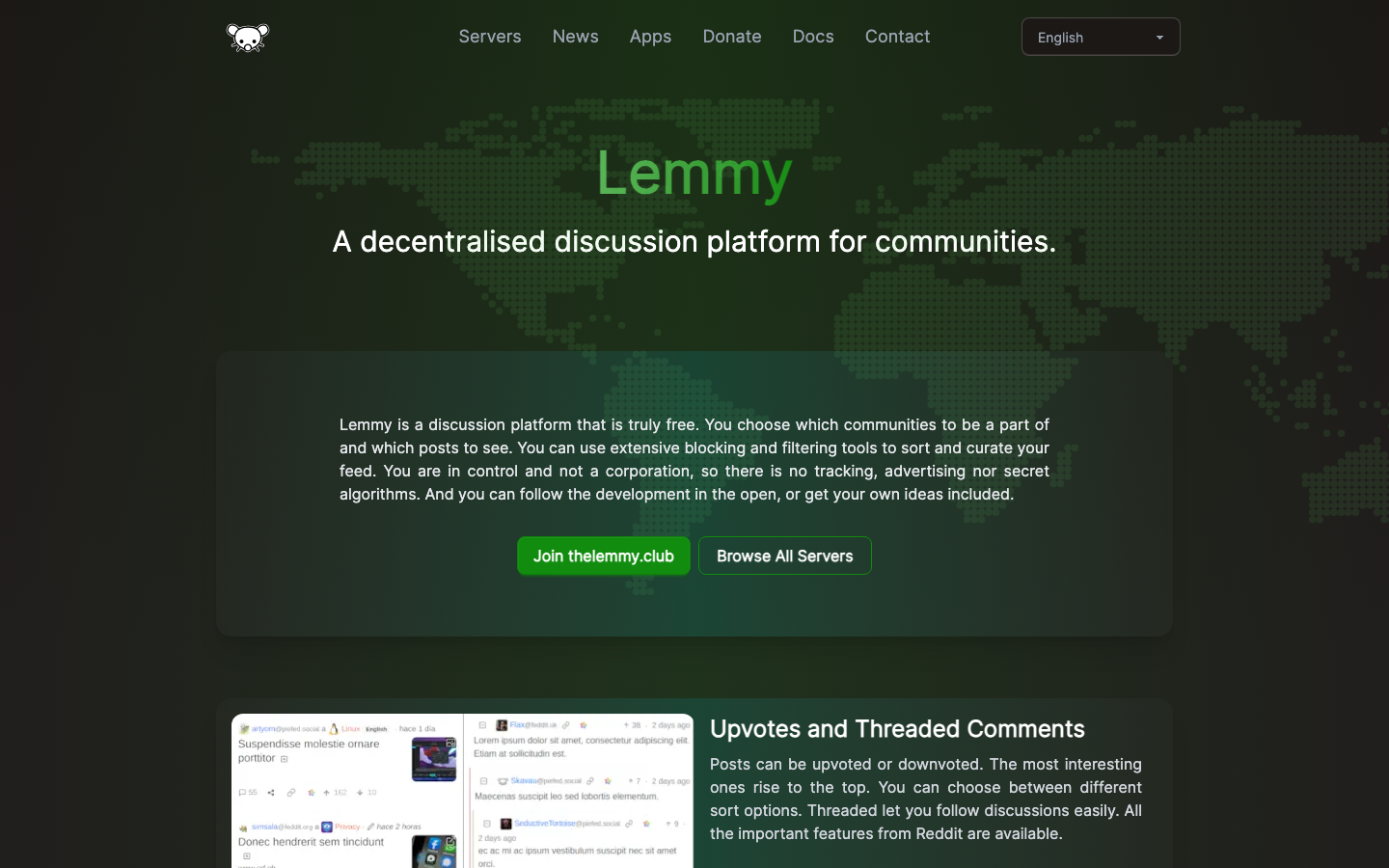
Lemmy is a decentralized, federated discussion platform written in Rust. Communities can run their own instances and connect with others across the network—imagine email, but for forums. It's built for communities that want full data ownership and no central authority.
Pros:
- Federation by design; communities own their data and can interoperate
- No vendor lock-in; if your instance goes down, your community can move
- Modern Rust codebase; fast and secure
Cons:
- Federation adds complexity; not ideal for teams that want a simple, isolated community
- Smaller ecosystem and fewer plugins than Discourse
- Requires more technical setup and understanding of federated concepts
humhub
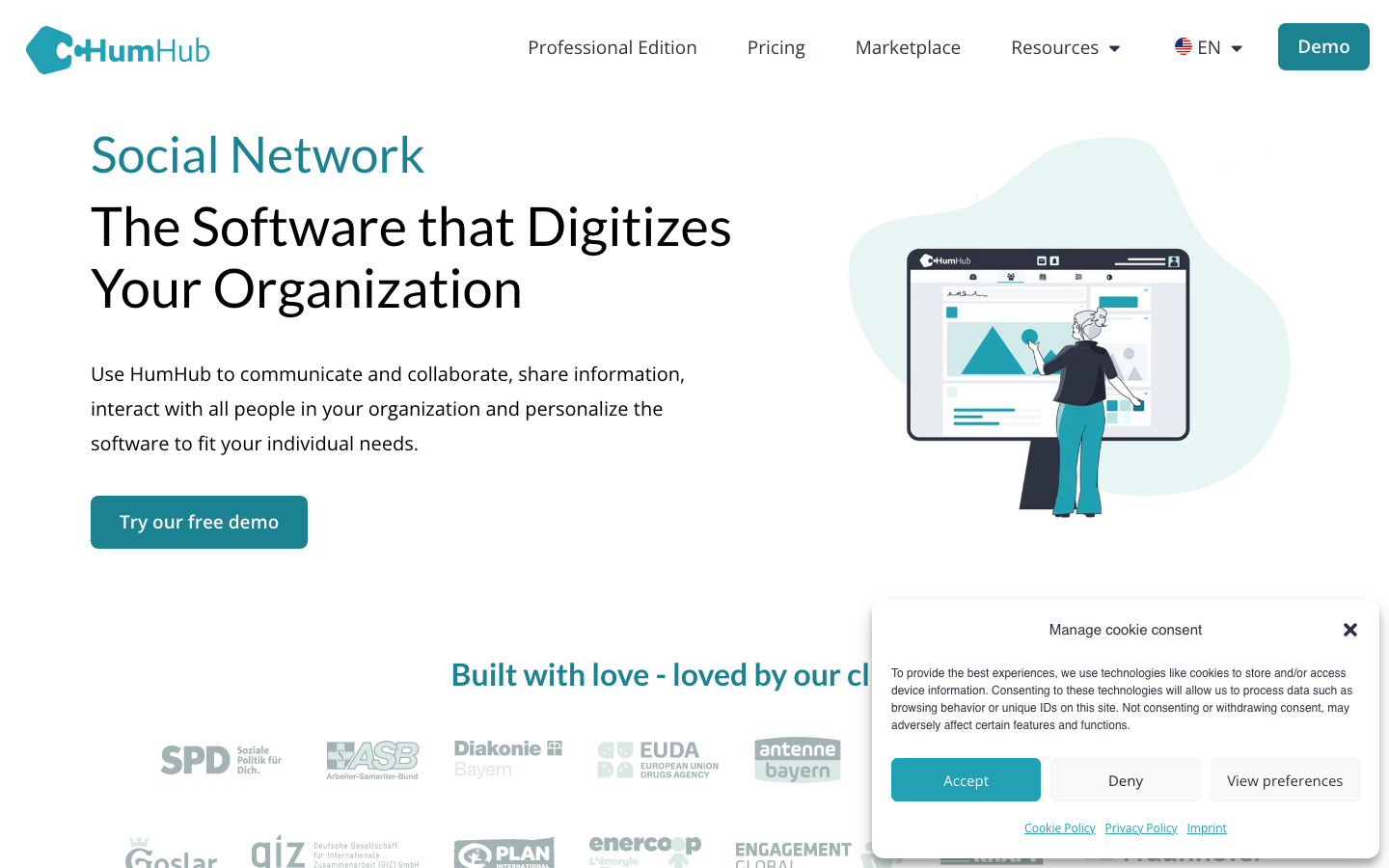
HumHub is an enterprise social network platform designed for internal collaboration, team communication, and knowledge sharing. It's more of a Slack alternative than a Discourse replacement, but it includes discussion features, activity streams, and user networks.
Pros:
- Built for enterprise; includes user management, spaces, and activity feeds
- Highly extensible with a module system
- Good for internal teams that need more than just forums
Cons:
- Heavier than a forum; overkill if you only need discussion
- License not publicly declared; check terms before deployment
- Steeper learning curve for setup and customization
Misago
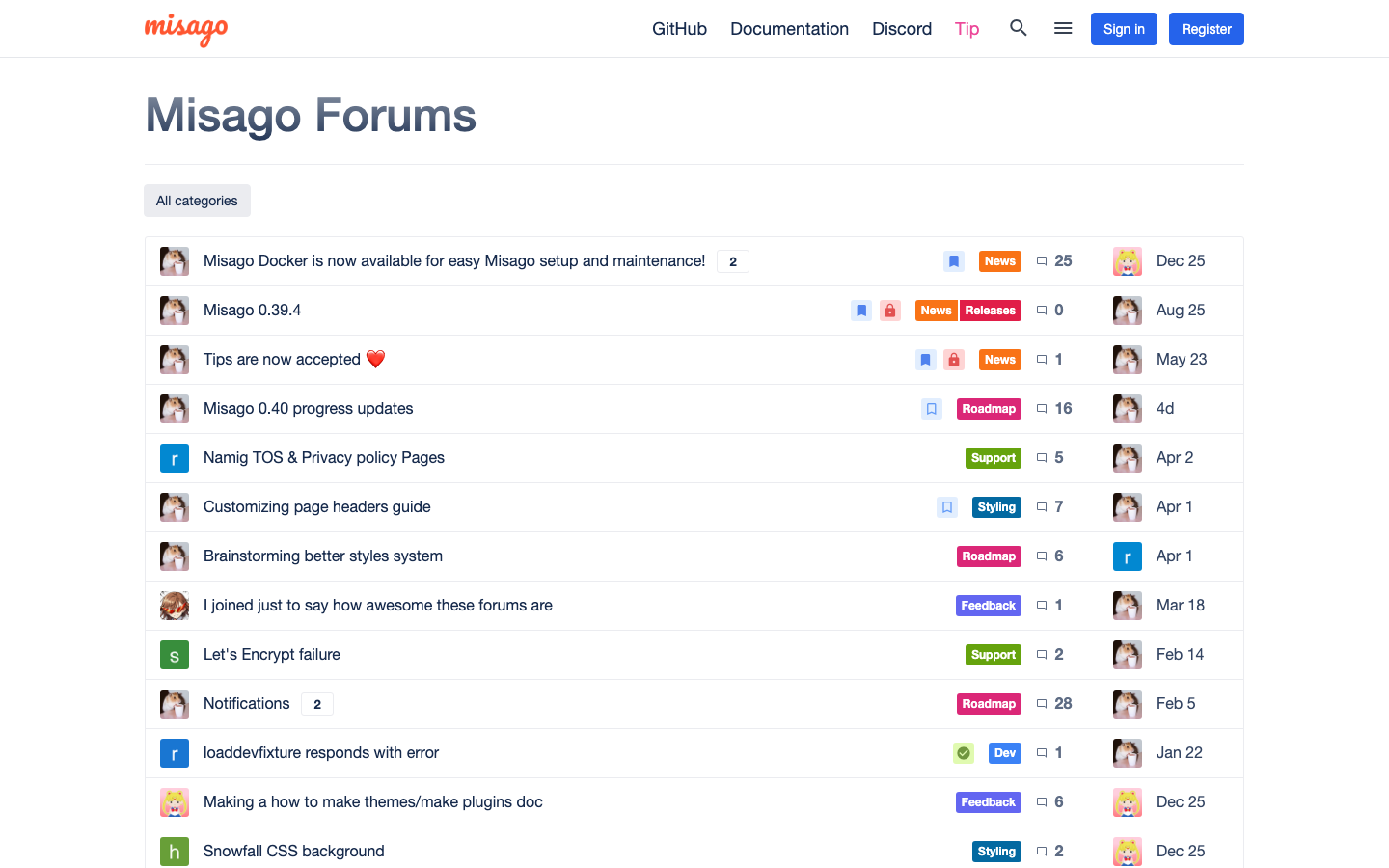
Misago is a high-performance forum application built in Python, designed for scalability and modern aesthetics. It emphasizes speed, responsive design, and clean code—suitable for communities expecting heavy traffic.
Pros:
- Built for scale; handles large communities efficiently
- Modern Python codebase; easy to customize and extend
- Strong admin tools and moderation features
Cons:
- Smaller community and plugin ecosystem than Discourse
- Python/Django stack; requires familiarity with that ecosystem for customization
loomio
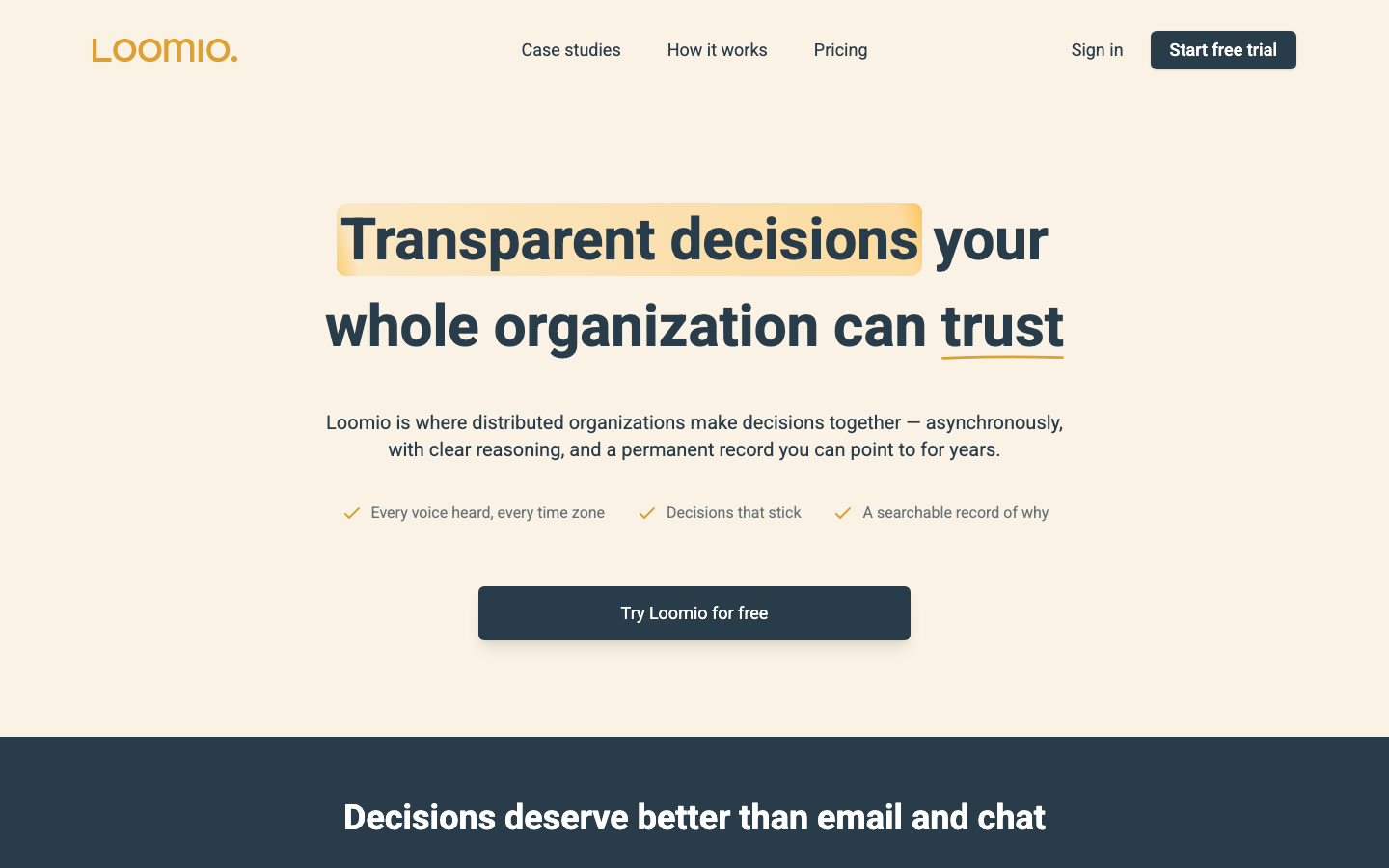
Loomio is a collaborative decision-making tool that structures discussion around proposals, voting, and consensus-building. It's less a forum and more a facilitated discussion platform—ideal for organizations, co-ops, and teams that need to make decisions together.
Pros:
- Purpose-built for structured decision-making; threads don't devolve into noise
- Transparent voting and proposal workflows
- Excellent for remote teams and distributed organizations
Cons:
- Not a general-purpose forum; best for decision-focused communities
- Smaller user base than Discourse; fewer customization options
Artalk
Artalk is a lightweight, self-hosted comment system designed as an alternative to Disqus. It's minimal, fast, and privacy-focused—ideal for embedding discussions on websites or blogs rather than building a standalone community.
Pros:
- Extremely lightweight; minimal resource overhead
- Privacy-first; no tracking or data selling
- Easy to embed on static sites and blogs
Cons:
- Not a full forum platform; designed for comments, not community discussion
- Smaller ecosystem; limited plugin or customization options
How to choose
Start by asking: what problem are you solving? If you're building a general-purpose community forum and want to escape Discourse's per-user pricing, flarum or NodeBB offer the gentlest migration path with the lowest operational overhead. If your team needs Q&A or knowledge management, answer is purpose-built and will serve you better than adapting a forum. For organizations that prize data sovereignty and want to avoid lock-in entirely, lemmy trades some operational simplicity for federation and true independence. For enterprise teams needing internal collaboration beyond forums, humhub or loomio solve different problems entirely. Finally, if you're embedding comments on a website, Artalk is the right tool. In all cases, self-hosting saves money but demands ongoing maintenance—budget for that before choosing.