






TL;DR
- You need a modern, Python-based CMS with strong content modeling and a shallow learning curve? Wagtail combines Django's maturity with an intuitive editor experience, cutting developer onboarding time significantly.
- Your team is .NET-focused and wants to avoid the Drupal upgrade treadmill? Umbraco CMS offers a familiar Windows/Azure-friendly stack with a gentler migration path from legacy systems.
- You're migrating from Drupal 7 and need a drop-in lighter alternative in the PHP ecosystem? Backdrop was purpose-built by Drupal veterans as a stable, low-maintenance fork that doesn't force the breaking changes of major version jumps.
Why teams leave Drupal
Drupal's defining challenge isn't capability—it's cost of ownership. Organizations running Drupal sites face major version migrations (Drupal 7 to 9/10 being the canonical painful example) that demand specialist developers and often require ground-up rewrites of custom code. These aren't routine updates; they're disruptive projects that lock teams into a high-developer-dependency model for years.
The deeper issue: Drupal's steep learning curve and complex architecture mean you can't easily hand off maintenance to junior developers or reduce headcount without risking the site. Each upgrade cycle repeats this pattern. Teams seeking alternatives are looking for open-source freedom—full data ownership, self-hosting, no vendor lock-in—but with a lighter maintenance burden. They want content modeling that doesn't require deep PHP expertise, upgrade paths that don't break everything, and the ability to run the system with fewer specialized developers. The goal is to keep the benefits of open source while escaping the upgrade tax and specialist dependency that Drupal imposes.
Quick comparison
| Name | License | Self-Hosted | Plugin Ecosystem | Headless / API | Best For |
|---|---|---|---|---|---|
| Wagtail | BSD-3-Clause | ✓ | Moderate (Django ecosystem) | ✓ Strong | Modern Python shops, content-first apps |
| Umbraco CMS | MIT | ✓ | Rich (.NET ecosystem) | ✓ Strong | .NET teams, enterprise Windows stacks |
| Joomla | GPL-2.0 | ✓ | Extensive | ✓ Limited | Community-driven sites, small-to-mid business |
| TYPO3 | GPL-2.0 | ✓ | Extensive | ✓ Strong | Large enterprise deployments, multi-site |
| Backdrop | GPL-2.0 | ✓ | Moderate (Drupal-compatible) | — | Drupal 7 migrations, stability-first orgs |
| Concrete CMS | MIT | ✓ | Moderate | ✓ Modern | Small teams, rapid site building |
Top open-source alternatives to Drupal
Wagtail
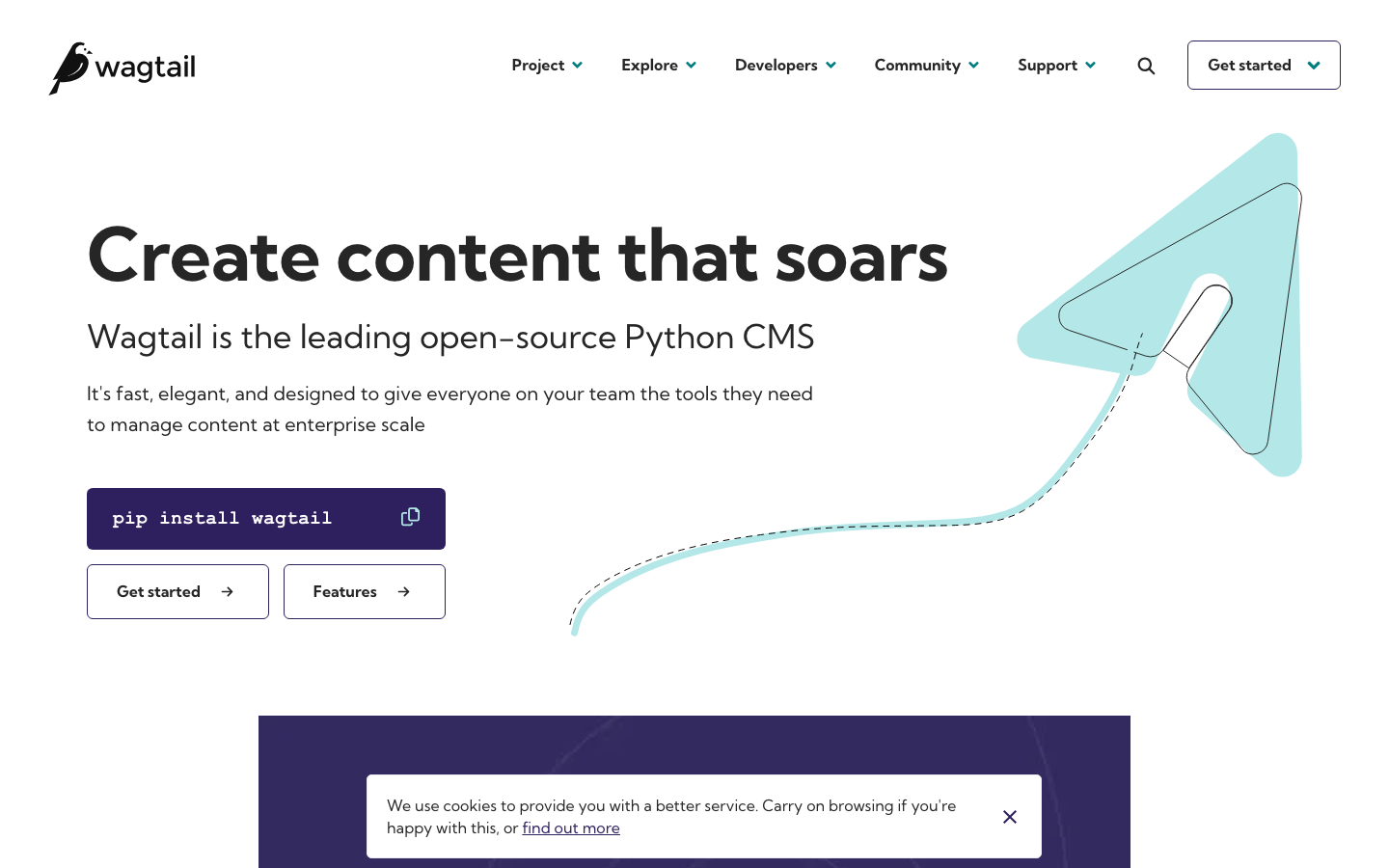
A Django-based CMS built for content teams and developers who want clean Python code and a modern editing experience. Wagtail prioritizes flexibility in content modeling and ships with a polished admin interface that requires far less training than Drupal.
Pros
- Steep learning curve eliminated: Django developers onboard in days, not weeks
- Excellent headless / API-first design; natural fit for decoupled architectures
- Content modeling via Python classes is intuitive and version-control friendly
Cons
- Smaller ecosystem than Drupal or TYPO3; fewer third-party extensions
- Requires Python infrastructure (not as ubiquitous as PHP hosting)
Umbraco CMS
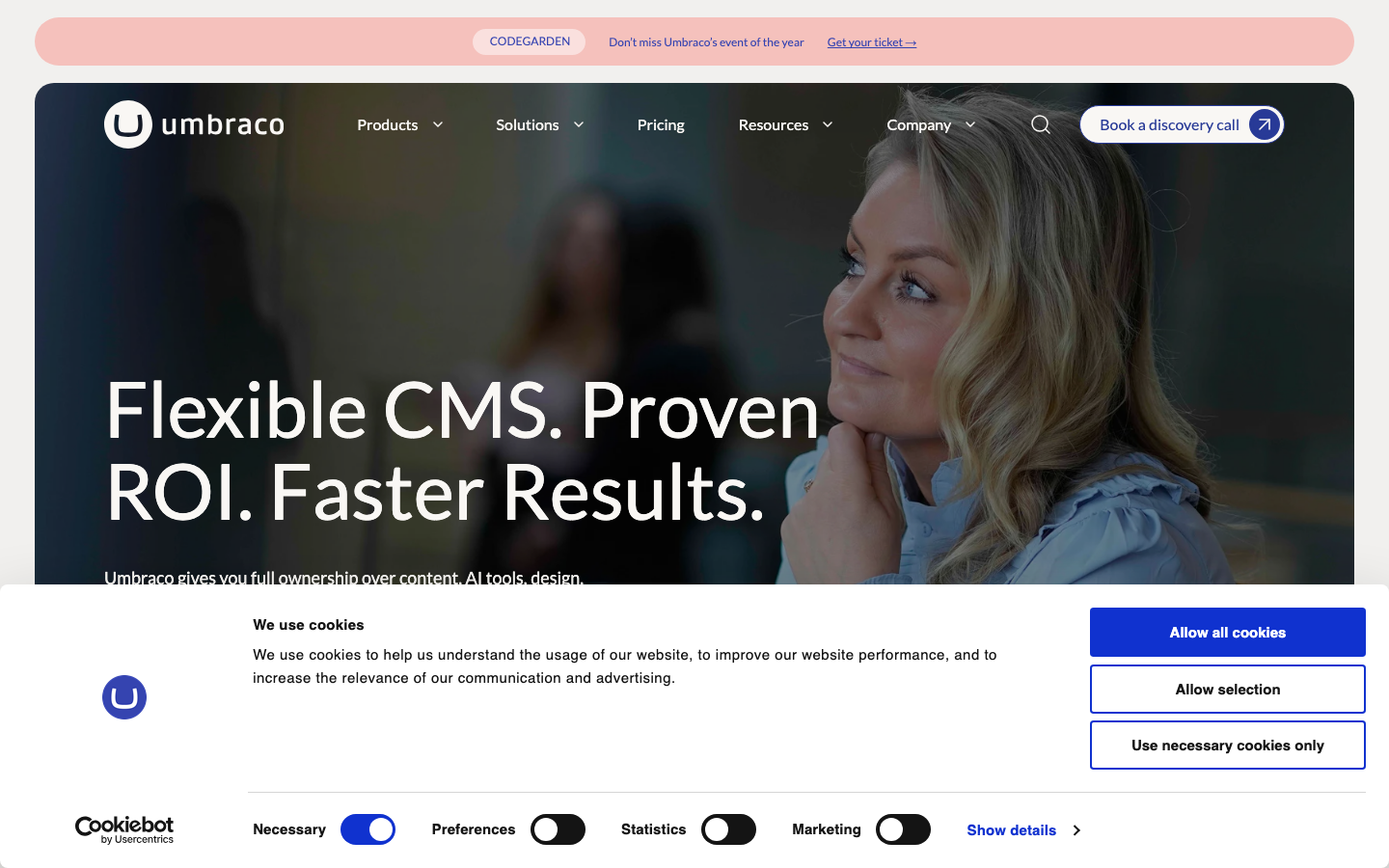
A .NET-native CMS designed for enterprises and teams already invested in the Microsoft stack. Umbraco emphasizes simplicity and a friendly editorial experience without the complexity overhead of Drupal.
Pros
- Native .NET/C# integration; Azure deployments are first-class
- MIT license and genuine open-source governance; no vendor lock-in
- Significantly lower barrier to entry than Drupal for .NET teams
Cons
- Smaller community than PHP-based alternatives; fewer pre-built extensions
- Requires .NET infrastructure (less common in shared hosting)
Joomla
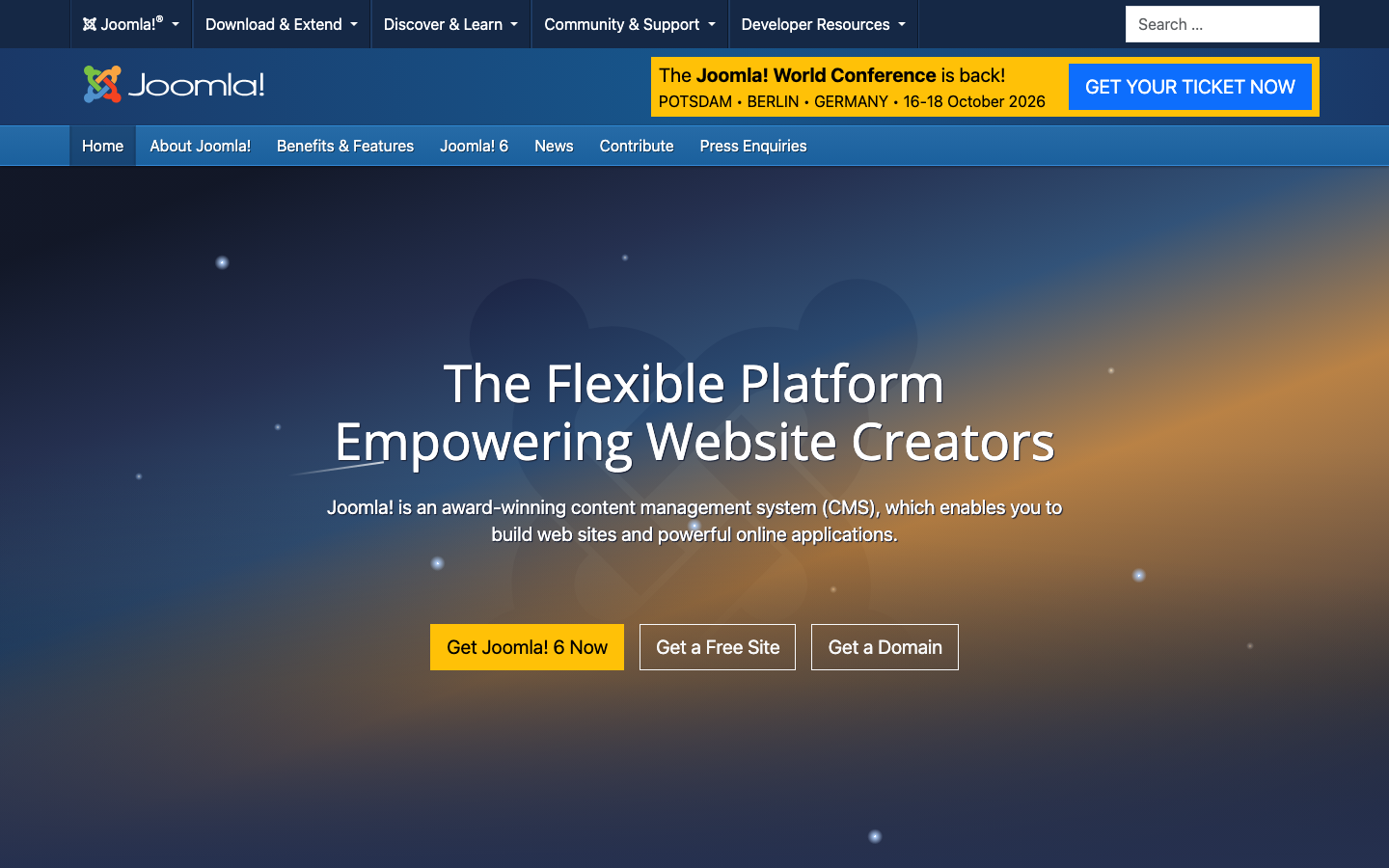
A PHP-based CMS with a large, active community and a robust plugin ecosystem. Joomla sits between Drupal's complexity and lighter systems, offering reasonable flexibility without the upgrade pain.
Pros
- Extensive third-party extensions and templates; mature marketplace
- Easier learning curve than Drupal; faster time-to-first-site
- Strong community support and documentation
Cons
- Less suitable for headless / API-first architectures than Wagtail or Umbraco
- Plugin quality varies; ecosystem curation is weaker than Drupal's
TYPO3
An enterprise-grade PHP CMS designed for large organizations and multi-site deployments. TYPO3 is powerful and flexible, with a sophisticated content and permission model suited to complex editorial workflows.
Pros
- Enterprise-ready: multi-site management, granular permissions, and scalability built in
- Strong headless capabilities; modern API layer
- Excellent for organizations with complex governance and content hierarchies
Cons
- Steep learning curve rivals Drupal; requires skilled developers
- Overkill for small teams or simple sites; higher operational overhead
Backdrop
A community-driven fork of Drupal 7, designed explicitly for organizations seeking stability and predictable upgrades without the breaking changes of Drupal 8/9/10. Backdrop inherits Drupal's strengths while removing the upgrade treadmill.
Pros
- Purpose-built for Drupal 7 migrants; familiar API and module ecosystem
- Commitment to backward compatibility; upgrades don't break sites
- Dramatically lower specialist-developer dependency than modern Drupal
Cons
- Smaller community than Drupal; fewer new modules and features
- Not suitable if you need cutting-edge functionality or headless-first design
Concrete CMS
A PHP-based CMS focused on rapid site delivery and ease of use. Concrete CMS emphasizes visual editing and a friendly interface for non-technical content managers.
Pros
- Intuitive visual editor; minimal training required for content teams
- MIT license; lightweight and straightforward to self-host
- Fast time-to-launch for small-to-mid-size projects
Cons
- Smaller ecosystem and community compared to Joomla or Drupal
- Less suitable for complex content modeling or enterprise multi-site scenarios
How to choose
Drupal 7 migration? Start with Backdrop—it's designed exactly for this, with minimal retraining and no forced rewrites.
.NET shop? Umbraco CMS removes the PHP barrier and integrates naturally with your existing infrastructure.
Python-first or headless-first? Wagtail has the best developer experience and API design for modern decoupled applications.
Large enterprise with complex governance? TYPO3 scales to multi-site complexity, though you'll need experienced developers.
Small team, rapid delivery? Joomla or Concrete CMS strike a balance between ease-of-use and ecosystem maturity without Drupal's overhead.