






TL;DR
- Growing teams hitting per-seat costs: iRedMail lets you run a full mail stack on your own hardware—no monthly bill per user, just infrastructure you control.
- Privacy-first organizations needing end-to-end encryption: Tutanota encrypts mail, contacts, and calendar on-device, so even the provider cannot read your data.
- Small teams wanting a lightweight webmail without self-hosting complexity: Snappymail offers a modern, fast web client you can deploy on modest infrastructure without the overhead of a full mail server.
Why teams leave Fastmail
A team of ten people hits their first renewal bill: $60/month ($6 × 10 seats), locked into Fastmail's servers for content security. The CFO asks a natural question: Why are we paying per person for email?
The structural pain points are real. Fastmail's model works for individuals and small teams, but scales poorly for growing organizations. Each new hire adds $6–$10/month in perpetuity; there's no way to own the infrastructure or amortize the cost across the team. You're also trusting Fastmail's servers with unencrypted content—privacy is respected (no ads, no data sales), but you have no cryptographic guarantee of confidentiality. For teams handling sensitive client data or operating in regulated industries, that's a hard ceiling. And if you need custom email workflows, API integrations, or branded mail delivery, Fastmail's per-user model doesn't bend; you're buying seats, not flexibility.
The alternative isn't a different SaaS service—it's ownership. Self-hosted mail stacks trade Fastmail's zero-maintenance convenience for sovereignty: you control the hardware, the encryption, the data, and the per-user economics flatten to infrastructure cost.
Quick comparison
| Name | License | Self-Hosted | Deliverability Setup | API / Automation | Best For |
|---|---|---|---|---|---|
| Tutanota | GPL-3.0 | No (managed service) | — | Limited | Privacy-first teams; end-to-end encrypted mail |
| Roundcube | License not declared | Yes | Manual (IMAP/SMTP backend required) | Plugins available | Teams with existing mail infrastructure; webmail UI |
| iRedMail | GPL-3.0 | Yes | Built-in (Postfix, Dovecot, SpamAssassin) | REST API, custom scripts | Organizations wanting full mail server sovereignty |
| Snappymail | AGPL-3.0 | Yes | Manual (IMAP/SMTP backend required) | Plugin architecture | Small teams; lightweight, modern webmail client |
| Cypht | LGPL-2.1 | Yes | Manual (aggregates existing IMAP/SMTP) | Limited | Multi-account aggregators; JMAP/EWS support |
Top open-source alternatives to Fastmail
Tutanota
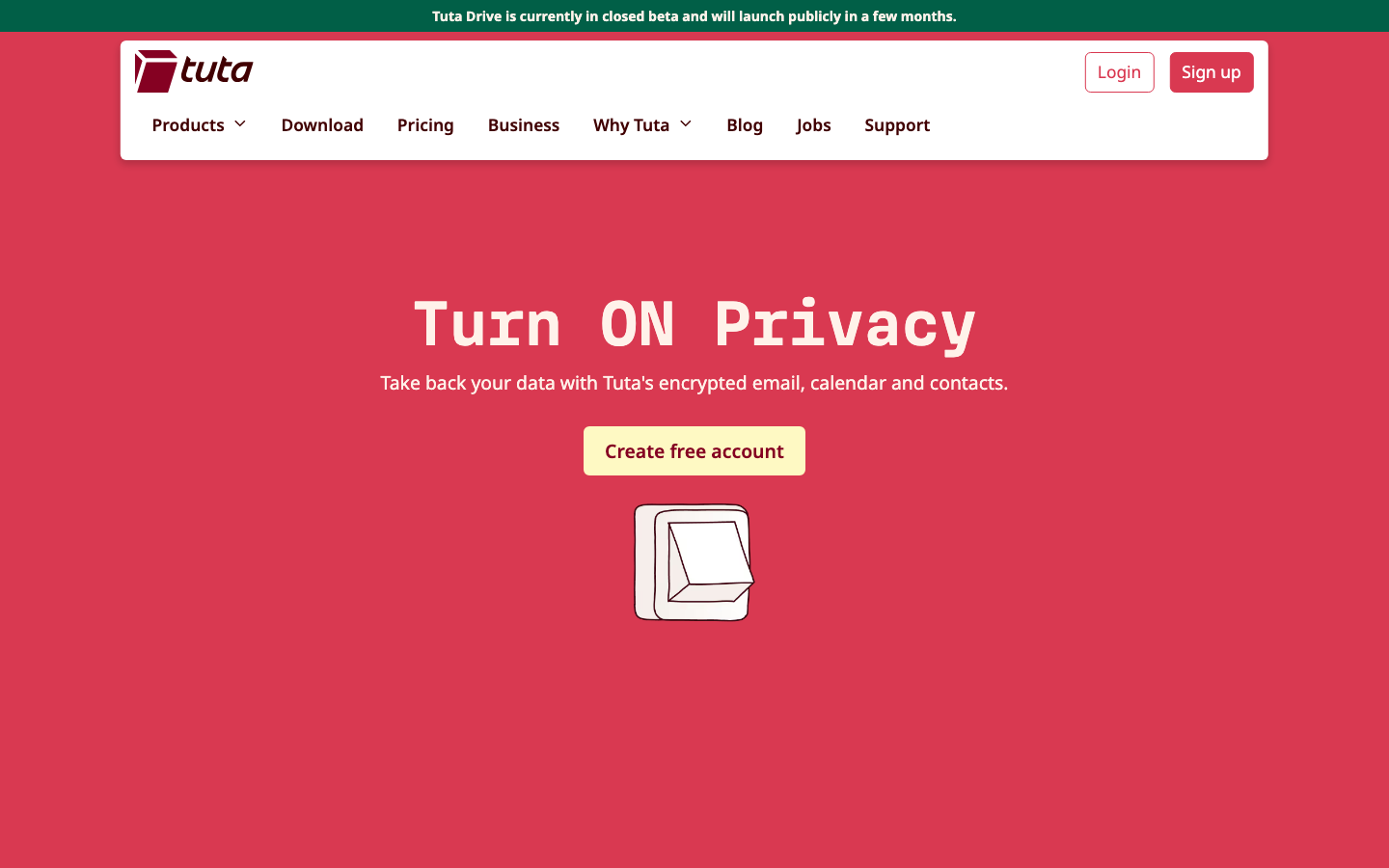
Tutanota is a privacy-focused email service with end-to-end encryption built into the client—your emails, contacts, and calendar entries are encrypted on your device before they ever leave it, so even Tutanota cannot read them. It's available as a managed service (no self-hosting required) and offers a strong alternative if you need cryptographic privacy without running your own infrastructure.
Pros
- End-to-end encryption by default; no trust-the-server model
- Integrated encrypted contacts and calendar
- Clean, modern interface; mobile apps included
Cons
- No free tier; paid plans required
- Not self-hosted; you're still relying on Tutanota's service availability
- Limited API and automation for team workflows
Roundcube
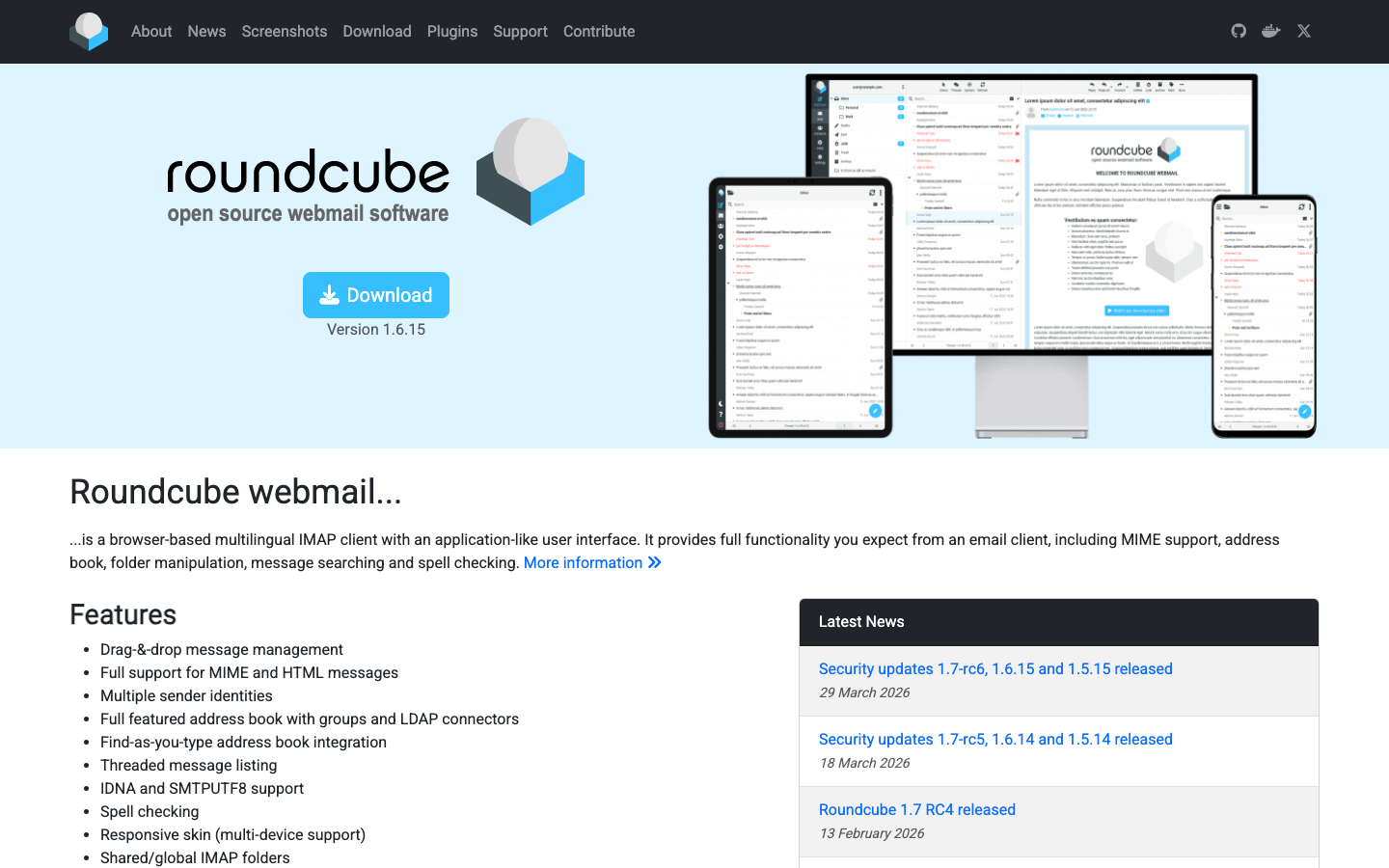
Roundcube is a mature, open-source webmail suite that runs on your own server and connects to any standard IMAP/SMTP backend. It's the lightest-weight way to add a web interface to existing mail infrastructure—you bring the mail server, Roundcube gives you the browser UI.
Pros
- Works with any IMAP/SMTP server; no vendor lock-in
- Lightweight and fast; minimal server footprint
- Plugin ecosystem for customization
Cons
- Requires you to operate a mail server separately (or use an existing one)
- No built-in encryption; security depends on your backend
- Limited modern UX compared to consumer email services
iRedMail
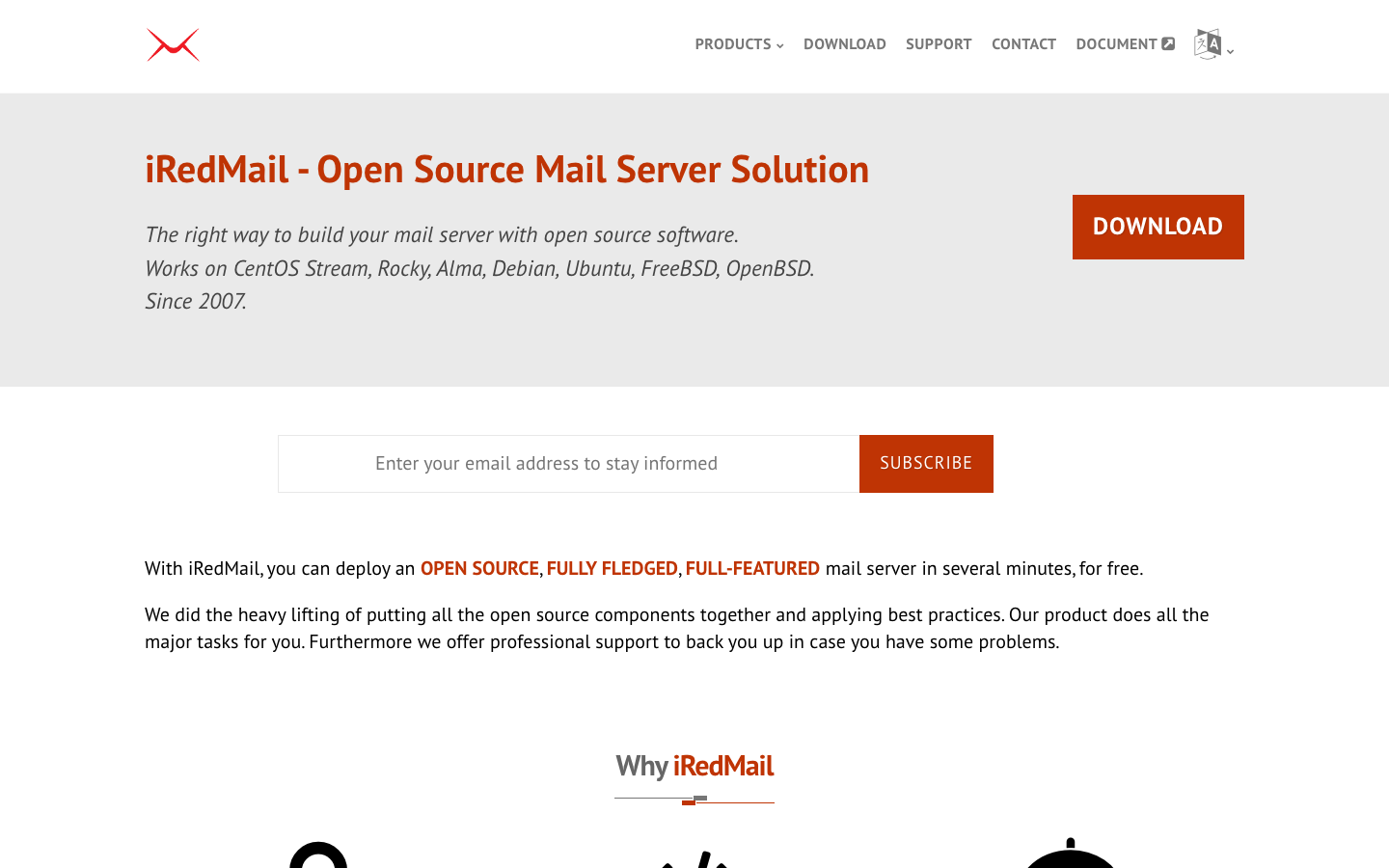
iRedMail is a full-featured, production-ready mail server stack for Linux and BSD that bundles Postfix, Dovecot, SpamAssassin, and a web admin panel into a single installer. It's the fastest path to running your own mail infrastructure without assembling components yourself.
Pros
- Complete mail server in one deployment; no per-user licensing
- Built-in spam filtering, backup, and admin tools
- Scales with infrastructure cost, not headcount
Cons
- Requires Linux/BSD server administration skills
- Deliverability depends on your IP reputation and DNS setup (SPF, DKIM, DMARC)
- Ongoing maintenance (security patches, monitoring) is your responsibility
Snappymail
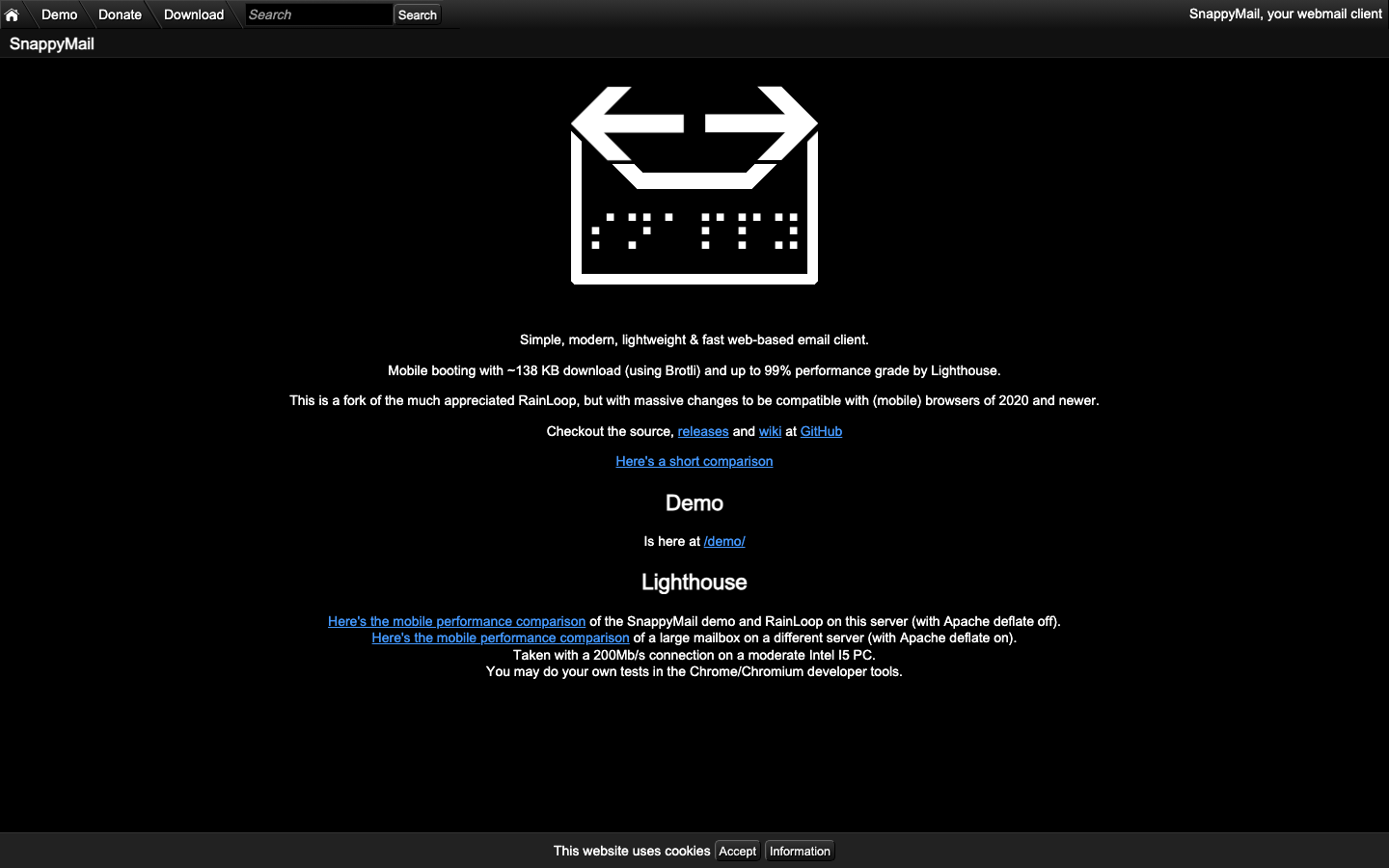
Snappymail is a lightweight, modern webmail client designed for simplicity and speed. Like Roundcube, it connects to standard IMAP/SMTP servers but with a more contemporary interface and lower resource overhead, making it ideal for teams that want a fast, minimal web client without complexity.
Pros
- Modern, responsive UI; fast performance on modest hardware
- Minimal dependencies; easy to deploy
- Supports IMAP/SMTP with good standards compliance
Cons
- Requires a separate mail server; not a complete stack
- Limited plugin ecosystem compared to Roundcube
- No built-in encryption or advanced security features
Cypht
Cypht is a lightweight webmail aggregator that connects to multiple IMAP, SMTP, JMAP, and Exchange Web Services accounts in a single interface. It's built for teams or power users who manage email across multiple providers and want a unified inbox without running a full mail server.
Pros
- Aggregates multiple email accounts (IMAP, JMAP, EWS) in one UI
- Very lightweight; minimal server requirements
- Good for multi-account workflows
Cons
- Not a mail server; requires existing email accounts
- Limited modern UX; more technical setup
- Smaller community; less active development than Roundcube
How to choose
For cost control and sovereignty: If per-user pricing is your pain point and you have the ops capacity, iRedMail is the answer—you own the stack, and cost scales with infrastructure, not headcount.
For privacy without infrastructure: Tutanota offers end-to-end encryption as a managed service; pick it if you need cryptographic guarantees but don't want to run servers.
For lightweight webmail on existing mail: If you already have a mail server (or want to use a cheap VPS), Roundcube or Snappymail give you a modern web interface without the overhead of a full stack. Choose Snappymail for modern UX on minimal hardware, or Roundcube if you need plugins and customization.
For multi-account aggregation: Cypht is niche but valuable if your team manages multiple external email accounts and wants them unified in one place.