







TL;DR
- You need full-text search without a paywall: FreshRSS gives you unlimited sources and search on your own hardware, no tier gatekeeping.
- Your team reads together and wants a social layer: NewsBlur bundles personal feeds with shared commentary and social discovery, all open-source.
- You're building a dashboard or aggregation layer: RSSHub transforms anything into RSS feeds, and glance unifies them into a single self-hosted pane of glass.
Why teams leave Feedly
The friction starts with search. Feedly's free plan locks full-text search behind Pro ($6/month annual) and Pro+ ($12.99/month), meaning free users can't even retrieve articles they've already read—a basic feature that should be free. Beyond that ceiling, the real problem is control. Your subscriptions, read state, and saved items live on Feedly's servers. If your needs grow, you're renegotiating tiers; if Feedly changes pricing or deprecates a feature, you have no recourse. For teams or individuals who treat RSS as infrastructure—a durable, portable reading pipeline—this model is untenable. Self-hosted open-source readers eliminate source caps (Feedly free: 100 sources; Pro: 1,000), remove paywalled search, and keep everything on your own infrastructure. You own your data format, your read history, and your feed subscriptions. No vendor lock-in, no surprise tier changes.
Quick comparison
| Name | License | Self-Hosted | Data Format / Portability | Real-time Collaboration | Best For |
|---|---|---|---|---|---|
| RSSHub | AGPL-3.0 | Yes | RSS/JSON feeds | — | Feed generation & transformation |
| glance | AGPL-3.0 | Yes | Dashboard (feeds aggregated) | — | Single-pane dashboards |
| FreshRSS | AGPL-3.0 | Yes | OPML export, standard RSS/Atom | — | Full-featured personal reader |
| v2 | Apache-2.0 | Yes | Standard feed formats | — | Minimalist single-user workflows |
| NewsBlur | MIT | Yes (or SaaS) | OPML, JSON, standard feeds | Yes (social & comments) | Teams sharing & discussing feeds |
| commafeed | Apache-2.0 | Yes | OPML, standard feed formats | — | Google Reader-style self-hosted |
| selfoss | GPL-3.0 | Yes | Standard feed aggregation | — | Mashups, live streams, multi-source |
Top open-source alternatives to Feedly
RSSHub
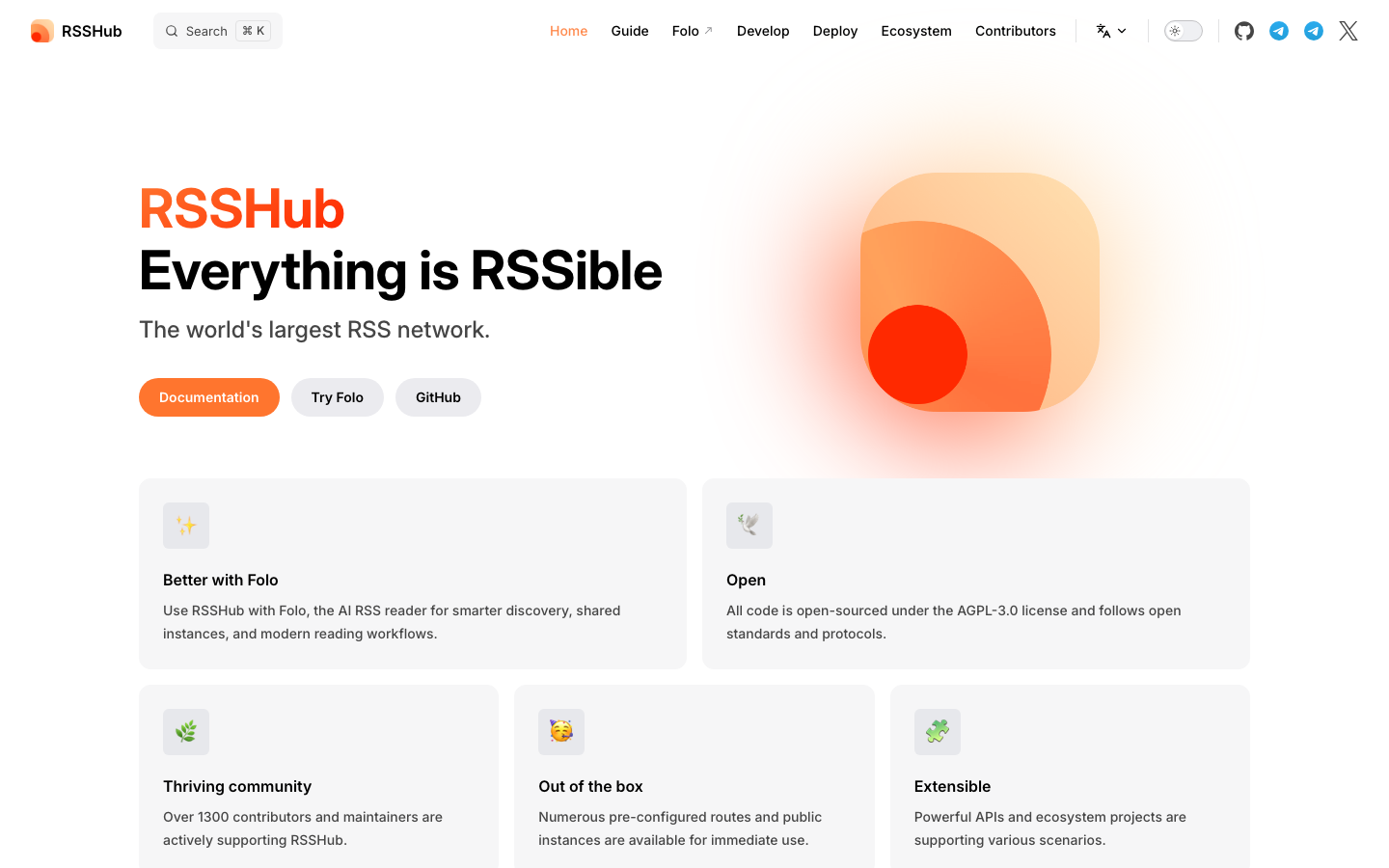
RSSHub is a feed generator that converts nearly anything into RSS—social media, news sites, GitHub releases, even Mastodon threads. It's not a reader itself, but the backbone for building RSS pipelines that Feedly can't touch. Use it to unify sources Feedly doesn't natively support.
Pros:
- Transforms hundreds of non-RSS sources into valid feeds
- Highly extensible; community-driven plugin ecosystem
- Decouples feed generation from reading, so you can pipe output into any reader
Cons:
- Requires hosting and maintenance of the service itself
- Not a standalone reader; you still need a reader to consume generated feeds
glance
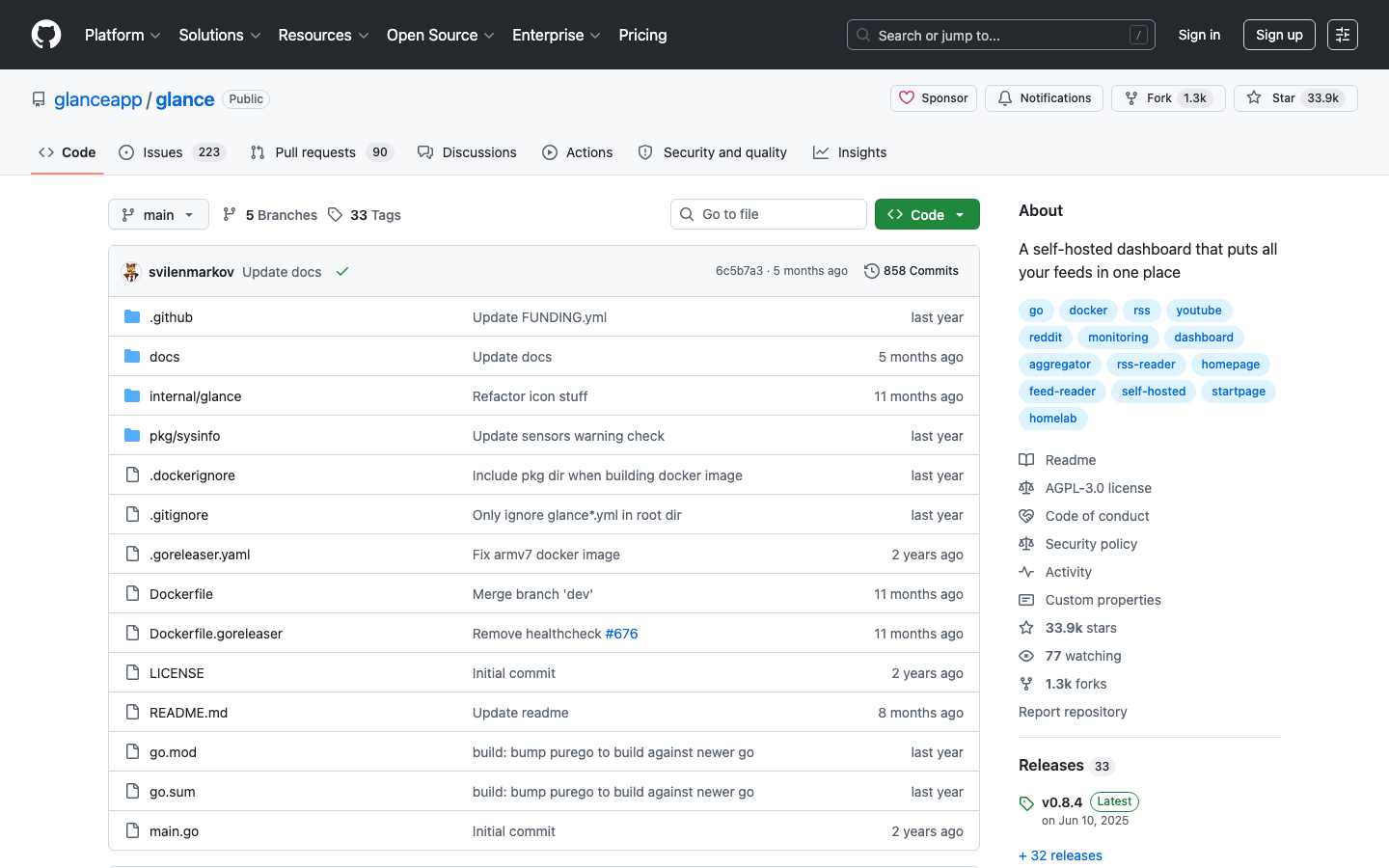
A self-hosted dashboard that pulls feeds into a unified, visual layout. Designed for people who want all their subscriptions visible at a glance—blogs, news, social feeds—on a single page you control.
Pros:
- Beautiful, distraction-free dashboard UI
- Runs entirely on your infrastructure
- Aggregates feeds without forcing you into a walled reader
Cons:
- Lighter on advanced features (search, tagging) compared to full readers
- Better suited to consumption than deep archival or organization
FreshRSS
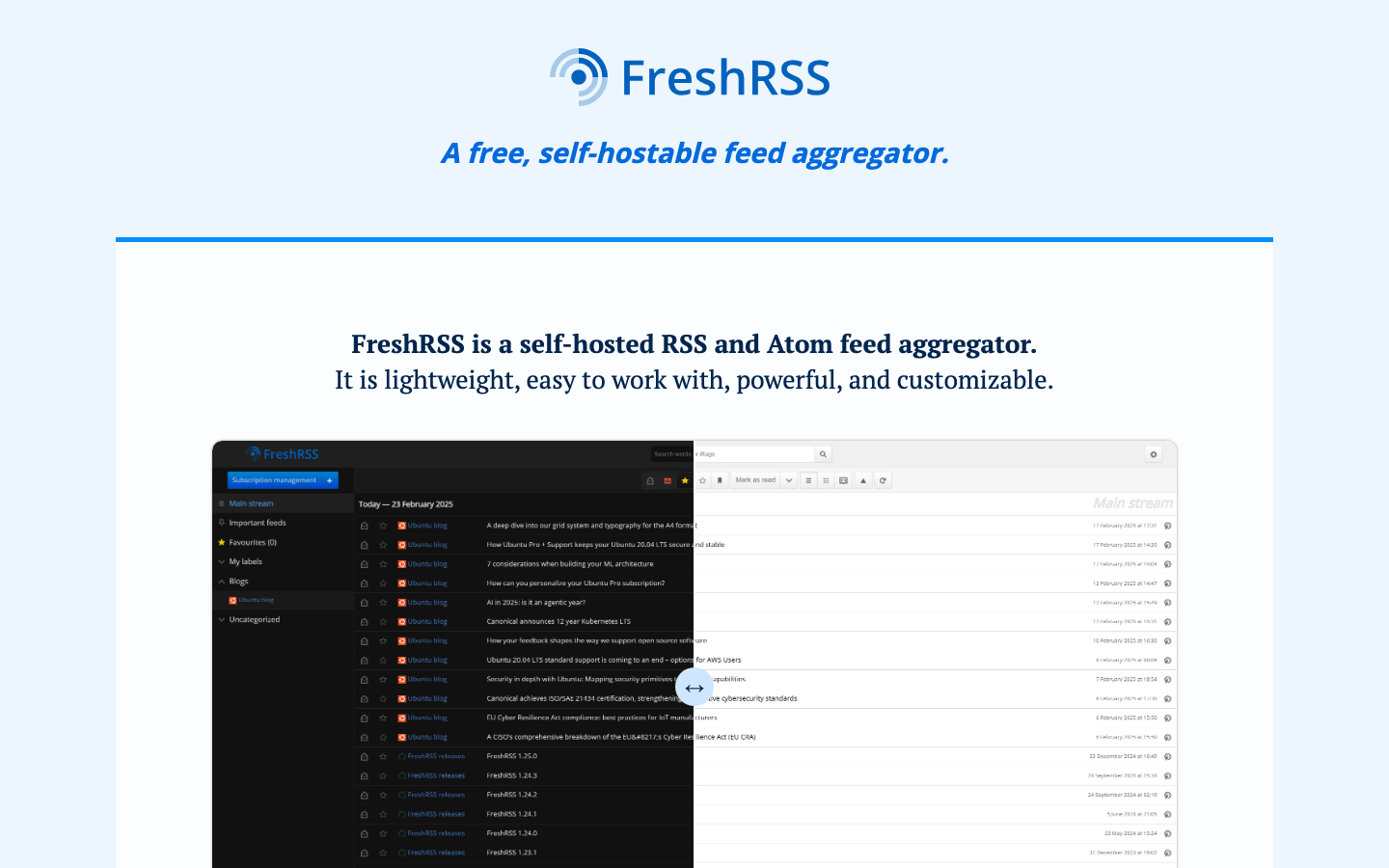
A full-featured, self-hosted RSS aggregator with no source limits, no paywalled search, and complete OPML portability. It's the direct answer to Feedly's free-tier ceiling: unlimited sources, unlimited search, zero lock-in.
Pros:
- Unlimited sources and full-text search on free/self-hosted tier
- Mature PHP codebase; easy to deploy on shared hosting
- OPML import/export; trivial to migrate in or out
Cons:
- No built-in social or collaboration features
- UI is functional but less polished than modern SaaS readers
v2
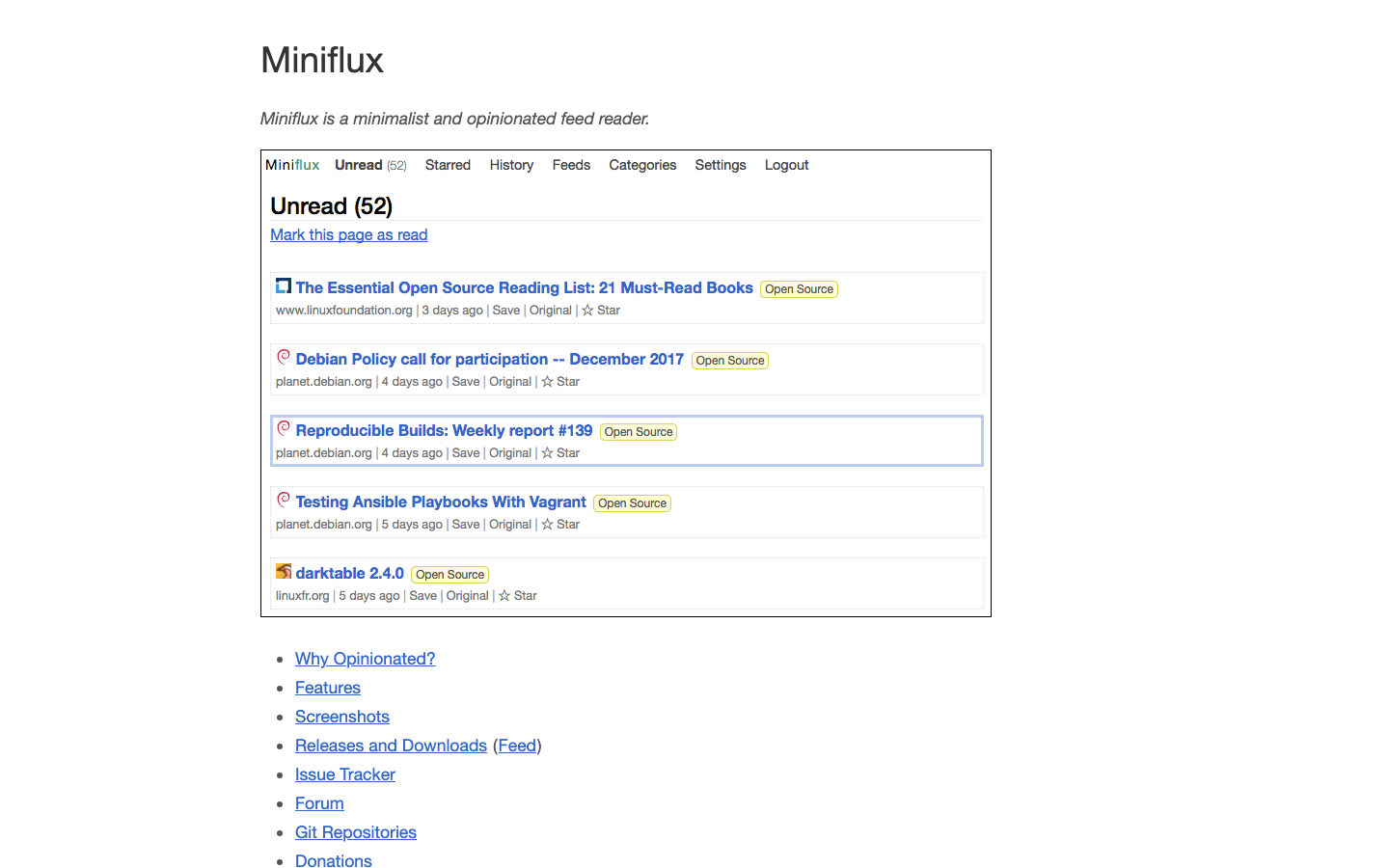
A minimalist, opinionated feed reader written in Go. Designed for people who reject bloat: no algorithms, no recommendation engine, just your feeds in a clean interface.
Pros:
- Lightweight and fast; minimal dependencies
- Straightforward deployment (single binary)
- Respects user intent; no dark patterns
Cons:
- Deliberately stripped-down; fewer organizational features than FreshRSS
- Small community; slower feature iteration
NewsBlur
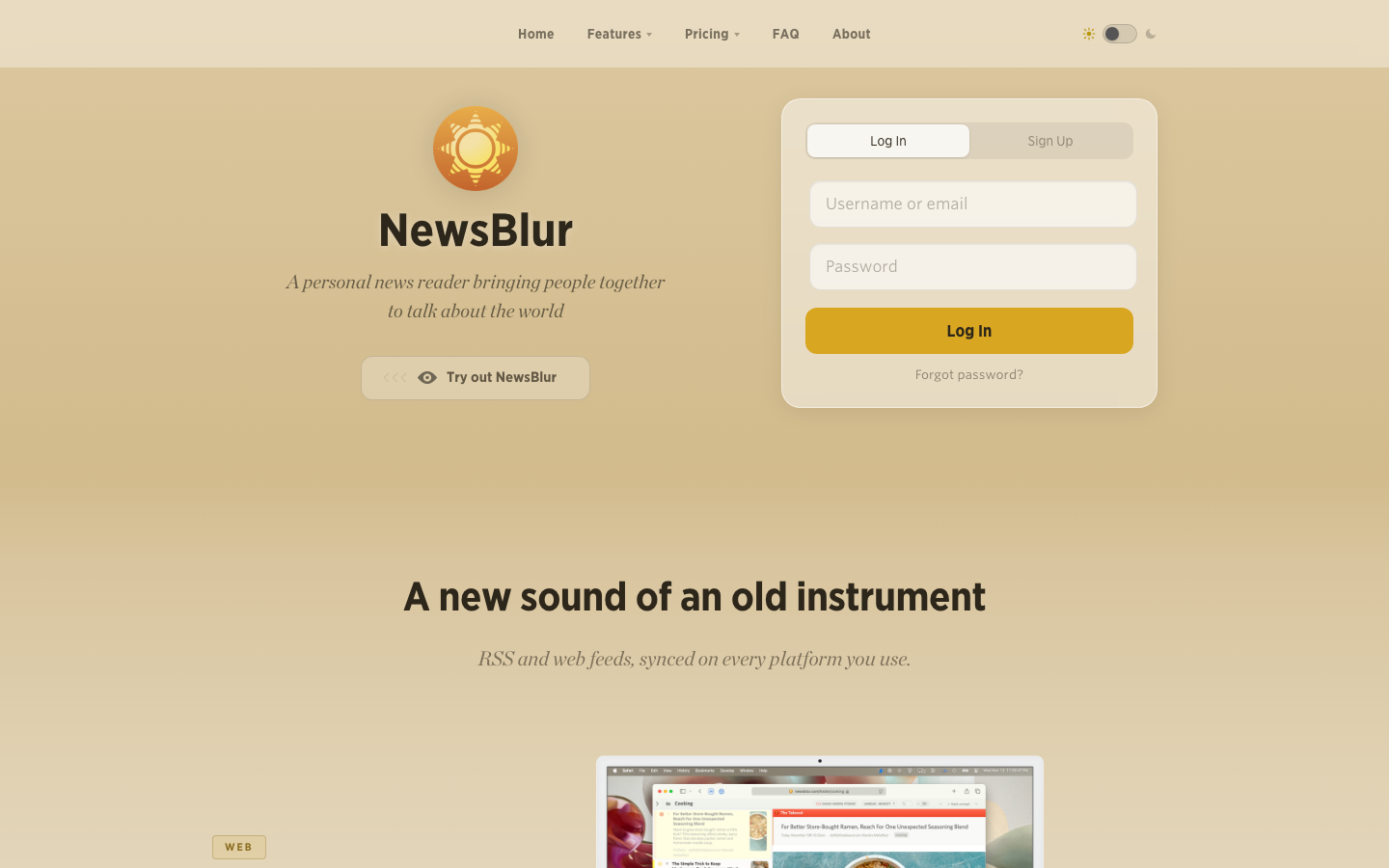
A personal news reader with a social layer: follow other readers, see shared stories, comment and discuss directly in the feed. Open-source, self-hostable, or use their SaaS tier.
Pros:
- Social discovery and real-time collaboration built in
- Excellent for teams or communities that discuss news together
- Both self-hosted and cloud options available
Cons:
- More complex to self-host than simpler readers
- Social features add UI overhead if you prefer solitude
commafeed
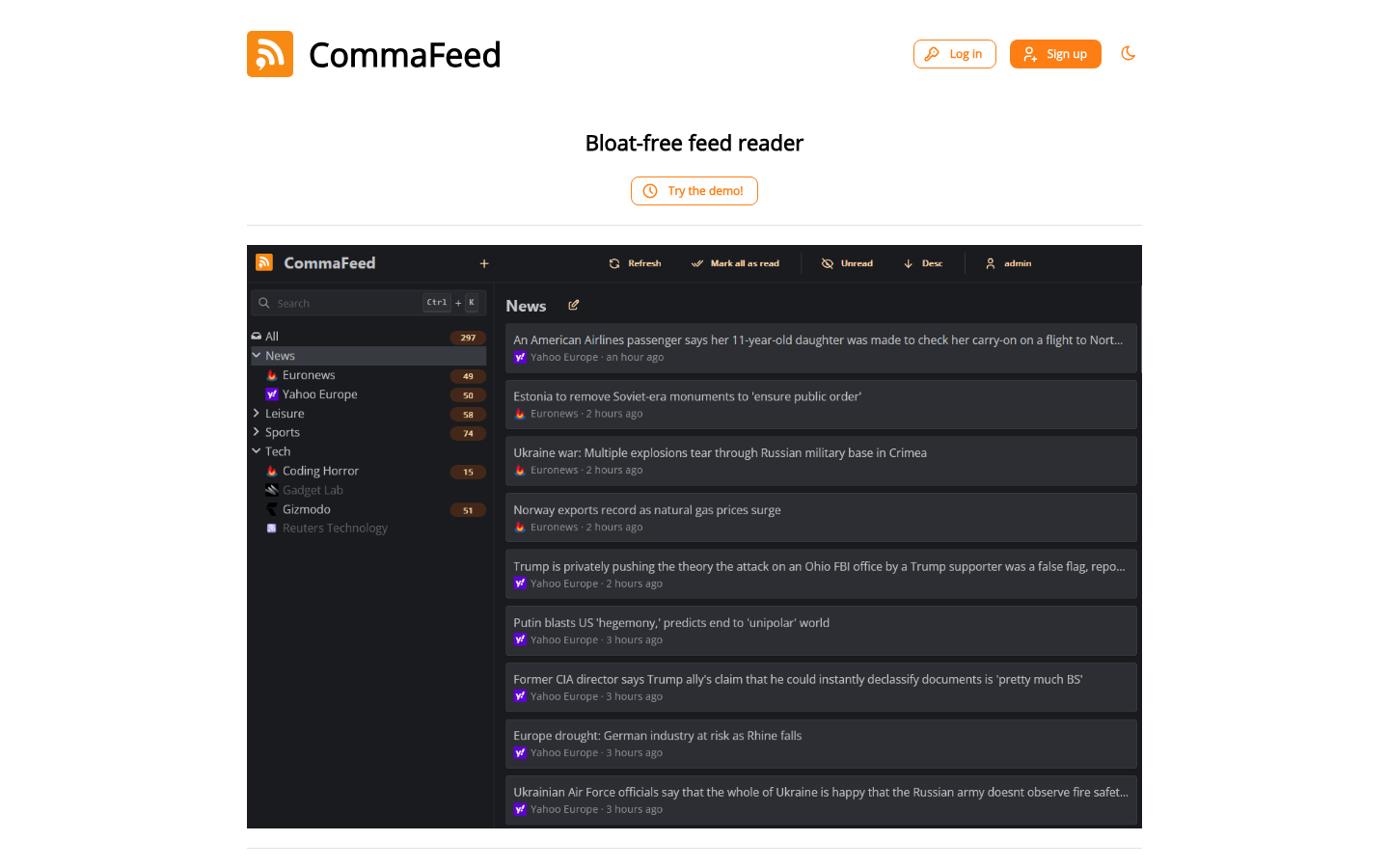
A Google Reader-inspired self-hosted RSS reader: clean, familiar, and Java-based. Designed for people who remember Reader's interface and want it back, self-hosted.
Pros:
- Proven Reader-like UX; intuitive for former Reader users
- Solid feature set: folders, tagging, search
- OPML import/export for portability
Cons:
- Java deployment; heavier resource footprint than Go or PHP alternatives
- Smaller active community than FreshRSS
selfoss
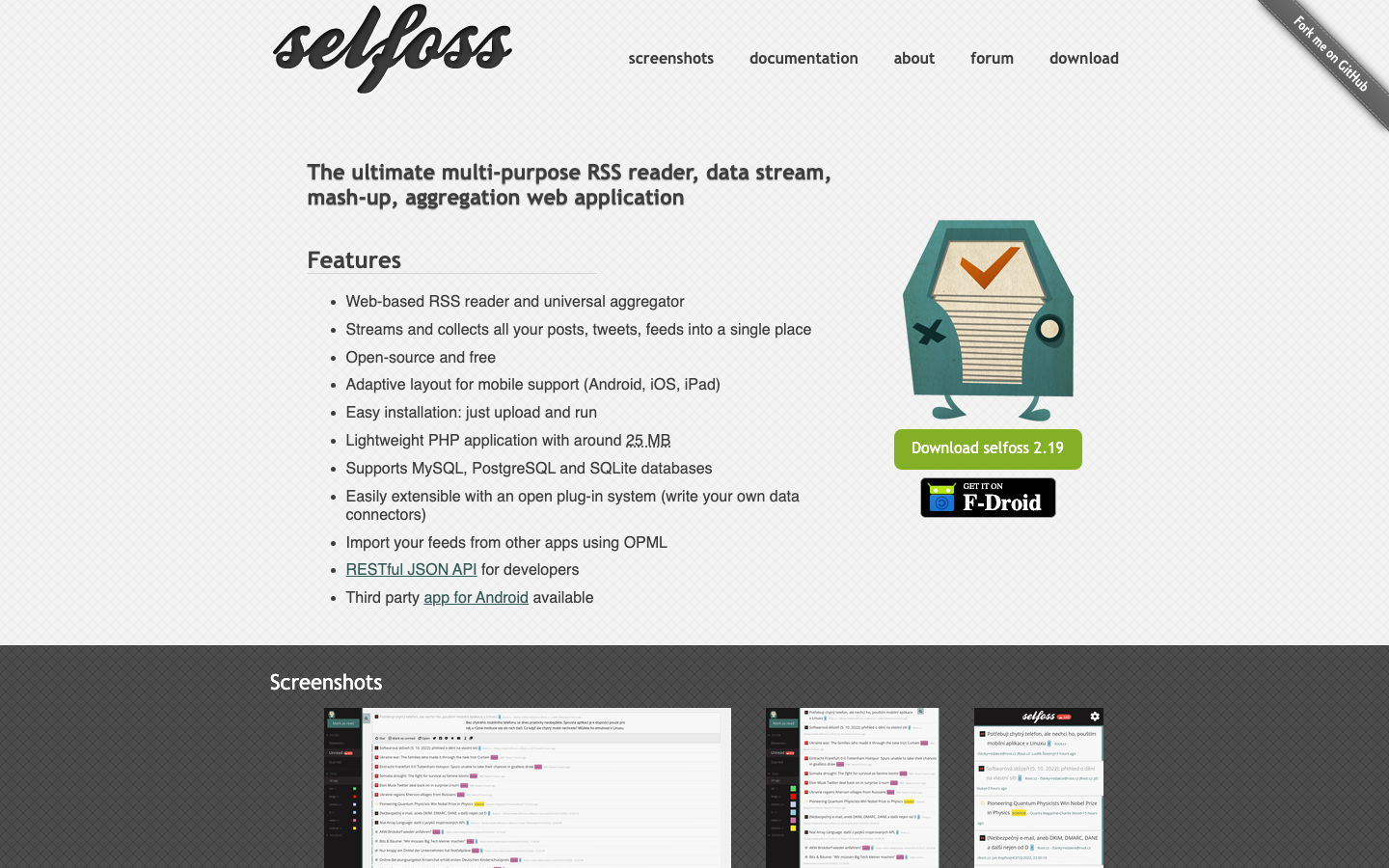
A multipurpose RSS reader, live stream aggregator, and mashup engine. Handles feeds, but also live data sources, making it useful for monitoring and real-time dashboards alongside reading.
Pros:
- Flexible beyond pure RSS; supports streams and mashups
- Lightweight and deployable on minimal infrastructure
- Good for mixed consumption (news + monitoring)
Cons:
- Less polished UI than modern readers
- Documentation and community smaller than FreshRSS
How to choose
Solo reader, maximum simplicity: Use FreshRSS or v2. FreshRSS if you want search and tagging; v2 if you want to minimize moving parts.
Team or social reading: NewsBlur is the only option with collaboration baked in; use it if your team discusses feeds together.
Dashboard or monitoring: glance for visual aggregation, or pair RSSHub with a reader to generate feeds from non-RSS sources.
Google Reader nostalgia: commafeed replicates that exact workflow.
Mixed sources (feeds + streams + data): selfoss handles aggregation beyond pure RSS.
All seven eliminate Feedly's paywall friction and lock-in. Pick based on team size, collaboration needs, and your tolerance for operational overhead.