







TL;DR
- Need a drop-in Postgres replacement with built-in auth and realtime → Supabase
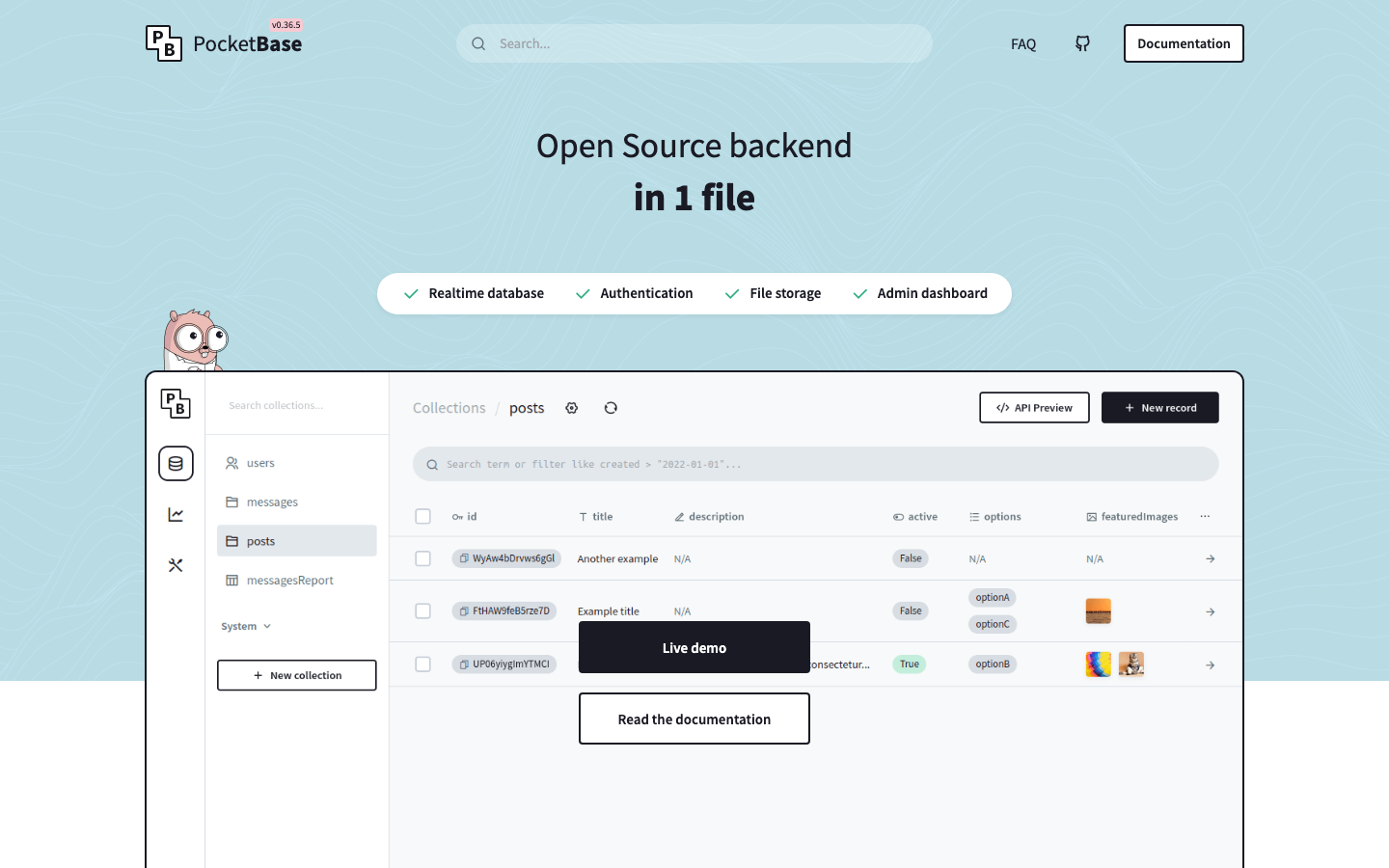
- Want the simplest single-file backend for prototypes and small teams → PocketBase
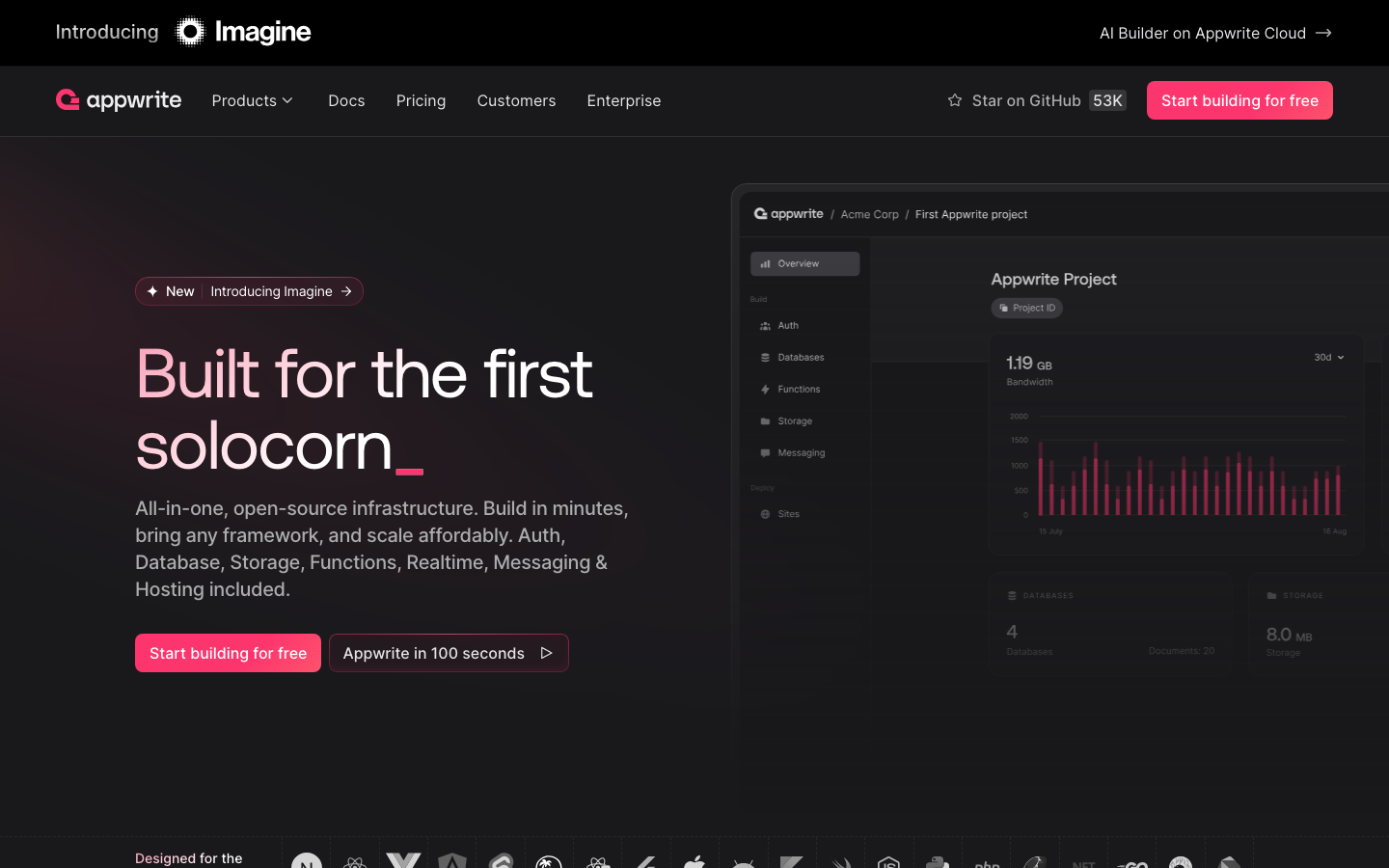
- Building a full-stack platform with functions, storage, and auth → Appwrite
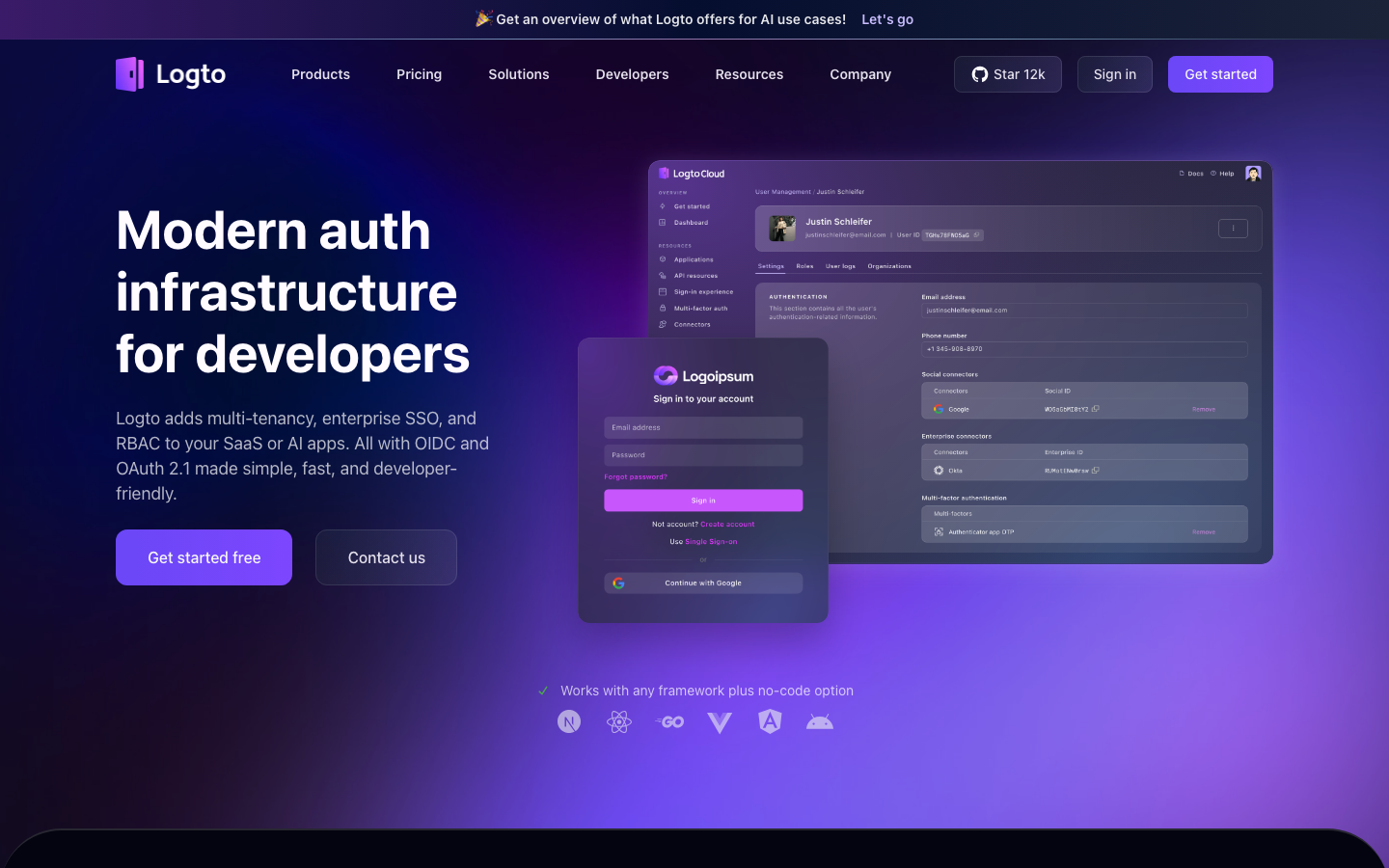
- Require auth-only infrastructure with enterprise SSO and multi-tenancy → Logto
Why developers look for a Firebase alternative
Firebase's Blaze (pay-as-you-go) plan has no hard spending cap. Google's own guidance and community reports document the risk: a single runaway query loop or traffic spike can turn a near-zero month into a large, unexpected bill. The free Spark tier is generous until an app gains traction, but scaling on Blaze introduces unpredictable costs that many teams find unacceptable for production workloads.
Structural lock-in compounds the problem. Firestore's proprietary query model, the Realtime Database, Firebase Auth, and tight coupling to Google Cloud infrastructure mean leaving Firebase is a rewrite, not a configuration change. Your data model, authentication flow, and deployment path all become Firebase-specific, making it costly to migrate later.
The open-source answer is self-hosting: Postgres or SQLite databases you control, backends you deploy on your own VPS or Kubernetes cluster, and portable code that runs anywhere. These projects trade Firebase's managed convenience for predictable infrastructure costs, data residency, and the freedom to migrate without rewriting your entire backend.
Quick comparison
| Name | License | Self-Hosted | Database | Auth | Realtime | Best For |
|---|---|---|---|---|---|---|
| Supabase | Apache-2.0 | Yes | PostgreSQL | Yes | Yes | SQL-first teams, Postgres expertise |
| PocketBase | MIT | Yes | SQLite | Yes | Yes | Solo devs, small teams, minimal ops |
| Appwrite | BSD-3-Clause | Yes | Own DB | Yes | Yes | Full-stack platforms, multi-service needs |
| Logto | MPL-2.0 | Yes | — | Yes (auth-only) | No | Auth infrastructure, SSO, multi-tenant SaaS |
| Nhost | MIT | Yes | PostgreSQL | Yes | Yes | GraphQL-first development |
| Redis | — | Yes | In-memory | No | Yes (pub/sub) | Caching, sessions, real-time pub/sub |
| Dify | — | Yes | — | No | No | AI agent workflows, LLM orchestration |
| Kinto | — | Yes | JSON document store | Basic | Yes (sync) | Offline-first sync, lightweight JSON APIs |
Top open-source Firebase alternatives
Supabase
Supabase is a PostgreSQL development platform that replicates Firebase's core features—auth, realtime subscriptions, and storage—but on top of a standard SQL database. You get a dedicated Postgres instance you can query directly, plus a REST and GraphQL API layer. It's the closest architectural match to Firebase for teams comfortable with relational databases.
Pros:
- Full PostgreSQL power; no proprietary query language or data model lock-in.
- Realtime subscriptions and built-in auth (JWT-based) with row-level security.
- Mature ecosystem; widely adopted by startups and enterprises.
Cons:
- Requires Postgres operational knowledge; not as "hands-off" as Firebase.
- Self-hosting requires more infrastructure setup than single-file alternatives.
Replaces: Firestore (via Postgres + REST API), Firebase Auth, Firebase Realtime Database, Cloud Storage.
PocketBase
PocketBase is an open-source realtime backend distributed as a single executable file. It bundles a SQLite database, auth system, file storage, and realtime subscriptions into one binary you can run on a a low-cost VPS. Ideal for solo developers, side projects, and teams that want zero DevOps overhead.
Pros:
- Single-file deployment; no external dependencies or container orchestration.
- Built-in admin UI, auth, and file uploads out of the box.
- Extremely low operational burden; runs on minimal hardware.
Cons:
- SQLite limits concurrency and scaling compared to Postgres; not suitable for high-traffic production apps.
- Smaller ecosystem and community than Supabase or Appwrite.
Replaces: Firestore (via SQLite), Firebase Auth, Firebase Storage, Firebase Realtime Database.
Appwrite
Appwrite is a complete backend platform offering databases, auth, storage, serverless functions, messaging, and realtime subscriptions. It's designed as a self-hosted alternative to Firebase and AWS Amplify, with a focus on developer experience and multi-service integration.
Pros:
- Comprehensive feature set; covers most Firebase use cases in one platform.
- Functions support for custom backend logic; not just database and auth.
- Strong documentation and active community.
Cons:
- More complex to self-host than PocketBase; requires Docker and orchestration.
- Steeper learning curve for teams new to backend infrastructure.
Replaces: Firestore, Firebase Auth, Cloud Storage, Cloud Functions, Firebase Realtime Database, Cloud Messaging (partial).
Logto
Logto is an authentication and authorization infrastructure platform built on OIDC and OAuth 2.1. It provides multi-tenancy, SSO, RBAC, and enterprise sign-on—designed for SaaS and AI applications that need production-grade identity without building it from scratch.
Pros:
- Enterprise-grade auth: SSO, RBAC, multi-tenancy, and audit logs built in.
- Standards-based (OIDC/OAuth 2.1); integrates with any backend or frontend framework.
- Lower operational complexity than rolling your own identity layer.
Cons:
- Auth-only; does not include database, storage, or realtime features.
- Requires pairing with a separate database and backend (e.g., Postgres + custom API).
Replaces: Firebase Auth (with enterprise features).
Nhost
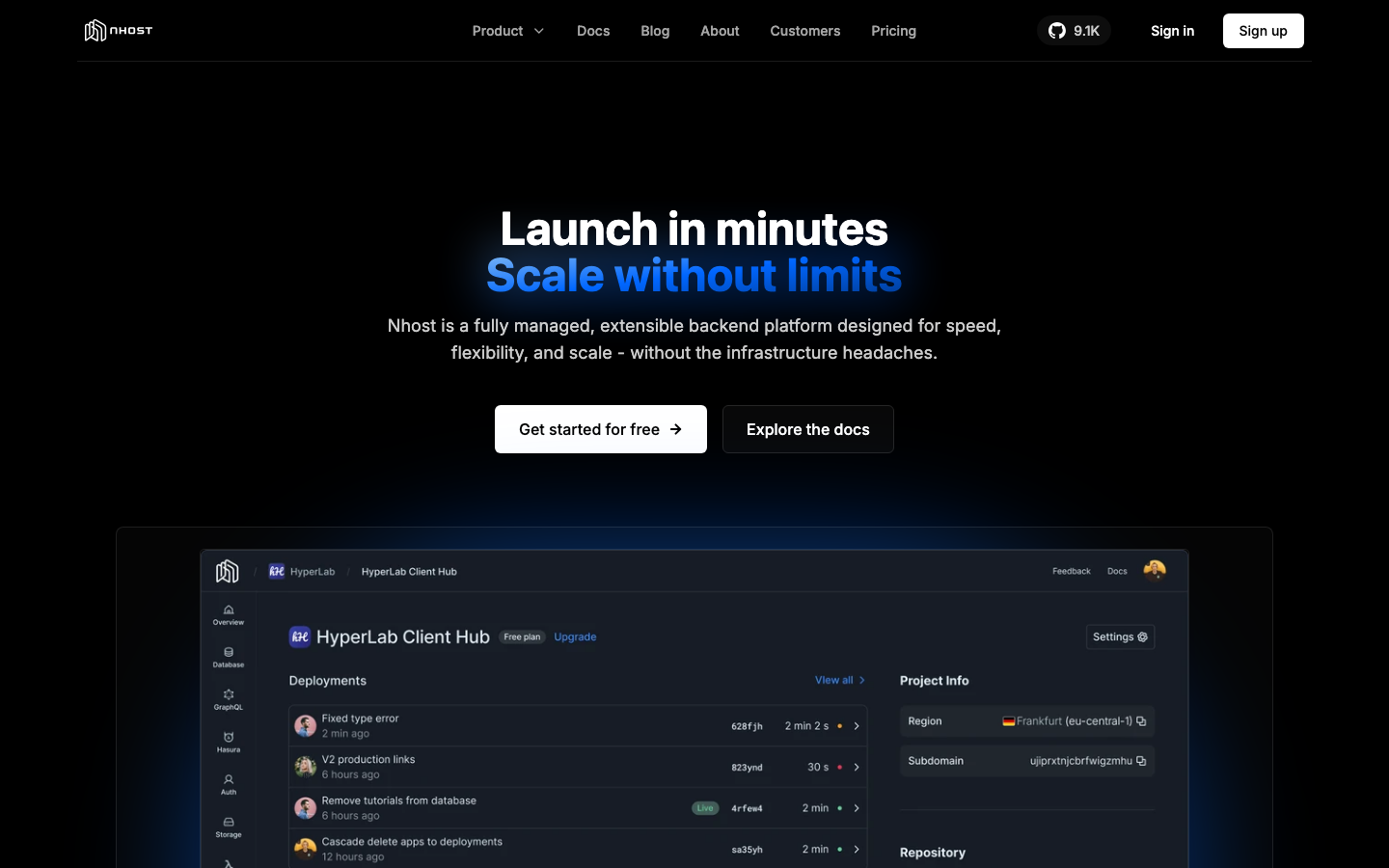
Nhost is an open-source Firebase alternative built on PostgreSQL and GraphQL. It provides a managed Postgres database, GraphQL API, auth, storage, and serverless functions. Ideal for teams that prefer GraphQL over REST and want a structured, opinionated backend.
Pros:
- GraphQL-first; powerful queries and subscriptions for modern frontends.
- PostgreSQL foundation; same SQL power and portability as Supabase.
- Includes functions and storage; more complete than auth-only solutions.
Cons:
- GraphQL adds complexity if your team is unfamiliar with it.
- Smaller community than Supabase; fewer third-party integrations.
Replaces: Firestore, Firebase Auth, Cloud Storage, Firebase Realtime Database (via GraphQL subscriptions).
Redis
Redis is an in-memory data structure server and cache. It excels at real-time pub/sub, sessions, leaderboards, and rate limiting. Not a full backend replacement, but a critical component for real-time features and performance.
Pros:
- Blazingly fast; sub-millisecond latency for pub/sub and caching.
- Pub/sub and streams for real-time message passing.
- Widely deployed and battle-tested at scale.
Cons:
- In-memory only; not suitable as a primary database (though persistence options exist).
- No built-in auth or storage; must be paired with other services.
Replaces: Firebase Realtime Database (for specific use cases), caching layer.
Dify
Dify is a production-ready platform for agentic workflow development and LLM orchestration. It provides a visual builder for AI agents, integrations with LLMs, and backend infrastructure for AI applications.
Pros:
- Purpose-built for AI workflows; visual agent builder and prompt management.
- No-code and low-code options for non-engineers.
- Handles LLM integrations and function calling out of the box.
Cons:
- Specialized for AI; not a general-purpose backend like Supabase or Appwrite.
- Does not include traditional auth, database, or realtime features.
Replaces: Firebase for AI-specific workloads (agents, LLM orchestration).
Kinto
Kinto is a generic JSON document store with built-in sharing and synchronization capabilities. It's designed for offline-first applications and lightweight APIs that need client-server sync without complex infrastructure.
Pros:
- Offline-first sync; excellent for mobile and distributed teams.
- Minimal setup; lightweight alternative to full-stack backends.
- JSON-native; familiar data model for JavaScript developers.
Cons:
- Not a full backend; lacks functions, advanced auth, and file storage.
- Smaller ecosystem; fewer integrations and third-party tools.
Replaces: Firebase Realtime Database (for offline-first sync), basic auth.
Replacing Firebase Cloud Messaging (FCM) for push notifications
Google deprecated the legacy FCM HTTP and XMPP send APIs in June 2023 and shut them down on July 22, 2024. All senders were forced to migrate to the FCM HTTP v1 API, which uses OAuth 2.0 access tokens instead of static server keys. This breaking change disrupted many older integrations and is a concrete reason teams reconsider depending on FCM for production push notifications.
Most open-source backends—Supabase, PocketBase, Appwrite, and Nhost—do not bundle a hosted push service equivalent to FCM. Instead, they pair cleanly with self-hostable push and notification stacks, and all provide realtime subscriptions and pub/sub channels for in-app updates. For native device push (iOS/Android), teams typically combine an open-source backend with a dedicated push service (self-hosted or third-party). The advantage: you control your notification infrastructure and are not locked into a single vendor's API or migration timeline.
Firebase alternatives for chat & realtime apps
Supabase, PocketBase, Appwrite, and Nhost all include realtime subscriptions and pub/sub channels suitable for chat and collaborative apps. Redis is ideal for high-performance pub/sub and message streams. A typical chat architecture pairs a Supabase or Appwrite backend for message storage and user management with Redis for pub/sub delivery and presence tracking, or uses PocketBase's built-in realtime for simpler deployments. Nhost's GraphQL subscriptions are particularly elegant for chat frontends that already use GraphQL.
How to choose
Start with your team's priorities: cost and control favor PocketBase (minimal ops, single VPS) or Supabase (Postgres power, mature ecosystem). Enterprise auth points to Logto paired with a backend of your choice. GraphQL preference suggests Nhost. Full-stack platform needs—functions, storage, messaging, auth—align with Appwrite. Real-time performance (caching, pub/sub, leaderboards) requires Redis as a component. AI workflows are Dify's domain. For most teams leaving Firebase, Supabase or PocketBase are the fastest paths to production: Supabase if you have Postgres expertise and scale concerns, PocketBase if you want to ship a working backend in hours on a minimal budget.