





TL;DR
- Teams running 500+ concurrent calls and willing to invest in infrastructure: Asterisk remains the most mature choice, though FreeSWITCH still wins on threading; if you want a lighter SIP foundation, Kamailio scales harder.
- Organizations building programmable, cloud-native telephony: Routr brings modern TypeScript-based SIP server logic to teams tired of C and XML configuration.
- Shops needing a turnkey PBX without the FreeSWITCH learning curve: FusionPBX wraps FreeSWITCH itself with a web GUI and multi-tenant features, cutting deployment time dramatically.
Why teams leave FreeSWITCH
Picture a team six months into their FreeSWITCH deployment: call routing works, but adding a new IVR menu requires editing XML by hand, testing in production because there's no GUI, and waiting for someone to remember the config schema. The platform is powerful—it handles thousands of concurrent calls where single-threaded systems choke—but that power comes at a cost: configuration complexity and operational overhead.
FreeSWITCH was architected by former Asterisk developers to solve a specific problem: scale beyond ~500–1,000 calls per node using multi-threading. It succeeds brilliantly at that. But the trade-off is steep. There is no out-of-the-box dashboard, no built-in multi-tenancy, and no gentle onboarding. Production-grade setups demand significant initial engineering work—writing dialplans, tuning the XML, integrating monitoring—and ongoing maintenance falls entirely on your team. For organizations that can't absorb that burden, or that need faster time-to-value, the pain point isn't capability; it's friction.
Vendor lock-in is less of a concern (FreeSWITCH is fully open), but operational lock-in is real: once you've invested weeks in a FreeSWITCH deployment, ripping it out for something simpler is expensive. Teams often explore alternatives not because FreeSWITCH fails technically, but because they underestimated the cost of keeping it running.
Quick comparison
| Name | License | Self-Hosted | Federation | E2E Encryption | Best For |
|---|---|---|---|---|---|
| Asterisk | — | ✓ | — | — | High-call-volume PBX; mature ecosystem; teams comfortable with C |
| Kamailio | GPL | ✓ | ✓ | — | Carrier-grade SIP routing; extreme scalability; telecom operators |
| Routr | MIT | ✓ | — | — | Programmable SIP; modern stack; teams preferring TypeScript over C |
| OpenSIPS | GPL | ✓ | — | — | High-performance SIP proxy; load balancing; telecom-grade reliability |
| FusionPBX | — | ✓ | — | — | Multi-tenant PBX; web UI; teams wanting FreeSWITCH without the config pain |
Top open-source alternatives to FreeSWITCH
Asterisk
Asterisk is the grandfather of open-source telephony platforms and remains the most widely deployed PBX worldwide. It handles voice, video, and messaging, with a mature ecosystem of integrations, documentation, and third-party tools. Most teams running FreeSWITCH came from Asterisk, choosing FreeSWITCH specifically to escape Asterisk's single-threaded bottleneck above ~500 concurrent calls.
Pros:
- Massive ecosystem: thousands of modules, dialplan examples, and community support
- Lower operational overhead than FreeSWITCH for small-to-medium deployments
- Proven reliability in production for over two decades
Cons:
- Single-threaded architecture struggles at high call volumes (the core reason FreeSWITCH exists)
- Configuration learning curve rivals FreeSWITCH; no GUI included
Kamailio
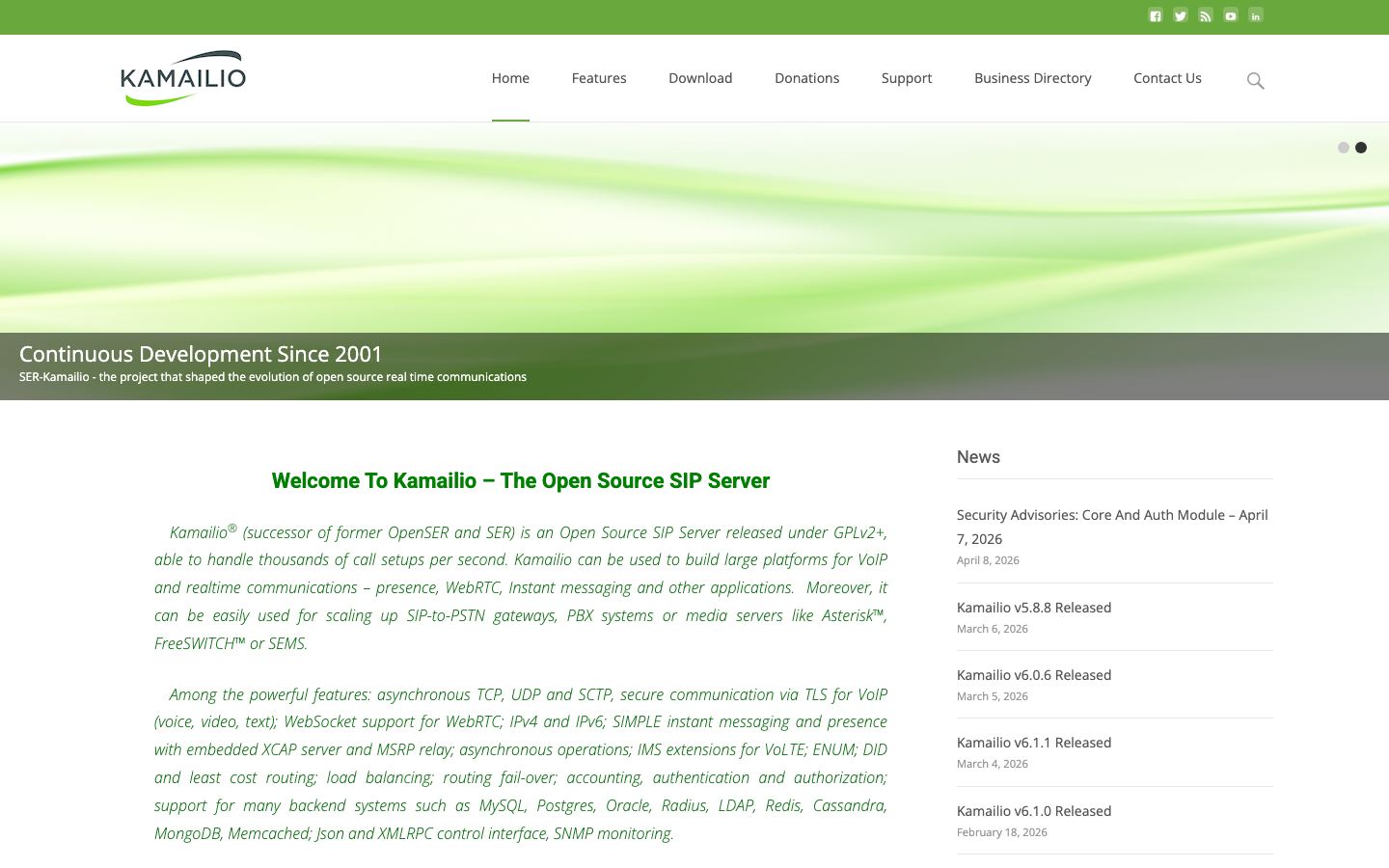
Kamailio is a pure SIP server—not a PBX—optimized for routing, load balancing, and session control at carrier scale. It powers telecom operators' infrastructure and excels at federation and interoperability. If you need a rock-solid SIP proxy that can handle millions of registrations, Kamailio is the answer; if you need a complete PBX (IVR, voicemail, call queues), you'll pair it with a separate application server.
Pros:
- Extreme scalability: designed for carrier-grade traffic
- Federation-friendly: works seamlessly across SIP networks
- Lightweight and fast; minimal resource footprint
Cons:
- Not a complete PBX—requires additional components for business features
- Steeper learning curve for teams accustomed to all-in-one platforms
Routr
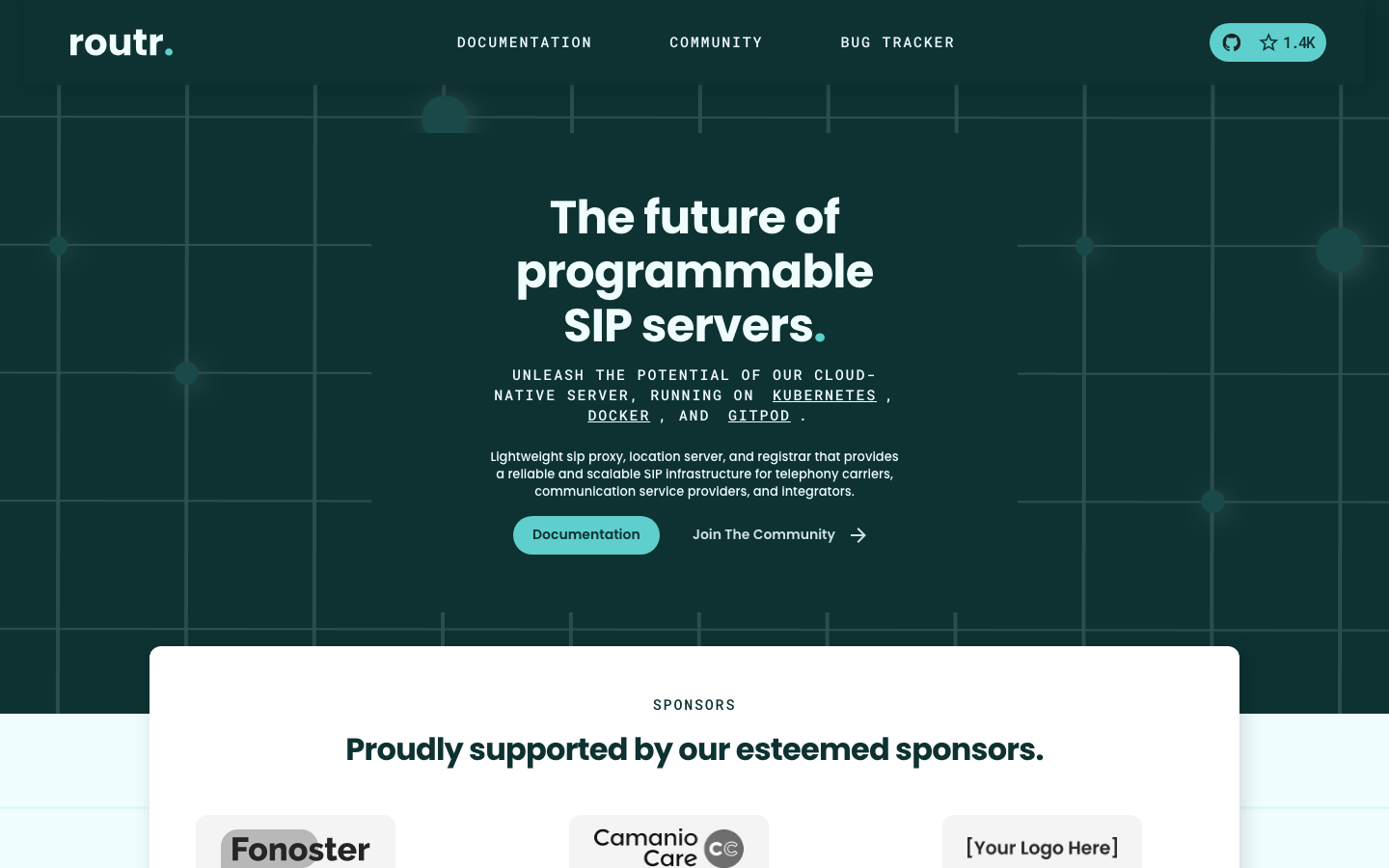
Routr is a modern, programmable SIP server written in TypeScript, designed for teams building cloud-native telephony. It replaces the XML-config paradigm with code, letting you define SIP logic in JavaScript and deploy via Docker. It's the youngest project here but appeals strongly to DevOps and backend teams tired of C and static configuration files.
Pros:
- Modern developer experience: TypeScript, familiar tooling, rapid iteration
- Cloud-native: containerized, API-driven, fits CI/CD pipelines
- Lower barrier to entry for software engineers unfamiliar with telecom
Cons:
- Smaller ecosystem and community compared to Asterisk or Kamailio
- Not yet proven at the scale or operational maturity of older platforms
OpenSIPS
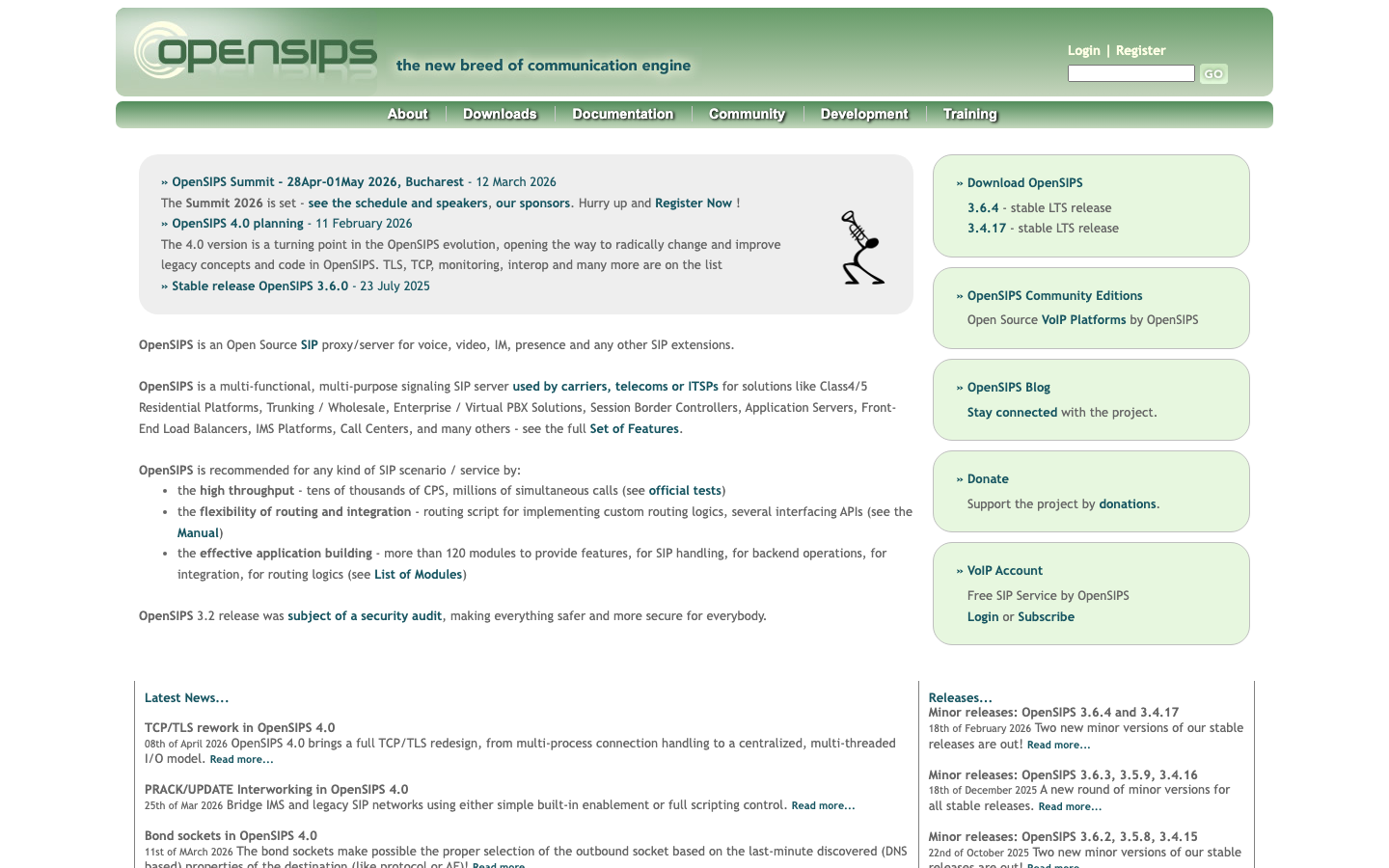
OpenSIPS is a high-performance SIP server focused on reliability, security, and scalability for professional telecom platforms. It's a fork of OpenSER and competes directly with Kamailio in the carrier space, offering similar routing power with a different architectural philosophy and feature set.
Pros:
- Telecom-grade performance and reliability
- Strong focus on security and access control
- Excellent for load balancing and session control
Cons:
- Requires deep SIP knowledge; not beginner-friendly
- Like Kamailio, it's a SIP server, not a complete PBX
FusionPBX
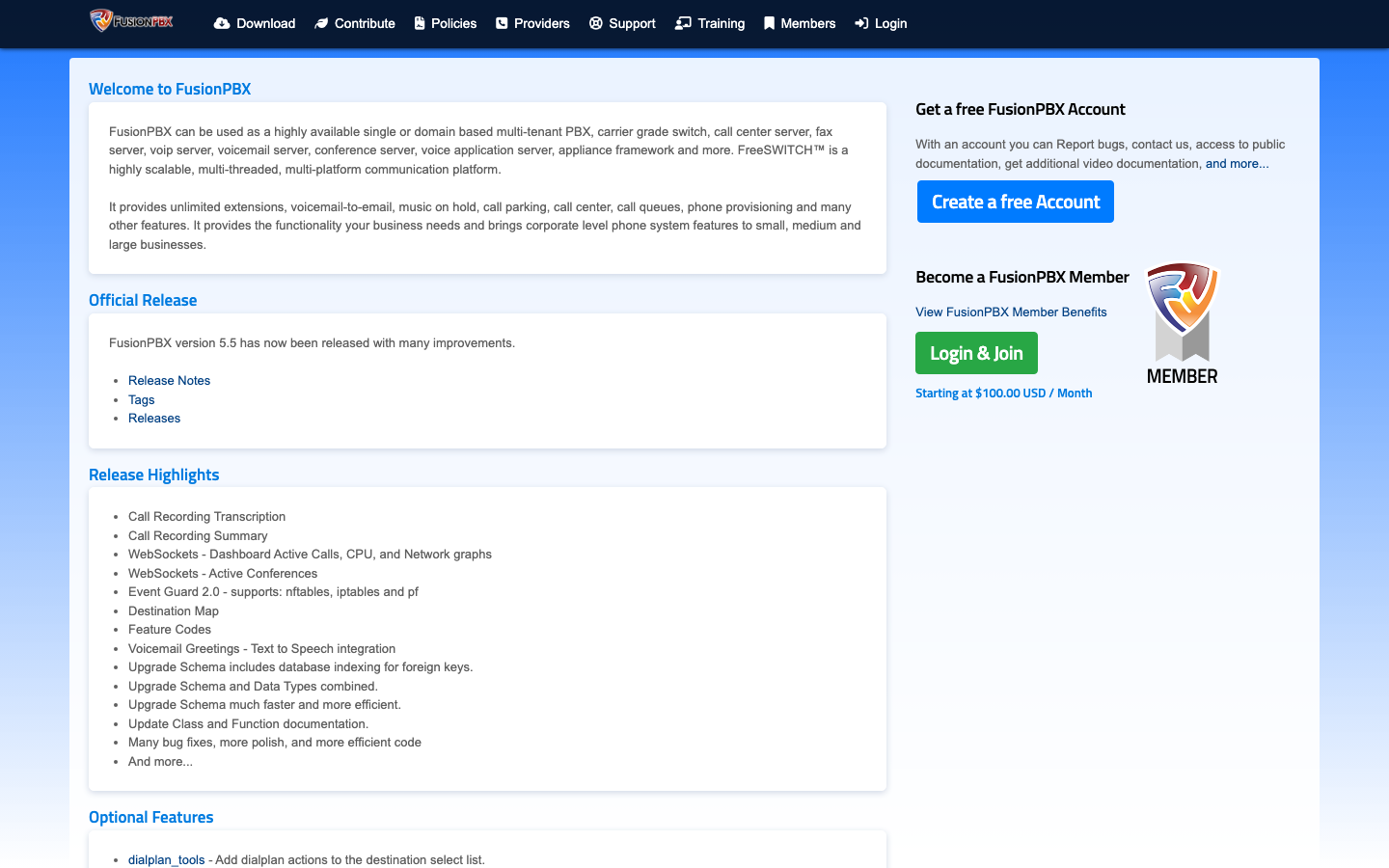
FusionPBX is a web-based GUI and multi-tenant management layer built on top of FreeSWITCH. It solves the exact pain point: if you want FreeSWITCH's power and scalability but can't stomach the XML configuration and lack of a dashboard, FusionPBX adds the operational layer that FreeSWITCH omits.
Pros:
- Dramatically faster deployment than raw FreeSWITCH
- Built-in multi-tenancy and web UI (no more hand-editing XML)
- Retains FreeSWITCH's high-concurrency strength
Cons:
- Still requires FreeSWITCH expertise for advanced customization
- Adds a layer of abstraction; some configurations still need manual tweaking
How to choose
If you need a complete, self-hosted PBX and can invest in setup, start with FusionPBX—it's FreeSWITCH with a UI, cutting deployment time by weeks. If you're scaling beyond 1,000 concurrent calls and have a dedicated ops team, raw Asterisk or FreeSWITCH are your lanes; choose FreeSWITCH only if Asterisk's single-threaded limits bite you. If you're building a carrier-grade SIP backbone or need extreme scalability, Kamailio or OpenSIPS are the standard—but plan to pair them with a separate application server for PBX features. If your team is software engineers, not telephony specialists, and you want to code your SIP logic, Routr is worth a pilot, especially for greenfield projects that can tolerate less mature tooling.