







TL;DR
- Privacy & data sovereignty matter most? FreshRSS puts your entire feed library and read state under your control on your own server, with no recurring fees or vendor lock-in.
- Cost scales with your library, not your wallet. NewsBlur and commafeed let you self-host without per-feed caps—feed 5,000 sources for the price of a VPS, not a subscription tier.
- Want feeds everywhere without the hosting overhead? RSSHub transforms any web content into RSS feeds, giving you source flexibility; pair it with glance for a unified dashboard that stays on your infrastructure.
Why teams leave Inoreader
Inoreader's free tier caps you at roughly 150 RSS feeds, which many knowledge workers outgrow within months. Moving to Pro costs $90/year—modest in isolation, but that's the entry point. Real capacity (2,500 feeds, API access, AI summaries, automation rules) locks you into annual billing and a vendor roadmap you don't control.
The deeper friction emerges over time. Your feed library, reading history, and saved articles live entirely on Inoreader's servers. There's no portable database export; you can't easily migrate a five-year knowledge stream to another reader without manual work. If Inoreader changes pricing, discontinues a feature you rely on, or sunsets the service, you're starting over. For teams or individuals treating RSS as a long-term personal knowledge base—not just a news habit—that lock-in becomes expensive in ways a spreadsheet can't capture.
Self-hosted alternatives remove the per-tier feed caps, eliminate recurring costs after initial setup, and keep your data on infrastructure you own. You control backups, retention, and the ability to export or switch readers without losing history.
Quick comparison
| Name | License | Self-Hosted | Data Format / Portability | Real-time Collaboration | Best For |
|---|---|---|---|---|---|
| RSSHub | AGPL-3.0 | Yes | JSON/RSS feeds | — | Feed source generation & flexibility |
| glance | AGPL-3.0 | Yes | YAML config, local storage | — | Personal dashboards & unified feeds |
| FreshRSS | AGPL-3.0 | Yes | OPML export, SQL database | Limited (multi-user) | Full-featured self-hosted reader |
| v2 | Apache-2.0 | Yes | — | — | Minimalist, opinionated workflows |
| NewsBlur | MIT | Yes | JSON/OPML export | Yes (social, comments) | Social reading & team discussion |
| commafeed | Apache-2.0 | Yes | OPML export, H2 database | — | Google Reader nostalgia, simplicity |
| selfoss | GPL-3.0 | Yes | JSON/OPML export | — | Multi-purpose aggregation & mashups |
Top open-source alternatives to Inoreader
RSSHub
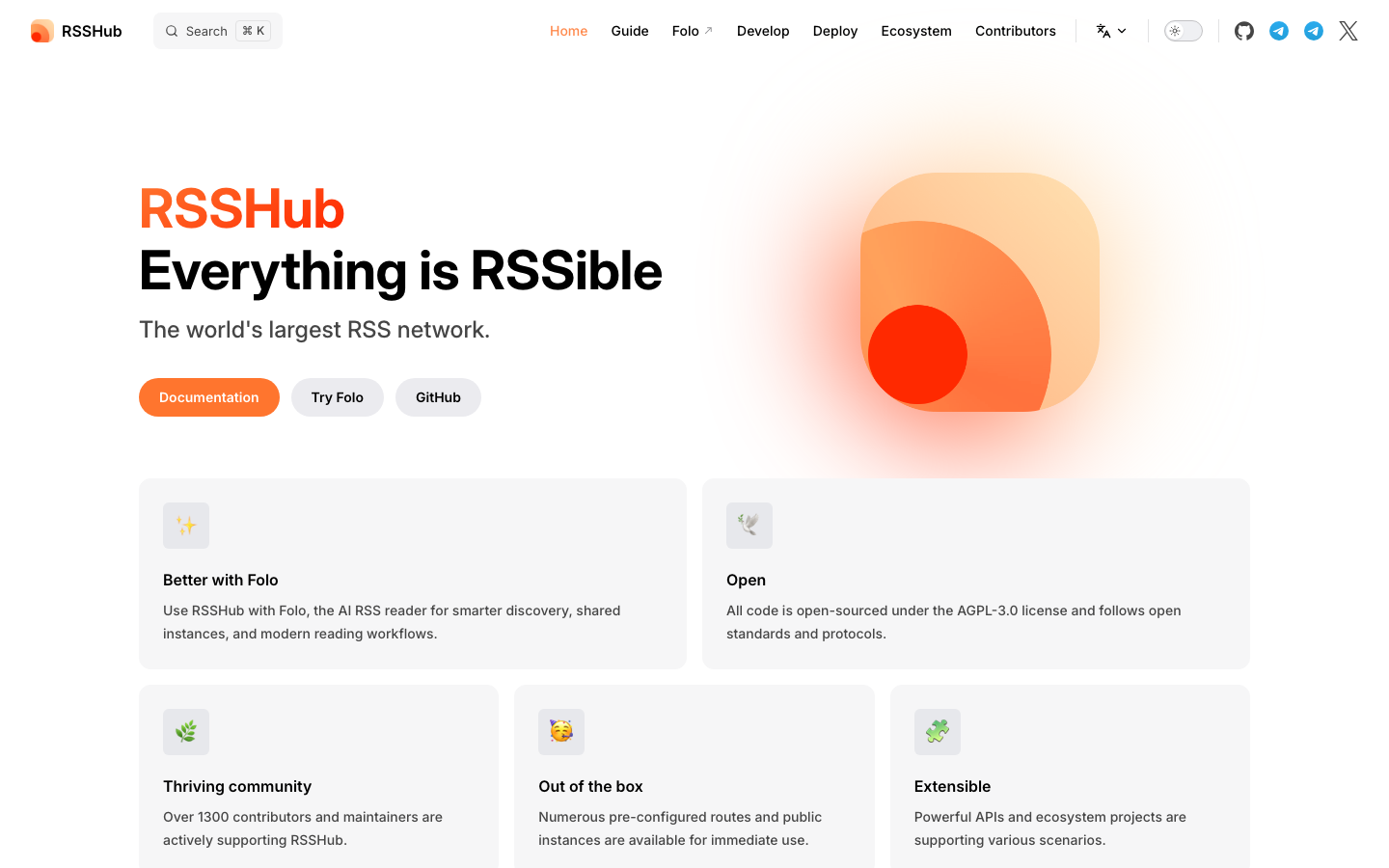
RSSHub is a feed generator that converts any web content—social media, blogs, video platforms, e-commerce sites—into standard RSS feeds. It runs as a self-hosted service and includes hundreds of built-in scrapers, so you can subscribe to sources that don't natively offer feeds.
Pros:
- Dramatically expands what you can treat as a feed source (Twitter, YouTube, Reddit, Substack, etc. without relying on third-party bridge services).
- AGPL-3.0 license and active community; easy to extend with custom scrapers.
Cons:
- Requires a separate deployment; best paired with another reader for the full experience.
- Feed generation depends on web scraping, which can break if target sites change their structure.
glance
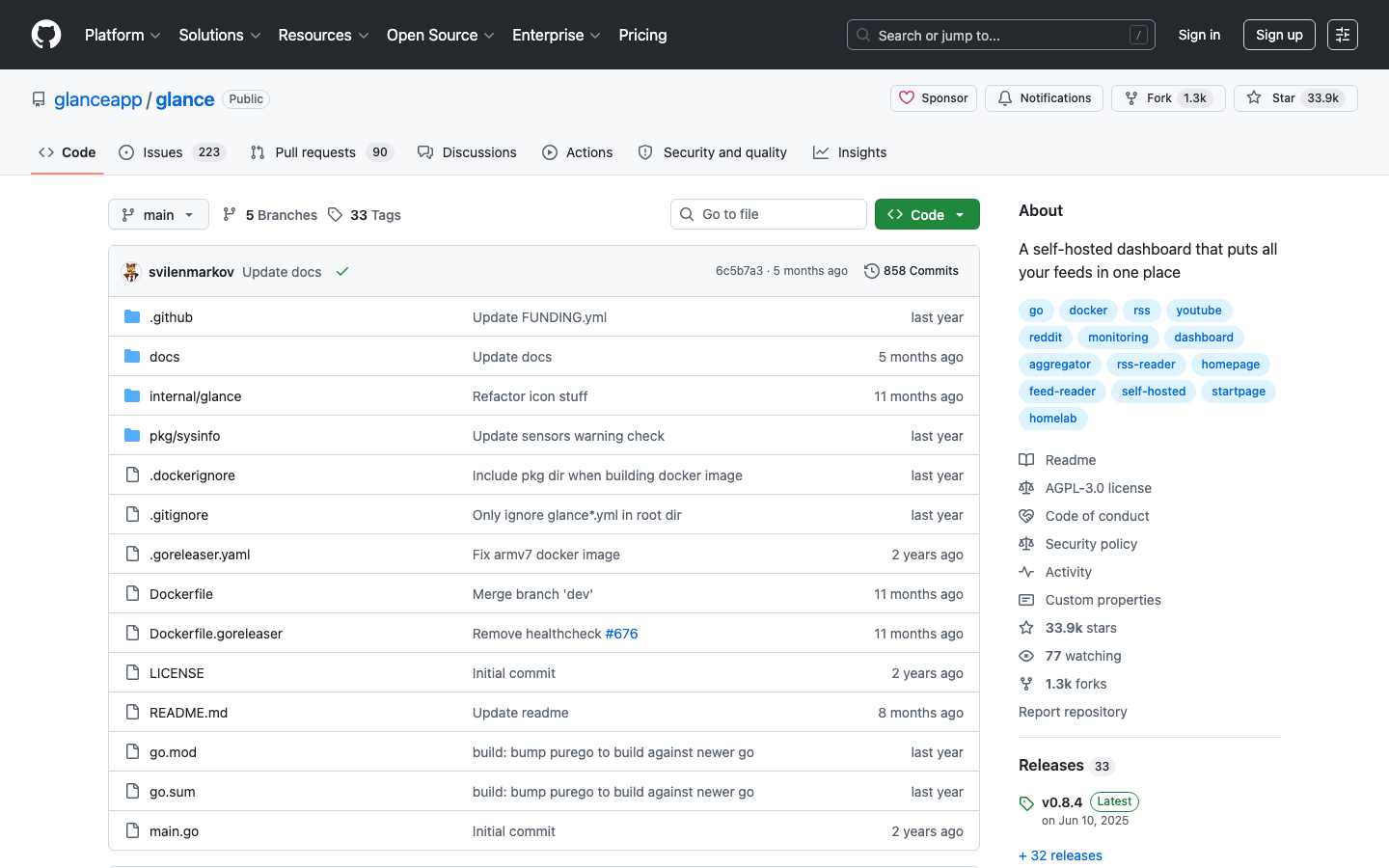
Glance is a personal dashboard that aggregates all your feeds—RSS, weather, calendar, bookmarks—into a single, clean interface. It's lightweight, configuration-driven, and designed to be your browser homepage.
Pros:
- Minimal, fast, and visually polished; YAML-based config makes it easy to customize.
- Self-contained; no database complexity, just local storage.
Cons:
- Focused on dashboard presentation rather than deep feed management (reading history, rules, filtering).
- Limited collaboration features; best for solo use.
FreshRSS
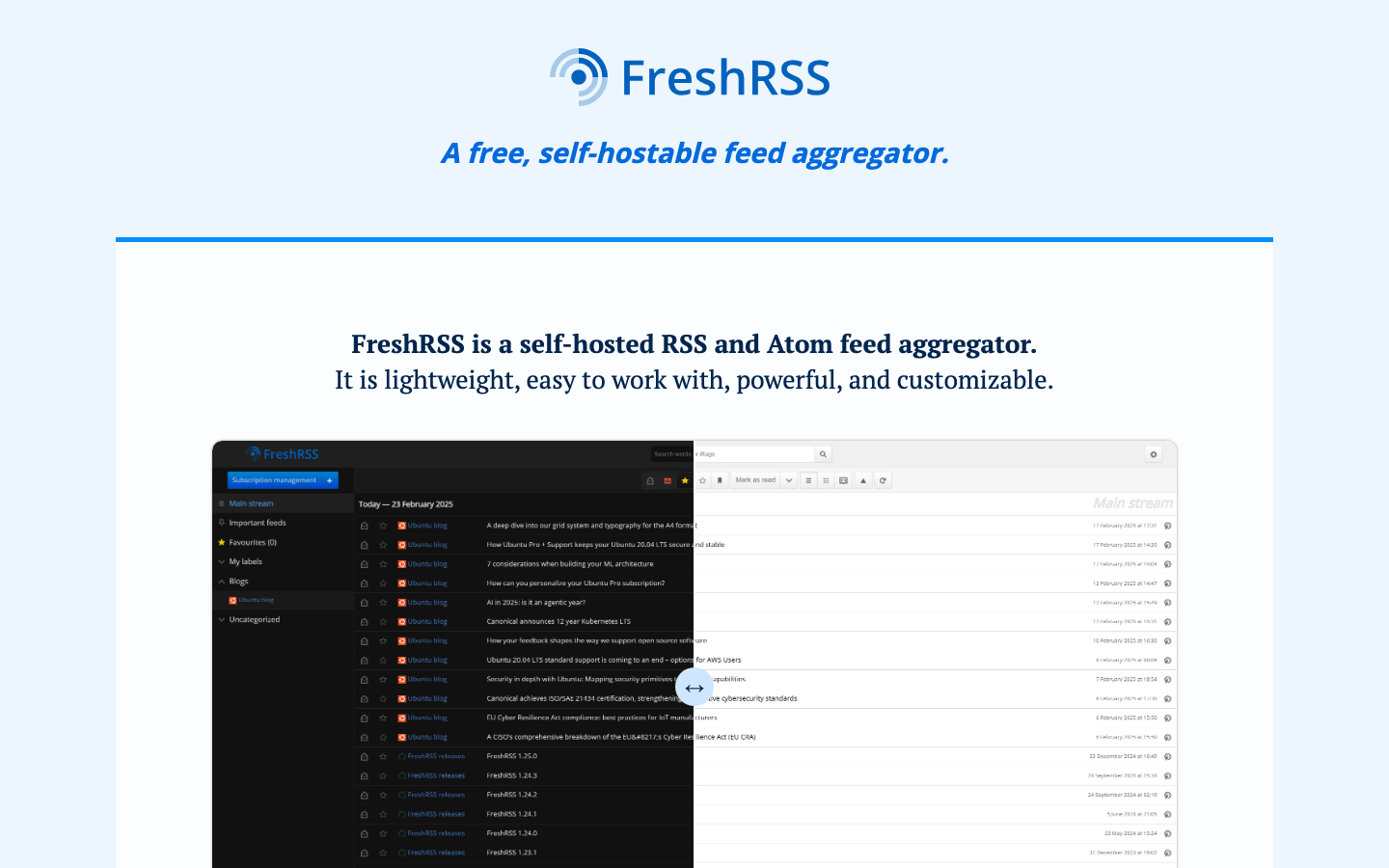
FreshRSS is a full-featured, self-hosted RSS aggregator with support for thousands of feeds, multi-user accounts, tagging, search, and API access. It's the most direct Inoreader alternative for power users.
Pros:
- No feed cap; supports unlimited sources on your server.
- OPML import/export and SQL database make migration and backup straightforward.
- Multi-user support with per-account read state and preferences.
Cons:
- Requires PHP hosting and database setup; more operational overhead than SaaS.
- UI is functional but less polished than modern commercial readers.
v2
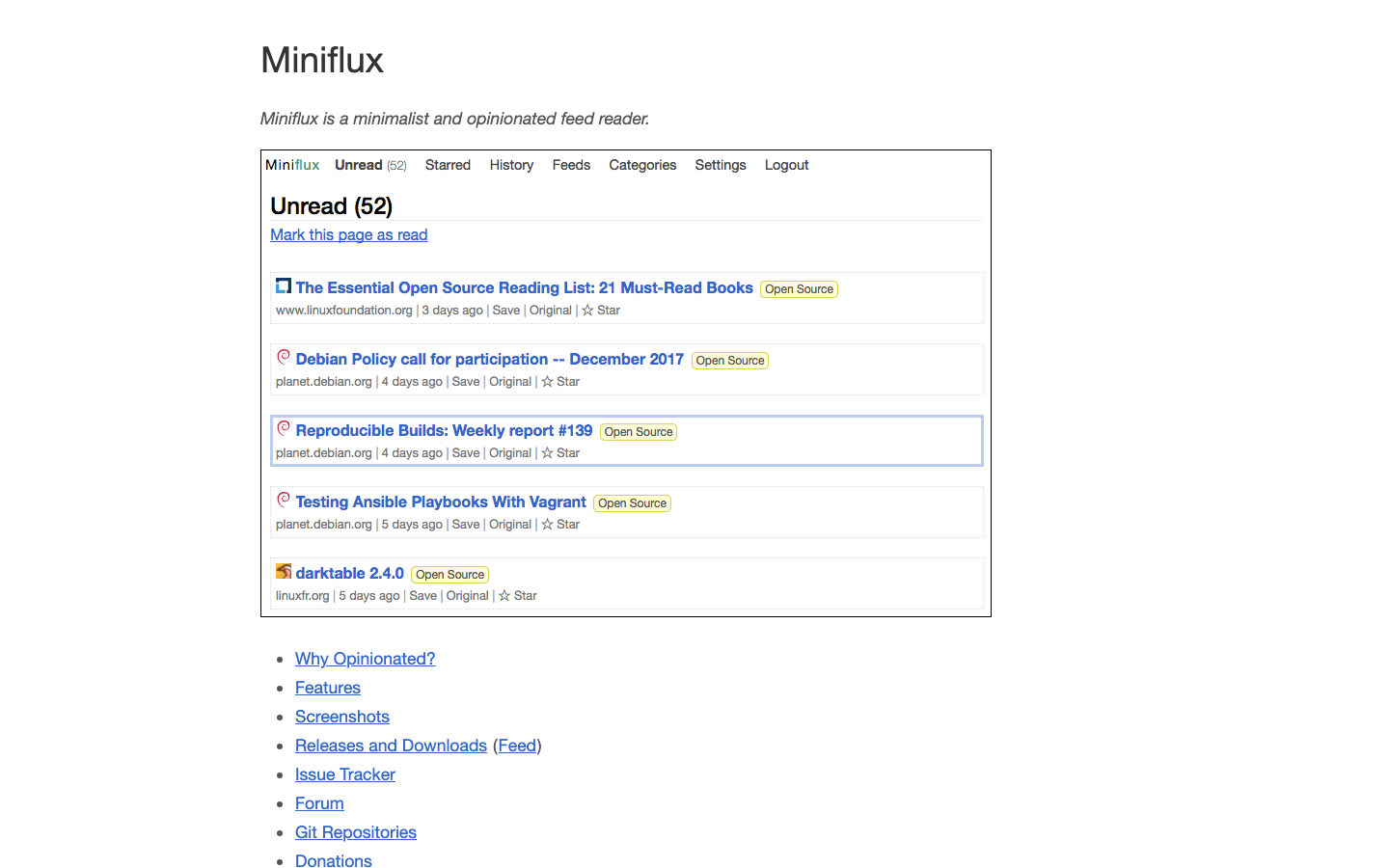
v2 is a minimalist feed reader written in Go, designed for users who want simplicity and speed over feature abundance. It emphasizes a clean reading experience and opinionated workflows.
Pros:
- Fast, lightweight, and easy to deploy (single binary).
- Apache-2.0 license; straightforward codebase for customization.
Cons:
- Fewer advanced features (rules, AI summaries, collaboration) than FreshRSS or NewsBlur.
- Limited documentation on data portability.
NewsBlur
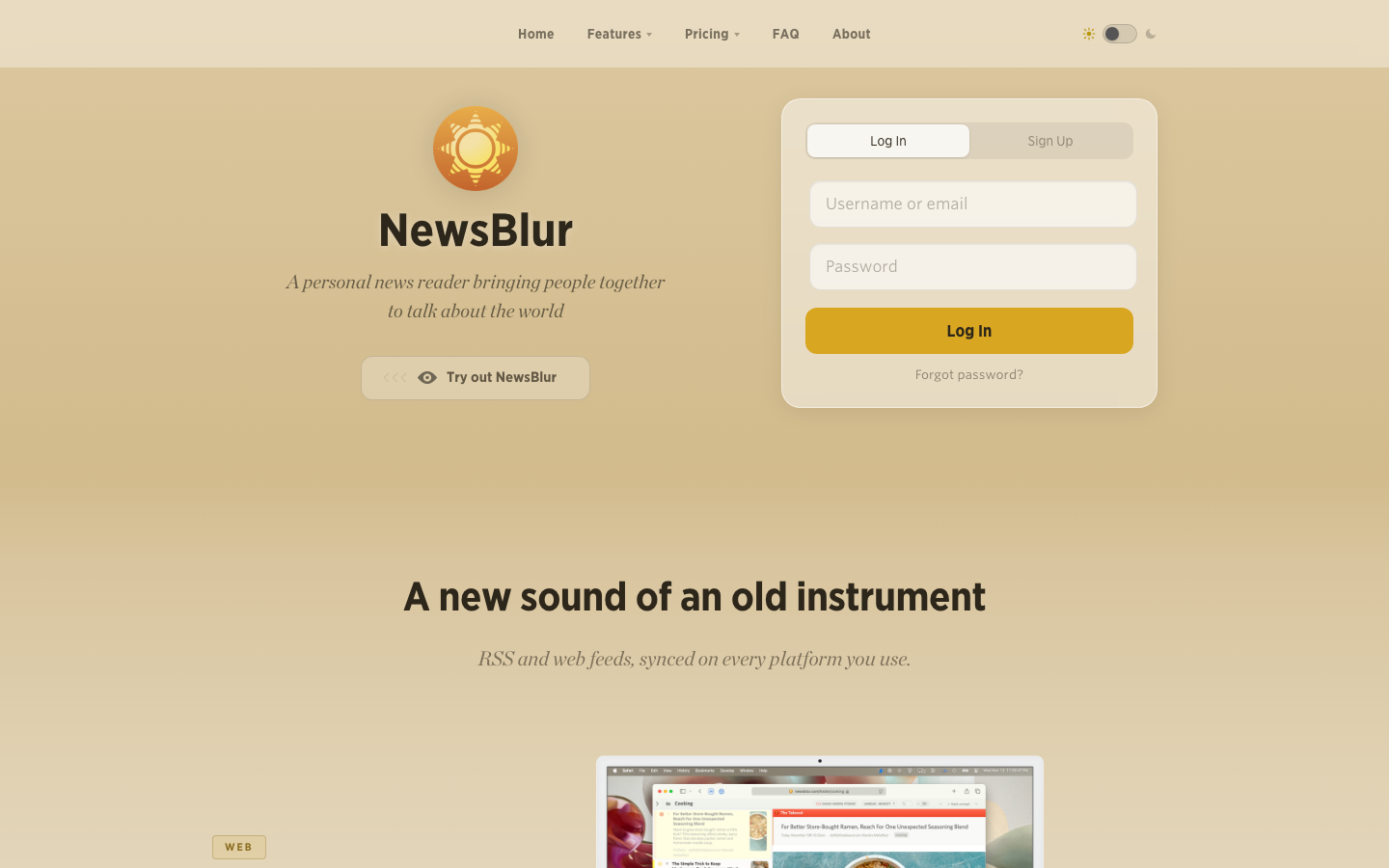
NewsBlur is a personal news reader with built-in social features: you can share stories, comment, and see what others in your network are reading. It supports self-hosting and includes a public instance for those who prefer managed hosting.
Pros:
- Social layer (comments, sharing, following) makes it good for teams or reading groups.
- MIT license and open-source codebase; OPML/JSON export for portability.
- Hybrid model: self-host or use the public instance, your choice.
Cons:
- More complex deployment than minimal readers; requires more infrastructure.
- Social features add UI overhead if you're a solo reader.
commafeed
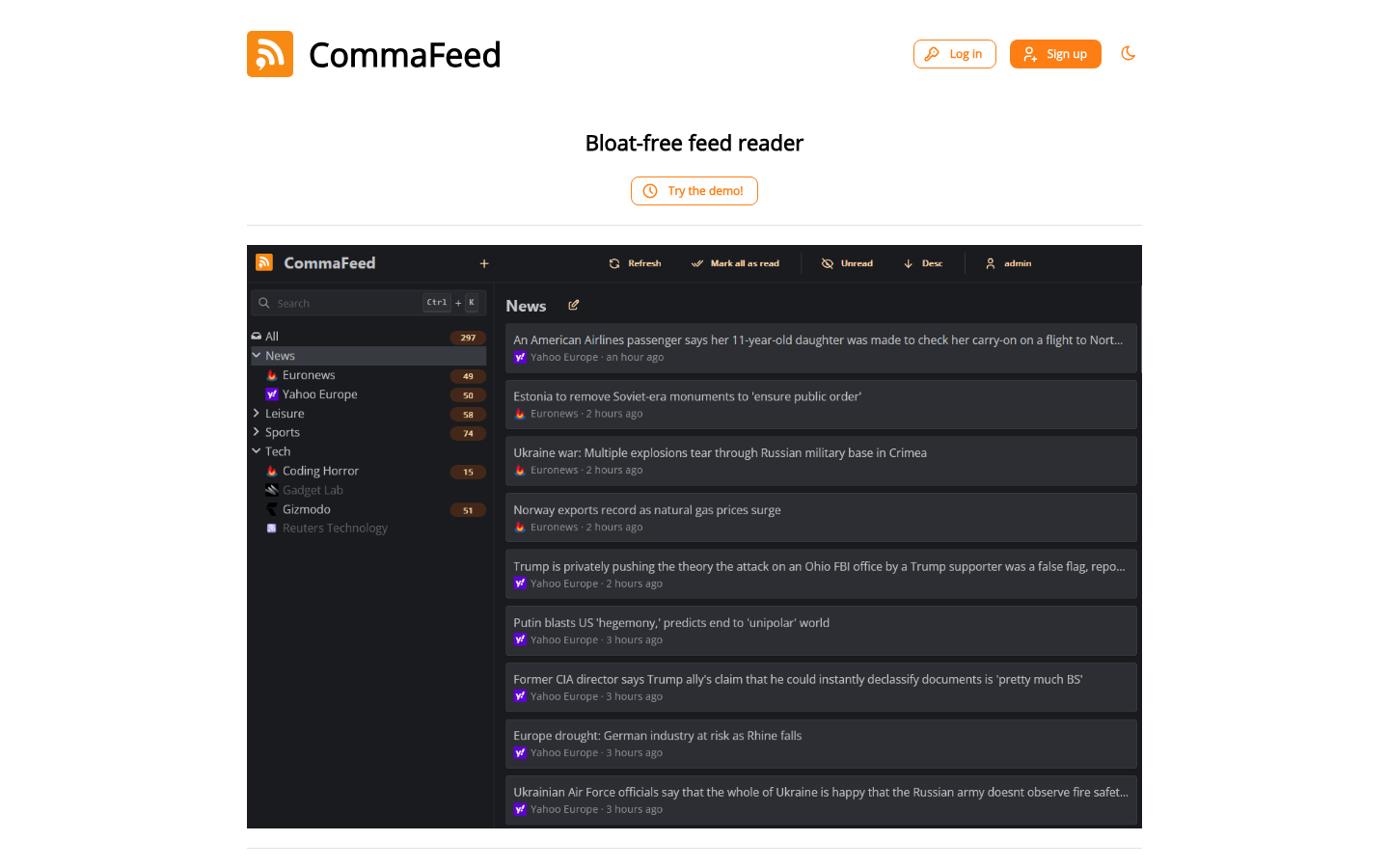
Commafeed is a Google Reader-inspired RSS reader that emphasizes simplicity and familiarity. It's built in Java and designed to feel like the old Google Reader experience.
Pros:
- Lightweight, easy to deploy, and nostalgic for former Google Reader users.
- OPML export and H2 database; straightforward to back up and migrate.
Cons:
- Smaller community and fewer active updates compared to FreshRSS.
- Limited advanced features (no rules, AI, or real-time collaboration).
selfoss
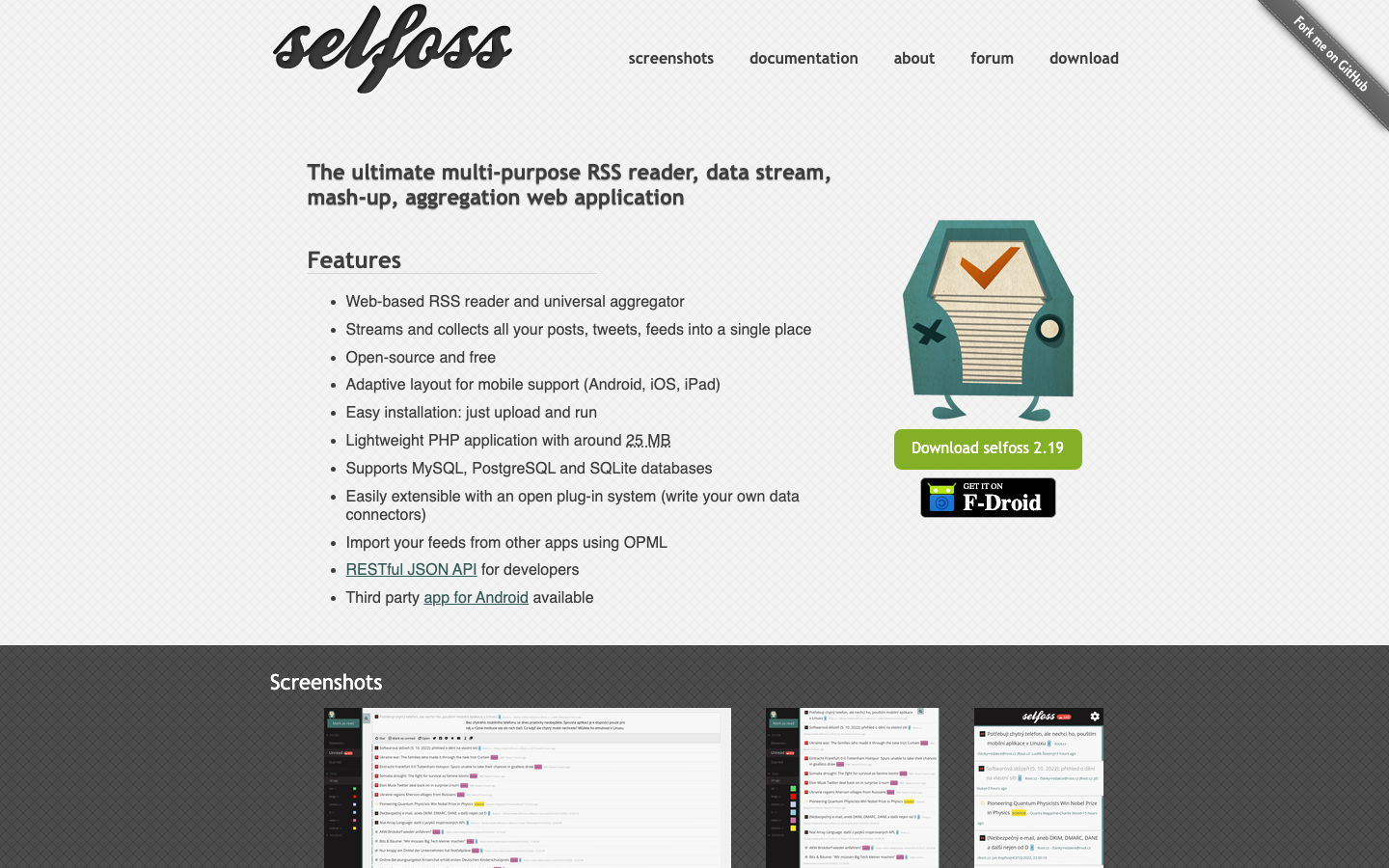
Selfoss is a multipurpose aggregation web application that combines RSS feeds, live streams, and custom data sources into a single mashup. It's designed for power users who want to blend multiple content types.
Pros:
- Flexible architecture supports feeds, streams, and custom plugins.
- GPL-3.0 license; OPML/JSON export for portability.
Cons:
- More complex setup and configuration than single-purpose readers.
- UI and documentation are less polished than FreshRSS or NewsBlur.
How to choose
Solo knowledge worker, privacy-first? Start with FreshRSS—it's the most mature self-hosted alternative and removes all per-feed caps and recurring costs.
Want a faster, lighter deployment? commafeed or v2 are leaner options if you don't need advanced filtering or collaboration.
Team or social reading? NewsBlur is the only option here with built-in commenting and sharing; it also supports self-hosting if data sovereignty is critical.
Need to expand your feed sources? Pair RSSHub with any reader to unlock feeds from platforms that don't natively support RSS, then use glance as your unified dashboard.