






TL;DR
- Privacy & data sovereignty matter most: mailcow-dockerized bundles admin UI, webmail, and full-stack mail into one container—no per-user licensing, no third-party data exposure, and you control every bit of it.
- Simplicity without sacrificing control: docker-mailserver strips away complexity by running a production-ready stack in Docker, so you get the same mail server power as iRedMail but with clearer, containerized deployment.
- Teams needing modern API-first mail infrastructure: maddy offers composable, modular architecture in Go—ideal if you want to build custom workflows or integrate mail handling into a larger platform without wrestling with legacy Postfix/Dovecot wiring.
Why teams leave iRedMail
iRedMail's free tier removes the installer friction, but self-hosted mail remains expensive in hidden ways. You own the entire stack: SPF, DKIM, DMARC, PTR records, TLS renewal, spam filter tuning, and IP reputation management all fall on your ops team. That operational weight compounds over time—one misconfigured DNS record tanks deliverability; one missed security patch opens the door to abuse. Teams that initially chose iRedMail for data sovereignty and cost savings often discover that "free software" doesn't mean "free to run"—especially when deliverability failures start bouncing customer mail into spam folders.
The privacy win is real: your email stays on your infrastructure, not Google's or Microsoft's. But that win only matters if you can actually maintain the system. iRedAdmin-Pro upsells additional admin features, and while the core remains open-source, teams often end up paying for professional support or hiring dedicated ops staff to keep the mail flowing and the filters current. If your team lacks mail-server expertise, the barrier to exit is high—migrating thousands of mailboxes to another platform is painful, and standing up a replacement takes weeks.
Quick comparison
| Name | License | Self-Hosted | Deliverability Setup | API / Automation | Best For |
|---|---|---|---|---|---|
| docker-mailserver | MIT | ✓ Full | Manual (SPF/DKIM/DMARC/PTR) | Limited; Docker compose scripting | Teams comfortable with containers; standardized deployments |
| mailcow-dockerized | GPL-3.0 | ✓ Full | Manual (SPF/DKIM/DMARC/PTR) | Web UI, some automation hooks | Organizations wanting integrated webmail + admin UI |
| maddy | GPL-3.0 | ✓ Full | Manual (SPF/DKIM/DMARC/PTR) | Modular config, custom routing | Developers building mail into larger systems |
| modoboa | ISC | ✓ Full | Manual (SPF/DKIM/DMARC/PTR) | REST API, automation-friendly | Smaller teams; simpler admin workflows |
| wildduck | EUPL-1.2 | ✓ Full | Manual (SPF/DKIM/DMARC/PTR) | REST API, modern architecture | API-first deployments; high-volume mail handling |
Top open-source alternatives to iRedMail
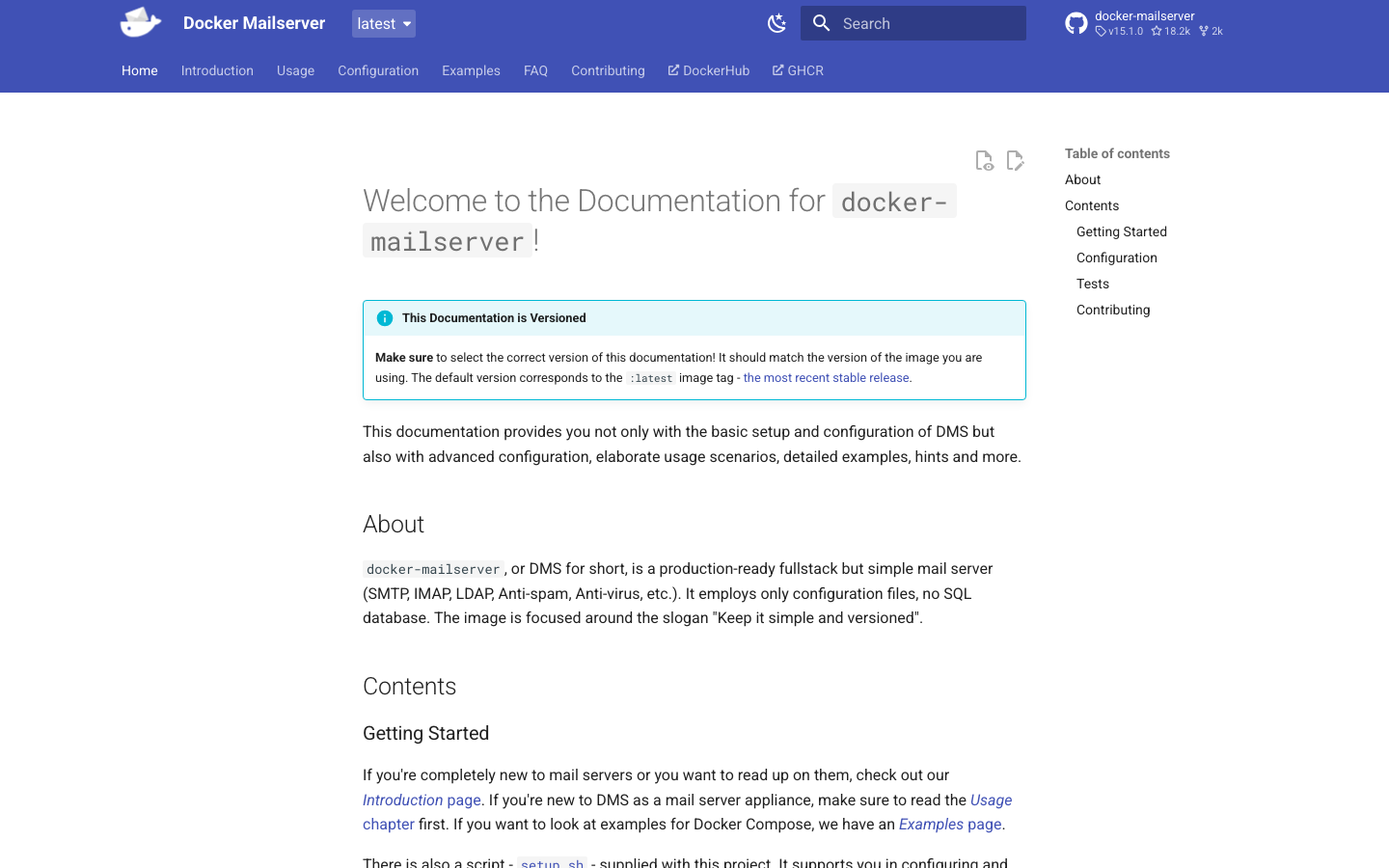
docker-mailserver
A production-ready, full-stack mail server (SMTP, IMAP, LDAP, antispam, antivirus) packaged as a single Docker container. It strips boilerplate and gives you a predictable, version-pinned environment that works the same on your laptop and in production.
Pros
- Minimal configuration surface; most settings are environment variables or simple config files.
- Excellent for teams already running Docker; integrates naturally into container orchestration (Kubernetes, Swarm, Compose).
- Active community and clear documentation for troubleshooting.
Cons
- No built-in webmail or admin UI; you manage domains and users via command-line or external tools.
- Deliverability still requires you to own SPF/DKIM/DMARC/PTR configuration and IP reputation.
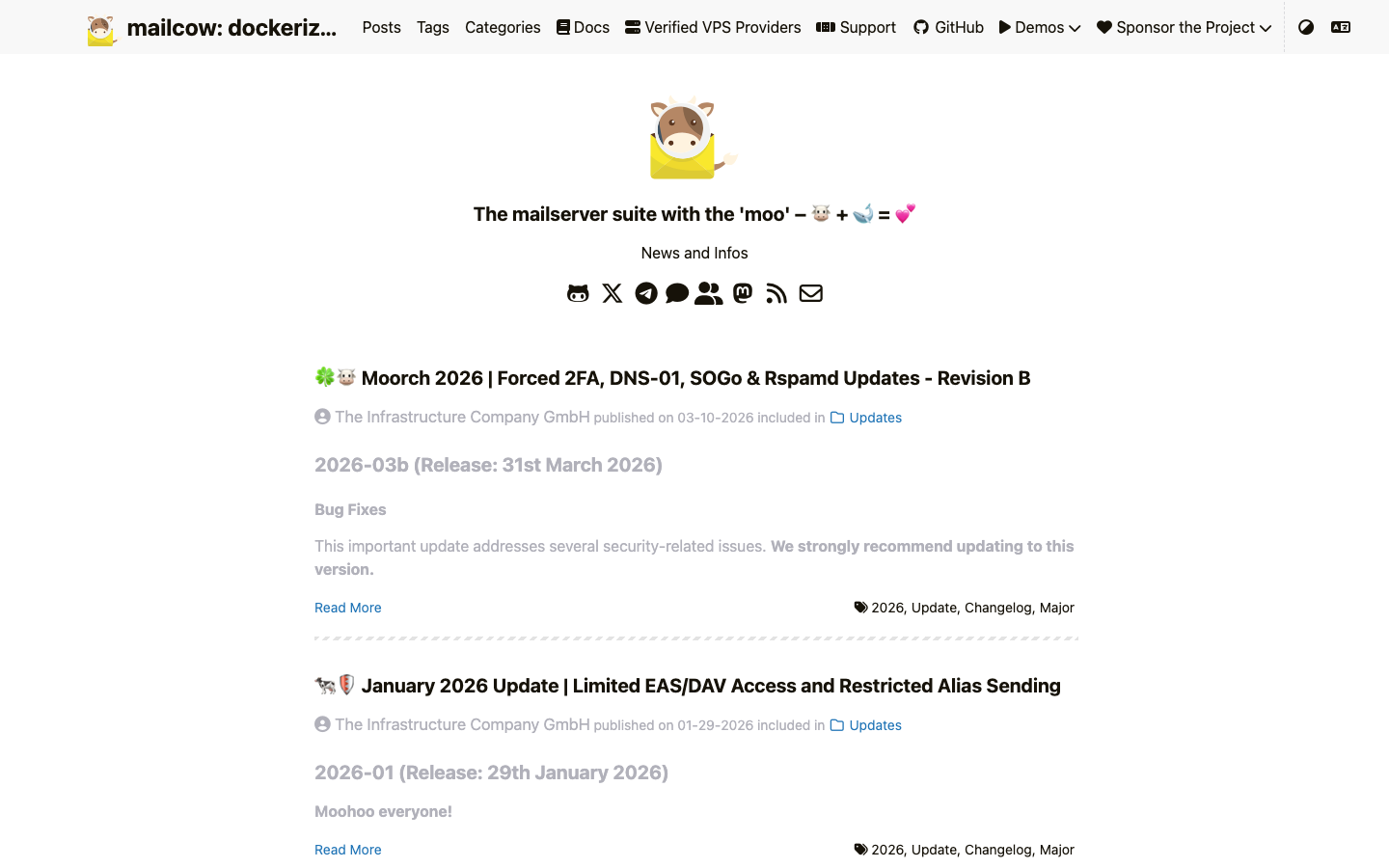
mailcow-dockerized
A complete mail-server suite (Postfix, Dovecot, Rspamd, SOGo webmail) running in Docker with a modern web-based admin dashboard and integrated webmail interface. It's designed for organizations that want Exchange-like functionality without the licensing headache.
Pros
- Full-featured admin UI and webmail bundled in; no need to wire separate components.
- Strong spam and antivirus filtering built in; easier to tune than raw Postfix.
- Active development and a growing community; regular updates and security patches.
Cons
- Docker-dependent; adds a layer of abstraction if your team isn't container-native.
- Deliverability remains your responsibility; misconfigured DNS or IP reputation still sinks mail delivery.
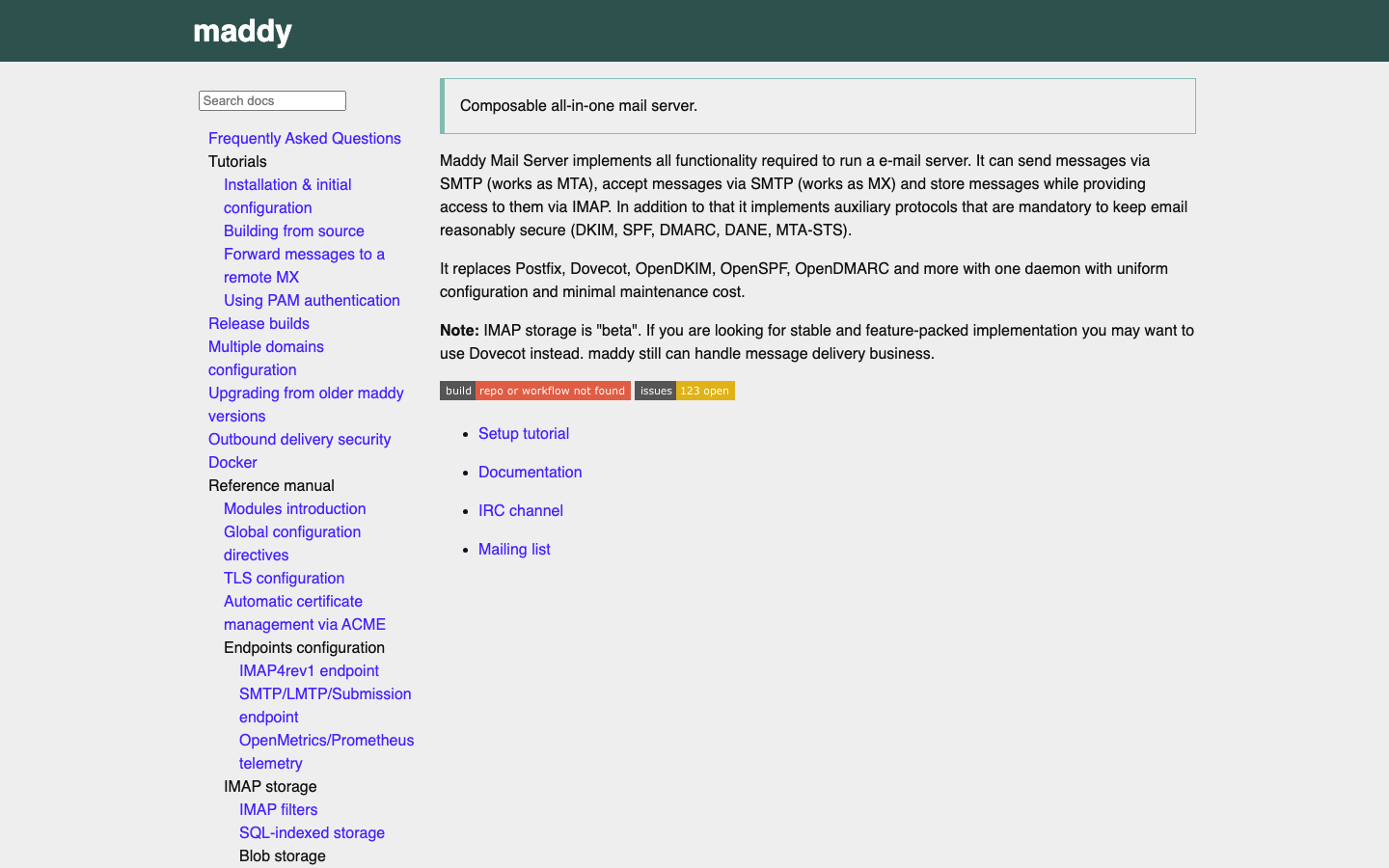
maddy
A modern, composable all-in-one mail server written in Go, designed for teams that want to build custom mail workflows without inheriting decades of Postfix/Dovecot legacy. Configuration is code-like and modular, so you can chain filters, routers, and handlers.
Pros
- Lightweight and fast; Go's single-binary model makes deployment and updates straightforward.
- Highly modular; excellent for custom routing, filtering, or integrating mail into a larger platform.
- Modern codebase; easier to extend and audit than older C-based mail servers.
Cons
- Smaller community than Postfix/Dovecot alternatives; fewer third-party integrations and less battle-tested in very large deployments.
- No built-in webmail or admin UI; you'll need to build or integrate external tools.
modoboa
A mail-hosting platform written in Python that combines Postfix and Dovecot with a clean admin interface and webmail. Designed for smaller organizations and hosting providers that want a complete, manageable mail solution.
Pros
- REST API and automation-friendly design; easier to script user provisioning and domain management.
- Clean, modern web interface; lower learning curve for non-ops users.
- Good documentation and straightforward deployment; Python makes it easy to customize.
Cons
- Smaller community and fewer deployments at scale; less proven in very high-volume environments.
- Deliverability tuning still falls on you; no magic bullet for IP reputation or filtering.
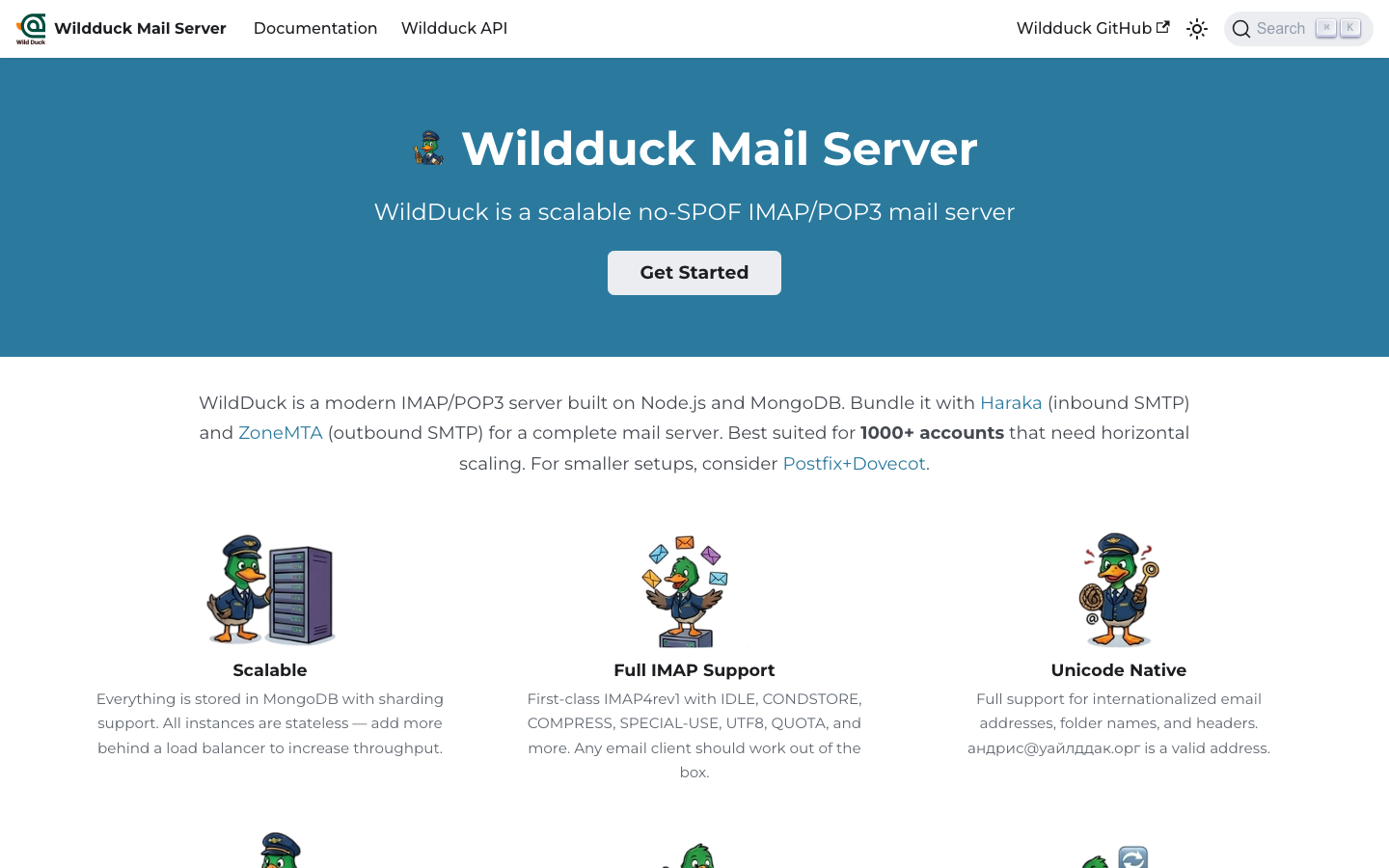
wildduck
An opinionated, API-first email server with a modern architecture, built in JavaScript/Node.js. It's designed for teams that want to build mail infrastructure programmatically and need high-volume, low-latency message handling.
Pros
- REST API-native; ideal for integrating mail into microservices or serverless platforms.
- Modern codebase; JavaScript developers can extend and customize without learning C or Erlang.
- Lightweight and fast; good for high-throughput, low-latency deployments.
Cons
- Minimal webmail or admin UI out of the box; you'll build or integrate your own.
- Smaller ecosystem; fewer hosting guides and community examples than iRedMail or mailcow.
How to choose
If your team runs Docker and wants simplicity, docker-mailserver is the closest spiritual successor to iRedMail—it bundles everything but leaves you in control. If you need a web admin UI and integrated webmail today, mailcow-dockerized is the most complete replacement. For teams building mail into a larger platform or API-driven workflow, maddy or wildduck offer modern, modular architectures. Smaller organizations or hosting providers should evaluate modoboa for its REST API and clean interface. Regardless of choice, remember: deliverability is never "set and forget"—you'll still own DNS, IP reputation, and filter tuning, just like with iRedMail. Pick the project whose operational model and community best match your team's skills.