





TL;DR
- Cost control matters most? Plane eliminates per-seat licensing and keeps your data in your hands—no Atlassian tax as your team grows.
- Privacy and data sovereignty are non-negotiable. Self-host OpenProject or Kanboard to own your project data entirely, with zero cloud vendor involvement.
- You need an all-in-one platform without the lock-in. Huly bundles project management, docs, and team communication in one open ecosystem, avoiding the Atlassian sprawl.
Why teams leave Jira
Jira's pricing model scales linearly with headcount—every new team member adds a per-seat cost that compounds over time. For growing teams, this becomes a significant line item, especially when you're paying for features you don't use. But cost alone isn't the breaking point; it's what happens when you decide to leave.
Jira's tight integration with the broader Atlassian ecosystem (Confluence, Bitbucket, Atlassian Cloud) creates structural lock-in. Your issues, workflows, and project metadata live in proprietary formats. Exporting and migrating to another system isn't a simple data dump—it's a project. That friction is intentional, and teams feel it when they've outgrown the platform or when Atlassian's direction no longer aligns with theirs.
Open-source alternatives flip the equation: you self-host, own your data outright, and have no per-seat licensing on core features. The trade-off is that you lose Atlassian's breadth and the convenience of a managed cloud service. But for teams that prioritize cost predictability, data sovereignty, and exit flexibility, that trade-off is worth it.
Quick comparison
| Name | License | Self-Hosted | API / Extensibility | Stack / Language | Best For |
|---|---|---|---|---|---|
| Plane | AGPL-3.0 | ✓ | REST API, webhooks, plugin architecture | TypeScript | Modern agile teams wanting a Jira-like experience without lock-in |
| Huly | EPL-2.0 | ✓ | Plugin system, extensible data model | TypeScript | Teams needing project management + docs + chat in one platform |
| OpenProject | GPL-3.0 | ✓ | REST API, webhooks, custom fields | Ruby | Enterprise teams with complex workflows and reporting needs |
| Kanboard | MIT | ✓ | REST API, plugin system | PHP | Small teams and solo practitioners who want simplicity and speed |
| Taiga | MPL-2.0 | ✓ | REST API, webhooks | Python | Agile and scrum teams prioritizing cross-functional collaboration |
Top open-source alternatives to Jira
Plane
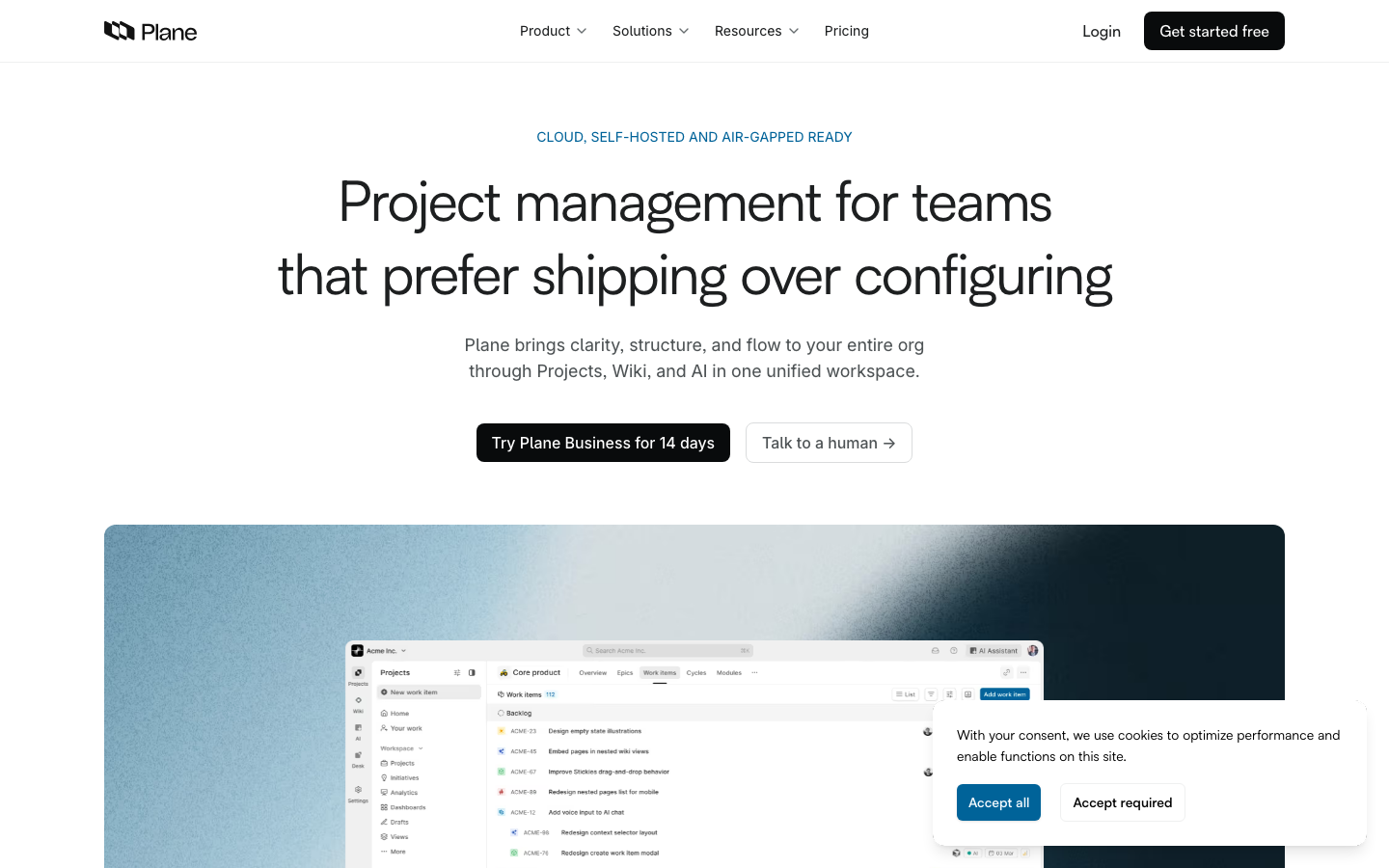
Plane is a modern, open-source project management platform designed as a direct alternative to Jira, Linear, and Monday.com. It handles tasks, sprints, docs, and issue triage in a clean interface built on TypeScript. With 48k+ GitHub stars, it's the most actively developed option in this space and the closest spiritual successor to Jira for teams that want familiar workflows without the vendor lock-in.
Pros
- Intuitive agile board and sprint workflows; feels immediately familiar to Jira users
- No per-seat licensing; self-host on your infrastructure and pay zero for additional team members
- Rich API and webhook support for custom integrations and automation
Cons
- Smaller ecosystem of third-party integrations compared to Jira
- Requires self-hosting infrastructure and maintenance overhead
Huly
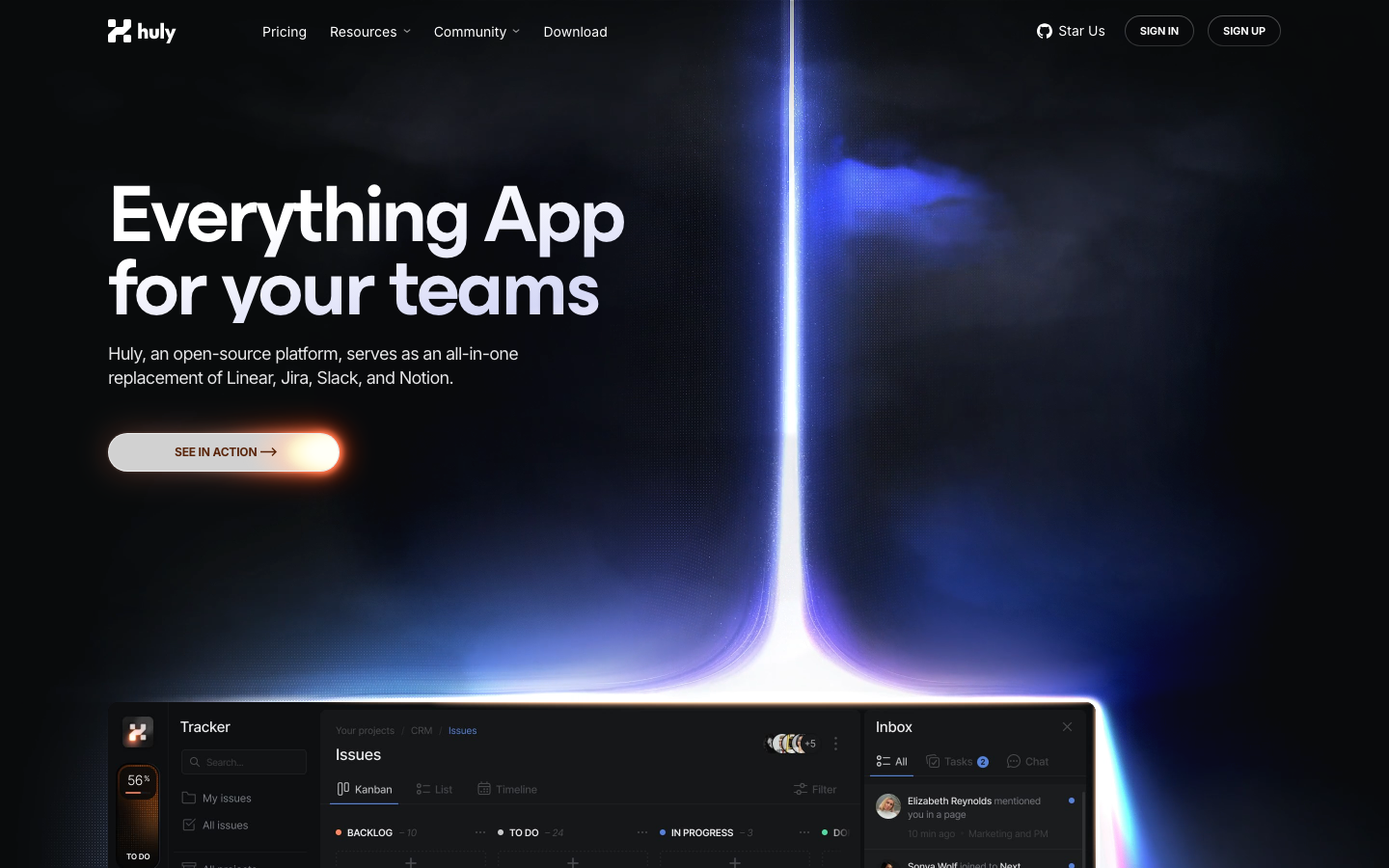
Huly is an all-in-one platform that bundles project management, document collaboration, and team chat into a single open-source application. It positions itself as an alternative to the entire Atlassian stack (Jira, Confluence, Slack) rolled into one, reducing the complexity of managing multiple tools and avoiding the lock-in that comes from deep ecosystem coupling.
Pros
- Unified platform eliminates context-switching between project management, docs, and communication
- Extensible plugin architecture allows deep customization without Atlassian's constraints
- Built on modern TypeScript stack with active development (25k+ stars)
Cons
- Less mature than Jira; smaller community and fewer battle-tested workflows
- Steeper learning curve due to breadth of features
OpenProject
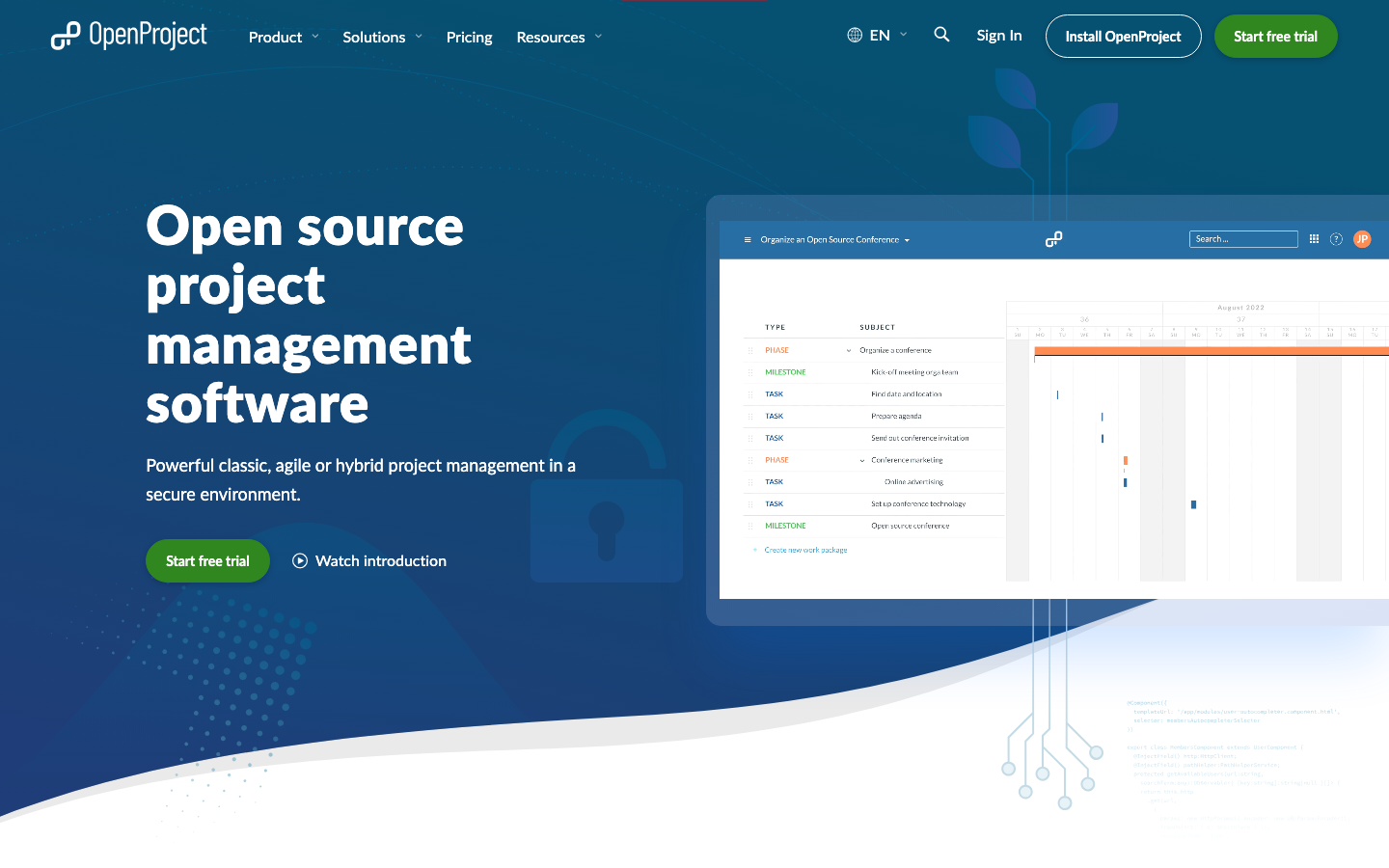
OpenProject is a mature, enterprise-grade open-source project management suite with strong support for complex workflows, Gantt charts, and reporting. It's built in Ruby and targets teams that need serious planning and tracking capabilities beyond basic kanban boards.
Pros
- Comprehensive feature set for waterfall, agile, and hybrid workflows
- Powerful reporting, custom fields, and role-based permissions suitable for regulated industries
- REST API and webhook support for deep integration
Cons
- Heavier interface and steeper onboarding curve for small teams
- Self-hosting requires more infrastructure and maintenance than lighter alternatives
Kanboard
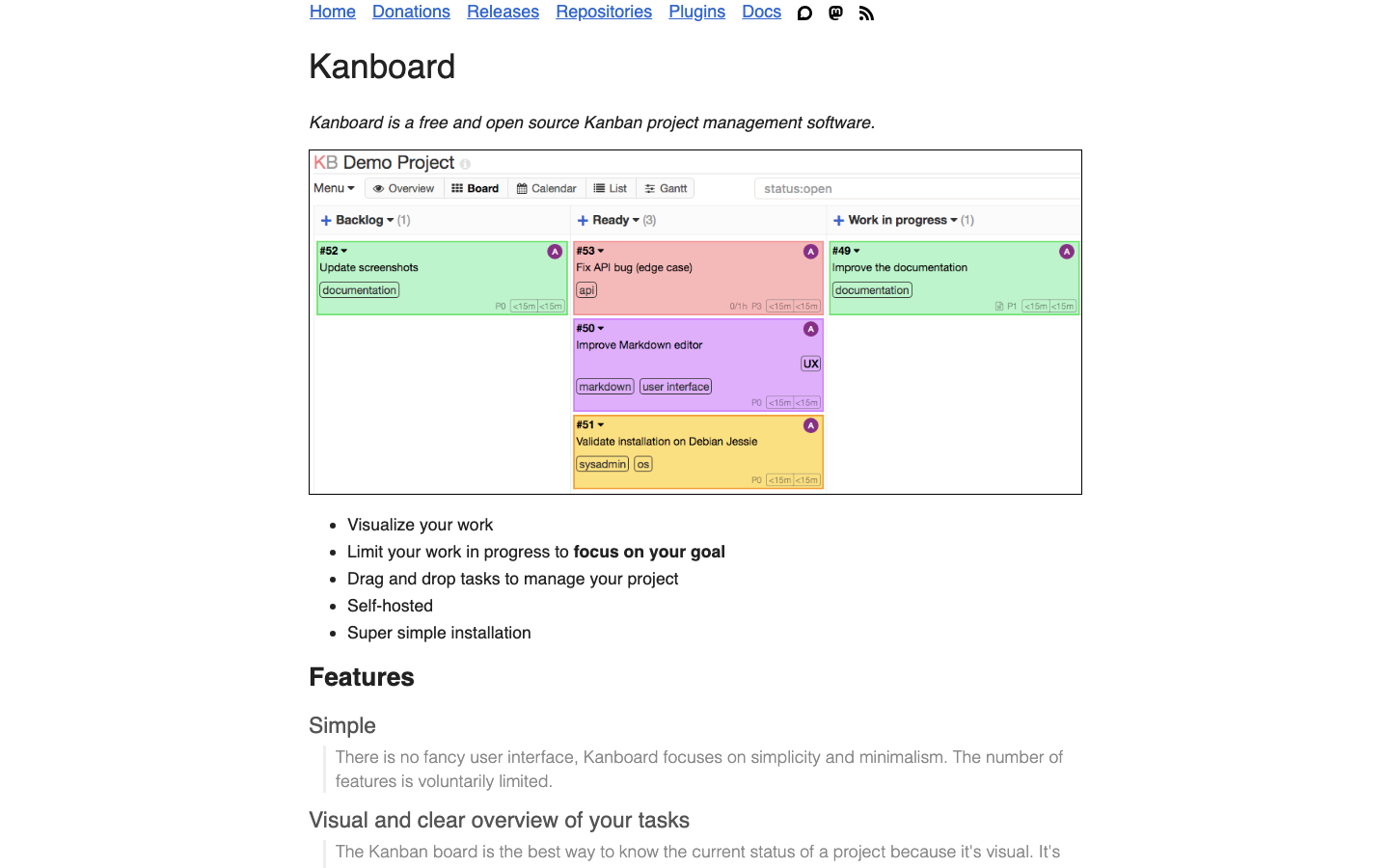
Kanboard is a lightweight, MIT-licensed kanban project management tool built in PHP. It strips away complexity in favor of simplicity and speed, making it ideal for small teams, freelancers, and projects that don't need heavy agile ceremony.
Pros
- Minimal learning curve; pure kanban focus without bloat
- Tiny footprint; runs on modest hosting with minimal resource overhead
- REST API and plugin system for extensibility despite its simplicity
Cons
- Limited beyond kanban; no sprint planning, roadmaps, or advanced reporting
- Smaller community and slower development cadence
Taiga
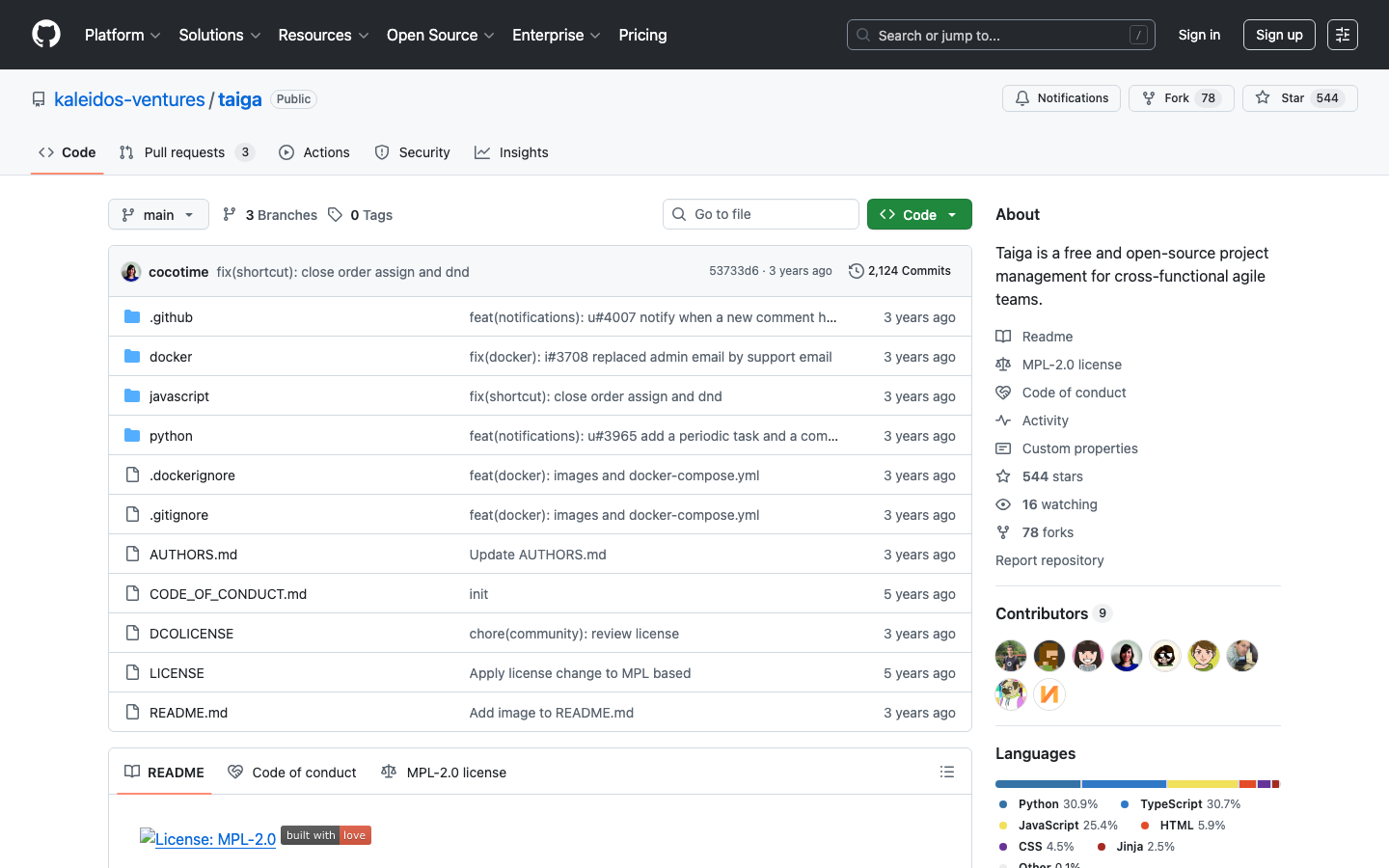
Taiga is a free, open-source platform designed specifically for agile and scrum teams. It emphasizes cross-functional collaboration and includes features for user stories, sprints, and backlog management, making it a solid choice for teams practicing Agile methodologies.
Pros
- Purpose-built for scrum and agile workflows with strong user story and backlog support
- REST API and webhooks for custom automation
- Active focus on team collaboration and transparency
Cons
- Smaller community compared to Plane and OpenProject (560 stars)
- Fewer integrations and extensions available in the ecosystem
How to choose
Solo or very small team (<5 people)? Start with Kanboard—it's fast, simple, and has almost no operational overhead. Growing agile team (5–50 people) that wants a Jira-like experience? Plane is your best bet; it's modern, well-maintained, and designed for teams transitioning away from Jira. Enterprise or complex workflows? OpenProject has the feature depth and reporting you need. Want to kill the Atlassian stack entirely? Huly bundles project management, docs, and chat, but accept that you're betting on a younger platform. Pure agile/scrum focus? Taiga is solid but less actively developed; only choose it if its specific agile features align exactly with your process.