





TL;DR
- Privacy & data sovereignty matter most? docker-mailserver strips away the web UI overhead and gives you a minimal, auditable container that keeps everything on your hardware with no cloud sync or tracking.
- Cost control over time is the priority. All five alternatives eliminate per-seat licensing entirely—pick mailcow-dockerized if you want the most polished admin panel without paying for seats, or maddy if you prefer a leaner, single-binary footprint.
- Operational control and customization drive the decision? modoboa and wildduck offer programmatic APIs and deeper automation hooks, trading some simplicity for extensibility.
Why teams leave Mailu
Mailu is genuinely free—no per-seat fees, no SaaS lock-in—but "free software" isn't the same as "free operations." Self-hosting email means you own the infrastructure cost, but you also own the deliverability problem. SPF, DKIM, DMARC, reverse DNS, TLS configuration, and IP-reputation management are non-negotiable, and a single misconfiguration or an unlucky IP range can silently sink your mail into spam. That operational burden doesn't disappear when you switch tools; it's the tax of self-hosting.
What does change between projects is how much operational friction you accept. Mailu bundles everything into Docker containers, which is approachable, but it doesn't simplify the networking, DNS, and reputation work. Some teams find that a lighter footprint (a single binary, fewer moving parts) is easier to debug and monitor. Others want a richer admin UI and API to automate user and domain management at scale. And for privacy-first organizations, the question isn't just cost—it's whether the mail server itself is doing any cloud sync, telemetry, or third-party API calls that could leak metadata.
Exit difficulty is real: once your mail is running on a self-hosted server, migrating away means exporting IMAP folders, updating MX records, and coordinating with users. Choosing a project with strong import/export support and a stable codebase reduces that risk.
Quick comparison
| Name | License | Self-Hosted | Deliverability Setup | API / Automation | Best For |
|---|---|---|---|---|---|
| docker-mailserver | MIT | ✓ Docker | Manual (SPF, DKIM, DMARC) | Minimal; shell/env-based | Teams prioritizing simplicity & auditability |
| mailcow-dockerized | GPL-3.0 | ✓ Docker | Manual + UI helpers | REST API, webhooks | Mid-size teams wanting a polished UI |
| maddy | GPL-3.0 | ✓ Binary or container | Manual + inline config | Limited; config-driven | Operators who prefer a single binary |
| modoboa | ISC | ✓ Docker/VM | Manual + UI helpers | REST API, Django ORM | Teams needing Python extensibility |
| wildduck | EUPL-1.2 | ✓ Node.js/container | Manual (requires expertise) | Full REST API, webhooks | High-volume, API-first deployments |
Top open-source alternatives to Mailu
docker-mailserver
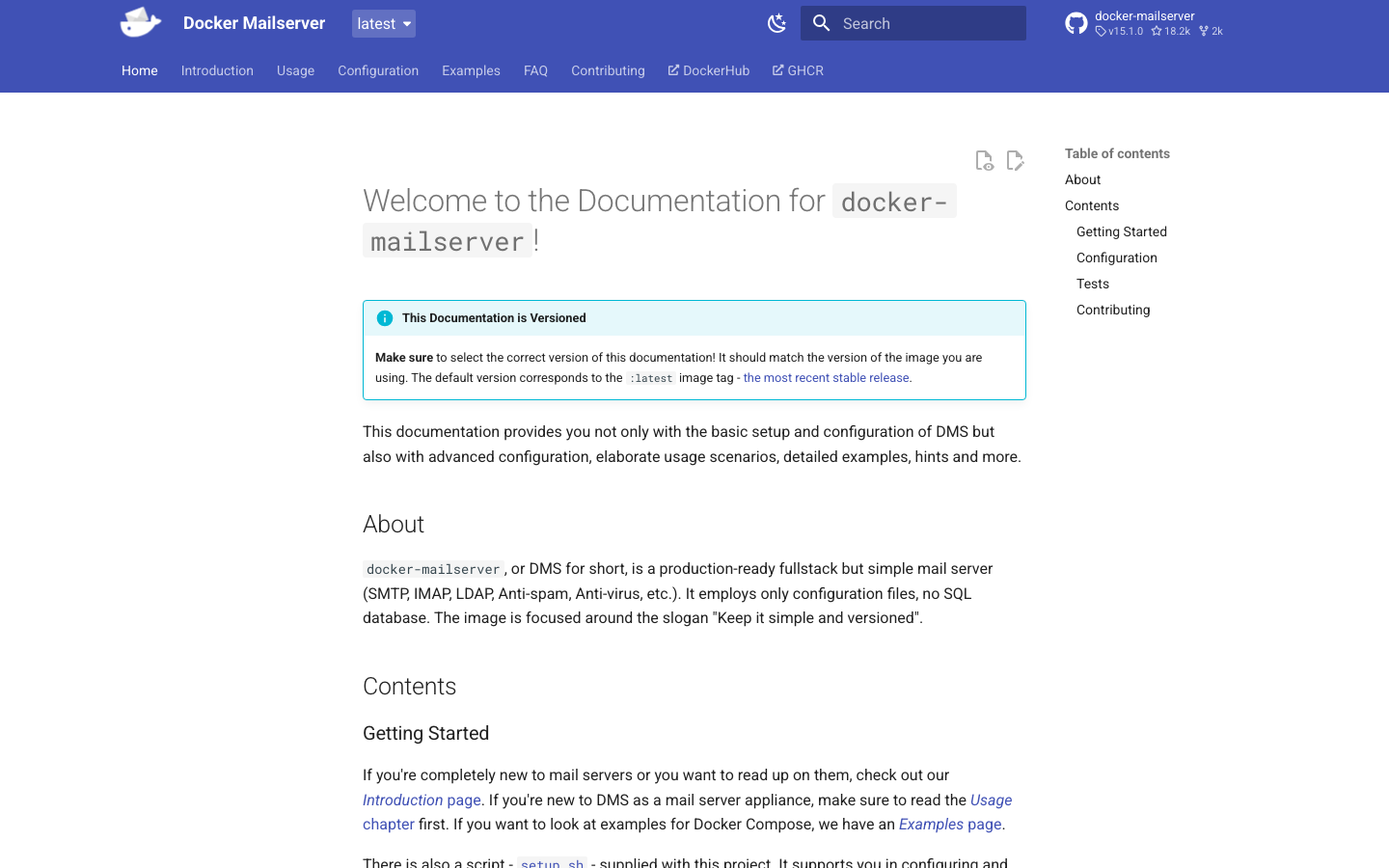
A production-ready, full-stack mail server (SMTP, IMAP, LDAP, antispam, antivirus) bundled into a single Docker container. It's the most minimal and auditable option in this group—fewer moving parts mean fewer places for surprises. Configuration is environment-variable–driven, making it easy to version-control and reproduce.
Pros
- Smallest attack surface and easiest to audit; MIT license is permissive.
- Single container simplifies deployment and monitoring.
- Strong community and extensive documentation for debugging deliverability issues.
Cons
- No web admin UI; all management is CLI or config files, which slows onboarding for non-technical teams.
- Antispam and antivirus setup requires manual tuning; no built-in wizards.
mailcow-dockerized
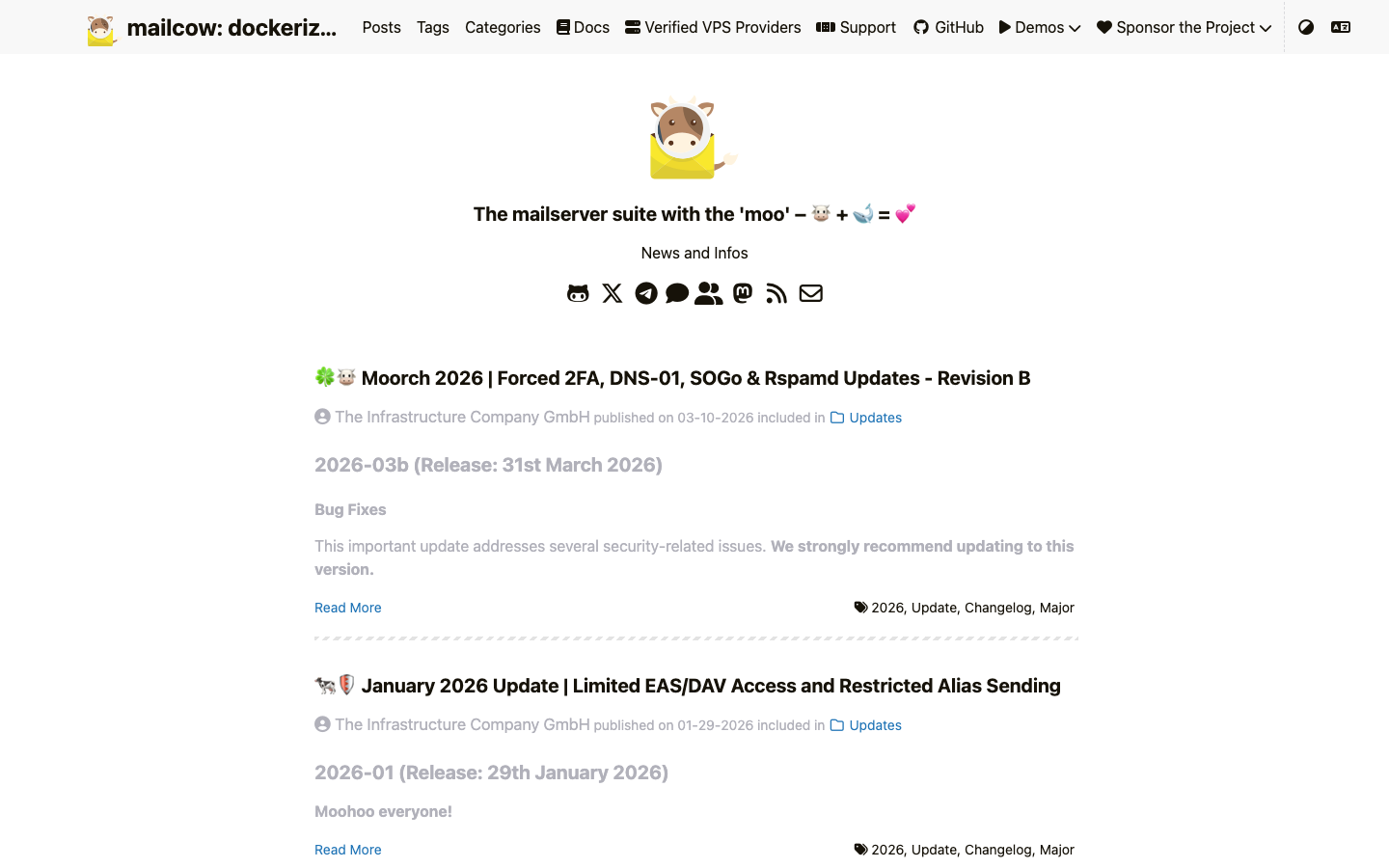
A full mail server suite with a polished web admin panel, SOGo webmail, and integrated tools for managing domains, mailboxes, and security policies. It's Mailu's closest peer in terms of all-in-one philosophy, but with a richer UI and more opinionated defaults.
Pros
- Professional web interface for domain and user management, reducing CLI friction.
- REST API and webhook support for automation at scale.
- Active development and a large community; easier onboarding for teams moving from SaaS.
Cons
- GPL-3.0 license may conflict with some organizational policies.
- More moving parts (multiple containers) increase operational complexity compared to docker-mailserver.
maddy
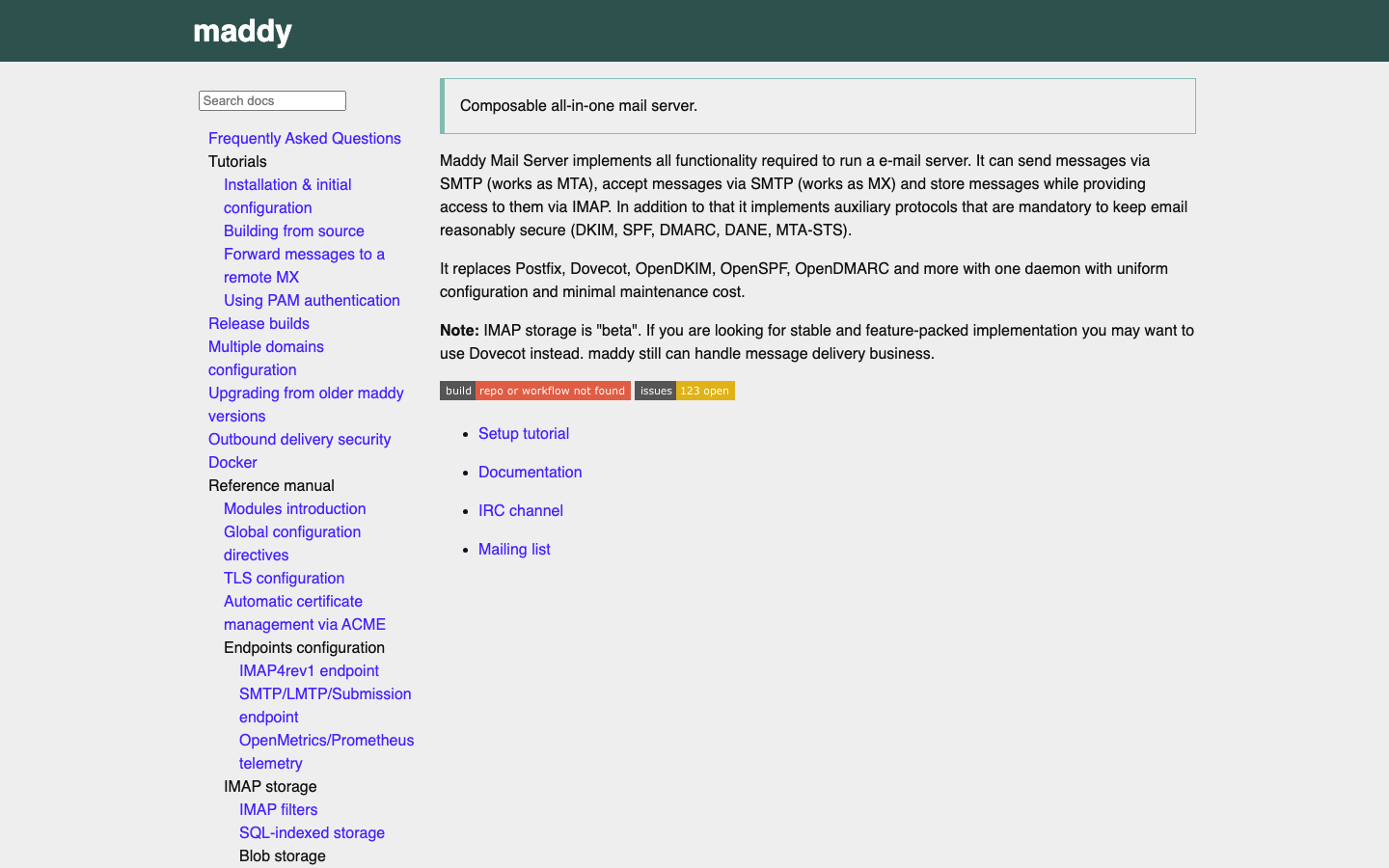
A composable, all-in-one mail server written in Go, deployable as a single binary or container. It's designed for operators who want a modern, low-overhead alternative to wiring Postfix and Dovecot by hand, with a focus on clean configuration and minimal dependencies.
Pros
- Single binary reduces deployment friction and makes it portable across environments.
- Modern codebase and configuration language; easier to reason about than legacy mail stacks.
- Lightweight resource footprint, ideal for small VPS or edge deployments.
Cons
- Smaller ecosystem and community compared to docker-mailserver or mailcow; fewer third-party integrations.
- Web UI is minimal; most work is config-file–driven, favoring operators over non-technical admins.
modoboa
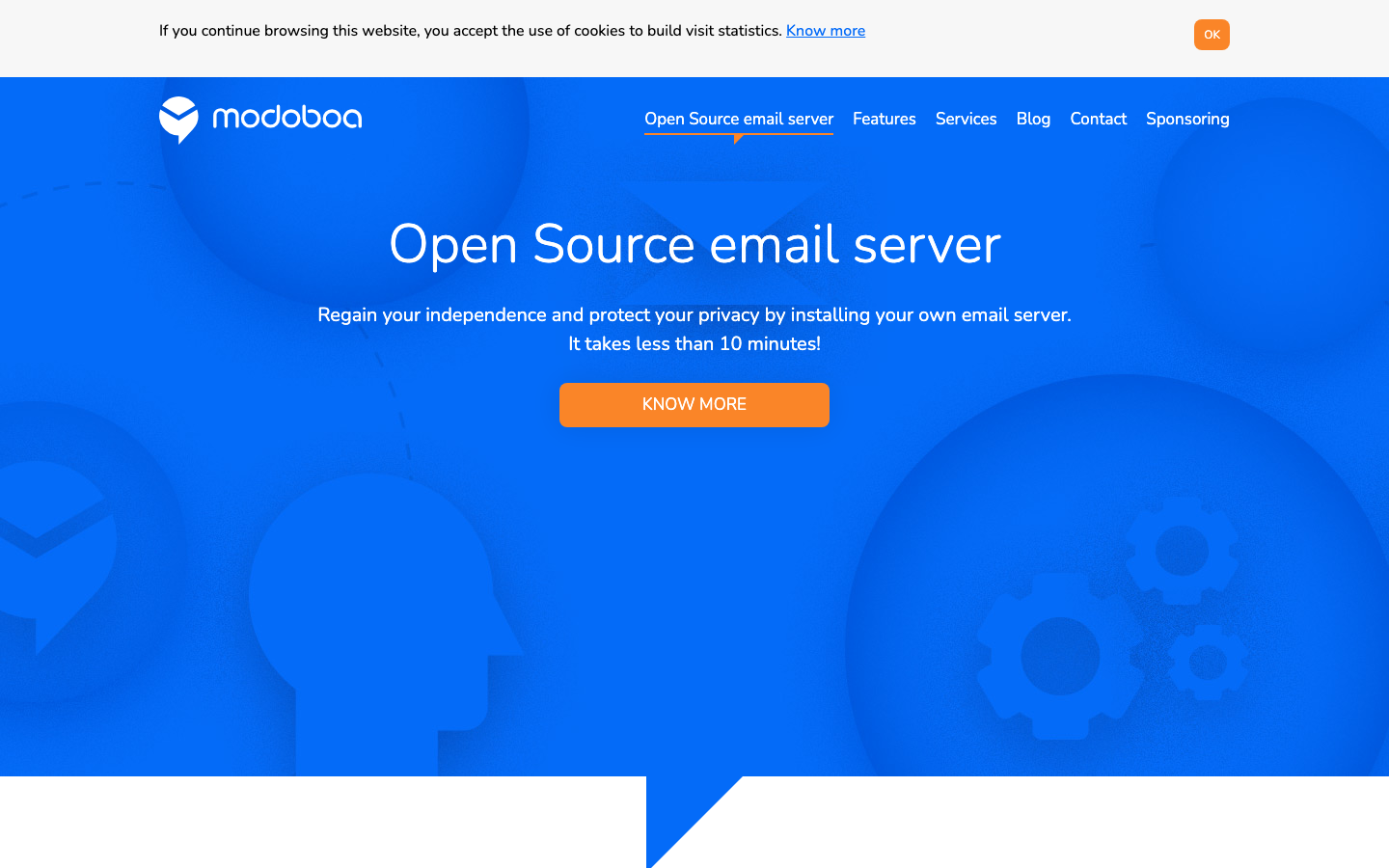
A mail hosting platform written in Python, offering a web UI, REST API, and plugin architecture for extending functionality. It's designed for teams that want to build custom mail workflows or integrate mail management into a larger Python application stack.
Pros
- Django-based; integrates naturally with Python ecosystems and allows custom extensions via plugins.
- REST API is well-documented and suitable for automation and multi-tenancy.
- ISC license is permissive and widely accepted.
Cons
- Smaller community and fewer production deployments compared to mailcow or docker-mailserver; less battle-tested at scale.
- Python stack adds operational overhead (dependency management, version pinning) compared to single-binary alternatives.
wildduck
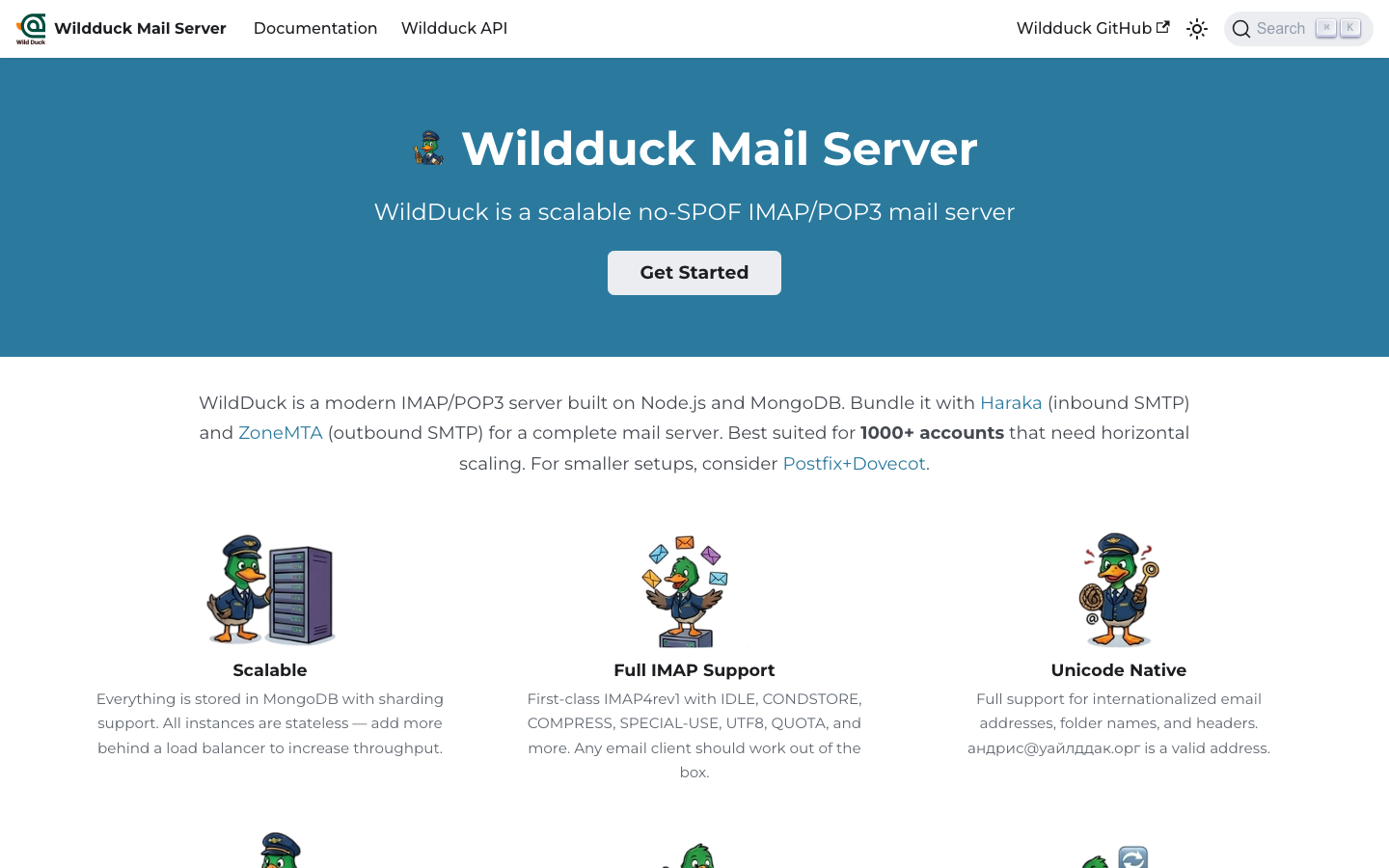
An opinionated, API-first email server built on Node.js, designed for high-volume, programmatic deployments. It prioritizes the REST API as the primary interface, making it ideal for platforms that need to manage thousands of mailboxes or integrate mail as a microservice.
Pros
- Full-featured REST API and webhook support; designed for automation from the ground up.
- Suitable for high-volume, multi-tenant deployments with fine-grained access control.
- EUPL-1.2 license balances openness with copyleft obligations.
Cons
- Steep learning curve; no web UI, so all interaction is API-driven or CLI-based.
- Requires strong DevOps expertise to deploy and troubleshoot; less forgiving for small teams.
How to choose
If you're a small team or solo operator prioritizing simplicity and auditability, docker-mailserver is the safest bet—fewer moving parts, easier to debug. If you need a polished web UI and don't mind a larger footprint, mailcow-dockerized offers the most feature parity with commercial solutions. For operators who prefer a single binary and modern Go code, maddy is worth evaluating. If you're building a mail platform or need deep Python integration, modoboa unlocks extensibility. Reserve wildduck for high-volume, API-first use cases where you have dedicated DevOps resources. In all cases, deliverability (SPF, DKIM, DMARC, IP reputation) remains your biggest operational challenge—the choice of mail server software is secondary to getting those fundamentals right.