





TL;DR
- Privacy and data ownership matter most? Discourse puts your community data in your hands, with no platform taking a cut of member revenue or locking content behind proprietary walls.
- Cost control is the priority. Lemmy runs on decentralized infrastructure, letting you avoid per-transaction fees and monthly SaaS bills that scale with your community's success.
- You need an all-in-one social network fast. HumHub bundles discussion, profiles, and activity streams into one self-hosted package with a module ecosystem to extend without rebuilding.
Why teams leave Mighty Networks
Mighty Networks charges on a monthly subscription basis and, critically, takes a percentage cut of transaction revenue on certain tiers—meaning as your community monetizes through memberships or courses, the platform's take grows with you. Your members, payment relationships, and all community content live inside Mighty Networks' proprietary system with no straightforward export or migration path. This creates vendor lock-in: switching platforms later means rebuilding elsewhere or losing your audience data entirely.
Teams building communities want to own their audience relationship and keep 100% of subscription revenue. They also want the option to self-host, avoiding ongoing SaaS fees and ensuring their community data isn't subject to platform policy changes or discontinuation. Open-source alternatives trade the all-in-one polish of a hosted platform for full data ownership, no revenue share, and the freedom to run the software on your own infrastructure—or migrate it anytime.
Quick comparison
| Name | License | Self-Hosted | API / Extensibility | Stack / Language | Best For |
|---|---|---|---|---|---|
| Discourse | GPL-2.0 | Yes | REST API, plugins, theme engine | Ruby | Discussion forums with strong moderation and community governance |
| Lemmy | AGPL-3.0 | Yes | Federation via ActivityPub, REST API | Rust | Decentralized communities; federated networks across instances |
| HumHub | License not declared | Yes | Module system, REST API | PHP | Enterprise social networks with profiles, activity streams, and groups |
| Elgg | License not declared | Yes | Plugin architecture, REST API | PHP | Lightweight social networking with user profiles and activity feeds |
| Open Source Social Network | License not declared | Yes | Plugin system | PHP | Community-focused social networking with friend connections and messaging |
Top open-source alternatives to Mighty Networks
Discourse
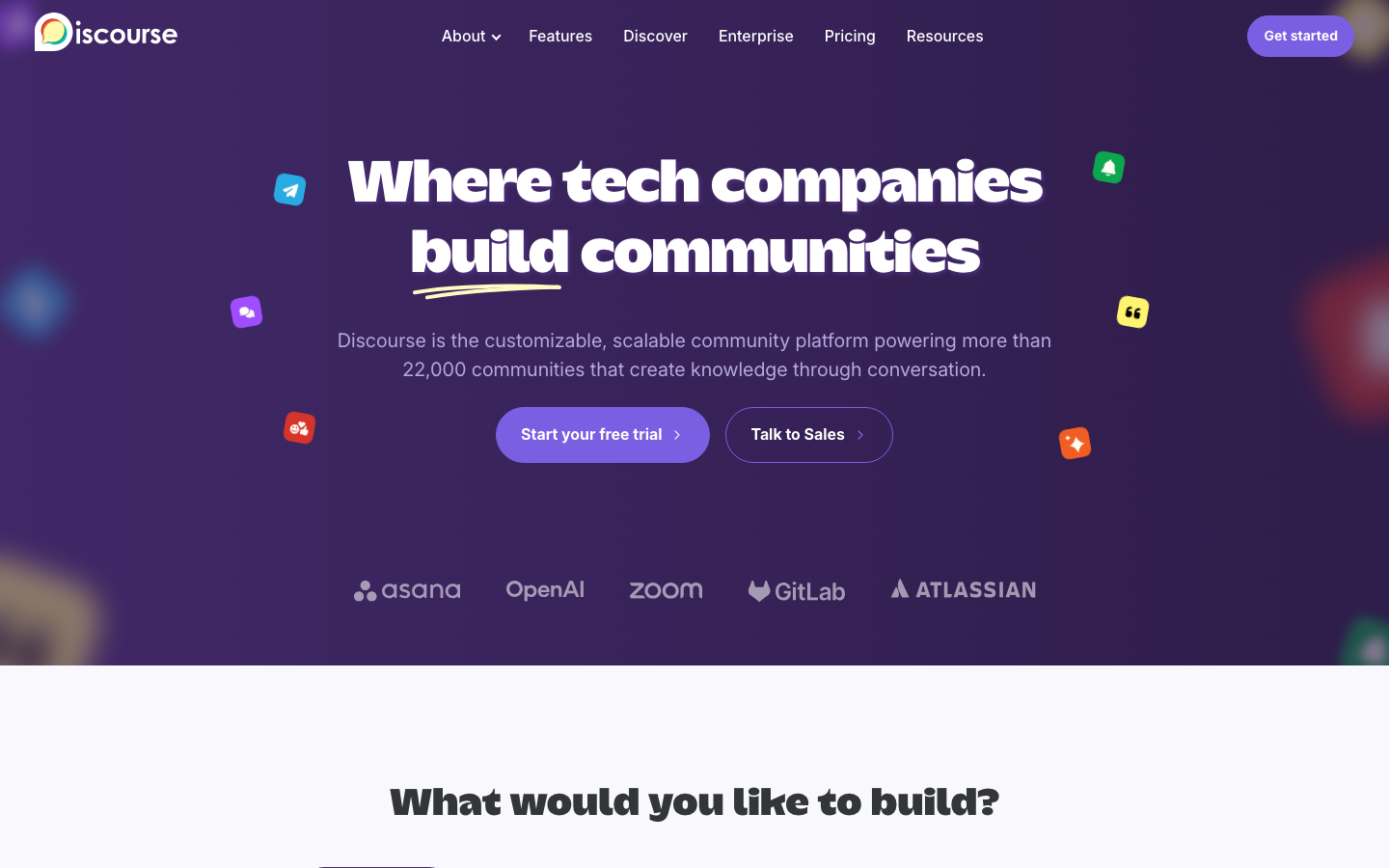
Discourse is a modern discussion platform built for community conversations. It emphasizes trust levels, moderation tools, and structured discussion threads—making it ideal for communities that want to foster quality debate and knowledge-building rather than just broadcast content.
Pros
- Strong moderation and governance features; communities can self-regulate with trust levels and user roles.
- Excellent API and plugin ecosystem; extend with custom features without forking the codebase.
- Active development and large user base (46,880 GitHub stars); extensive documentation and third-party integrations.
Cons
- Focused on discussion threads rather than a full social network (no user profiles, activity streams, or friend connections by default).
- Requires more infrastructure and DevOps knowledge to self-host at scale compared to lighter alternatives.
Lemmy
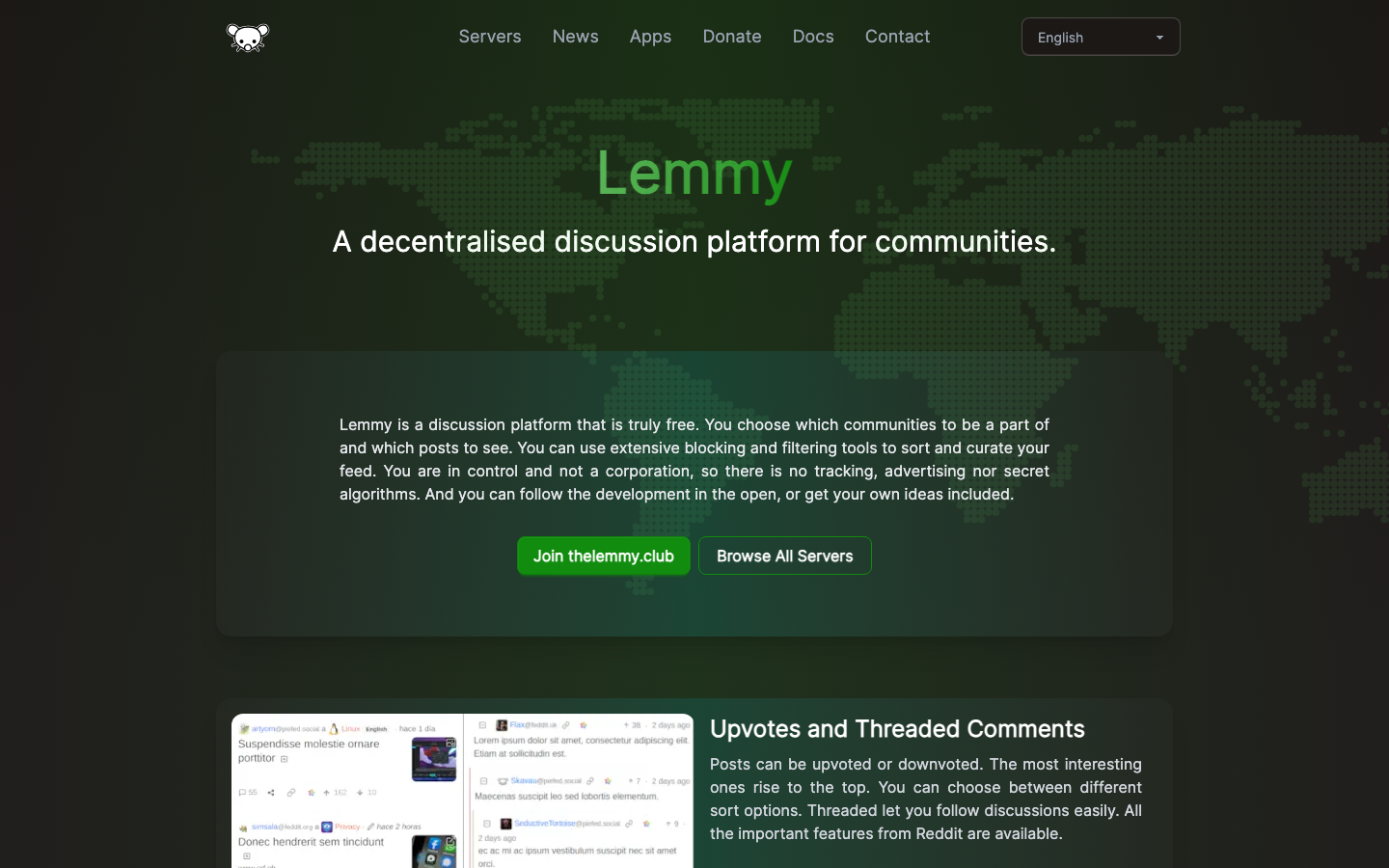
Lemmy is a decentralized discussion platform inspired by Reddit, built on ActivityPub federation. Instead of a single instance, communities can run their own Lemmy server and federate with others, creating a distributed network without a central authority.
Pros
- Decentralized by design; no single point of failure or platform policy risk, and users can move between federated instances.
- No revenue share or transaction fees; you keep all subscription and membership revenue.
- Built in Rust for performance and safety; lightweight compared to Ruby or PHP alternatives.
Cons
- Federated architecture adds operational complexity; you need to understand instance federation, uptime, and moderation across a network.
- Smaller ecosystem and community compared to Discourse; fewer plugins and integrations available.
HumHub
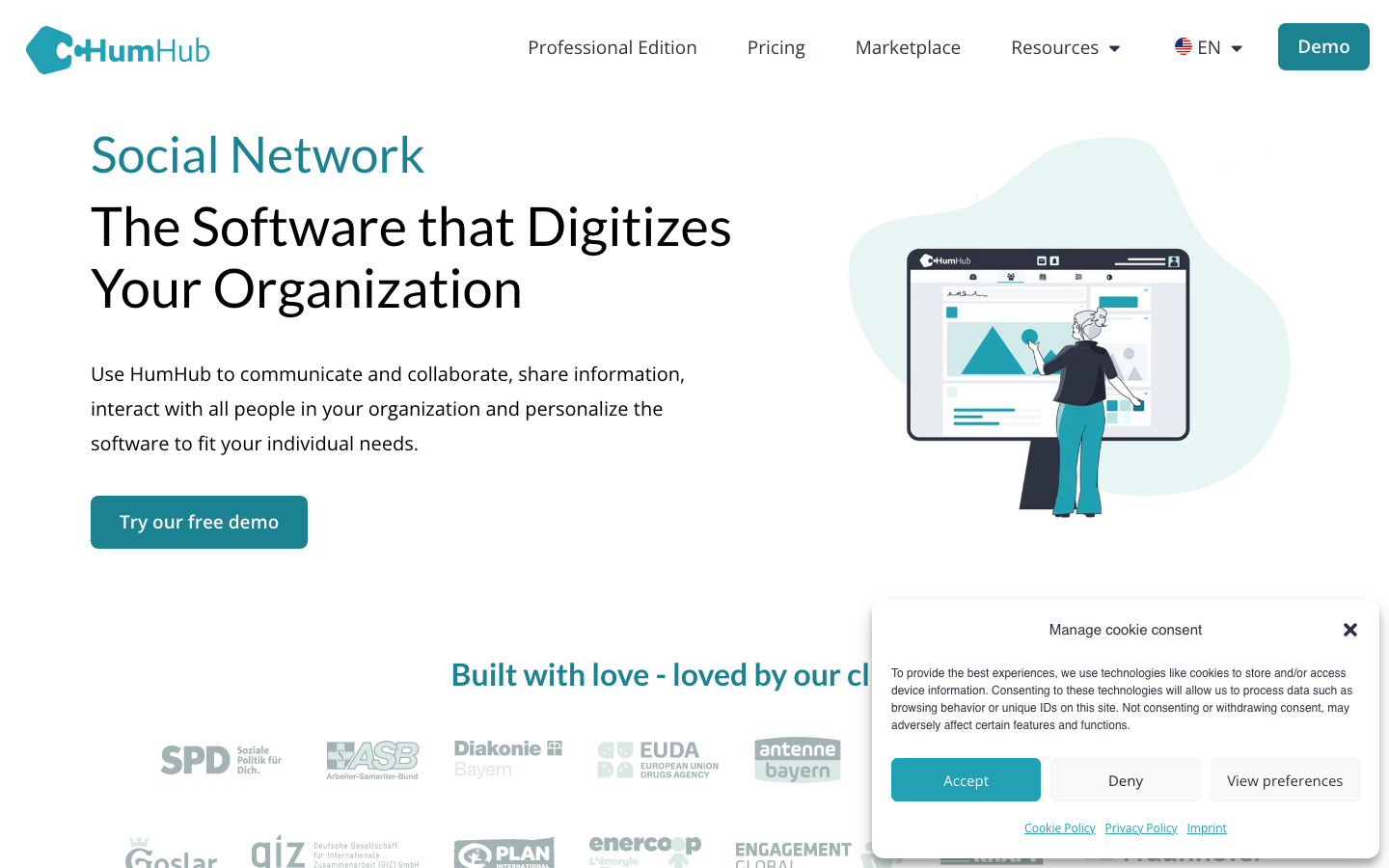
HumHub is an open-source enterprise social network that bundles user profiles, activity streams, messaging, and groups into one self-hosted package. It's designed as a cohesive social experience rather than a pure discussion forum.
Pros
- All-in-one social network experience with profiles, activity feeds, and direct messaging out of the box.
- Module system allows you to extend functionality (events, tasks, files) without core code changes.
- Intuitive interface; easier onboarding for non-technical community managers compared to Discourse or Lemmy.
Cons
- Smaller community and fewer third-party integrations than Discourse.
- Built in PHP, which may require more server resources and DevOps overhead than Rust-based alternatives.
Elgg
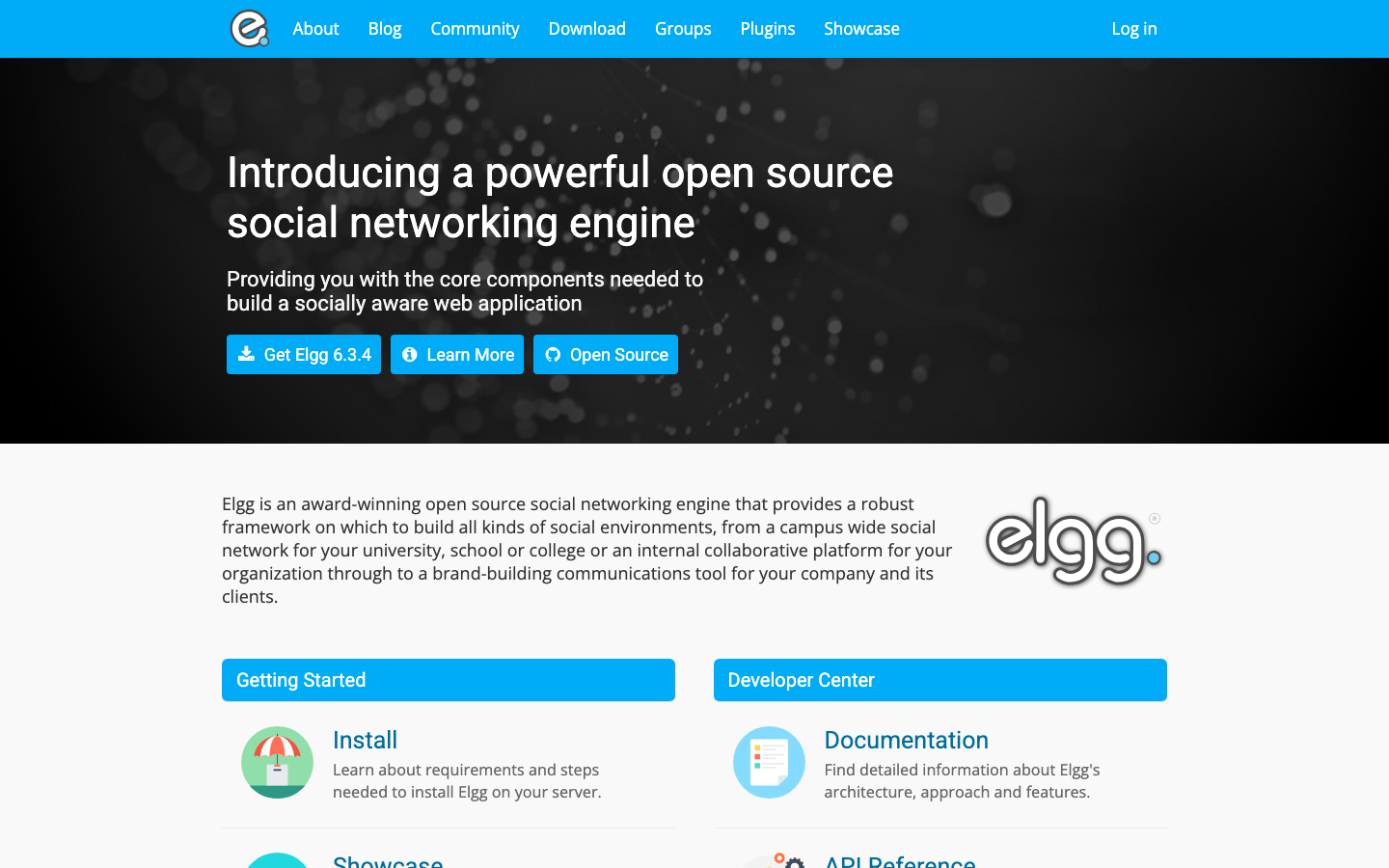
Elgg is a lightweight PHP-based social networking engine that powers user profiles, activity streams, and community interactions. It's designed to be modular and simple to extend, making it a good foundation for custom social networks.
Pros
- Minimal footprint and low server requirements; runs well on modest hosting.
- Plugin architecture is flexible; you can build custom features without extensive core modifications.
- Established project with a long history; suitable for organizations that need stability and community support.
Cons
- Smaller active development community; fewer updates and third-party modules compared to Discourse or HumHub.
- Less polished UI/UX out of the box; requires more customization to match modern community platform expectations.
Open Source Social Network
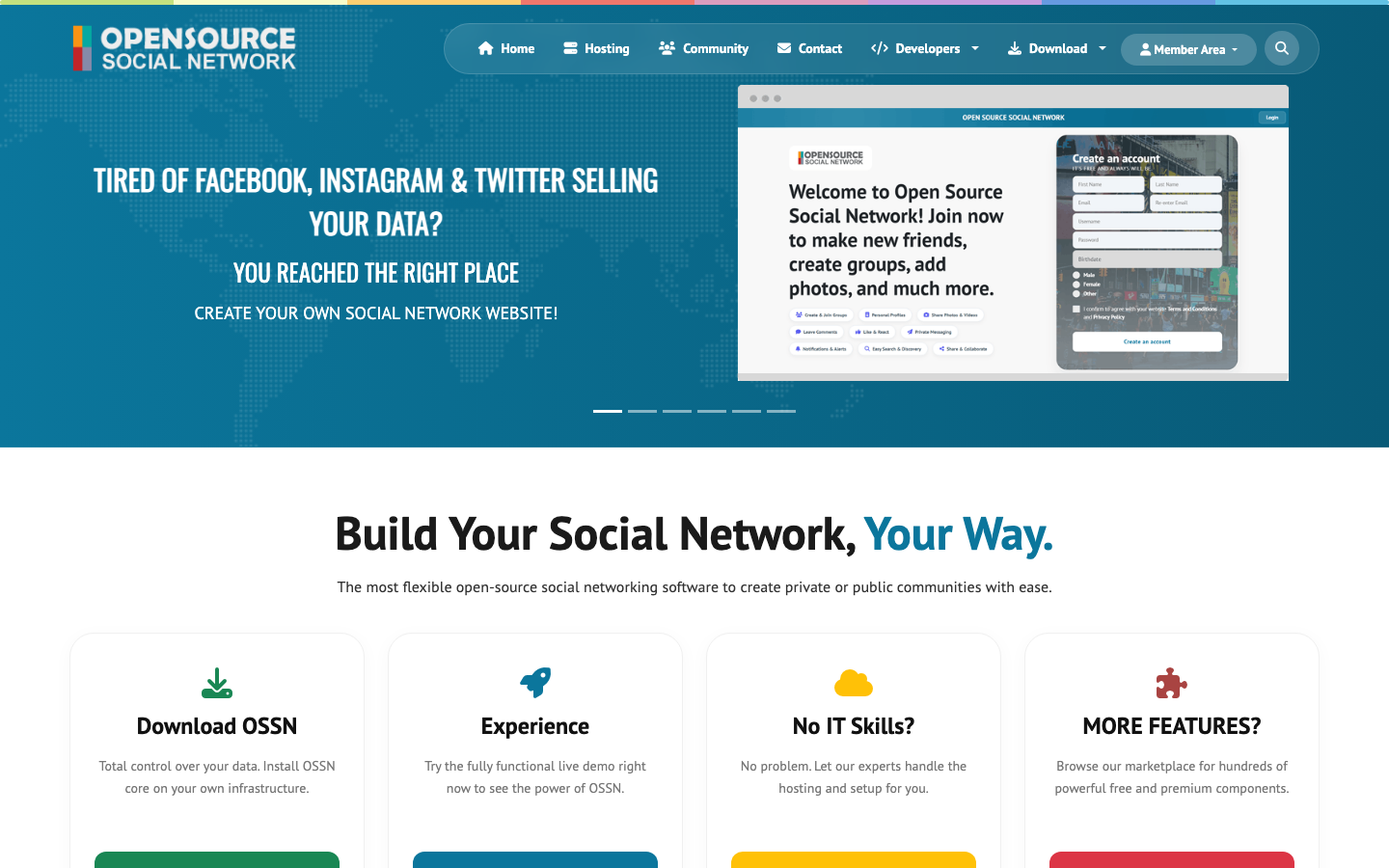
Open Source Social Network (OSSN) is a PHP-based social networking platform focused on community engagement, friend connections, and member relationships. It emphasizes ease of installation and intuitive use for building social communities.
Pros
- Friend-based social graph; communities can form meaningful one-to-one connections alongside group discussions.
- Straightforward installation and setup; lower barrier to entry for teams without deep DevOps experience.
- Plugin system for adding custom features and integrations.
Cons
- Smallest active community among the alternatives; fewer plugins, themes, and third-party support.
- Less frequent updates and slower feature development compared to larger projects like Discourse.
How to choose
For discussion-focused communities (forums, Q&A, knowledge bases), Discourse is the most mature and feature-rich option. For teams that prioritize decentralization and federation, Lemmy eliminates central platform risk and works well across multiple independent instances. For organizations building an internal or branded social network with profiles and activity streams, HumHub provides the most complete all-in-one experience. For lightweight or budget-constrained deployments, Elgg or Open Source Social Network are viable, though with smaller ecosystems and less frequent updates. Choose based on your community's primary use case (discussion vs. social networking), team size, and DevOps capacity—not on feature count alone.