




TL;DR
- Privacy and control matter most? DBeaver runs entirely on your machine—no cloud dependency, no vendor visibility into your schema or queries.
- Keeping costs at zero long-term is the real win: all five alternatives here are free and open-source, eliminating the per-seat subscription trap that commercial IDEs lock you into.
- Teams needing a lightweight, self-contained admin tool should start with Adminer—a single PHP file that deploys anywhere without infrastructure overhead.
Why teams leave pgAdmin
pgAdmin itself is free and open-source, so the "escape from pgAdmin" narrative isn't about cost—it's about breadth and workflow fit. Where pgAdmin shines as a PostgreSQL-native admin GUI, teams often outgrow it when they need to work across multiple database engines (MySQL, SQL Server, SQLite, MongoDB) in a single tool, or when they want a development-focused ORM layer rather than pure database administration.
The deeper reason teams explore alternatives is total cost of ownership over time. While pgAdmin has zero licensing cost, teams often end up running parallel tools: a schema browser here, a query IDE there, an ORM integration elsewhere. That fragmentation creates maintenance burden and knowledge silos. Open-source alternatives like DBeaver and Prisma consolidate those workflows under one roof—still free, still self-hosted, but with less operational friction.
For organizations with strict data residency or privacy policies, the choice is even sharper: commercial database IDEs (DataGrip, Navicat) phone home for licensing checks and telemetry. Open-source tools under your own infrastructure eliminate that risk entirely. You own the code, the data never leaves your network, and you're not locked into a vendor's roadmap or pricing changes.
Quick comparison
| Name | License | Self-Hosted | API / Extensibility | Stack / Language | Best For |
|---|---|---|---|---|---|
| DBeaver | Apache-2.0 | ✓ Full | Plugin architecture, JDBC extensibility | Java | Multi-database IDE; teams needing rich UI and broad DB support |
| Prisma | Apache-2.0 | ✓ Via CLI & self-hosted Prisma Data Platform | Type-safe query API, schema introspection | TypeScript / Node.js | Application developers; ORM-first workflows and type safety |
| Adminer | — | ✓ Single file deployment | Limited; read-only plugin system | PHP | Minimal footprint; quick admin access on shared hosting or containers |
| CloudBeaver | Apache-2.0 | ✓ Docker-native | REST API, admin extensions | TypeScript | Teams wanting web-based multi-user access without pgAdmin's Postgres-only focus |
| Azimutt | MIT | ✓ Full | Limited; schema exploration focus | Elm | Database documentation, ER diagramming, and optimization analysis |
Top open-source alternatives to pgAdmin
DBeaver
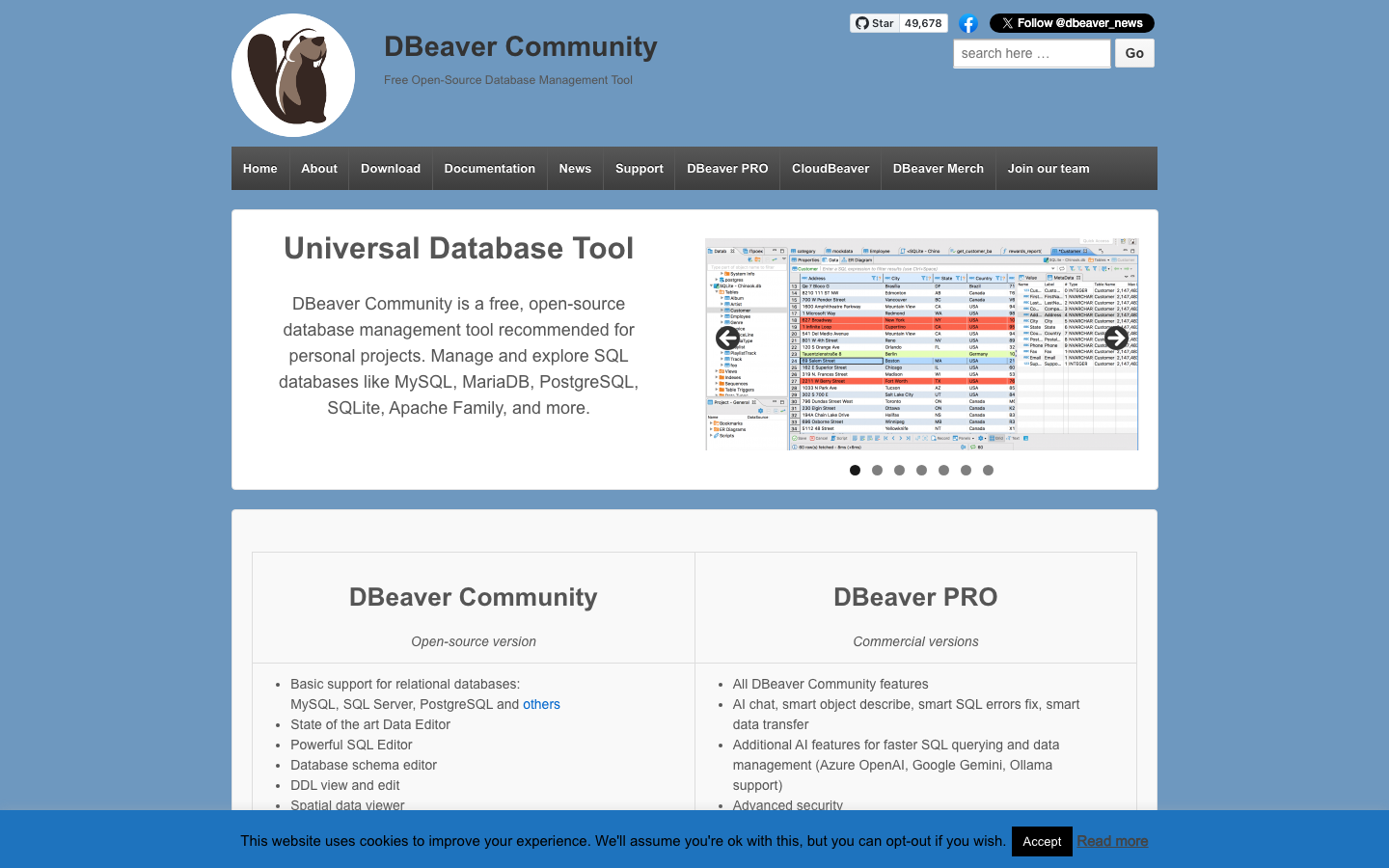
DBeaver is a universal database IDE that connects to PostgreSQL, MySQL, MariaDB, SQL Server, SQLite, MongoDB, and dozens more. It combines a rich GUI with query execution, schema browsing, data export, and ERD visualization—all in one desktop or web application.
Pros:
- Supports 20+ database engines in a single tool, eliminating tool-switching overhead.
- Extensible via plugins and JDBC drivers; active community contributes connectors and features.
- Full self-hosted deployment; no cloud dependency or licensing checks.
Cons:
- Heavier resource footprint (Java-based) compared to lightweight alternatives like Adminer.
- Steeper learning curve for new users; feature density can feel overwhelming for simple admin tasks.
Prisma
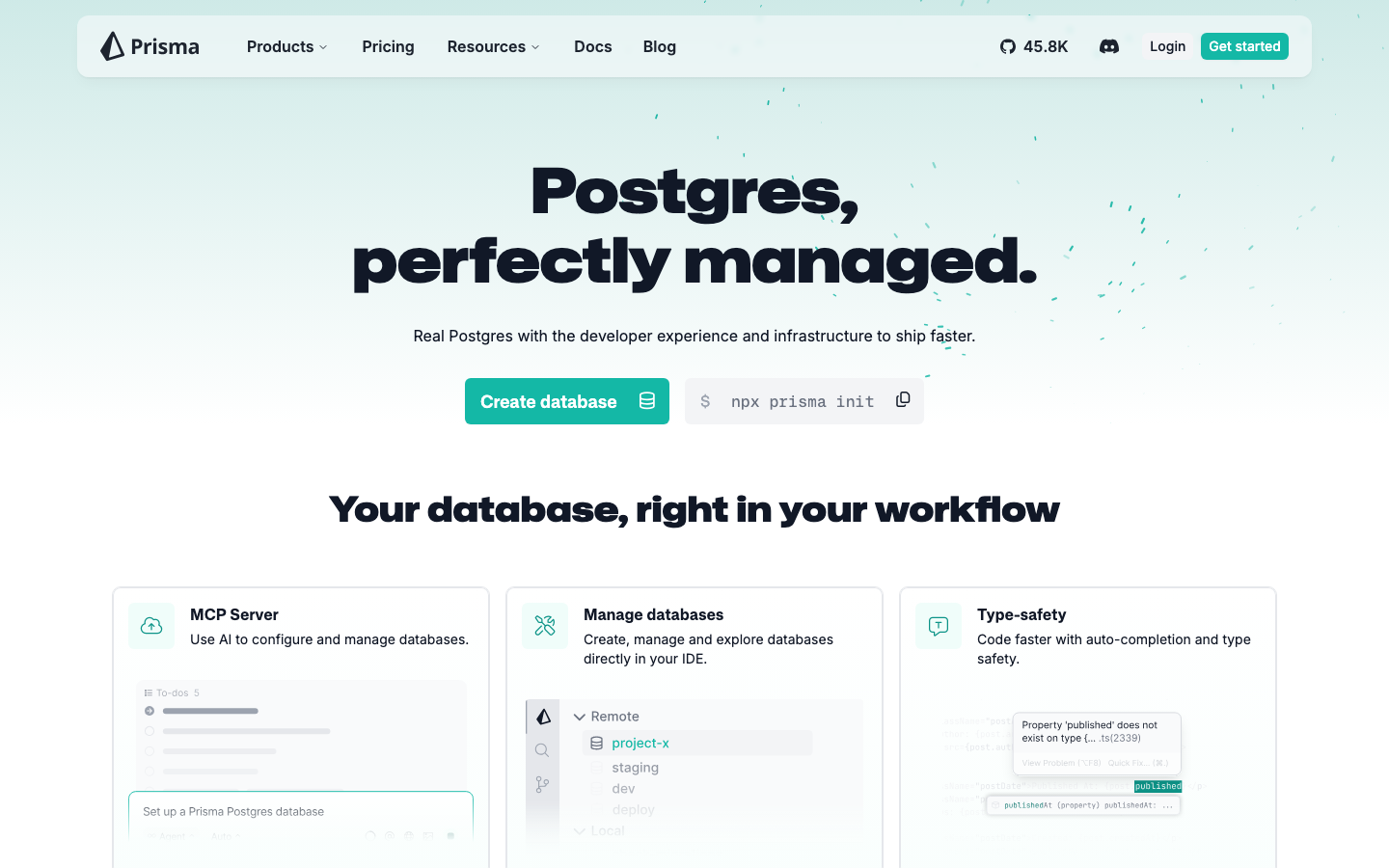
Prisma is a next-generation ORM for Node.js and TypeScript that abstracts database access through a type-safe, auto-generated client. It works with PostgreSQL, MySQL, MariaDB, SQL Server, SQLite, MongoDB, and CockroachDB, and includes Prisma Studio—a visual database browser and editor built into the development workflow.
Pros:
- Type-safe queries eliminate entire classes of runtime errors; tight integration with TypeScript/JavaScript ecosystems.
- Schema-first approach: define your data model once, generate migrations and queries automatically.
- Developer-friendly; Prisma Studio makes ad-hoc queries and data inspection frictionless during development.
Cons:
- Designed for application developers, not database administrators; doesn't replace pgAdmin for pure DBA workflows.
- Requires Node.js runtime; not suitable for teams without JavaScript/TypeScript infrastructure.
Adminer
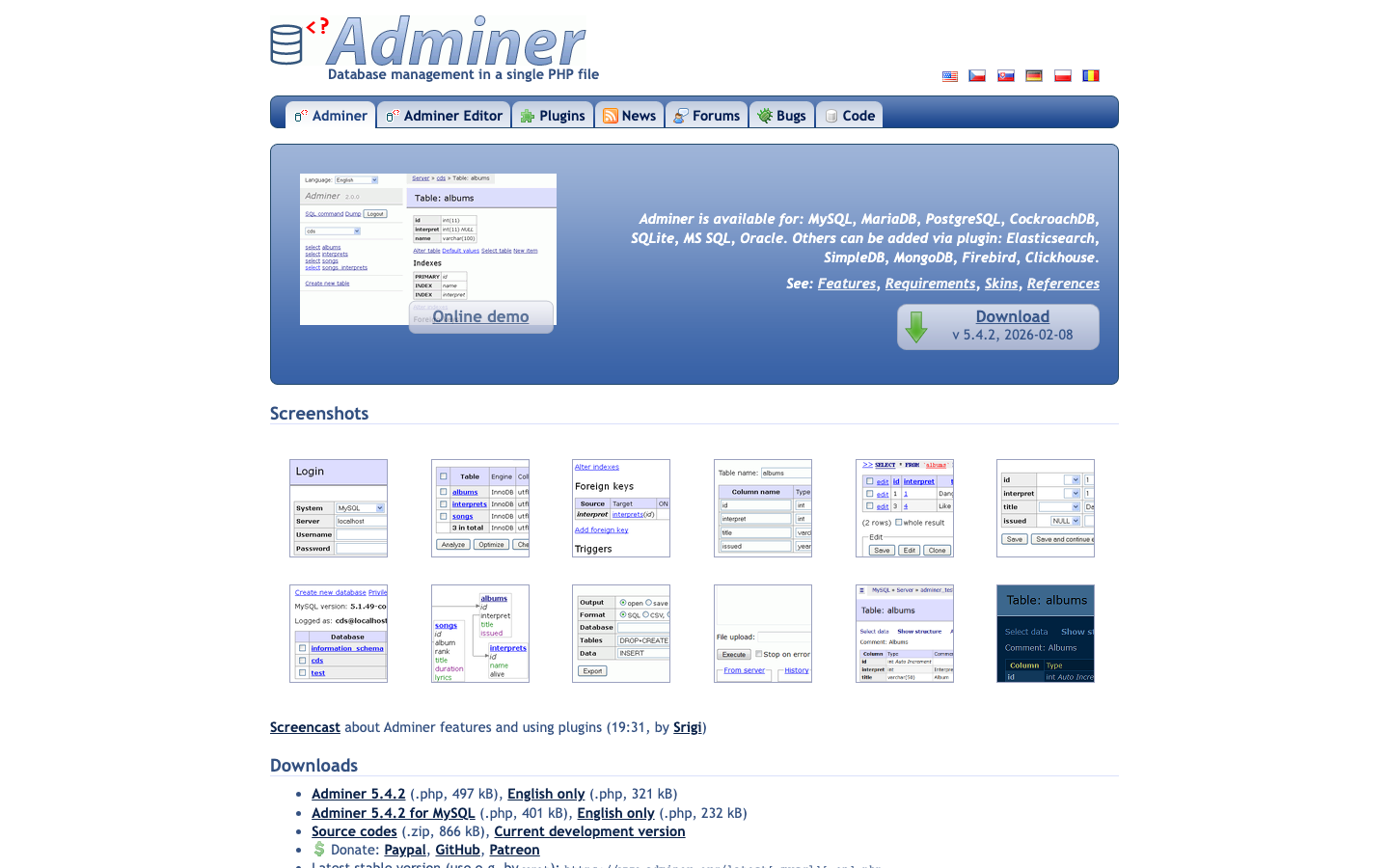
Adminer is a single-file PHP application that provides database management for PostgreSQL, MySQL, MariaDB, SQLite, and others. Drop it into any web server and get instant admin access—no installation, no dependencies beyond PHP.
Pros:
- Minimal deployment footprint; literally one PHP file you can commit to a repository or copy to a server.
- Works on shared hosting, containers, and minimal infrastructure where Java or Node.js may not be available.
- Fast load times and low memory overhead; ideal for quick admin tasks or emergency access.
Cons:
- Limited UI polish and feature breadth compared to DBeaver or CloudBeaver.
- No multi-user permission model; security relies entirely on HTTP authentication and network isolation.
CloudBeaver
CloudBeaver is a web-based database manager purpose-built for team access. It provides a browser-native interface to PostgreSQL, MySQL, MariaDB, SQL Server, SQLite, and other engines, with multi-user support, role-based access, and a modern UI.
Pros:
- Web-first architecture; teams access the same tool without installing desktop software.
- Multi-user support with role-based permissions; better suited to shared DBA workflows than pgAdmin's single-user model.
- Docker-native deployment; runs easily in container orchestration platforms.
Cons:
- Smaller ecosystem and community compared to DBeaver; fewer third-party extensions.
- Still PostgreSQL-capable but less mature than DBeaver for non-Postgres databases.
Azimutt
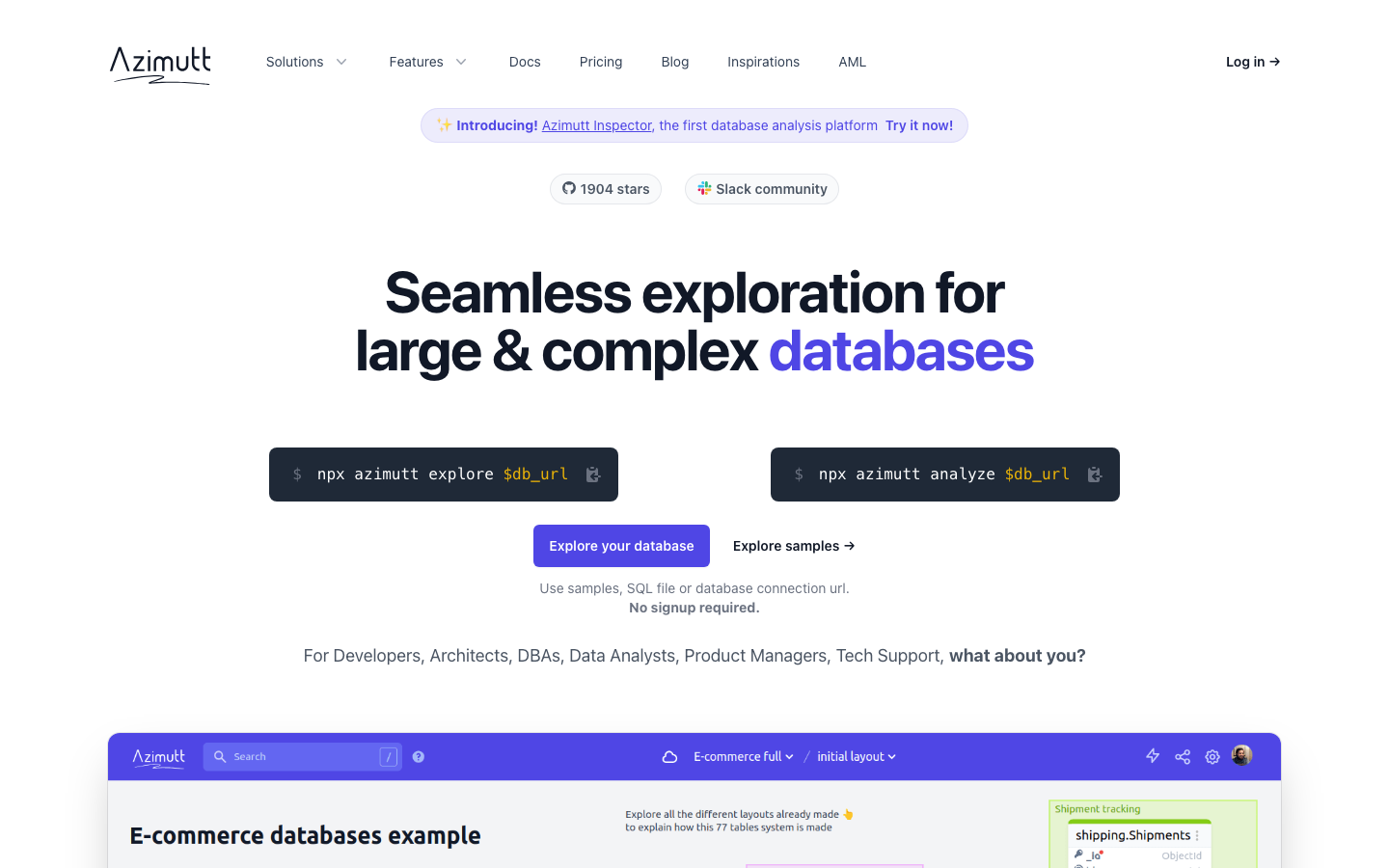
Azimutt is a database exploration, documentation, and optimization tool that focuses on understanding schema structure, relationships, and performance. It connects to PostgreSQL, MySQL, MariaDB, SQL Server, and SQLite to generate interactive entity-relationship diagrams and documentation.
Pros:
- Excellent for schema documentation and team knowledge sharing; generates visual ER diagrams automatically.
- Lightweight and fast; optimized for read-heavy exploration rather than heavy write operations.
- MIT licensed; fully open-source with no restrictions on commercial use.
Cons:
- Not a replacement for pgAdmin as an admin tool; doesn't support data editing or query execution.
- Best suited to schema analysis and documentation; limited for day-to-day database operations.
How to choose
If you manage PostgreSQL only and need a mature, full-featured admin GUI: stick with pgAdmin—it's purpose-built and battle-tested.
If you work across multiple databases (Postgres + MySQL + SQL Server, etc.) and want a single IDE: DBeaver is the clear choice; its breadth and polish justify the larger footprint.
If you're a developer building applications and want type safety and ORM integration: Prisma eliminates the need for a separate admin tool entirely—schema management and queries happen through your codebase.
If you need minimal deployment overhead—shared hosting, containers, or emergency access: Adminer is unbeatable; one file, anywhere.
If your team needs web-based multi-user access without pgAdmin's single-user limitation: CloudBeaver adds collaboration features while staying lightweight.
If schema documentation and relationship visualization are your primary concern: Azimutt is purpose-built for that job and pairs well with any of the above for operations.