


























TL;DR
- Streaming your own media library remotely without paywalls: Jellyfin eliminates Plex's April 2025 Remote Watch Pass requirement—you own your server, you own the access.
- Managing comics, manga, and digital books as a unified library: Komga and Stump both offer purpose-built servers with OPDS support, letting you organize reading collections without vendor lock-in.
- Self-hosted game library management across devices: RoM Manager provides a beautiful, cross-platform ROM server that keeps your entire collection under your control.
Why teams leave Plex
Plex's monetization escalation has become the primary driver of defection. The lifetime Plex Pass jumped from $120 to $250 in early 2025, then to $749.99 effective July 1, 2026—a 524% increase in under 18 months. More critically, as of April 29, 2025 (enforcement rolling out from November 2025), remote streaming of your own personal media now requires a paid Plex Pass or Remote Watch Pass. You must pay to access media you already own from outside your home network.
This represents a fundamental shift from "media server you control" to "cloud service you rent." Self-hosters are particularly alienated by the cloud-account dependency and the principle that your own library should require subscription access. Privacy concerns compound the issue: despite Plex's policy claims, the company has experienced breaches (including a September incident that exposed emails, usernames, and hashed passwords), making the mandatory cloud tie-in a harder sell for privacy-conscious users.
Open-source alternatives eliminate this entire problem. You run the server. You own the data. There are no surprise paywalls, no remote-access fees, and no mandatory cloud accounts. For teams managing media at scale—whether films, comics, games, or ebooks—this is the core appeal.
Quick comparison
| Name | License | Self-Hosted | E2E Encryption | Mobile / Desktop Sync | Best For |
|---|---|---|---|---|---|
| Jellyfin | GPL-2.0 | ✓ | — | ✓ | Movies, TV, music, photos |
| Kavita | GPL-3.0 | ✓ | — | ✓ | eBook and reading collections |
| RoM Manager | AGPL-3.0 | ✓ | — | ✓ | Video game ROM libraries |
| Komga | MIT | ✓ | — | ✓ | Comics, manga, magazines, eBooks |
| Stump | MIT | ✓ | — | ✓ (OPDS WIP) | Comics, manga, digital books |
| Slink | AGPL-3.0 | ✓ | — | ✓ | Image sharing and galleries |
| Gameyfin | AGPL-3.0 | ✓ | — | — | Game library organization |
Top open-source alternatives to Plex
Jellyfin
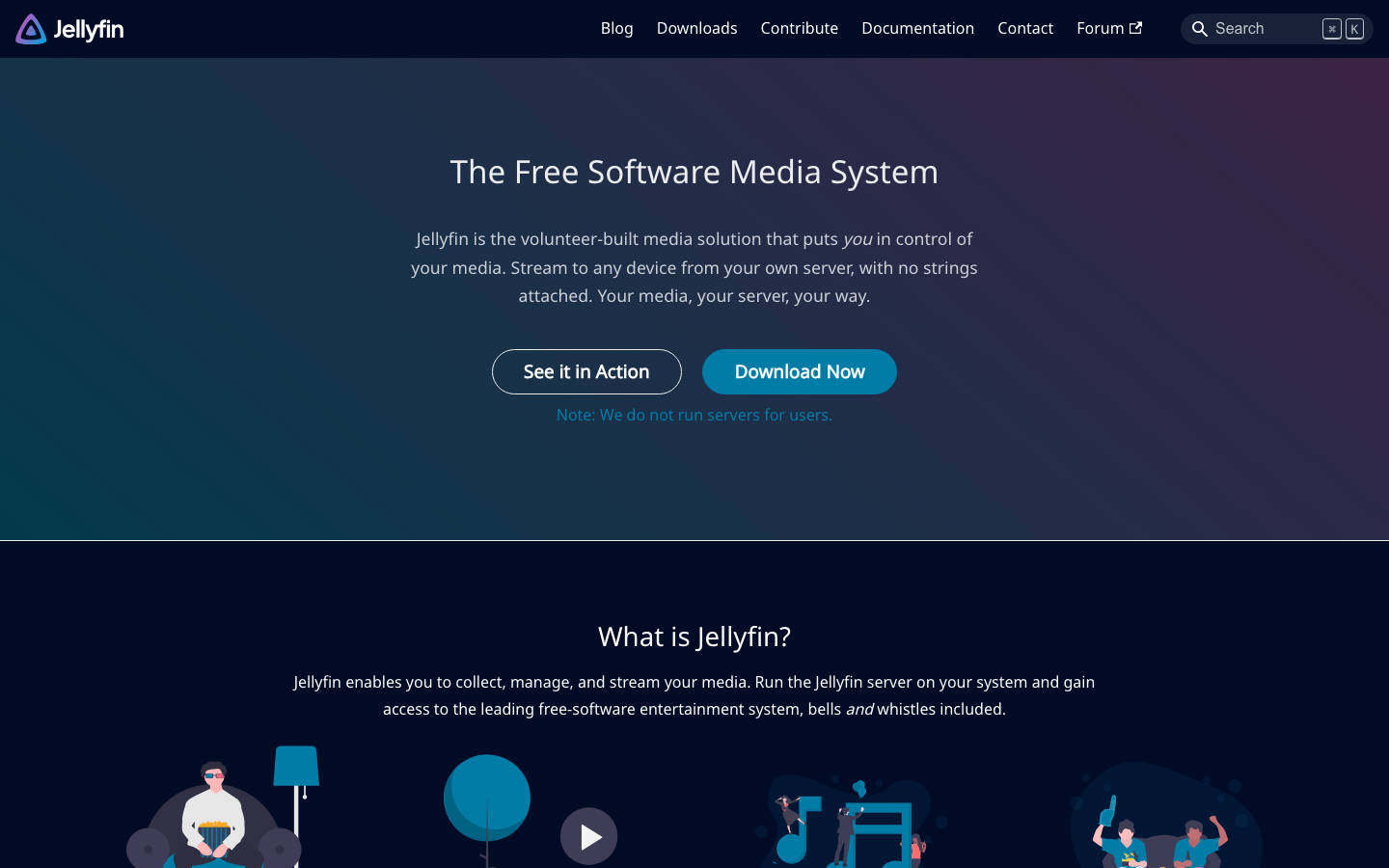
Jellyfin is the most direct Plex replacement: a full-featured media server for movies, TV shows, music, photos, and live TV. Written in C# and licensed under GPL-2.0, it's the most-starred project in this category (50k+ GitHub stars) and has reached feature parity with Plex for most use cases—without the paywall.
Pros:
- Complete remote streaming with zero subscription requirements
- Active development and large community; extensive client ecosystem
- Transcoding, live TV, and metadata management built-in
Cons:
- Steeper initial setup than Plex's wizard-driven onboarding
- Mobile app ecosystem is community-driven (quality varies by platform)
Kavita
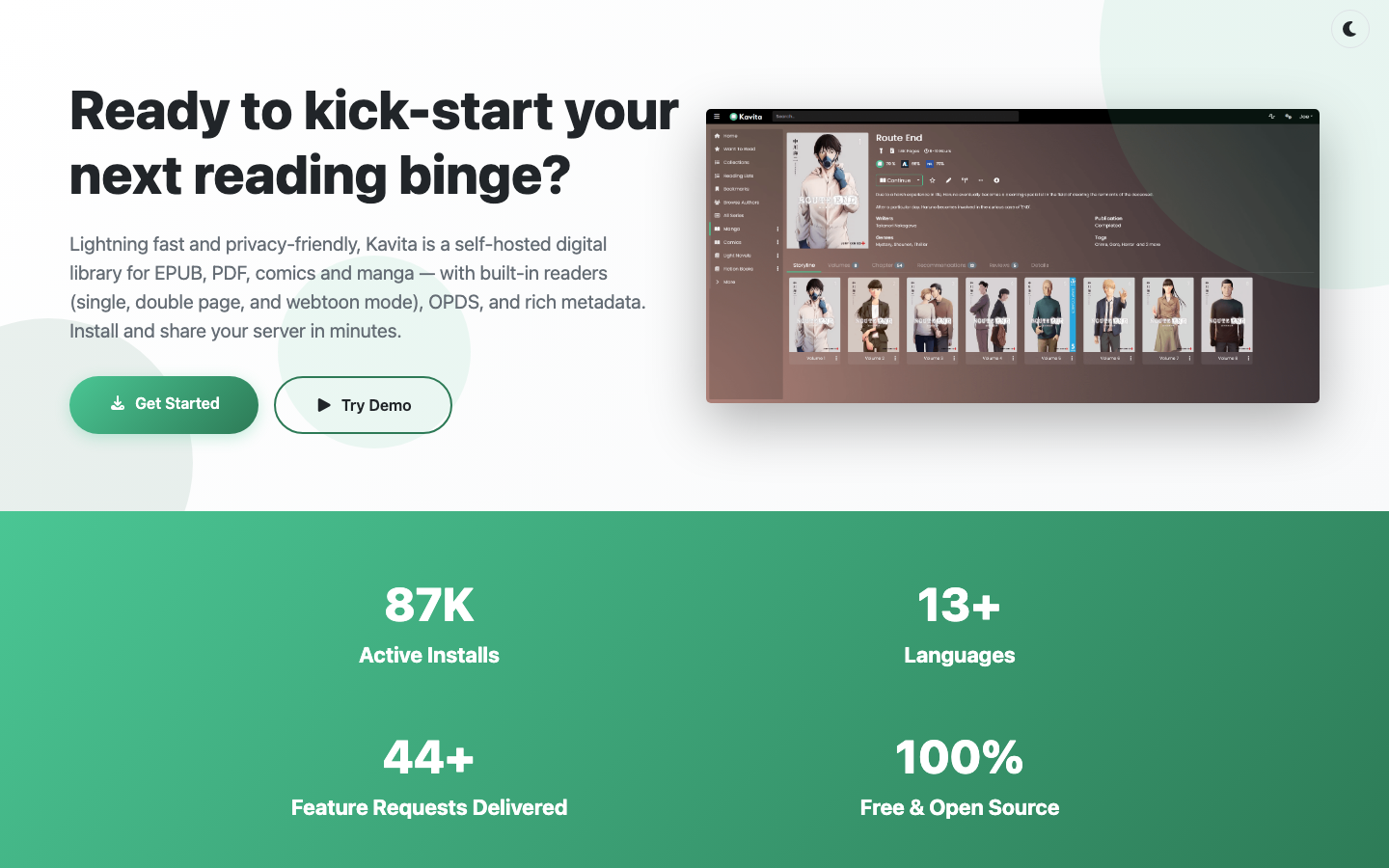
Kavita is a purpose-built reading server for eBooks, manga, and comic collections. It emphasizes speed and cross-platform support, letting you organize and share reading libraries with friends and family on your own server.
Pros:
- Specialized for reading formats (EPUB, PDF, CBR, CBZ, etc.)
- Fast, responsive web interface with advanced filtering and tagging
- Built-in reader with progress tracking and series organization
Cons:
- Narrower scope than Plex (reading only, not multimedia)
- Smaller community means fewer third-party integrations
RoM Manager
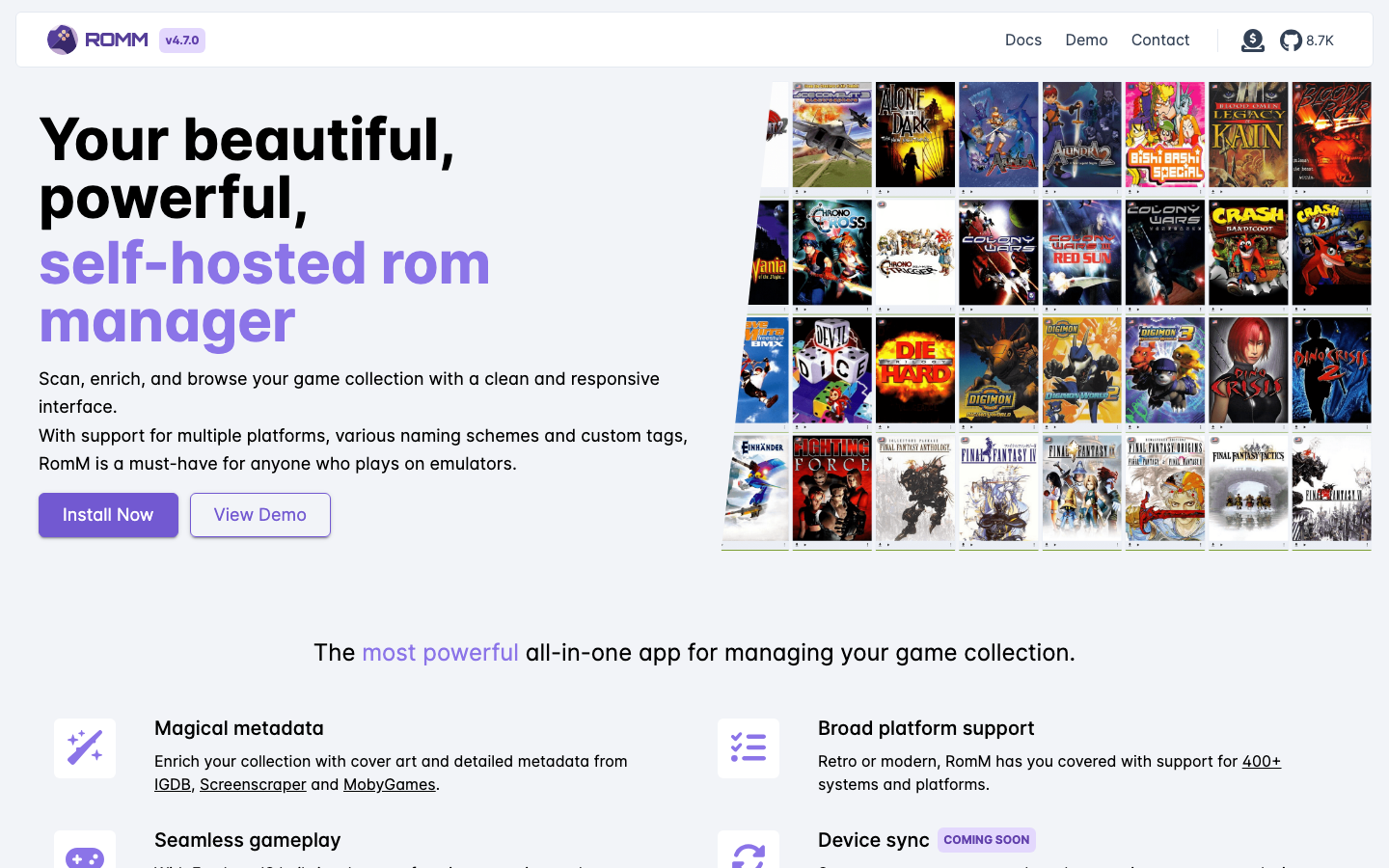
RoM Manager is a self-hosted ROM manager and player with a beautiful, modern interface. It's built for gamers who want to organize and play retro and modern game libraries across devices without cloud sync requirements.
Pros:
- Gorgeous UI designed specifically for game discovery and playback
- Cross-platform ROM support with emulator integration
- No external dependencies or cloud account required
Cons:
- Narrowly focused on ROM/game management (not general media)
- Mobile sync and remote play are functional but less polished than Jellyfin
Komga
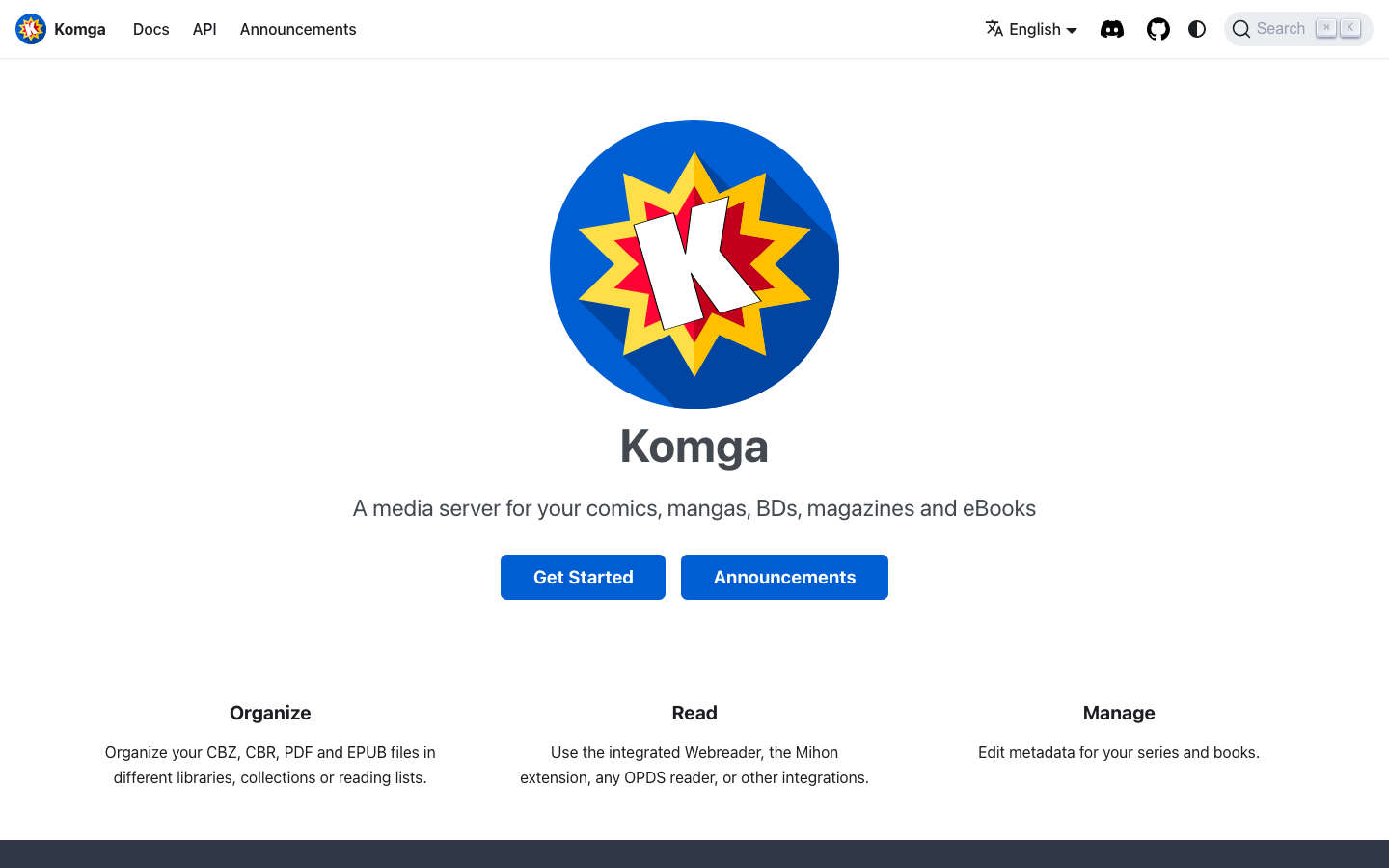
Komga is a media server for comics, manga, books, magazines, and BDs with API, OPDS, and Kobo/KOReader sync support. It's MIT-licensed and written in Kotlin, making it lightweight and portable.
Pros:
- OPDS support enables compatibility with e-readers and reading apps (Kobo, KOReader)
- Excellent for manga/comic organization with series and volume tracking
- REST API for custom integrations
Cons:
- Less mature than Jellyfin; smaller ecosystem
- Documentation is functional but less extensive
Stump
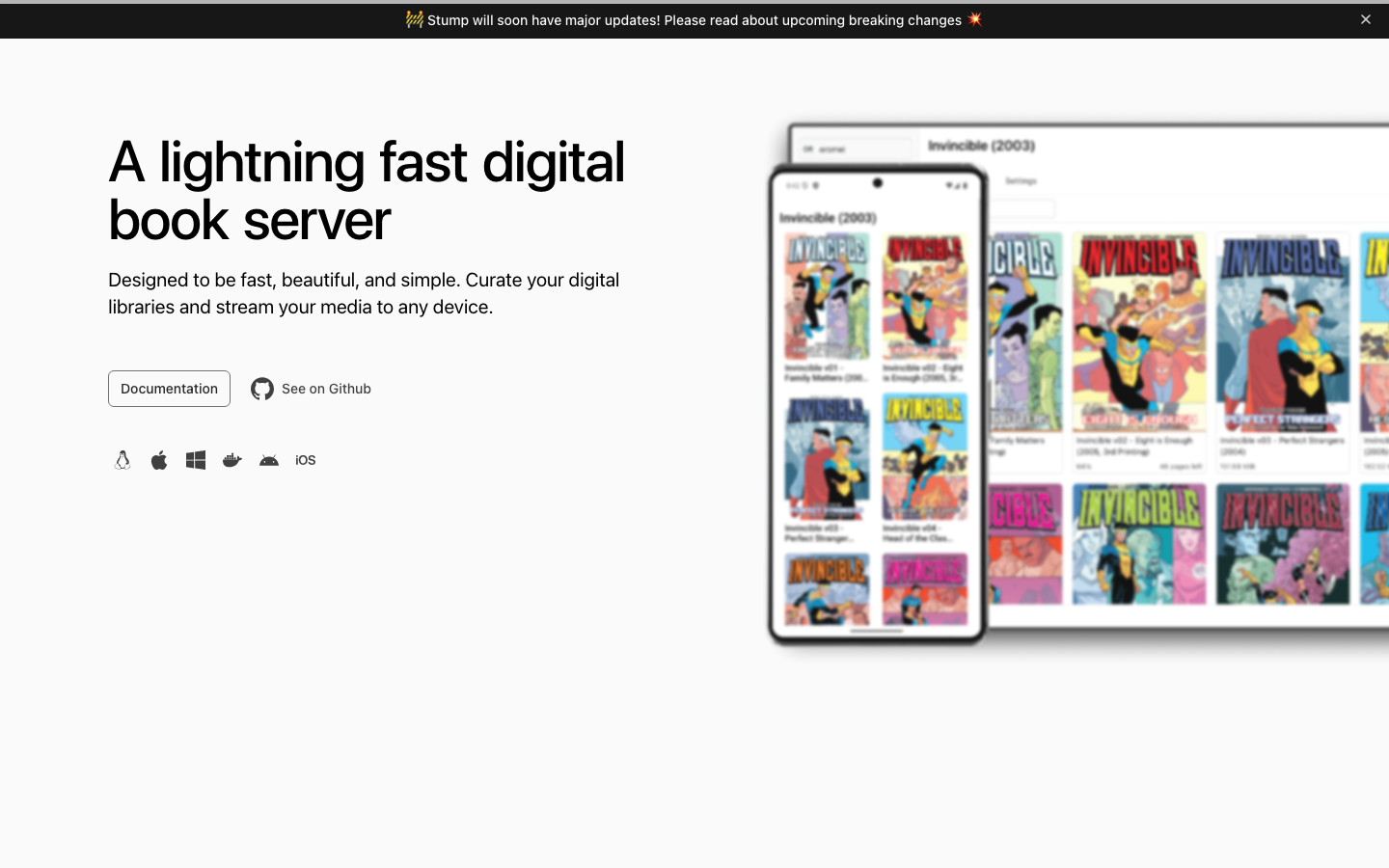
Stump is a free and open-source server for comics, manga, and digital books with OPDS support (currently in progress). Built in TypeScript, it's a lighter-weight alternative to Komga with a focus on simplicity.
Pros:
- Written in TypeScript; easier to extend and modify for developers
- MIT license offers maximum flexibility
- Clean, minimal design philosophy
Cons:
- Earlier in development cycle; OPDS support is still WIP
- Smaller community and fewer production deployments
Slink
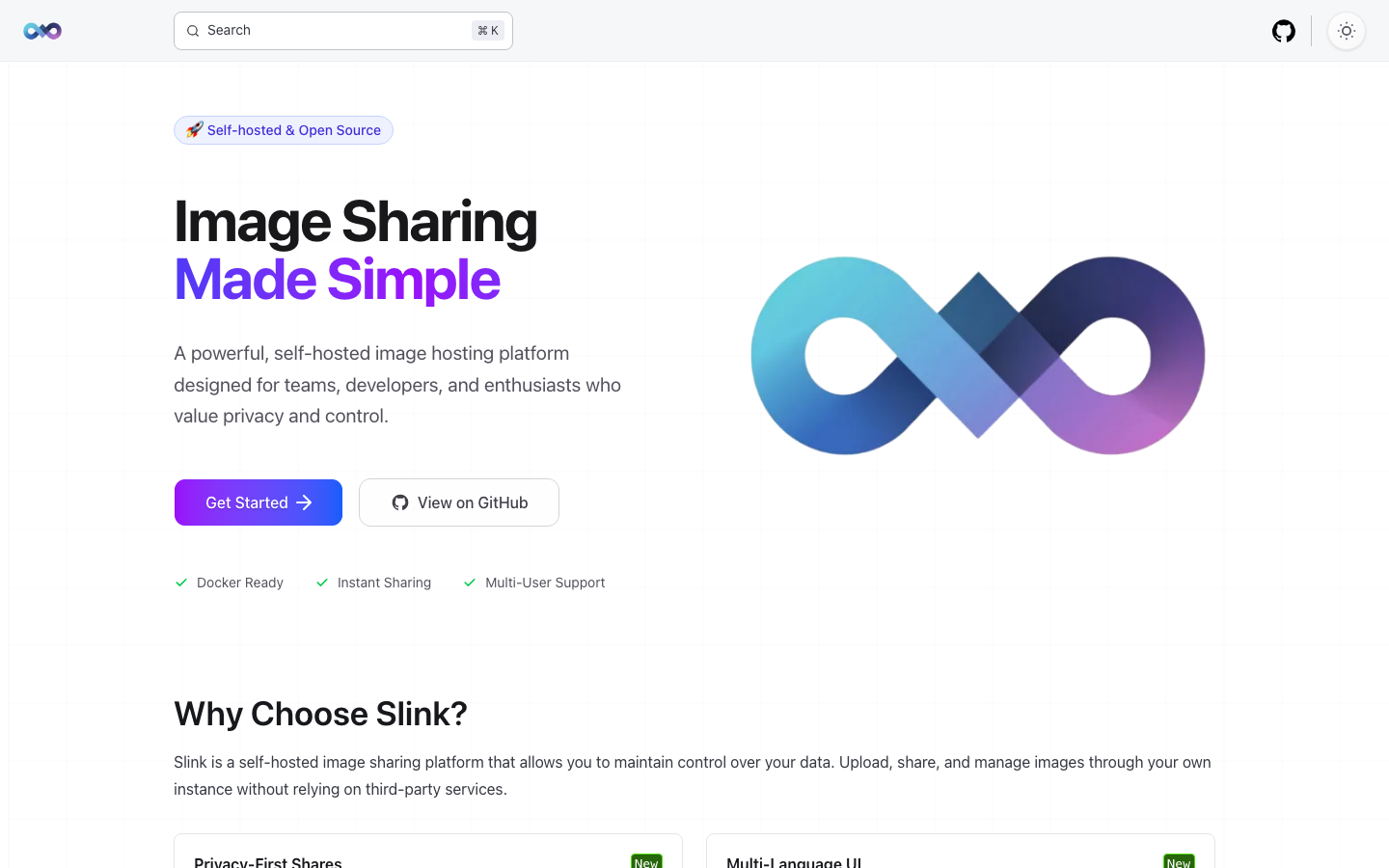
Slink is a self-hosted image sharing service for managing and sharing photo galleries. It's AGPL-3.0 licensed and built in PHP, designed for users who want private, self-controlled image storage without cloud dependency.
Pros:
- Lightweight and simple to deploy (PHP-based)
- Full control over image data and sharing permissions
- Minimal resource footprint
Cons:
- Narrowly focused on images (not multimedia like Plex)
- Smaller project with less active development
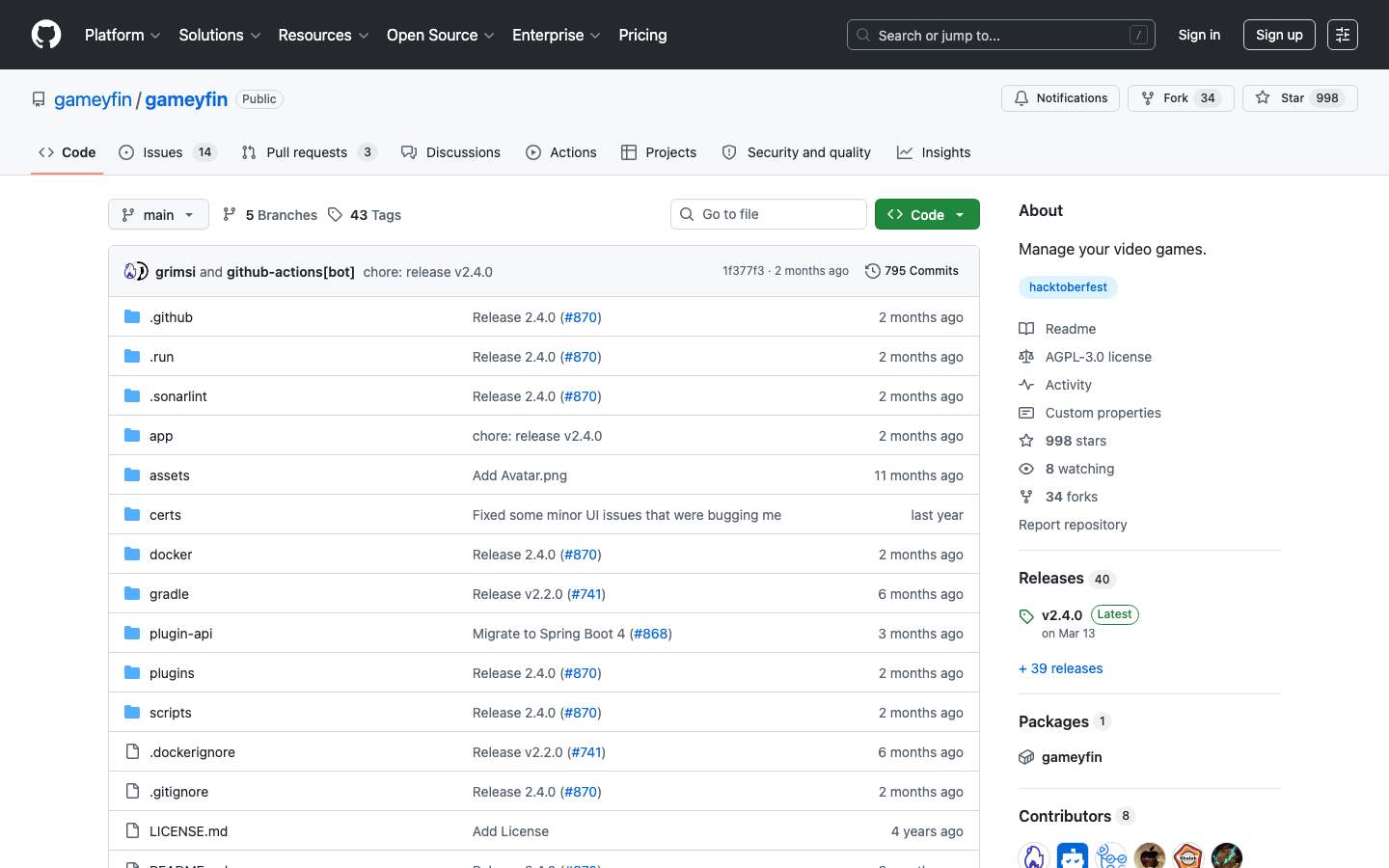
Gameyfin
Gameyfin is a game library management tool written in Kotlin (AGPL-3.0). It lets you organize and catalog video games across multiple platforms in a single interface.
Pros:
- Purpose-built for game library management and discovery
- Multi-platform game support with unified interface
- AGPL licensing ensures community-driven development
Cons:
- Early-stage project (under 1k stars); limited production usage
- Mobile sync and remote play are not yet fully implemented
How to choose
For general media (films, TV, music, photos): Jellyfin is the clear choice—it's the most mature, feature-complete, and actively developed Plex alternative with the largest community.
For reading collections (eBooks, comics, manga): Choose Komga if you want OPDS e-reader sync and mature manga support; pick Stump if you prefer a lighter TypeScript codebase and don't need OPDS yet; use Kavita if reading is your primary use case and you want a dedicated, polished interface.
For games: RoM Manager is purpose-built for ROM libraries and emulation; Gameyfin is better for modern game catalog management if you're willing to work with an earlier-stage project.
For images only: Slink is minimal and self-contained.
All seven projects eliminate Plex's paywall and cloud lock-in. Pick based on your primary media type and tolerance for community-driven development maturity.