










TL;DR
- Need a self-hosted all-in-one mail server with modern protocols? Stalwart bundles IMAP, SMTP, JMAP, and CalDAV in one Rust binary—no vendor lock-in, full control over encryption and data.
- Want encrypted email without running infrastructure? Tutanota mirrors ProtonMail's zero-access encryption model but is open-source and GPL-licensed, letting you audit the code or self-host.
- Building a lightweight webmail UI for an existing mail stack? Roundcube or SnappyMail provide modern, standards-based clients you can deploy on your own servers.
Why teams leave ProtonMail
ProtonMail's free tier caps you at 1 GB storage and 150 emails per day—a hard ceiling for growing teams. Upgrade to Plus (€3.99–€4.99/month) or Unlimited (€9.99–€12.99/month), and costs compound across headcount; a 10-person team paying annual rates still surrenders control of infrastructure and encryption keys to a single vendor.
The deeper friction: encryption that prevents full-text search, interoperability constraints with non-Proton recipients, and closed-source server code mean you're betting on Proton's roadmap and pricing decisions. Teams handling sensitive workflows—healthcare, legal, financial—or operating under data residency rules (GDPR, HIPAA) find that architectural privacy (zero-access encryption) conflicts with operational needs: audit trails, compliance reporting, and the ability to migrate without vendor consent.
Self-hostable, standards-based alternatives eliminate that trade-off. You own the servers, control the encryption keys, and can integrate with existing tools and workflows.
Quick comparison
| Name | License | Self-Hosted | Deliverability Setup | API / Automation | Best For |
|---|---|---|---|---|---|
| Stalwart | — | ✓ Full | SMTP, SPF, DKIM, DMARC native | JMAP, HTTP API | All-in-one, modern protocol stack |
| Tutanota | GPL-3.0 | ✓ Optional | Limited (service-hosted) | REST API (limited) | Encrypted SaaS or self-hosted instance |
| Roundcube | — | ✓ Full | Depends on backend IMAP/SMTP | Plugin-based | Webmail UI for existing mail servers |
| Peergos | AGPL-3.0 | ✓ Full | Not email-primary | REST API | P2P file & messaging, not traditional mail |
| Enclosed | Apache-2.0 | ✓ Full | Not applicable | Not applicable | Ephemeral secure note sharing |
| RetroShare | — | ✓ Full | Not email-primary | Limited | Decentralized friend-to-friend comms |
| iRedMail | GPL-3.0 | ✓ Full | SMTP, SPF, DKIM, DMARC configurable | Limited (CLI-based) | Full mail server on Linux/BSD |
| SnappyMail | AGPL-3.0 | ✓ Full | Depends on backend IMAP/SMTP | Limited | Modern, lightweight webmail client |
Top open-source alternatives to ProtonMail
Stalwart
An all-in-one mail and collaboration server written in Rust, supporting IMAP, JMAP, SMTP, CalDAV, CardDAV, and WebDAV in a single binary. Built for scalability and protocol fluency, it eliminates the need to piece together separate services and gives you native control over encryption, storage, and user management.
Pros:
- Modern protocol support (JMAP, CalDAV) alongside legacy IMAP/SMTP; no gaps in interoperability.
- Single, memory-efficient Rust binary; minimal operational overhead.
- Full encryption and key management under your control; no vendor dependency.
Cons:
- Smaller ecosystem than traditional postfix/dovecot stacks; fewer third-party integrations.
- Requires Linux/Unix infrastructure knowledge for initial deployment.
Tutanota
An open-source encrypted email service (GPL-3.0) that enforces end-to-end encryption for messages, contacts, and calendar entries across all devices. Unlike ProtonMail, the source code is auditable and you can run your own instance, combining the privacy model with full transparency.
Pros:
- Zero-access encryption identical to ProtonMail's architecture, but open-source and auditable.
- Self-hostable: run a private instance if you want data sovereignty.
- Mobile and desktop clients included; consistent UX across platforms.
Cons:
- Self-hosting requires significant infrastructure; most users rely on the hosted service.
- Smaller user base and ecosystem than ProtonMail, affecting interoperability perception.
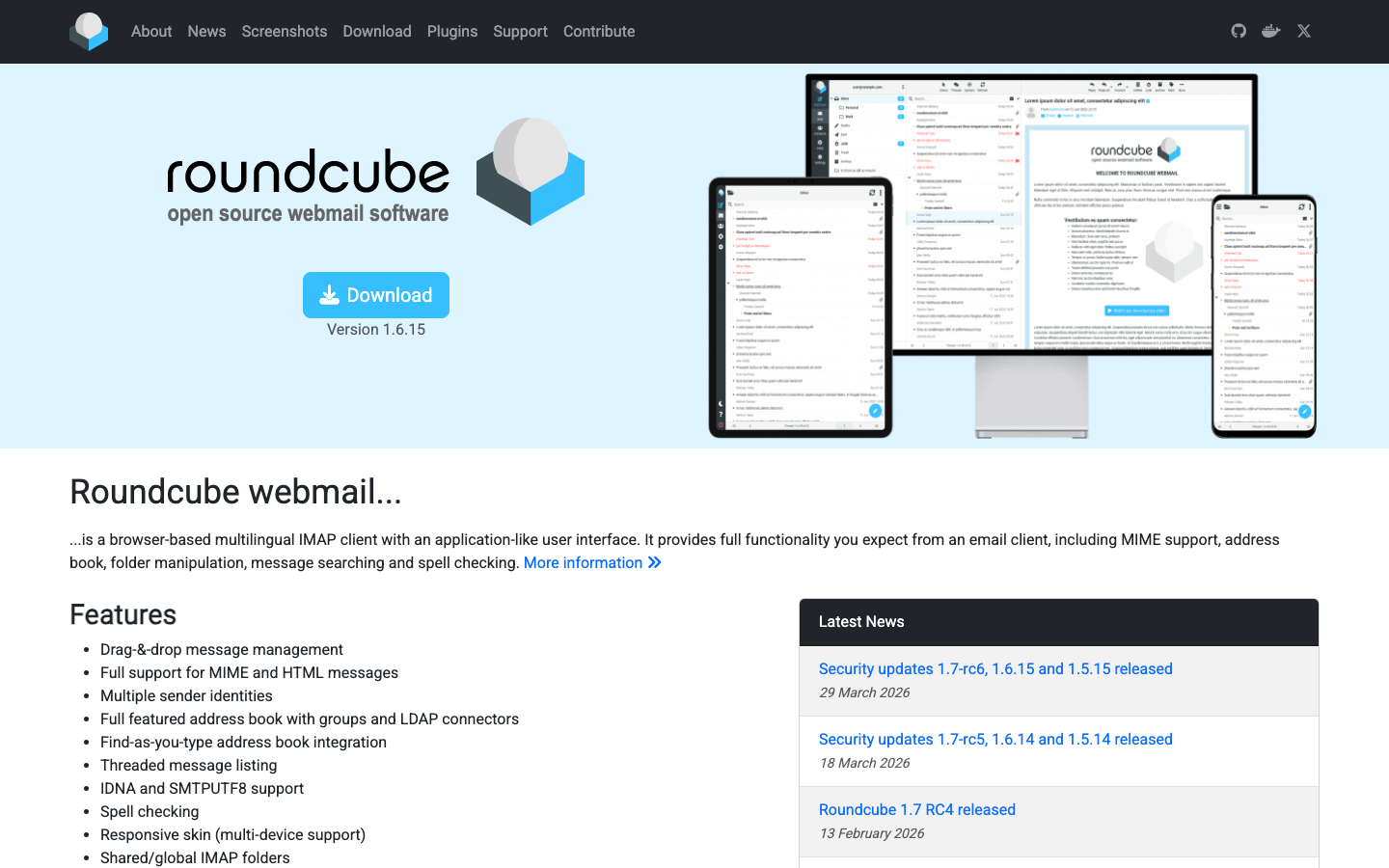
Roundcube
A mature, PHP-based webmail client that works with any standard IMAP and SMTP backend. It's the industry standard for self-hosted mail UIs, offering a Gmail-like experience without vendor lock-in.
Pros:
- Pluggable architecture; extensive community plugins for custom workflows.
- Works with any IMAP server (Dovecot, Cyrus, etc.); no proprietary backend required.
- Lightweight and battle-tested across thousands of deployments.
Cons:
- Does not include a mail server; requires a separate IMAP/SMTP stack.
- No built-in encryption (depends on TLS transport and backend encryption policies).
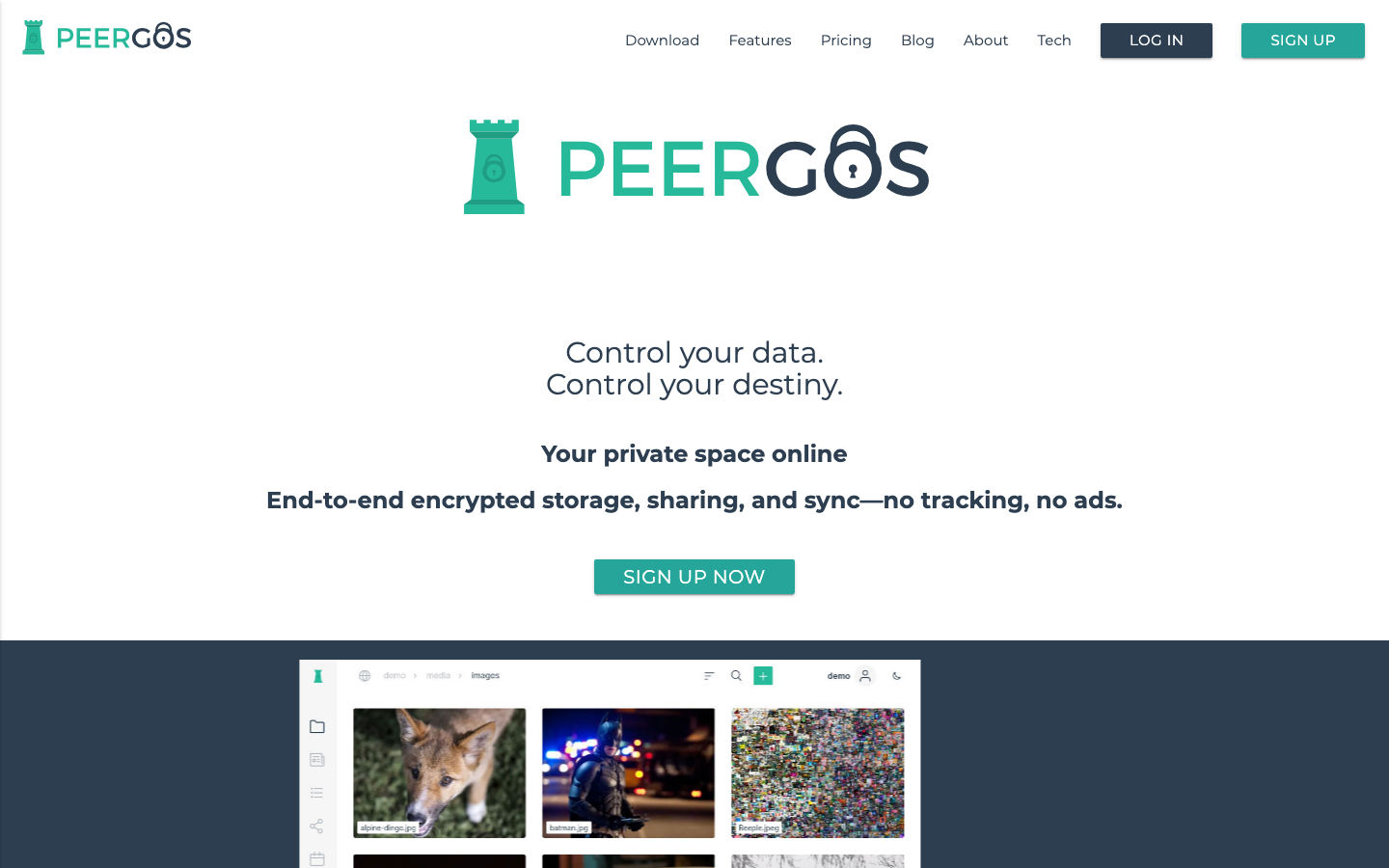
Peergos
A peer-to-peer secure file storage and social network protocol written in Java. While not a traditional email service, it offers encrypted messaging and file sharing in a decentralized architecture with no central server dependency.
Pros:
- True P2P architecture; no single point of failure or vendor control.
- Encrypted storage and messaging by design.
Cons:
- Not a drop-in email replacement; messaging is secondary to file storage.
- Smaller user base and fewer integrations with standard email workflows.
Enclosed
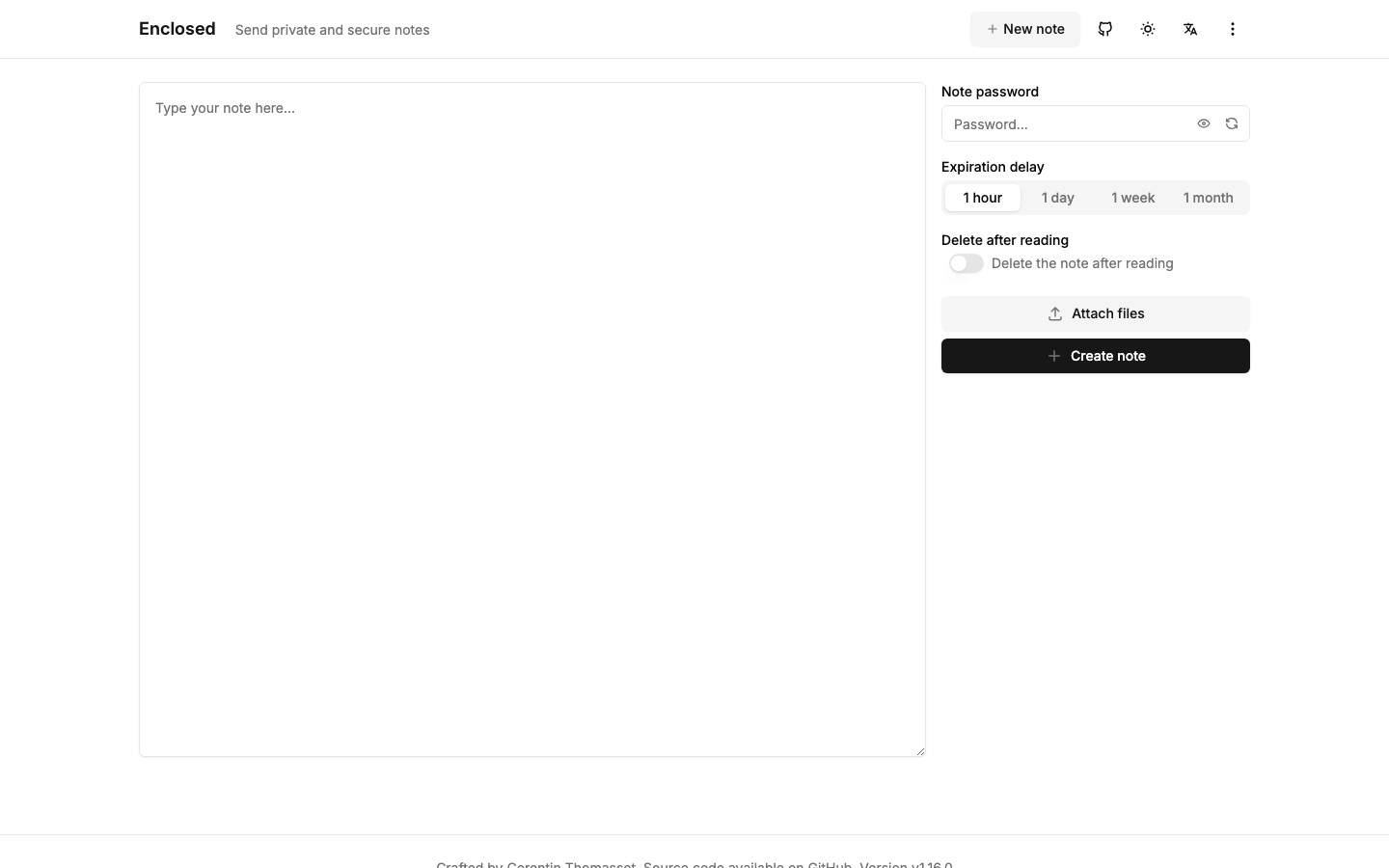
A minimalistic web app for sending encrypted, ephemeral notes. Designed for one-off secure communication rather than ongoing email, it prioritizes simplicity and zero-knowledge architecture.
Pros:
- Extremely lightweight and fast; no account overhead.
- Perfect for sharing sensitive data in single-use scenarios.
Cons:
- Not suitable for ongoing email communication or team collaboration.
- No contact management, calendar, or traditional mail features.
RetroShare
A decentralized, friend-to-friend communication platform with encrypted messaging, file sharing, and forums. It operates as a private network overlay, not a traditional email service.
Pros:
- Fully decentralized; no central server or provider.
- Encrypted by default; friends-only trust model.
Cons:
- Steep learning curve and niche user base; not suitable for standard email workflows.
- No interoperability with SMTP/IMAP; requires all parties to run RetroShare.
iRedMail
A full-featured mail server solution for Linux and BSD that bundles Postfix, Dovecot, and related tools into an automated installer. It's the practical choice for teams wanting a complete, self-hosted mail stack without building from scratch.
Pros:
- Comprehensive: mail server, webmail (Roundcube), spam filtering, and user management in one package.
- Well-documented and widely deployed; large community for troubleshooting.
- Full control over encryption, backups, and compliance policies.
Cons:
- Requires Linux/BSD sysadmin skills; not a turnkey service.
- Deliverability depends on your IP reputation and DNS setup; shared hosting risks apply.
SnappyMail
A modern, fast webmail client built in TypeScript (AGPL-3.0) that works with any IMAP backend. It's a lighter, more contemporary alternative to Roundcube with a focus on performance and UX.
Pros:
- Modern JavaScript stack; responsive mobile UI out of the box.
- Lower resource footprint than Roundcube; faster for large mailboxes.
- Works with any IMAP/SMTP server.
Cons:
- Smaller ecosystem and fewer plugins than Roundcube.
- Does not include a mail server; requires a separate backend.
How to choose
Solo or small team (<5 people) wanting privacy without infrastructure? Start with Tutanota hosted mode—you get ProtonMail's encryption model, open-source code, and no server to run.
Growing team needing full control and compliance? Deploy iRedMail or Stalwart. iRedMail is faster to stand up on Linux; Stalwart is better if you want a single modern binary and JMAP support.
Already have a mail server and just need a better UI? Layer Roundcube or SnappyMail on top. Roundcube has more plugins; SnappyMail is faster.
Decentralization or ephemeral sharing over traditional email? Peergos for P2P file storage, Enclosed for one-off secure notes, or RetroShare for a friend-to-friend network—but don't expect SMTP interoperability.