







TL;DR
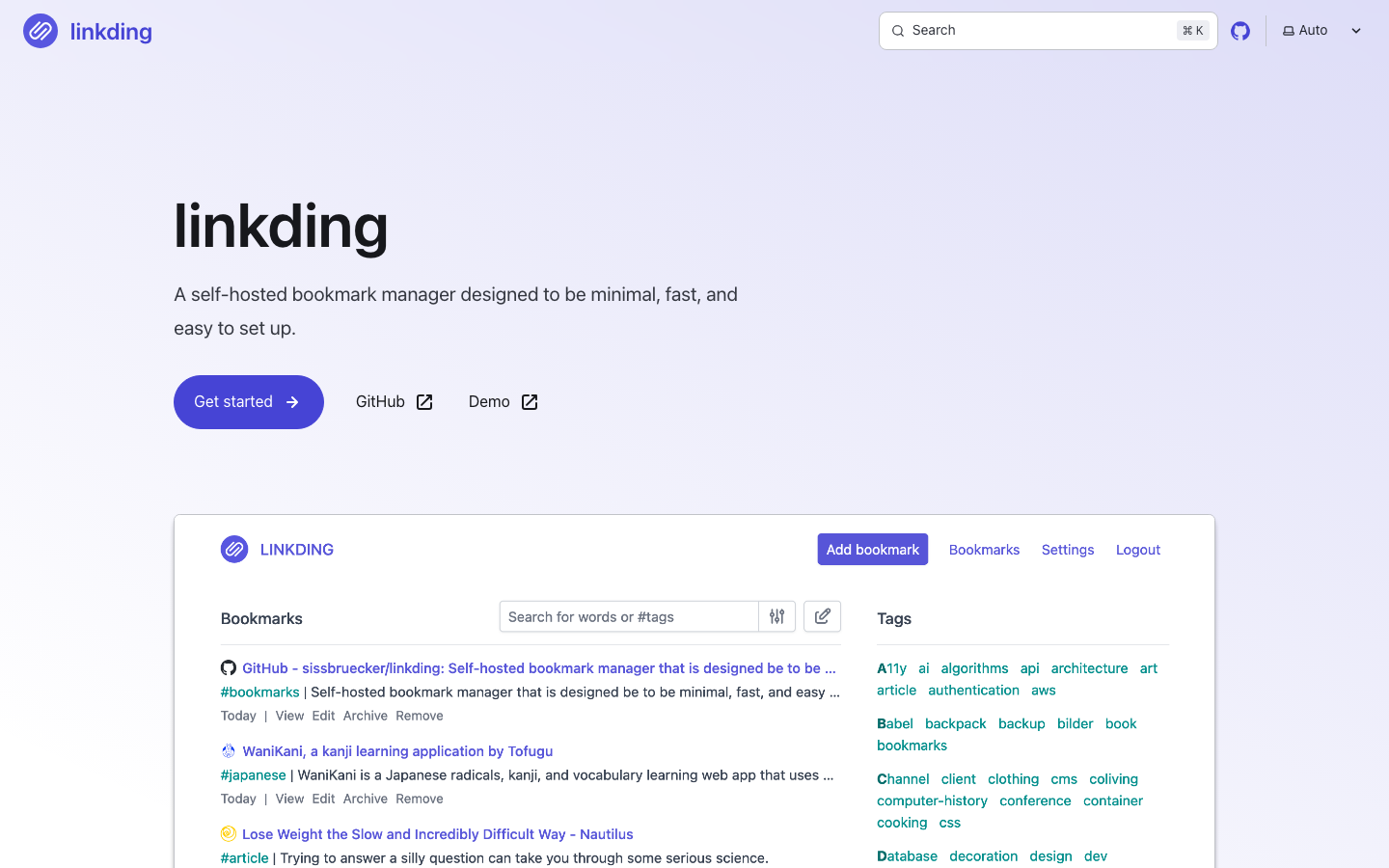
- Need a lightweight, Docker-first setup with minimal overhead? linkding is purpose-built for speed and simplicity, letting you spin up a personal bookmark vault in minutes without wrestling configuration.
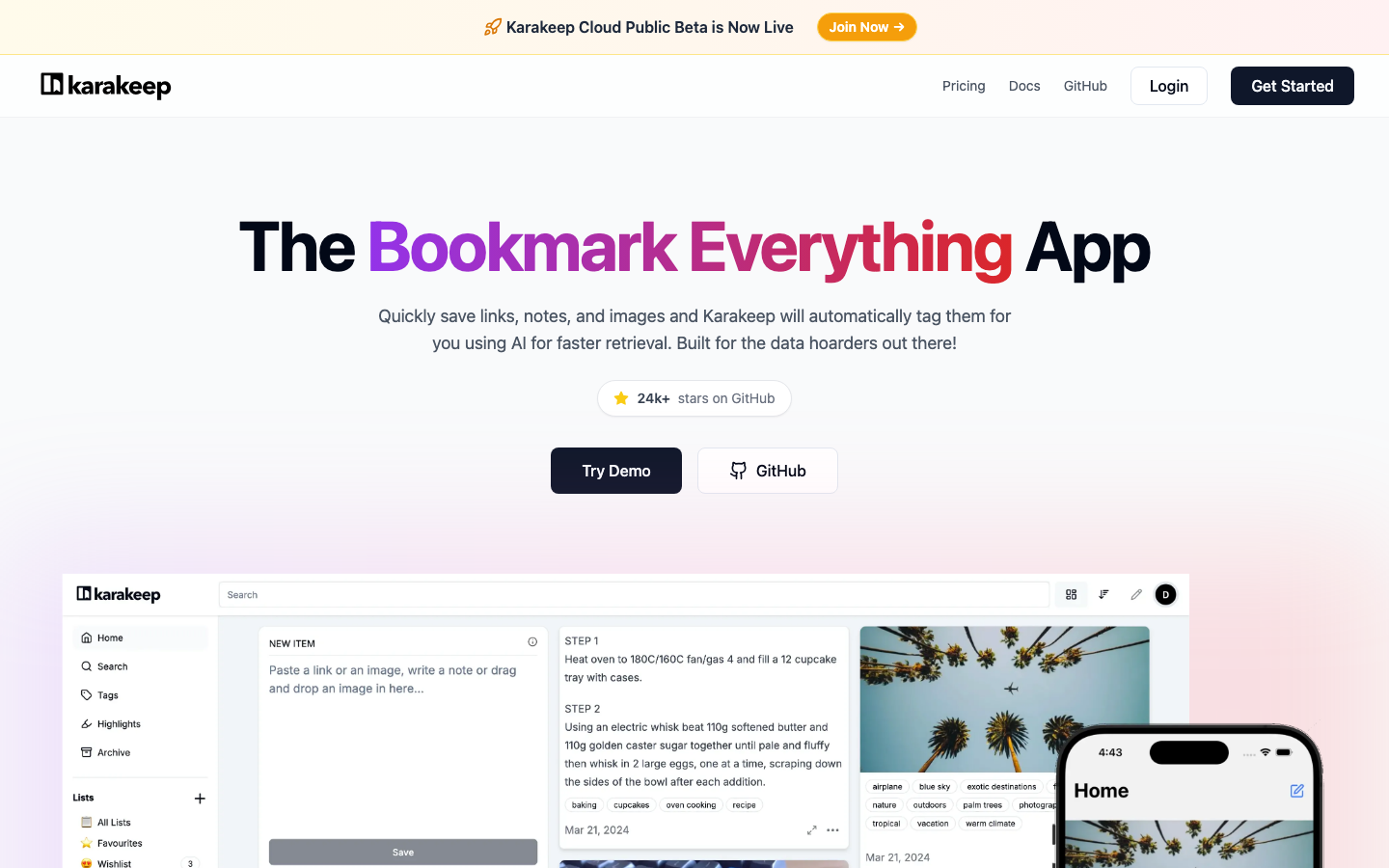
- Want AI-powered automatic organization across links, notes, and images? karakeep handles the tagging burden automatically, ideal for teams capturing diverse media types into a unified searchable archive.
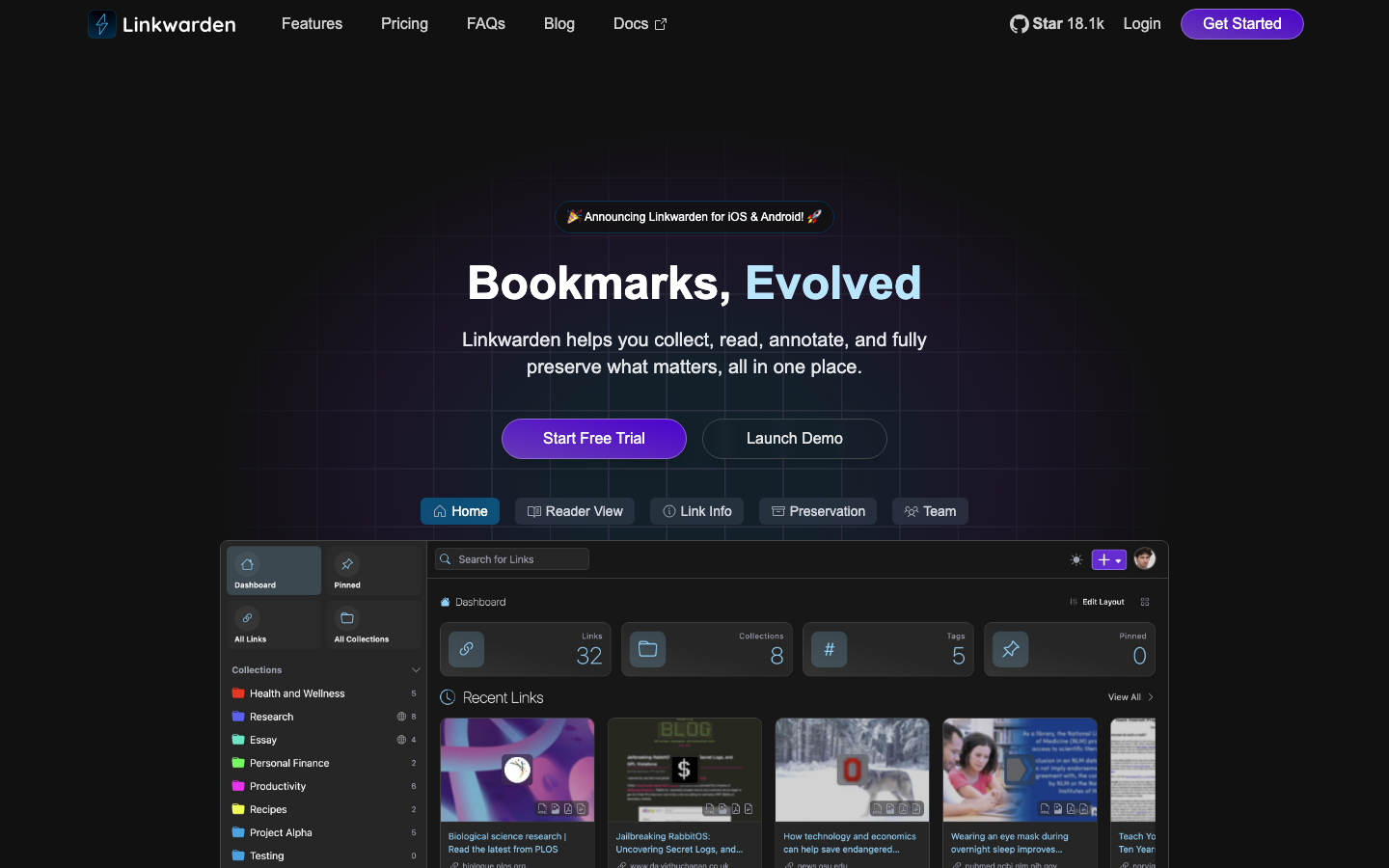
- Building a collaborative knowledge base where multiple people annotate and preserve web content together? linkwarden is designed for real-time teamwork, letting you collect, read, and preserve as a group without losing data to a third party's acquisition or shutdown.
Why teams leave Raindrop.io
The core issue is simple: Raindrop.io is a SaaS. Your bookmarks, highlights, metadata, and years of curation live on their servers under their terms. History teaches a hard lesson—read-later and bookmarking services get acquired, pivoted, or shut down with little warning. That's not speculation; it's the pattern. When your personal or team archive is the asset, hosting it yourself removes the existential risk.
Beyond survival, there's the lock-in question. While Raindrop offers CSV import and export, proprietary SaaS formats rarely port cleanly to other systems. You can leave, but moving 10,000 bookmarks with all their metadata, tags, and annotations is friction by design. Pricing, too, creeps upward—free tiers shrink, per-seat costs climb, and you're renegotiating your knowledge base budget annually.
Self-hosted alternatives flip the equation: your data stays yours, in open formats, on infrastructure you control. No vendor lock-in. No surprise shutdowns. No per-user fees. The trade-off is operational—you run the server—but for teams treating bookmarks as permanent institutional memory, that's a worthwhile exchange.
Quick comparison
| Name | License | Self-Hosted | Data Format / Portability | Real-time Collaboration | Best For |
|---|---|---|---|---|---|
| karakeep | AGPL-3.0 | ✓ | JSON; full export | — | AI-assisted tagging, mixed media archives |
| linkwarden | AGPL-3.0 | ✓ | Standard formats; export support | ✓ | Team annotation and preservation workflows |
| linkding | MIT | ✓ | HTML, JSON; clean exports | — | Minimal, fast personal or small-team setups |
| LinkAce | GPL-3.0 | ✓ | Database-backed; export available | — | Lightweight link archives with tagging |
| grimoire | MIT | ✓ | — | — | Minimalist bookmark curation |
| selfoss | GPL-3.0 | ✓ | Aggregation-focused; export support | — | RSS + bookmarks unified; content aggregation |
Top open-source alternatives to Raindrop.io
karakeep
A self-hosted bookmark and notes app that ingests links, images, and text snippets, then uses AI to auto-tag and categorize them. It's built for teams that want a unified inbox for web clippings without manual tagging overhead. Full-text search and collaborative note-taking are built in.
Pros
- Automatic tagging via AI reduces organizational friction at scale.
- Handles mixed media (links, images, notes) in a single system.
- Full-text search across all content types.
Cons
- Requires compute resources for AI inference; more demanding than lightweight alternatives.
- Collaboration features less mature than purpose-built team tools.
linkwarden
Purpose-built for collaborative teams, linkwarden lets you collect, read, annotate, and fully preserve web content in one place. It emphasizes both personal curation and team workflows, with real-time collaboration on reading lists and annotations. Data stays on your infrastructure, fully under your control.
Pros
- Native real-time collaboration; designed for team workflows from the ground up.
- Strong preservation focus; built to keep content intact long-term.
- AGPL license ensures transparency and community-driven development.
Cons
- Requires more setup and maintenance than minimal alternatives.
- Steeper learning curve for teams new to self-hosted tools.
linkding
A minimal, fast bookmark manager optimized for Docker deployment. It's deliberately lean—no bloat, no AI, no frills—just a clean way to save and search links. Perfect for individuals or small teams who want something up and running in minutes.
Pros
- Extremely fast and lightweight; runs on modest hardware.
- MIT license; no copyleft restrictions.
- Docker-first design; trivial to deploy and back up.
Cons
- Minimal collaboration features; designed for individual or read-only sharing.
- No built-in annotation or highlighting tools.
LinkAce
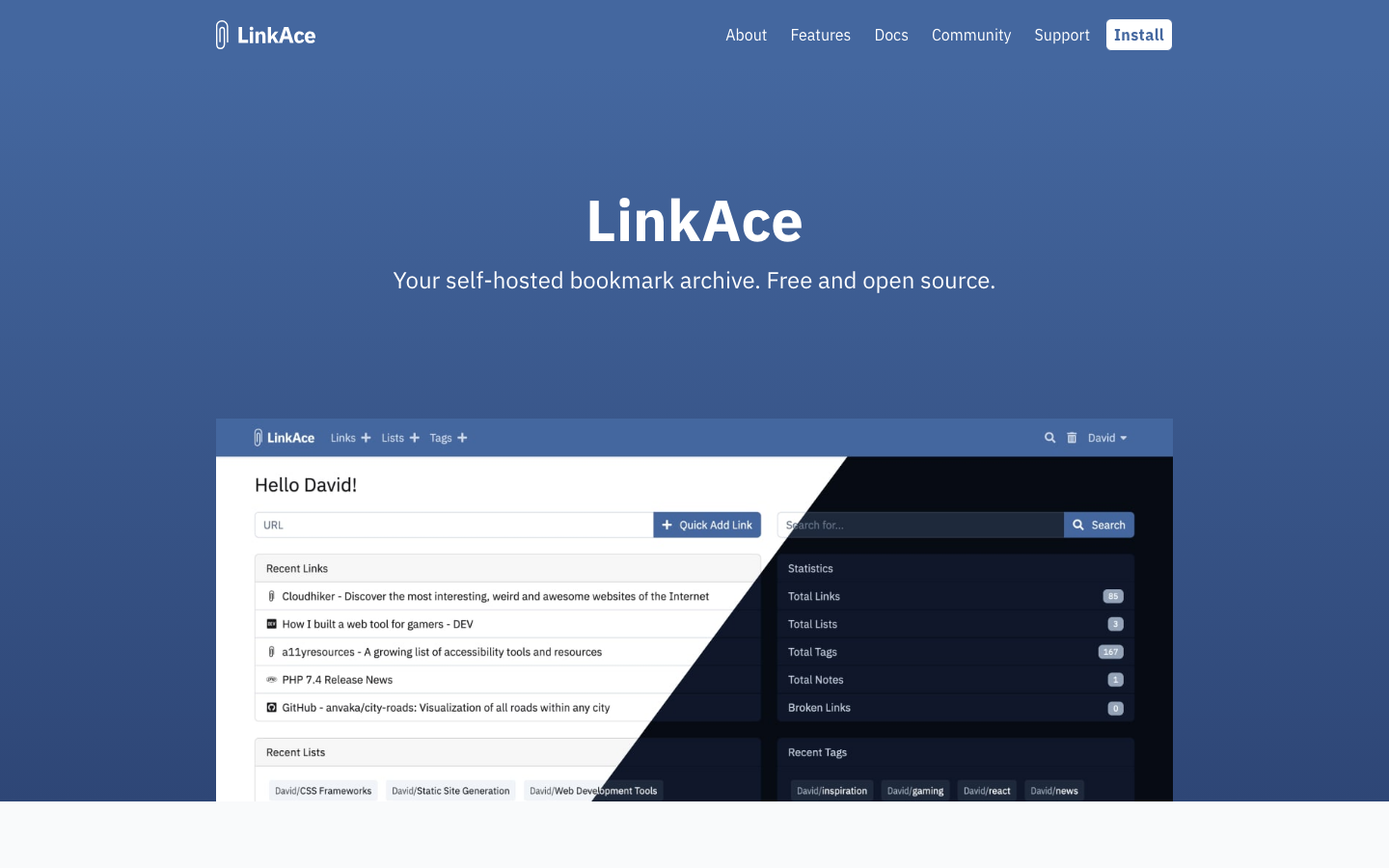
A self-hosted link archive built on PHP, offering tagging, categorization, and search across your saved links. It's lightweight and straightforward, suited for teams wanting a no-nonsense link collection without extra features.
Pros
- Simple, stable codebase; easy to understand and modify.
- Low resource footprint.
- Tagging and search work well for most use cases.
Cons
- Smaller community and fewer active contributors than larger projects.
- Limited collaboration or annotation features.
grimoire
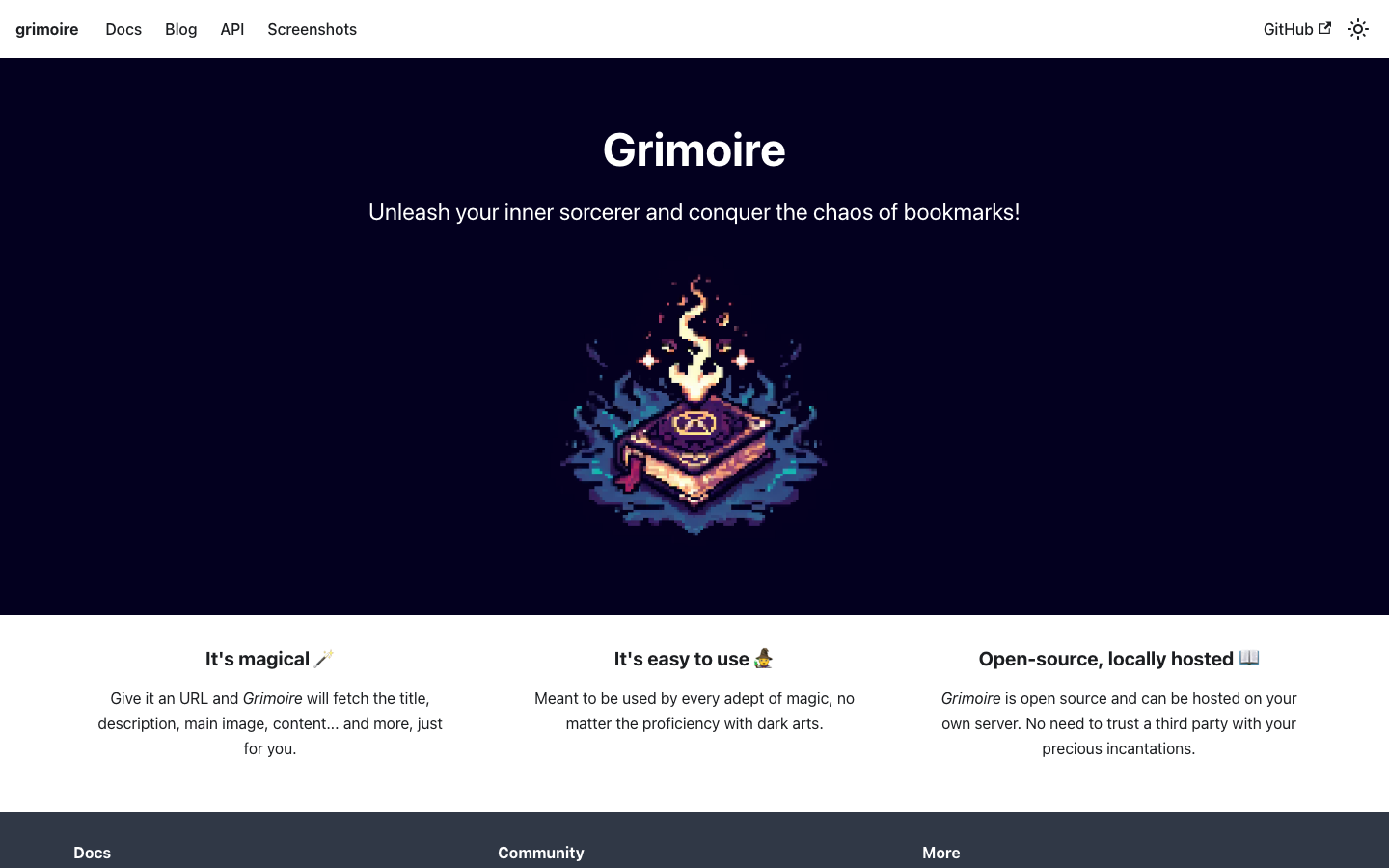
A minimalist bookmark manager with a focus on elegant curation. It's designed for people who want to bookmark thoughtfully without unnecessary UI clutter or features.
Pros
- Extremely lightweight and fast.
- MIT license; permissive and community-friendly.
Cons
- Smaller project with less documentation and community support.
- Limited advanced features (collaboration, full-text search, etc.).
selfoss
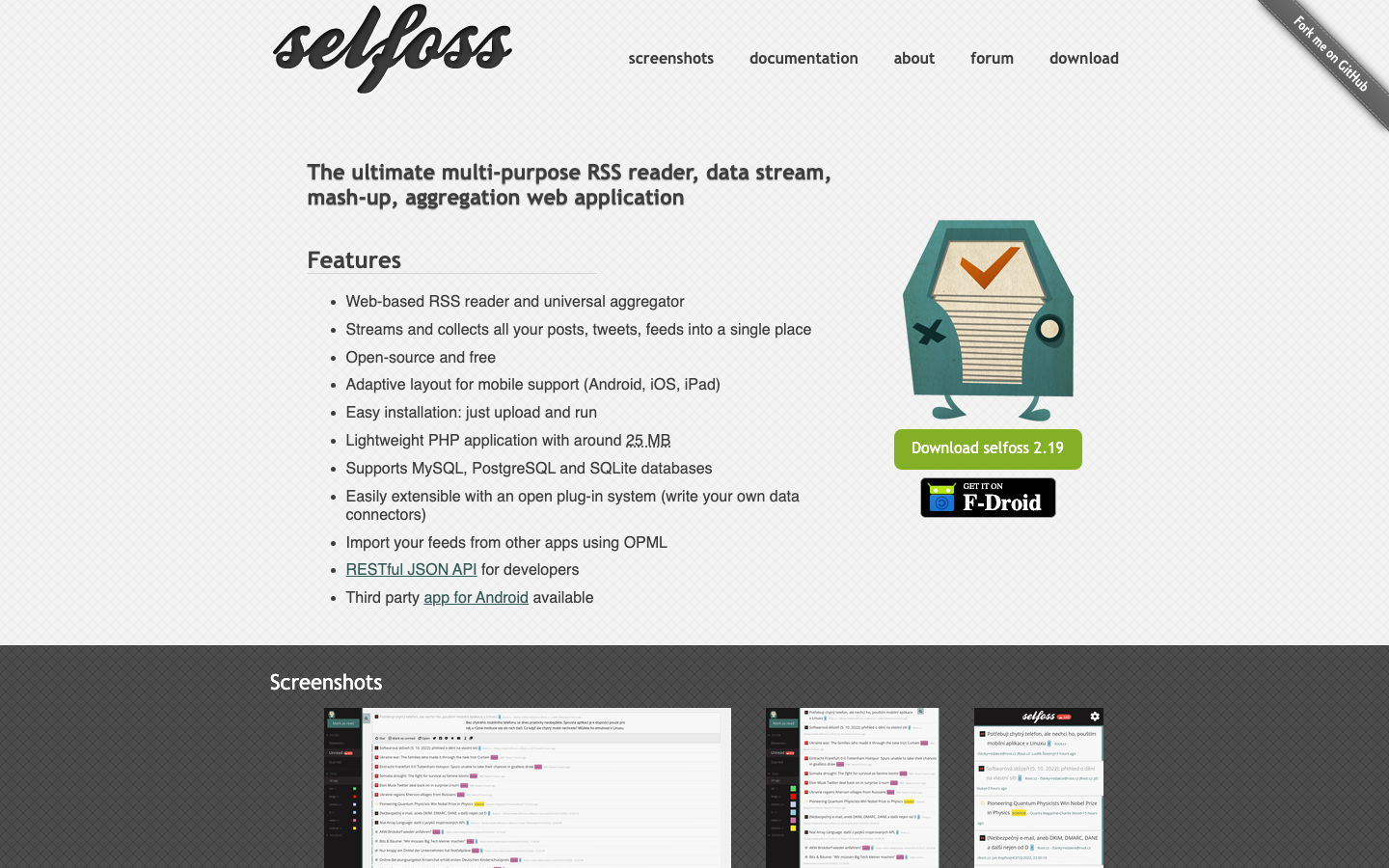
A multipurpose RSS reader and content aggregation platform that doubles as a bookmark and link manager. It unifies feed subscriptions, live streams, and manual bookmarks in one dashboard, making it ideal for teams that blend news monitoring with knowledge curation.
Pros
- Unique dual role as RSS reader + bookmark manager; consolidates multiple tools.
- Aggregation-focused; good for teams monitoring multiple sources.
- GPL-3.0 license; transparent and community-driven.
Cons
- More complex than single-purpose bookmark managers; steeper setup learning curve.
- Real-time collaboration is not a primary design goal.
How to choose
Solo users prioritizing speed and simplicity: Start with linkding. It's the fastest path to a working bookmark vault, Docker-ready, and requires minimal maintenance.
Teams needing real-time collaboration and preservation: linkwarden is purpose-built for this. The extra setup cost pays off immediately when multiple people are annotating and curating together.
Organizations handling diverse media types (links, images, clippings, notes): karakeep eliminates manual tagging via AI, scaling well for large archives. Accept higher resource requirements in exchange for reduced organizational overhead.
Lightweight archives with modest feature needs: LinkAce or grimoire work well if your team just needs tagging and search without collaboration.
Teams blending news monitoring and bookmarking: selfoss is the only tool here that unifies RSS feeds and manual bookmarks; use it if you need both.