



TL;DR
- Privacy first: Choose SimpleX-style decentralization if you need metadata minimization and no phone-number identity requirement—chitchatter delivers serverless, ephemeral peer-to-peer chat with zero infrastructure dependency.
- Full control matters: Teams needing self-hosting and federation should evaluate Peergos or RetroShare, both built for decentralized ownership without reliance on any central authority.
- Cost is zero, but lock-in is real: Signal's non-profit model means no per-user fees, yet its phone-number binding and closed architecture create switching friction that open alternatives eliminate through federation and self-hosting.
Why teams leave Signal
Signal's funding model is genuinely sustainable—a non-profit backed by major donations, no ads, no per-user charges. That's not the problem. The problem is identity and control.
Signal ties every account to a phone number. For journalists, whistleblowers, activists, and teams operating across jurisdictions, this is a dealbreaker. Phone numbers are trackable, often tied to government ID, and create a permanent digital trail. Once your identity is locked to that number in Signal's centralized system, there's no way to separate it.
The deeper issue: Signal runs on Signal's servers. There's no federation, no self-hosting option, no way to run it on your own infrastructure or connect it to other networks. If Signal changes its terms, gets compromised, or becomes unavailable in your region, you have no fallback. You're dependent on the Signal Foundation's continued operation and goodwill. For compliance-heavy organizations, this centralized architecture also means data lives on someone else's servers—a non-starter for many enterprises and regulated teams.
Teams with these constraints—privacy-first operations, on-premise requirements, number-free identity, or federation needs—look elsewhere. The alternatives below address one or more of these gaps.
Quick comparison
| Name | License | Self-Hosted | Federation | E2E Encryption | Best For |
|---|---|---|---|---|---|
| c-toxcore | GPL-3.0 | Yes | Peer-to-peer | Yes | Decentralized, protocol-level security |
| Peergos | AGPL-3.0 | Yes | Yes | Yes | File storage + chat, identity control |
| chitchatter | GPL-2.0 | Yes | Peer-to-peer | Yes | Ephemeral, serverless conversations |
| enclosed | Apache-2.0 | Yes | No | Yes | Secure note-sharing, minimal footprint |
| RetroShare | License not declared | Yes | Friend-to-friend | Yes | Decentralized social + file network |
Top open-source alternatives to Signal
c-toxcore
c-toxcore is a peer-to-peer communication protocol and library designed to be the foundation for decentralized messaging. It operates without central servers, routing messages directly between peers or through a DHT (distributed hash table). The protocol prioritizes security at the architectural level rather than bolting it on top.
Pros:
- Pure peer-to-peer means no single point of failure or censorship vector
- Protocol-level encryption and decentralization eliminate server-side metadata risks
- Can be embedded into custom applications, not locked into one UI
Cons:
- Lower user adoption and ecosystem maturity compared to Signal
- Requires technical setup; not a drop-in mobile app for non-technical users
Peergos
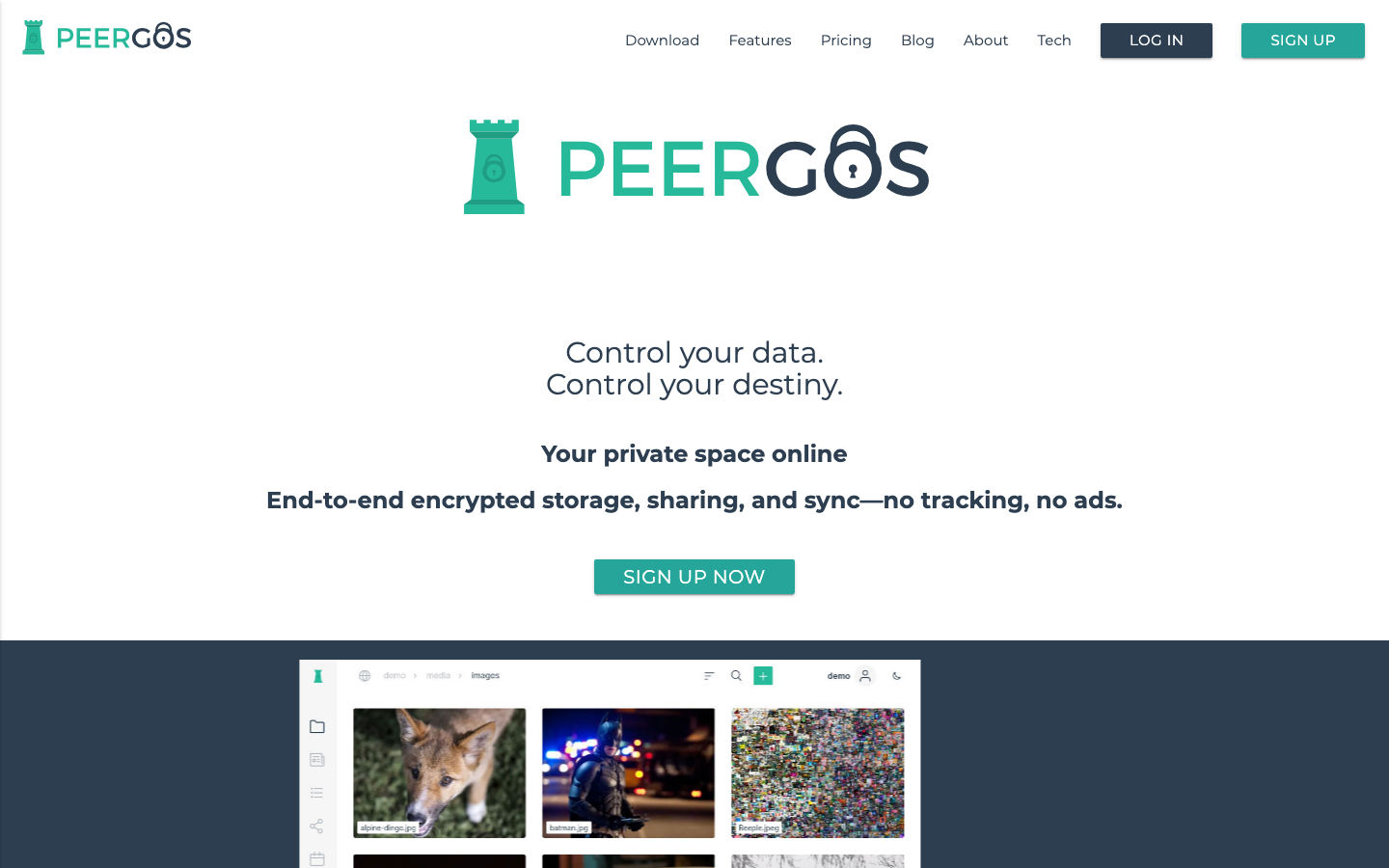
Peergos is a peer-to-peer social network and file storage system that combines secure messaging with document collaboration. It uses content-addressed storage and allows users to control their own identity and data without delegating to a central authority. Federation is built in—you can run your own Peergos node and connect to the broader network.
Pros:
- Self-hosted nodes that federate; you own your data and can migrate freely
- Integrated file sharing and collaborative features beyond chat
- Identity is decoupled from phone numbers; you control your account
Cons:
- Smaller user base and less polished mobile experience than Signal
- Steeper learning curve for non-technical teams
chitchatter
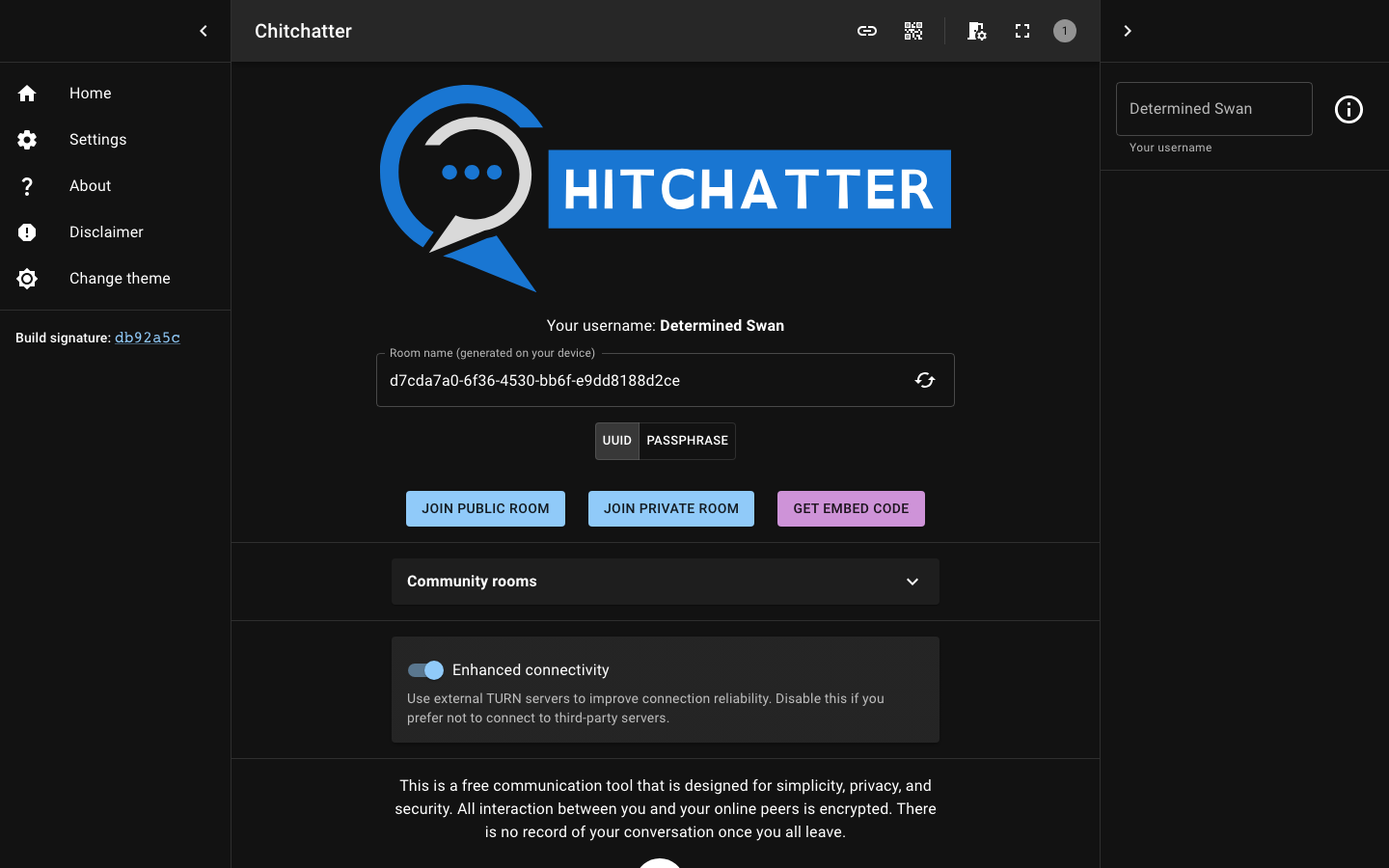
chitchatter is a browser-based peer-to-peer chat application that requires no server, no account creation, and no persistent infrastructure. Conversations are ephemeral and decentralized; peers connect directly via WebRTC or similar mechanisms. It's designed for temporary, secure conversations without any backend.
Pros:
- Zero setup required; works in the browser without installation or account creation
- Messages don't persist on any server; privacy by design
- Ideal for quick, sensitive conversations that should leave no trace
Cons:
- Not suitable for long-term message history or team continuity
- Limited to browser-based communication; no native mobile app
enclosed
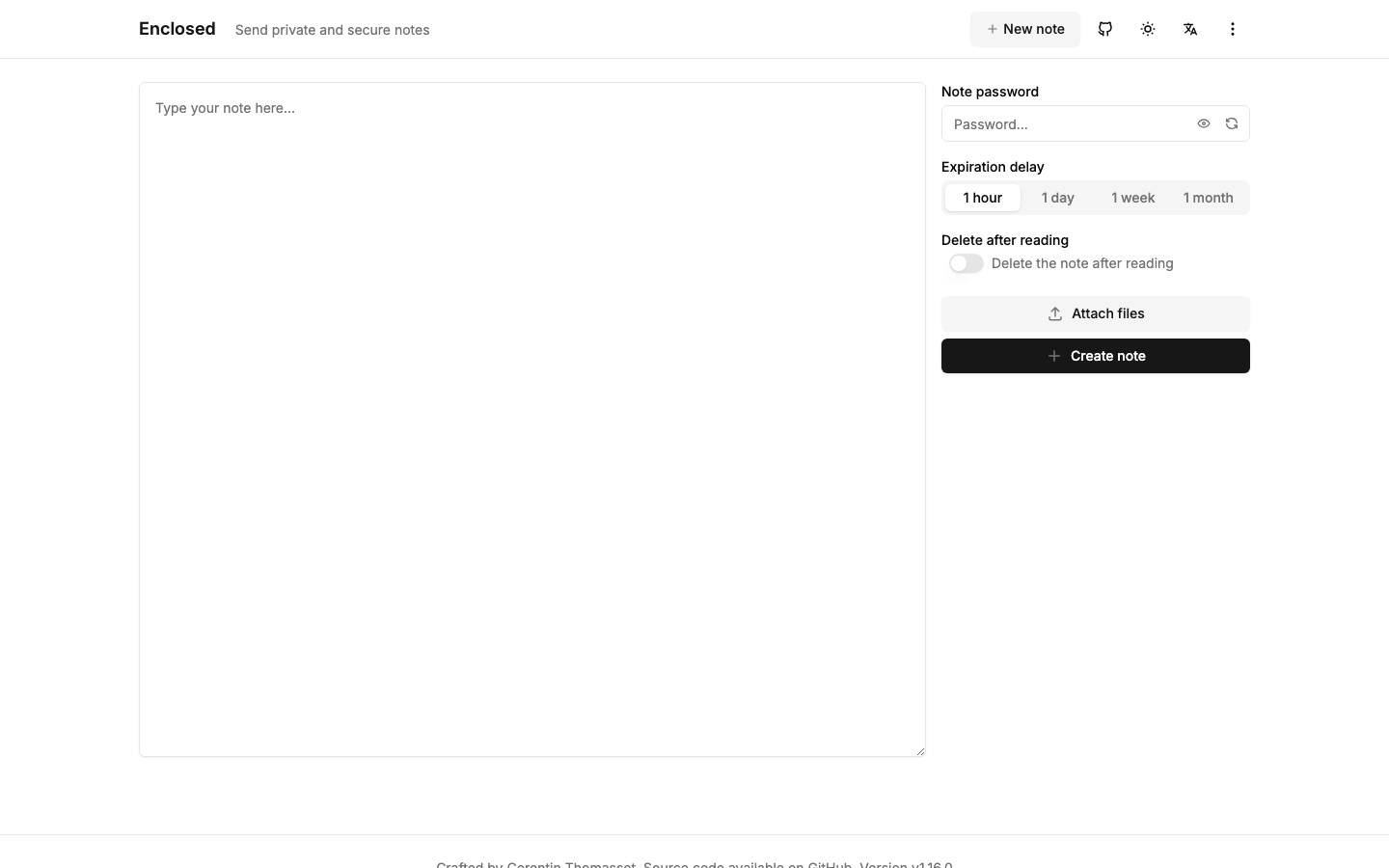
enclosed is a minimalist web application for sharing encrypted notes and secrets. It emphasizes simplicity and security, letting users generate a link to a note that self-destructs or expires. No account or login required.
Pros:
- Extremely lightweight and easy to deploy; minimal dependencies
- Focuses on a single use case (secure note-sharing) and does it well
- Can be self-hosted or used as a public instance
Cons:
- Not a full messaging or social platform; better for one-off secure sharing than ongoing conversations
- Limited collaboration features
RetroShare
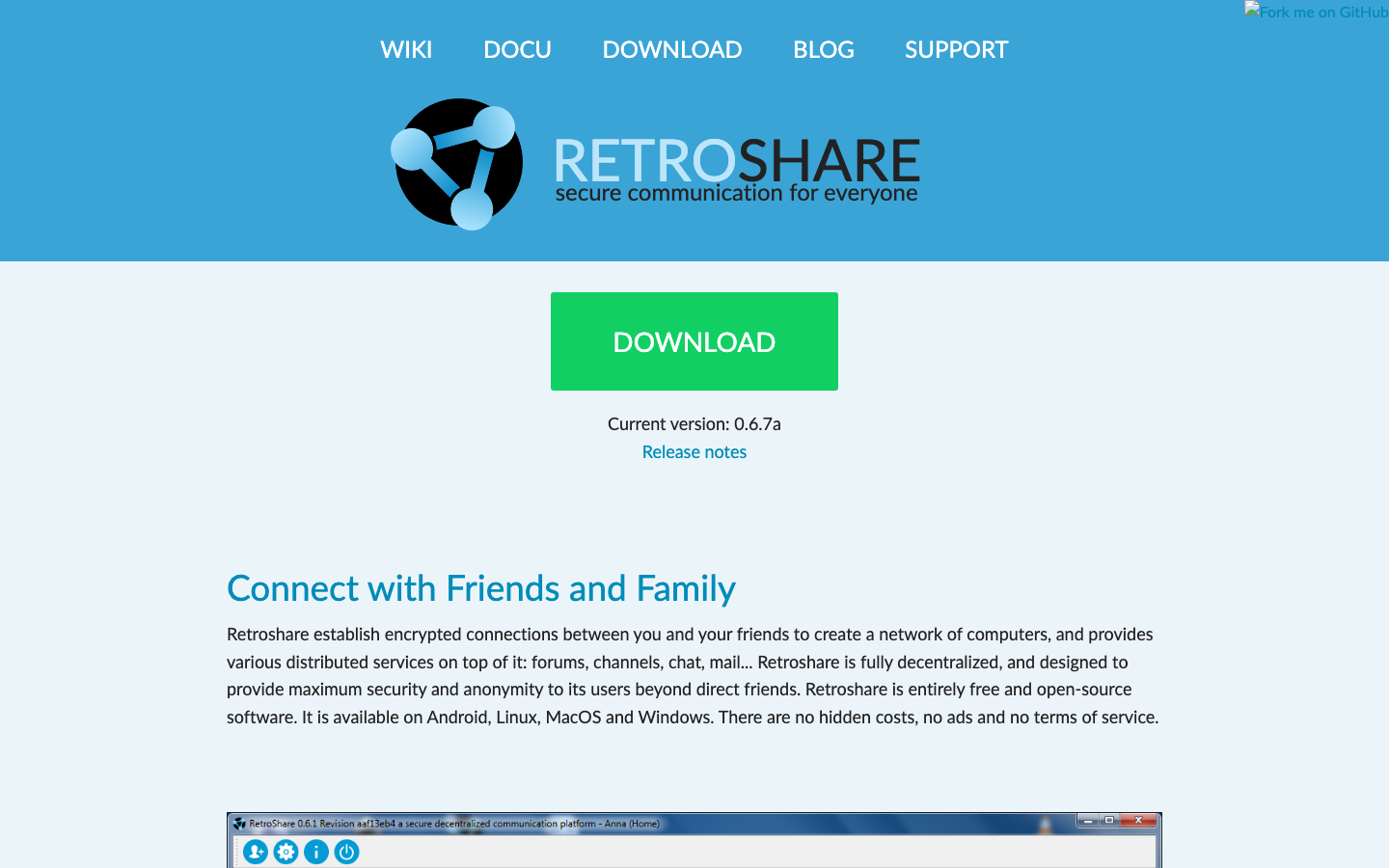
RetroShare is a friend-to-friend and decentralized communication platform that combines encrypted messaging, file sharing, forums, and social features. It builds a web of trust between peers and encrypts all communication end-to-end. Unlike purely peer-to-peer systems, it leverages your social graph as the backbone of the network.
Pros:
- Rich feature set: chat, file sharing, forums, and social networking in one platform
- Friend-to-friend model means you control your network topology and trust relationships
- Fully decentralized and self-hosted; no central authority
Cons:
- More complex to set up and understand than Signal
- Smaller active community; less frequent updates than mainstream alternatives
How to choose
For ephemeral, high-sensitivity conversations: chitchatter requires no setup and leaves no trace—ideal for journalists, activists, or one-time secure exchanges.
For teams needing full data ownership and federation: Peergos or RetroShare let you self-host and connect to a broader network without depending on any single company.
For protocol-level decentralization: c-toxcore is the right choice if you're building a custom app and want peer-to-peer security baked into the foundation.
For simple, secure note-sharing: enclosed is lightweight enough to deploy in minutes and solves the specific problem of sharing secrets without infrastructure overhead.
If you need Signal's polish and ease of use but reject its phone-number identity and centralization, start with Peergos. If you need maximum privacy with zero persistence, chitchatter wins. If you're building infrastructure for a team or organization, evaluate RetroShare for its richer feature set or c-toxcore for architectural flexibility.