









TL;DR
- Keep costs predictable and avoid per-seat SaaS pricing: Keystone and Squidex both run fully self-hosted with MIT licenses, eliminating Strapi Cloud's tiered seat and usage fees.
- Own your content database and API without vendor lock-in: Wagtail and Apostrophe are built on proven frameworks (Django and Node.js) that let you control your entire stack and exit whenever you choose.
- Scale without worrying about request limits or backups: Self-hosting any of these projects means no surprise overage charges as your API traffic grows—you control infrastructure costs directly.
Why teams leave Strapi
Strapi's open-source core is free, but the managed experience comes with a cost structure that compounds quickly. The Developer tier starts around $29/month, but Pro plans jump to ~$99/month, and Team plans reach ~$499/month—and that's before you hit per-request or storage overages. For teams running content APIs in production, these costs add up fast, especially when scaling across multiple environments or seat counts.
Beyond pricing, the real friction emerges around ownership. Strapi Cloud locks you into their managed infrastructure: backups, SLAs, and API rate limits all live behind a paywall. If you want to migrate content, switch hosting, or integrate with custom infrastructure, you're either paying for higher tiers or fighting data export workflows. Self-hosting the open-source version avoids this, but it puts DevOps burden on your team. Teams comparing alternatives typically want a middle ground: a CMS that's genuinely open-source, runs anywhere, and doesn't meter usage or seats.
For e-commerce and content-heavy projects, the per-request or per-seat model also creates unpredictable costs as your audience grows. You lose the ability to optimize your own infrastructure, and you're always a few viral campaigns away from an unexpected bill.
Quick comparison
| Name | License | Self-Hosted | Plugin Ecosystem | Headless / API | Best For |
|---|---|---|---|---|---|
| JeecgBoot | Apache-2.0 | ✓ | Extensive (AI, plugins) | REST + GraphQL | Low-code rapid development; internal tools |
| Wagtail | BSD-3-Clause | ✓ | Django ecosystem | REST / GraphQL (via plugins) | Content-first sites; editorial workflows |
| Keystone | MIT | ✓ | React + Node.js ecosystem | GraphQL-native | Flexible headless CMS; developer-friendly |
| Umbraco CMS | MIT | ✓ | .NET ecosystem | REST / GraphQL (via packages) | Enterprise .NET shops; traditional CMS users |
| Apostrophe | License not declared | ✓ | Node.js + in-context editing | REST / headless | Full-stack JS teams; hybrid editing workflows |
| Pimcore | License not declared | ✓ | Extensive (PIM, DAM, CDP) | REST / GraphQL | Product data; digital commerce; multi-channel |
| Squidex | MIT | ✓ | .NET ecosystem | GraphQL + REST | .NET teams; schema-first headless CMS |
| Cockpit | License not declared | ✓ | Lightweight | REST / GraphQL | Minimal, self-hosted content API |
Top open-source alternatives to Strapi
JeecgBoot
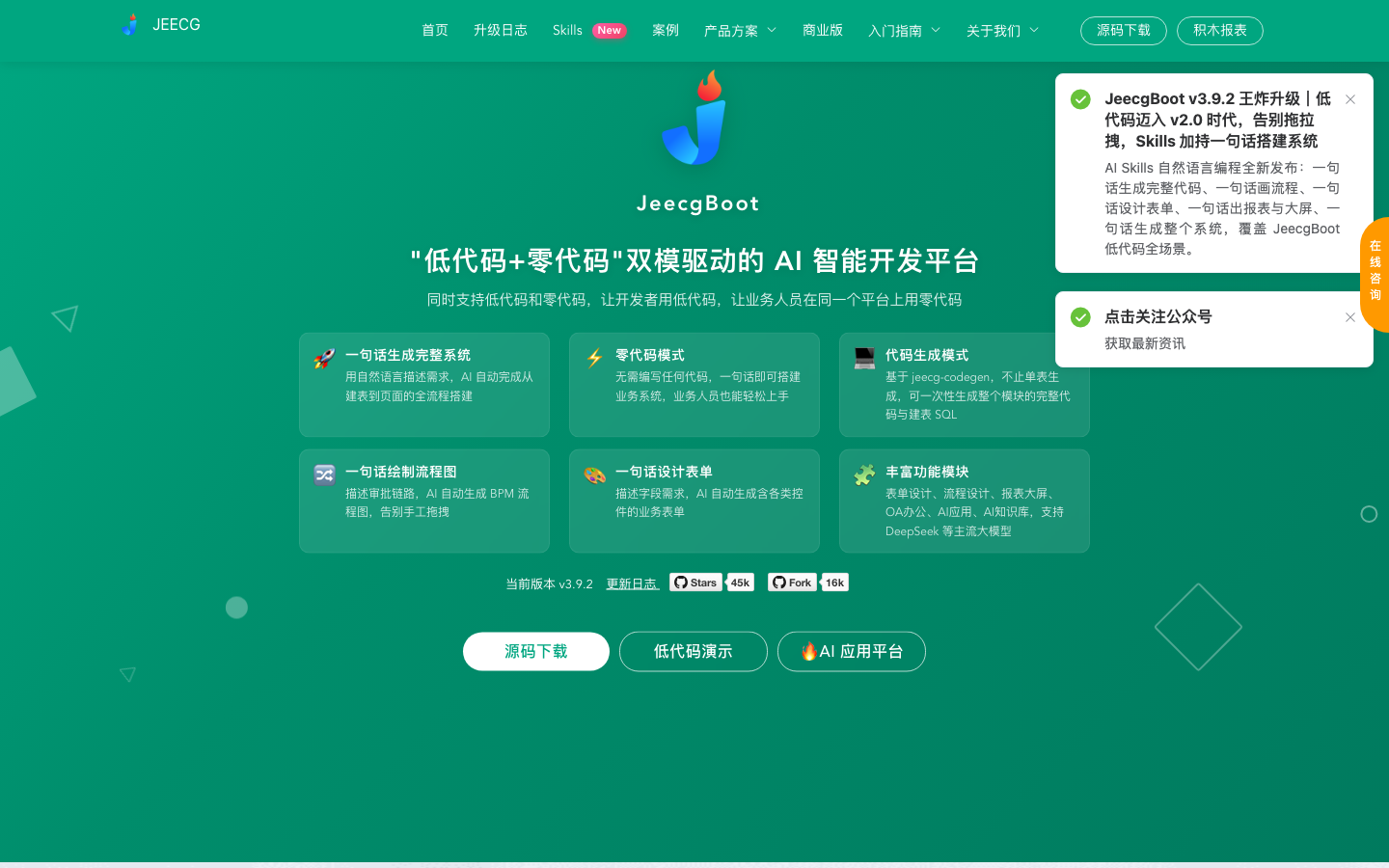
JeecgBoot is an AI-powered low-code platform that bridges zero-code and low-code modes, letting teams build business systems and APIs in minutes without writing boilerplate. It combines rapid UI generation, AI-assisted workflows, and code generation for Java backends, cutting repetitive work by ~80% while preserving flexibility for custom logic.
Pros
- Built-in AI for form design, process diagramming, and code generation—dramatically speeds up prototyping and reduces manual work.
- Dual-mode approach: use zero-code for simple cases, drop into low-code or hand-written Java when you need control.
- Self-hosted on Apache 2.0, no usage limits or per-seat pricing.
Cons
- Heaviest lift for teams not already invested in Java; steeper learning curve than lightweight headless CMS options.
- Positioned more as a full application platform than a pure content API, so overkill if you only need content management.
Wagtail
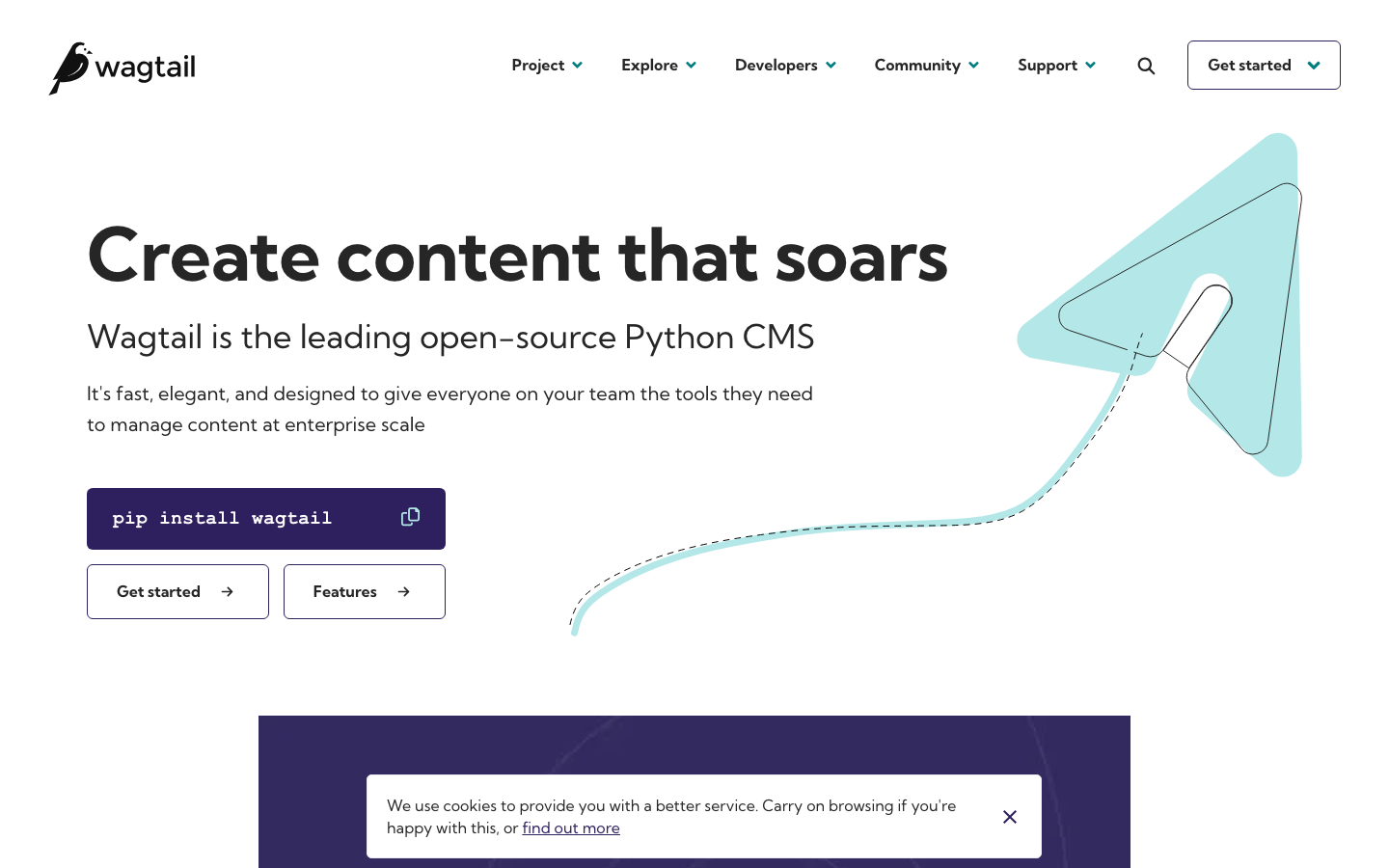
Wagtail is a Django-native content management system built for editorial teams and content-first websites. It emphasizes a flexible, intuitive authoring experience and integrates seamlessly with Django's ecosystem, making it ideal for teams who want CMS power without abandoning their Python stack.
Pros
- Excellent editorial UX with in-context editing and a polished admin interface; content editors feel at home.
- Full Django integration means you can customize and extend using Python; no API lock-in.
- BSD-3-Clause license and self-hosted only—no surprise SaaS bills.
Cons
- Traditionally stronger as a traditional CMS than a headless API; GraphQL support requires additional packages.
- Django expertise expected; steeper for teams without Python experience.
Keystone
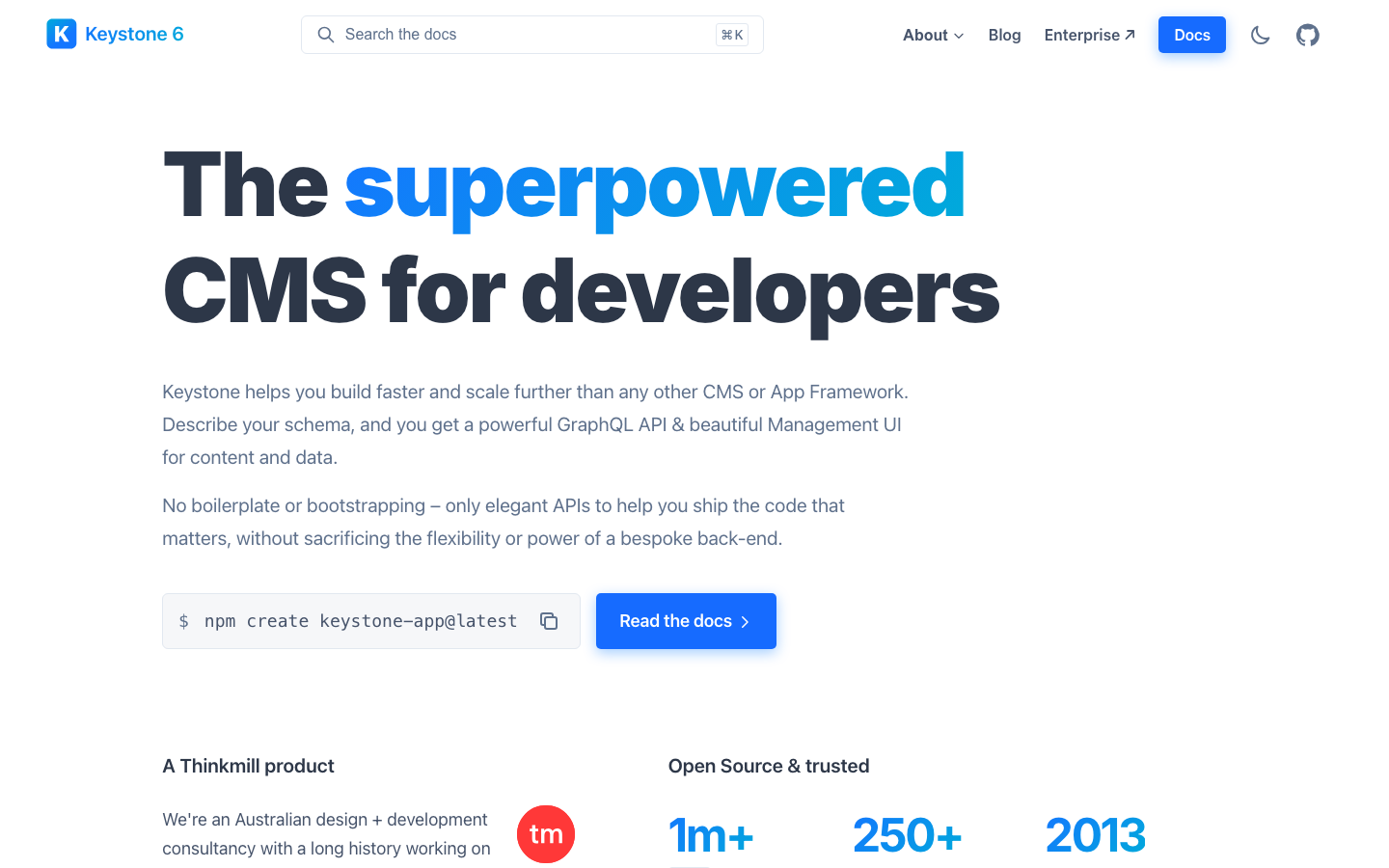
Keystone is a superpowered headless CMS built on GraphQL and React, designed for teams who want a modern, API-first foundation without sacrificing flexibility. It generates a full GraphQL schema from your content model and includes an intuitive admin UI out of the box.
Pros
- GraphQL-native and schema-driven; perfect for teams building modern JavaScript frontends.
- MIT license, fully self-hosted, and no per-request or per-seat pricing.
- Strong React admin UI and extensive Node.js ecosystem integration.
Cons
- Smaller ecosystem than Strapi or Wagtail; fewer pre-built plugins and integrations.
- Requires Node.js and GraphQL familiarity; not ideal for teams preferring REST-only APIs.
Umbraco CMS
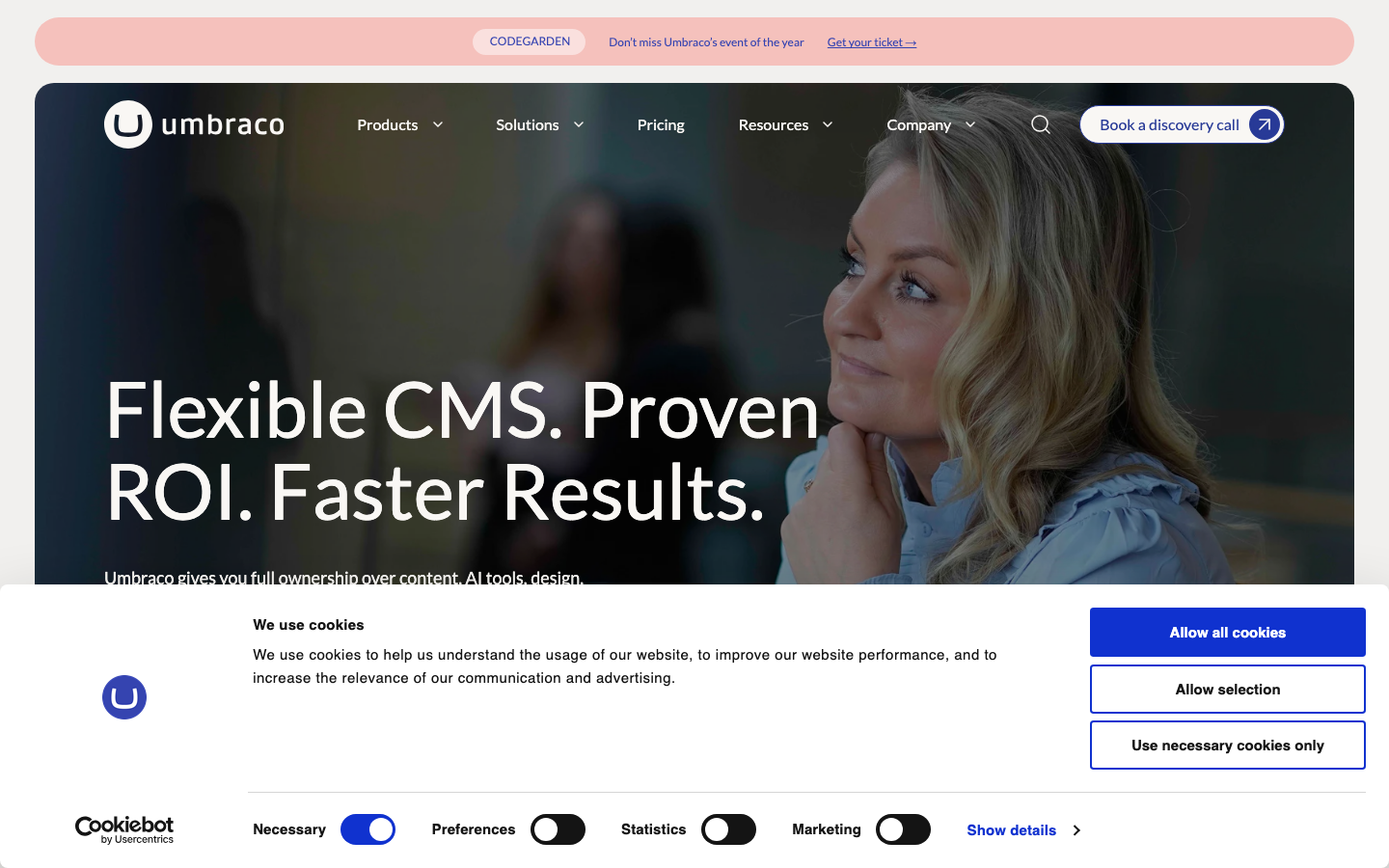
Umbraco is a free, MIT-licensed .NET content management system with a long track record in enterprise environments. It supports both traditional and headless workflows, making it a natural fit for organizations already committed to the Microsoft stack.
Pros
- Mature .NET ecosystem with extensive plugin support and a large community.
- Flexible content modeling and strong editorial UX for content teams.
- MIT license and self-hosted; no vendor lock-in or usage-based pricing.
Cons
- Requires .NET infrastructure; not ideal for JavaScript-first or polyglot teams.
- Headless capabilities are solid but less GraphQL-native than Keystone.
Apostrophe
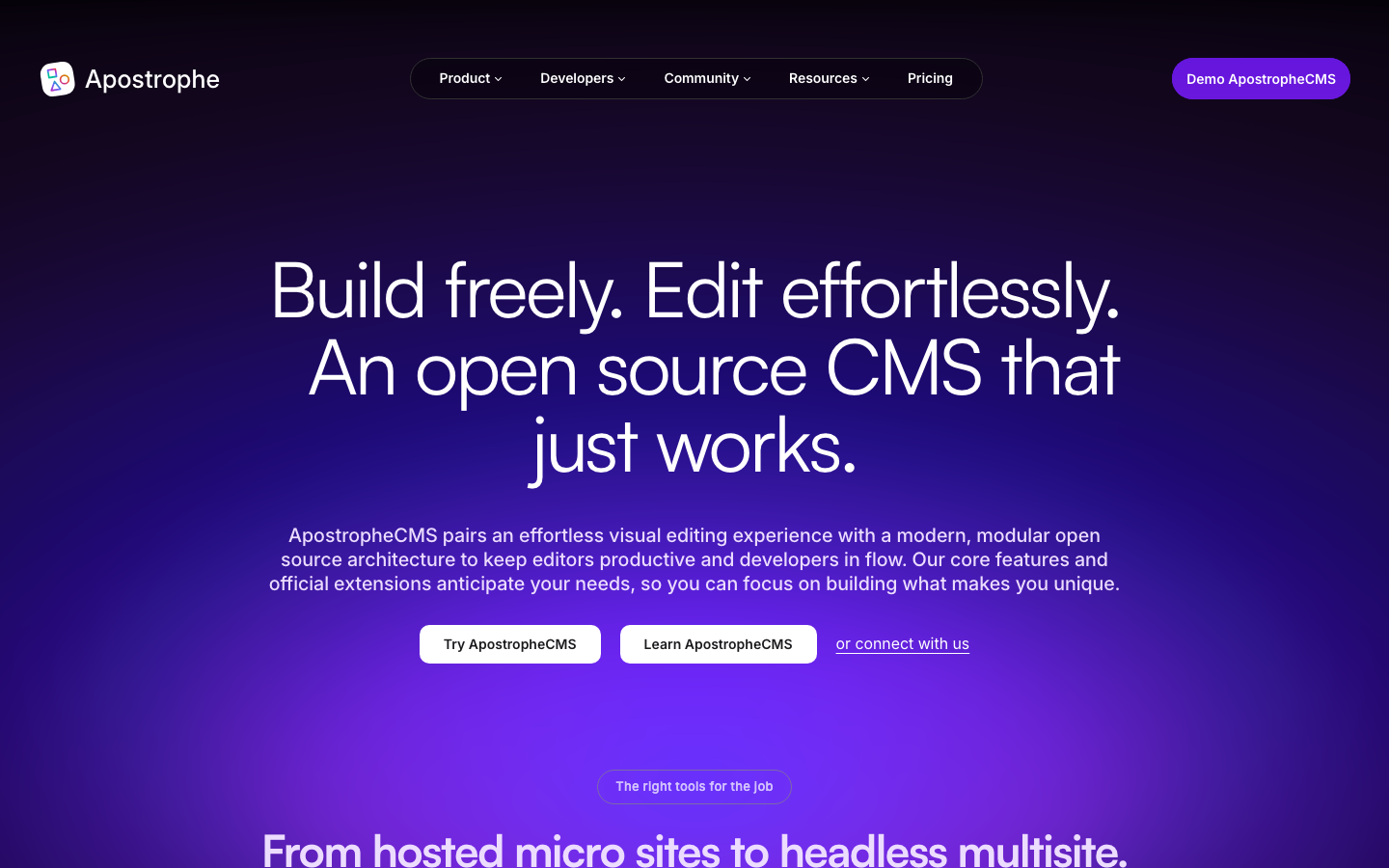
Apostrophe is a full-stack Node.js CMS that uniquely combines in-context editing (edit content where it appears on the page) with true headless architecture. It's built for teams who want both developer flexibility and a great content editor experience without compromise.
Pros
- Hybrid approach: edit in-context on your site and serve content as a headless API simultaneously.
- Full-stack JavaScript means frontend and backend teams speak the same language.
- Self-hosted, no per-seat or usage fees; you control your entire infrastructure.
Cons
- License not formally declared; less legal clarity than MIT or Apache projects.
- Smaller community and ecosystem compared to Strapi or Wagtail.
Pimcore
Pimcore is an open-core data and experience management platform that goes beyond CMS to include PIM (product information management), DAM (digital asset management), and CDP capabilities. It's built for organizations managing complex product catalogs, multi-channel commerce, and rich media.
Pros
- All-in-one platform for content, products, assets, and customer data; eliminates tool sprawl.
- Enterprise-grade features (workflows, versioning, multi-language) built in.
- Self-hosted and open; scales with your infrastructure, not usage meters.
Cons
- License not formally declared; adds some legal ambiguity.
- Complexity and learning curve; overkill if you only need basic content management.
Squidex
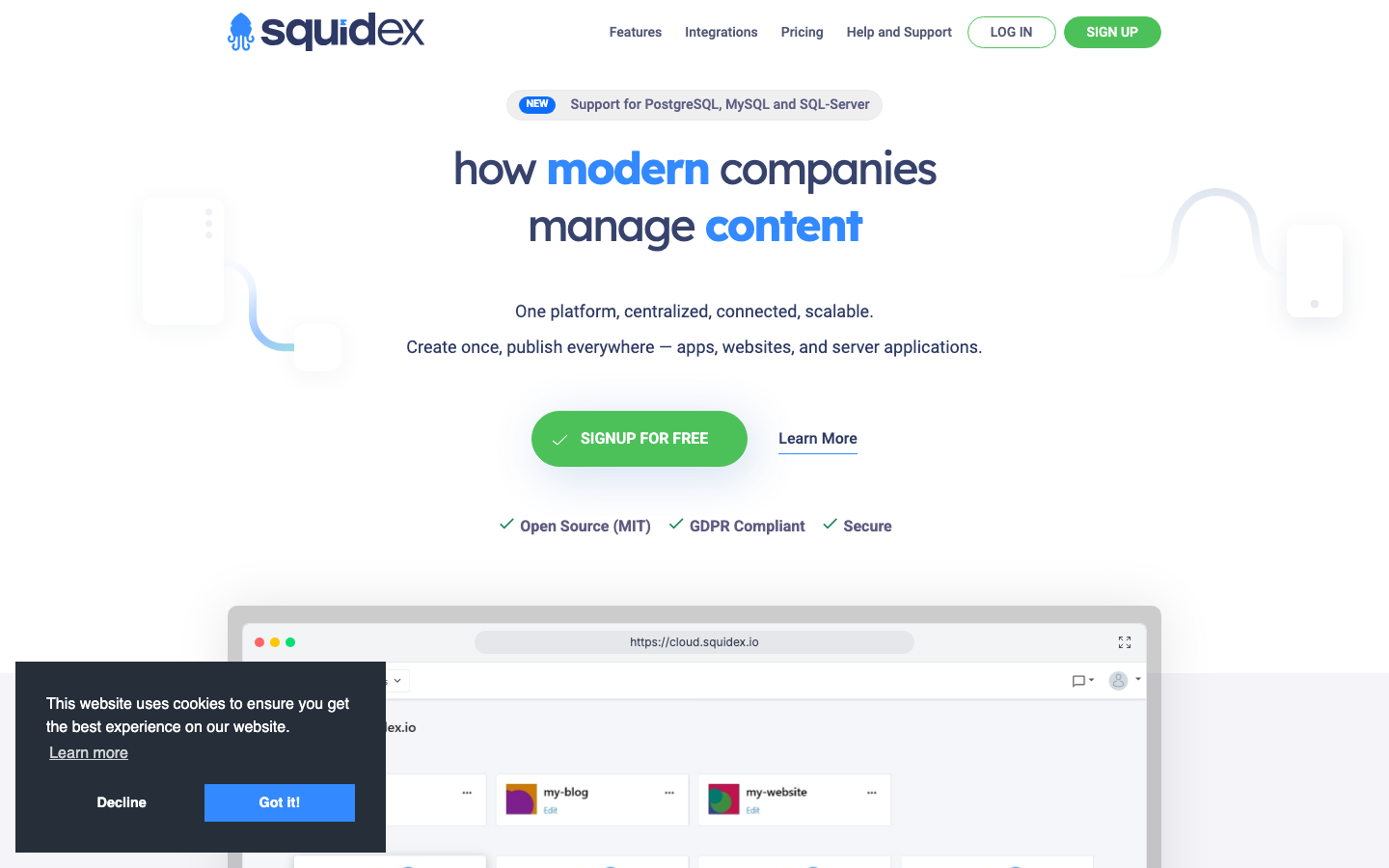
Squidex is a headless CMS and content management hub built on .NET with a clean, schema-first design. It's lightweight compared to Pimcore but more feature-rich than minimal alternatives, and it speaks both GraphQL and REST natively.
Pros
- MIT license, fully self-hosted, no per-seat or usage-based pricing.
- Native GraphQL and REST APIs; schema-first approach makes API contracts explicit.
- Fast and lightweight; lower operational overhead than larger platforms.
Cons
- Smaller ecosystem than Strapi or Wagtail; fewer plugins and integrations.
- .NET stack requirement; less ideal for JavaScript-first teams.
Cockpit
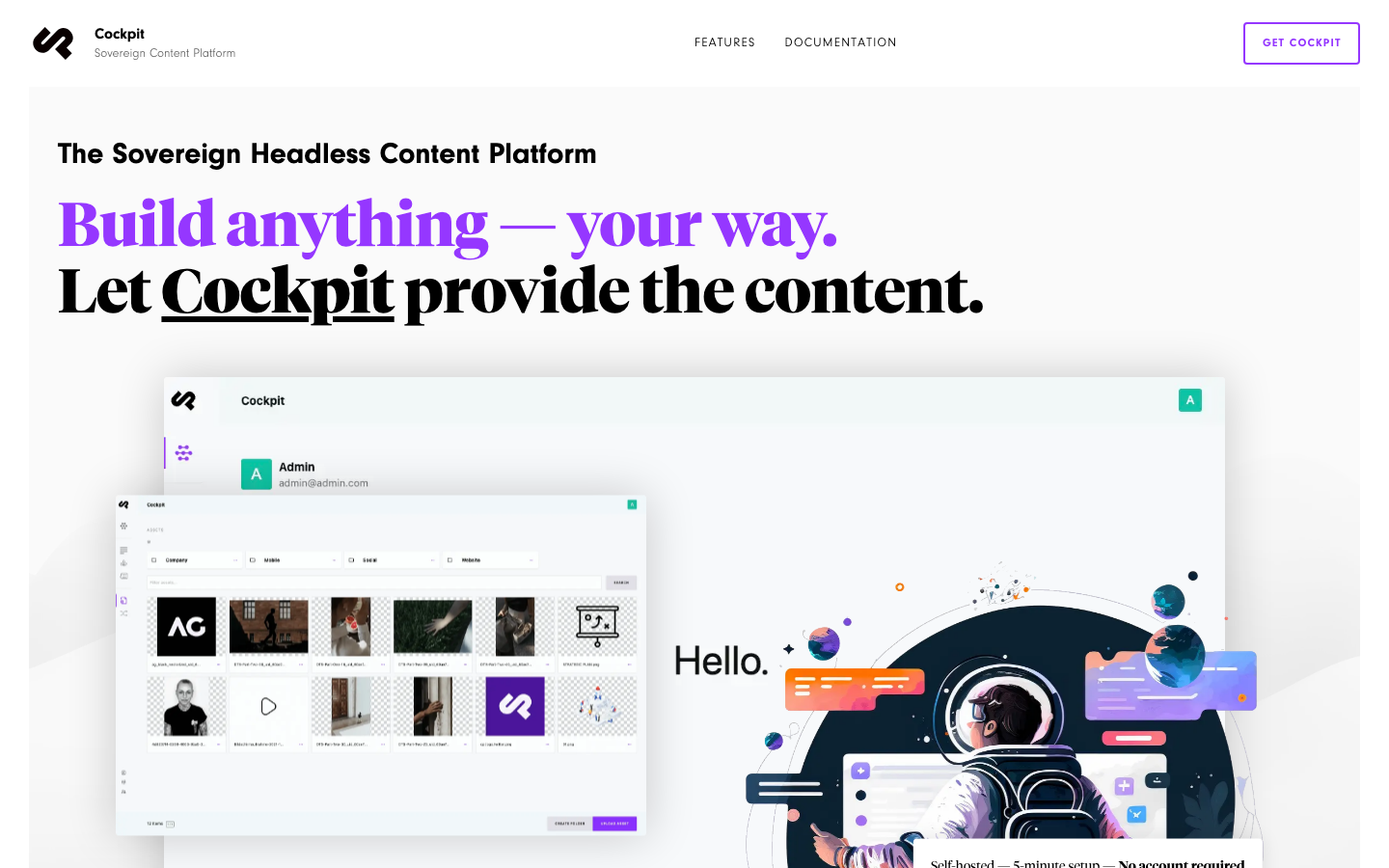
Cockpit is a minimal, self-hosted content platform focused on simplicity and low operational overhead. It provides a lightweight REST and GraphQL API without the complexity of larger CMS platforms, making it ideal for teams who want to own their content infrastructure with minimal dependencies.
Pros
- Extremely lightweight; minimal resource footprint and straightforward to deploy.
- Self-hosted and free; no usage limits, per-seat pricing, or SaaS tiers.
- REST and GraphQL support in a tiny footprint.
Cons
- Minimal feature set; lacks advanced editorial workflows, versioning, and multi-language support out of the box.
- Very small community; fewer integrations and third-party modules.
How to choose
Start by asking: Are you locked into a specific tech stack? If you're a .NET shop, Umbraco or Squidex are natural fits. For Python teams, Wagtail is unbeatable. Full-stack JavaScript teams should lean toward Keystone or Apostrophe. If you're managing complex product data or multi-channel commerce, Pimcore justifies its complexity. For teams who want rapid development and don't mind low-code abstractions, JeecgBoot accelerates time-to-market. Finally, if you want the absolute simplest self-hosted headless API with no vendor lock-in, Cockpit removes all the friction—at the cost of advanced features.