





TL;DR
- Growing teams tired of per-seat billing: Focalboard and Wekan strip away Trello's user licensing model, letting you scale collaboration without climbing costs.
- Teams needing self-hosted control: Planka and Kanboard run on your own infrastructure, eliminating vendor lock-in and keeping project data off third-party servers.
- Non-traditional project managers and neurodivergent teams: Leantime rethinks kanban around goals and accessibility, built specifically for teams that don't fit the "standard PM" mold.
Why teams leave Trello
Picture a 12-person startup three months in. They've filled 8 boards, added 9 collaborators, and hit Trello's free-tier ceiling. Now every new hire or contractor requires a paid seat—$5 to $10+ per person per month—and the math gets ugly fast. Meanwhile, their automation runs are capped at 250 per month, and a 50MB video attachment won't fit. They're locked into Atlassian's ecosystem with no easy way out.
The structural issue is usage-based and per-user licensing. Trello's free plan is deliberately limited: 10 boards, 10 collaborators, 10MB files. Lifting those caps means paying per user, not per team. A 20-person team looking at $5/user/month is already at $1,200 annually—and that's before moving to higher tiers. Open-source alternatives flip the model: you pay once for self-hosted infrastructure (your server cost), and add as many users and boards as your hardware supports. There's no per-seat tax.
Equally important is vendor lock-in. Trello lives in Atlassian's proprietary platform, the same ecosystem that ties you to Jira, Confluence, and their API rate limits. Your boards, cards, and automation rules are stored in Atlassian's data centers. Self-hosted open-source tools let you own the database, control the backups, and migrate freely if priorities shift.
Quick comparison
| Name | License | Self-Hosted | API / Extensibility | Stack / Language | Best For |
|---|---|---|---|---|---|
| Focalboard | — | Yes | REST API, webhooks | TypeScript | Teams wanting Trello/Notion parity with full self-hosting |
| Wekan | MIT | Yes | REST API, webhooks | JavaScript (Meteor) | Budget-conscious teams comfortable with community support |
| Planka | — | Yes | — | JavaScript | Lean teams prioritizing simplicity and fast setup |
| Leantime | AGPL-3.0 | Yes | REST API | PHP | Goal-driven teams, ADHD/neurodivergent-friendly workflows |
| Kanboard | MIT | Yes | REST API, plugins | PHP | Small to mid-sized teams needing lightweight, stable kanban |
Top open-source alternatives to Trello
Focalboard
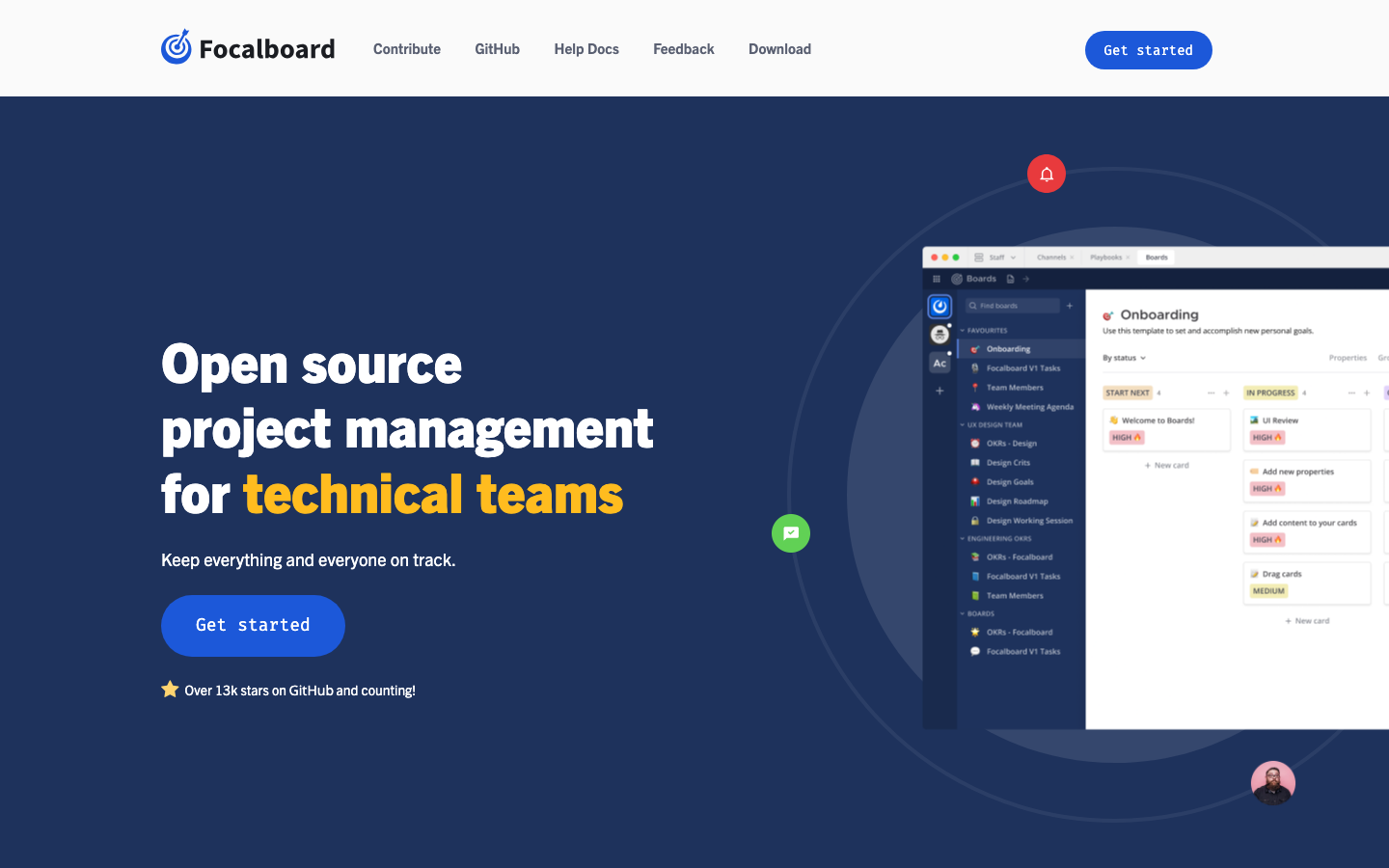
Focalboard is an open-source, self-hosted alternative to Trello, Notion, and Asana rolled into one. It replicates the boards-and-cards interface while adding database views, wikis, and calendar perspectives—giving you flexibility beyond pure kanban. With 26k+ GitHub stars, it's the most actively watched project in this space.
Pros
- Full feature parity with Trello's core workflow plus extras (views, databases, templates)
- Strong REST API and webhook support for custom integrations
- TypeScript codebase attracts active development and contributions
Cons
- Steeper learning curve if your team only needs simple kanban
- Requires more server resources than lightweight alternatives
Wekan
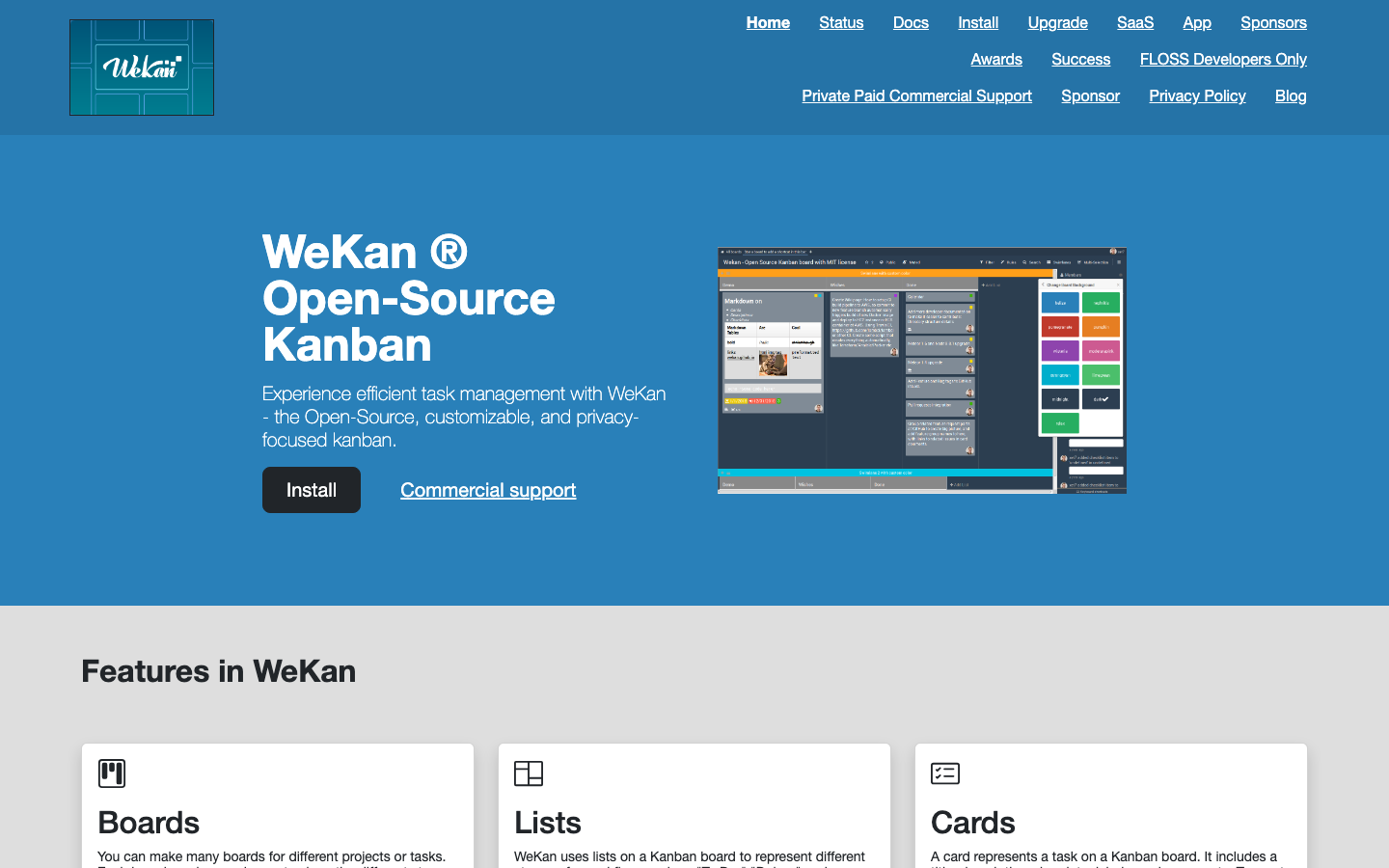
Wekan is a pure-play open-source kanban built on Meteor, focused on the boards-lists-cards model without the feature bloat. It's MIT-licensed and backed by commercial support options for teams that need it.
Pros
- Lightweight and fast; minimal dependencies
- Mature codebase (20k+ stars) with long track record
- MIT license provides legal clarity
Cons
- Community-driven; GitHub issues are for code contributors, not general support (commercial support available separately)
- Fewer built-in integrations than Focalboard
Planka
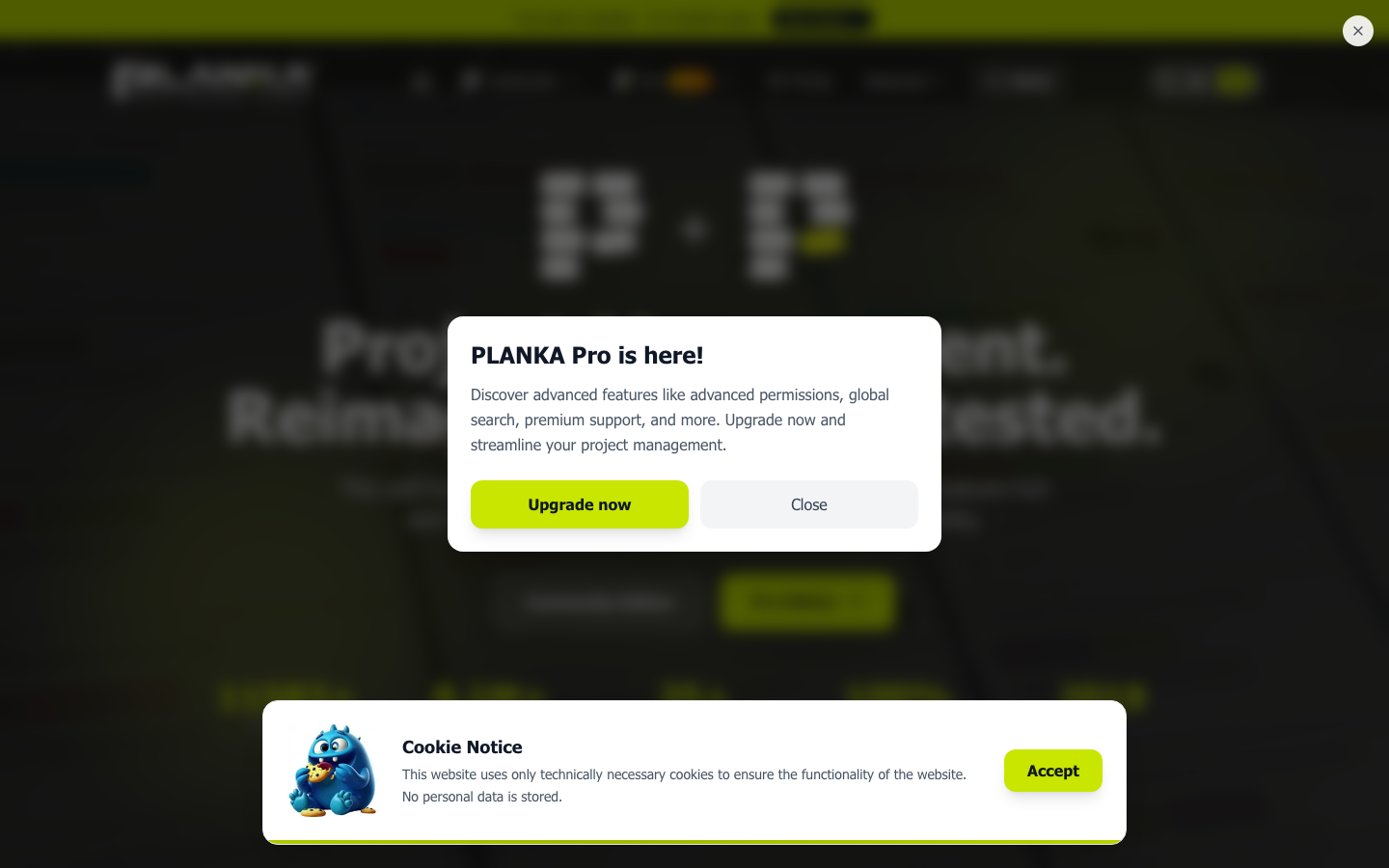
Planka is a streamlined kanban tool designed for teams that want Trello's simplicity without the cruft. It emphasizes a clean, modern interface and quick setup.
Pros
- Minimal, intuitive UI—new users are productive immediately
- Lightweight footprint; runs well on modest hardware
- Fast iteration and responsive maintainers
Cons
- Smaller community (11k+ stars) means fewer third-party extensions
- License not publicly declared; verify compliance before enterprise use
Leantime
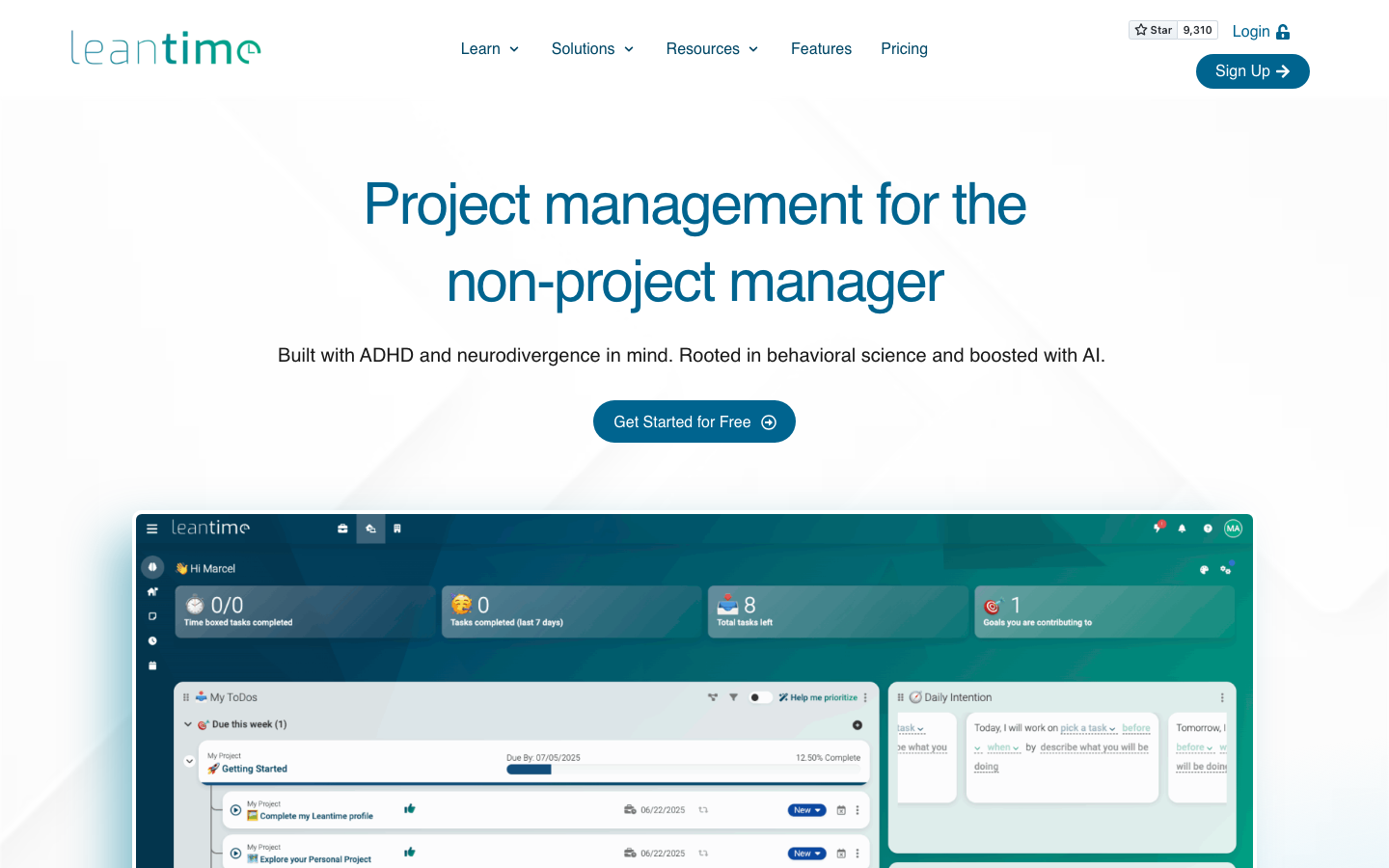
Leantime rethinks project management for teams that don't fit the traditional PM box. Built with ADHD, autism, and dyslexia in mind, it combines kanban with goal-tracking, timelines, and a focus on clarity over complexity.
Pros
- Goal-centric design; helps teams align on outcomes, not just tasks
- Accessibility-first approach reduces cognitive load
- AGPL-3.0 license is explicit and community-friendly
Cons
- Smaller ecosystem (9.6k+ stars) means fewer integrations
- Philosophy is opinionated; works best for teams that embrace goal-driven workflows
Kanboard
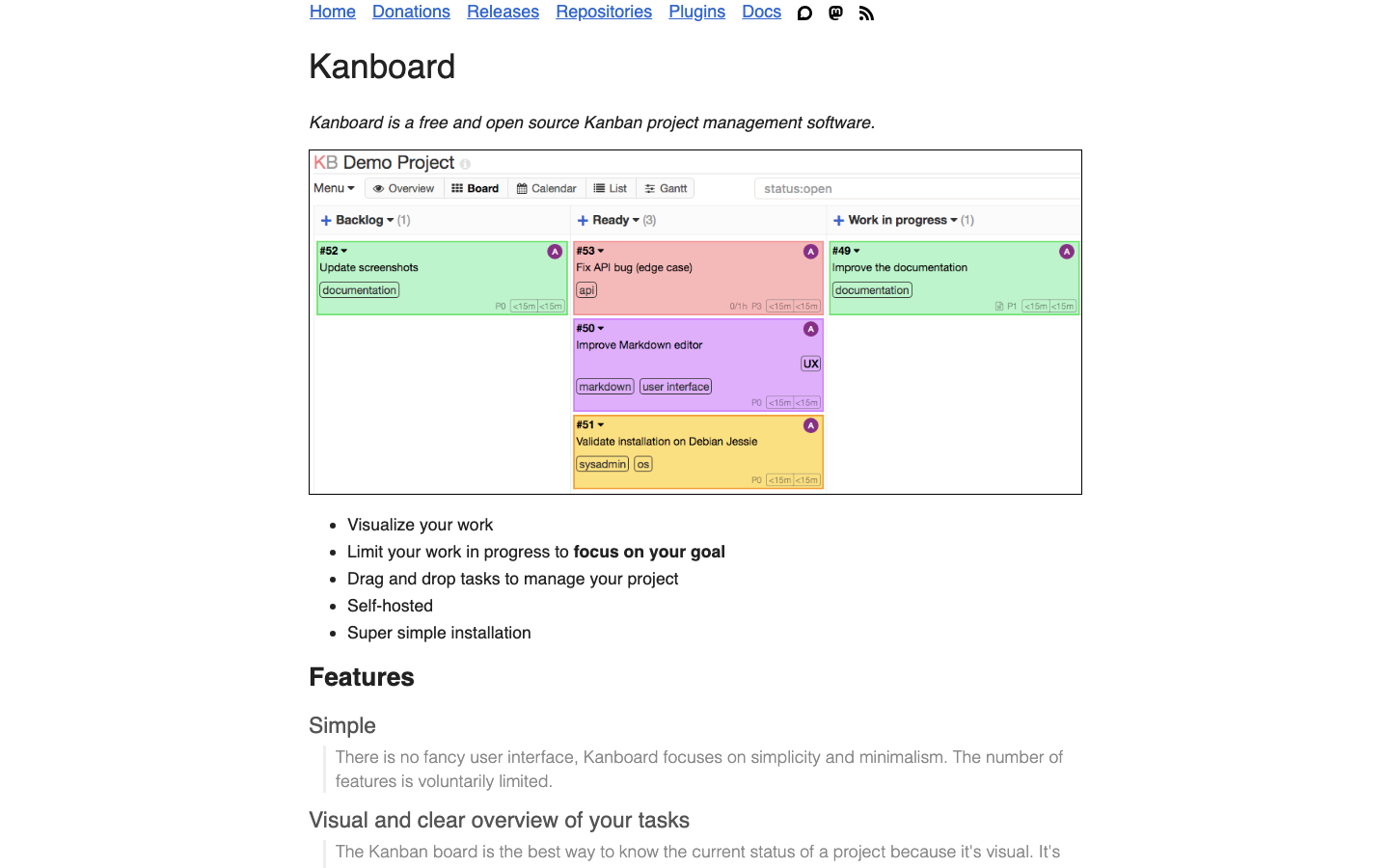
Kanboard is a no-frills kanban project management system. It's MIT-licensed, PHP-based, and designed for teams that want a stable, proven tool without feature creep.
Pros
- Extremely lightweight; runs on minimal infrastructure
- Stable and battle-tested (9.5k+ stars, long history)
- Plugin architecture allows custom extensions
Cons
- Minimal UI polish compared to Focalboard or Planka
- Smaller feature set; best for teams that only need kanban
How to choose
Start with team size and growth trajectory. If you're under 10 people and want simplicity, Planka or Kanboard are fast to deploy and run on a $5/month VPS. If you're 10+ and growing, Focalboard or Wekan justify the slightly higher setup cost by eliminating per-user fees immediately.
Next, consider your team's workflow. Pure kanban? Wekan or Kanboard are battle-tested. Need more than cards—databases, timelines, wikis? Focalboard is your answer. If your team struggles with traditional project management or you're building for neurodivergent users, Leantime is worth the learning curve.
Finally, weigh support and risk tolerance. Wekan and Leantime offer commercial support if you need SLAs. All five are self-hosted, so you control uptime and data; the trade-off is that you own the ops burden. For teams comfortable running their own infrastructure, that's a feature, not a bug.