








TL;DR
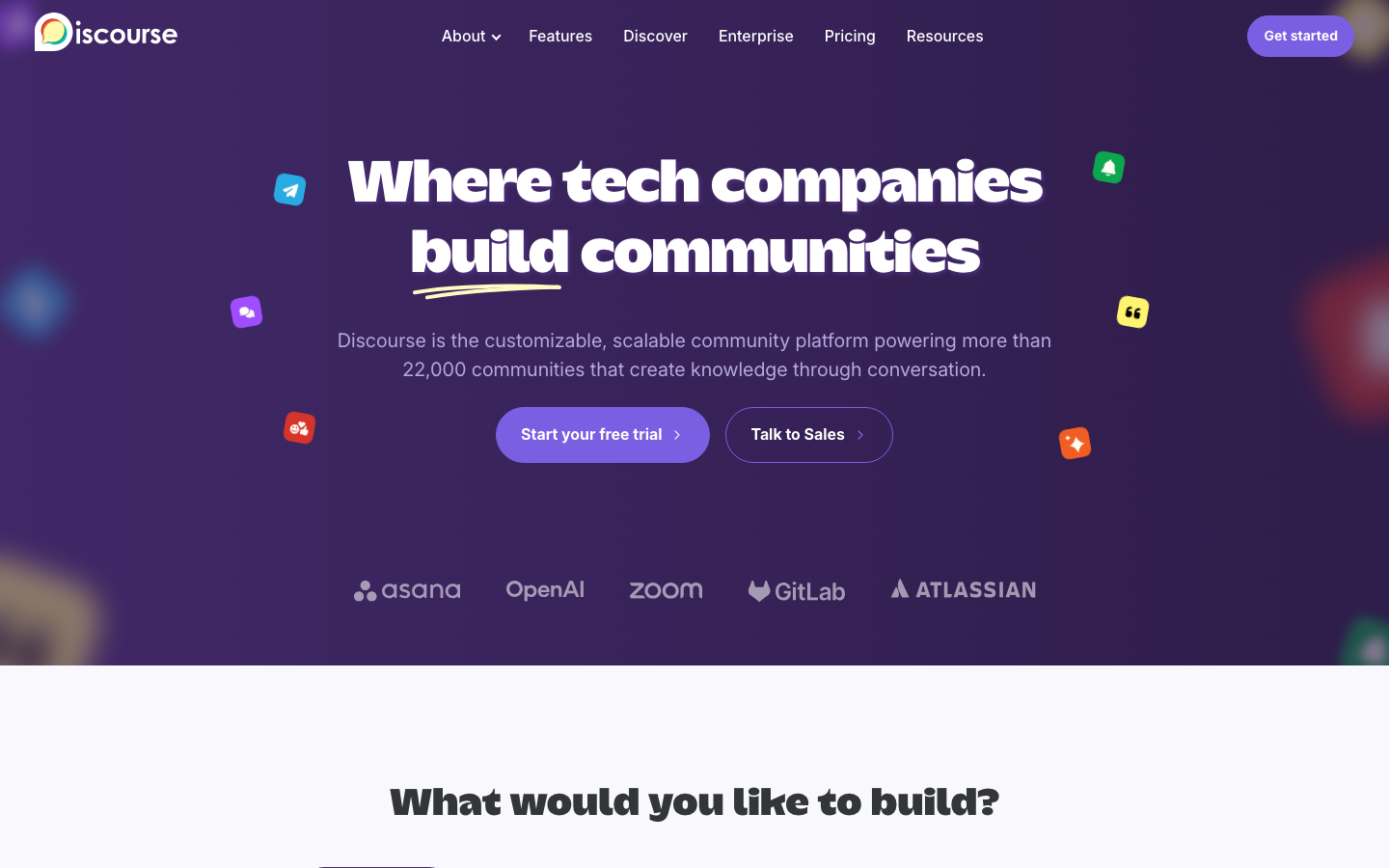
- You need a modern, actively maintained forum with strong moderation and real-time features: Discourse has the largest community and most polished UX, with built-in chat, notifications, and a relentless release cadence.
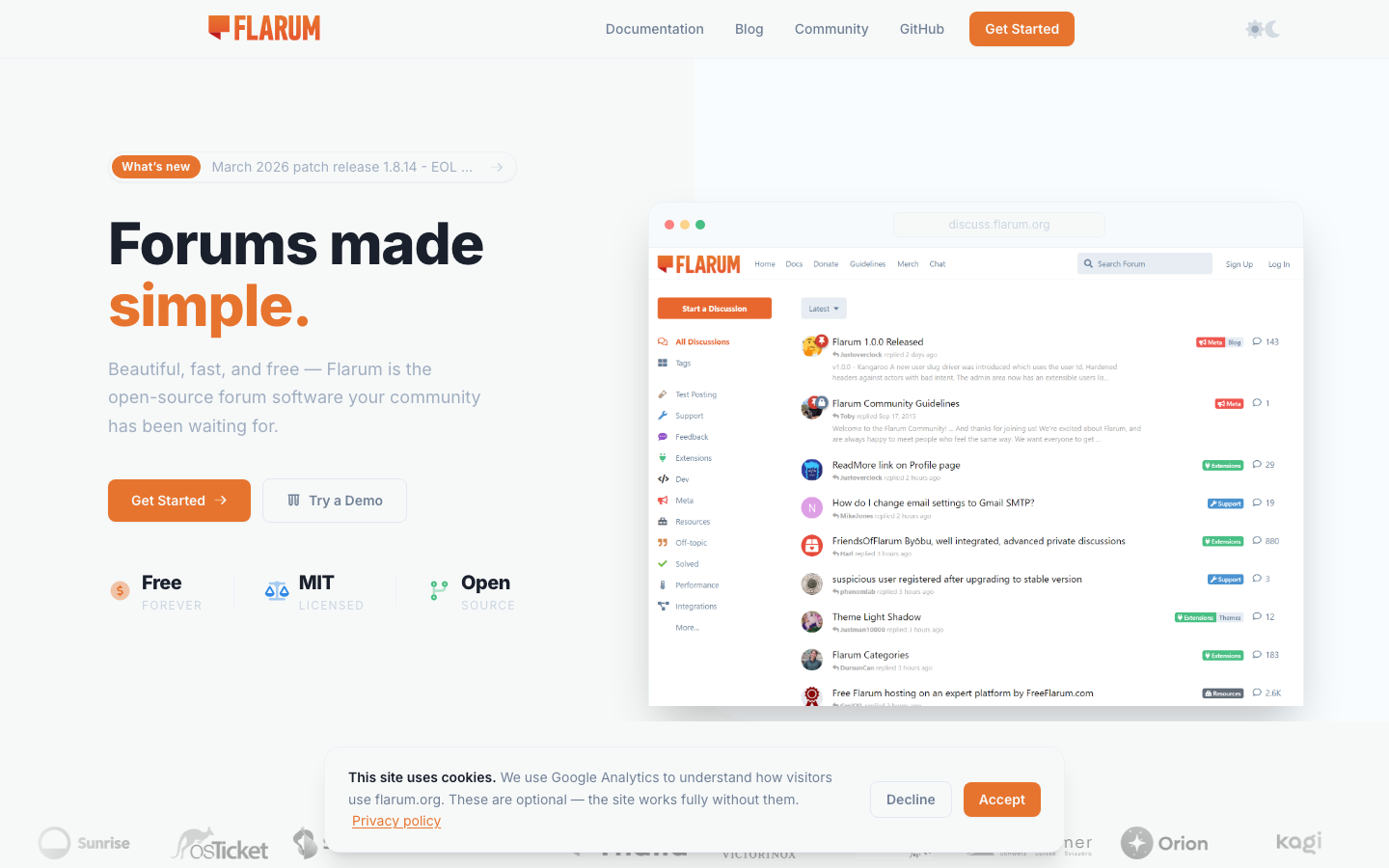
- Your team wants lightweight, PHP-based simplicity without enterprise overhead: Flarum strips away bloat and delivers a clean, mobile-first forum in a fraction of the footprint.
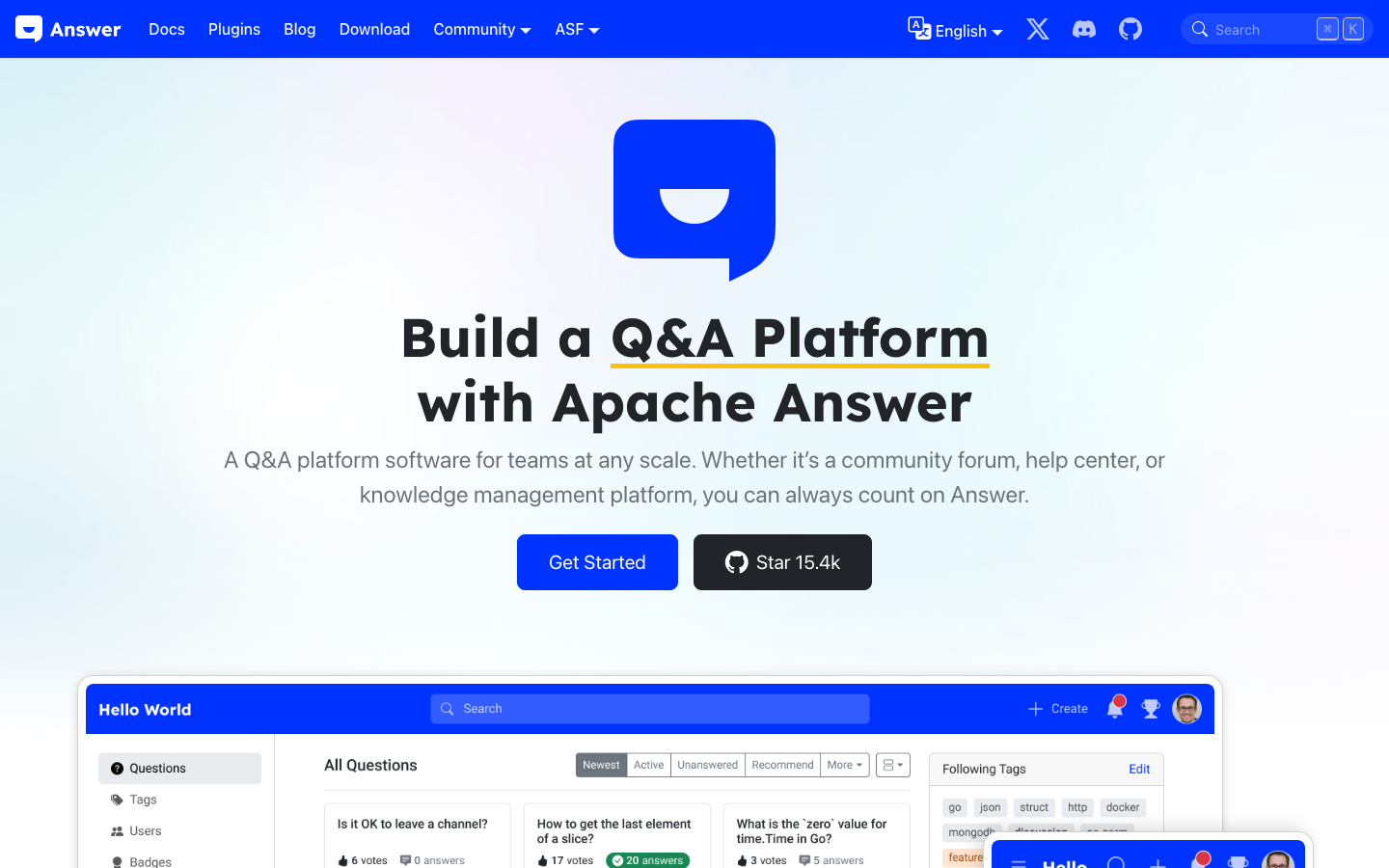
- You're building a knowledge base or Q&A site, not a general discussion forum: Apache Answer pivots from discussion to structured Q&A, with better discoverability and team knowledge management.
Why teams leave Vanilla Forums
In May 2021, Higher Logic acquired Vanilla Forums and rebranded it as "Higher Logic Vanilla," fundamentally shifting the product's identity from self-hosted community software to enterprise B2B/B2C customer-community platforms. The pivot came with quote-based, sales-gated pricing—the kind that requires a sales call rather than transparent per-seat costs.
The pain is twofold. First, the open-source Vanilla core still exists but now receives second-class treatment; self-hosters report that the community edition lags behind the commercial platform in roadmap priority and feature parity. Second, and more acutely, teams that simply want a self-hostable forum without an enterprise sales motion find themselves either locked into opaque licensing or watching their chosen platform drift toward use cases that don't fit them.
For organizations that value predictable costs, data sovereignty, and a roadmap driven by community needs rather than enterprise account expansion, the post-acquisition direction makes the hunt for alternatives urgent.
Quick comparison
| Name | License | Self-Hosted | Federation | E2E Encryption | Best For |
|---|---|---|---|---|---|
| Discourse | GPL-2.0 | ✓ | — | — | Modern, feature-rich forums with chat & notifications |
| Flarum | MIT | ✓ | — | — | Lightweight, mobile-first forums with minimal overhead |
| Apache Answer | Apache-2.0 | ✓ | — | — | Q&A platforms and structured knowledge bases |
| NodeBB | GPL-3.0 | ✓ | — | — | Real-time forums built on Node.js |
| Misago | GPL-2.0 | ✓ | — | — | High-performance, scalable forums in Python |
| phpBB | GPL-2.0 | ✓ | — | — | Classic, battle-tested bulletin board software |
| MyBB | LGPL-3.0 | ✓ | — | — | Lightweight, customizable forums |
| Open Source Social Network | license not declared | ✓ | — | — | Social networking with community features |
Top open-source alternatives to Vanilla Forums
Discourse
Discourse is a modern discussion platform built on Ruby on Rails, designed from the ground up for the web. It combines traditional forum structure with real-time chat, notifications, and sophisticated moderation tools. With 46,880 GitHub stars, it's the most mature and actively developed option in this space.
Pros:
- Comprehensive feature set: built-in chat, email integration, powerful search, and user trust levels reduce moderation burden.
- Aggressive release cycle and large community; most questions have answers and plugins are abundant.
- Excellent mobile experience and accessibility out of the box.
Cons:
- Heavier resource footprint (Rails + PostgreSQL); requires more infrastructure than lightweight alternatives.
- Steeper learning curve for customization; theming and plugin development demand Ruby/JavaScript competency.
Flarum
Flarum is a lightweight, modern forum software written in PHP that prioritizes simplicity and user experience. It strips away legacy cruft and delivers a fast, responsive forum in a single-page-app style interface.
Pros:
- Minimal footprint and fast out of the box; runs on modest hardware.
- Clean, intuitive UX for both users and admins; low barrier to setup.
- MIT license offers maximum freedom for customization and redistribution.
Cons:
- Smaller ecosystem of extensions compared to Discourse; some advanced features require custom development.
- Less mature than Discourse; fewer battle-tested deployments at scale.
Apache Answer
Apache Answer is a Q&A and knowledge management platform built in Go, designed for teams that need structured, searchable knowledge rather than chronological discussion. It works as a community forum, help center, or internal knowledge base.
Pros:
- Purpose-built for Q&A; better discoverability and organization than thread-based forums.
- Written in Go; fast, lightweight, and single-binary deployment.
- Strong Apache backing and Apache-2.0 license ensure long-term governance.
Cons:
- Different paradigm from traditional forums; requires buy-in from your community on Q&A workflows.
- Smaller user base means fewer third-party integrations and plugins.
NodeBB
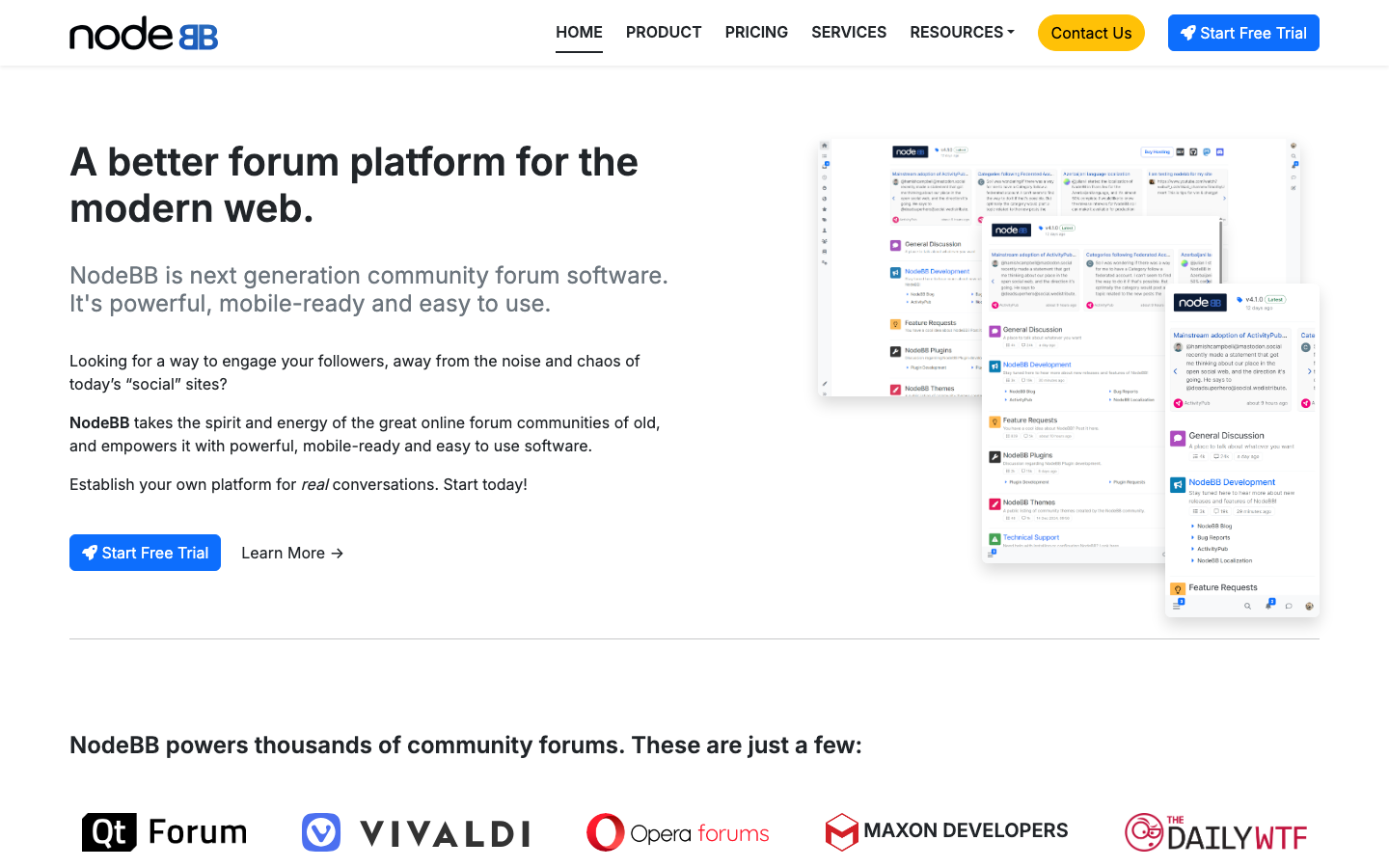
NodeBB is a forum platform built on Node.js, emphasizing real-time features, modern architecture, and developer-friendly APIs. It combines traditional forum structure with live notifications and socket-based interactions.
Pros:
- Real-time updates and live notifications built in; no polling overhead.
- JavaScript throughout the stack; familiar to full-stack JavaScript teams.
- Strong REST API and webhook support for integrations.
Cons:
- Node.js runtime adds operational complexity compared to PHP alternatives.
- Smaller community and fewer plugins than Discourse; custom development often necessary.
Misago
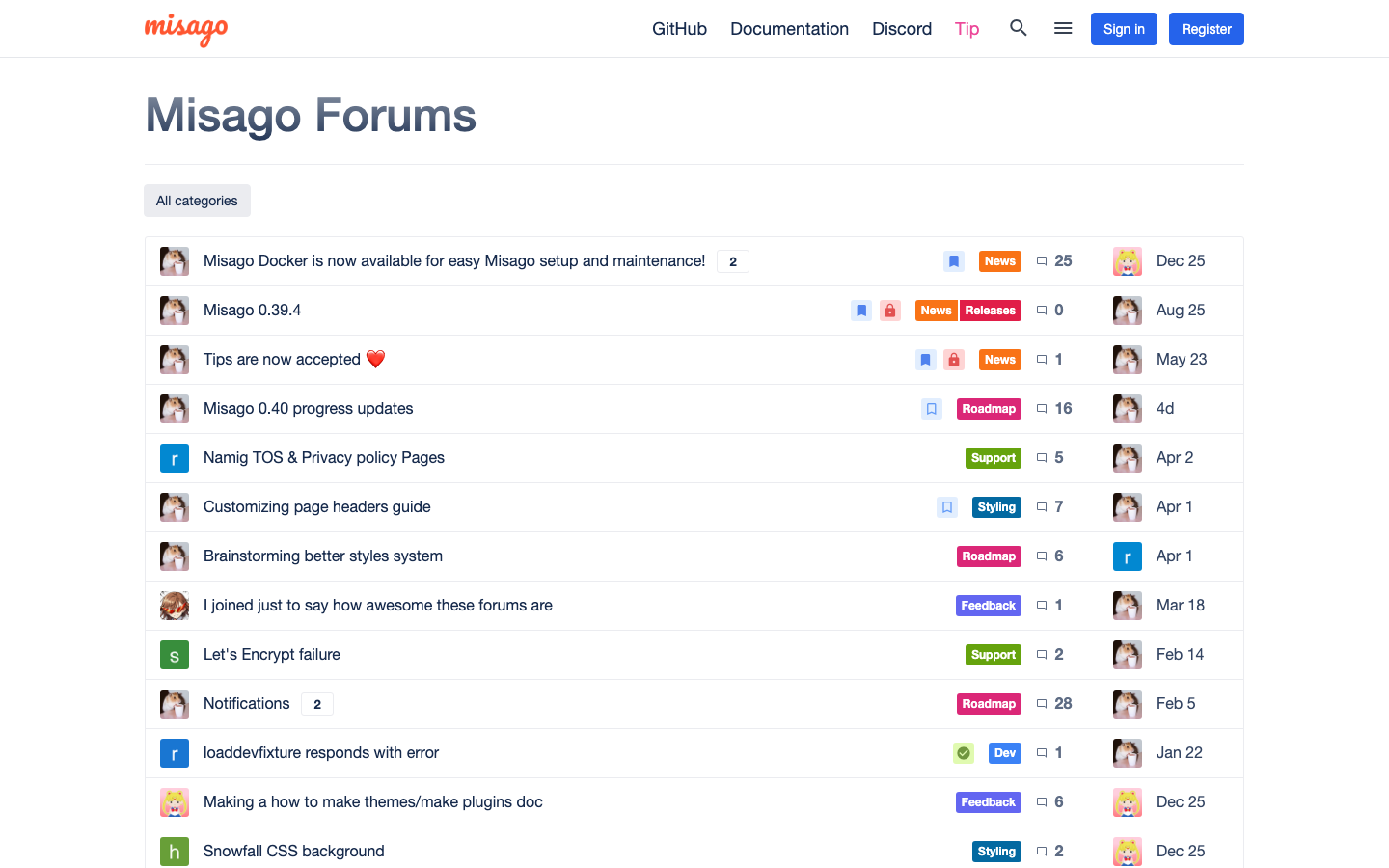
Misago is a modern forum application written in Python, designed for performance, scalability, and responsiveness. It emphasizes clean code and a contemporary user experience.
Pros:
- Python-based; appeals to teams with Python infrastructure and expertise.
- Fully featured and responsive; handles large user bases well.
- Clean, modern codebase designed for maintainability.
Cons:
- Smaller user base and ecosystem compared to PHP or Ruby alternatives.
- Requires Python/Django knowledge for deep customization.
phpBB
phpBB is a venerable, battle-tested open-source bulletin board written in PHP. It has powered millions of forums for over two decades and remains one of the most widely deployed forum platforms globally.
Pros:
- Proven stability and security track record; thousands of production deployments.
- Extensive customization through themes and extensions; mature plugin ecosystem.
- Runs on nearly any shared hosting; minimal infrastructure requirements.
Cons:
- Older codebase and UI; lacks the modern polish of Discourse or Flarum.
- Steeper learning curve for setup and administration compared to newer platforms.
MyBB
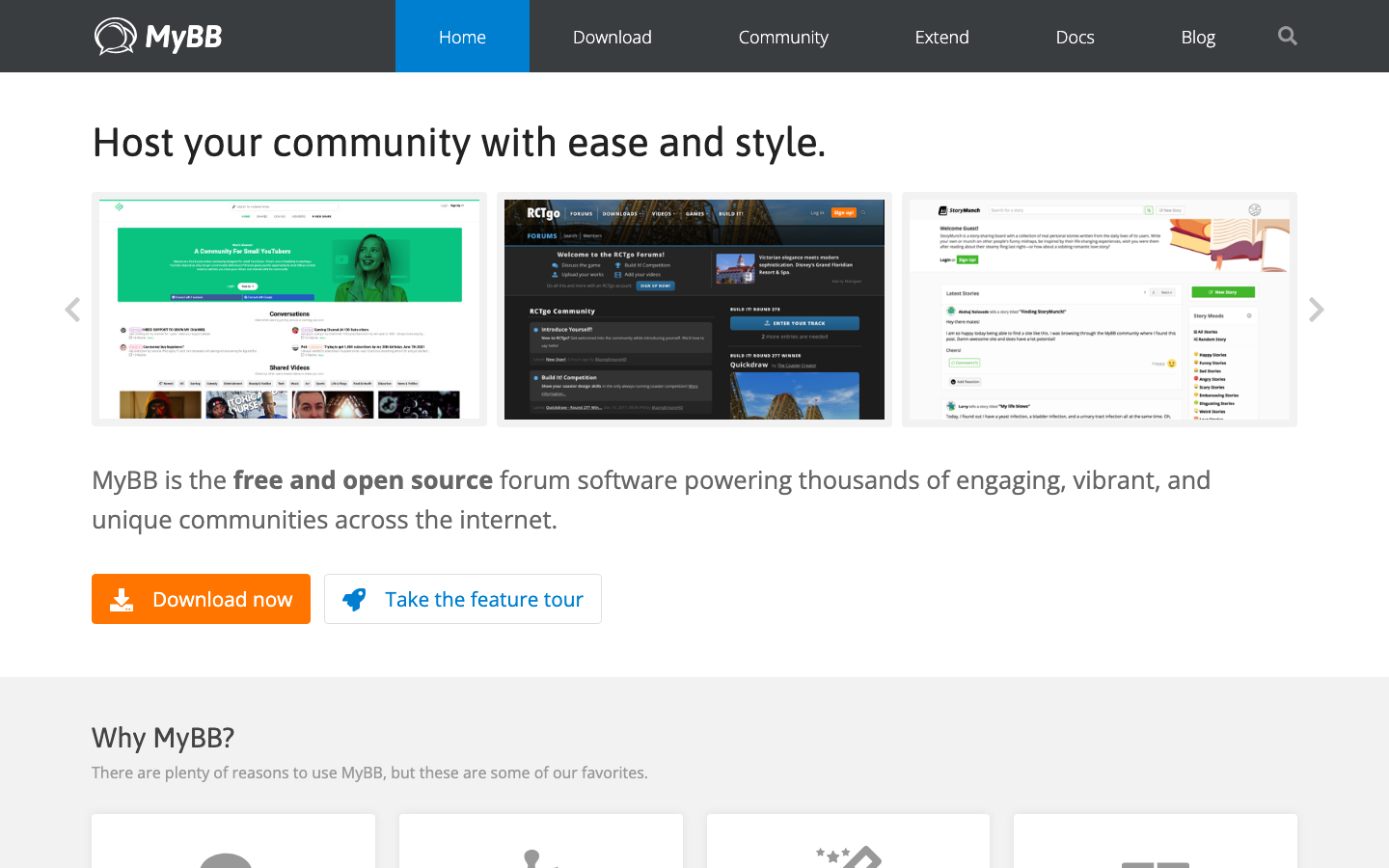
MyBB is a free, open-source forum software written in PHP, offering a balance between simplicity and feature completeness. It's lighter than phpBB but more feature-rich than Flarum.
Pros:
- Easy to install and customize; good documentation and active community support.
- LGPL-3.0 license; permissive for both open and closed customizations.
- Lower resource overhead than Discourse or NodeBB.
Cons:
- Smaller ecosystem and slower release cycle than major alternatives.
- UI feels dated compared to modern single-page-app forums.
Open Source Social Network
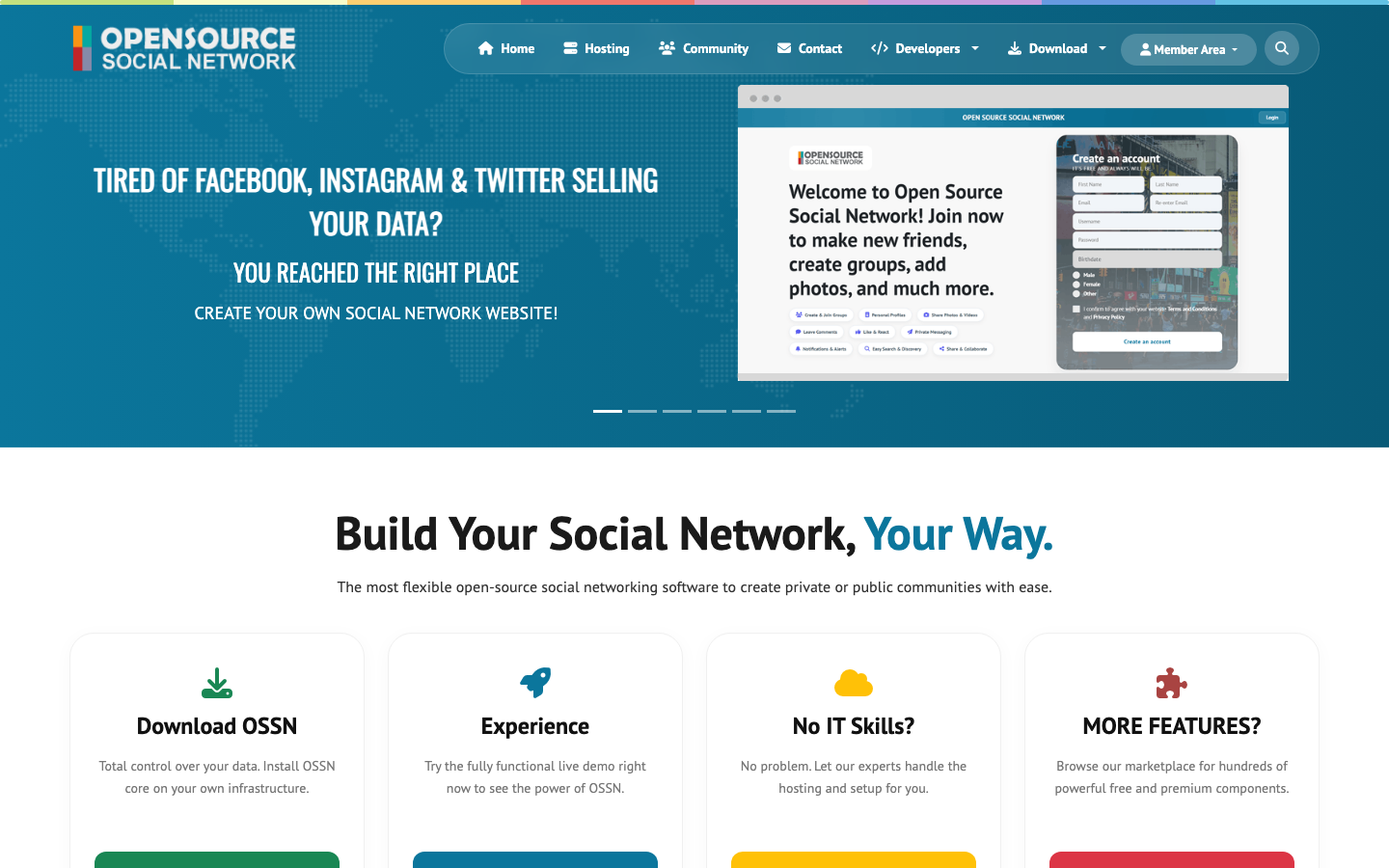
Open Source Social Network (OSSN) is a PHP-based social networking platform that goes beyond forums to include user profiles, activity feeds, and social relationship features. It's suited for organizations that need community engagement tools beyond discussion.
Pros:
- Broader social features (profiles, activity streams, messaging) in one package.
- PHP-based; deployable on standard web hosting.
- Flexible for building branded social communities.
Cons:
- License not declared; unclear legal standing and maintenance status.
- Smaller user base and fewer updates; less suitable for high-availability production use.
How to choose
Start with your use case: if you need a modern, feature-complete forum with strong moderation and real-time notifications, Discourse is the clear leader despite higher resource costs. If you're resource-constrained or prefer PHP simplicity, Flarum or phpBB (depending on how much legacy compatibility you need) are solid bets. For teams building knowledge bases or internal Q&A systems, Apache Answer is purpose-built and worth the paradigm shift. For Node.js shops, NodeBB offers native real-time capabilities. Evaluate your team's infrastructure expertise, expected scale, and willingness to customize; all eight options self-host, but operational burden varies significantly.