





TL;DR
- Cost predictability matters most? Coolify gives you flat infrastructure costs on your own hardware—no surprise overage bills when traffic spikes.
- You need production Node.js reliability without managed-service lock-in? PM2 is a lightweight process manager that keeps your app running and load-balanced on any server you control.
- Control and simplicity over feature richness? Dokku bundles Docker + PaaS conventions into a single tool, letting small teams deploy like Heroku without the Heroku pricing.
Why teams leave Vercel
Vercel's usage-based billing model creates a cost-of-ownership problem. The Pro plan includes 1 TB/month bandwidth and switched to credit-based pricing in September 2025 (a $20 monthly usage credit), but overage charges—historically around $40 per 100 GB—mean a modest traffic spike or serverless function surge can turn a $20/month bill into hundreds. Real-world reports of surprise invoices are common enough that cost-conscious teams treat Vercel as a short-term option, not a long-term home.
Beyond pricing, Vercel's platform conventions create subtle lock-in. Your deployment workflow, environment variables, edge function syntax, and analytics integrations all assume Vercel's infrastructure. Migrating a mature application away requires rewriting deployment logic, refactoring serverless functions to a different runtime, or accepting performance trade-offs. You also cede control of your infrastructure, privacy policies, and uptime SLA to a single vendor. For teams that value predictable costs, data residency, or the ability to audit their own deployments, self-hostable alternatives offer a compelling trade-off: you lose Vercel's polished UI and automatic scaling, but you gain ownership, flat costs, and the freedom to exit.
Quick comparison
| Name | License | Self-Hosted | API / Extensibility | Stack / Language | Best For |
|---|---|---|---|---|---|
| Coolify | Apache-2.0 | ✓ Full | Webhooks, UI-driven | PHP, multi-stack | Full-stack apps, one-click services, cost control |
| PM2 | — | ✓ Full | Programmatic API, CLI | JavaScript / Node.js | Long-running Node processes, load balancing |
| Dokku | MIT | ✓ Full | Git push deploy, plugins | Shell, Docker-native | Small teams, Heroku-like workflow |
| Zola | EUPL-1.2 | ✓ Full | Static output, templates | Rust | Fast static sites, blogs, documentation |
| CapRover | — | ✓ Full | Docker-native, CLI | TypeScript | Scaling apps, Docker orchestration, self-managed clusters |
Top open-source alternatives to Vercel
Coolify
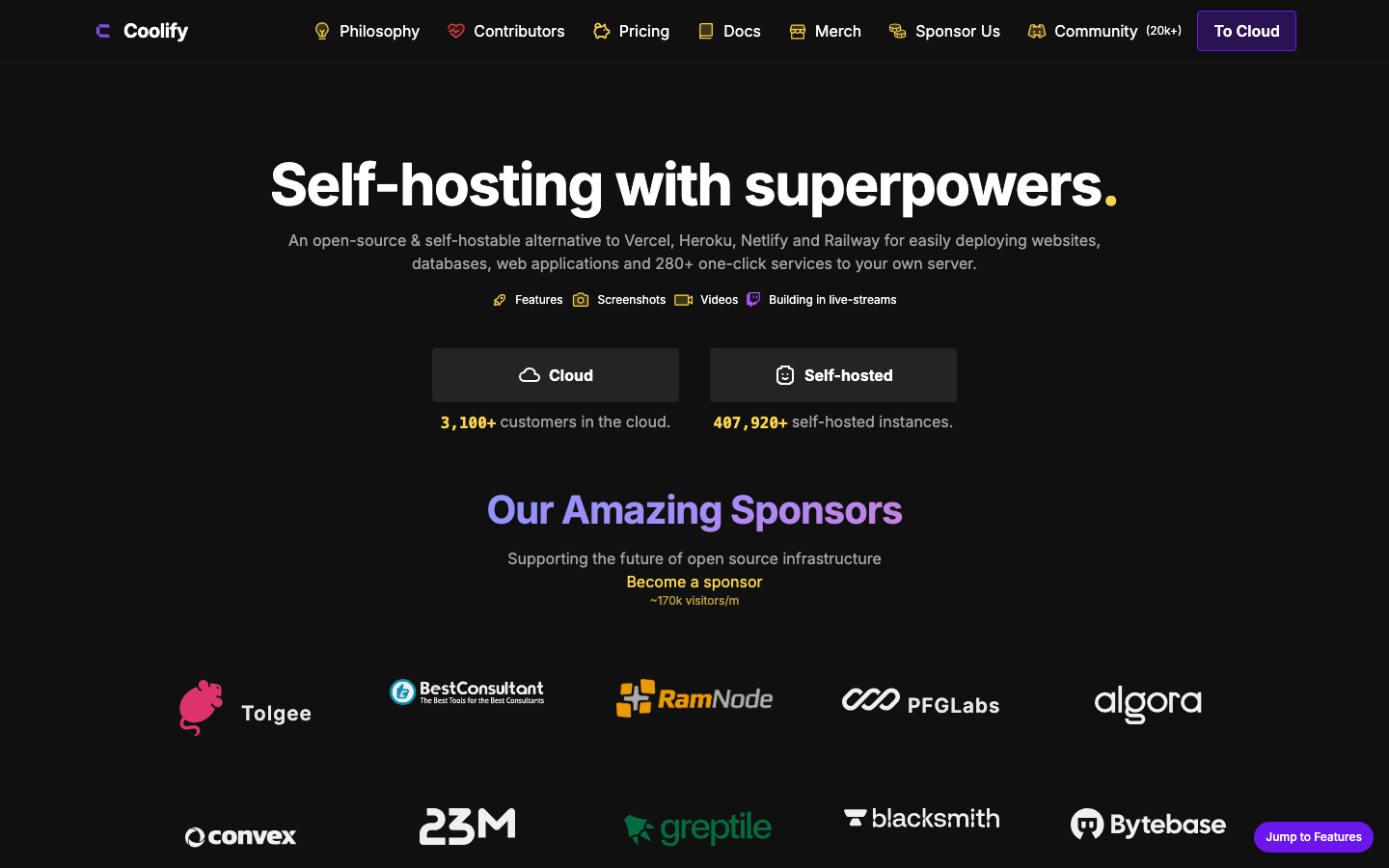
An open-source, self-hostable PaaS that replicates Vercel's ease of deployment while running on your own infrastructure. Deploy static sites, full-stack applications, databases, and 280+ one-click services (WordPress, Strapi, Plausible, etc.) without vendor lock-in. Built in PHP and designed for teams that want managed-service convenience without managed-service pricing.
Pros
- Predictable costs: pay for your server, not per GB of bandwidth or function invocation.
- Massive service library (280+) means you can self-host your entire stack in one place.
- Web UI matches Vercel's approachability while keeping all data on your hardware.
Cons
- Requires you to provision and maintain your own server infrastructure.
- Smaller ecosystem and community compared to Vercel; fewer integrations and third-party add-ons.
PM2
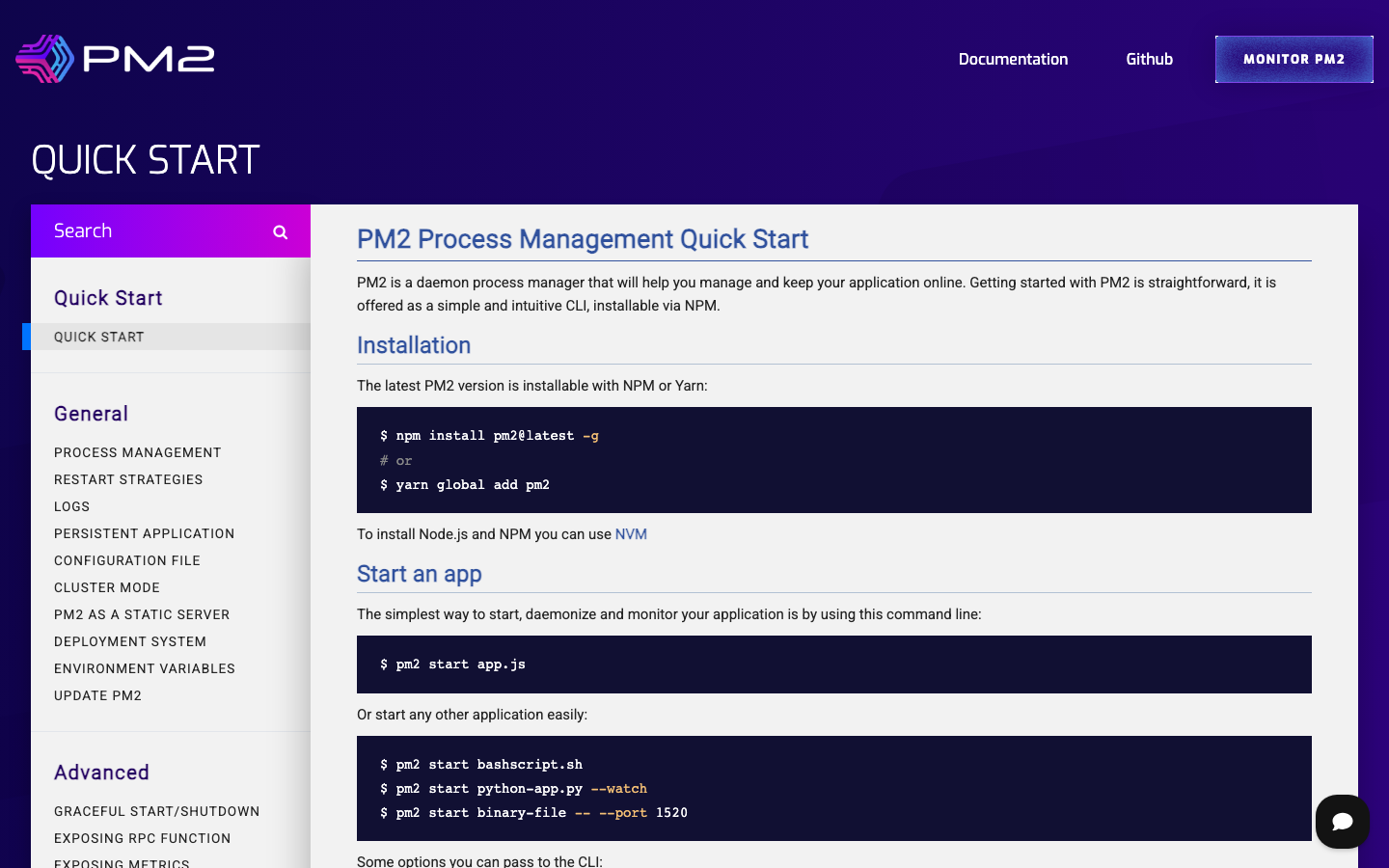
A production-grade Node.js process manager with built-in load balancing, cluster mode, and monitoring. Keeps your application running, restarts it on crashes, and distributes traffic across CPU cores—the foundation of any serious Node.js deployment outside managed platforms.
Pros
- Lightweight and language-focused: does one job (process management) extremely well.
- Zero vendor lock-in; runs on any server where Node.js runs.
- Programmatic API and CLI make it easy to integrate into custom deployment pipelines.
Cons
- Not a full PaaS: you still need to handle reverse proxies, TLS, and log aggregation yourself.
- Best suited to teams comfortable with server administration; less hand-holding than Vercel.
Dokku
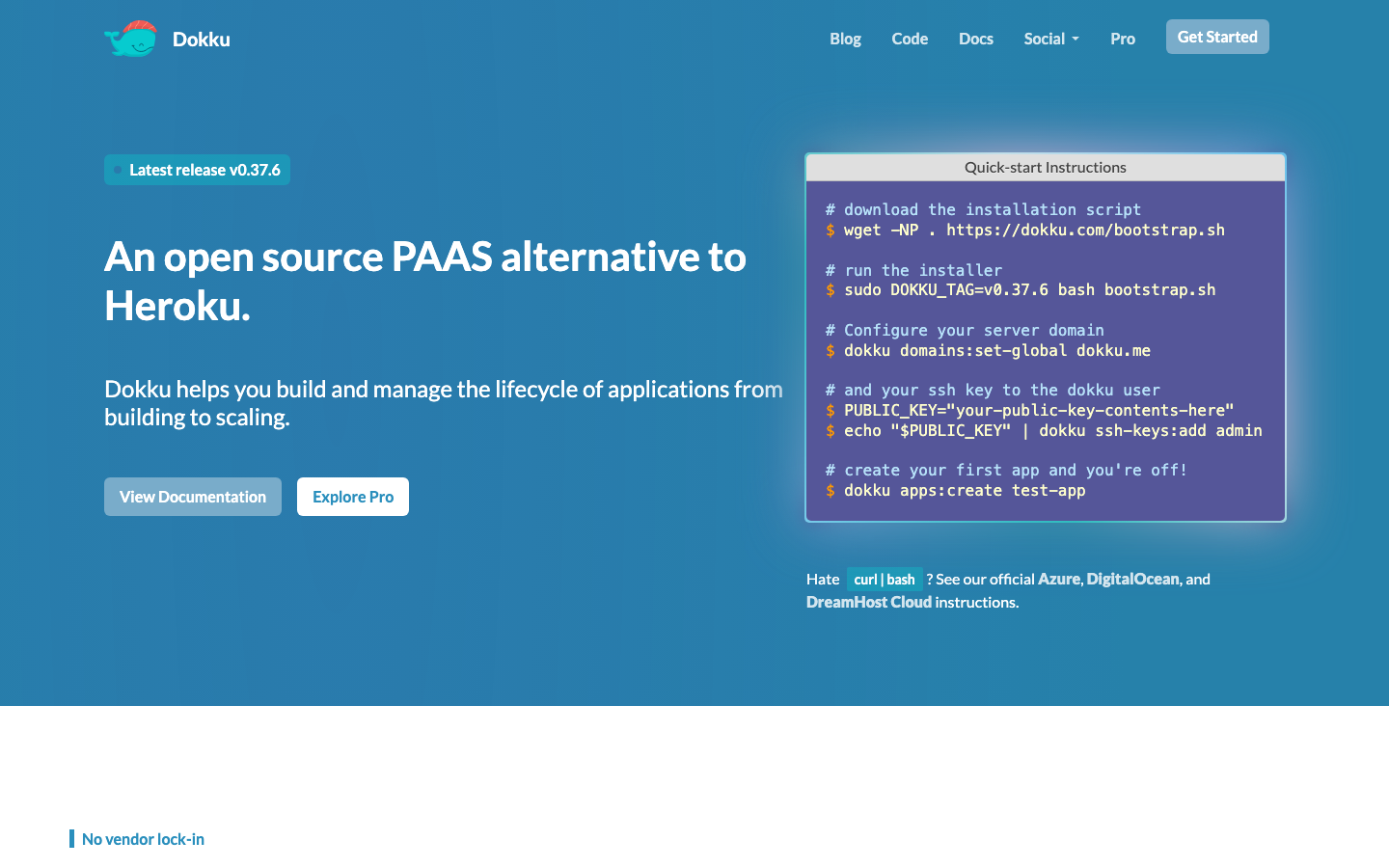
A Docker-powered PaaS that brings Heroku's simplicity to your own server. Git push to deploy; Dokku handles the rest—building containers, managing networking, scaling processes. MIT-licensed and plugin-extensible, it's ideal for teams that loved Heroku's workflow but want to escape its pricing.
Pros
- Familiar
git pushdeployment model; minimal learning curve for Heroku alumni. - Lightweight and efficient; runs on modest hardware (even a $5/month VPS).
- Plugin system lets you add Postgres, Redis, Let's Encrypt, and other services without leaving the platform.
Cons
- Scaling is manual and limited compared to Vercel; not designed for auto-scaling across multiple machines.
- Smaller community means fewer pre-built integrations and less troubleshooting help online.
Zola
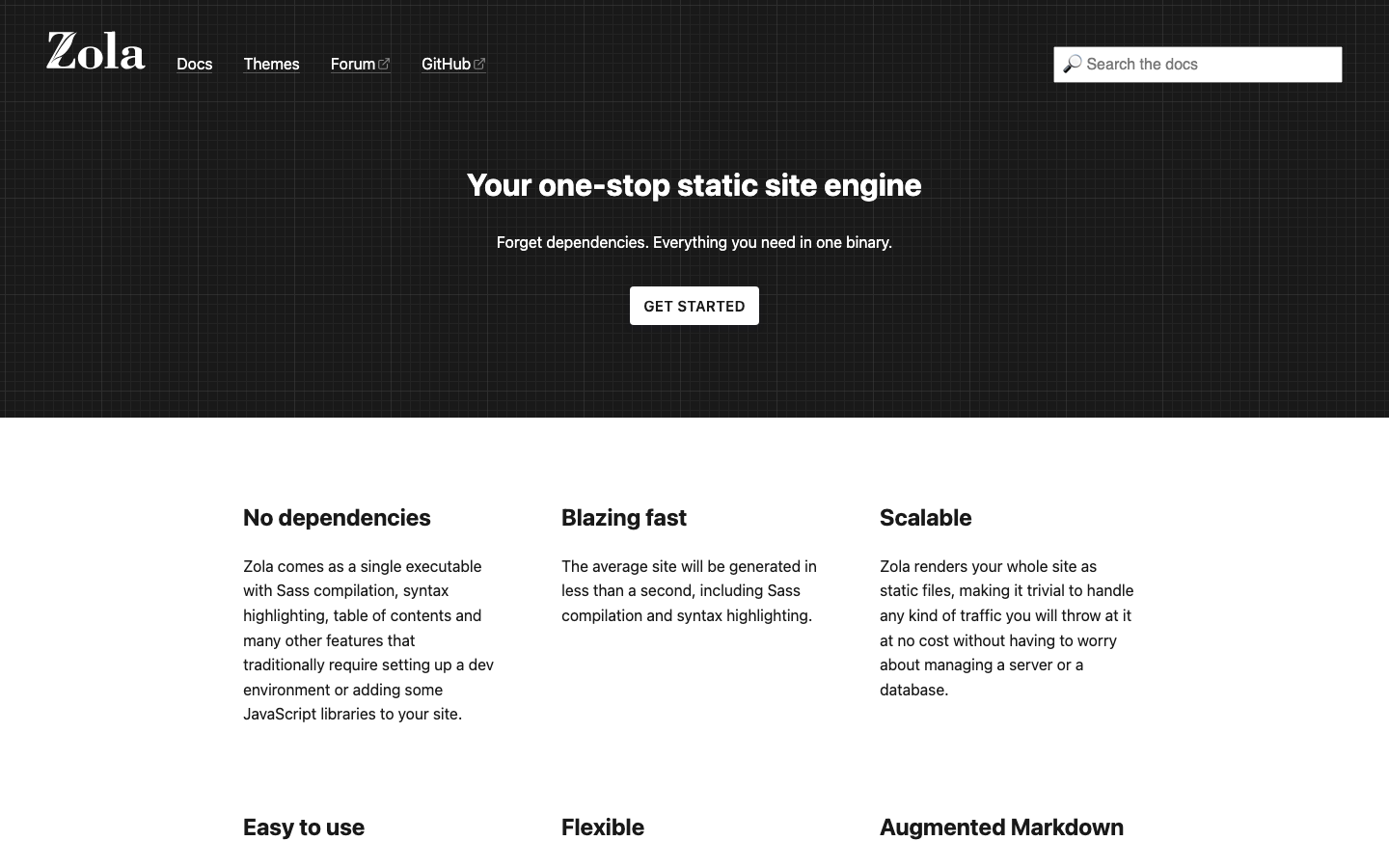
A fast, single-binary static site generator written in Rust. Everything you need—templating, Markdown parsing, asset pipeline—is built in; no npm dependencies, no Node.js required. Ideal for blogs, documentation, marketing sites, and any content that doesn't need dynamic backends.
Pros
- Blazing fast builds and minimal output size; static sites are trivially cheap to host anywhere.
- All-in-one binary eliminates dependency hell and makes deployment trivial.
- Perfect for teams that don't need serverless functions or dynamic backends.
Cons
- Static-only: not suitable for dynamic applications, user-generated content, or real-time features.
- Smaller ecosystem compared to Next.js or Hugo; fewer themes and plugins.
CapRover
A scalable, self-hosted PaaS built on Docker and nginx. Deploy applications via CLI, manage multiple servers, and scale containers without writing infrastructure code. Marketed as "Heroku on Steroids"—more powerful than Dokku, less opinionated than Vercel.
Pros
- Multi-server clustering and load balancing out of the box; scales horizontally as you grow.
- Docker-native: deploy any containerized application, not just Node.js or static sites.
- CLI-driven workflow is fast and scriptable; integrates well into CI/CD pipelines.
Cons
- Steeper learning curve than Dokku; requires basic Docker and networking knowledge.
- License not declared; community support is smaller than Dokku's.
How to choose
Start with your infrastructure comfort level. If you want a managed UI and don't mind self-hosting, Coolify is the closest Vercel replacement. If you're already running Node.js and just need process management and load balancing, PM2 is minimal and battle-tested. Teams that loved Heroku should try Dokku first—it's the simplest entry point to self-hosting. For static sites and documentation, Zola eliminates the need for a server entirely. If you're building a multi-service cluster or need to scale across machines, CapRover offers more power at the cost of complexity. All five are cheaper than Vercel at scale; the trade-off is that you're responsible for uptime and security updates.