
















TL;DR
- Single-click mail server for small teams or individuals: Mail-in-a-Box bundles SMTP, IMAP, DNS, and webmail in one deploy, eliminating the self-hosting complexity that pushed Zimbra users toward SaaS.
- Enterprise-grade stack with full protocol support: Stalwart covers email, calendar (CalDAV), contacts (CardDAV), and WebDAV in a single Rust binary, matching Zimbra's collaboration scope without license gating.
- Docker-first deployments for ops teams: docker-mailserver and mailcow-dockerized let infrastructure teams build reproducible, containerized mail stacks with antispam and antivirus baked in—no vendor binaries required.
Why teams leave Zimbra
Zimbra's open-source promise has fractured. Starting with version 9, the project stopped publishing official open-source-edition binaries; self-hosters now depend on unofficial community rebuilds from vendors like Zextras or UALinux. The current Zimbra Daffodil (v10) is license-gated, and running the Network Edition requires not just a paid license but also dedicated hardware and in-house expertise to maintain. This two-tier model—open source in name, closed in distribution—has become the core friction point.
Organizations evaluating Zimbra face a stark choice: either pay for SaaS (Zimbra Cloud), or invest heavily in self-hosting infrastructure and vendor-dependent builds. Neither path offers the control or cost predictability that attracted teams to open source in the first place. For teams that need genuine autonomy—no license renewal cycles, no vendor lock-in, and the ability to fork and modify—fully open alternatives with active binary releases become the logical exit.
Quick comparison
| Name | License | Self-Hosted | Deliverability Setup | API / Automation | Best For |
|---|---|---|---|---|---|
| docker-mailserver | MIT | ✓ Full | SPF, DKIM, DMARC, Spamassassin, ClamAV | REST / LDAP integration | Container-native ops teams |
| Mail-in-a-Box | CC0-1.0 | ✓ Full | Automatic SPF, DKIM, DMARC, DNS | Web UI + command-line | Individuals, small teams |
| mailcow-dockerized | GPL-3.0 | ✓ Full | SPF, DKIM, DMARC, Rspamd, ClamAV | REST API, webhooks | Mid-market self-hosters |
| Stalwart | License not declared | ✓ Full | SPF, DKIM, DMARC, built-in filtering | REST API, protocol-native | Multi-protocol collaboration |
| Mailu | License not declared | ✓ Full | SPF, DKIM, DMARC, Rspamd | Web admin, API | Kubernetes / container platforms |
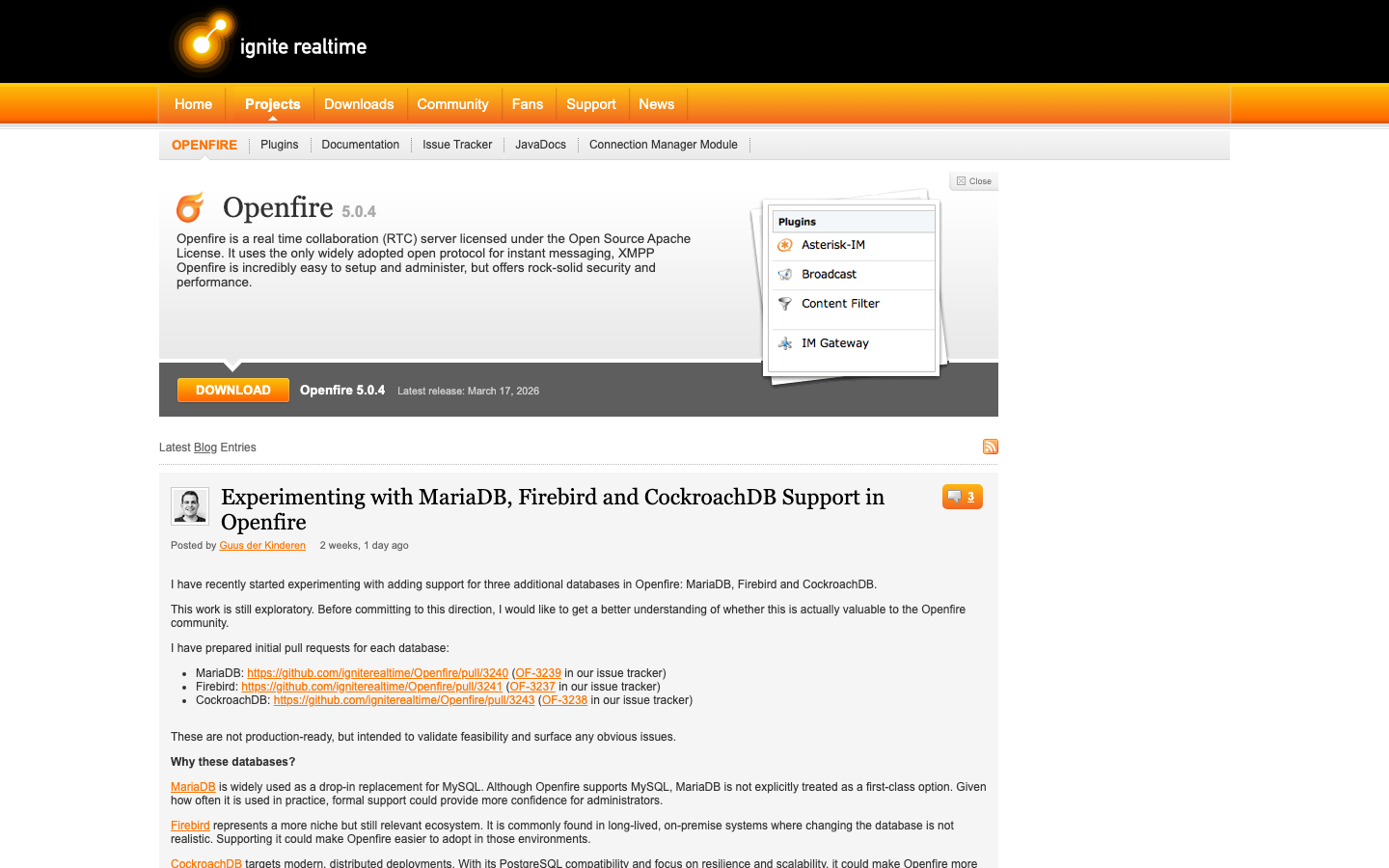
| ejabberd | License not declared | ✓ Full | N/A (XMPP/messaging focus) | REST API, Erlang modules | Real-time messaging, XMPP federation |
| maddy | GPL-3.0 | ✓ Full | SPF, DKIM, DMARC, built-in filtering | Lua scripting, protocol hooks | Minimalist, composable deployments |
| mox | MIT | ✓ Full | SPF, DKIM, DMARC, built-in filters | Command-line, Go API | Single-binary, low-maintenance setups |
Top open-source alternatives to Zimbra
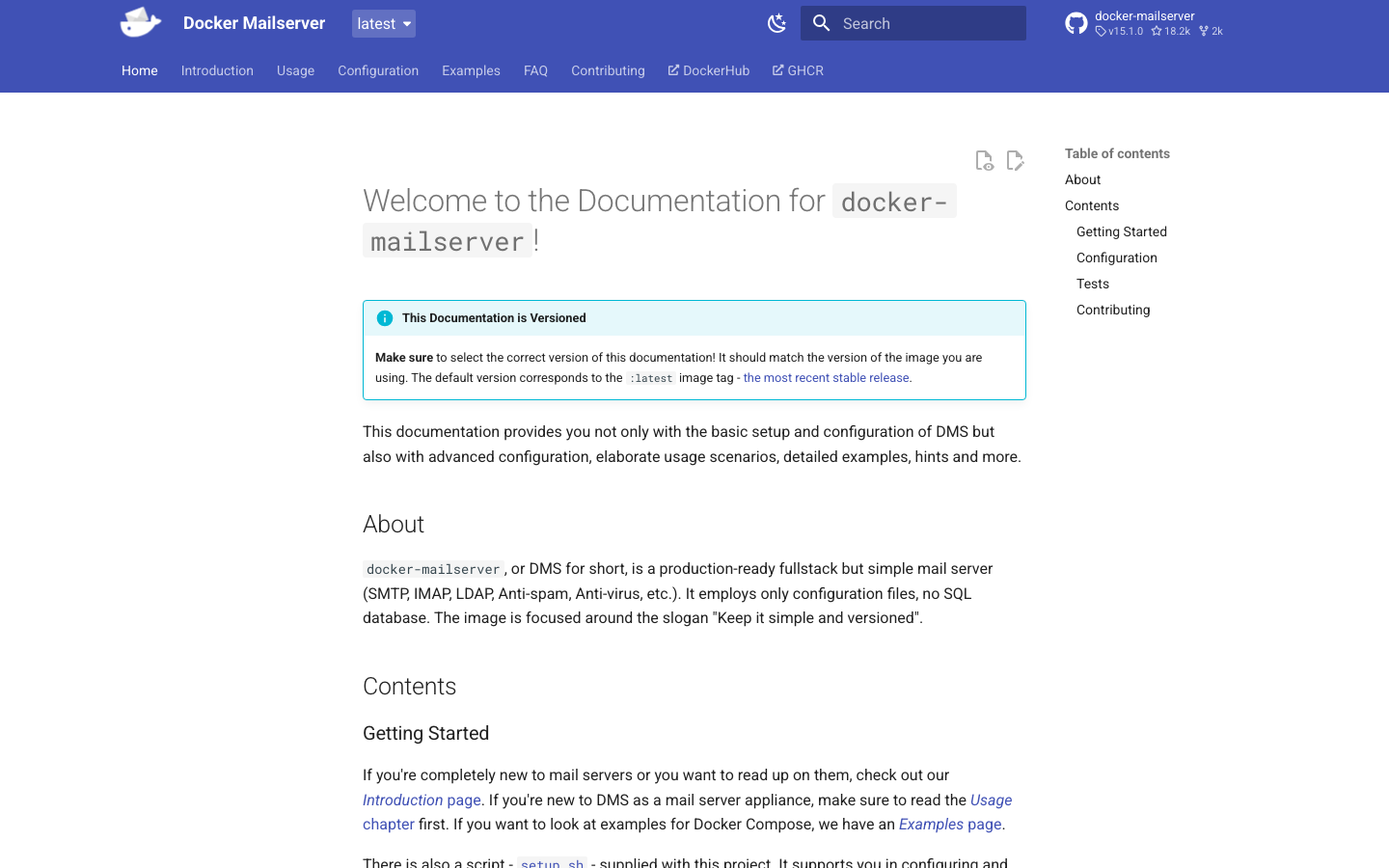
docker-mailserver
A production-ready, containerized full-stack mail server with SMTP, IMAP, LDAP, antispam (Spamassassin), and antivirus (ClamAV) built in. Designed for teams that already live in Docker and want a battle-tested, MIT-licensed foundation.
Pros:
- Mature ecosystem with strong community support (18k+ GitHub stars).
- Comprehensive security stack: native Spamassassin, ClamAV, and greylisting.
- Minimal vendor lock-in; runs identically across any Docker host.
Cons:
- Steep learning curve for operators unfamiliar with container networking and volume management.
- No native web UI; administration is primarily command-line or via third-party tools.
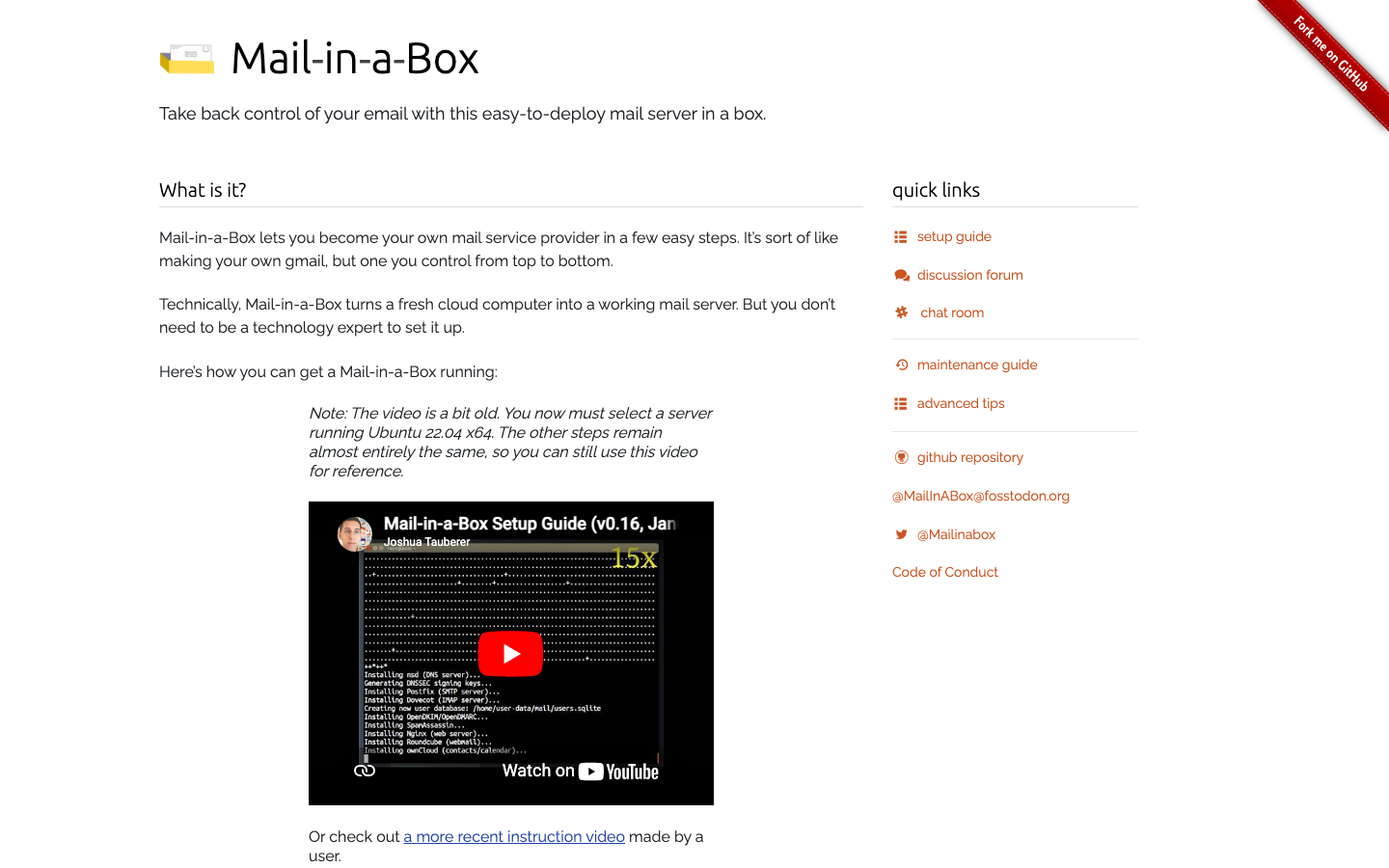
Mail-in-a-Box
A one-click mail server deployment that bundles SMTP, IMAP, DNS management, webmail, and basic collaboration (calendar/contacts via CardDAV/CalDAV) on a single Ubuntu machine. Designed for individuals and small teams who want to reclaim email control without infrastructure expertise.
Pros:
- Genuinely one-click setup; DNS and TLS are automatic.
- CC0 (public domain) license ensures maximum freedom.
- Includes webmail and calendar/contact sync out of the box.
Cons:
- Single-machine architecture limits horizontal scaling.
- Less granular control over advanced filtering and protocol tuning than container-native alternatives.
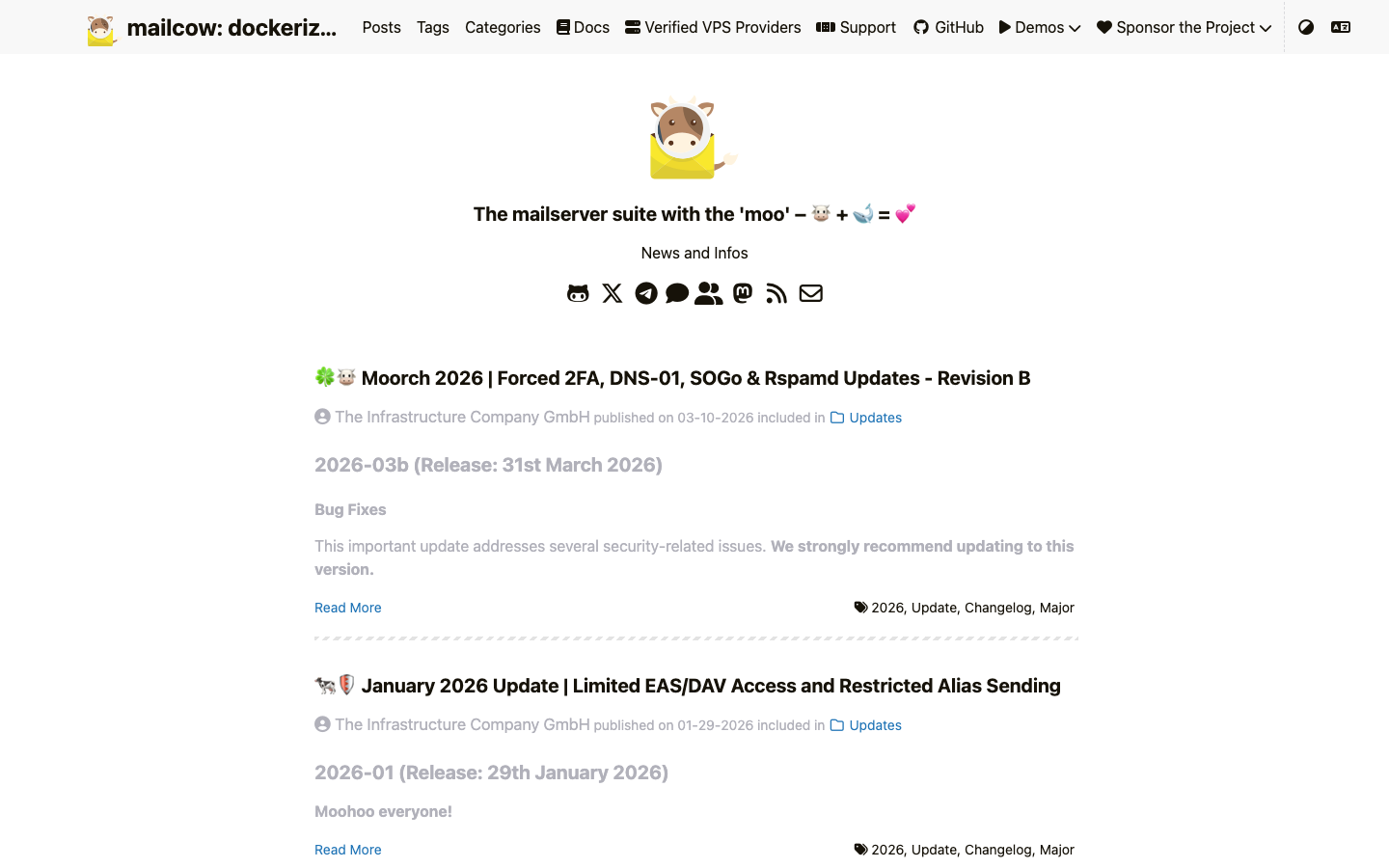
mailcow-dockerized
A dockerized, full-featured mail stack with web-based admin UI, REST API, Rspamd filtering, and ClamAV antivirus. Targets teams that want Zimbra-like administrative polish but with genuine open-source licensing and binary transparency.
Pros:
- Web UI rivals Zimbra in usability; no command-line required for routine tasks.
- REST API and webhook support enable custom automation and integrations.
- GPL-3.0 ensures source code availability and community contribution.
Cons:
- Larger resource footprint due to multiple containers; requires more infrastructure than single-binary alternatives.
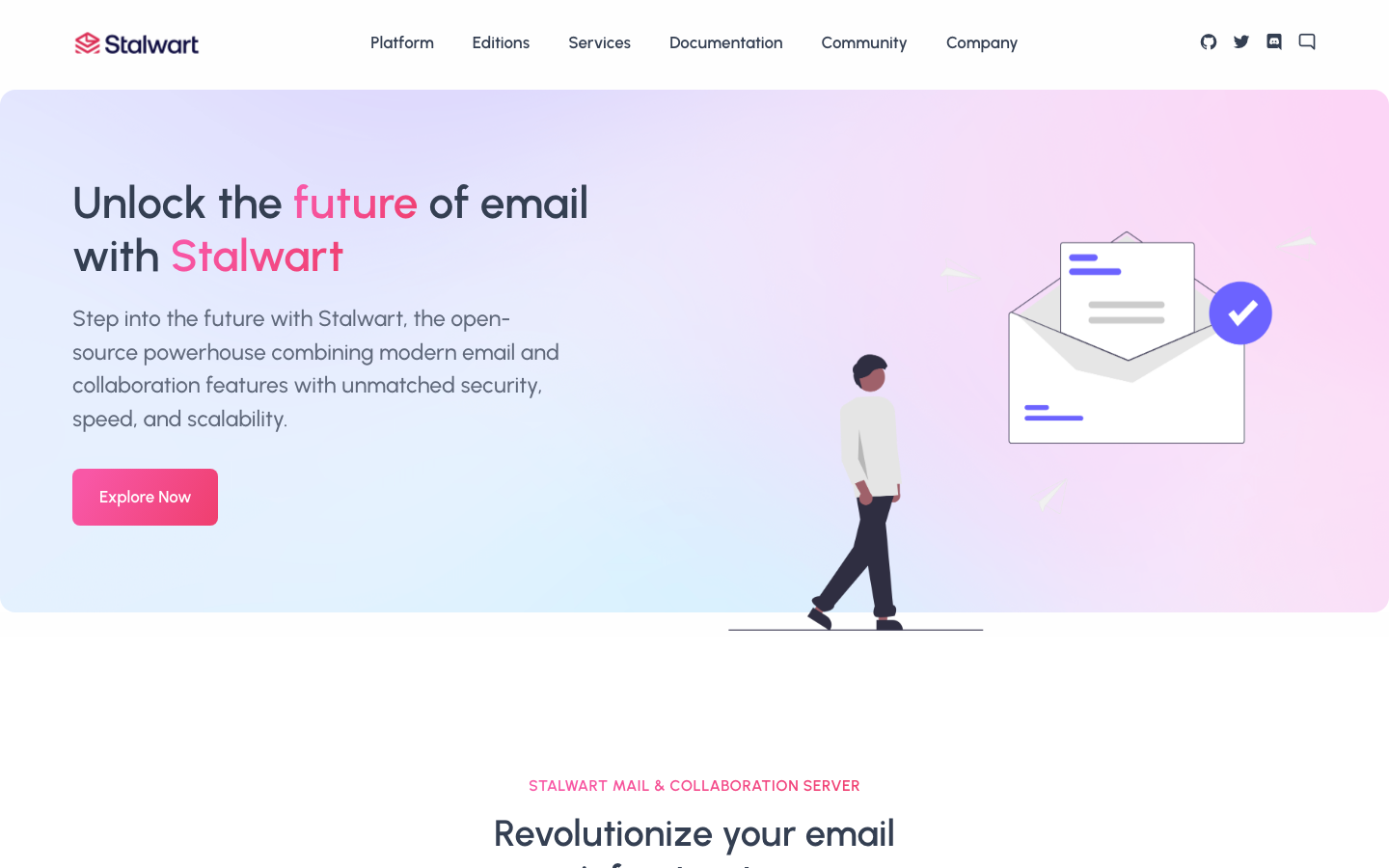
Stalwart
An all-in-one mail and collaboration server written in Rust, supporting IMAP, JMAP, SMTP, CalDAV, CardDAV, and WebDAV in a single binary. Positioned as a modern, protocol-fluent alternative to monolithic suites like Zimbra.
Pros:
- Unified stack: email, calendar, contacts, and file sharing in one codebase.
- JMAP support (modern email protocol) alongside legacy IMAP.
- Rust foundation promises memory safety and high performance.
Cons:
- License not formally declared; verify compliance requirements before enterprise adoption.
- Smaller community and fewer battle-tested deployments at scale compared to docker-mailserver.
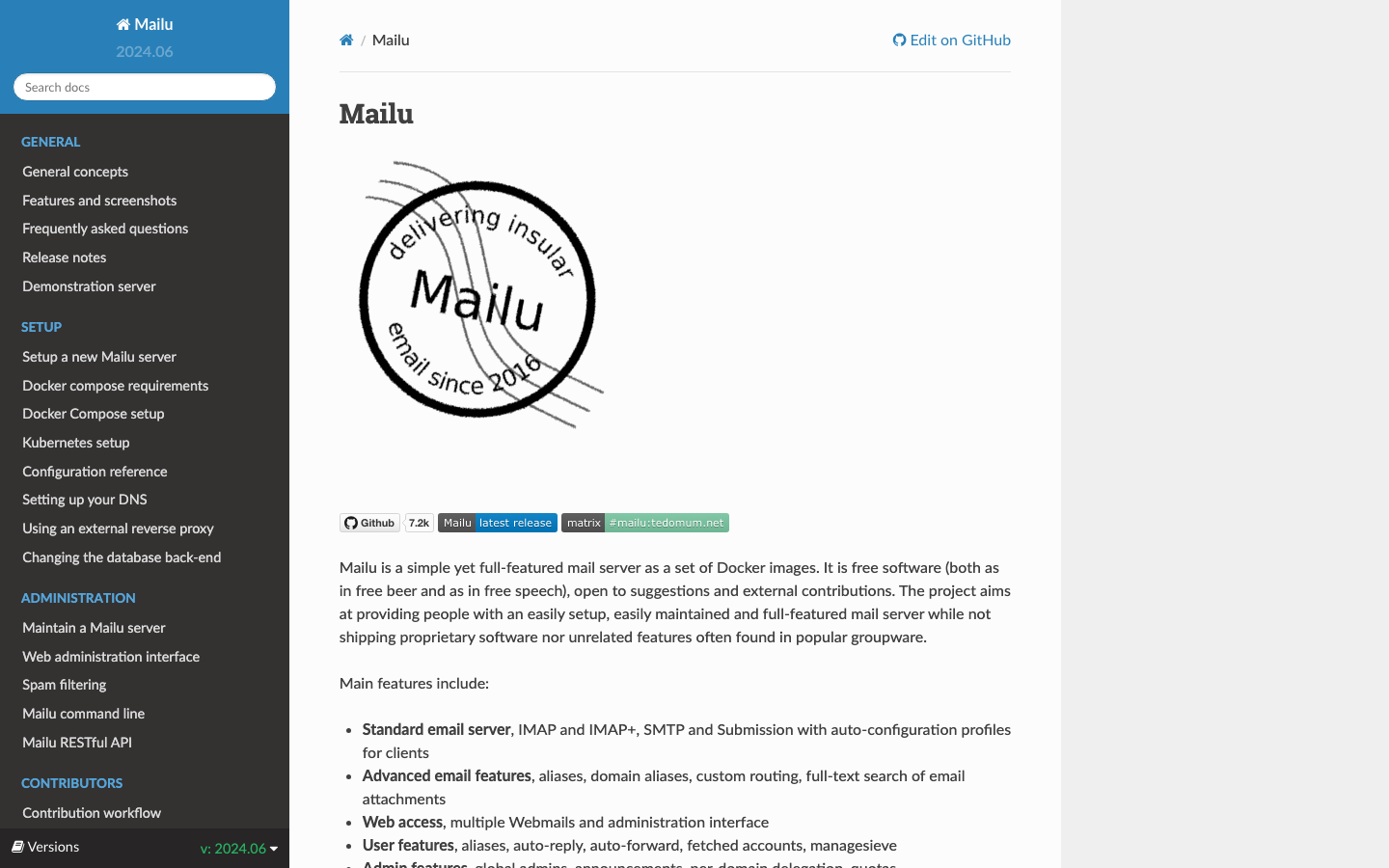
Mailu
A lightweight, Kubernetes-friendly mail distribution packaged as Docker images with integrated Rspamd filtering, ClamAV, and a web admin interface. Optimized for cloud-native and containerized environments.
Pros:
- Kubernetes-native; scales horizontally with cluster orchestration.
- Minimal resource overhead compared to mailcow.
- Web UI covers core admin tasks without complexity.
Cons:
- License not declared; review legal requirements before production use.
- Smaller ecosystem than mailcow; fewer third-party integrations.
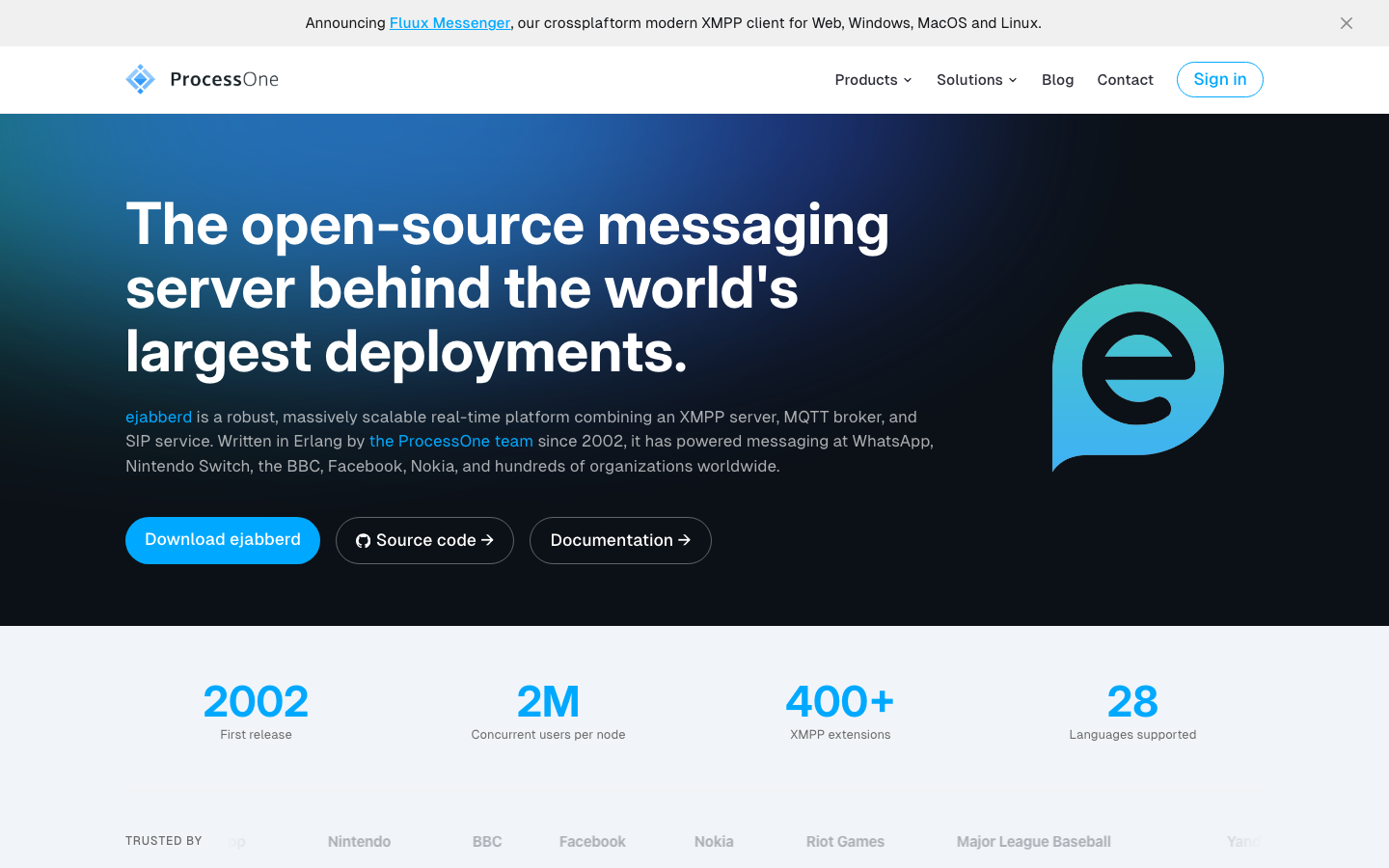
ejabberd
A robust, massively scalable messaging platform built on Erlang, supporting XMPP, MQTT, and SIP protocols. Suited for organizations needing real-time messaging, federation, and extreme uptime requirements rather than traditional email alone.
Pros:
- Legendary reliability; Erlang runtime handles millions of concurrent connections.
- Federation support enables inter-organization messaging without central control.
- XMPP + MQTT + SIP in one platform covers diverse communication needs.
Cons:
- Not a traditional email server; SMTP/IMAP are not primary; requires separate mail infrastructure.
- Steeper learning curve for teams unfamiliar with XMPP or real-time protocols.
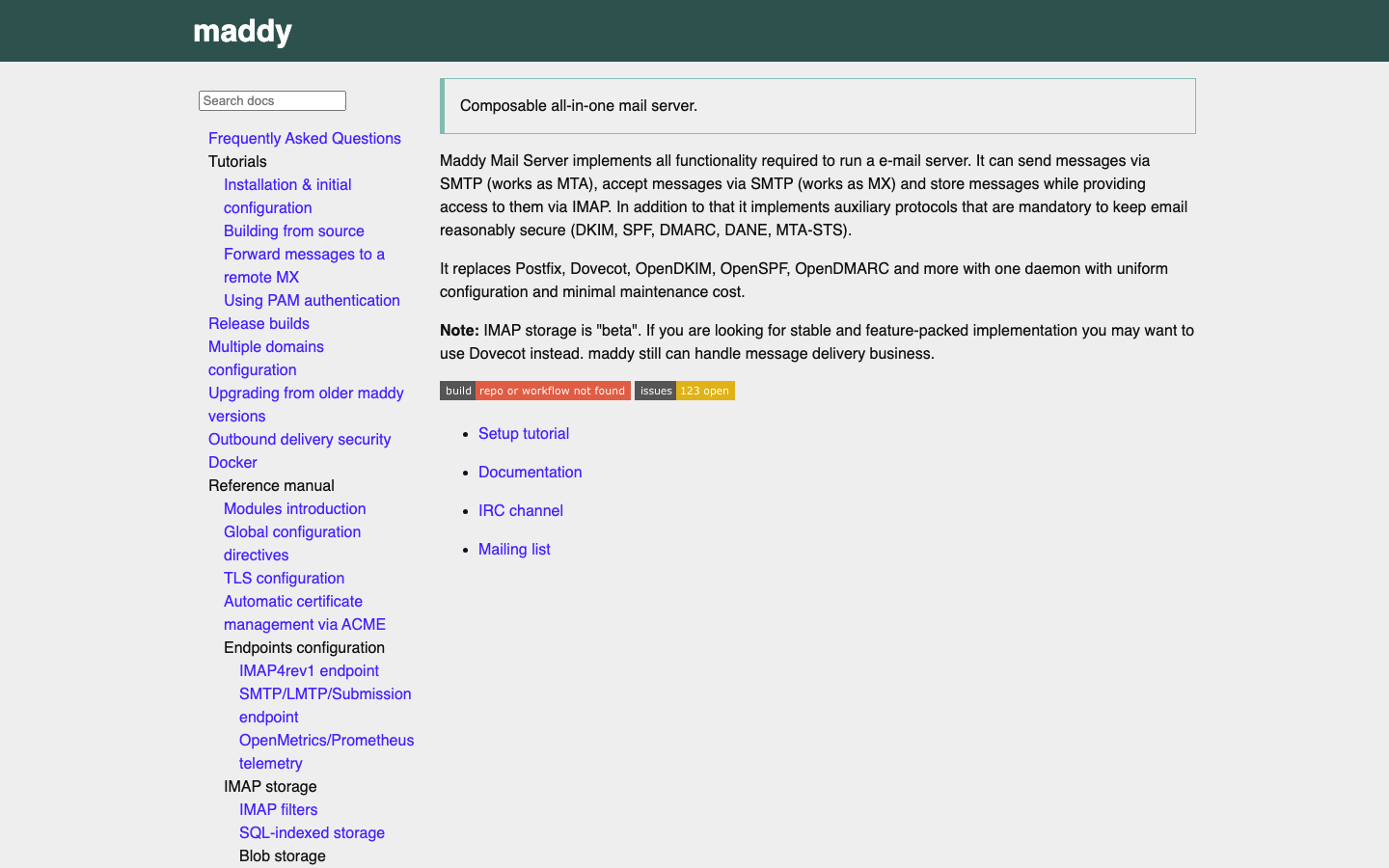
maddy
A composable, all-in-one mail server written in Go with built-in filtering, SPF/DKIM/DMARC support, and Lua scripting for custom logic. Emphasizes minimalism and modularity over feature bloat.
Pros:
- Single binary; deploys anywhere Go runs with zero dependencies.
- Lua scripting allows custom mail rules and workflows without code recompilation.
- GPL-3.0 license guarantees source transparency.
Cons:
- Smaller user base and fewer pre-built integrations than larger alternatives.
- Web UI is minimal; most configuration is text-based.
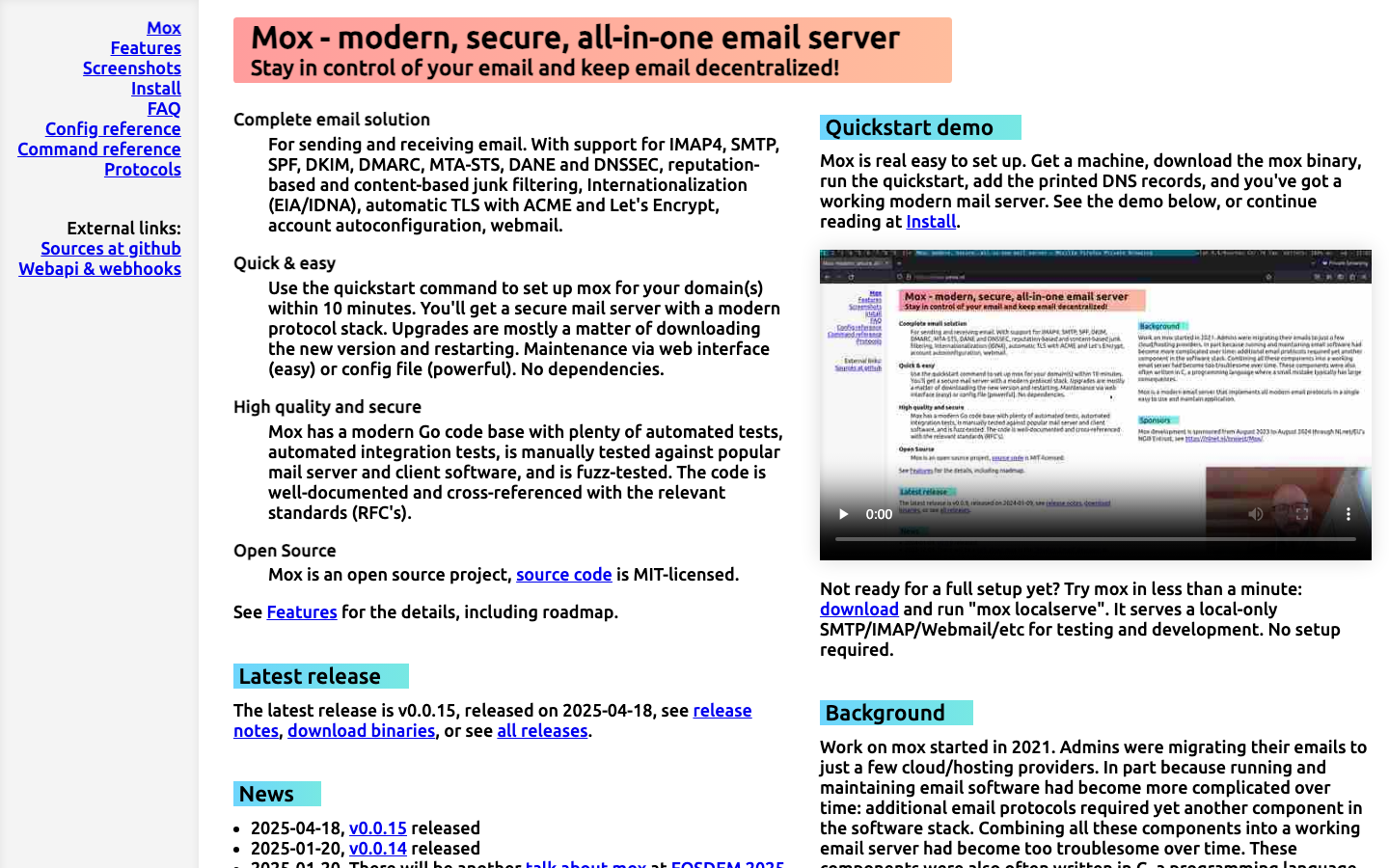
mox
A modern, low-maintenance mail server in a single Go binary, emphasizing security, simplicity, and automatic TLS/DKIM/SPF setup. Designed for operators who want email to "just work" with minimal ongoing care.
Pros:
- Truly minimal: single binary, automatic certificate management, built-in filtering.
- MIT license and active development focused on reliability.
- Lowest operational overhead of all alternatives; ideal for small-to-medium deployments.
Cons:
- Very young project; fewer large-scale production deployments documented.
- No web UI; configuration is file-based.
How to choose
For individuals and small teams (< 50 users): Start with Mail-in-a-Box or mox. Both require minimal infrastructure and eliminate setup friction; Mail-in-a-Box adds calendar/contacts, while mox prioritizes simplicity and zero-touch operation.
For mid-market teams (50–500 users) needing a web UI: mailcow-dockerized replicates Zimbra's administrative experience while preserving full source code access and avoiding license lock-in.
For infrastructure-first organizations (Kubernetes, Docker Compose): docker-mailserver or Mailu integrate seamlessly into container orchestration; choose docker-mailserver for maturity and flexibility, Mailu for cloud-native scaling.
For teams requiring unified collaboration (email + calendar + contacts + files): Stalwart is the closest Zimbra analog, offering CalDAV, CardDAV, and WebDAV in a single binary—verify license terms for your use case.
For real-time messaging beyond email: ejabberd replaces email with federated XMPP/MQTT; useful only if your primary need is instant messaging, not traditional email.