

















TL;DR
- You need a fully headless, API-first platform with modern tooling: Medusa gives you TypeScript, a composable architecture, and zero vendor lock-in—build storefronts anywhere.
- Your team runs on WordPress and wants ecommerce without learning a new system: WooCommerce integrates directly into WordPress, keeping your content and commerce stack unified.
- You're scaling fast and can't afford subscription creep tied to revenue thresholds: Self-host Saleor or Bagisto and pay only for your infrastructure, not per-sale or per-feature.
Why teams leave BigCommerce
The core friction starts with cost structure. BigCommerce's plans have hard revenue thresholds—you're forced to upgrade as you grow, and each tier jump is a step function in monthly spend. But the real cost isn't the base subscription: it's the ecosystem tax. Themes, third-party apps, and custom development pile on top of the $29.95–$299.95/month baseline, and you have no visibility into total cost until you're locked in.
More damaging is the closed-platform trap. BigCommerce is a hosted SaaS with proprietary APIs and limited customization without expensive professional services. Your store's data, logic, and customer experience are tethered to their infrastructure. If you need deep integrations, custom checkout flows, or headless storefronts, you hit the walls of their platform quickly. And when you want out—to migrate, to self-host, or to own your stack—you discover that exit is expensive and painful.
Open-source alternatives flip this: you own the code, control the infrastructure, and scale your costs with actual usage, not arbitrary plan boundaries.
Quick comparison
| Name | License | Self-Hosted | Plugin Ecosystem | Headless / API | Best For |
|---|---|---|---|---|---|
| Medusa | MIT | ✓ | Modular plugins | Native REST + GraphQL | Composable, multi-channel commerce |
| Bagisto | MIT | ✓ | Laravel ecosystem | REST API | Laravel shops, rapid MVP |
| Saleor | BSD-3-Clause | ✓ | Apps & extensions | Native GraphQL | High-performance, headless-first |
| Spree | BSD-3-Clause | ✓ | Gems & extensions | REST API + SDK | B2B, marketplace, cross-border |
| Magento 2 | OSL-3.0 | ✓ | Extensive marketplace | REST + GraphQL | Enterprise, complex catalogs |
| WooCommerce | License not declared | ✓ | WordPress plugins | REST API | WordPress-native stores |
| Evershop | GPL-3.0 | ✓ | Node.js ecosystem | REST API | Modern TypeScript stacks |
| PrestaShop | License not declared | ✓ | Module marketplace | REST API | SMB, multi-language stores |
Top open-source alternatives to BigCommerce
Medusa
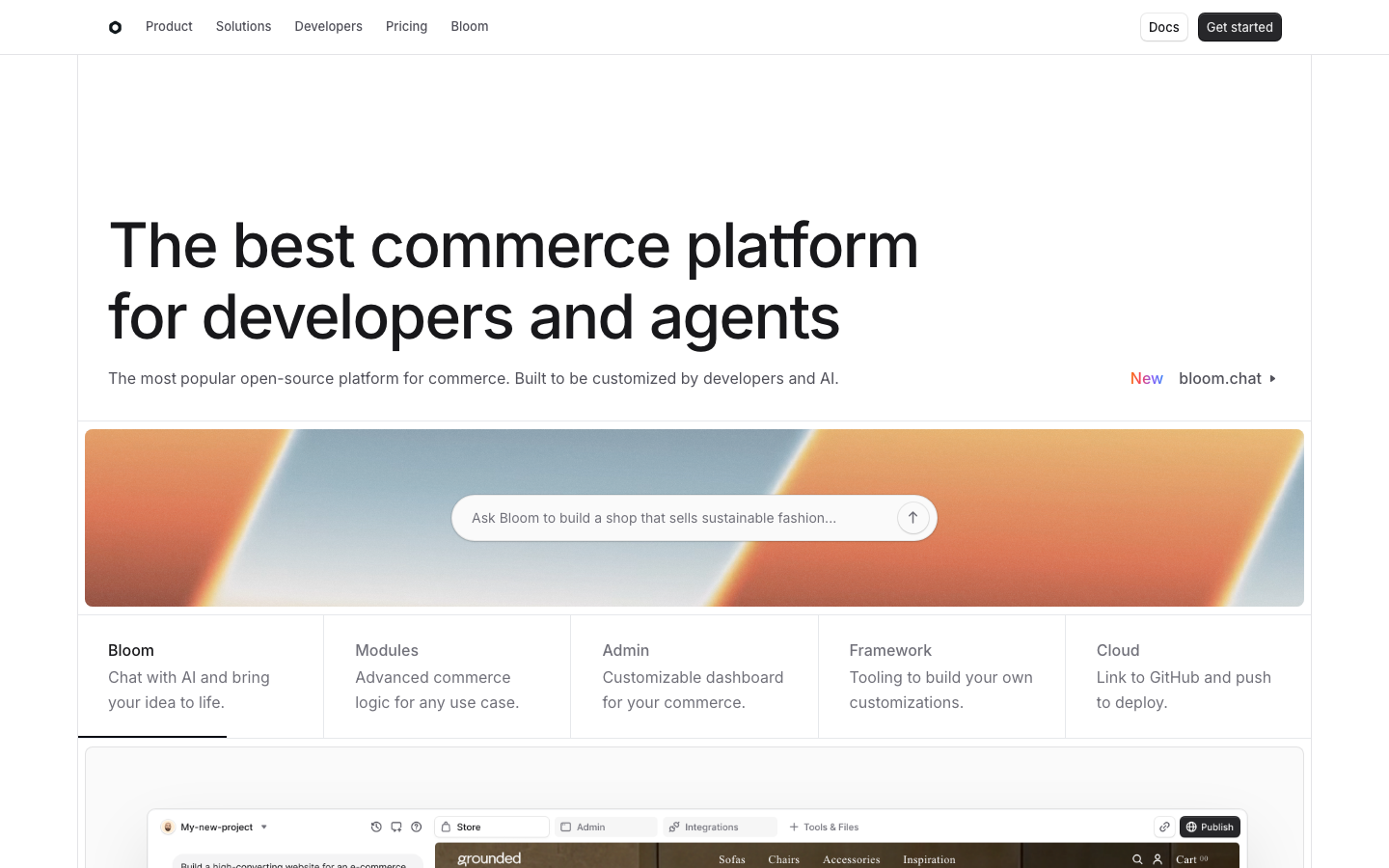
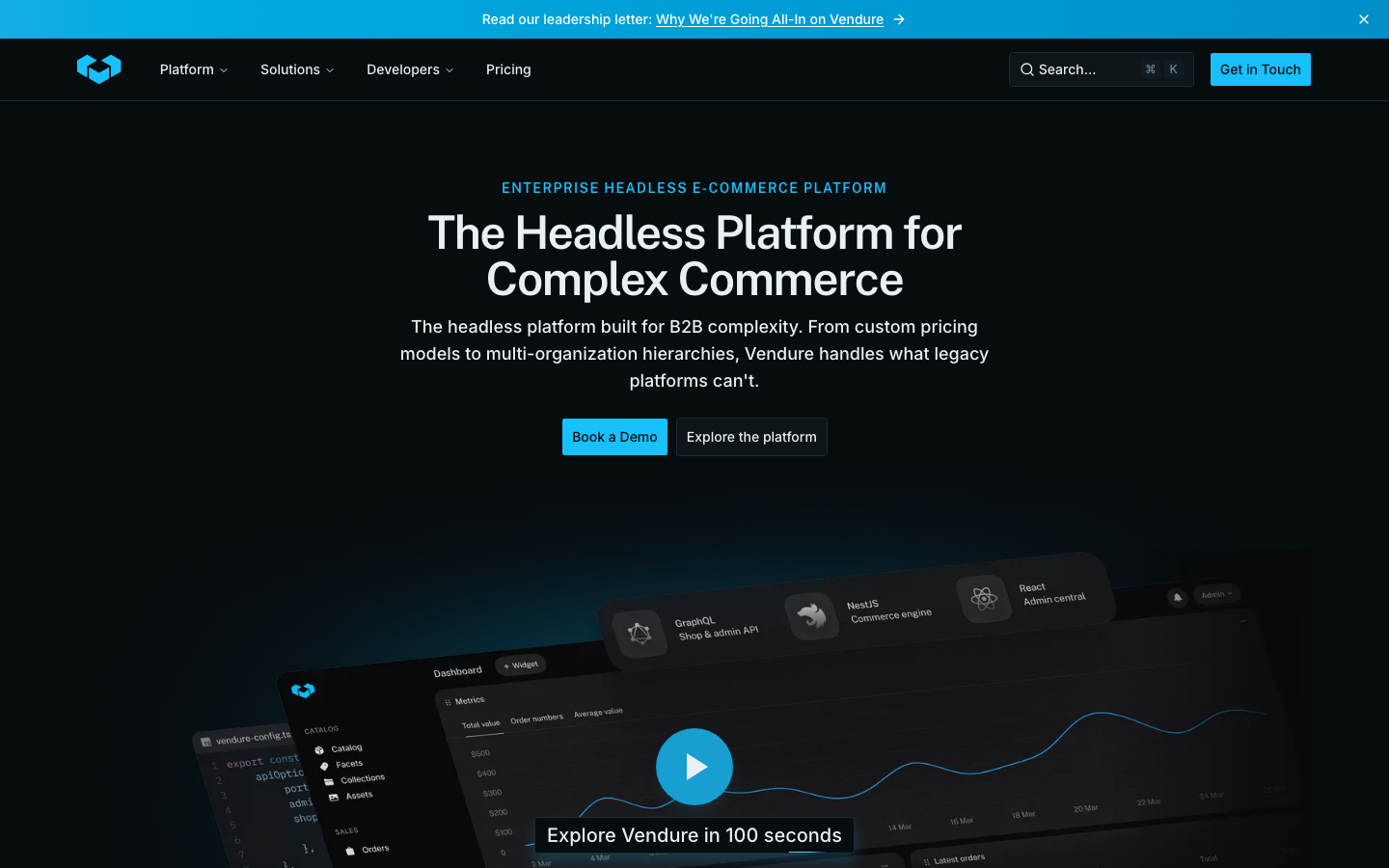
Medusa is a headless commerce engine built in TypeScript with a modular, plugin-first architecture. It's designed for teams building composable commerce—where your storefront, admin, and backend are decoupled and independently deployable.
Pros:
- Native REST and GraphQL APIs; true headless-first design means you own your frontend entirely.
- MIT license and modular plugin system; scale features without bloat or vendor lock-in.
- Strong TypeScript ecosystem; integrates seamlessly with modern frameworks (Next.js, Remix, etc.).
Cons:
- Smaller ecosystem than Magento or WooCommerce; fewer pre-built integrations out of the box.
- Requires more upfront architectural thinking; not ideal if you want a ready-made admin UI and storefront.
Bagisto
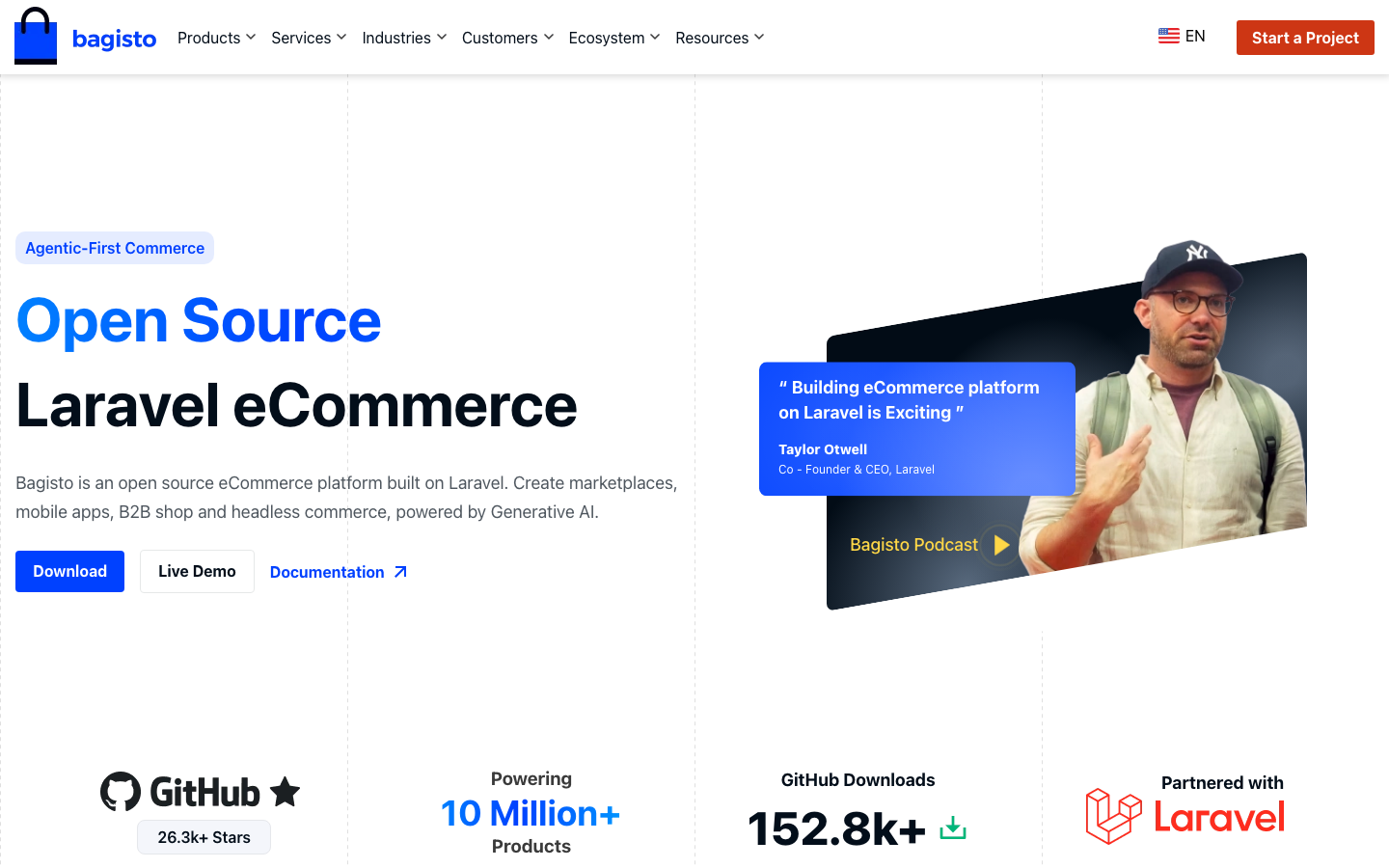
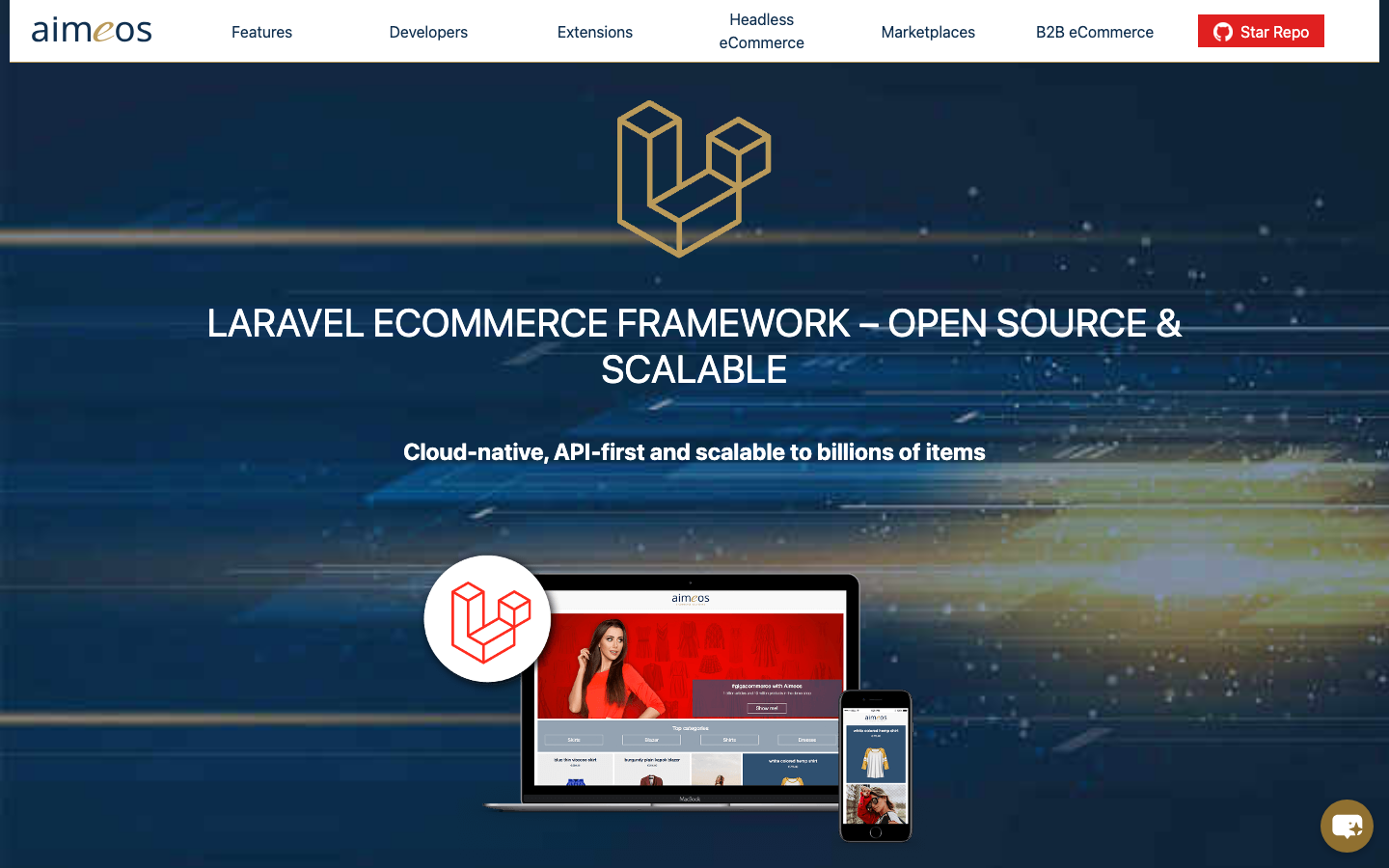
Bagisto is a Laravel-based ecommerce platform emphasizing simplicity and speed. Built on Laravel's ecosystem, it's lightweight and designed for teams already comfortable with PHP.
Pros:
- MIT license and Laravel foundation means rapid customization for PHP developers.
- Low hosting overhead; runs on standard LAMP stacks without complex infrastructure.
- Straightforward REST API and admin UI; good for small-to-medium stores.
Cons:
- Smaller community and ecosystem than Magento or WooCommerce; fewer third-party integrations.
- Less suitable for complex B2B or marketplace scenarios; better for simpler use cases.
Saleor
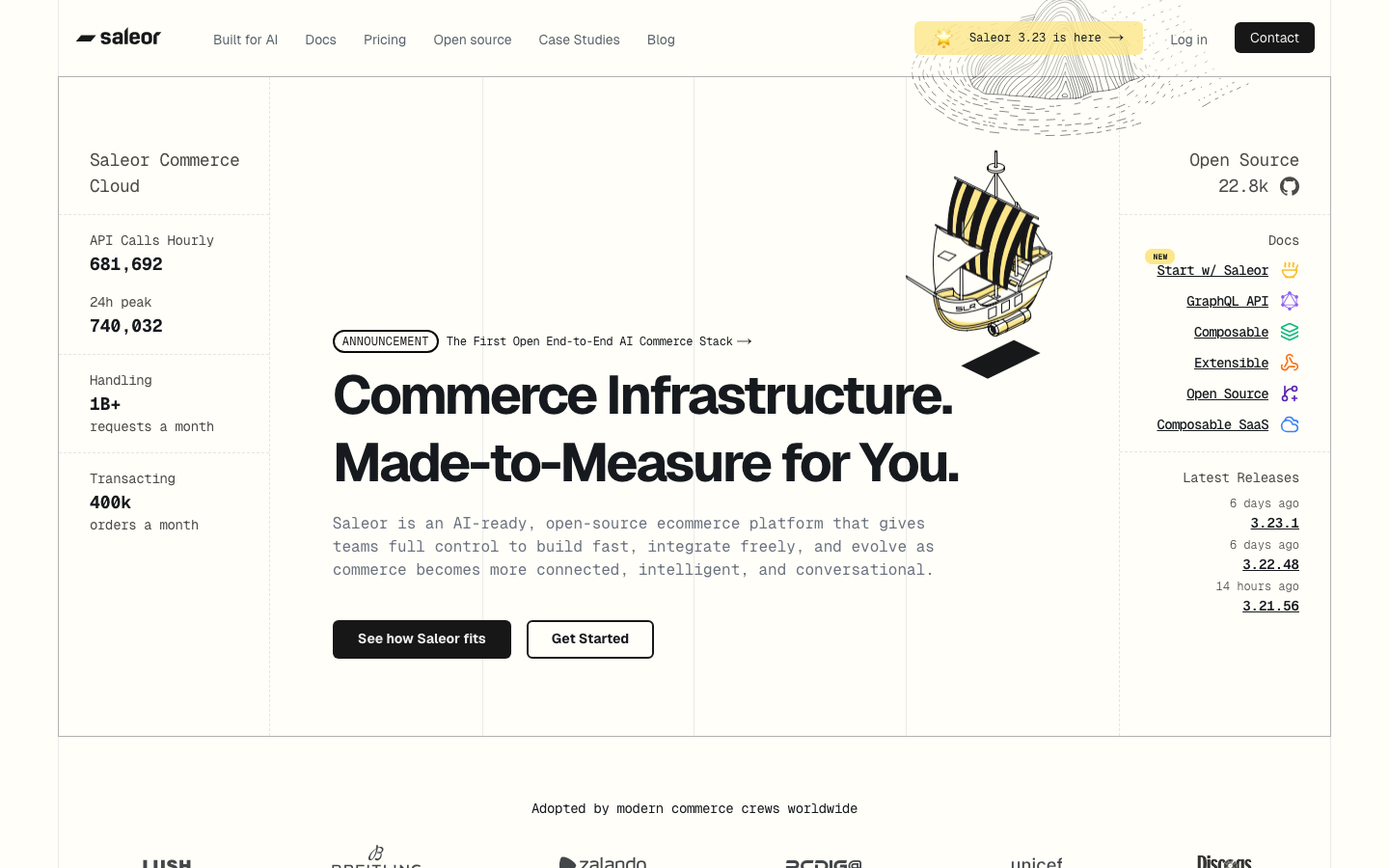
Saleor is a high-performance, GraphQL-first commerce API built in Python. It's designed as a backend-only platform, leaving frontend and channel decisions entirely to you.
Pros:
- GraphQL-native; efficient queries and real-time subscriptions reduce over-fetching and complexity.
- High performance at scale; built for platforms handling millions of SKUs and transactions.
- Clean, modern API design; excellent for headless and multi-channel commerce.
Cons:
- Requires building or integrating a separate admin and storefront UI; not a turnkey solution.
- Smaller community than PHP-based alternatives; fewer pre-built extensions.
Spree
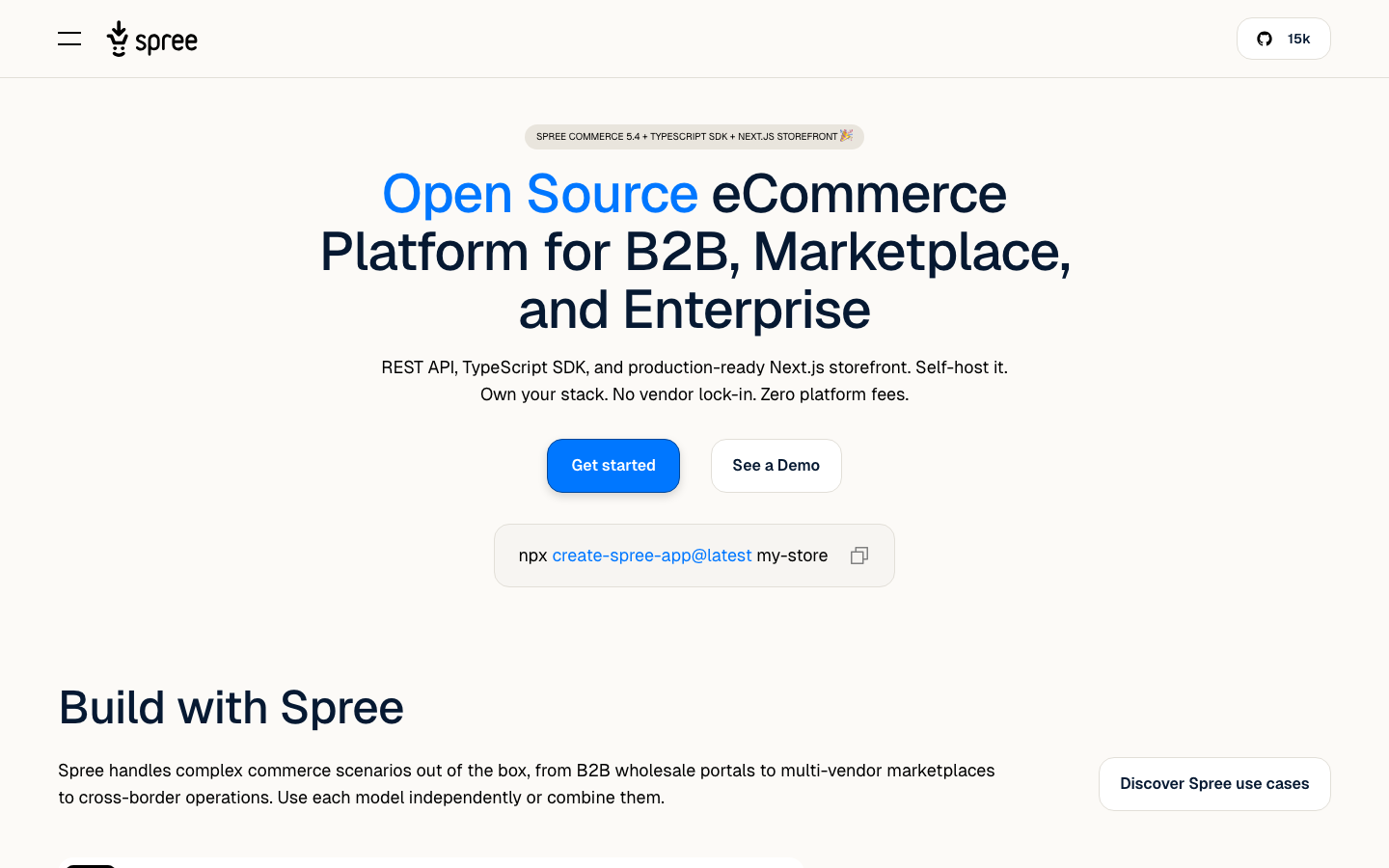
Spree is a Ruby-based, API-first ecommerce platform with a REST API, TypeScript SDK, and modern storefront templates. It's purpose-built for B2B, marketplace, and cross-border commerce.
Pros:
- BSD-3-Clause license and mature Ruby ecosystem; deep customization via gems and Rails conventions.
- Strong REST API and TypeScript SDK; native support for complex commerce workflows (B2B, multi-vendor).
- Flexible order and fulfillment logic; designed for non-standard commerce models.
Cons:
- Ruby-on-Rails knowledge required for deep customization; smaller talent pool than PHP.
- Fewer pre-built integrations than Magento; you'll build more custom code.
Magento 2
Magento 2 is a feature-rich, enterprise-grade PHP platform with a vast ecosystem. It powers millions of stores and is the de facto standard for complex, large-scale ecommerce.
Pros:
- Enormous ecosystem of extensions, themes, and integrations; solutions exist for nearly any requirement.
- Powerful admin UI and built-in tools for complex catalogs, pricing rules, and multi-store setups.
- REST and GraphQL APIs; mature headless support for enterprise use cases.
Cons:
- Steep learning curve and significant hosting/infrastructure costs; requires experienced DevOps and PHP expertise.
- Heavy platform; slower time-to-market for simple stores; overkill for most SMBs.
WooCommerce
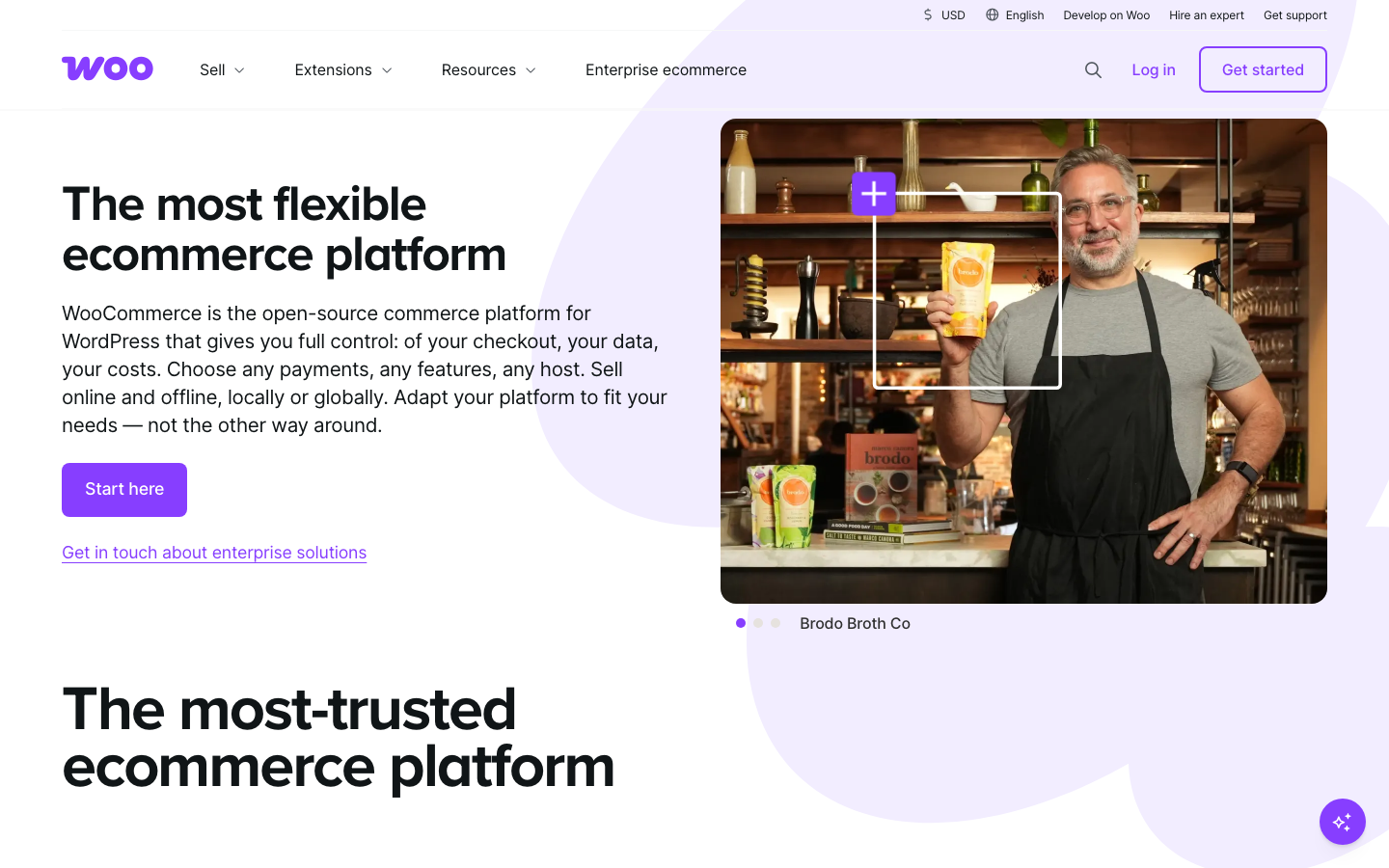
WooCommerce is a WordPress plugin that turns WordPress into a full ecommerce platform. It's the most popular ecommerce solution globally, with millions of active stores.
Pros:
- Zero learning curve if you already use WordPress; integrates seamlessly into existing sites.
- Massive ecosystem of plugins and themes; enormous community support and documentation.
- License not declared but widely used; flexible hosting options from shared hosting to dedicated servers.
Cons:
- Not headless by default; decoupling requires additional architecture and plugins.
- Performance can suffer on large catalogs or high-traffic sites without careful optimization.
Evershop
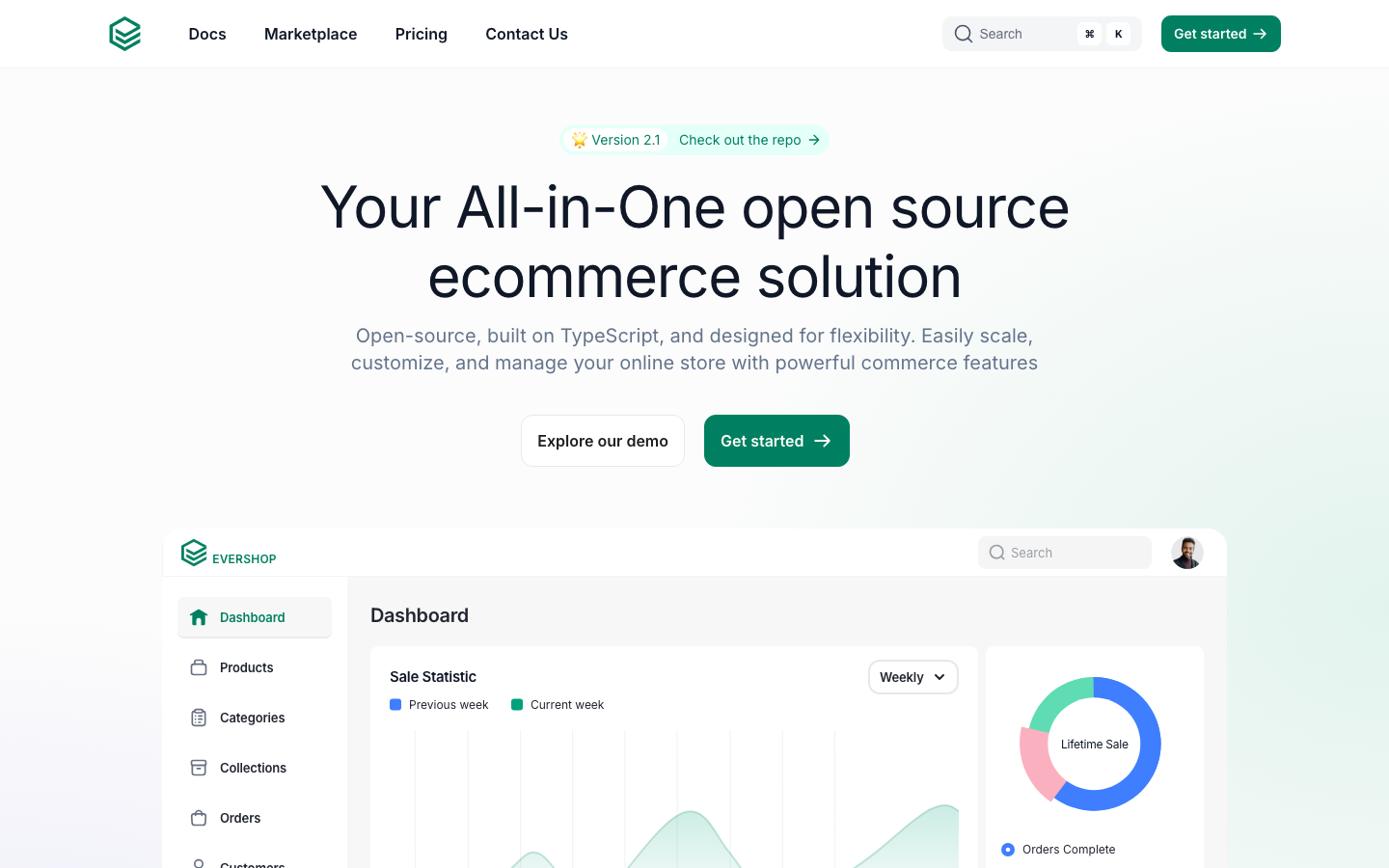
Evershop is a modern, TypeScript-based ecommerce platform designed for developers who want a lightweight, contemporary stack. It's built on Node.js with a focus on speed and simplicity.
Pros:
- Modern TypeScript stack; native integration with Node.js, React, and contemporary frontend tools.
- GPL-3.0 license and minimal overhead; runs efficiently on modest infrastructure.
- Clean, minimal API; easy to understand and extend without legacy baggage.
Cons:
- Very young ecosystem; far fewer extensions and integrations than mature platforms.
- Smaller community; less real-world battle-testing in production environments.
PrestaShop
PrestaShop is a mature, feature-complete PHP ecommerce platform with strong multi-language and multi-currency support. It's widely used by SMBs in Europe and beyond.
Pros:
- Mature platform with a large, active community; extensive module marketplace and documentation.
- Strong multi-language and multi-currency support; built for international commerce.
- REST API and admin UI; suitable for rapid store launch without heavy customization.
Cons:
- License not declared; less transparency than MIT or BSD alternatives.
- Not headless-first; decoupling requires workarounds; heavier platform than modern alternatives.
How to choose
For startups and rapid iteration: Choose Bagisto or Evershop if your team is small and you need to launch fast. Both are lightweight and require minimal infrastructure investment.
For WordPress shops: WooCommerce is the only sensible choice—you avoid learning a new system and leverage the WordPress ecosystem directly.
For headless and multi-channel: Medusa or Saleor are your best bets. Both are API-first, modern, and designed for composable commerce. Choose Medusa for a modular plugin system; choose Saleor for GraphQL and high performance.
For complex B2B or marketplace: Spree is built for these workflows. If you need even more power, Magento 2 is the enterprise standard—but only if you have the team and budget.
For international or SMB scale: PrestaShop has proven itself globally; it's mature, battle-tested, and designed for multi-language stores without heavy infrastructure.