













TL;DR
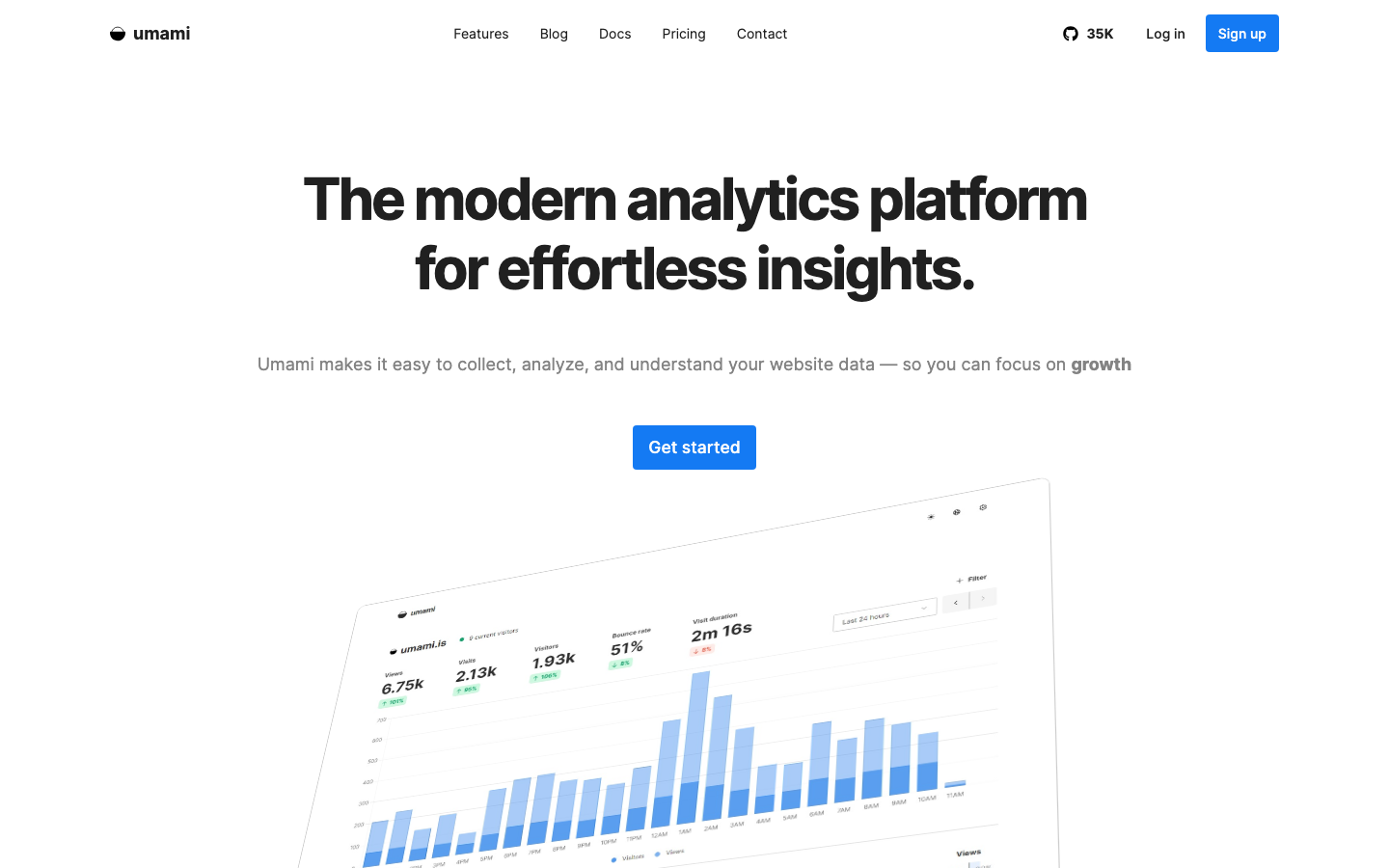
- Privacy first? Umami keeps visitor data on your servers with a clean, modern interface—no third-party tracking, no GDPR headaches.
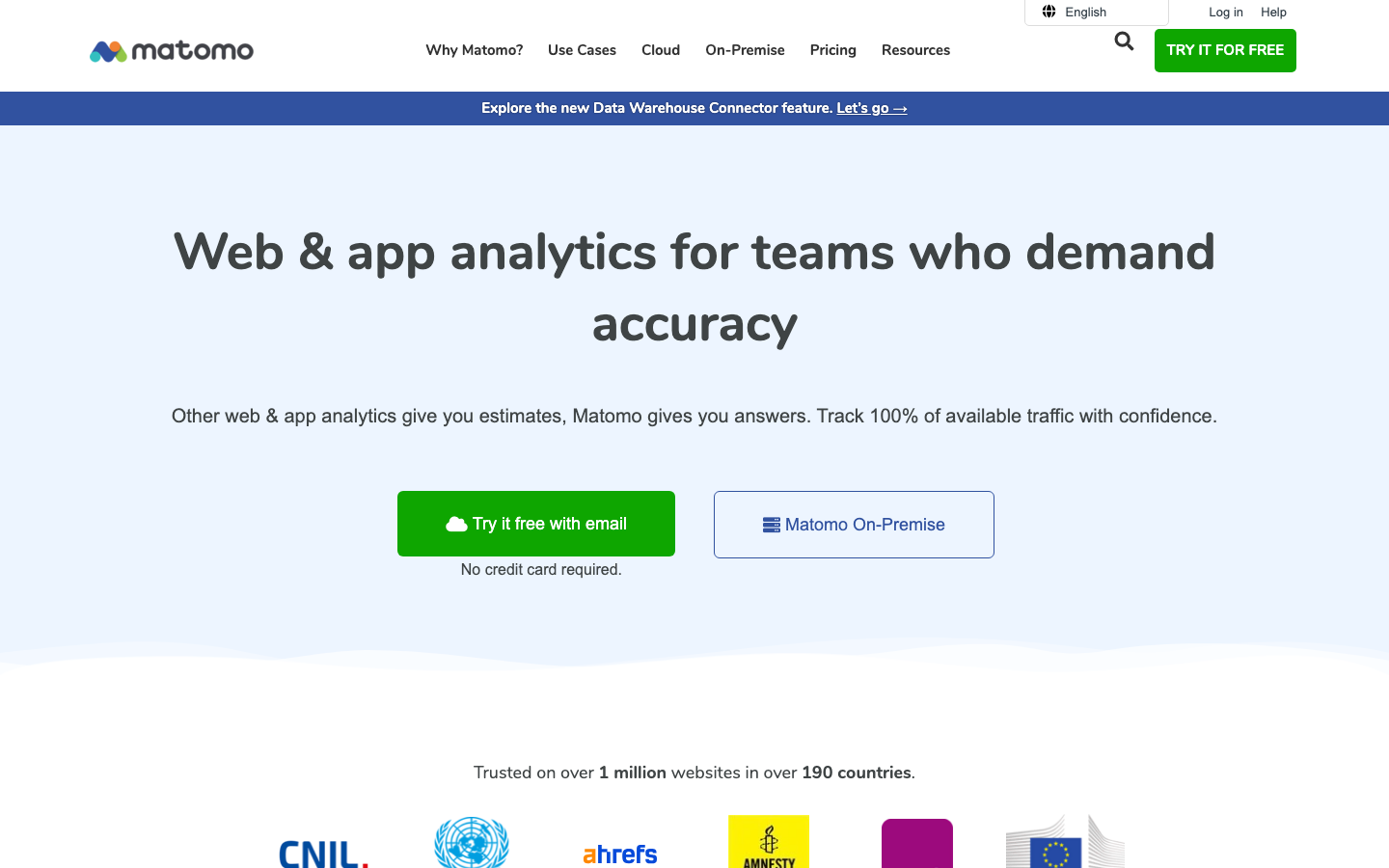
- Total cost of ownership matters. Self-hosted alternatives like Matomo eliminate per-event billing and data sampling penalties that compound as your traffic grows.
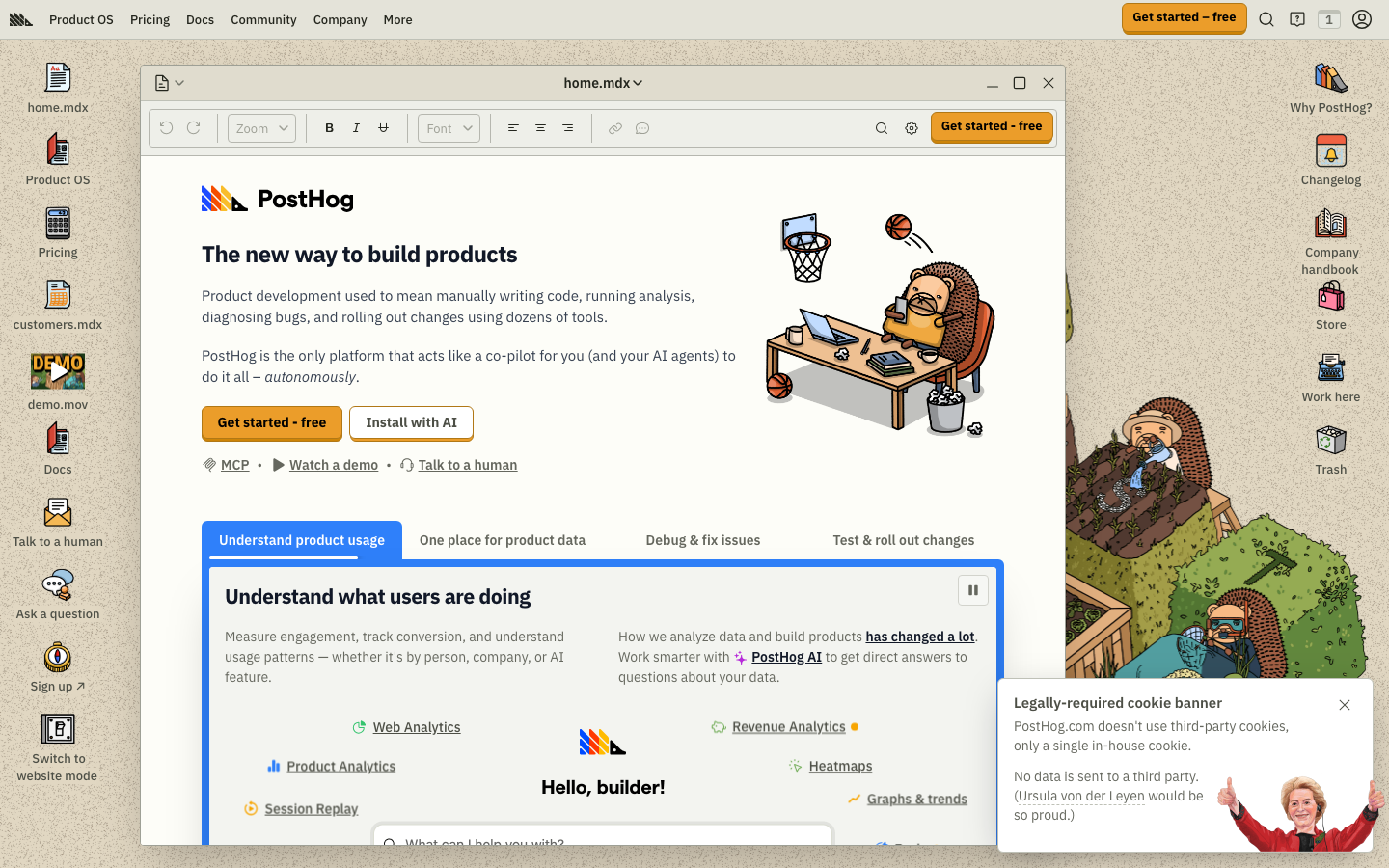
- You need full control. PostHog goes beyond analytics with session replay, feature flags, and experimentation—all in one platform you run yourself.
Why teams leave Google Analytics
Google Analytics 4's 2023 rollout promised modernization but delivered friction instead. The event-based data model broke years of custom reports, forcing teams to rebuild dashboards from scratch. At scale, GA4's data sampling kicks in on large datasets, making analysis unreliable exactly when you need precision most.
The deeper cost isn't in setup—it's in lock-in. Your visitors' data lives on Google's servers, you don't own the raw data export, and querying is constrained by Google's UI. That creates two problems: data sovereignty (your data is subject to US jurisdiction and Google's terms) and exit cost (moving analytics platforms is painful when you can't easily extract historical data).
EU regulators have scrutinized GA4 over GDPR compliance, with several countries questioning whether consent frameworks are adequate. Even without regulatory pressure, teams increasingly see analytics infrastructure as a core business asset—something you should control, not rent.
Self-hosted analytics invert this: your data stays on your infrastructure, you own the raw logs, you can query however you want, and you're not locked into a vendor's feature roadmap or pricing model.
Quick comparison
| Name | License | Self-Hosted | Data Ownership | Query Flexibility | Best For |
|---|---|---|---|---|---|
| Umami | MIT | ✓ | Full | Dashboard UI + basic export | Privacy-conscious teams, simple use cases |
| PostHog | License not declared | ✓ | Full | SQL queries, full data warehouse | Product teams needing replay + experiments |
| Analytics | AGPL-3.0 | ✓ | Full | Limited (log-based) | Minimal overhead, GDPR-first deployments |
| Matomo | GPL-3.0 | ✓ | Full | SQL, custom reports, API | GA4 drop-in replacement, enterprise scale |
| GoAccess | MIT | ✓ | Full | Log parsing + terminal/browser UI | DevOps, real-time log analysis |
| Rybbit | AGPL-3.0 | ✓ | Full | Dashboard-driven | Teams wanting simplicity over power |
| Countly | License not declared | ✓ | Full | Mobile + web analytics, API | Mobile-first teams, multi-platform tracking |
| GoatCounter | License not declared | ✓ | Full | Simple query UI | Minimal analytics, no personal data tracking |
Top open-source alternatives to Google Analytics
Umami
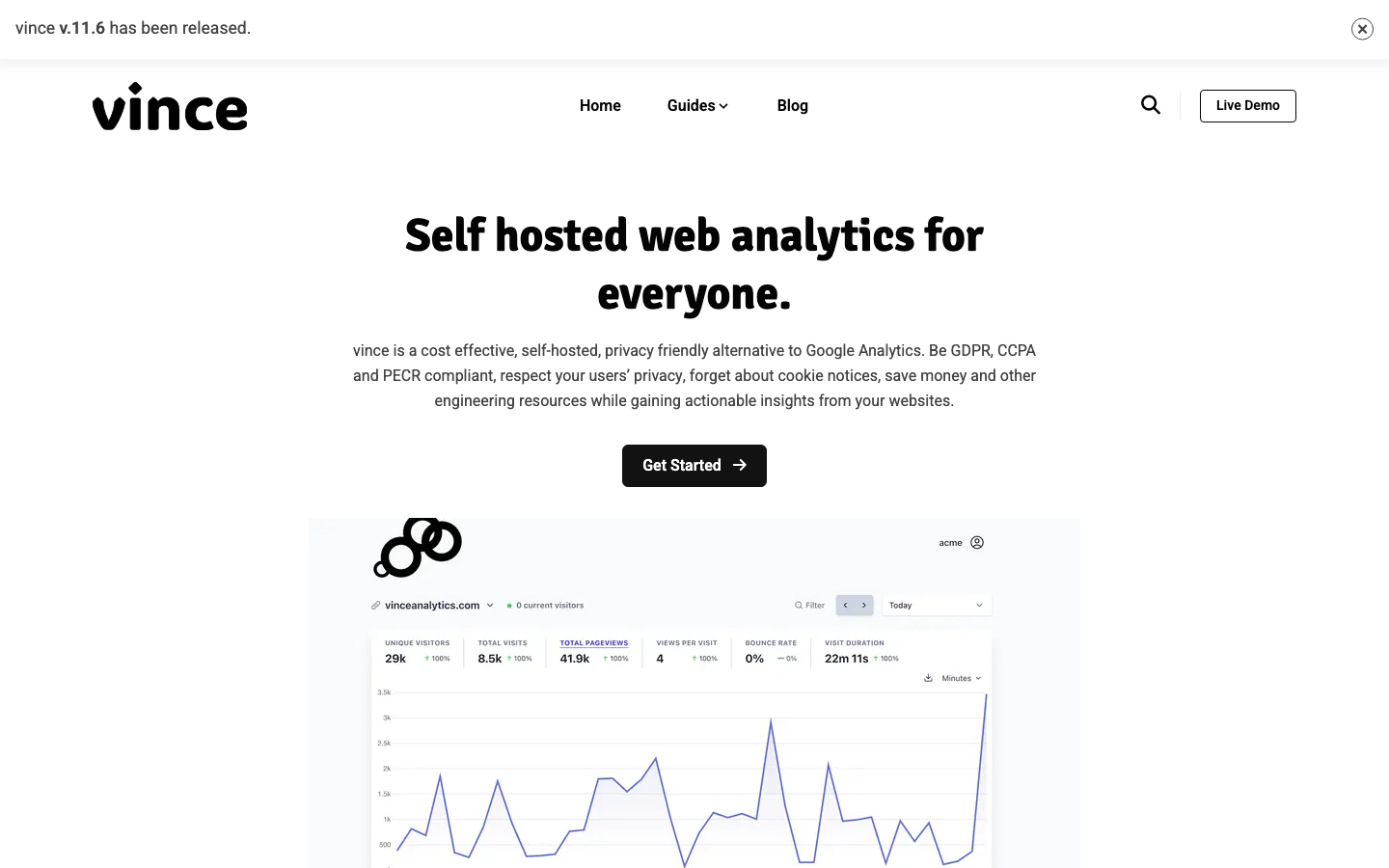
Umami is a privacy-first analytics platform built to feel familiar to GA4 users but without the baggage. It runs on your infrastructure, tracks events cleanly, and keeps visitor data private by design. The dashboard is modern and intuitive—a direct rebuke to GA4's complexity.
Pros
- MIT license, active TypeScript codebase (36k+ stars)
- Simple event model with fast queries
- GDPR-friendly: no fingerprinting, no third-party tracking
Cons
- Query flexibility is limited to the dashboard UI; no SQL layer for deep analysis
- Smaller ecosystem than Matomo for custom integrations
PostHog
PostHog is a full product platform, not just analytics. It bundles web analytics, session replay, feature flags, experimentation, and error tracking in one self-hosted stack. If you're building a product and want to own your entire data layer, PostHog removes the need for five separate tools.
Pros
- All-in-one: analytics, replay, experiments, surveys, CDP, and data warehouse
- SQL-based queries on raw data; no sampling, no limits
- Python-based, widely extensible
Cons
- Steeper learning curve and infrastructure overhead than lightweight alternatives
- License not declared; verify terms before production use
Analytics
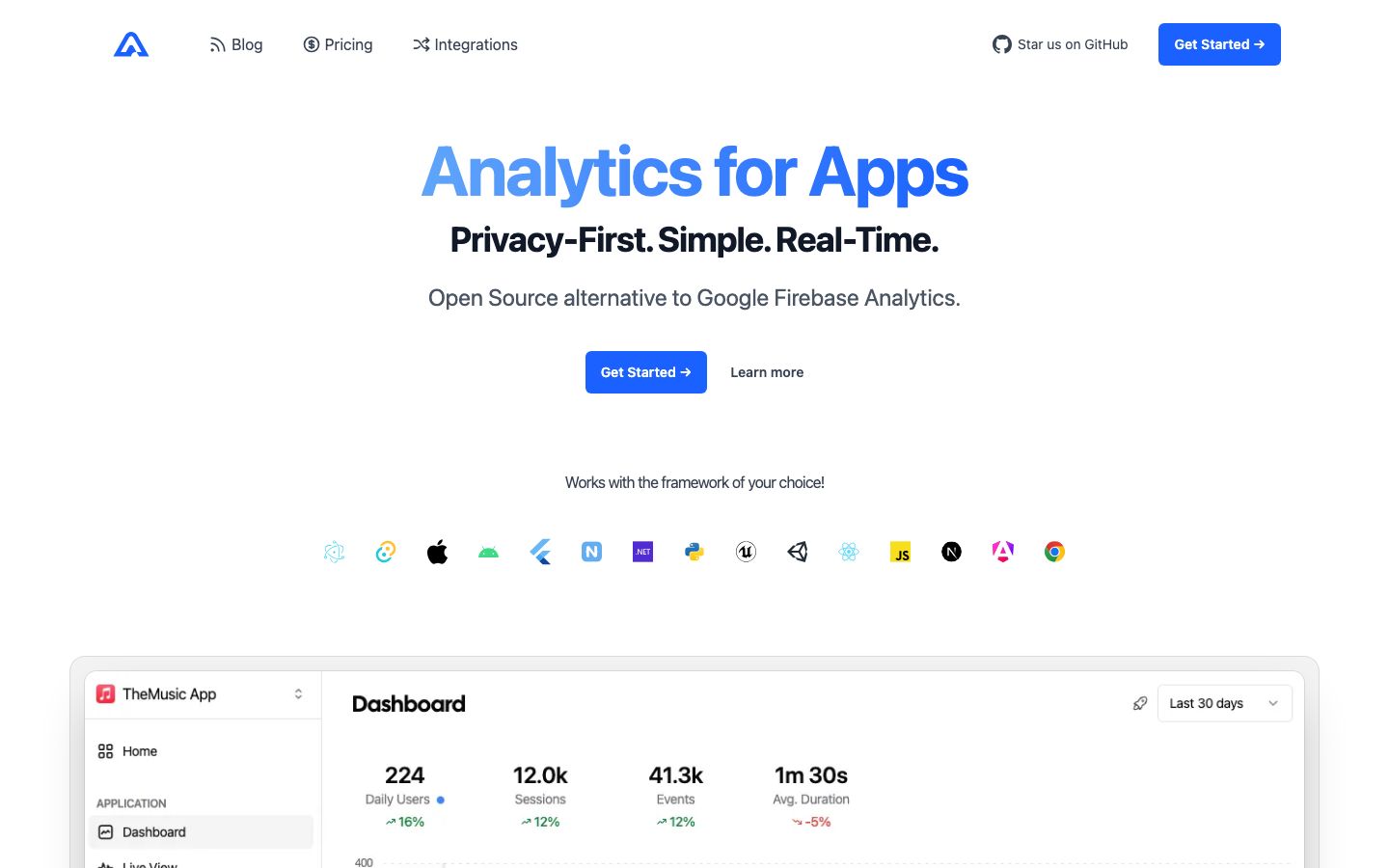
A lightweight Elixir-built analytics engine designed for teams that want minimal overhead and maximum privacy. It's log-based, fast, and AGPL-licensed—no bloat, no trackers, no consent-banner gymnastics.
Pros
- Extremely lightweight; runs efficiently on modest hardware
- AGPL-3.0 ensures transparency and community contribution
- Minimal data collection by design
Cons
- Query interface is basic; built for simple dashboards, not ad-hoc analysis
- Smaller community than Matomo; fewer third-party plugins
Matomo
Matomo is the most direct GA4 replacement in the open-source world. It replicates Google Analytics' feature set (goals, funnels, segments, custom dimensions) while keeping data on your servers. Over 15 years of development means it scales to enterprise traffic and integrates with existing workflows.
Pros
- GPL-3.0; mature, battle-tested codebase (21k+ stars)
- Closest GA4 feature parity; easiest migration path
- SQL access, API, and plugin ecosystem for customization
Cons
- Higher infrastructure requirements than lightweight alternatives
- Larger codebase means more moving parts to maintain
GoAccess
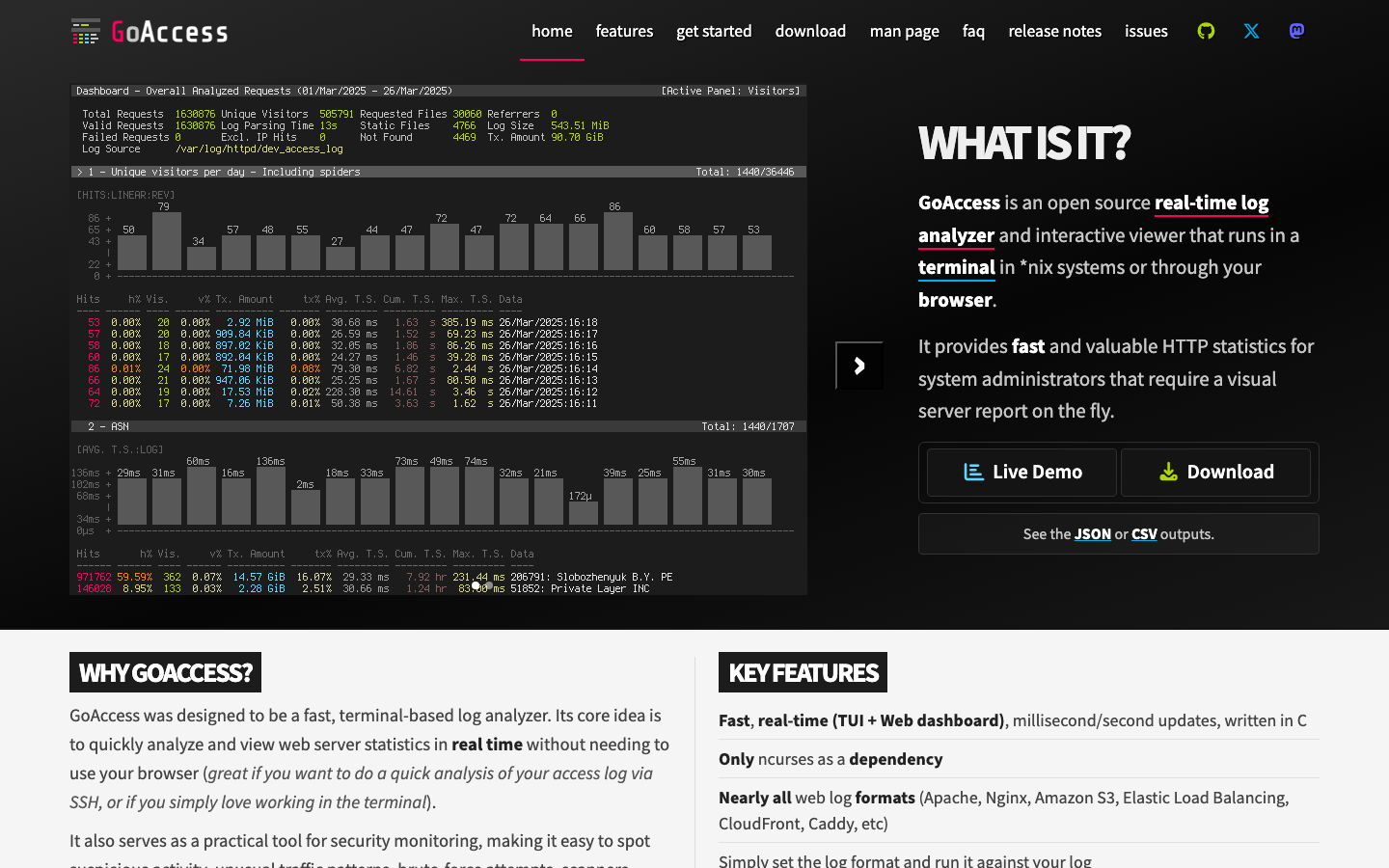
GoAccess parses web server logs in real-time and visualizes traffic patterns in your terminal or browser. It's built in C for speed and requires zero external dependencies—just point it at your access logs.
Pros
- Real-time log analysis; no event collection overhead
- MIT license, tiny footprint, runs on any server
- Terminal-native; integrates with Unix workflows
Cons
- Log-based only; requires access to raw server logs (not suitable for client-side or SaaS tracking)
- No user-session abstraction; optimized for traffic patterns, not user journeys
Rybbit
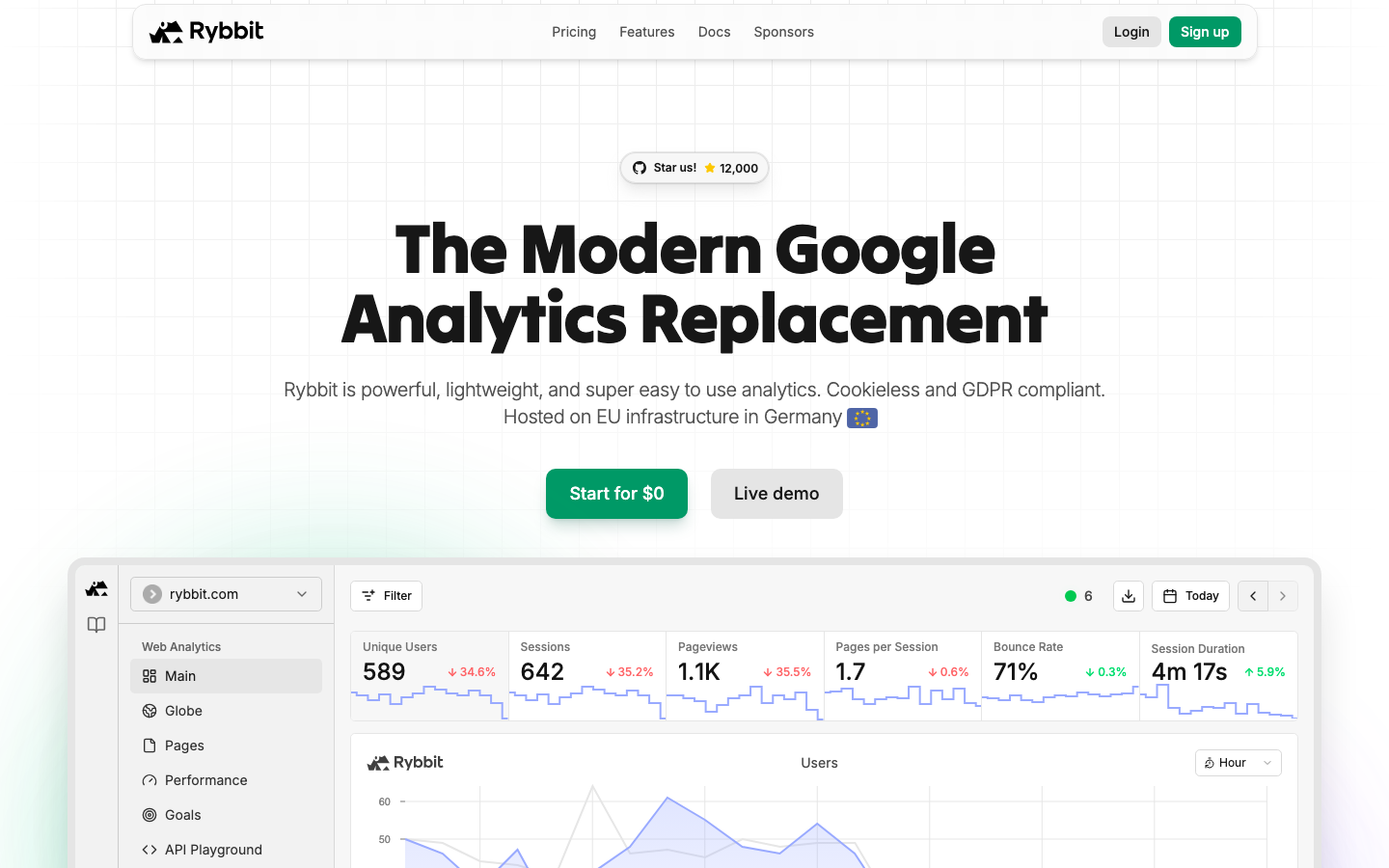
Rybbit markets itself as "10x more intuitive" than GA4—a bold claim backed by a clean, opinionated dashboard. It's TypeScript-based, AGPL-licensed, and designed for teams that want analytics to be simple, not powerful.
Pros
- Minimal learning curve; dashboard-first design
- AGPL-3.0; privacy-focused event model
- Fast deployment with sensible defaults
Cons
- Smaller community and ecosystem (12k stars)
- Limited customization; if you need SQL queries or advanced segments, you'll hit walls
Countly
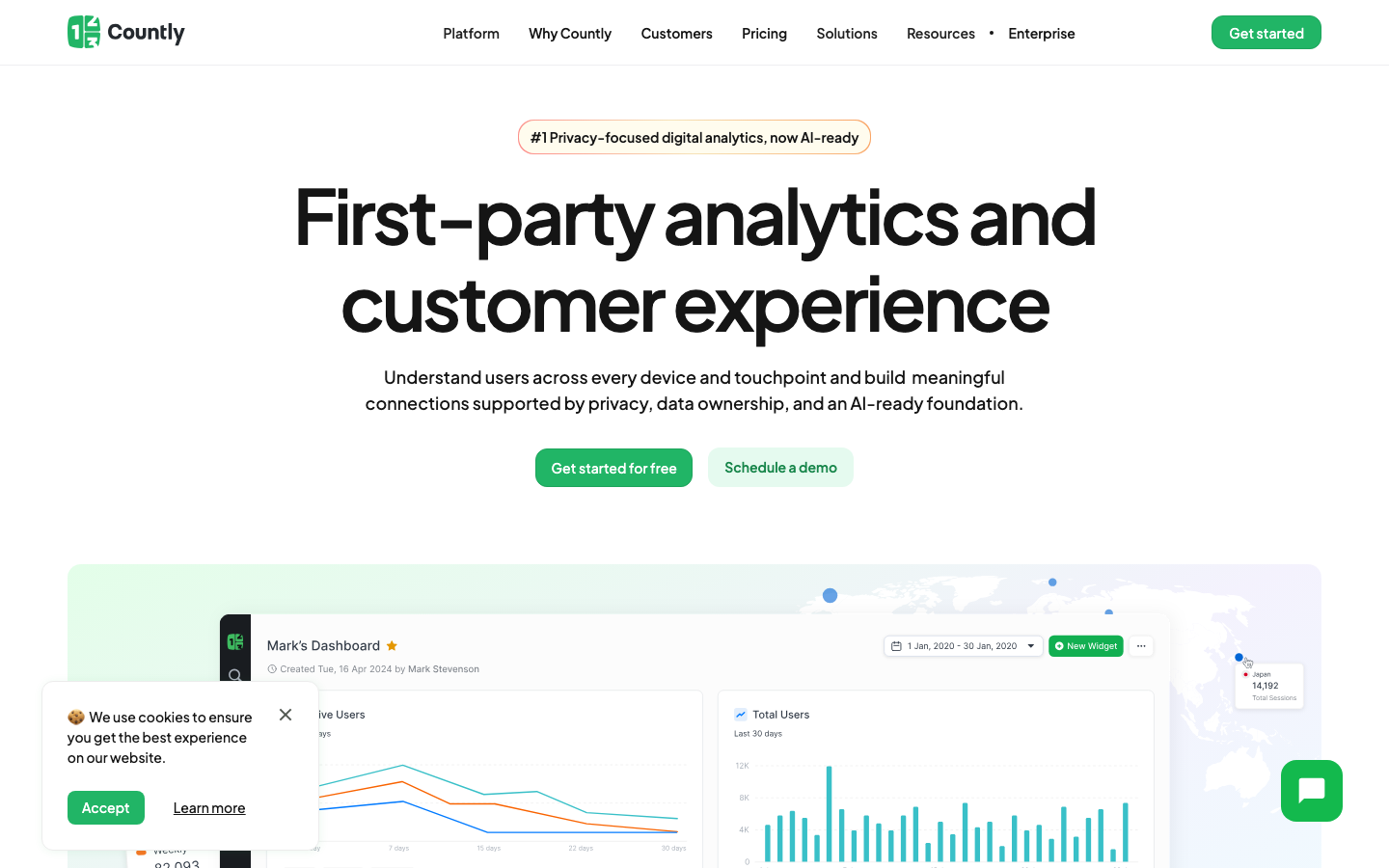
Countly is a privacy-first, AI-powered platform for mobile and web analytics. It's designed for teams tracking across multiple platforms—iOS, Android, web, IoT—and includes engagement and push-notification features.
Pros
- Mobile-native; first-class support for app analytics
- AI-powered insights and anomaly detection
- Self-hosted with full data ownership
Cons
- License not declared; verify legal terms before deployment
- Heavier infrastructure footprint than lightweight alternatives
GoatCounter
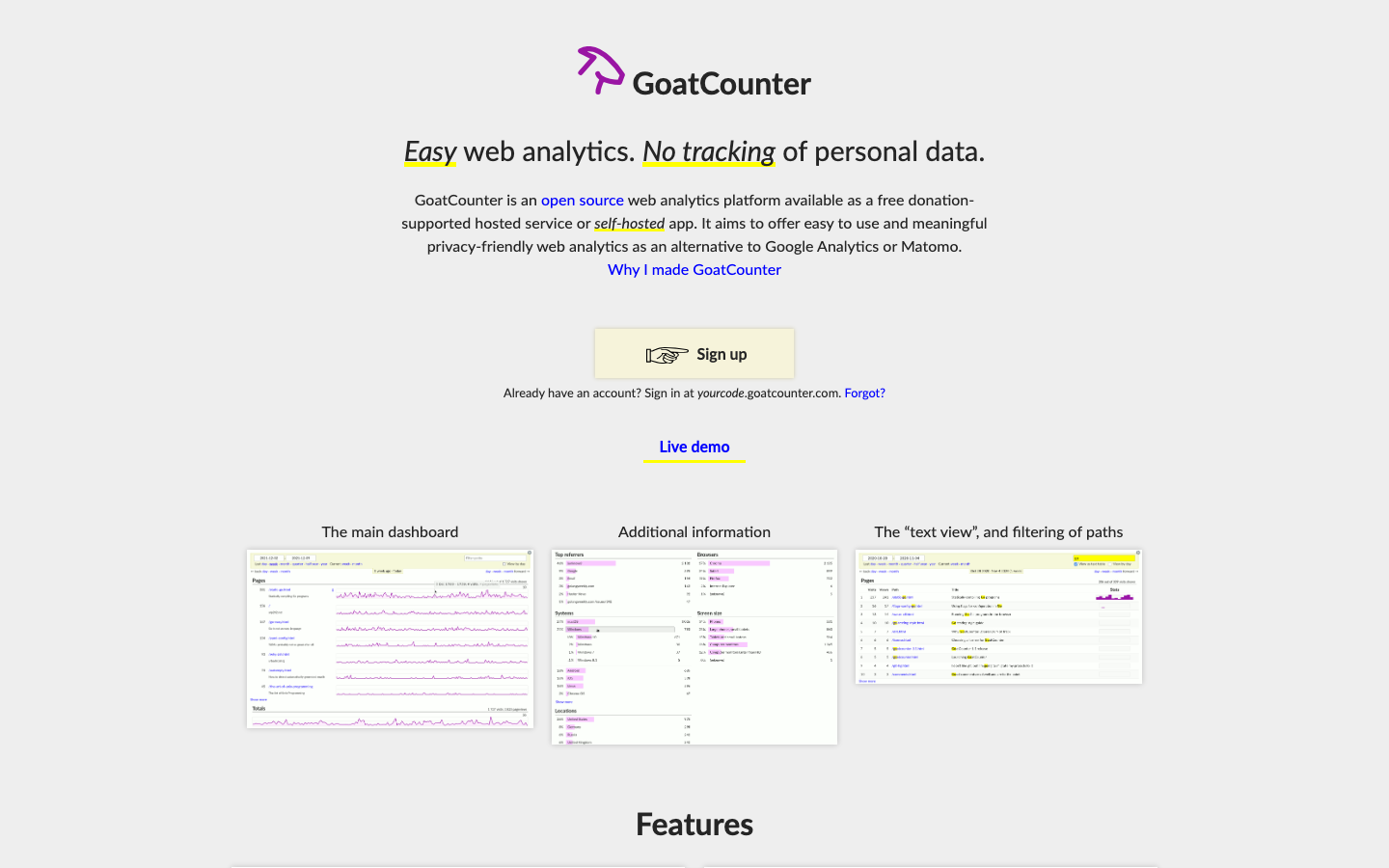
GoatCounter is analytics for teams that reject the tracking-industrial complex. It counts page views and basic events without fingerprinting, user IDs, or behavioral profiling. Built in Go, it's fast and simple.
Pros
- Ethical by design: no personal data tracking, no cookies by default
- Minimal resource consumption
- Easy to self-host or use their managed tier
Cons
- Very basic feature set; not suitable for product analytics or funnel analysis
- License not declared; check terms for your use case
How to choose
Start with your data scale and team skill. If you're migrating from GA4 and need feature parity, Matomo is the safest bet. If you're a product team needing experiments, replay, and SQL access, PostHog pays for itself by replacing multiple tools. For privacy-first teams with simple needs, Umami or GoatCounter are faster to deploy.
Consider infrastructure appetite. Lightweight options like Analytics and GoAccess run on minimal hardware; heavier platforms like Countly and PostHog need more resources but offer more features. If you're already running Kubernetes, that overhead is trivial. If you're a solo founder on a $5 VPS, it matters.
Verify licensing and support. MIT and GPL projects have clear legal standing; projects marked "license not declared" require explicit review before production use. Larger communities (Matomo, PostHog, Umami) mean more tutorials, plugins, and troubleshooting help.