





TL;DR
- Support teams moving off per-seat billing: Chatwoot bundles live chat, email, and omni-channel support in one self-hosted package, eliminating Intercom's stacked headcount + usage fees.
- Mobile-first product teams building chat UX: React Native Gifted Chat gives you a production-ready chat interface you control, avoiding lock-in to proprietary messaging layers.
- Teams needing conversational automation without vendor dependency: Typebot.io lets you self-host a chatbot builder, keeping workflow logic and customer interactions on your own infrastructure.
Why teams leave Intercom
Picture a support team three months in: ticket volume spikes, they add a second agent, and suddenly the bill jumps not just by one seat, but by another $29–$85 per person per month — plus per-resolution charges for AI features. The math doesn't feel like it's in their control anymore.
Intercom's hybrid model — per-seat licensing stacked with usage-based AI resolution pricing — creates unpredictable scaling costs. As support volume grows, teams face a choice: pay more for seats, pay more per AI action, or both. Worse, customer conversations, help content, and contact data sit inside Intercom's platform, creating vendor lock-in. Exporting conversation history or migrating to another system becomes operationally painful.
Open-source alternatives shift the equation. Self-hosted platforms like Chatwoot run on your infrastructure, eliminating per-seat stacking and keeping data in your control. You pay once for deployment, not per user or per support action. The trade-off is honest: you lose Intercom's polish and advanced AI integrations, but you gain cost predictability and data sovereignty — especially critical for teams handling sensitive customer information or operating under data residency rules.
Quick comparison
| Name | License | Self-Hosted | API / Extensibility | Stack / Language | Best For |
|---|---|---|---|---|---|
| Chatwoot | — | ✅ Yes | REST API, webhooks, integrations | Ruby | Full-featured support desk & live chat |
| React Native Gifted Chat | MIT | ✅ Component library | Customizable, composable React Native | TypeScript | Mobile chat UI & messaging interfaces |
| Typebot.io | — | ✅ Yes | Embeddable, API-driven | TypeScript | Self-hosted chatbot & automation builder |
| Live Helper Chat | Apache-2.0 | ✅ Yes | REST API, webhooks, Telegram/Twilio/Facebook | PHP | Multi-channel live support with voice/video |
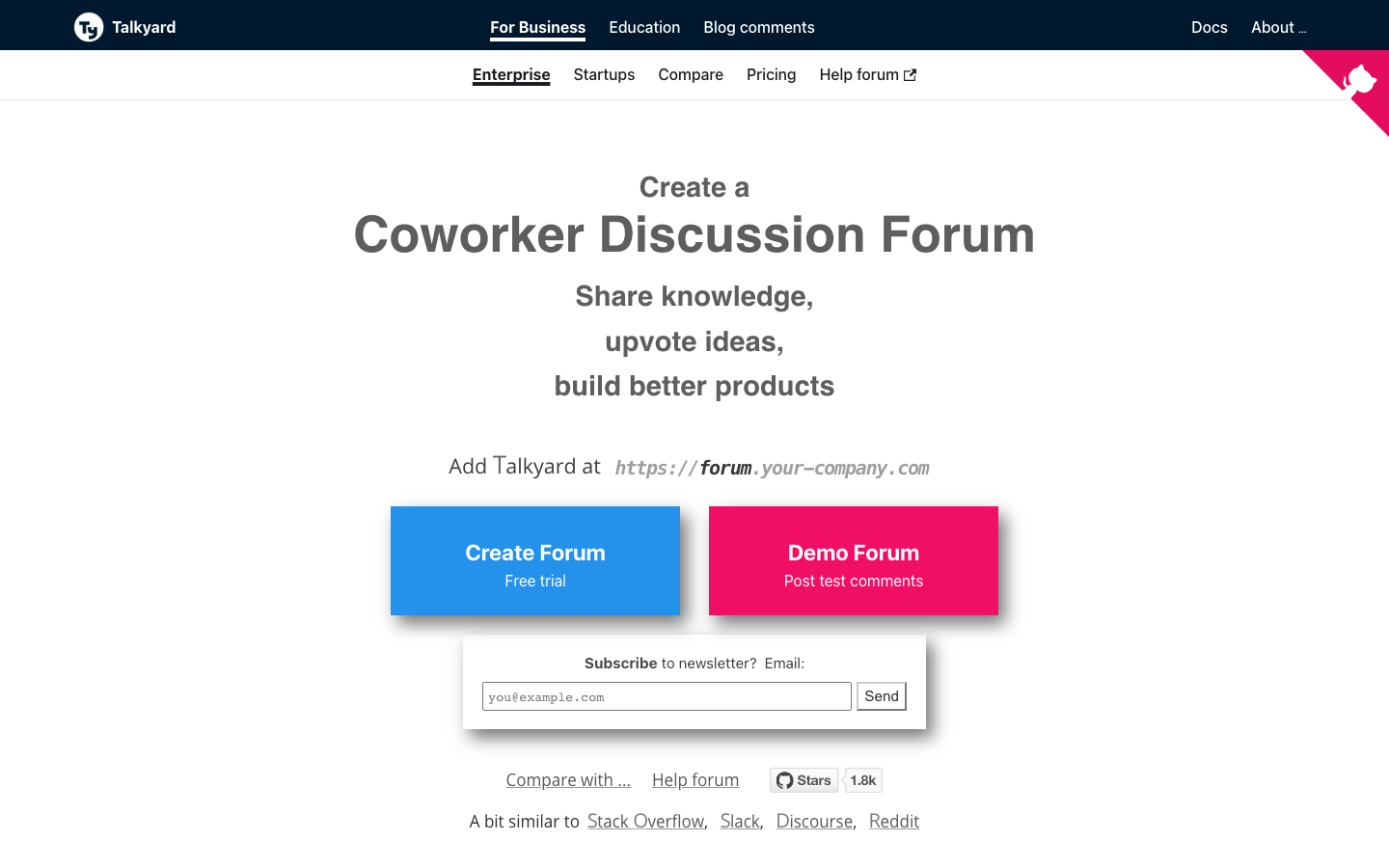
| Talkyard | AGPL-3.0 | ✅ Yes | REST API, plugin architecture | TypeScript | Community forums & discussion platforms |
Top open-source alternatives to Intercom
Chatwoot
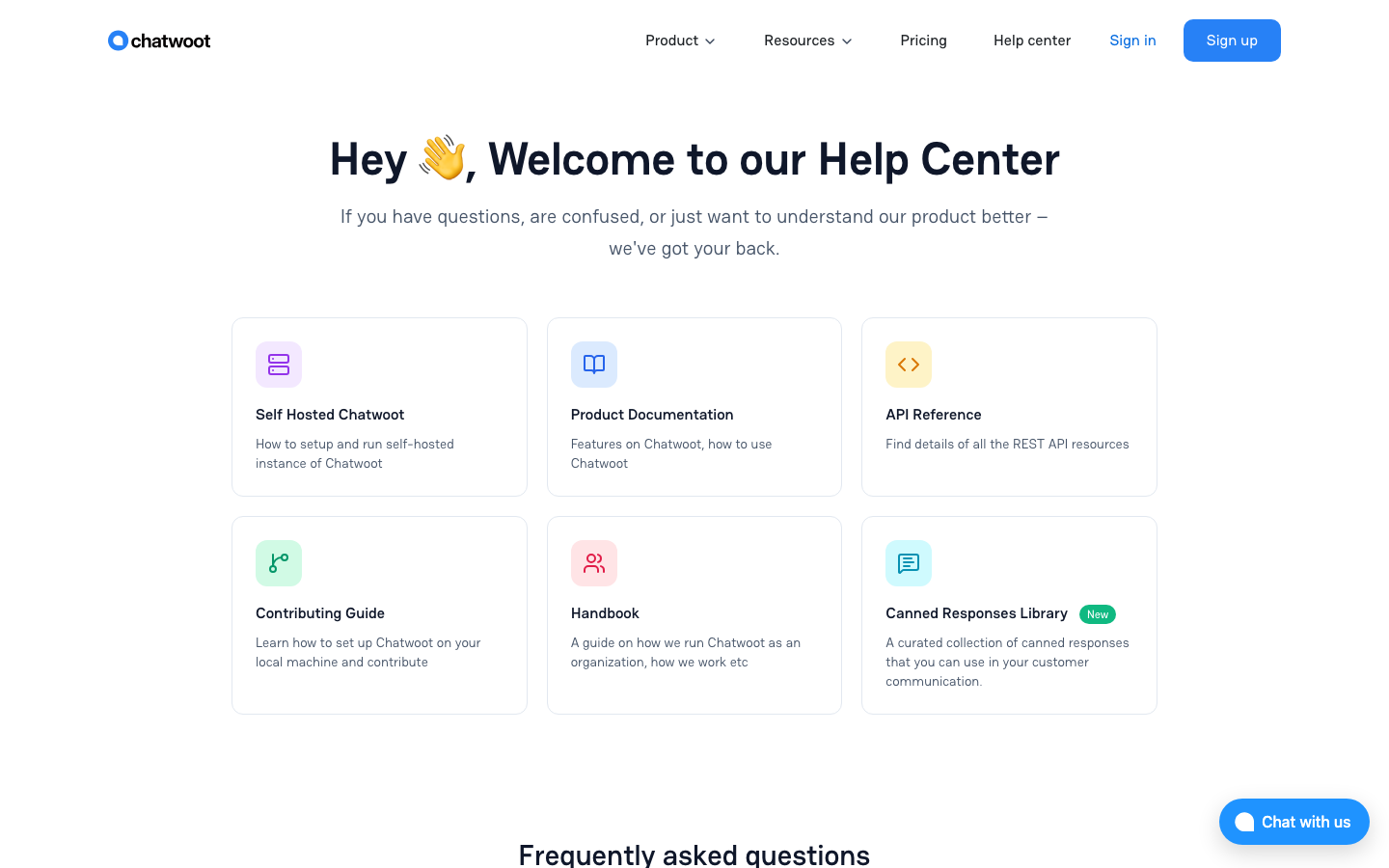
Chatwoot is a full-featured, self-hosted customer support platform combining live chat, email support, and omni-channel inbox management. It's the most direct Intercom replacement: one unified dashboard for conversations across web, mobile, email, and social channels, with no per-seat or per-resolution billing.
Pros
- Omni-channel support (web chat, email, social, SMS) in a single inbox
- Self-hosted on your infrastructure; no per-seat or per-AI-action fees
- Active open-source community and regular updates
Cons
- Lacks Intercom's advanced AI features out-of-the-box (though extensible via APIs)
- Smaller ecosystem of pre-built integrations compared to Intercom
React Native Gifted Chat
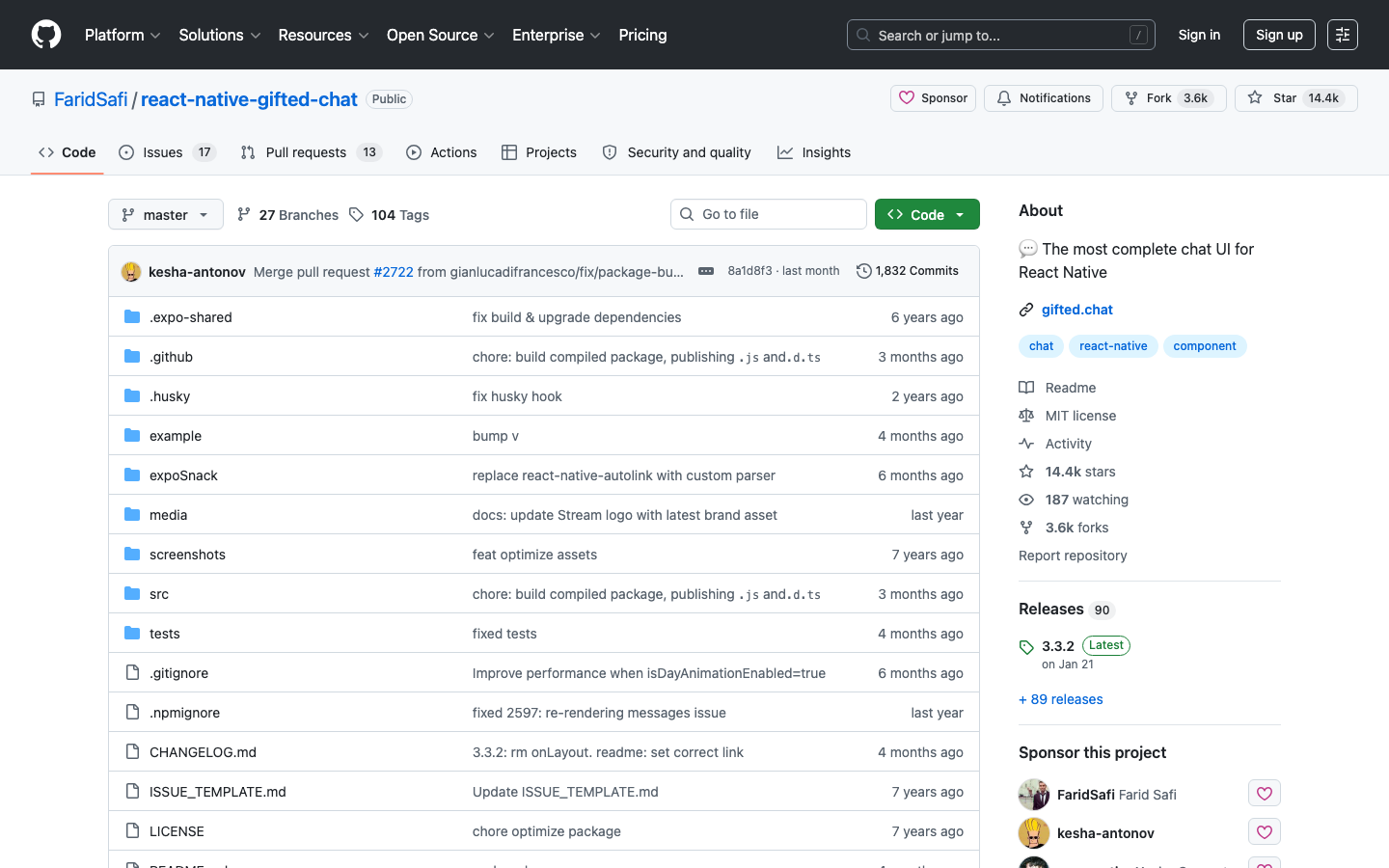
A production-ready chat UI library for React Native apps, offering the most complete messaging interface components for mobile platforms. Use it to embed customer communication directly into your app without relying on Intercom's proprietary mobile SDK.
Pros
- MIT-licensed, fully customizable React Native components
- Battle-tested in production apps; high-quality, well-documented API
- No vendor lock-in; you own the UI layer
Cons
- A UI library only — you must build backend messaging logic and infrastructure separately
- Does not include support ticketing, help center, or team collaboration features
Typebot.io
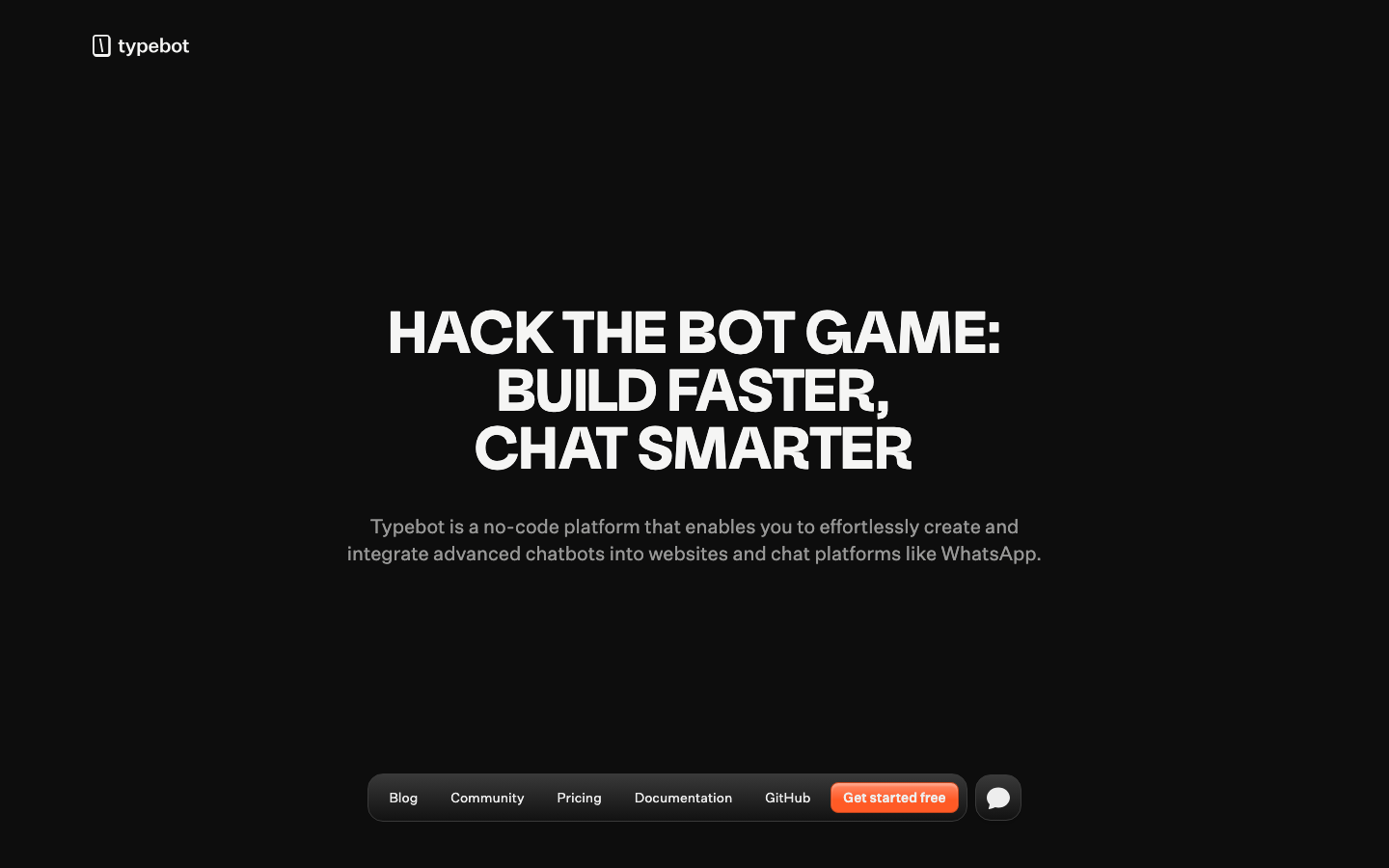
A self-hosted, no-code chatbot builder for automating customer conversations and lead qualification. Embed bots on your website or integrate via API; all logic and data stay on your servers.
Pros
- Visual, no-code bot builder reduces development overhead
- Self-hosted; customer interactions never leave your infrastructure
- Embeddable and API-driven for flexible deployment
Cons
- Focused on automation and bot flows, not live agent support
- Smaller feature set than full support platforms like Chatwoot
Live Helper Chat
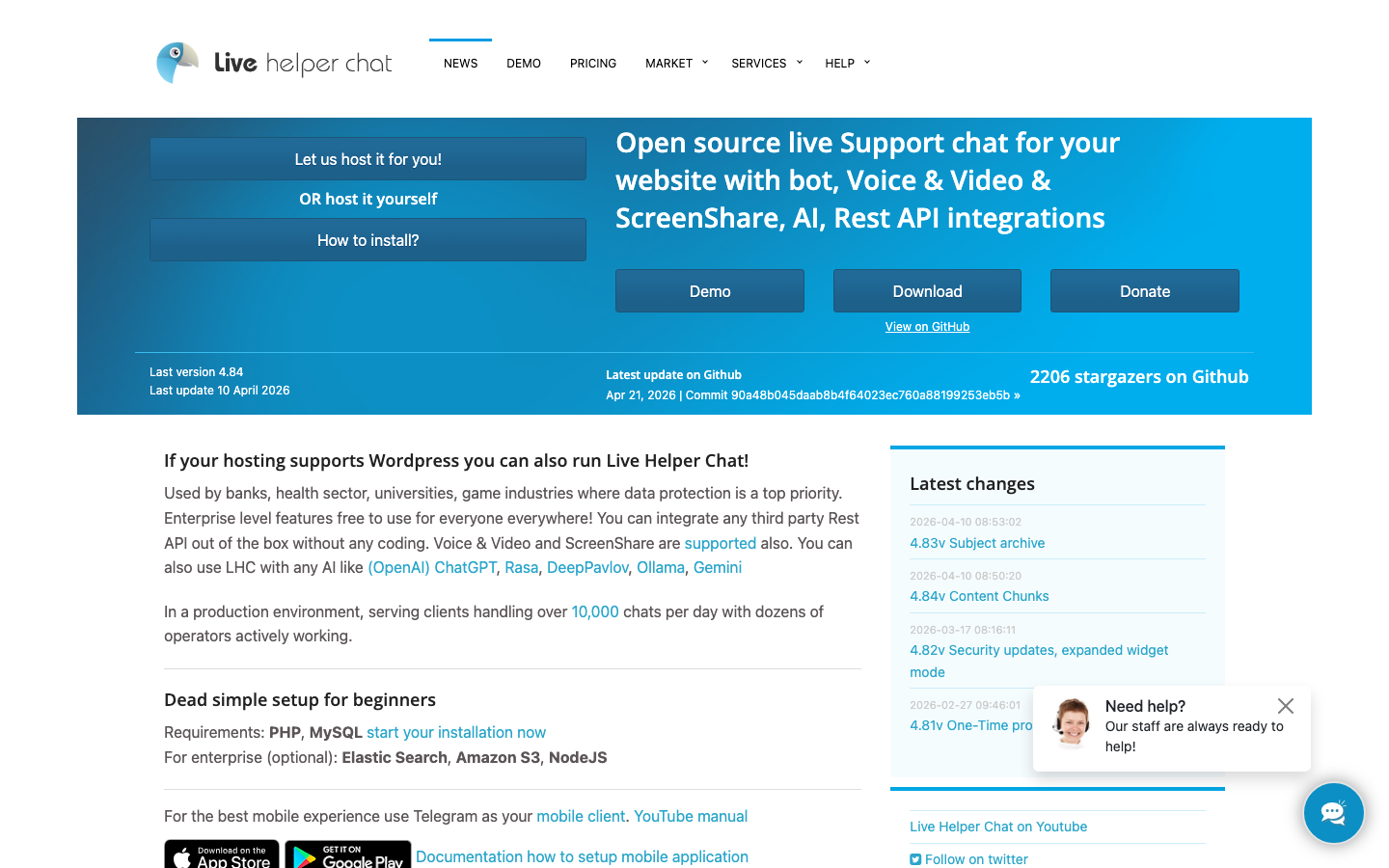
A PHP-based live support platform with web and mobile apps, supporting voice, video, screen-sharing, and multi-channel messaging (Telegram, Twilio/WhatsApp, Facebook Messenger). Built for teams needing rich-media support capabilities.
Pros
- Rich media support: voice, video, and screen-sharing out-of-the-box
- Multi-channel: native integrations with Telegram, WhatsApp, Facebook
- Apache-2.0 licensed; mature, self-hosted option
Cons
- PHP stack may feel dated to modern DevOps teams
- Smaller community compared to Chatwoot; fewer third-party integrations
Talkyard
A community discussion platform combining features from StackOverflow, Slack, Discourse, and Reddit. Best suited for teams building customer communities, knowledge bases, and peer-to-peer support rather than traditional support ticketing.
Pros
- Unified community platform: forums, chat, Q&A, and blog comments in one
- AGPL-3.0 licensed; self-hosted with strong data privacy
- Reduces support burden by enabling customer-to-customer help
Cons
- Not a replacement for live agent support or ticketing workflows
- Steeper learning curve for teams used to traditional support desks
How to choose
Start with your primary use case: if you need a live chat + support ticketing replacement, Chatwoot is the closest match to Intercom's core feature set. If you're building mobile-first products, React Native Gifted Chat gives you chat UI control without vendor dependency. For automation and bot-driven support, Typebot.io is your best bet. If your team requires rich media support (voice, video, screen-share), Live Helper Chat includes those natively. Finally, if you're investing in community-driven support, Talkyard shifts the model from agent-to-customer to peer support. Evaluate based on team size (self-hosting overhead), data sensitivity (on-premise requirements), and whether you need live agents or can rely on bots and community.