

















TL;DR
- Startups and lean teams should evaluate Medusa or Bagisto — both offer modern, lightweight architectures that won't demand a dedicated DevOps budget just to keep the lights on.
- WordPress-native shops already running content alongside commerce will find WooCommerce the natural fit, avoiding the overhead of learning a separate platform.
- Enterprise teams needing composable, API-first infrastructure should consider Saleor or Spree, which let you decouple storefront from backend and scale without rewiring everything.
Why teams leave Magento
A product manager at a mid-market retailer opens her laptop one Tuesday morning to find the hosting bill has doubled—again. Her Magento store, now three years old with custom modules and a heavily modified theme, needs a security patch. The specialized developer who built it charges $250/hour, and she needs him for at least a week. Meanwhile, she's locked into expensive hosting because Magento demands significant server resources, and migrating to anything else means rebuilding from scratch.
This is the Magento tax. The platform itself is free (Magento Open Source), but the total cost of ownership tells a different story. Hosting, security updates, custom development, and ongoing maintenance create a spiral of expense that only accelerates as your store grows. Adobe's paid tier (Adobe Commerce and Adobe Commerce Cloud) starts at $22,000–$40,000 annually, but even merchants on the open-source edition find themselves spending heavily on specialized developer time—Magento's complexity is its defining feature, and that complexity locks you in.
Scaling becomes a project, not a toggle. Customizations pile up. Migrating a mature Magento store to another platform is a major undertaking, which means many teams stay trapped, paying the tax year after year, because the switching cost is too high.
Quick comparison
| Name | License | Self-Hosted | Plugin Ecosystem | Headless / API | Best For |
|---|---|---|---|---|---|
| Medusa | MIT | Yes | Modular plugins | Full REST API | Modern, composable commerce; fast iteration |
| Bagisto | MIT | Yes | Laravel-based modules | REST API | PHP shops; Laravel familiarity |
| Saleor | BSD-3-Clause | Yes | GraphQL-native | Full GraphQL API | Headless-first; complex storefronts |
| Spree | BSD-3-Clause | Yes | Ruby gems | REST API + TypeScript SDK | B2B, marketplace, cross-border; Ruby teams |
| Magento 2 | OSL-3.0 | Yes | Extensive marketplace | REST API | Existing Magento merchants; enterprise scale |
| WooCommerce | License not declared | Yes | 70,000+ plugins | REST API | WordPress-native shops; content + commerce |
| Evershop | GPL-3.0 | Yes | Plugin system | REST API | TypeScript teams; modern stack |
| PrestaShop | License not declared | Yes | Module marketplace | REST API | SMB retailers; quick setup |
Top open-source alternatives to Magento
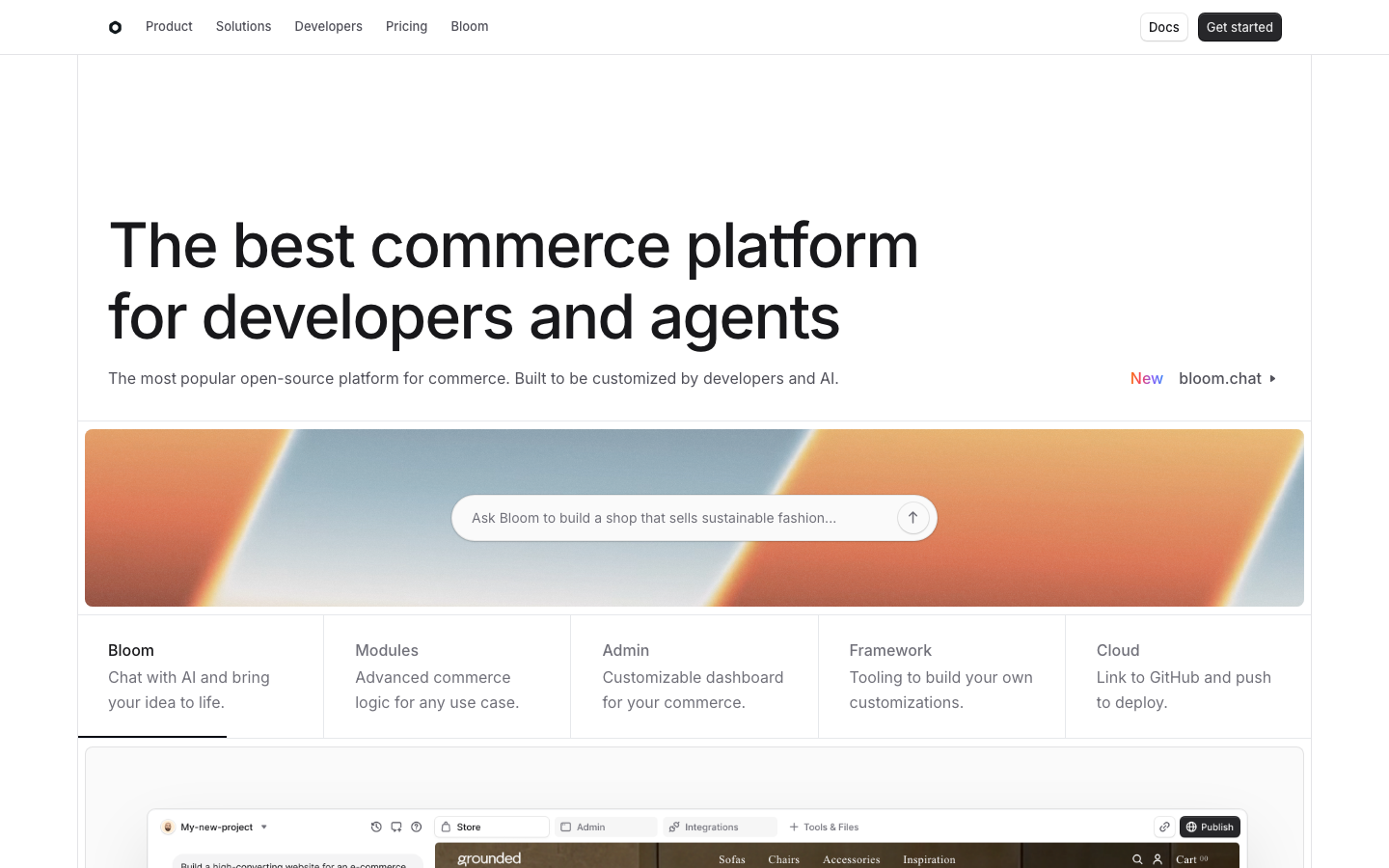
Medusa
Medusa is a modern, composable commerce platform built on TypeScript and Node.js, designed as an API-first alternative to monolithic e-commerce systems. It lets you build custom storefronts, integrate with any tool, and scale without vendor lock-in. With 32,735 GitHub stars, it's the most actively developed project in this category.
Pros
- Fully modular architecture; plug in payment gateways, fulfillment, CMS, and analytics without touching core code.
- No hosting overhead—lightweight, runs efficiently on modest infrastructure.
- Modern developer experience; TypeScript, REST API, and clear documentation reduce time-to-value.
Cons
- Smaller ecosystem of pre-built extensions compared to Magento's marketplace; more DIY required.
- Requires comfort with headless architecture; not ideal if you want a drag-and-drop admin interface out of the box.
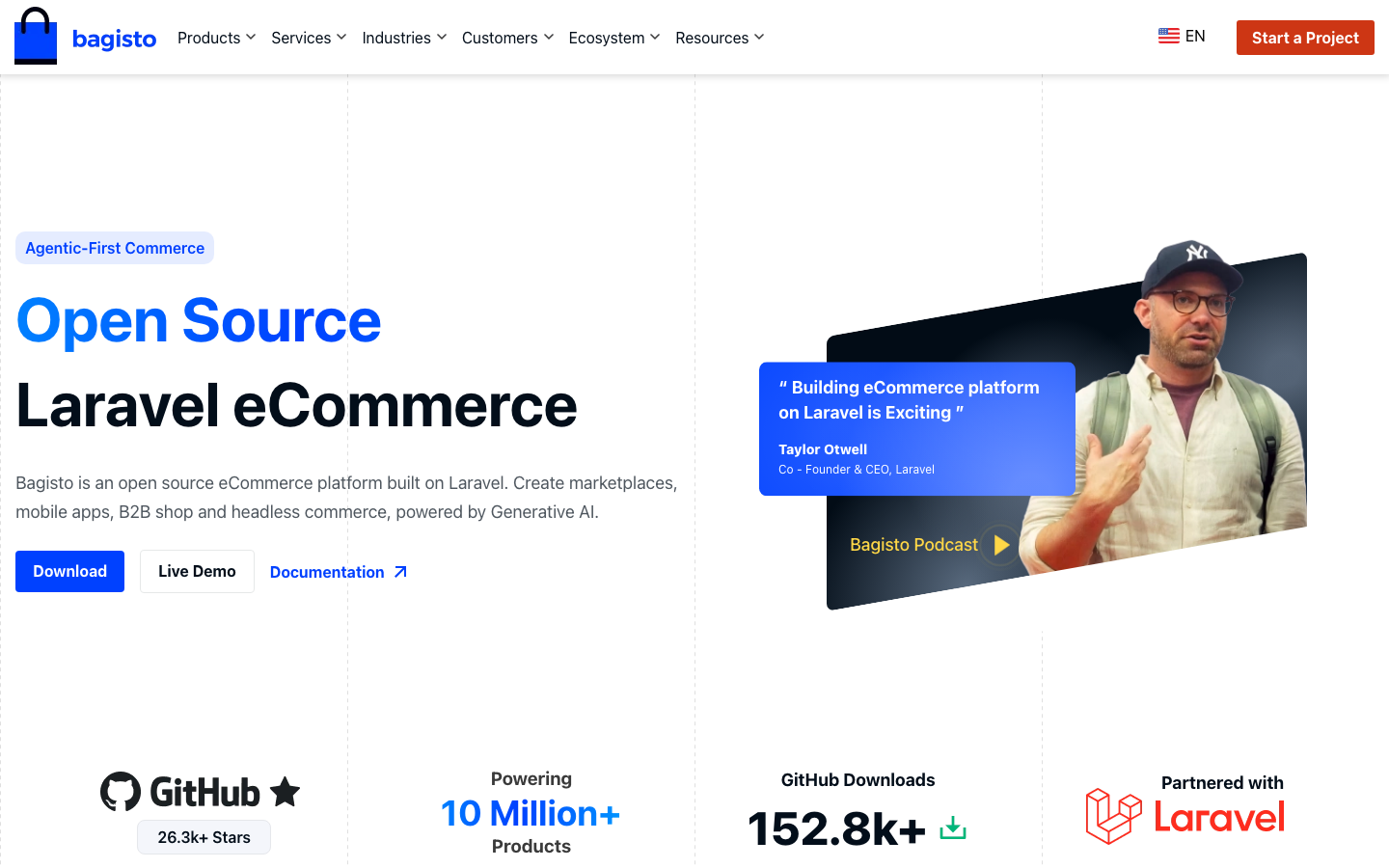
Bagisto
Bagisto is a free, open-source Laravel-based e-commerce platform that prioritizes simplicity and developer friendliness. It's built for teams already invested in PHP and Laravel, offering a modern alternative to Magento without the complexity tax.
Pros
- Laravel foundation means familiar tooling and a large developer community; Laravel skills transfer directly.
- Lightweight and fast to deploy; lower hosting costs than Magento.
- Clean admin interface and modular structure make customization straightforward.
Cons
- Smaller community and ecosystem than Magento; fewer pre-built modules and integrations.
- Best suited to mid-market stores; enterprise-scale deployments require more custom work.
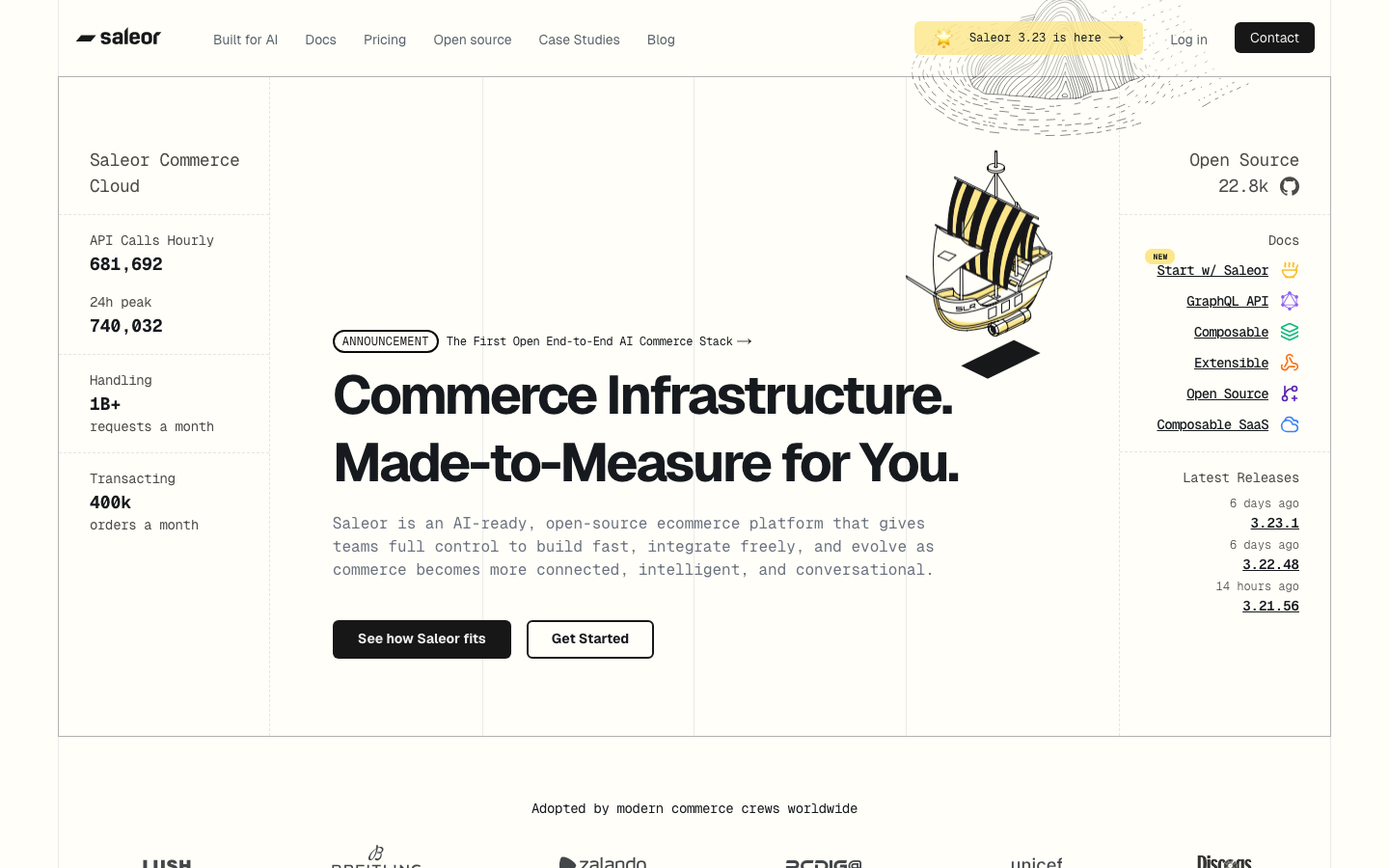
Saleor
Saleor is a high-performance, headless commerce API built in Python, designed for teams that want to decouple their storefront from their backend. It's GraphQL-native and built for speed and flexibility.
Pros
- GraphQL API is powerful and efficient; reduces over-fetching and simplifies complex queries.
- Strong focus on performance and scalability; handles high transaction volumes without bloat.
- Great for multi-channel commerce; one backend, many storefronts.
Cons
- Headless-first means you'll need to build or integrate a storefront; not a complete out-of-the-box solution.
- Python backend may require different hosting or DevOps expertise than PHP-based alternatives.
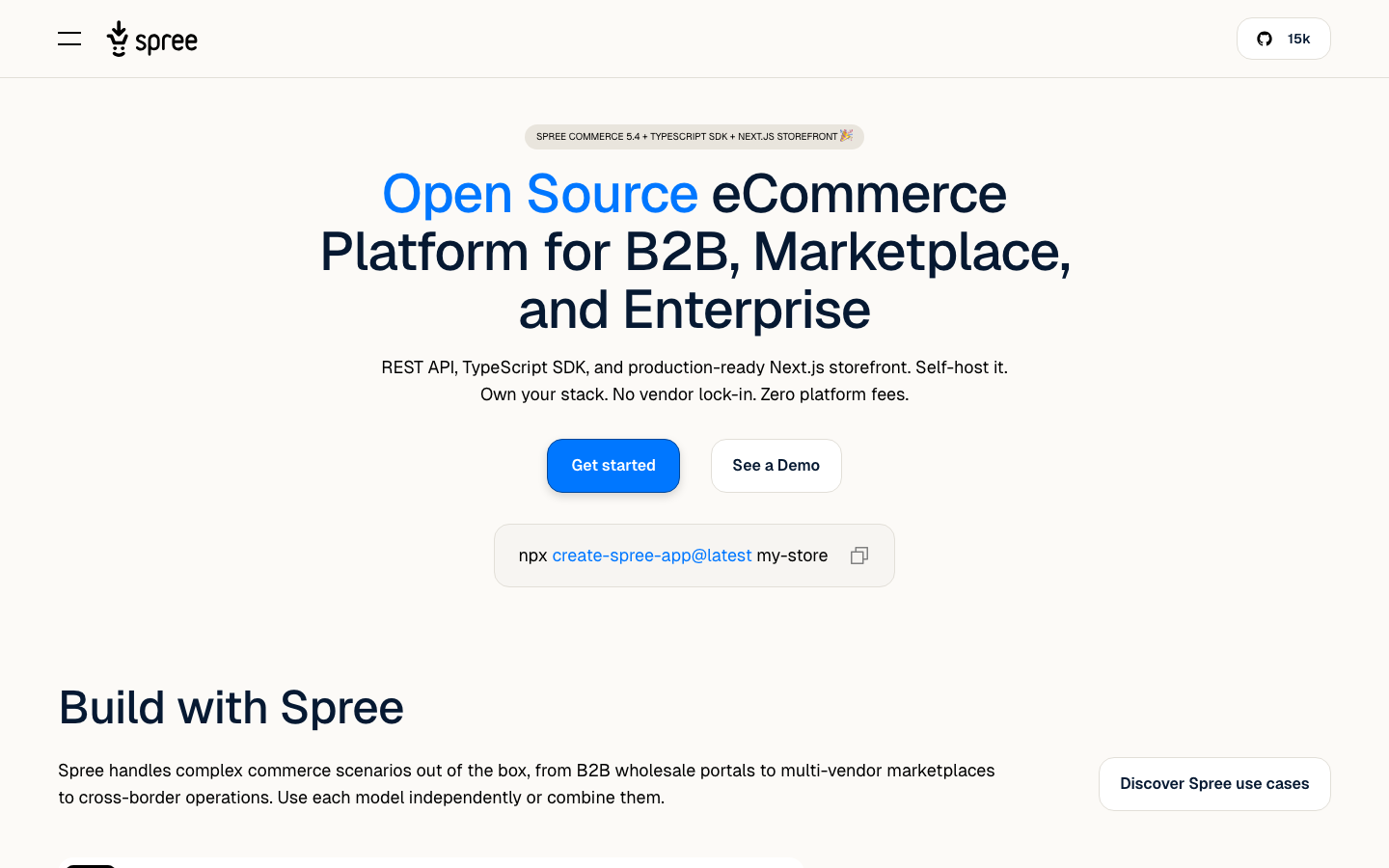
Spree
Spree is an open-source, headless e-commerce platform built in Ruby with a REST API and TypeScript SDK. It's designed for B2B, marketplace, and cross-border commerce, offering flexibility without Magento's overhead.
Pros
- REST API and TypeScript SDK make frontend integration clean and modern.
- Strong B2B and marketplace features baked in; less custom development needed for complex workflows.
- Ruby on Rails foundation appeals to startups and agencies comfortable with that stack.
Cons
- Ruby ecosystem smaller than PHP; fewer hosting providers and less commodity infrastructure.
- Requires building a separate storefront; not a traditional admin-driven platform.
Magento 2
Magento 2 is the open-source version of Adobe's e-commerce platform, available under the OSL-3.0 license. It remains one of the most feature-rich platforms for enterprise-scale commerce, though it carries the complexity and cost burden described above.
Pros
- Massive ecosystem of extensions, themes, and integrations; solutions exist for almost any use case.
- Battle-tested at enterprise scale; strong for complex B2B and high-volume B2C stores.
- If you're already on Magento, staying on it avoids migration risk.
Cons
- Expensive to operate; hosting, security, and developer costs accumulate quickly.
- Steep learning curve and vendor lock-in; migrating away is a major project.
- Complexity means even small changes often require specialized developers.
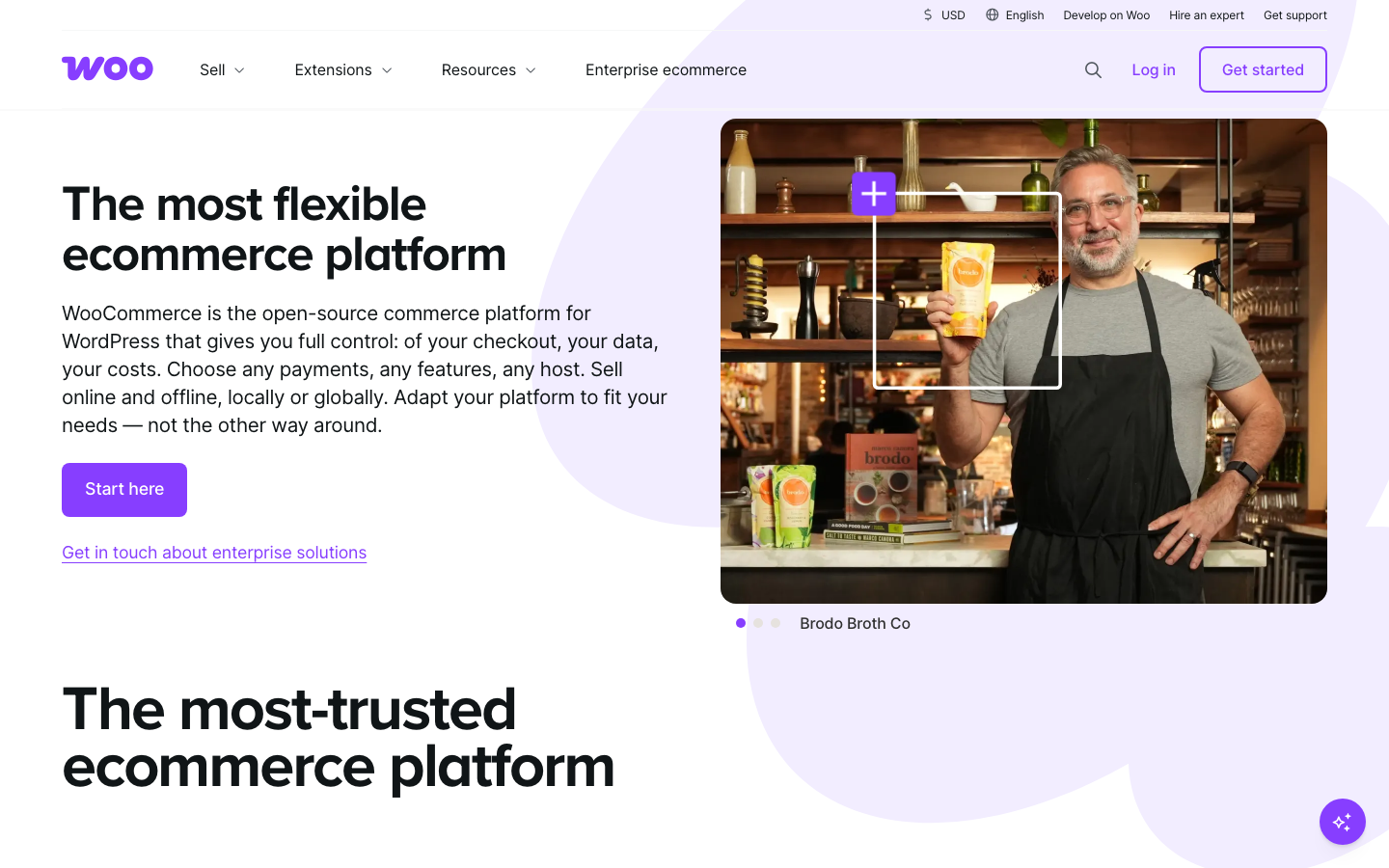
WooCommerce
WooCommerce is a customizable, open-source e-commerce plugin for WordPress, letting you build commerce on top of the world's most popular CMS. It's ideal for teams that already live in WordPress.
Pros
- Seamless integration with WordPress; if you're managing content on WordPress, commerce is a natural extension.
- Huge plugin ecosystem (70,000+) and lower barrier to entry; many developers know it.
- Significantly lower hosting and maintenance costs than Magento.
Cons
- Performance can suffer under high load; WordPress architecture isn't optimized for large-scale commerce.
- Less suitable for complex B2B or marketplace workflows; you'll often need custom plugins.
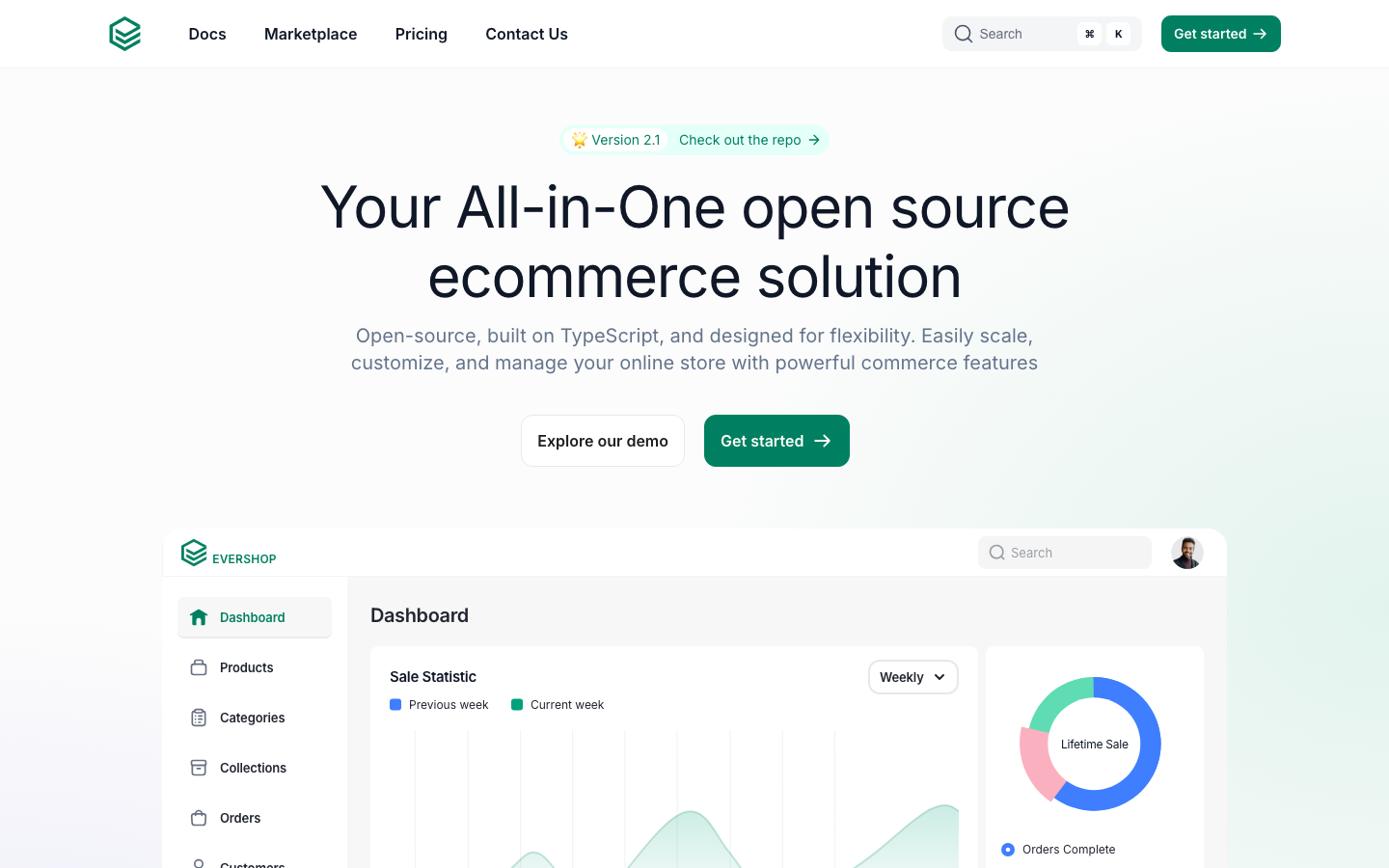
Evershop
Evershop is a modern, TypeScript-based e-commerce platform designed for teams building with contemporary JavaScript tooling. It offers a plugin system and REST API for flexibility.
Pros
- Modern TypeScript stack appeals to JavaScript-forward teams; integrates naturally with Next.js and modern frontend frameworks.
- Lightweight and fast; lower operational overhead than Magento.
- Clean plugin architecture; modular and easy to extend.
Cons
- Younger project with a smaller community; fewer third-party integrations and modules.
- Documentation and ecosystem still maturing; expect to do more custom work.
PrestaShop
PrestaShop is a universal, open-source e-commerce platform designed for quick setup and ease of use. It's widely used by SMBs and retailers who want to launch a store without deep technical expertise.
Pros
- User-friendly admin interface; non-developers can manage products, orders, and basic customizations.
- Module marketplace with thousands of add-ons; most common features are available out of the box.
- Lower cost to operate than Magento; lighter resource footprint.
Cons
- Less flexible for highly custom workflows; monolithic architecture makes deep customization harder.
- Smaller developer community than Magento or WordPress; finding specialized talent is harder.
How to choose
Start with your team's expertise and your store's complexity. If you're on WordPress, WooCommerce is the path of least resistance. If you need headless architecture and modern APIs, Medusa, Saleor, or Spree offer cleaner designs than Magento with lower operational cost. If you're a Laravel shop, Bagisto saves you from learning a new framework. For SMBs wanting simplicity, PrestaShop or Bagisto beat Magento's complexity tax. And if you're already deep in a customized Magento install, staying put may be cheaper than migrating—but for new projects, every alternative here will cost less to run at scale.