








TL;DR
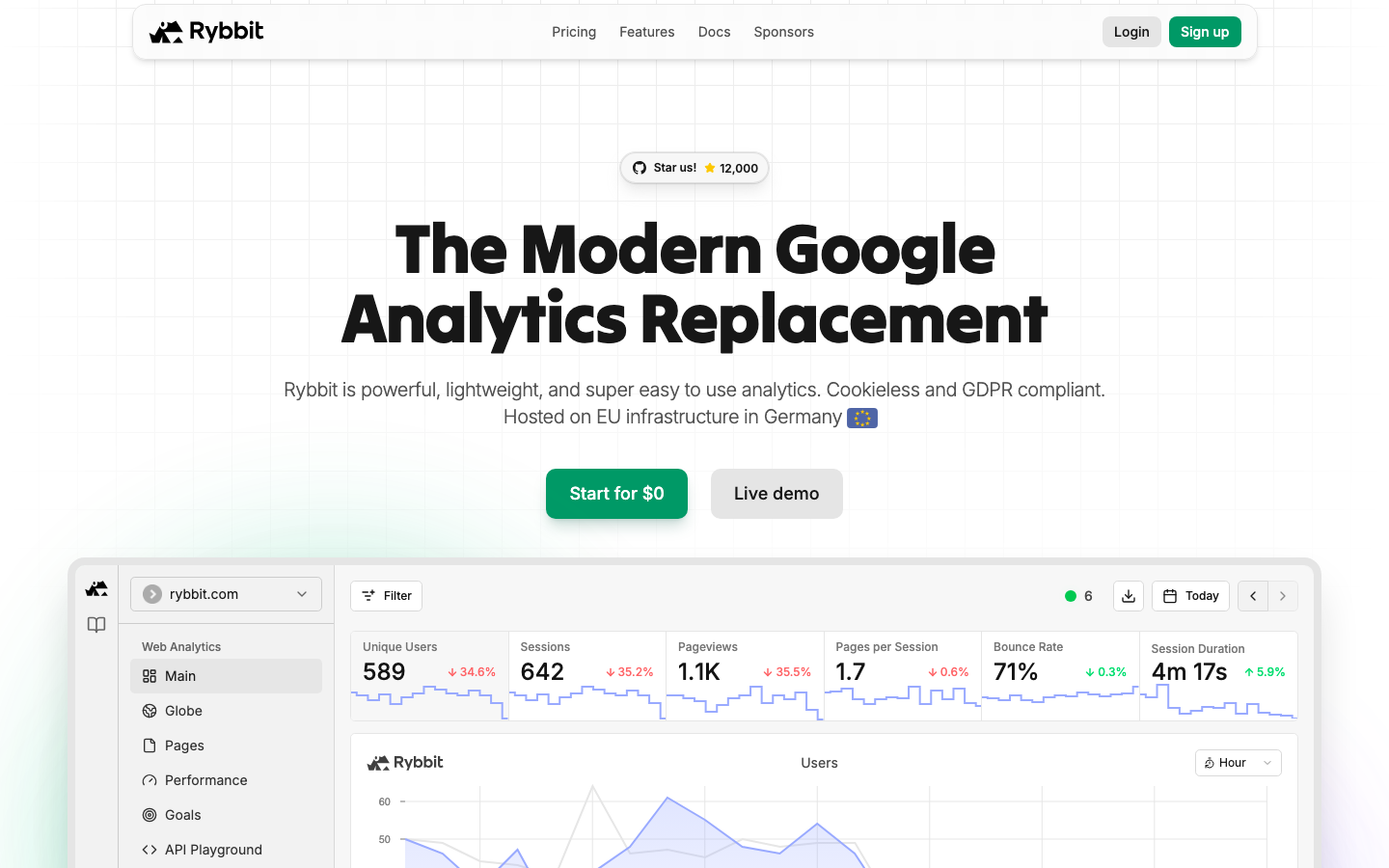
- Privacy first: Rybbit gives you a Google Analytics alternative that keeps 100% of visitor data on your own servers—no third-party vendor access, no sampling, fully GDPR-friendly.
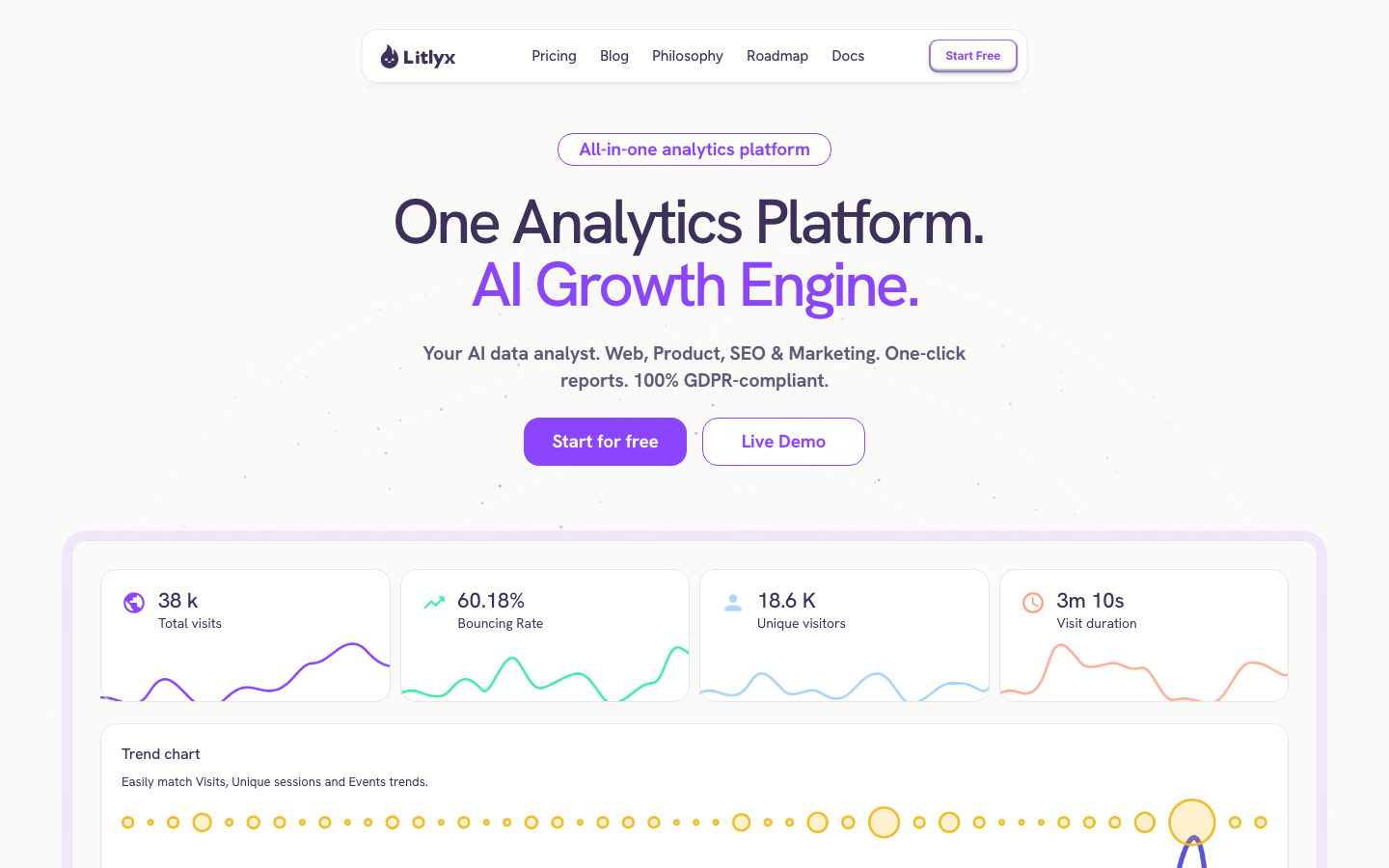
- Fastest setup: Litlyx deploys in 30 seconds with an AI-powered dashboard, letting you own your analytics without weeks of configuration overhead.
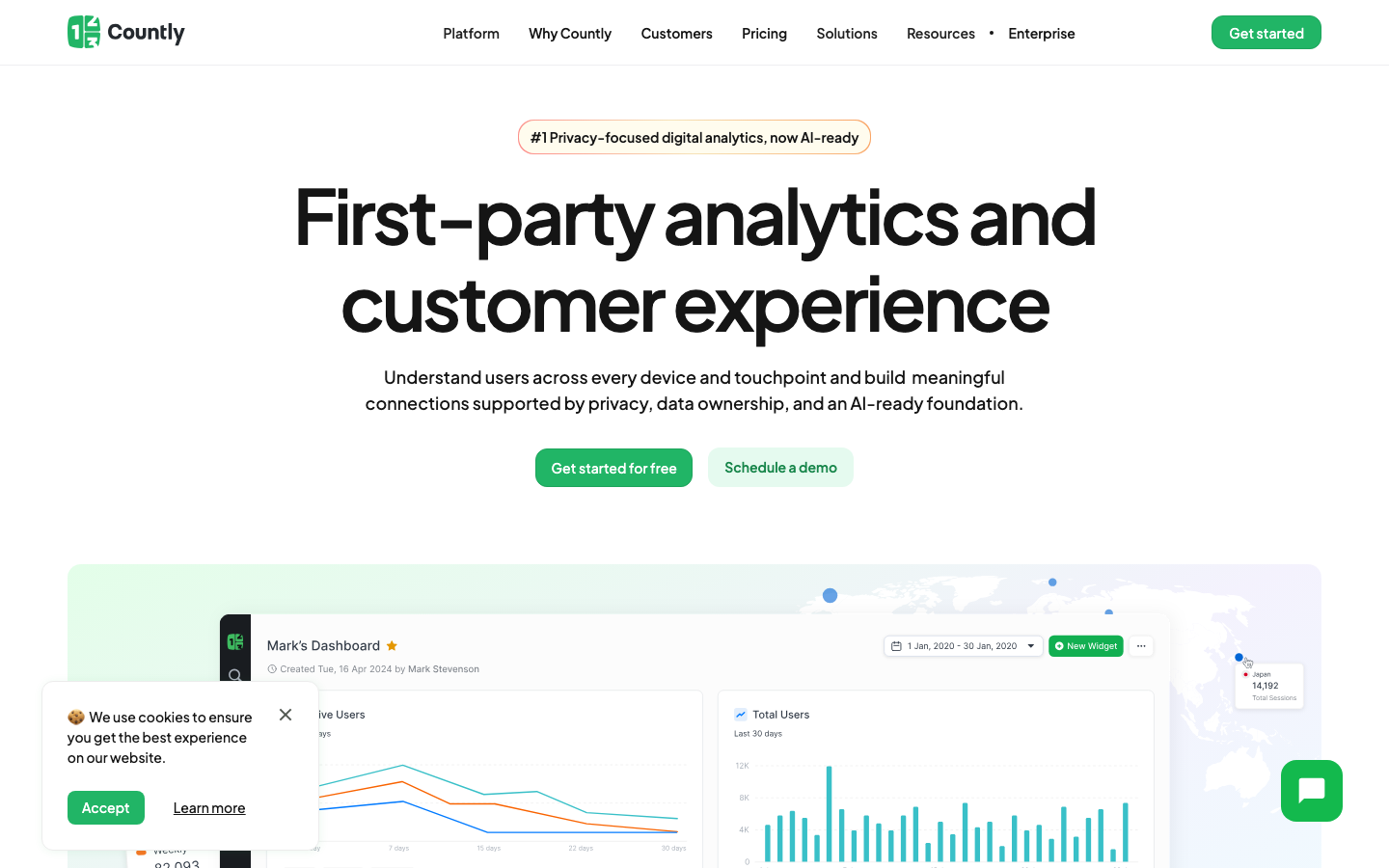
- Maximum control: Countly combines privacy-first architecture with AI-powered insights across mobile, desktop, and IoT, so you're not locked into a single analytics paradigm.
Why teams leave Matomo
The shift away from Matomo often starts with a simple realization: you're paying for a tool, but you don't fully own the data it collects. Even self-hosted analytics platforms can create hidden costs—infrastructure maintenance, scaling databases, security patching—that add up faster than expected. More importantly, teams discover that traditional analytics (whether proprietary or self-hosted) still expose them to privacy and compliance risk if they're not architected from the ground up for GDPR and data minimization.
The real pain point isn't Matomo itself; it's the analytics paradigm it represents. Visitor tracking historically meant storing detailed behavioral profiles on your servers or a vendor's, consent-banner complexity, and the constant anxiety of regulatory exposure. When regulations tighten or your privacy posture becomes a competitive advantage, you realize you need a fundamentally different approach: analytics that track aggregate insights without storing personal data, that require minimal consent, and that let you answer business questions without becoming a data controller.
Self-hosting Matomo solves some problems but creates others—you still need to manage infrastructure, handle data retention policies, and justify why you're keeping raw event logs. Newer alternatives flip the model: they give you the analytics you need while minimizing the data you store, cutting both compliance risk and operational overhead.
Quick comparison
| Name | License | Self-Hosted | API / Extensibility | Stack / Language | Best For |
|---|---|---|---|---|---|
| Rybbit | AGPL-3.0 | ✓ Yes | Custom integrations via TypeScript | TypeScript | Teams wanting Google Analytics simplicity with privacy-first design |
| Countly | License not declared | ✓ Yes | Extensible platform; AI-powered insights | JavaScript | Multi-platform analytics (mobile, desktop, IoT, web) with engagement tracking |
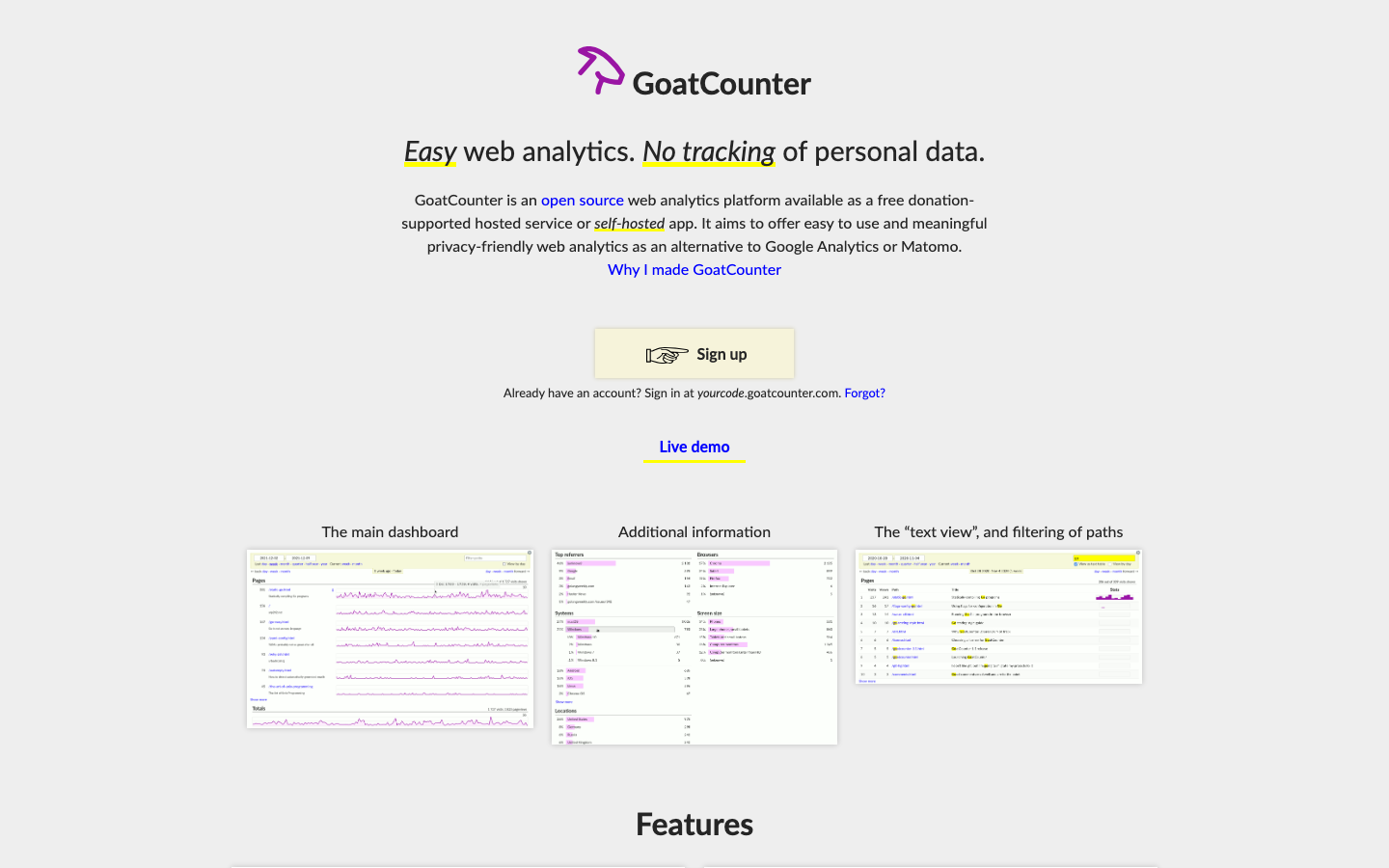
| GoatCounter | License not declared | ✓ Yes | Minimal API; lightweight philosophy | Go | Privacy-conscious teams that reject personal data tracking entirely |
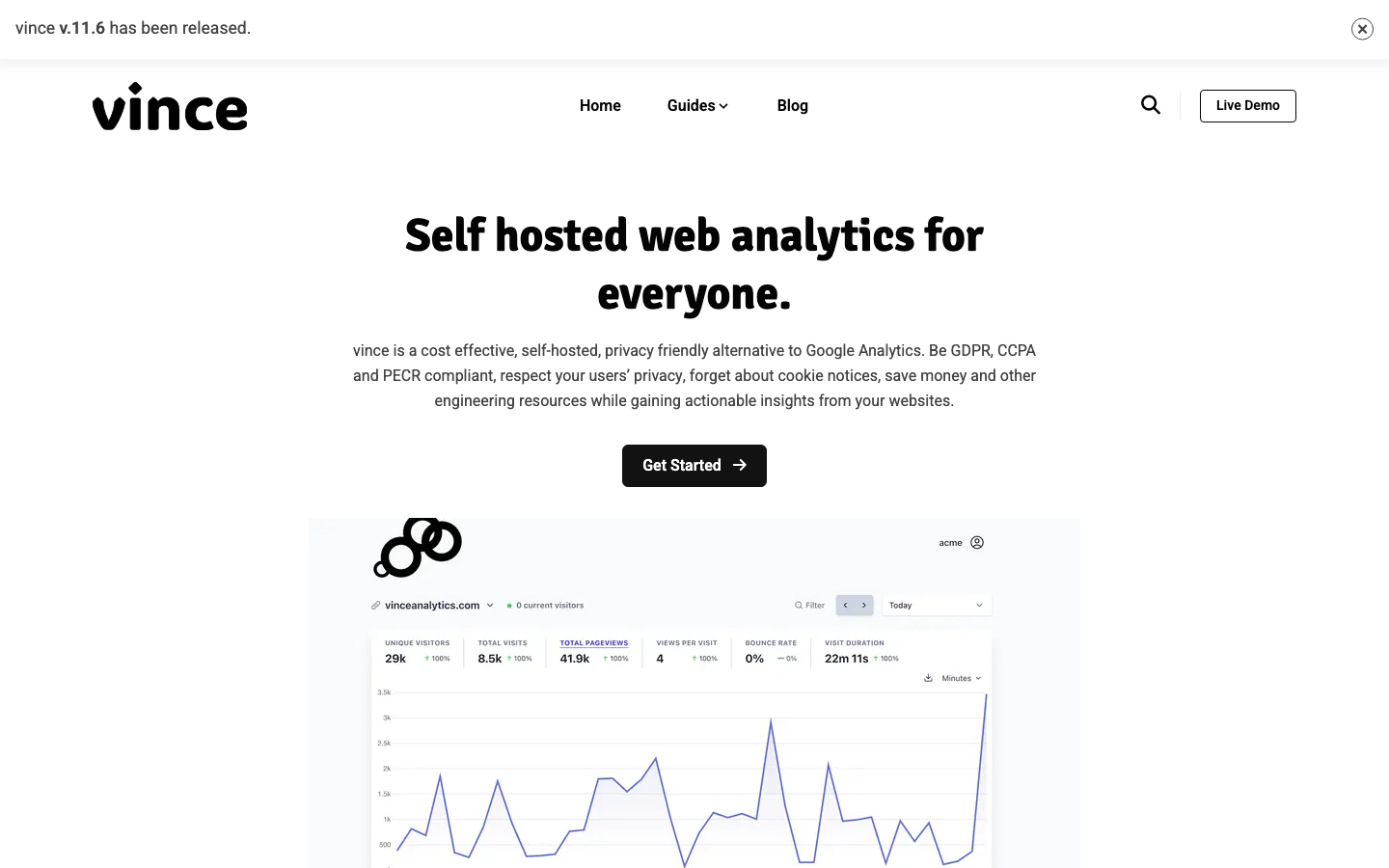
| Vince | AGPL-3.0 | ✓ Yes | — | Go | Lightweight Google Analytics replacement for simple use cases |
| Litlyx | Apache-2.0 | ✓ Yes | Dashboard + API; AI-powered insights | TypeScript | Teams needing instant setup and GDPR compliance without configuration |
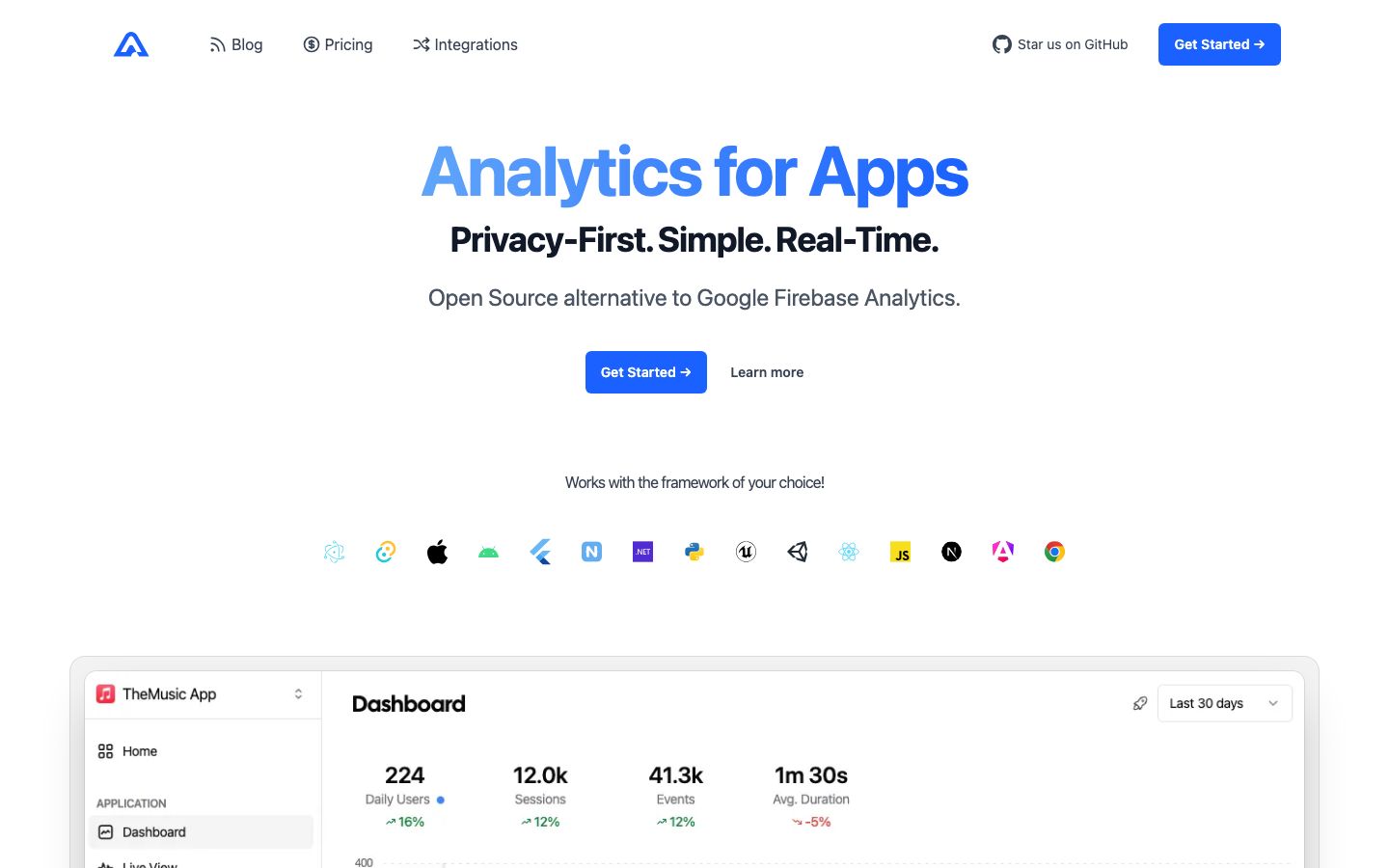
| Aptabase | AGPL-3.0 | ✓ Yes | SDK-based; mobile-first design | TypeScript | Mobile and desktop app analytics with privacy by default |
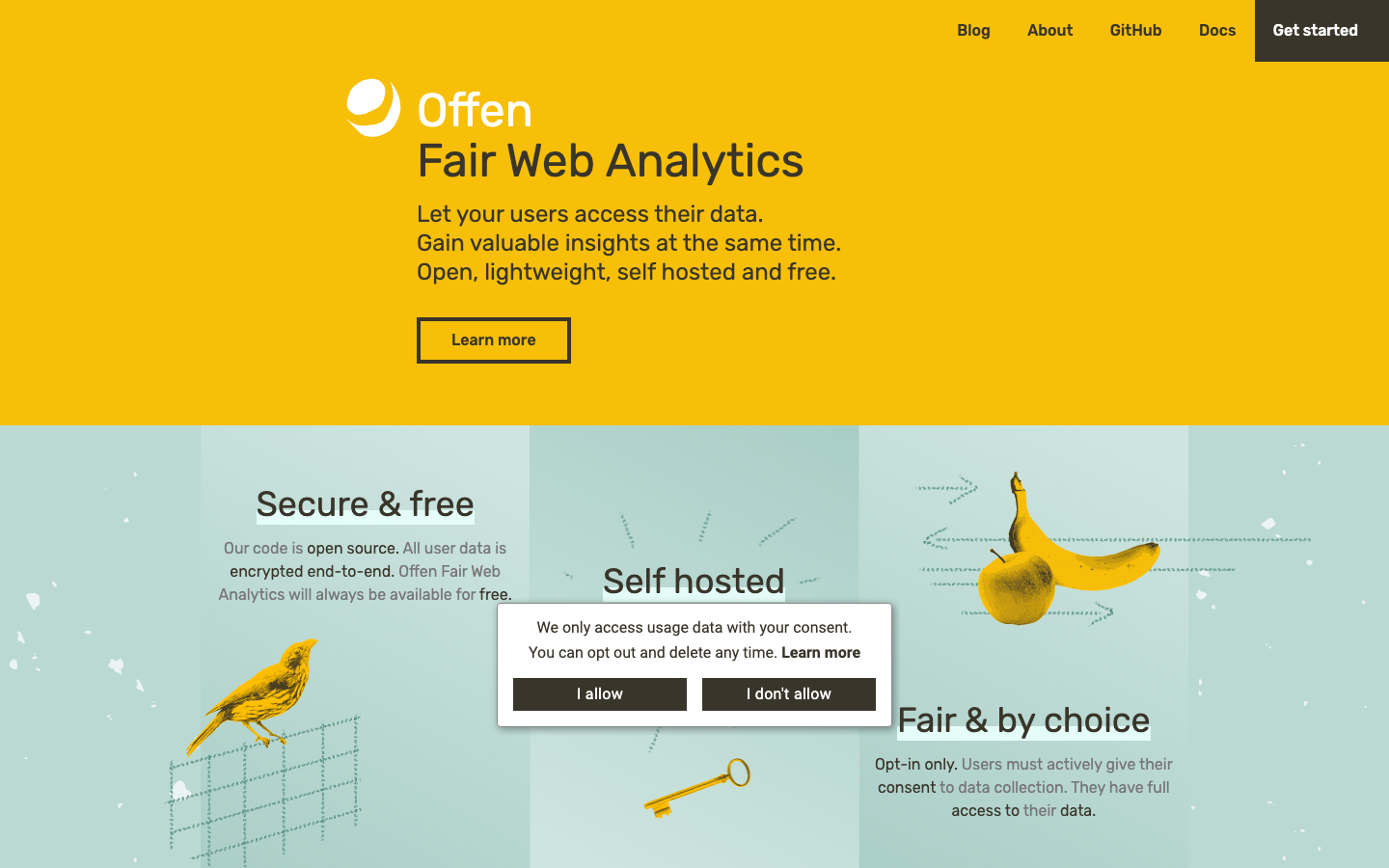
| Offen | Apache-2.0 | ✓ Yes | Fair analytics model; user transparency | JavaScript | Teams committed to visitor consent and transparent data practices |
Top open-source alternatives to Matomo
Rybbit
Rybbit is a privacy-first Google Analytics alternative built on TypeScript, designed to be 10x more intuitive than traditional analytics platforms. It's fully self-hostable, keeps all visitor data on your servers, and eliminates the sampling and data-ownership issues that plague proprietary tools. With 12,000+ GitHub stars, it's the most-starred project in this category.
Pros:
- Dramatically simpler UI than Matomo—onboarding and dashboard navigation feel modern and frictionless
- AGPL-3.0 ensures the codebase stays open; you control your analytics stack completely
- No data sampling at any traffic volume; every event is yours to analyze
Cons:
- Smaller ecosystem than Matomo; fewer third-party integrations and plugins
- Community is younger, so you may encounter fewer StackOverflow answers for edge cases
Countly
Countly is an AI-powered analytics platform designed for privacy-first tracking across desktop, mobile, IoT, and web. It goes beyond simple page-view analytics to include customer engagement, journey mapping, and behavioral insights—all without relying on third-party data brokers.
Pros:
- Multi-platform support out of the box; one dashboard for web, mobile, and IoT analytics
- AI-powered insights reduce manual analysis and help teams spot optimization opportunities faster
- Engagement and retention tracking built in, not bolted on
Cons:
- License not publicly declared; less transparency on modification and redistribution rights than fully open alternatives
- Steeper learning curve than simpler tools like GoatCounter; requires more configuration for advanced features
GoatCounter
GoatCounter is a deliberately minimal web analytics tool that rejects personal data tracking entirely. Written in Go, it's lightweight, fast, and philosophically committed to privacy—no cookies, no fingerprinting, no user profiles.
Pros:
- Genuinely privacy-first; you get aggregate insights without storing any personal data, eliminating GDPR complexity
- Extremely lightweight; minimal infrastructure footprint and fast query performance
- Transparent about what it doesn't do, avoiding scope creep and unnecessary data collection
Cons:
- Minimal feature set; if you need advanced segmentation, funnels, or engagement metrics, you'll hit its limits quickly
- No AI-powered insights or behavioral tracking; it's deliberately basic
Vince
Vince is a lightweight, self-hosted Google Analytics replacement written in Go. It's built for teams that want straightforward analytics without the overhead of Matomo or the minimalism of GoatCounter.
Pros:
- Fast and efficient; Go's performance means low infrastructure costs even at moderate traffic volumes
- AGPL-3.0 license guarantees code transparency and community control
- Simple to deploy and maintain; fewer moving parts than heavier platforms
Cons:
- Smaller community and fewer integrations compared to Matomo
- Feature set is narrower; advanced use cases may require custom development
Litlyx
Litlyx combines self-hosted analytics with AI-powered insights and a focus on GDPR compliance. It's designed for instant setup—literally 30 seconds—with a clean, modern dashboard that requires almost no configuration.
Pros:
- Setup speed is unmatched; deploy and start collecting analytics the same day
- AI-powered dashboard automatically surfaces insights without manual querying
- Apache-2.0 license and full GDPR compliance reduce legal and operational risk
Cons:
- Newer project; smaller ecosystem and fewer third-party integrations than established alternatives
- AI insights are only as good as your data; teams with sparse traffic may not see meaningful recommendations
Aptabase
Aptabase is a privacy-first analytics platform purpose-built for mobile and desktop applications. It uses a lightweight SDK approach, minimizes data collection by design, and keeps everything on your infrastructure.
Pros:
- Mobile-first architecture; SDKs for iOS, Android, and desktop are optimized for app analytics
- Privacy by default; minimal data footprint and transparent about what's collected
- AGPL-3.0 license ensures full code ownership and community accountability
Cons:
- Less mature for web analytics; if you need comprehensive website tracking, other tools may be better suited
- Smaller user base means fewer community plugins and integrations
Offen
Offen is a "fair web analytics" platform that puts visitor consent and transparency at the center. It's built on the principle that visitors should understand and control how their data is used, making it ideal for teams committed to ethical data practices.
Pros:
- Visitor-first model; users can see their own data and opt out transparently, building trust
- Apache-2.0 license; fully open and modifiable
- Reduces regulatory burden by embedding consent into the analytics architecture itself
Cons:
- Narrower feature set focused on fairness over comprehensiveness; advanced segmentation is limited
- Smaller community; fewer resources and integrations compared to larger platforms
How to choose
Choose Rybbit if you're migrating from Google Analytics and want a familiar feature set with modern privacy defaults—it's the fastest path to full data ownership. Choose Countly if you're tracking across multiple platforms (web, mobile, IoT) and want AI-powered engagement insights baked in. Choose GoatCounter if privacy is non-negotiable and you're willing to trade advanced features for simplicity and zero personal data storage. Choose Litlyx if you need to deploy in minutes and want GDPR compliance without configuration overhead. For mobile-first teams, Aptabase is purpose-built; for teams committed to visitor transparency, Offen aligns analytics with ethical principles. Vince is your choice if you want lightweight, efficient analytics without the overhead of heavier platforms.