











TL;DR
- Teams needing SSO and compliance controls without per-user fees should evaluate Synapse or Tailchat, both of which keep authentication and audit features in the free tier rather than gating them behind licensing tiers.
- For organizations prioritizing ease of deployment and a social-network feel over pure messaging, HumHub offers an enterprise social network that scales without seat-based pricing.
- Decentralization-first teams that want to avoid any single-vendor dependency should consider RetroShare or Movim, which trade some UI polish for peer-to-peer resilience and federated architecture.
Why teams leave Mattermost
A compliance officer at a mid-sized fintech startup logs into Mattermost's admin panel to set up SAML SSO for their new hire cohort. She discovers the feature is locked behind the Professional tier—$10 per user per month. With 50 employees, that's $500/month just to meet their security baseline. She already chose Mattermost to avoid Slack's per-seat pricing. Now she's looking at the math differently: self-hosting is cheap, but the features her industry actually requires—single sign-on, MFA enforcement, compliance exports—are priced like SaaS.
This is Mattermost's structural tension. The free self-hosted tier is genuinely unlimited for messaging, channels, and users, which makes it attractive to teams seeking data sovereignty and cost control. But that generosity ends at the enterprise security boundary. Authentication features (AD/LDAP, SAML SSO), compliance exports, custom admin roles, and 24/7 support all live in paid tiers that scale with headcount. For regulated industries—finance, healthcare, government—this creates a hidden licensing cliff: you adopt the free tier expecting to save money, then discover that the controls you legally need cost $10+ per user per month, or require a custom Enterprise quote.
Teams also hit friction around vendor lock-in. Once your message history and integrations are embedded in Mattermost, moving to something else demands export tooling and re-plumbing. The platform's strength—self-hosting and data ownership—becomes a weakness if the pricing model forces you to either pay up or migrate painfully.
Quick comparison
| Name | License | Self-Hosted | Federation | E2E Encryption | Best For |
|---|---|---|---|---|---|
| Hubot | MIT | ✓ | — | — | Bot automation & chatops |
| Open-IM-Server | Apache-2.0 | ✓ | — | ✓ | Instant messaging at scale |
| HumHub | License not declared | ✓ | — | — | Enterprise social networks |
| The Lounge | MIT | ✓ | — | — | IRC communities & legacy integration |
| Synapse | AGPL-3.0 | ✓ | ✓ | ✓ | Federated, encrypted team chat |
| Tailchat | Apache-2.0 | ✓ | — | — | Modern Slack-like experience, no licensing tiers |
| Movim | AGPL-3.0 | ✓ | ✓ | ✓ | Decentralized social communication |
| RetroShare | License not declared | ✓ | ✓ | ✓ | Friend-to-friend, fully decentralized networks |
Top open-source alternatives to Mattermost
Hubot
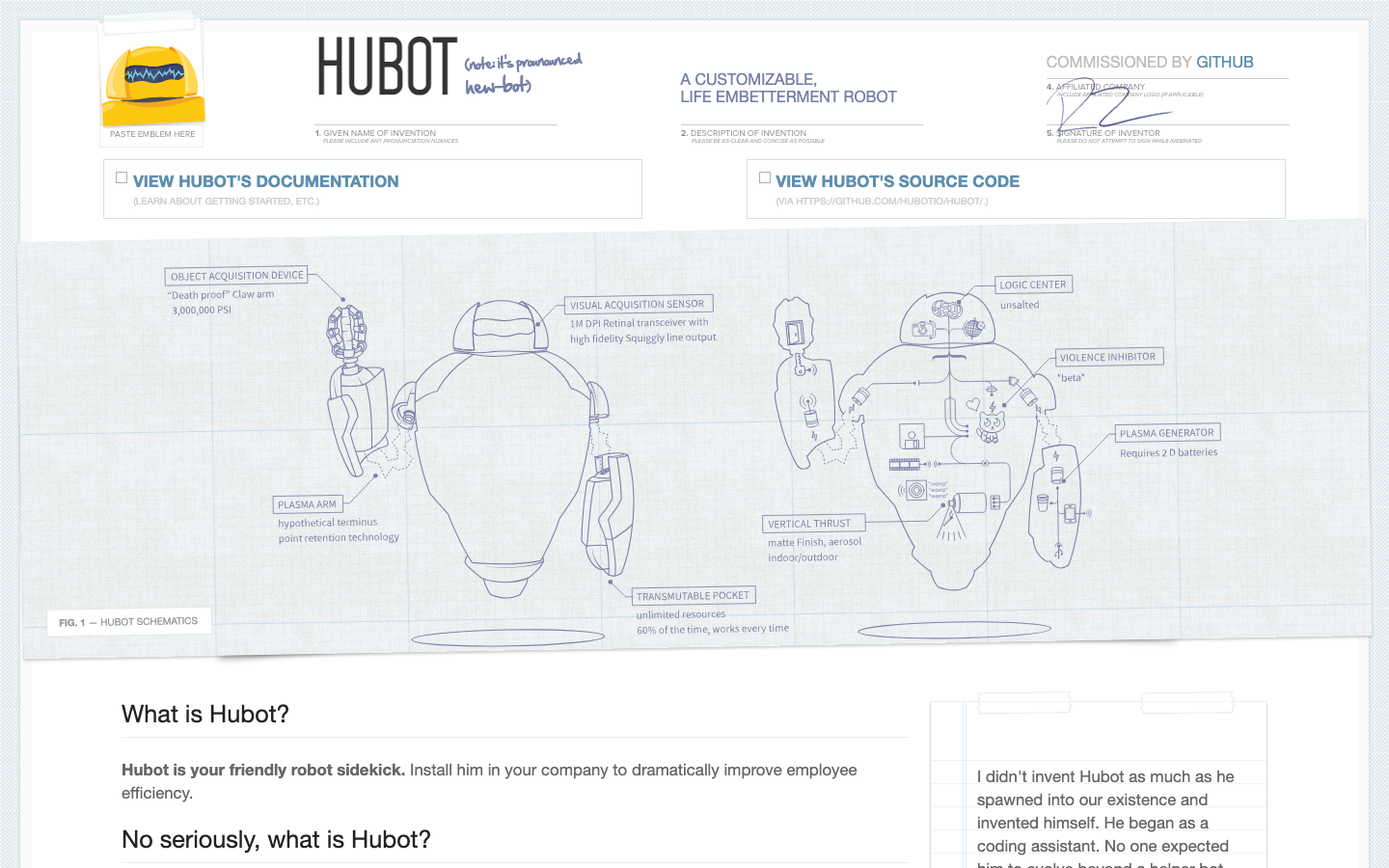
Hubot is a chatbot framework that plugs into any chat system to automate tasks, run scripts, and handle integrations. It's not a messaging platform itself, but a powerful companion layer for teams that want to extend their chat with custom logic and CI/CD triggers.
Pros
- Lightweight and language-agnostic; runs anywhere Node.js does
- Strong integration ecosystem and community adapters for popular services
- MIT licensed; no licensing surprises
Cons
- Requires a separate host chat platform; not a standalone team chat solution
- Steep learning curve for non-engineers to write custom behaviors
Open-IM-Server
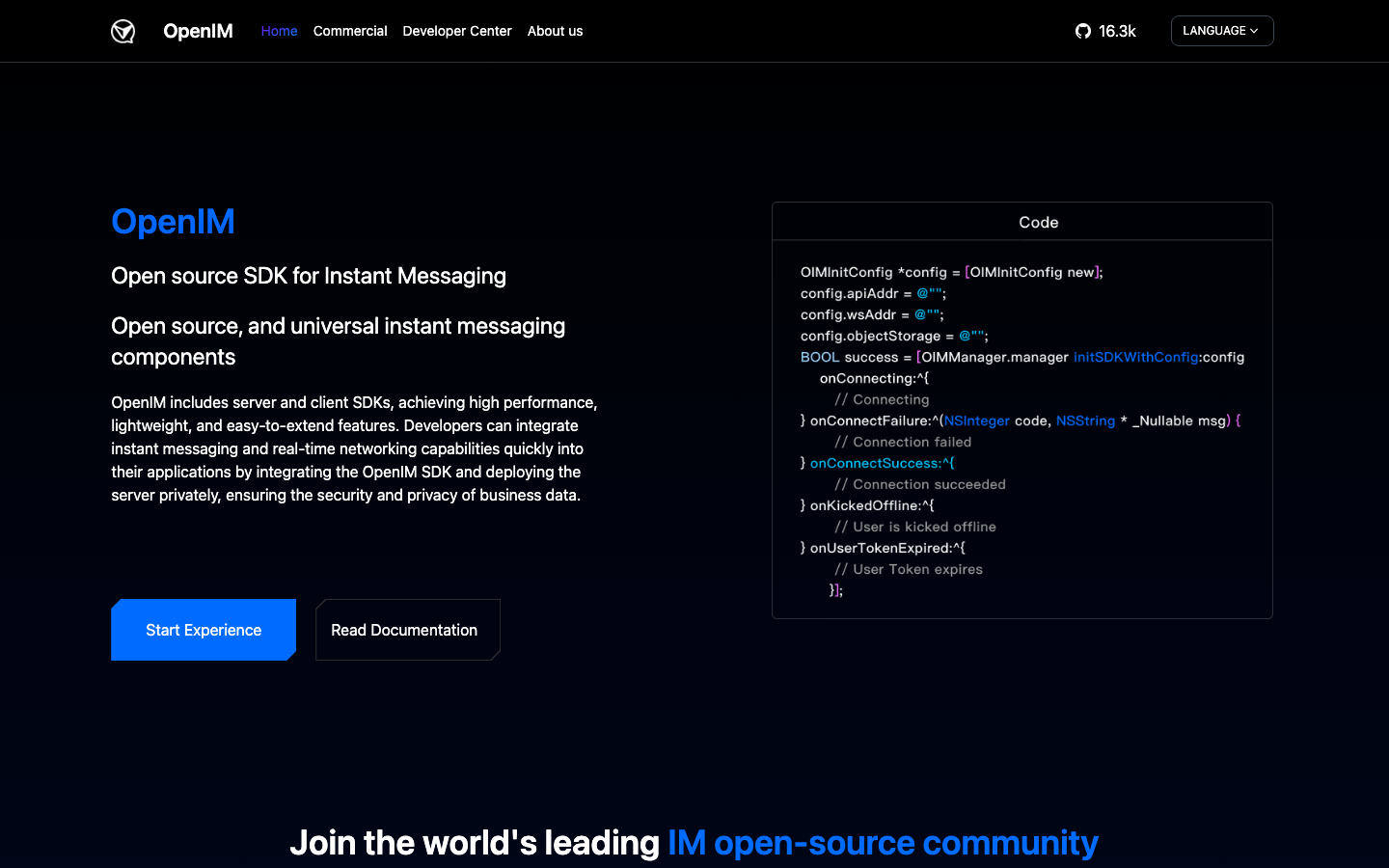
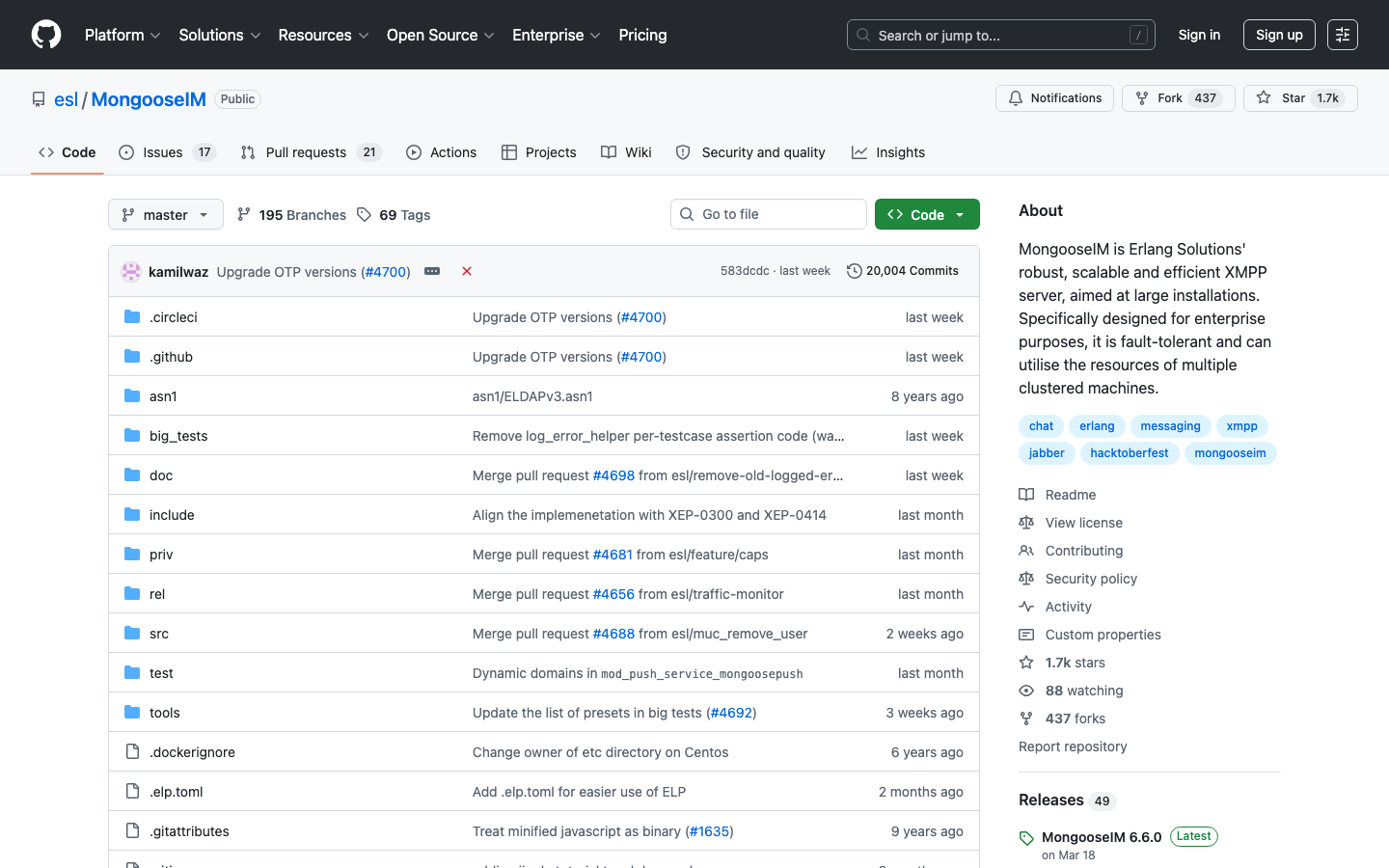
Open-IM-Server is a high-performance instant messaging backend written in Go, designed to scale to millions of concurrent users. It provides messaging, group chat, and file sharing APIs ready for custom frontend integration.
Pros
- Built for scale and high concurrency; suitable for large deployments
- End-to-end encryption supported
- Apache-2.0 licensed; commercial-friendly
Cons
- Requires building or integrating a frontend UI; not a ready-to-use chat app
- Minimal documentation compared to more mature projects
HumHub
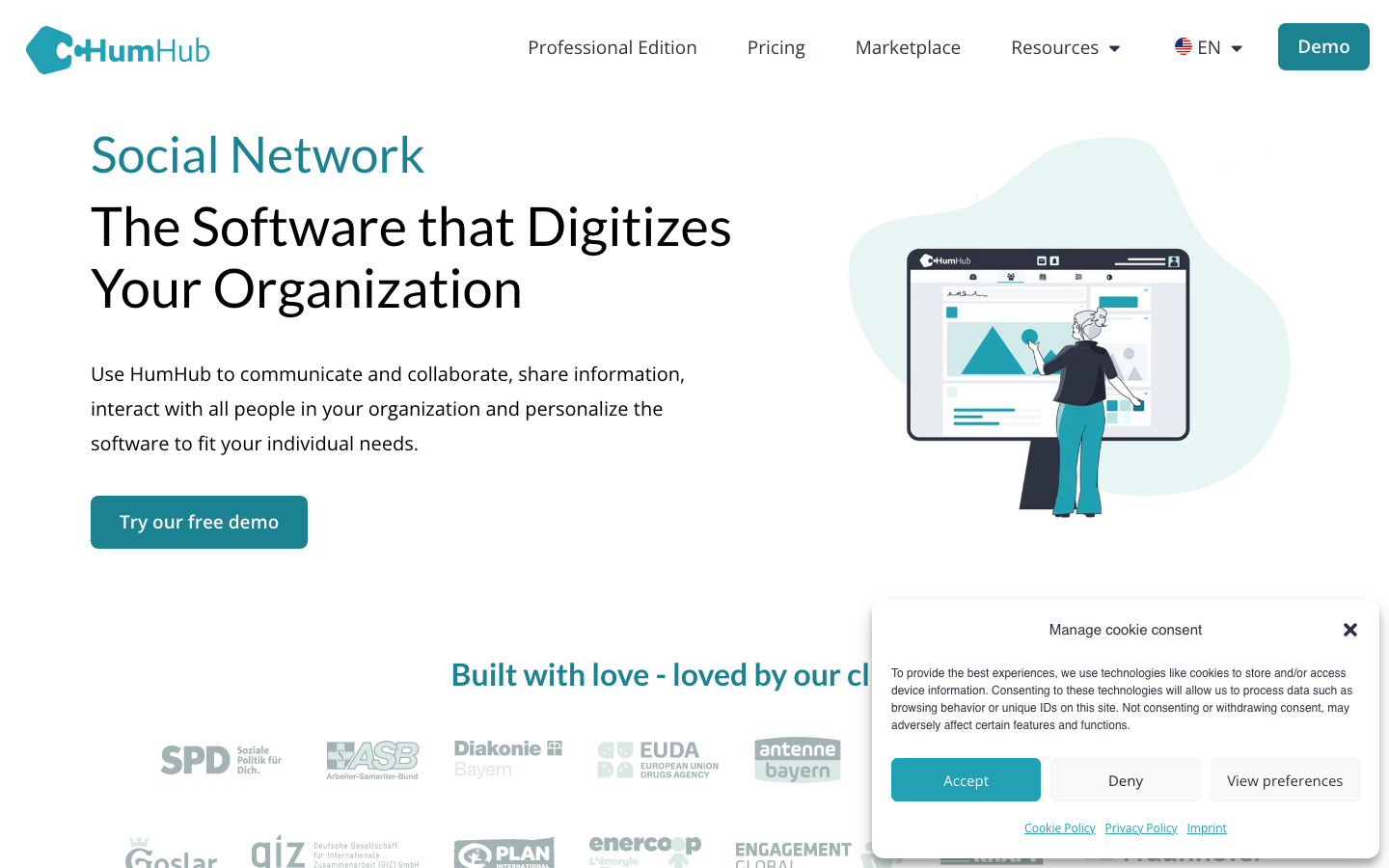
HumHub is an open-source enterprise social network that combines messaging, activity streams, and collaboration spaces. It's positioned as an internal social platform rather than a pure chat tool, with a focus on company culture and knowledge sharing.
Pros
- All-in-one social network; no per-user licensing tiers
- Extensive module ecosystem to customize workflows and features
- Intuitive UI designed for non-technical users
Cons
- Heavier resource footprint than lightweight chat-only platforms
- License terms not formally declared; check project documentation
The Lounge
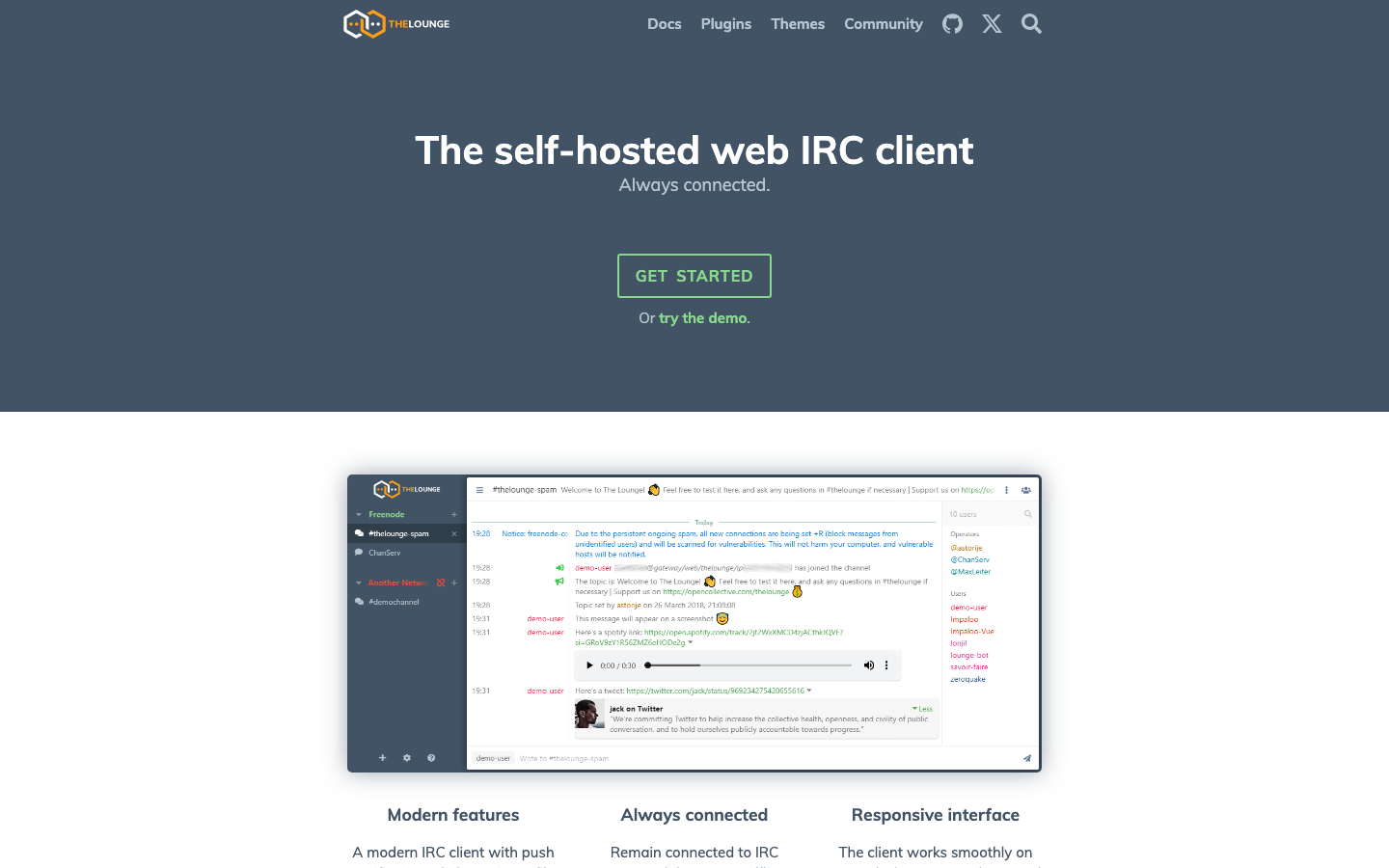
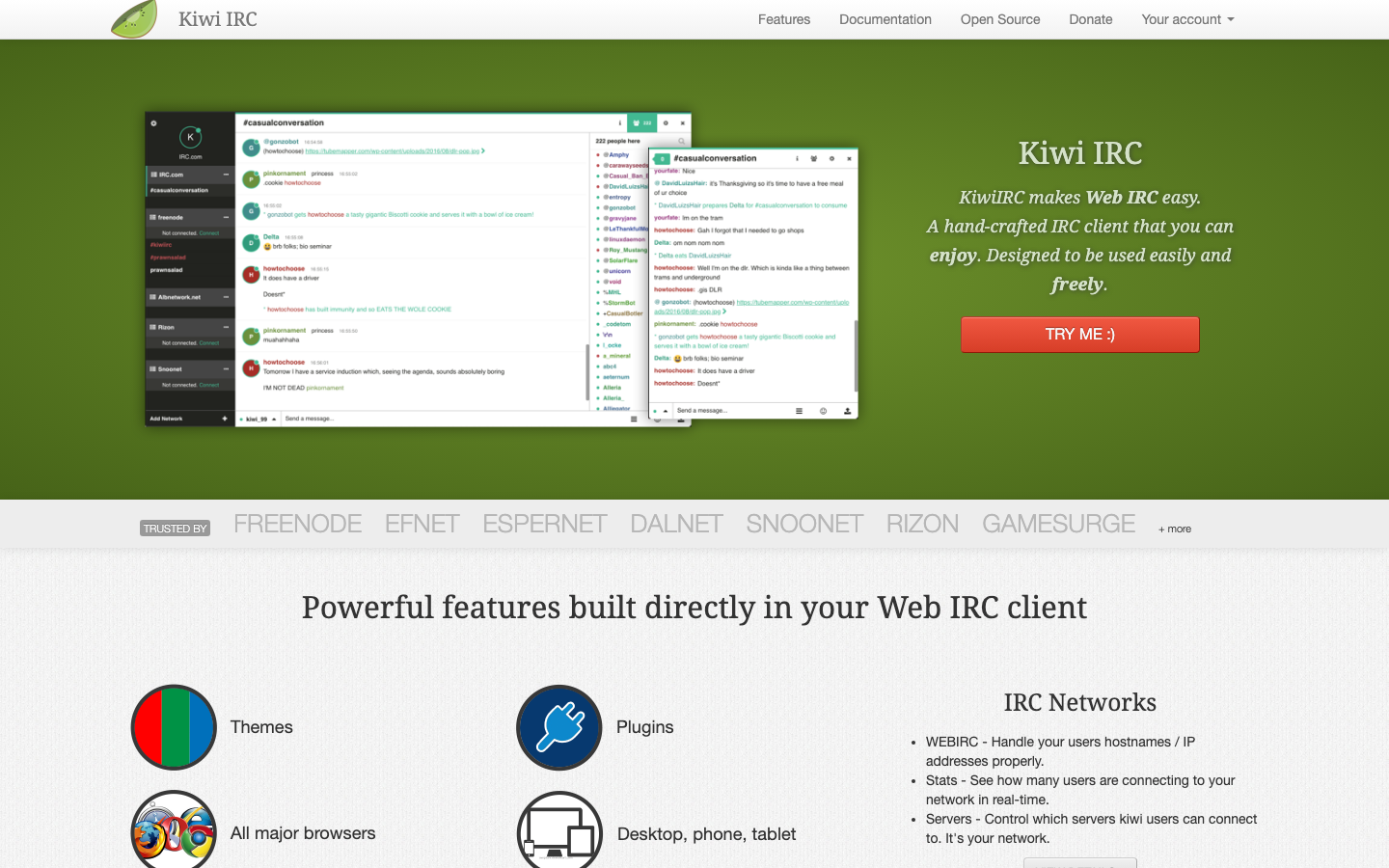
The Lounge is a modern, self-hosted web IRC client that brings IRC communities into a responsive, cross-platform interface. It's ideal for teams already embedded in IRC networks or wanting to bridge legacy chat infrastructure.
Pros
- Lightweight and simple to deploy
- Excellent for IRC enthusiasts and communities with long message history
- MIT licensed
Cons
- Focused on IRC; not a replacement for Slack-like messaging if you need modern group chat features
- Limited native mobile experience compared to native apps
Synapse
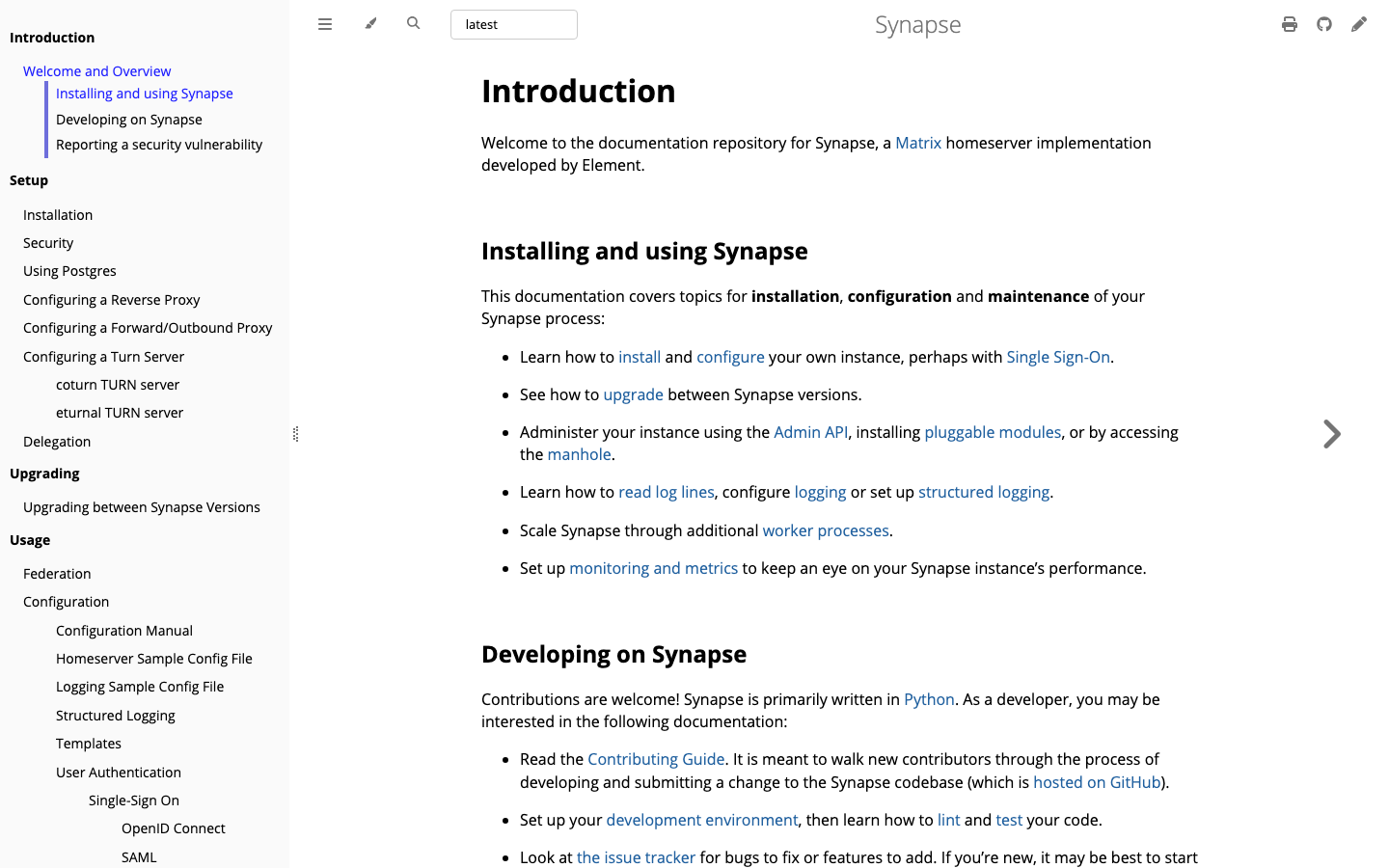
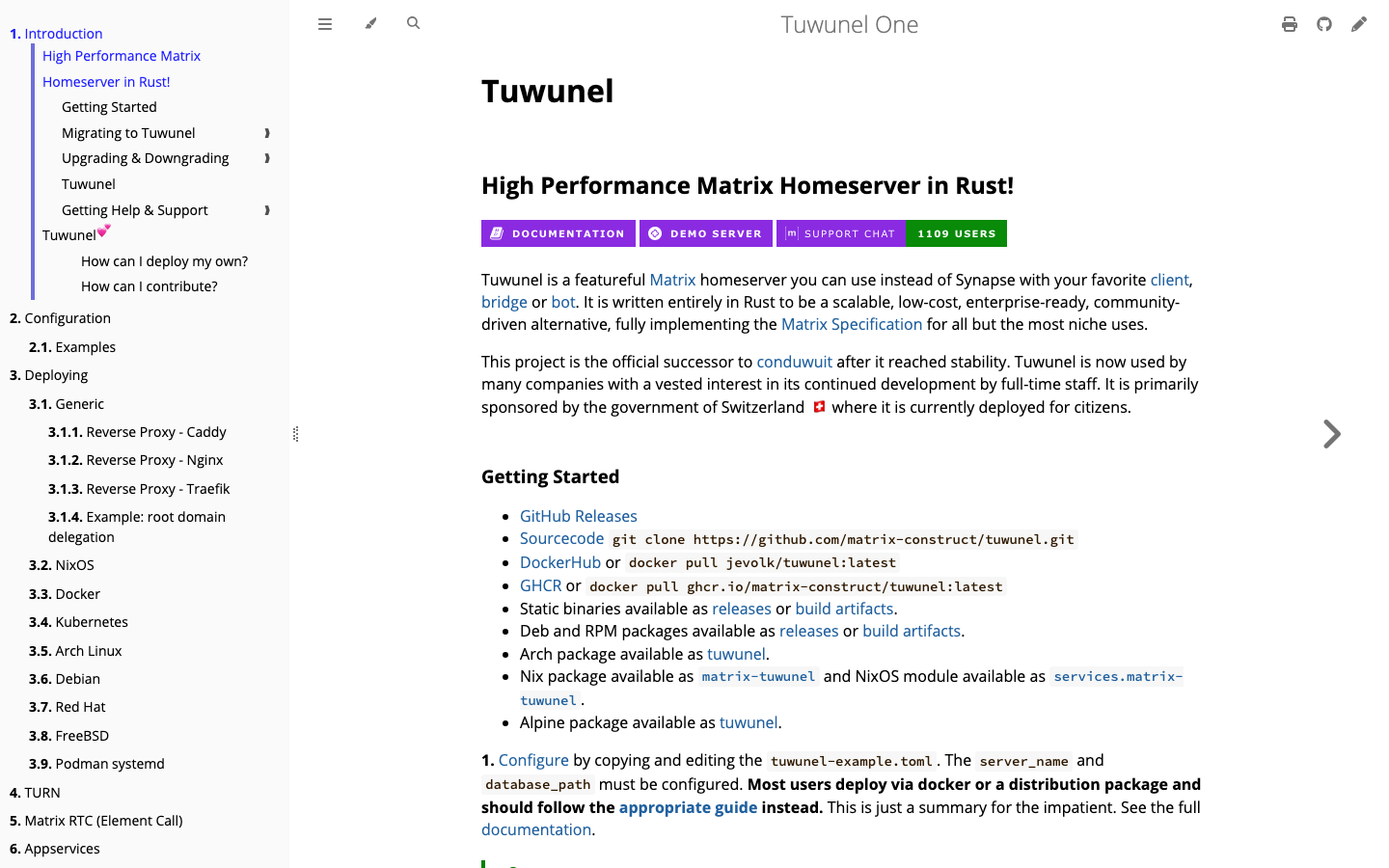
Synapse is a Matrix homeserver written in Python and Rust that powers federated, end-to-end encrypted team chat. Matrix is an open protocol, so Synapse instances can interoperate with other Matrix servers and clients without vendor lock-in.
Pros
- Full federation; teams can run their own server and still chat across organizations
- End-to-end encryption built-in; no enterprise tier paywall
- AGPL-3.0; strong copyleft ensures community benefit
Cons
- Steeper setup and operational overhead than Mattermost
- Performance and resource usage can be demanding on smaller infrastructure
Tailchat
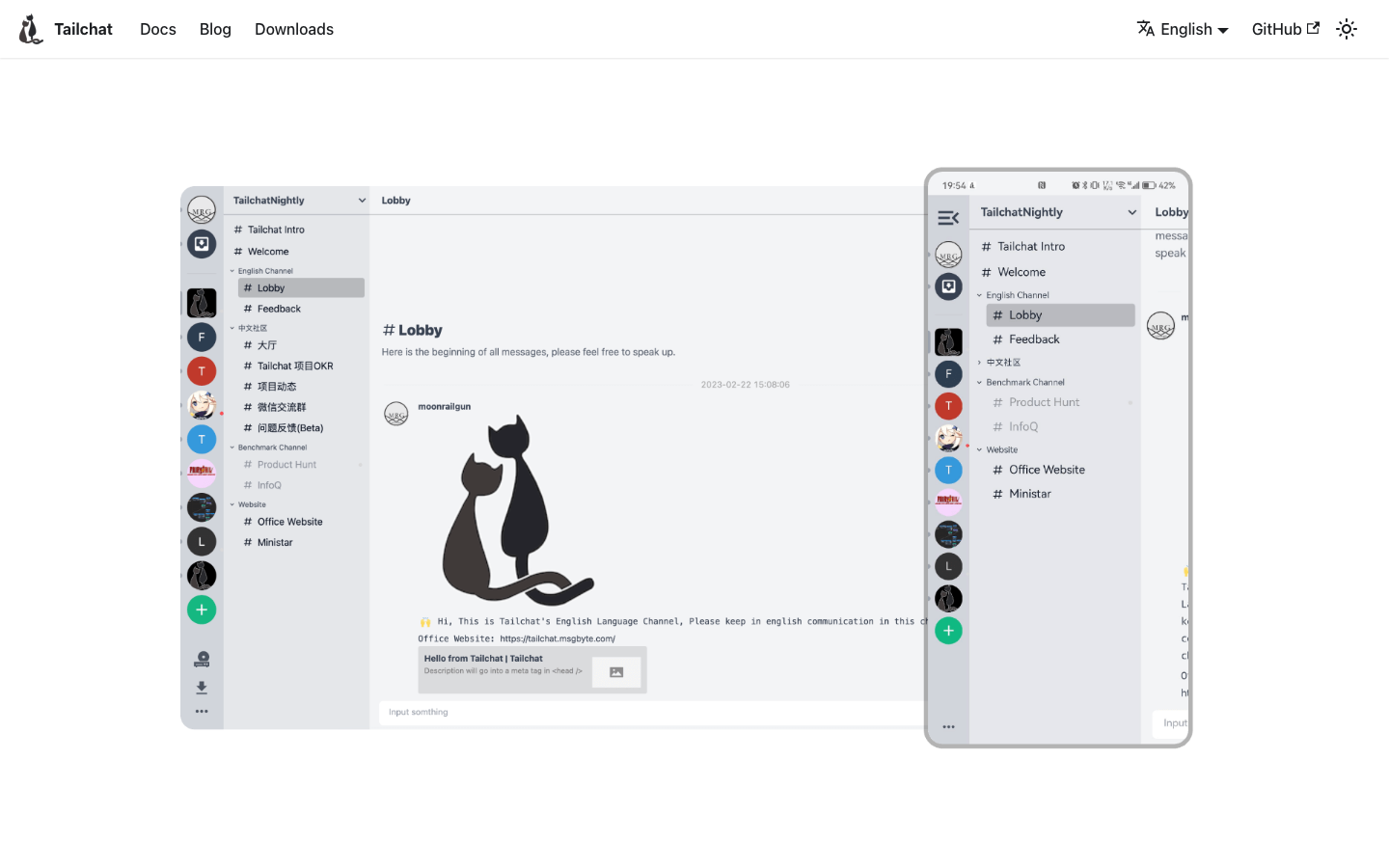
Tailchat is a next-generation team chat application designed as a Slack alternative with a modern, responsive interface. It runs self-hosted and includes messaging, channels, integrations, and plugins without licensing tiers.
Pros
- Clean, modern UI that feels familiar to Slack users
- No per-user licensing; all features available in the free self-hosted version
- Apache-2.0 licensed and actively developed
Cons
- Smaller community and ecosystem compared to Mattermost
- Federation and decentralization not a focus; designed for self-contained deployments
Movim
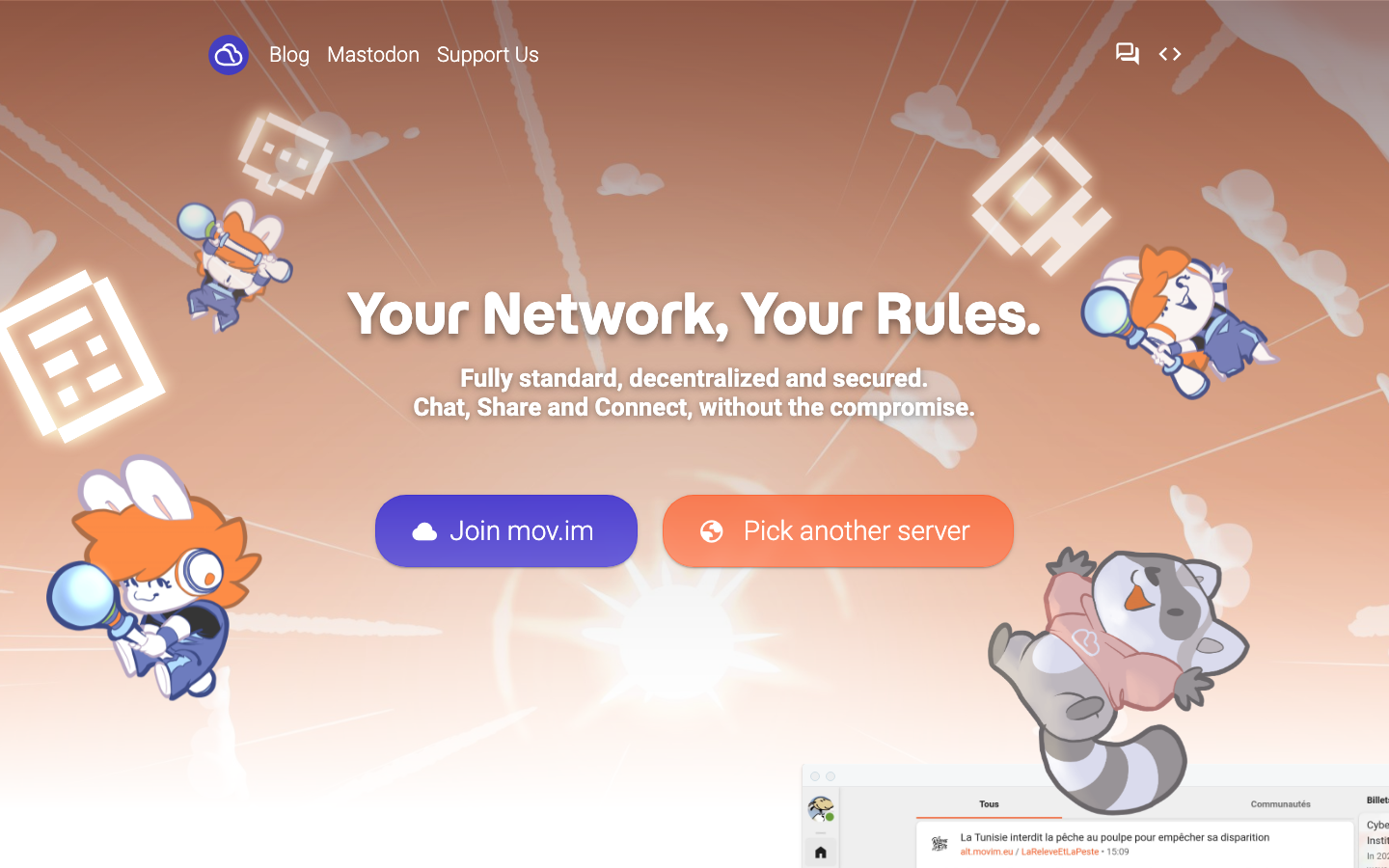
Movim is a decentralized social platform built on the XMPP protocol, enabling chat, blogging, and social feeds without central server dependency. It prioritizes privacy and user autonomy over traditional client-server architecture.
Pros
- True decentralization; users can host their own nodes
- End-to-end encryption and federation native to the platform
- AGPL-3.0; community-owned by design
Cons
- XMPP ecosystem is niche; smaller user base and fewer integrations
- UX is less polished than modern chat platforms; steeper learning curve
RetroShare
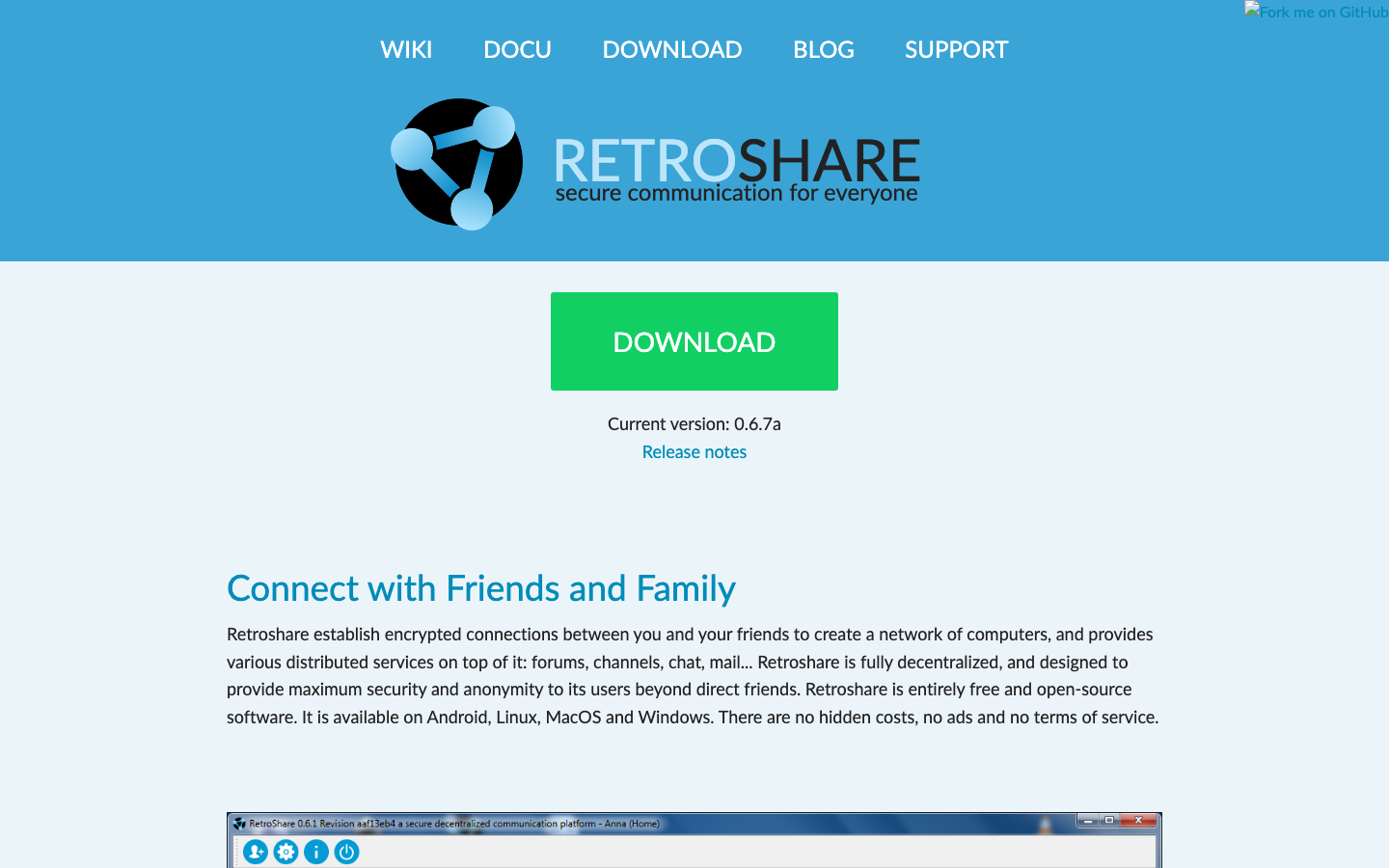
RetroShare is a friend-to-friend and decentralized communication platform that operates without reliance on central servers. It supports messaging, file sharing, forums, and channels over encrypted peer-to-peer networks.
Pros
- Fully decentralized; no single point of failure or vendor control
- Built-in file sharing and forums alongside messaging
- Cross-platform (Windows, Linux, macOS)
Cons
- UI is dated and less intuitive than modern alternatives
- Smaller community; limited integrations and third-party tooling
How to choose
Start by identifying your team's primary pain point with Mattermost. If it's licensing costs for compliance features (SSO, MFA, exports), Synapse and Tailchat move those into the free tier. If you need a social-network feel with no seat-based pricing, HumHub is built for that. If your team values decentralization and resilience over convenience, RetroShare or Movim eliminate vendor dependency entirely—at the cost of UX polish and ecosystem maturity. For pure automation and chatops, Hubot complements any platform. Smaller teams with simple chat needs may find The Lounge or Open-IM-Server sufficient, though the latter requires frontend integration work. Budget for operational overhead; self-hosted alternatives trade Mattermost's licensing friction for deployment and maintenance responsibility.