






TL;DR
- Teams needing lightweight, extensible bots without per-user fees: hubot lets you script custom automation without hitting Rocket.Chat's 10,000 push-notification monthly cap or concurrent-user paywalls.
- Organizations requiring true federation and interoperability: Synapse runs a Matrix homeserver so your team isn't locked into a single vendor's infrastructure or forced to upgrade tiers as headcount grows.
- Chat-first teams wanting end-to-end encryption out of the box: open-im-server provides a full IM backend with Go performance and no per-user licensing model, eliminating the cost scaling that hits Rocket.Chat's Pro tier.
Why teams leave Rocket.Chat
Rocket.Chat's free Community edition caps concurrent users at 100 and limits push notifications to 10,000 per month—a hard ceiling that many growing teams hit within weeks. Once you breach those limits, you face a choice: self-host and own the infrastructure burden, or move to the Starter plan (50 users, still hosted) or Pro (per-user annual pricing). The per-user model is the real trap: as your team scales from 50 to 200 people, costs compound predictably, turning an "open-source alternative to Slack" into a per-seat SaaS spend.
Beyond pricing, Rocket.Chat's Enterprise features—custom roles, device management, privacy-first AI—are gated behind quote-based contracts. This creates vendor lock-in: your data, chat history, and integrations live in Rocket.Chat's ecosystem, and migrating out means rebuilding automation and retraining users. Self-hosting sidesteps licensing but demands ops resources; you're now responsible for scaling, backups, and security patches. For teams prioritizing data sovereignty and cost control, the gap between Rocket.Chat's marketing (open-source flexibility) and its pricing reality (per-user tiers, feature gates) is where frustration sets in.
Quick comparison
| Name | License | Self-Hosted | Federation | E2E Encryption | Best For |
|---|---|---|---|---|---|
| hubot | MIT | Yes | — | — | Bot automation & scripting |
| open-im-server | Apache-2.0 | Yes | — | Yes | Scalable IM backend, no per-user fees |
| chat | GPL-3.0 | Yes | — | Yes | Multi-platform messaging (iOS, Android, web, CLI) |
| synapse | AGPL-3.0 | Yes | Yes | Yes | Federated, vendor-neutral chat infrastructure |
| weechat | GPL-3.0 | Yes | — | — | Terminal-based, extensible chat client |
| converse.js | MPL-2.0 | Yes | Yes | Yes | Web-based XMPP/Jabber chat |
| kiwiirc | Apache-2.0 | Yes | — | — | Modern IRC web client |
Top open-source alternatives to Rocket.Chat
hubot
A customizable automation framework (16,787 stars) written in JavaScript that lets you script bots to handle repetitive tasks—deployments, alerts, reminders—across any chat system. Unlike Rocket.Chat's push-notification quotas, hubot integrates with your existing infrastructure and scales with your scripts.
Pros:
- Lightweight, language-agnostic scripting; no per-user licensing
- Plugs into multiple chat backends (Slack, IRC, custom APIs)
- Large ecosystem of community adapters and middleware
Cons:
- Not a standalone chat platform—requires a separate messaging backend
- Maintenance and script upkeep fall entirely on your team
open-im-server
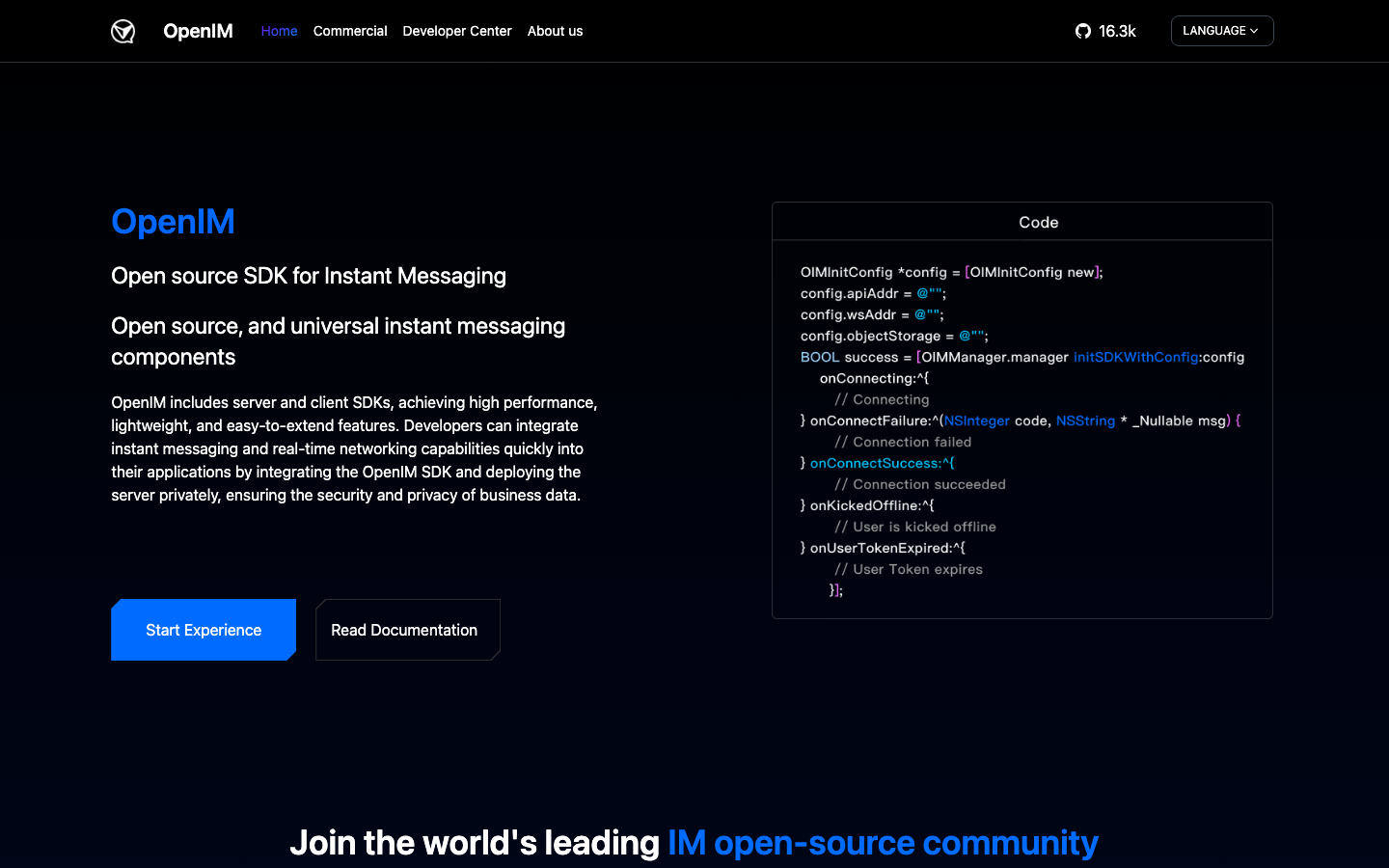
A full-featured IM backend (16,372 stars) written in Go, designed to power instant messaging at scale without per-user pricing. Includes iOS (Swift), Android (Java), web (JavaScript), and CLI clients, plus chatbot support—a complete alternative to Rocket.Chat's tiered model.
Pros:
- No concurrent-user caps or per-user annual fees; flat self-hosted cost
- Built-in end-to-end encryption and multi-client support
- Go backend ensures high throughput and low latency
Cons:
- Ecosystem smaller than Rocket.Chat; fewer third-party integrations
- Admin UI and documentation less polished than commercial platforms
chat
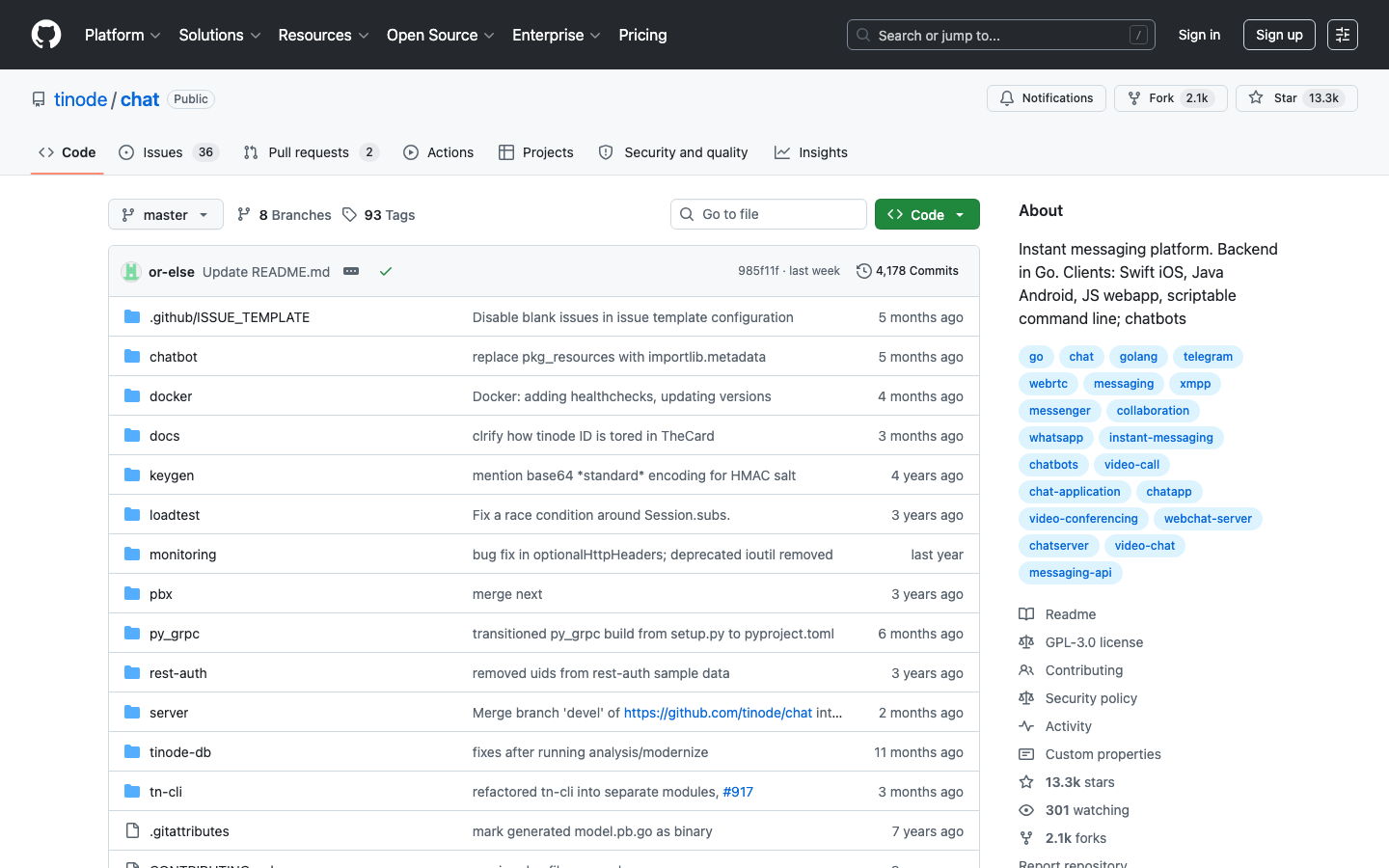
An instant messaging platform (13,261 stars) with a Go backend and native clients for iOS, Android, web, and command line, plus chatbot scripting. Delivers encryption and multi-platform support without Rocket.Chat's licensing tiers.
Pros:
- True end-to-end encryption across all clients
- Scriptable CLI and bot framework for automation
- No per-user fees; single deployment cost
Cons:
- Smaller community and fewer pre-built integrations than Rocket.Chat
- Less mature admin dashboards and analytics
synapse
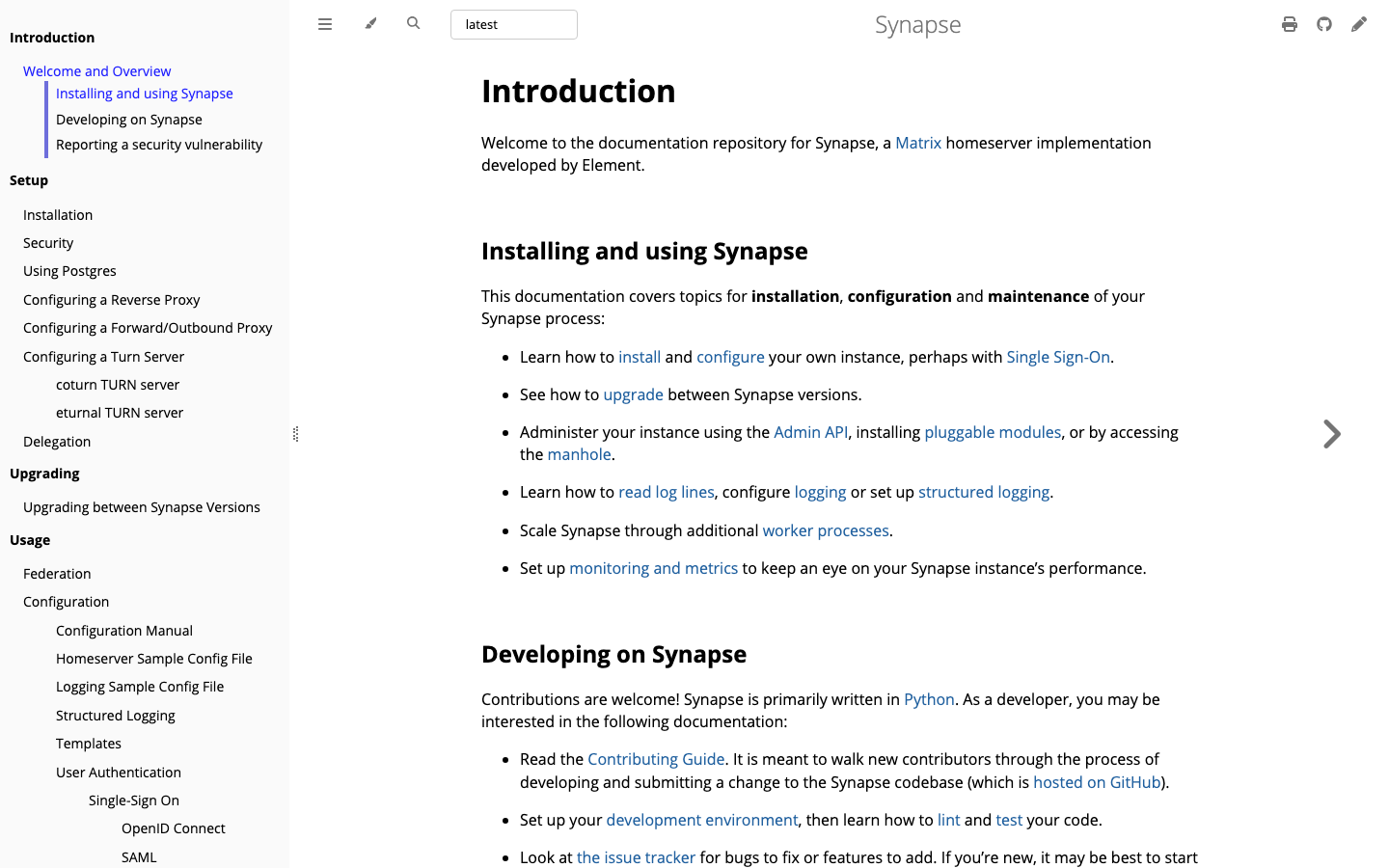
A Matrix homeserver (4,084 stars) written in Python and Rust that enables true federation—your chat infrastructure isn't locked into a single vendor. Teams can run Synapse independently and still interoperate with other Matrix servers, eliminating vendor lock-in entirely.
Pros:
- Full federation support; users on different servers can chat seamlessly
- AGPL-3.0 ensures code stays open; no surprise licensing changes
- End-to-end encryption standard across clients
Cons:
- Heavier resource footprint than lightweight alternatives; Python/Rust stack requires more ops expertise
- Smaller ecosystem of native mobile apps compared to Slack or Teams
weechat
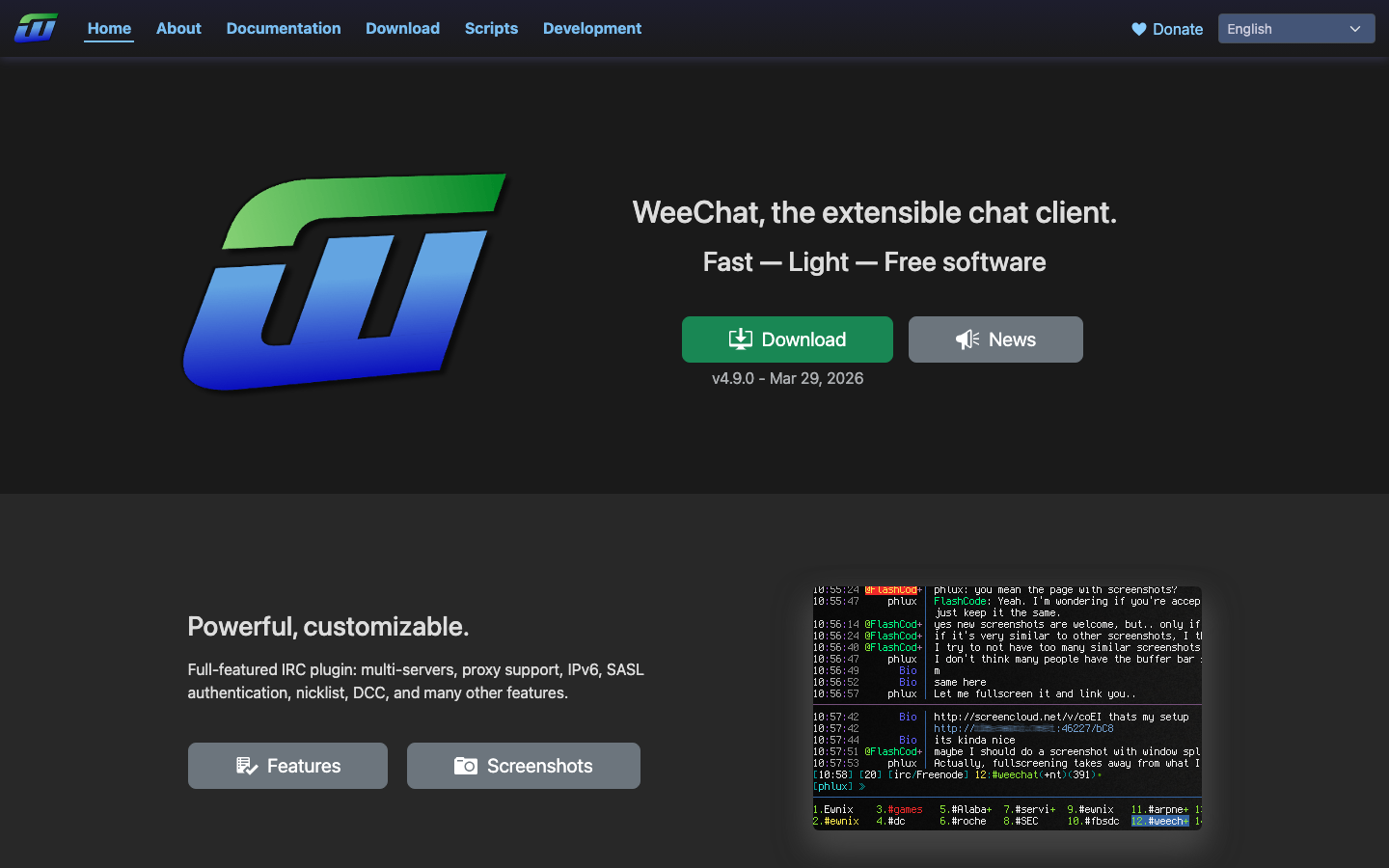
An extensible terminal-based chat client (3,303 stars) written in C, designed for power users and DevOps teams who live in the CLI. Connects to IRC, XMPP, and other protocols without the overhead of a full chat server.
Pros:
- Minimal resource footprint; runs on any system with a terminal
- Highly scriptable in Python, Perl, Ruby, and other languages
- No licensing; pure open-source GPL-3.0
Cons:
- Terminal-only; not suitable for teams wanting a modern web or mobile UI
- Not a server—requires external chat infrastructure (IRC, XMPP, etc.)
converse.js
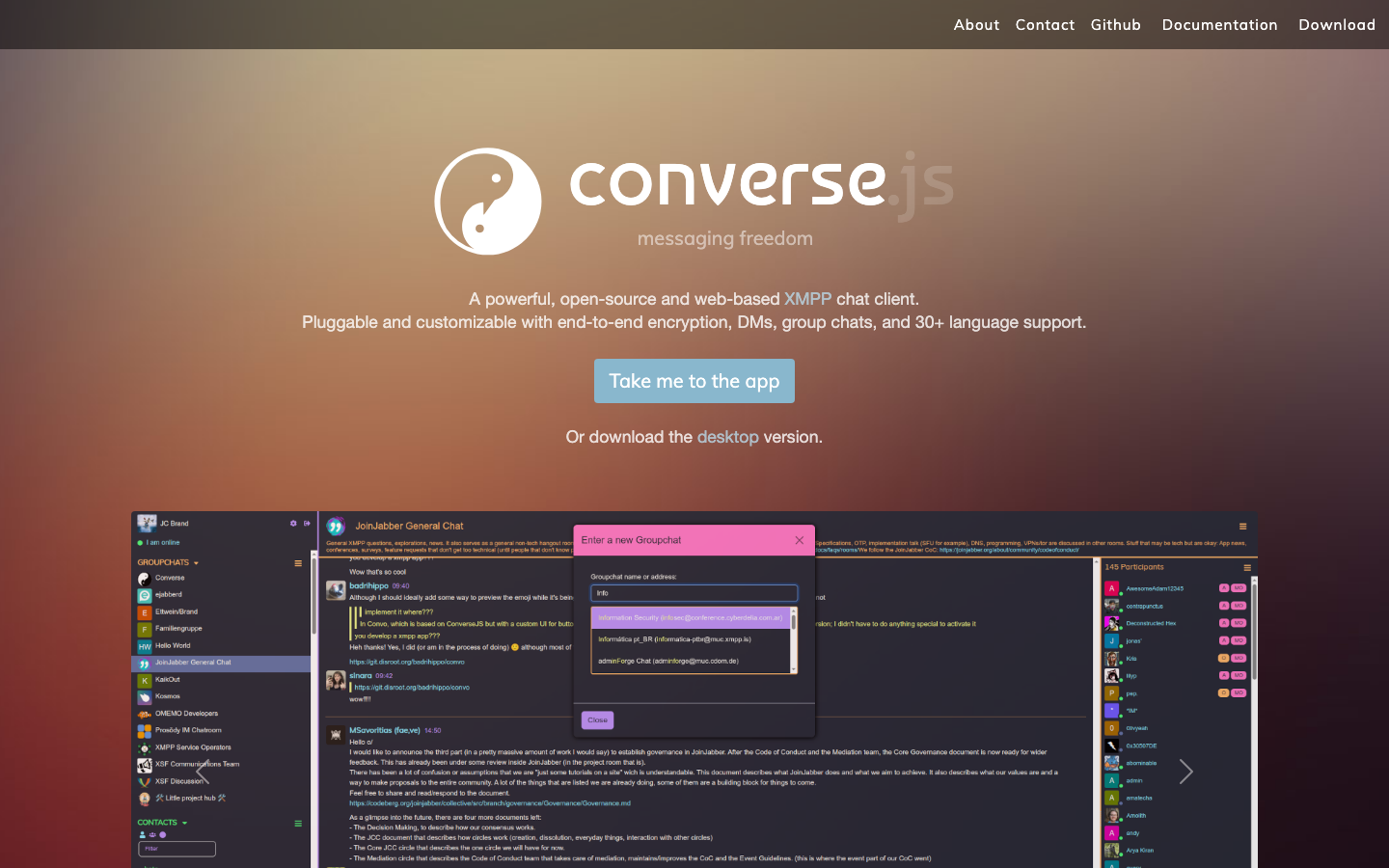
A web-based XMPP/Jabber chat client (3,241 stars) written in JavaScript, enabling real-time messaging over open standards. Runs in the browser without Rocket.Chat's push-notification quotas or per-user tiers.
Pros:
- Standards-based (XMPP); works with any XMPP server, not locked to one vendor
- Web-native; no app installation or updates
- MPL-2.0 license; permissive and business-friendly
Cons:
- XMPP ecosystem smaller and more fragmented than modern chat platforms
- Requires an existing XMPP server; not a complete out-of-the-box solution
kiwiirc
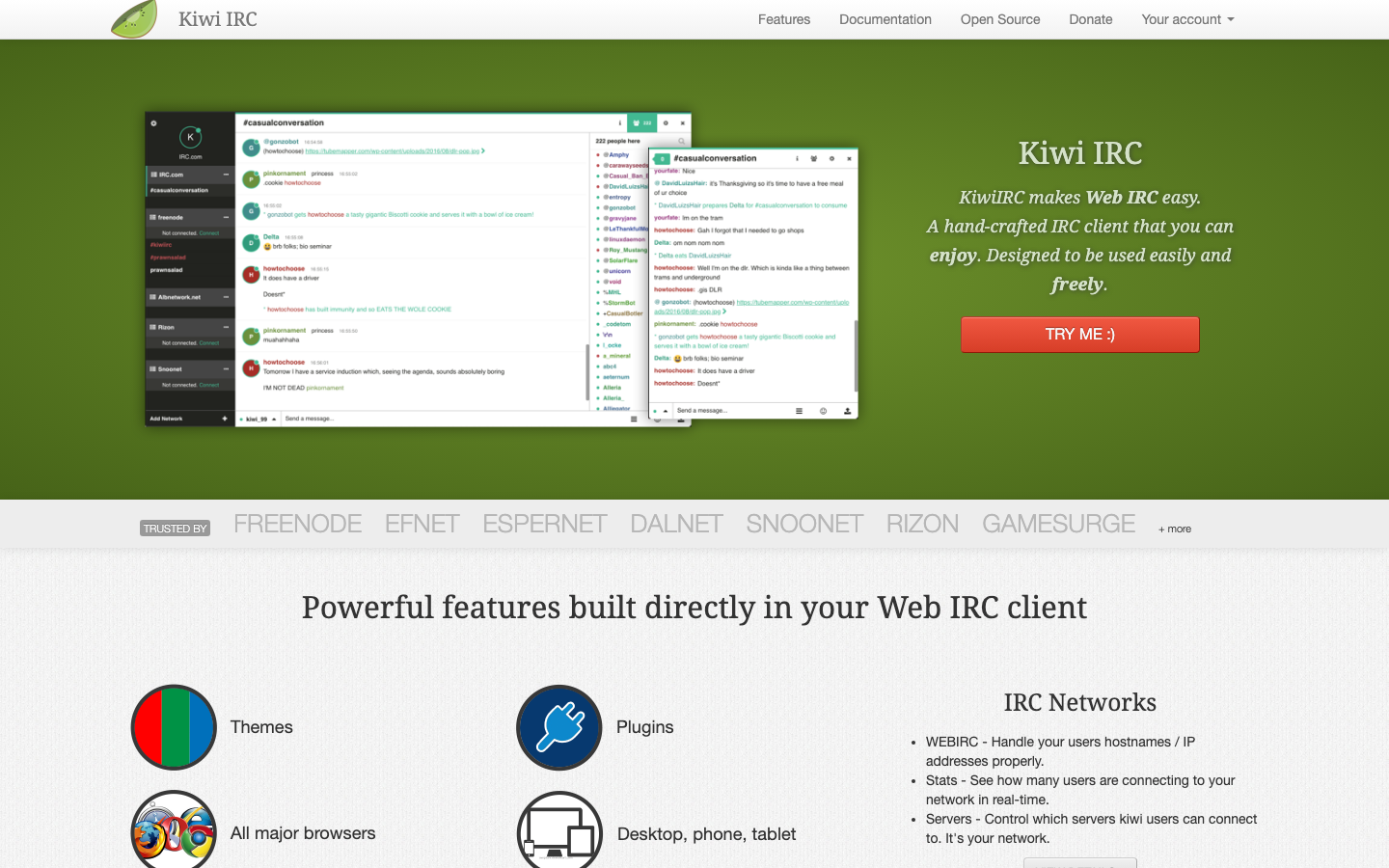
A modern IRC web client (977 stars) built with Vue, bringing a contemporary UX to the IRC protocol. Ideal for teams already using or migrating to IRC, avoiding Rocket.Chat's per-user scaling costs.
Pros:
- Lightweight, fast, and modern UI for IRC
- No per-user fees; single deployment serves unlimited concurrent users
- Apache-2.0 licensed; permissive for commercial use
Cons:
- IRC-only; no native mobile clients
- Smaller feature set than Rocket.Chat (no built-in video, file sync, etc.)
How to choose
If your team is scaling and hitting Rocket.Chat's concurrent-user or push-notification caps, open-im-server or chat eliminate per-user pricing while delivering encryption and multi-platform clients. For teams that prioritize interoperability and long-term vendor independence, synapse (Matrix federation) or converse.js (XMPP standards) ensure you're never locked in. DevOps and CLI-first teams should evaluate weechat for terminal efficiency. If you're already invested in IRC or want a lightweight modern web interface, kiwiirc is a cost-effective pivot. Finally, hubot is not a chat replacement but a force multiplier for automation—pair it with any backend to reduce manual toil without Rocket.Chat's notification quotas.