












TL;DR
- Cost control matters most? Twenty strips away per-seat licensing and proprietary pricing models, letting you own the infrastructure and predict spend.
- Data sovereignty is non-negotiable. ERPNext and Laravel CRM give you full database ownership on your own servers, with no vendor lock-in on customer records.
- You need breadth without the bill shock. Dolibarr combines ERP and CRM in one GPL-licensed package, eliminating the add-on cloud trap that inflates Salesforce costs over time.
Why teams leave Salesforce
Salesforce's cost structure compounds silently. You start with per-user seat licensing, then layer in paid add-on clouds (Service, Commerce, Marketing) for features competitors bundle. Most recently, Salesforce shipped three different AI pricing models in roughly 18 months—from $2 per conversation to $0.10 per action—making annual budgets a moving target. Teams that needed to forecast spend found themselves renegotiating contracts mid-year.
Beyond cost, lock-in is structural. Salesforce's proprietary data model, workflow automation, and ecosystem mean that extracting your customer data and migrating to another platform is a months-long project. API rate limits and feature parity gaps force you to stay. Self-hosted open-source alternatives flip this: you control the database, own the code, and can migrate or modify without permission. For teams that value data sovereignty, predictable costs, or the ability to customize without fighting a vendor's roadmap, the trade-off—running your own infrastructure instead of relying on Salesforce's managed service—often favors open source.
Quick comparison
| Name | License | Self-Hosted | API / Extensibility | Stack / Language | Best For |
|---|---|---|---|---|---|
| Twenty | — | Yes | Modern REST API, extensible plugin architecture | TypeScript | Modern, developer-first CRM teams |
| ERPNext | GPL-3.0 | Yes | Frappe framework, deeply extensible | Python | Mid-market needing ERP + CRM together |
| Huly Platform | EPL-2.0 | Yes | Modular, integrates project & team tools | TypeScript | Teams wanting CRM + project management unified |
| Monica | AGPL-3.0 | Yes | REST API, lightweight | PHP | Personal and small-business relationship tracking |
| Laravel CRM | MIT | Yes | Laravel ecosystem, highly customizable | Blade | Laravel shops, SMEs, rapid custom development |
| NocoBase | — | Yes | No-code extensibility, AI-powered automation | TypeScript | Business apps without deep coding; rapid iteration |
| Idurar ERP CRM | AGPL-3.0 | Yes | Full-stack Node/React, REST API | JavaScript | Accounting-heavy ops, invoicing, small-to-mid businesses |
| Dolibarr | GPL-3.0 | Yes | Module-based, PHP extensibility | PHP | Freelancers and SMEs needing ERP + CRM + accounting |
Top open-source alternatives to Salesforce
Twenty
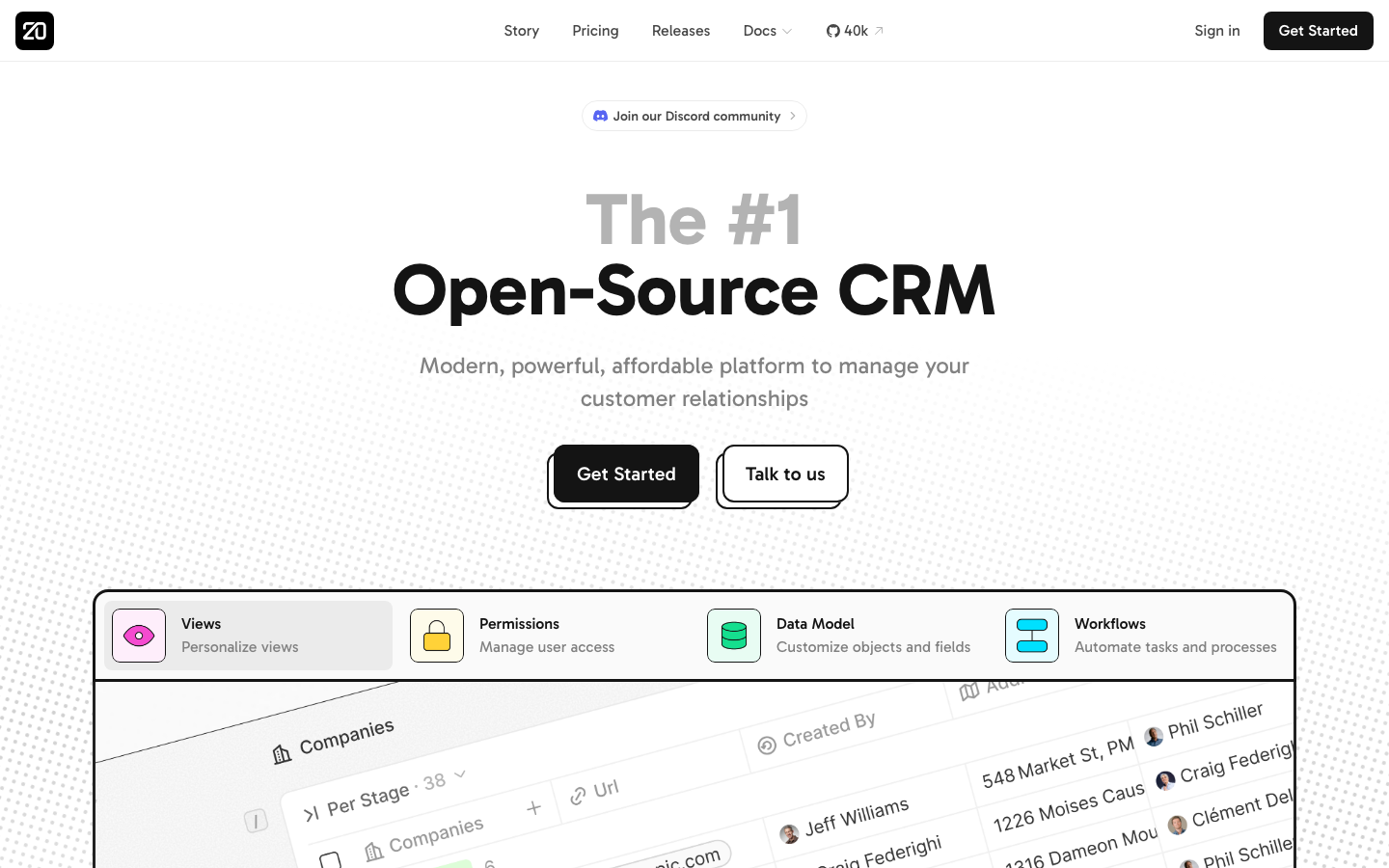
Twenty is purpose-built as a modern Salesforce alternative, with a clean TypeScript stack and developer-first design. It handles contact management, pipelines, and sales automation—the core of what most teams actually use Salesforce for—without the seat licensing or AI pricing surprises.
Pros
- No per-user seat fees; deploy once, unlimited users on your infrastructure.
- Modern REST API and plugin architecture make customization straightforward for engineering teams.
- Explicitly designed to replace Salesforce, so feature parity on essentials is the goal.
Cons
- Younger project than Salesforce; ecosystem and third-party integrations are still growing.
- Requires self-hosting infrastructure and operational overhead.
ERPNext
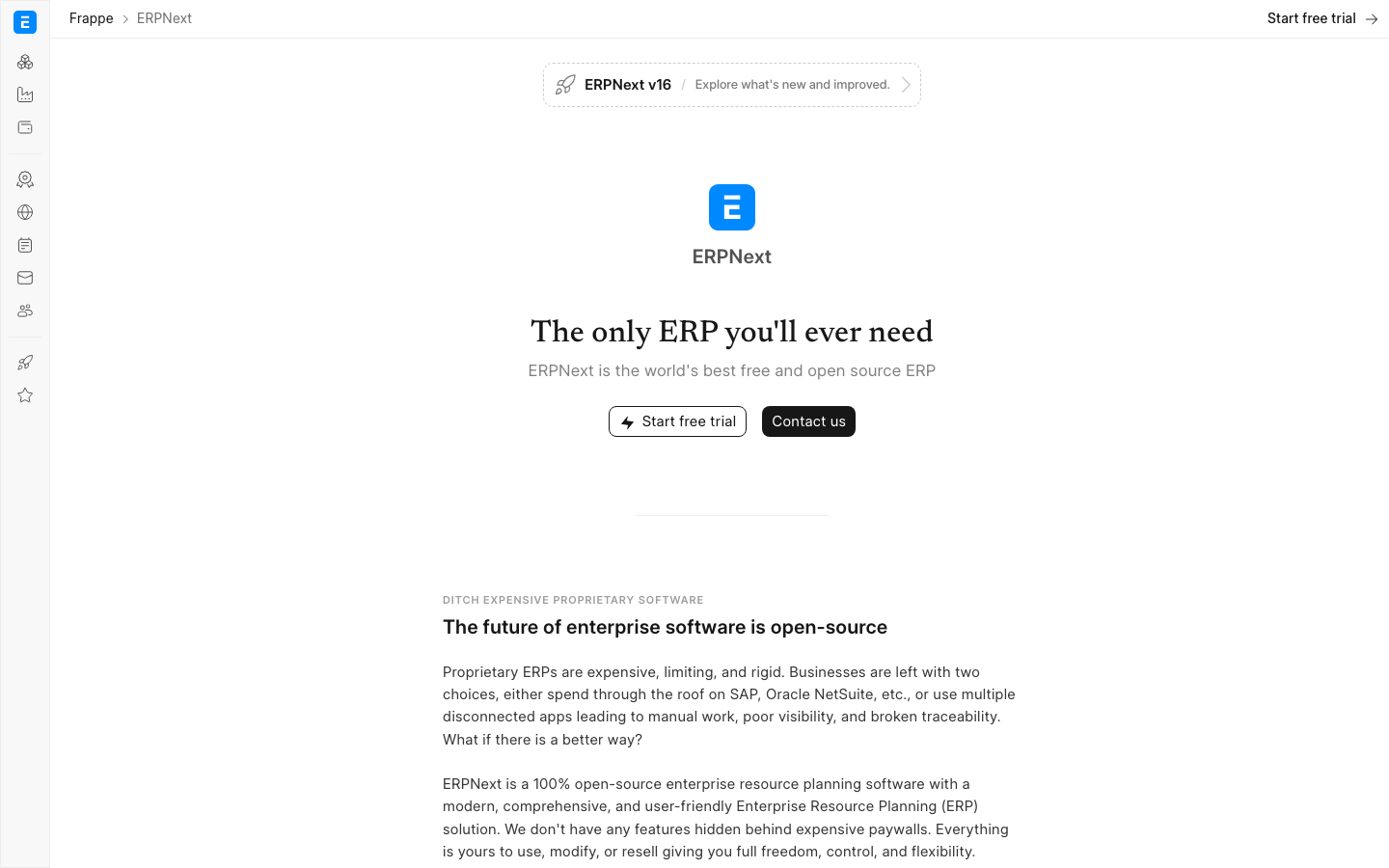
ERPNext is a full-featured ERP platform that includes robust CRM, invoicing, inventory, and accounting modules. Built on the Frappe framework, it's GPL-licensed and widely deployed in mid-market and enterprise organizations globally.
Pros
- Unified ERP + CRM eliminates the "buy three clouds from Salesforce" trap; everything is one system.
- Highly extensible through Frappe's Python-based customization; large community and documentation.
- Transparent GPL-3.0 licensing; no surprise pricing models.
Cons
- Steeper learning curve than lighter CRM-only tools; more powerful but more complex.
- Requires Python/Frappe expertise for advanced customization; not as approachable for non-technical teams.
Huly Platform
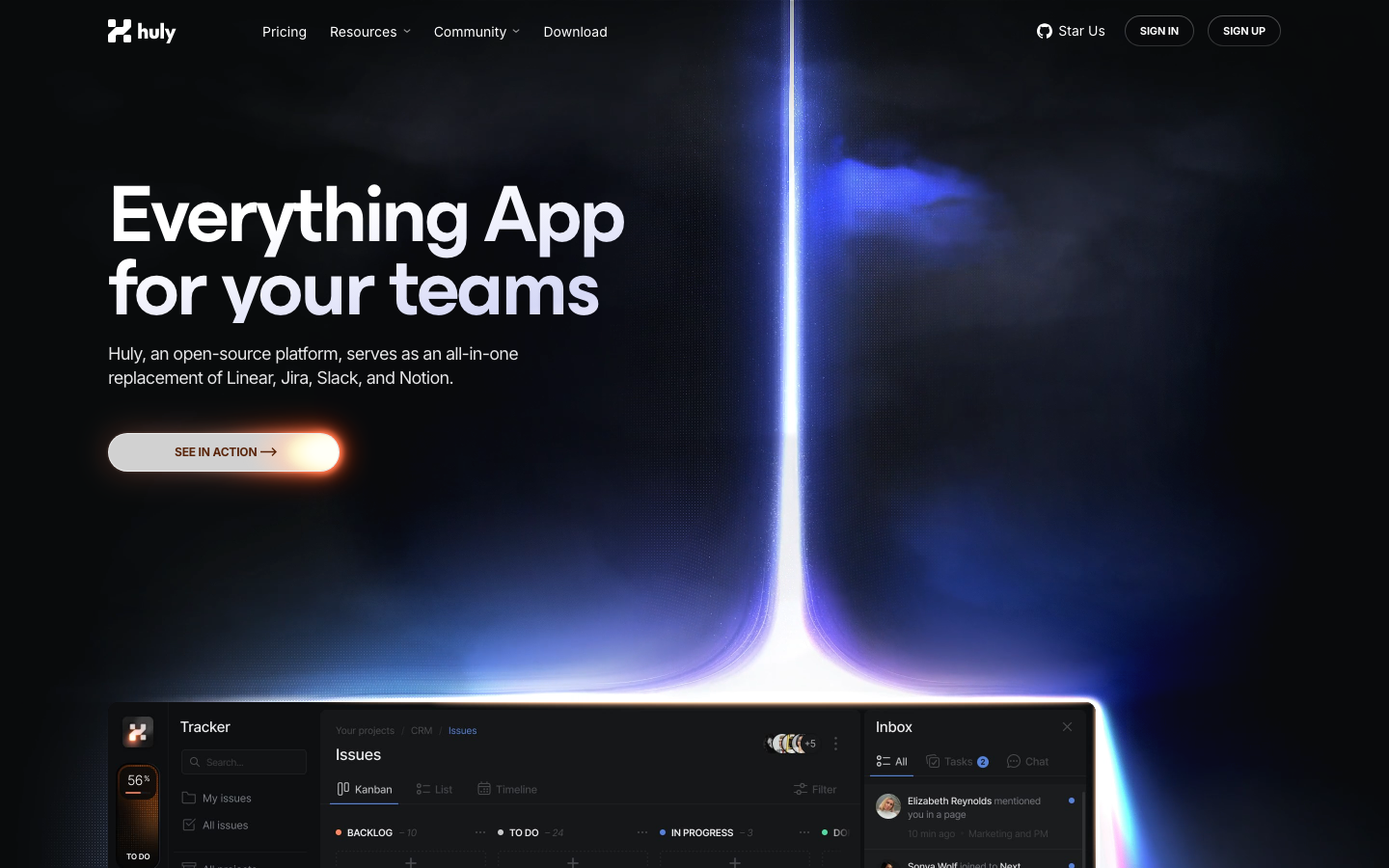
Huly positions itself as an all-in-one workspace combining CRM, project management, and team collaboration—think Salesforce + Linear + Slack in one. It's built in TypeScript and designed for teams that want to consolidate tools.
Pros
- Unified interface reduces tool-switching; sales, support, and ops teams share the same workspace.
- Modular architecture lets you enable only what you need (CRM, projects, chat, docs).
- EPL-2.0 license; full self-hosting control.
Cons
- Broader scope means deeper learning curve; not a lightweight CRM-only play.
- Smaller community than Salesforce; fewer third-party integrations out of the box.
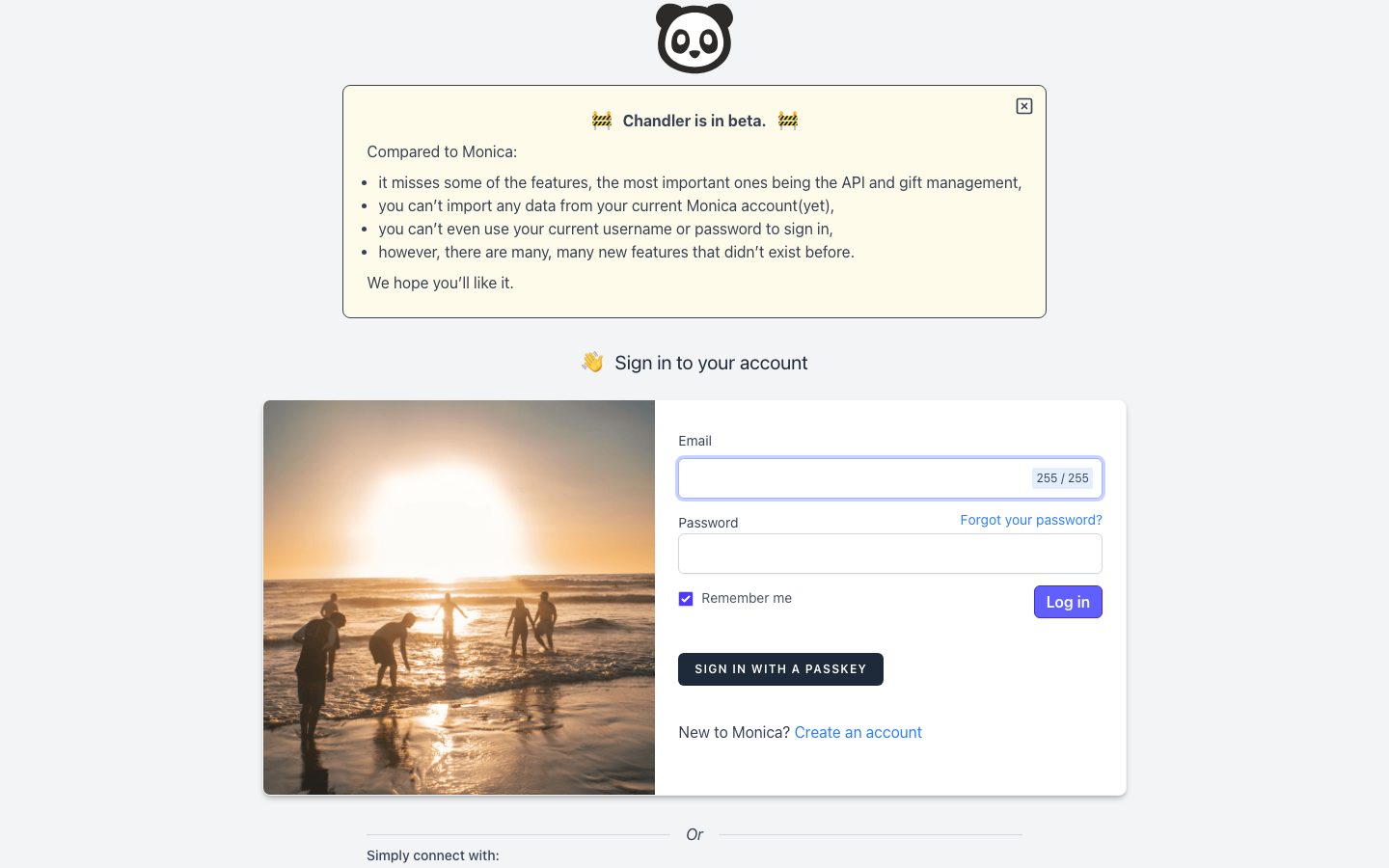
Monica
Monica is a personal and small-business CRM focused on relationship management—tracking contacts, interactions, and notes about friends, family, and business relationships. It's lightweight, AGPL-licensed, and ideal for solopreneurs and small teams.
Pros
- Simple, focused design; no overwhelming feature bloat.
- Low resource footprint; easy to self-host on modest infrastructure.
- Strong privacy focus; all data stays on your server.
Cons
- Not designed for sales pipelines or complex enterprise workflows.
- Limited API and customization compared to larger platforms; better for personal use than mid-market sales teams.
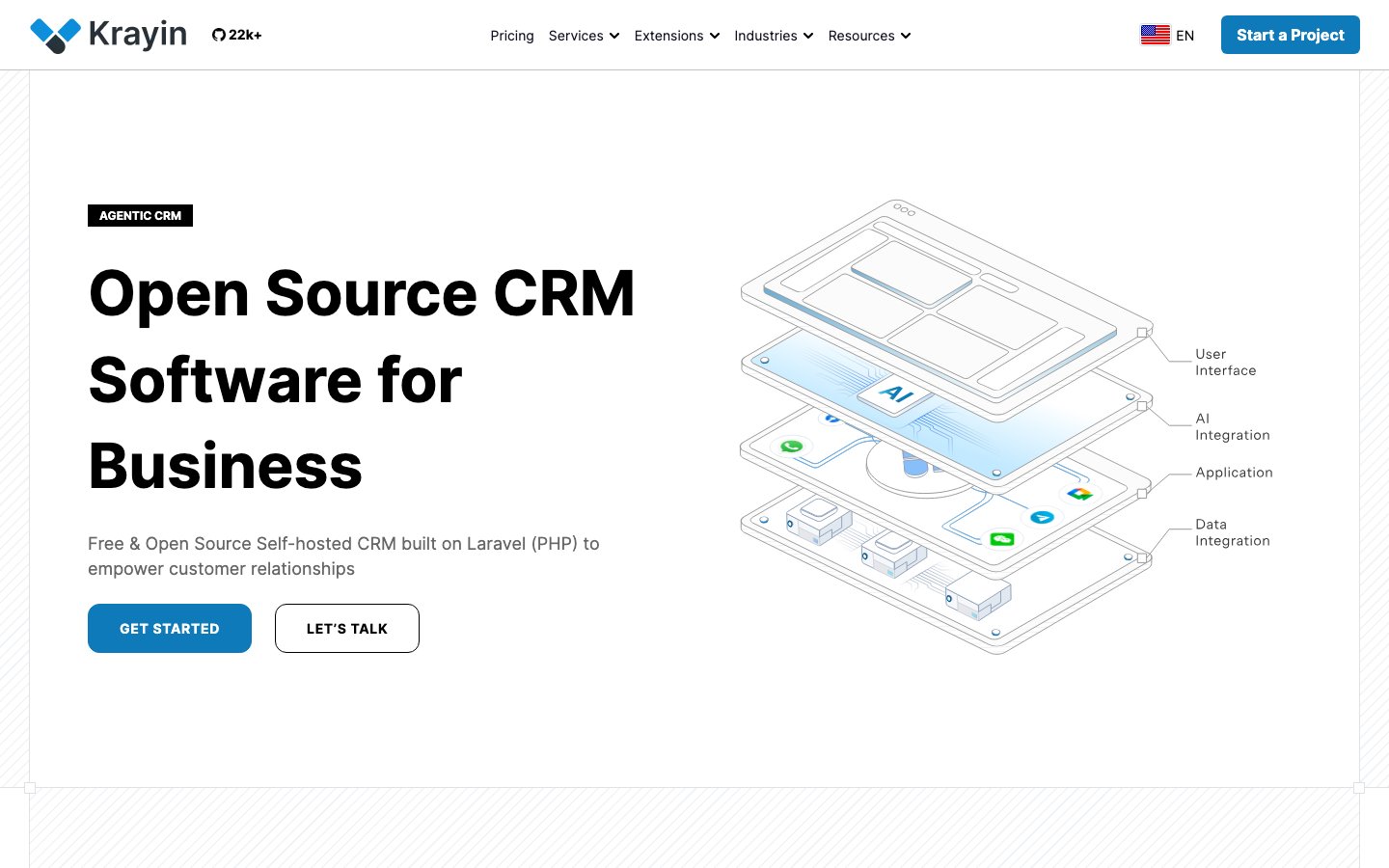
Laravel CRM
Laravel CRM is a full-featured customer lifecycle management system built on the Laravel framework with MIT licensing. It's designed for SMEs and enterprises and appeals strongly to development teams already invested in Laravel.
Pros
- MIT license; permissive and friendly to commercial use.
- Deep Laravel integration; customize and extend using familiar tooling and patterns.
- Covers full customer lifecycle: leads, contacts, deals, invoicing, support.
Cons
- Requires Laravel expertise; not a good fit for teams without PHP/Laravel developers.
- Smaller ecosystem than Salesforce; fewer out-of-the-box integrations.
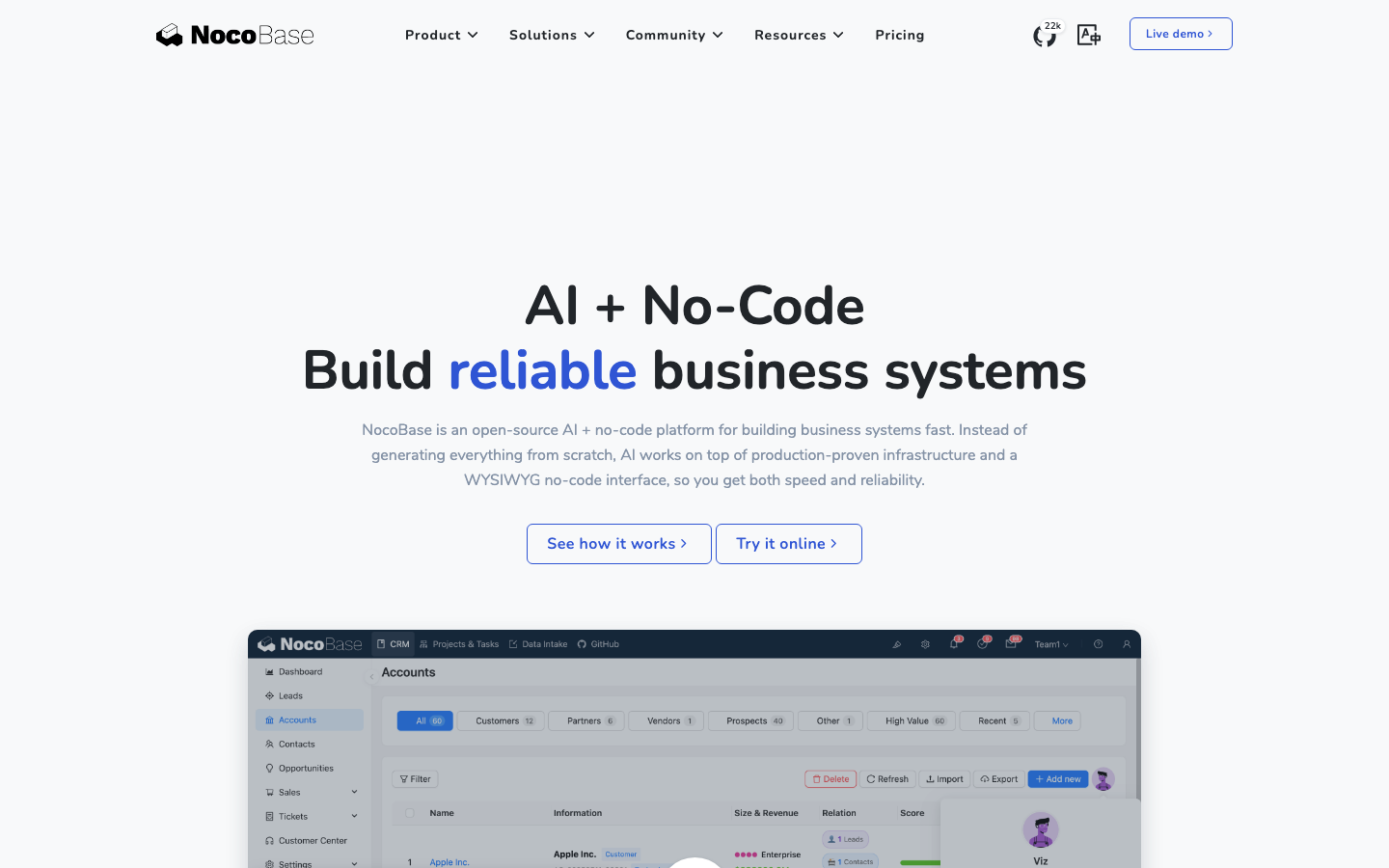
NocoBase
NocoBase is a no-code/low-code platform for building business applications, including CRM and ERP workflows, without writing code. It emphasizes extensibility and AI-powered automation, making it accessible to non-technical operators.
Pros
- No-code CRM and workflow building; empower business teams without developer bottlenecks.
- AI-powered automation reduces manual data entry and task creation.
- Highly extensible; can grow from simple CRM to complex multi-app business platform.
Cons
- License not declared; check project documentation before production use.
- No-code tools have limits; complex custom logic may still require developer intervention.
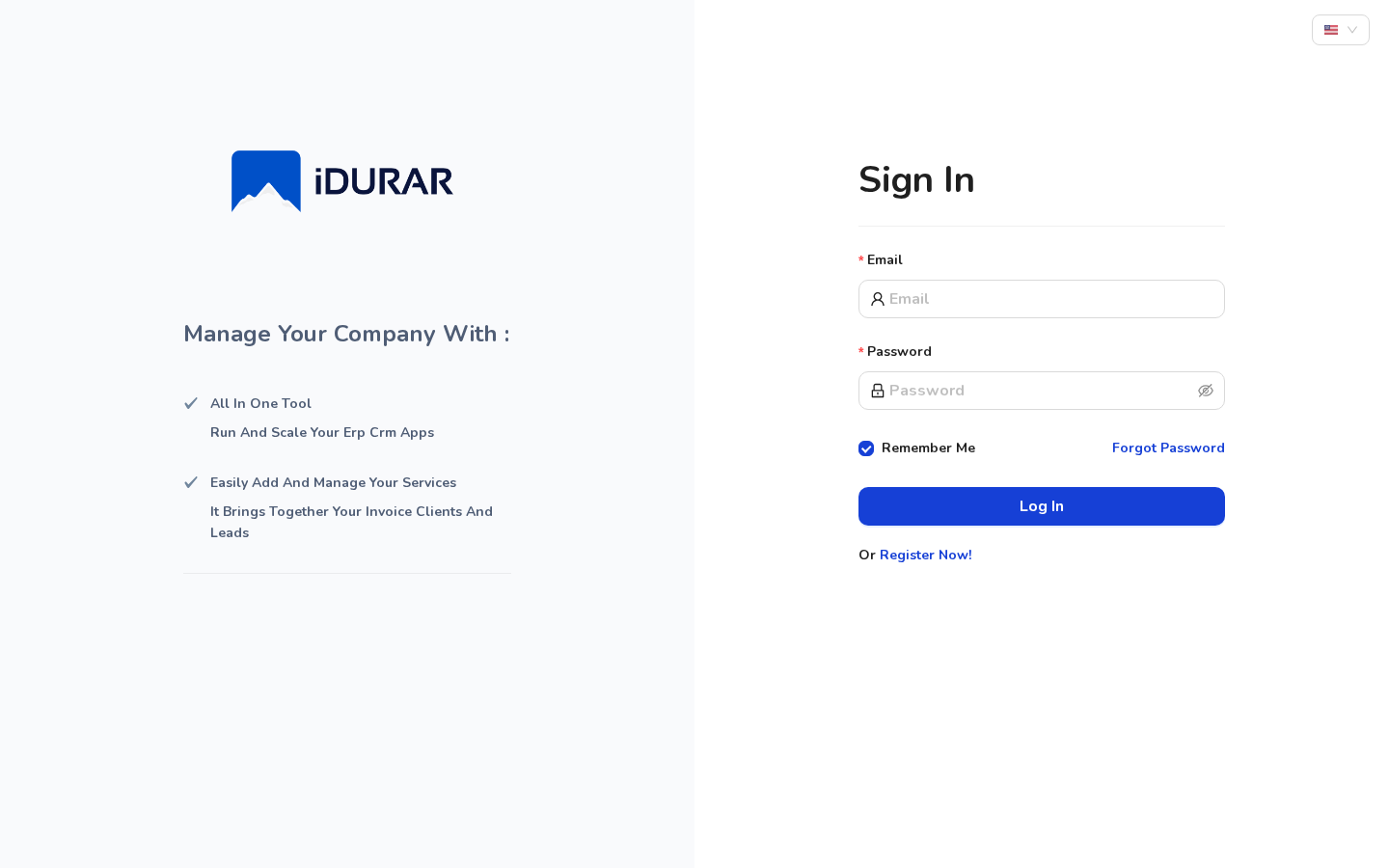
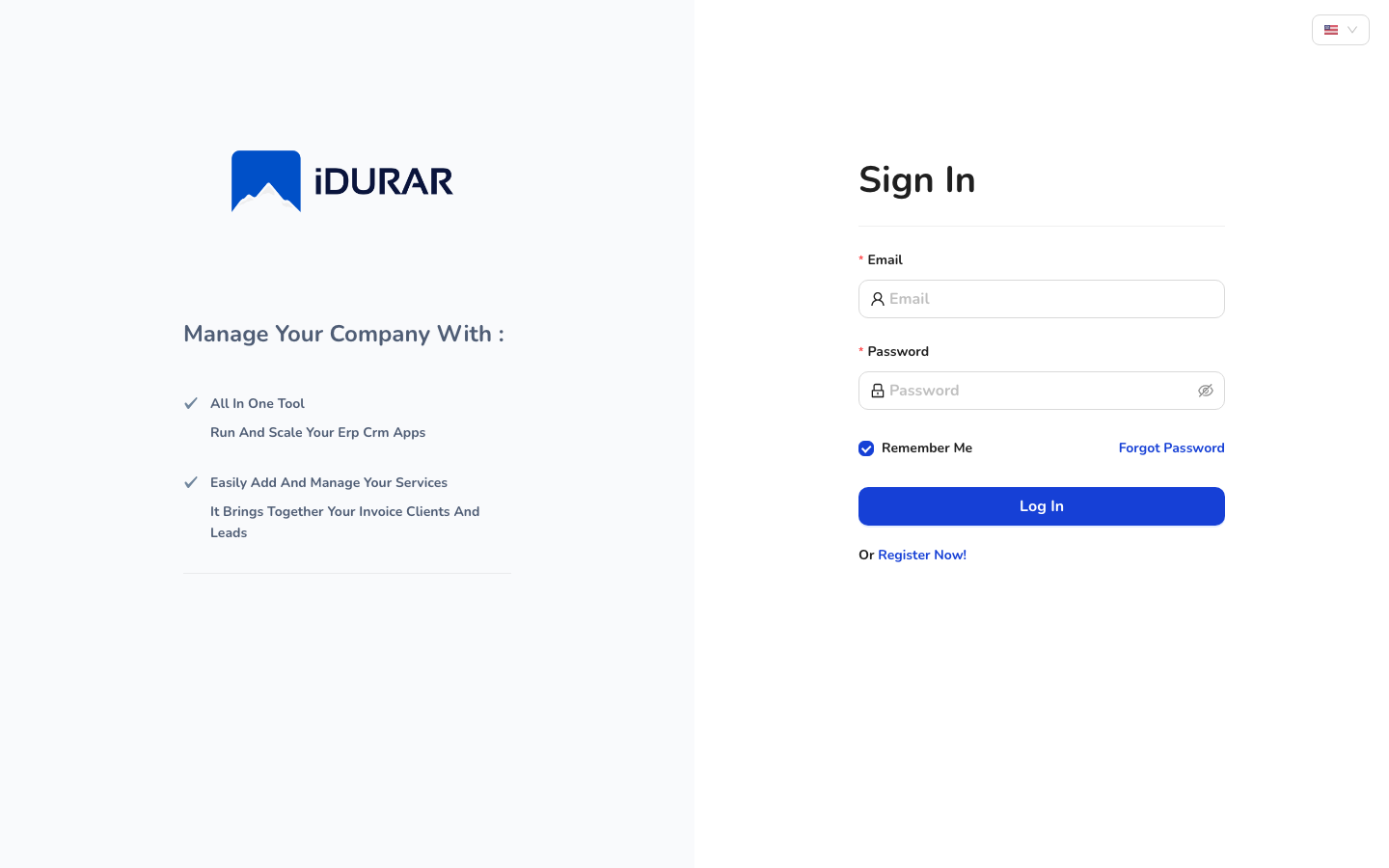
Idurar ERP CRM
Idurar combines ERP, CRM, and accounting in a single Node.js + React application. It's AGPL-licensed and purpose-built for invoicing, accounting, and customer management in small-to-mid-sized businesses.
Pros
- Full-stack accounting + invoicing + CRM; eliminates the need for separate billing systems.
- Modern JavaScript stack (Node/React); familiar to web developers.
- AGPL-3.0; transparent, community-driven development.
Cons
- Smaller project by adoption; fewer reference implementations and case studies.
- Accounting-heavy design; if you don't need invoicing, you may be over-provisioned.
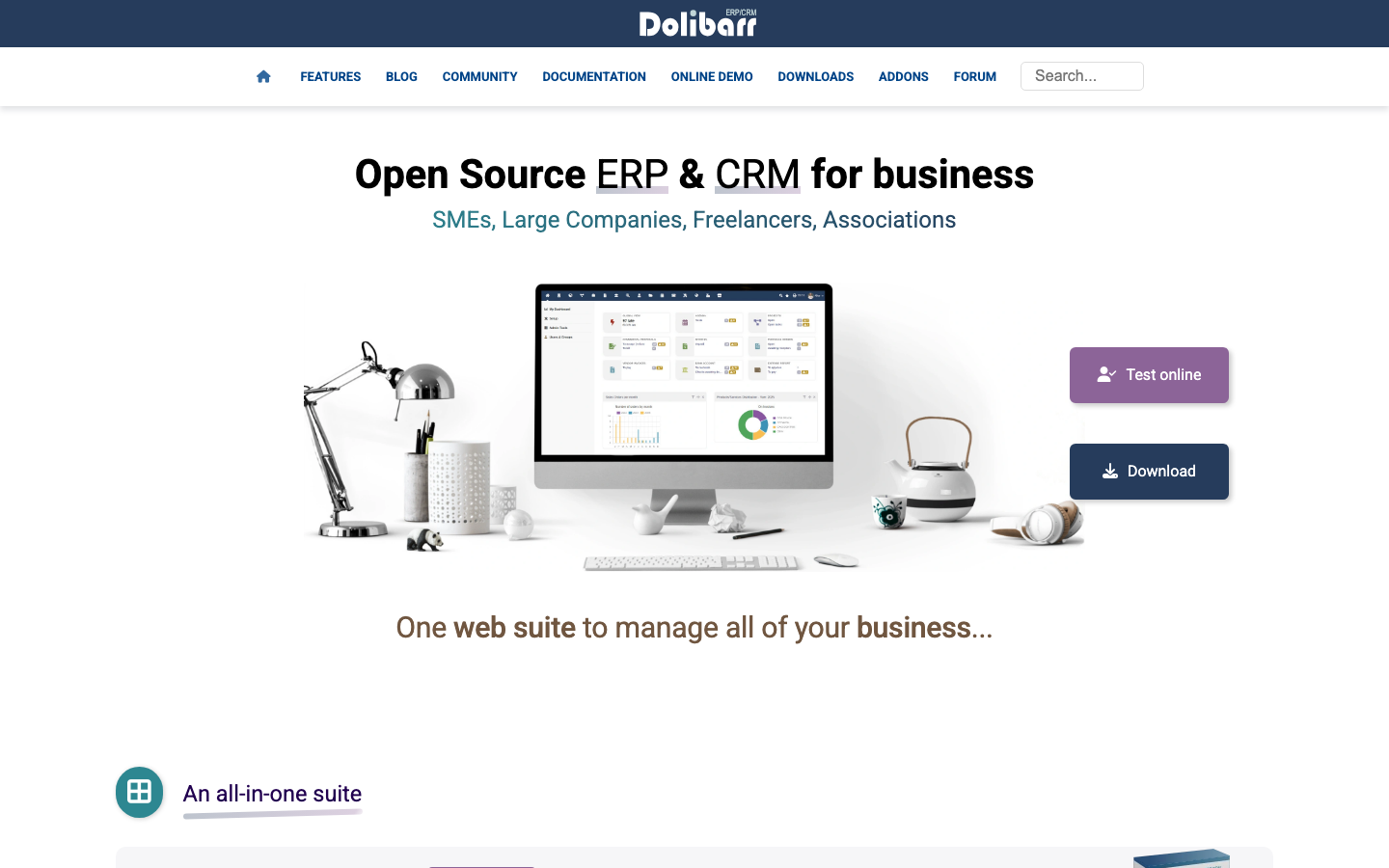
Dolibarr
Dolibarr is a mature, GPL-licensed ERP/CRM system written in PHP. It covers contacts, suppliers, invoices, orders, inventory, accounting, and more—designed for businesses of any size, from freelancers to enterprises.
Pros
- All-in-one ERP + CRM + accounting; no add-on clouds or per-module fees.
- Mature codebase with large community; stable, well-documented, proven in production.
- Runs on standard LAMP stack; easy to deploy and maintain.
Cons
- UI and UX feel dated compared to modern Salesforce or Twenty; less polished.
- PHP-based; less appealing to JavaScript/TypeScript-first teams.
How to choose
For developer teams building a modern CRM from scratch: Twenty is purpose-built for this—clean TypeScript, modern API, no seat licensing.
For mid-market companies needing ERP + CRM unified: ERPNext is the mature, battle-tested choice with deep customization and a strong community.
For teams already on Laravel: Laravel CRM lets you stay in your ecosystem and avoid learning a new framework.
For freelancers and small businesses that need invoicing + CRM: Dolibarr is stable, all-in-one, and requires minimal infrastructure knowledge.
For teams that want no-code agility: NocoBase lets non-technical users build and modify workflows without developer handoffs.
Choose based on your team's technical depth, whether you need ERP features alongside CRM, and how much operational overhead you can absorb. All eight projects eliminate Salesforce's per-seat licensing and proprietary lock-in—the choice is about which trade-offs fit your constraints.