











TL;DR
- Enterprise teams moving away from SAP's cost structure should evaluate Medusa or Saleor—both offer composable, API-first architectures that eliminate per-license fees and reduce implementation timelines.
- For organizations with PHP infrastructure and Symfony expertise, Sylius delivers a headless platform built on familiar frameworks, avoiding the learning curve of a proprietary stack.
- Retailers seeking a self-hosted, no-vendor-lock-in foundation at scale can build on Spree or Vendure, both designed for B2B complexity and marketplace expansion without SAP's six-figure TCO.
Why teams leave SAP Commerce Cloud
A team three months into an SAP Commerce Cloud implementation realizes their consulting bill has already exceeded their annual software budget. The timeline keeps slipping. Changes that should take weeks require specialized SAP consultants at premium rates. The data is locked in SAP's proprietary stack; moving it out later will be painful and expensive.
This is the reality of heavyweight enterprise e-commerce. SAP Commerce Cloud demands high licensing costs, extended deployment cycles, and ongoing dependence on a narrow pool of certified consultants. Total cost of ownership routinely reaches six or seven figures—not just software, but implementation, customization, and the constant need for expert intervention.
The deeper problem is vendor lock-in. SAP's tightly integrated architecture means your code, data, and business logic become bound to their ecosystem. Swapping components, integrating best-of-breed tools, or migrating to a different platform later becomes prohibitively expensive. You're not just paying for software; you're paying for the privilege of being locked in.
Open-source alternatives flip this model. Self-hosting means no per-license fees. Full code ownership means your team can modify, extend, and migrate freely. No proprietary consultants, no surprise implementation costs, and no penalty for wanting to own your own infrastructure. For teams unwilling to accept SAP's cost and complexity, the economics and control of open source are compelling.
Quick comparison
| Name | License | Self-Hosted | Plugin Ecosystem | Headless / API | Best For |
|---|---|---|---|---|---|
| Medusa | MIT | ✓ | Extensive | GraphQL & REST | Flexible, composable architectures; rapid iteration |
| Saleor | BSD-3-Clause | ✓ | Modular | GraphQL | High-performance, API-first commerce |
| Spree | BSD-3-Clause | ✓ | Rich | REST API | B2B, cross-border, marketplace complexity |
| Magento 2 | OSL-3.0 | ✓ | Extensive | REST & GraphQL | Large catalogs; existing Magento users |
| Evershop | GPL-3.0 | ✓ | Growing | REST API | TypeScript-first teams; modern stack preference |
| Sylius | MIT | ✓ | Modular | REST & GraphQL | PHP/Symfony shops; headless-first design |
| Vendure | License not declared | ✓ | Plugin-based | GraphQL | TypeScript teams; NestJS integration |
| Aimeos | MIT | ✓ | Laravel-native | REST & GraphQL | B2B, complex catalogs, Laravel shops |
Top open-source alternatives to SAP Commerce Cloud
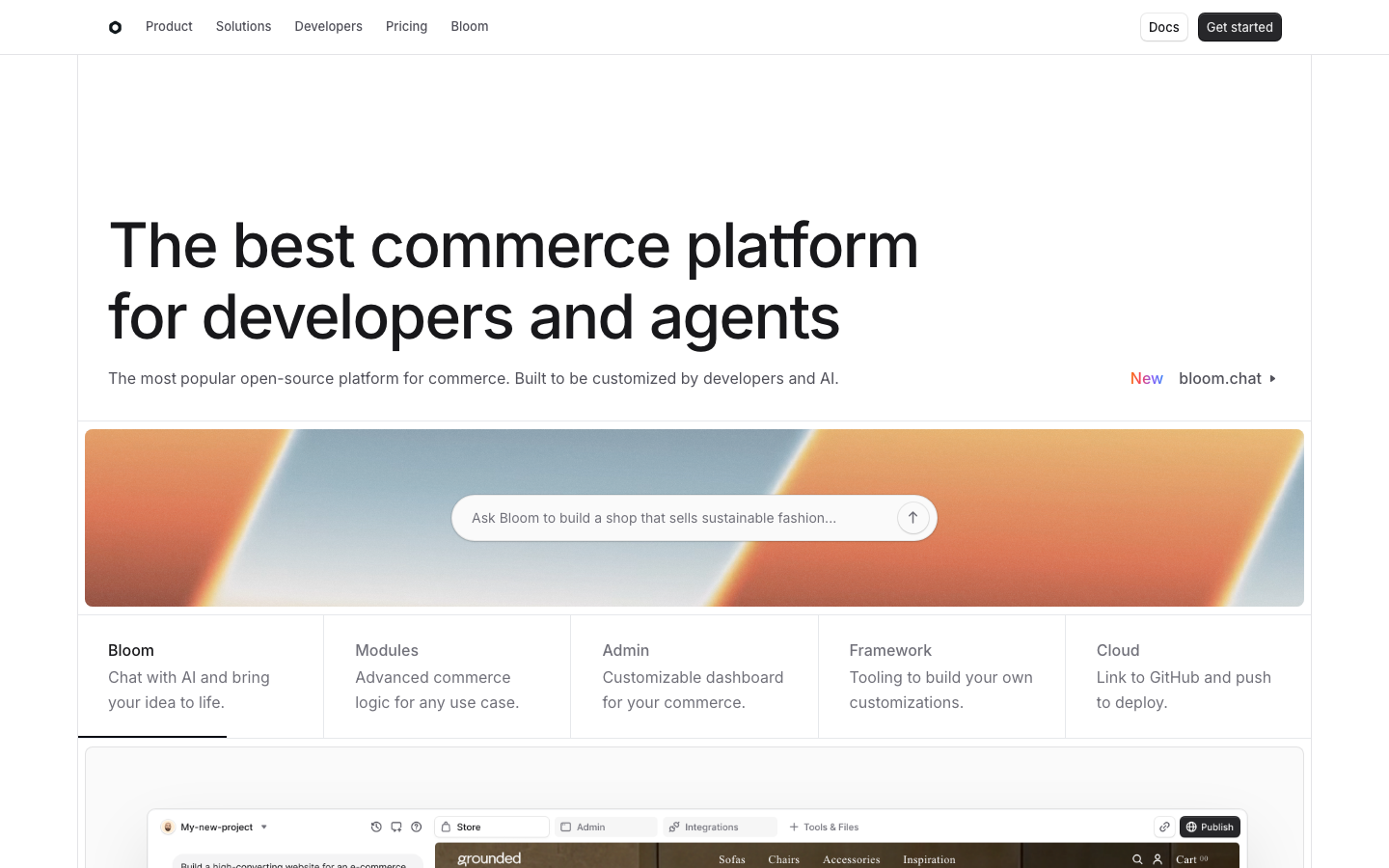
Medusa
The most flexible commerce platform in the open-source ecosystem, Medusa is built on TypeScript and designed for teams that need composability without constraints. It ships with both GraphQL and REST APIs, letting you integrate with any frontend, backend, or third-party service without fighting a monolithic architecture.
Pros:
- Composable, modular design—swap components without ripping out the entire system
- Strong TypeScript ecosystem and developer experience
- Extensive plugin marketplace and active community
Cons:
- Younger project relative to Magento; smaller ecosystem of pre-built extensions
- Requires more hands-on architecture decisions; not a "plug and play" box
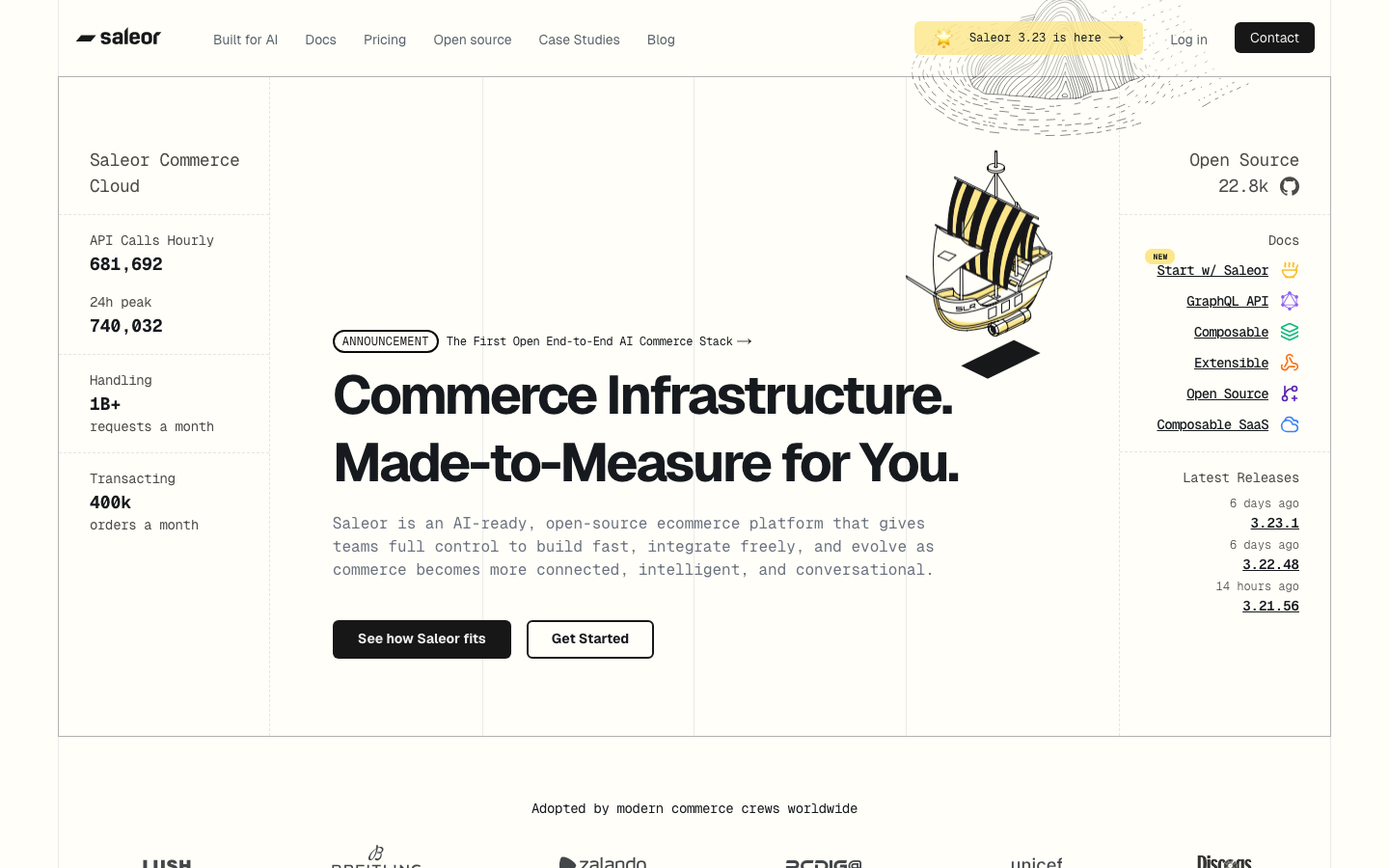
Saleor
A high-performance, API-first commerce platform built in Python with GraphQL as its primary interface. Saleor emphasizes clean architecture and speed, making it a strong choice for teams prioritizing API design and headless flexibility.
Pros:
- GraphQL-native; excellent for mobile-first and omnichannel experiences
- Lightweight and fast compared to monolithic alternatives
- Strong focus on modern development practices
Cons:
- Smaller plugin ecosystem than Magento or Spree
- Python backend may require hiring or training if your team is primarily PHP/Ruby
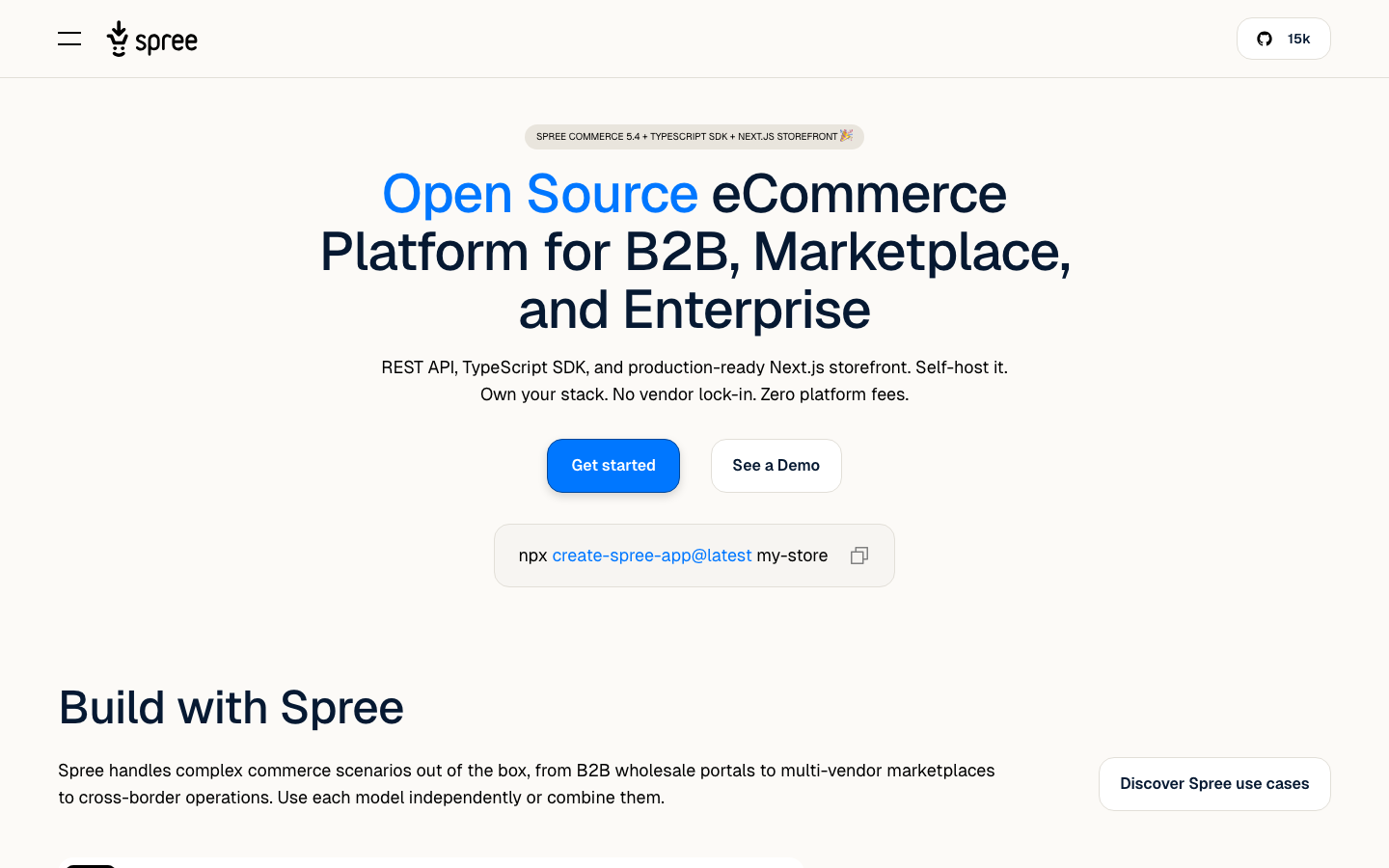
Spree
A mature, open-source headless e-commerce platform built on Ruby with REST API and a TypeScript SDK. Spree is purpose-built for complexity—cross-border commerce, B2B workflows, and marketplace operations—and comes with battle-tested patterns for these scenarios.
Pros:
- Proven in production at scale; deep feature set for B2B and multi-vendor
- REST API with TypeScript SDK; easy frontend integration
- Strong community and years of real-world commerce knowledge
Cons:
- Ruby ecosystem is smaller than PHP; hiring Ruby developers can be harder in some markets
- Requires more customization than a traditional monolith for simple storefronts
Magento 2
The most feature-complete open-source e-commerce platform, Magento 2 is built on PHP and dominates large catalog and enterprise scenarios. It offers both REST and GraphQL APIs and has the largest ecosystem of extensions and integrations in the open-source space.
Pros:
- Enormous ecosystem of extensions, themes, and integrations
- Mature, battle-tested at massive scale
- Strong community and abundant third-party support
Cons:
- Steeper learning curve and higher infrastructure overhead than lighter alternatives
- Contributor License Agreement required for submissions; some perceive as less "open" than other projects
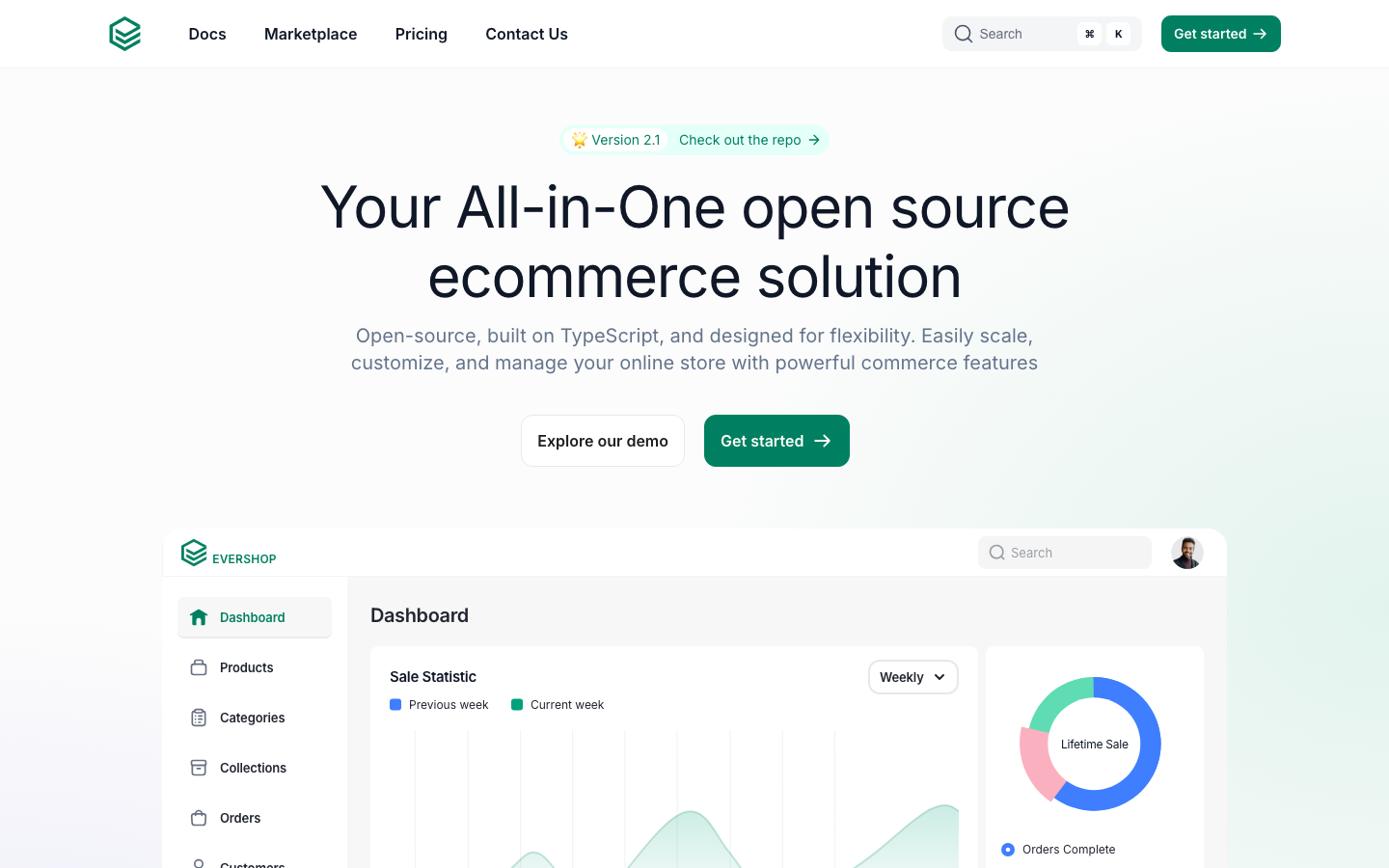
Evershop
A modern, TypeScript-first e-commerce platform designed for teams that want contemporary tooling and developer experience. Evershop emphasizes a clean, minimal core and a growing ecosystem of extensions.
Pros:
- TypeScript throughout; appeals to modern, JavaScript-forward teams
- Lightweight and fast; easy to understand and customize
- GPL-3.0 license; strong copyleft protection
Cons:
- Newer project with smaller ecosystem compared to Magento or Spree
- Fewer pre-built extensions and integrations
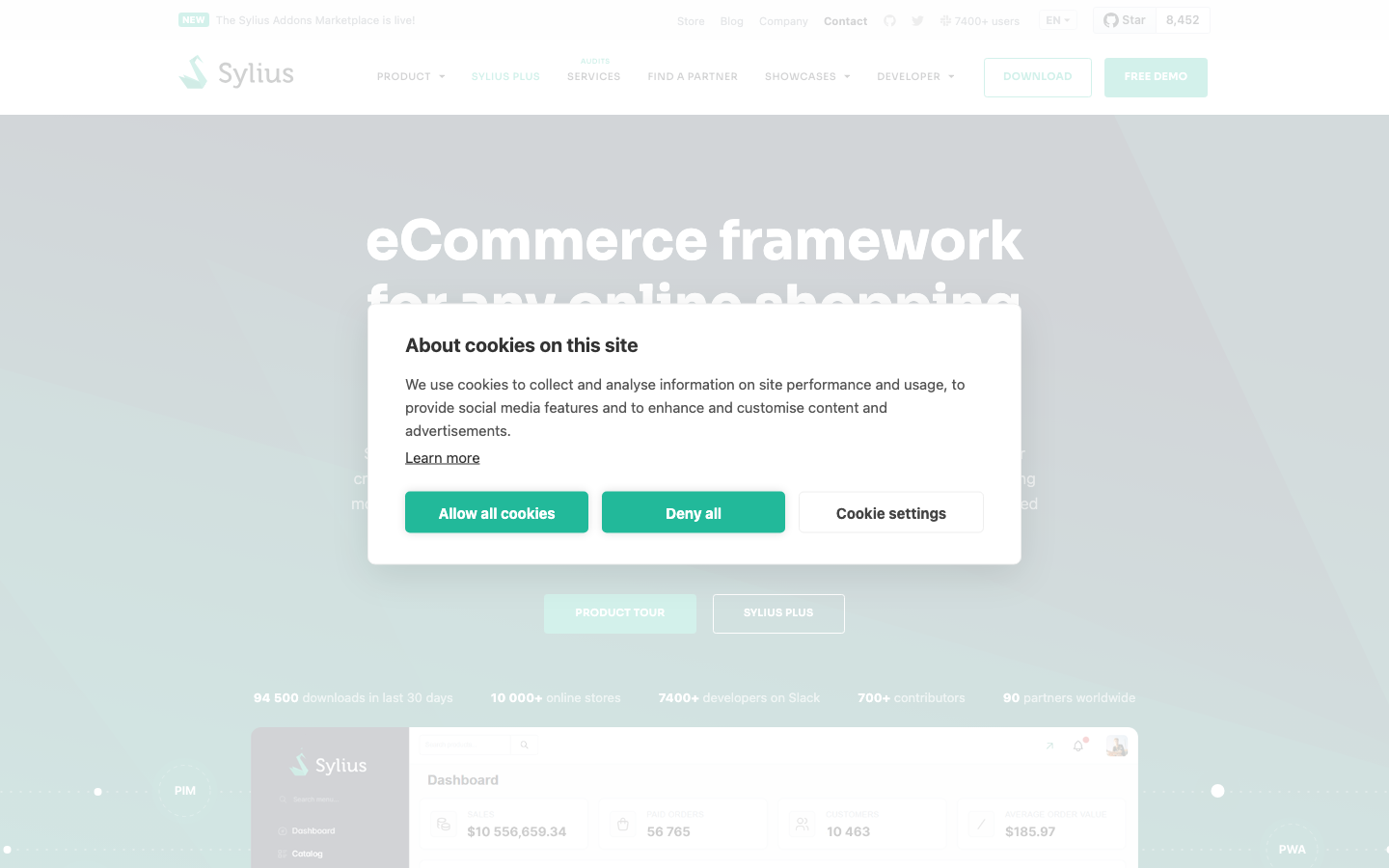
Sylius
A headless e-commerce platform built on top of PHP, Symfony, and API Platform. Sylius is purpose-built for teams that already invest in Symfony and want a commerce layer that respects modern PHP architecture.
Pros:
- Deeply integrated with Symfony and API Platform; leverage existing PHP expertise
- Headless-first design; clean separation of concerns
- Modular architecture; pay for what you use
Cons:
- Smaller community than Magento; fewer third-party extensions
- Requires solid PHP and Symfony knowledge; steeper onboarding for teams new to the framework
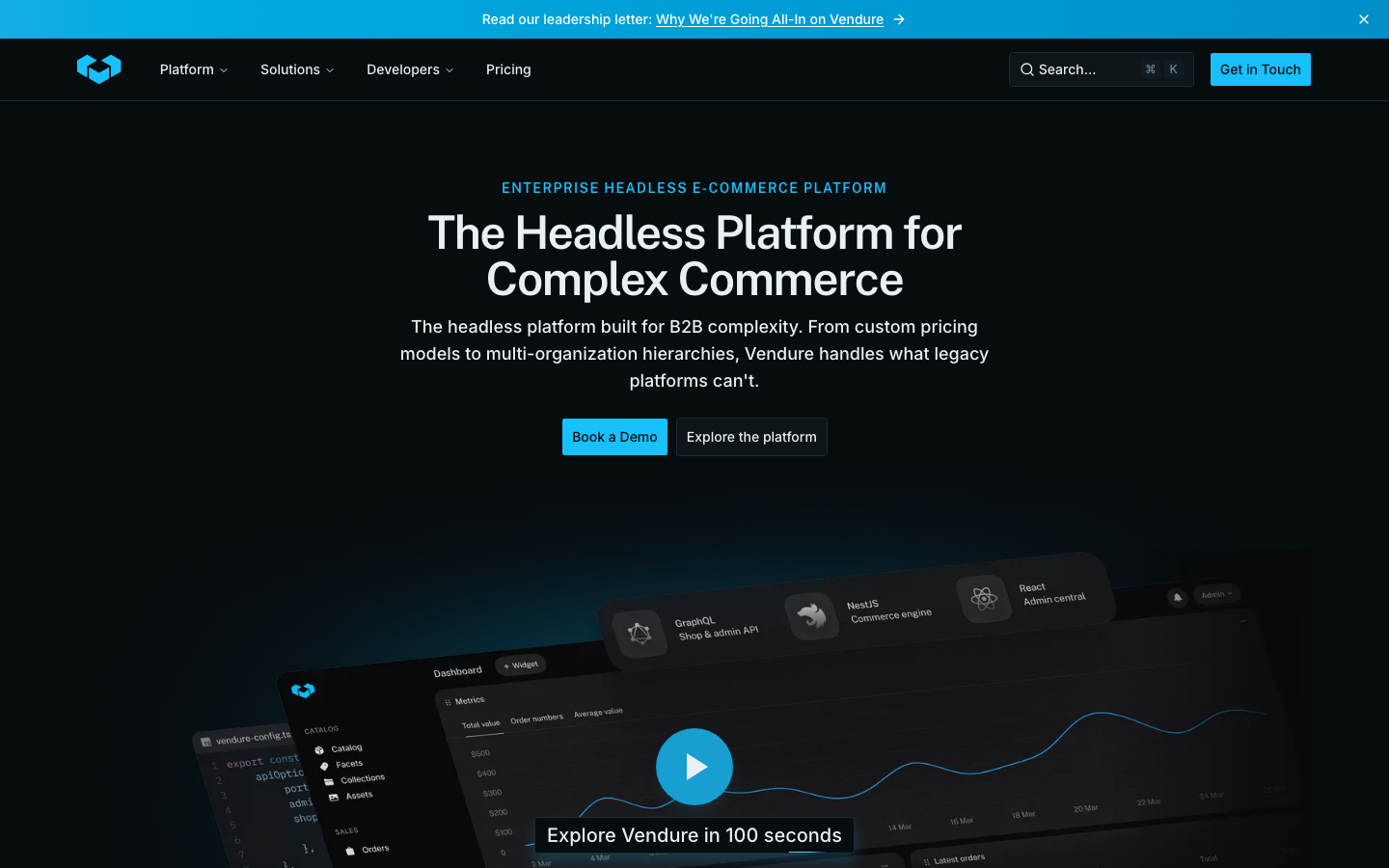
Vendure
A headless commerce framework built with TypeScript, NestJS, React, and GraphQL. Vendure is designed for teams that want a modern, type-safe commerce backend and are willing to invest in a GraphQL-first approach.
Pros:
- Full TypeScript stack; type safety across backend and frontend
- NestJS foundation; excellent for microservices and scaling
- GraphQL-native; elegant API design
Cons:
- License not declared; check project documentation before production use
- Smaller ecosystem and community relative to Magento or Spree
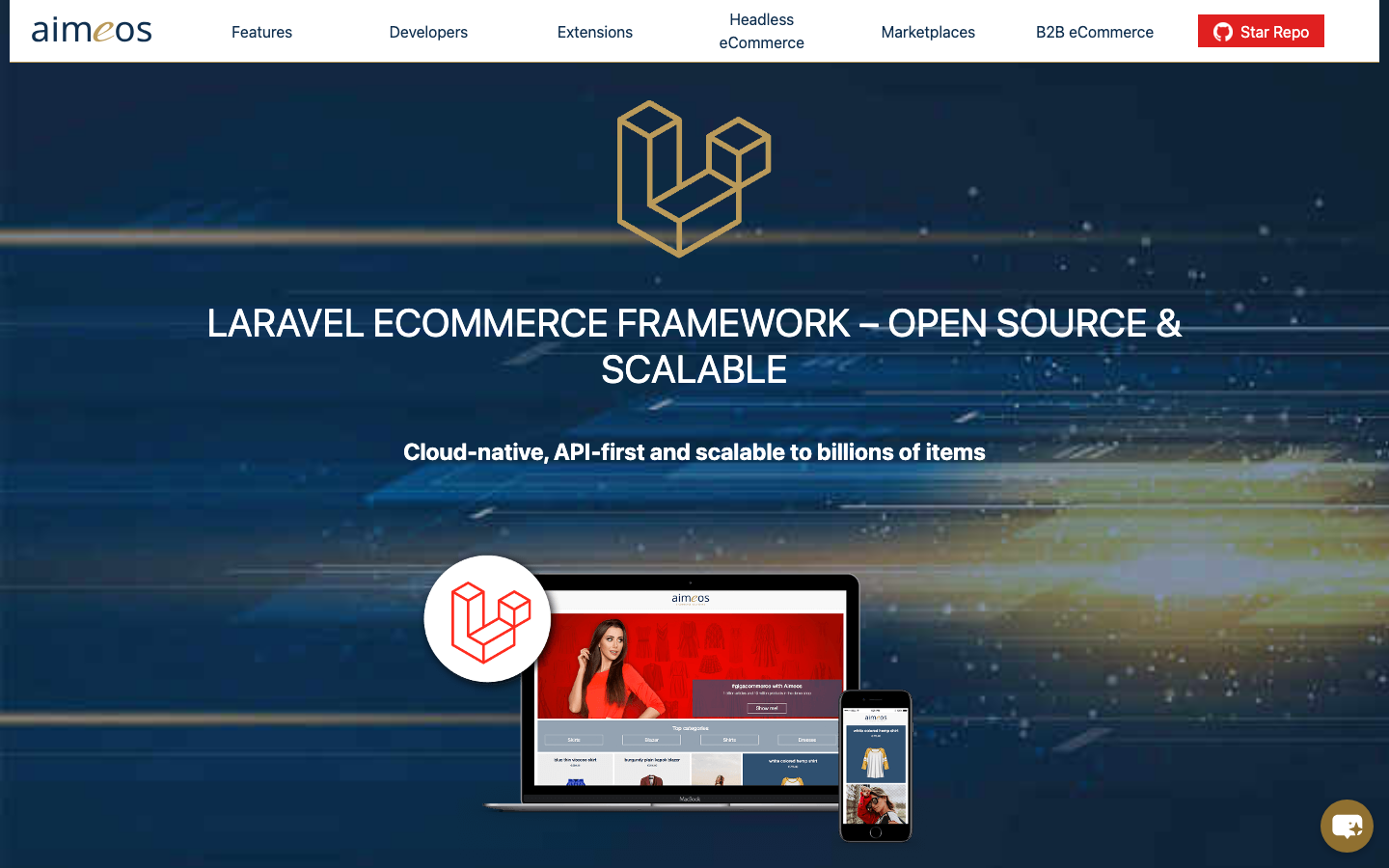
Aimeos
An integrated e-commerce framework built on Laravel 12, Aimeos is optimized for complex B2B applications, large catalogs, and marketplace scenarios. It combines Laravel's simplicity with enterprise commerce features.
Pros:
- Laravel-native; seamless integration for Laravel shops
- Designed for B2B complexity and ultra-fast performance at scale
- REST and GraphQL APIs; flexible frontend options
Cons:
- Smaller community than Magento; fewer off-the-shelf extensions
- Laravel-specific; less useful for teams outside the Laravel ecosystem
How to choose
For pure cost and speed of deployment, start with Medusa or Saleor—both have shallow learning curves and fast time to market. If you have existing PHP infrastructure, Sylius or Aimeos let you leverage what you already know. For B2B complexity and marketplace scenarios, Spree has the deepest feature set and proven patterns. For teams migrating from Magento, Magento 2 offers the smoothest transition and largest ecosystem. If TypeScript is your primary language, Vendure or Evershop align your entire stack. In all cases, the open-source model means you own your data, control your costs, and avoid the six-figure lock-in trap of proprietary platforms.