




TL;DR
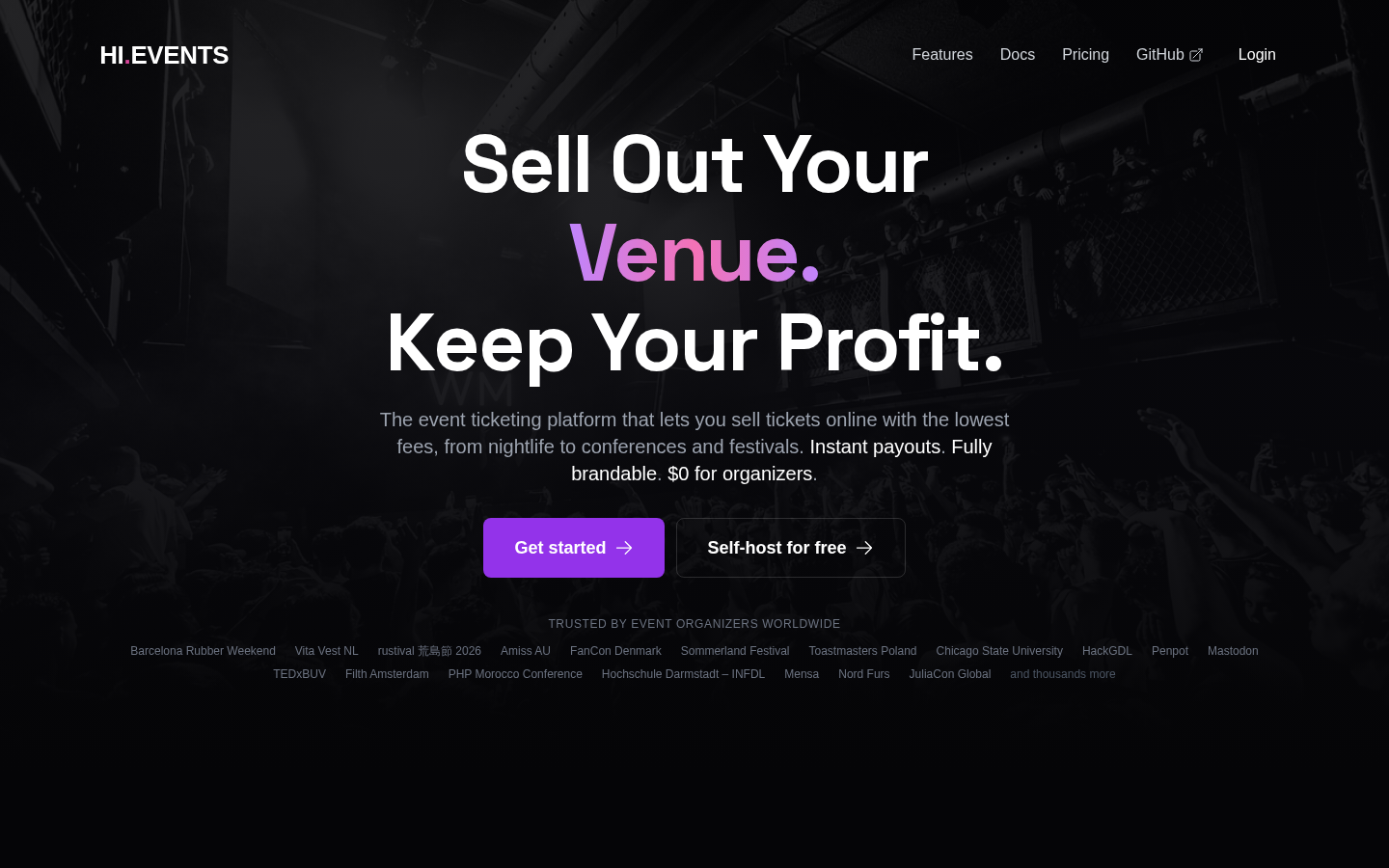
- You need full control of attendee data and zero per-ticket fees: Hi.Events is the most accessible self-hosted ticketing platform, with a modern PHP stack and active development.
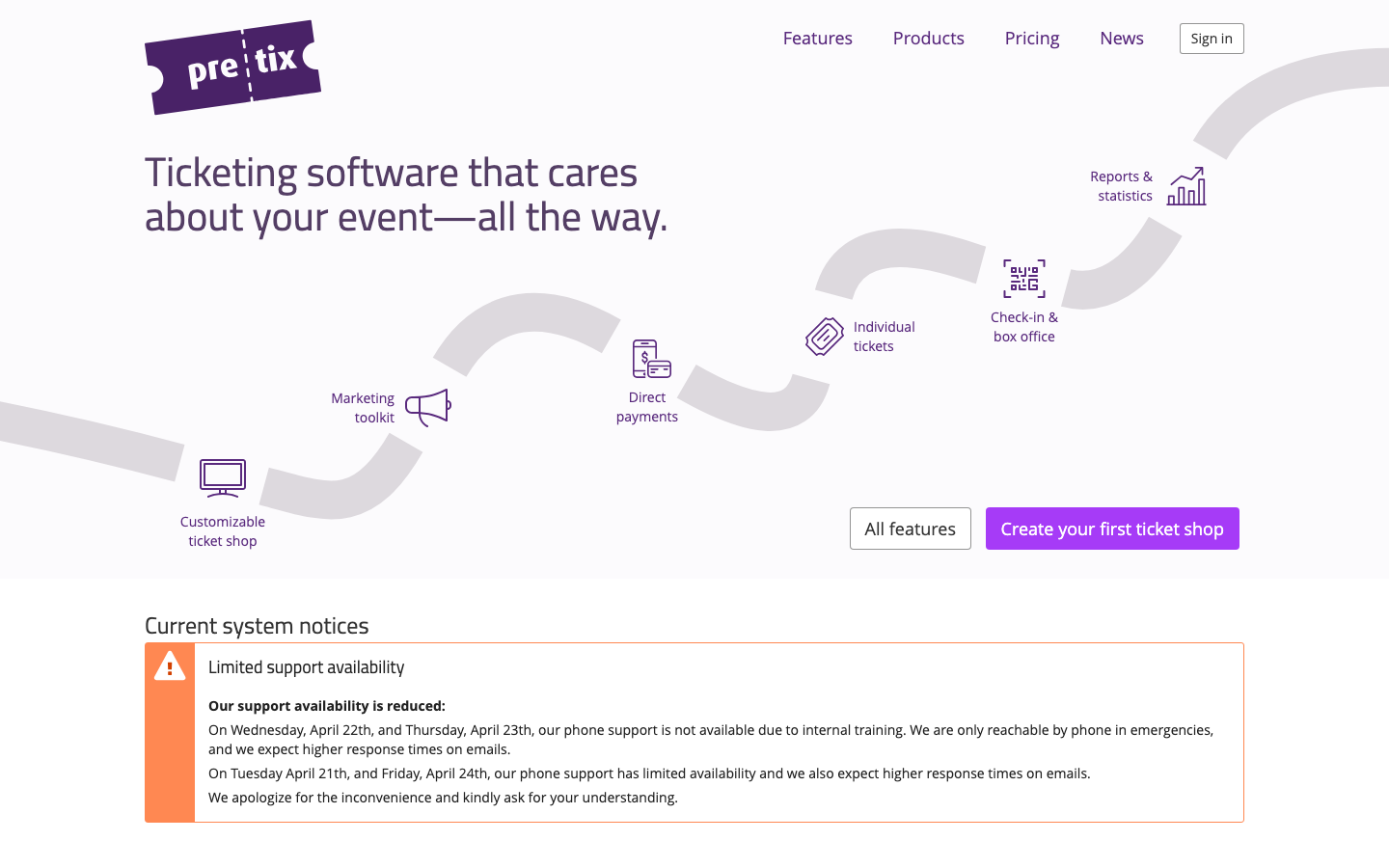
- Running a conference or large multi-day event with speaker management requirements: pretix pairs robust ticketing with the mature Python ecosystem and battle-tested scaling.
- Your primary concern is conference logistics—call for papers, speaker workflows, scheduling—not just ticket sales: pretalx solves the full planning pipeline with minimal ticketing overhead.
Why teams leave Ticket Tailor
Ticket Tailor is a managed platform: you pay per ticket or a subscription, your event pages live on their domain, attendee data flows through their infrastructure, and you're locked into their payment terms. The core friction is ongoing platform fees that scale with every sale, combined with vendor lock-in on attendee relationships and payment routing.
For event organizers running frequent or high-volume events, those per-ticket cuts compound. More fundamentally, you never own the attendee relationship—Ticket Tailor controls the data pipeline, the checkout experience, and the payout flow. If you want to customize the ticket form, integrate with your own CRM, or retain full attendee records without a third party's terms of service, you hit the limits of a managed service.
Self-hosted open-source ticketing platforms eliminate both. You run the software on your own infrastructure, own the attendee database outright, customize the checkout and ticket delivery, and keep 100% of revenue (minus payment processor fees). The trade-off is operational: you manage deployment, updates, and uptime instead of delegating to a vendor.
Quick comparison
| Name | License | Self-Hosted | API / Extensibility | Stack / Language | Best For |
|---|---|---|---|---|---|
| Hi.Events | — | Yes | REST API, plugin architecture | PHP | Modern, accessible ticketing; fast setup |
| pretix | — | Yes | REST API, plugin system, webhooks | Python | High-volume events, festivals, conferences |
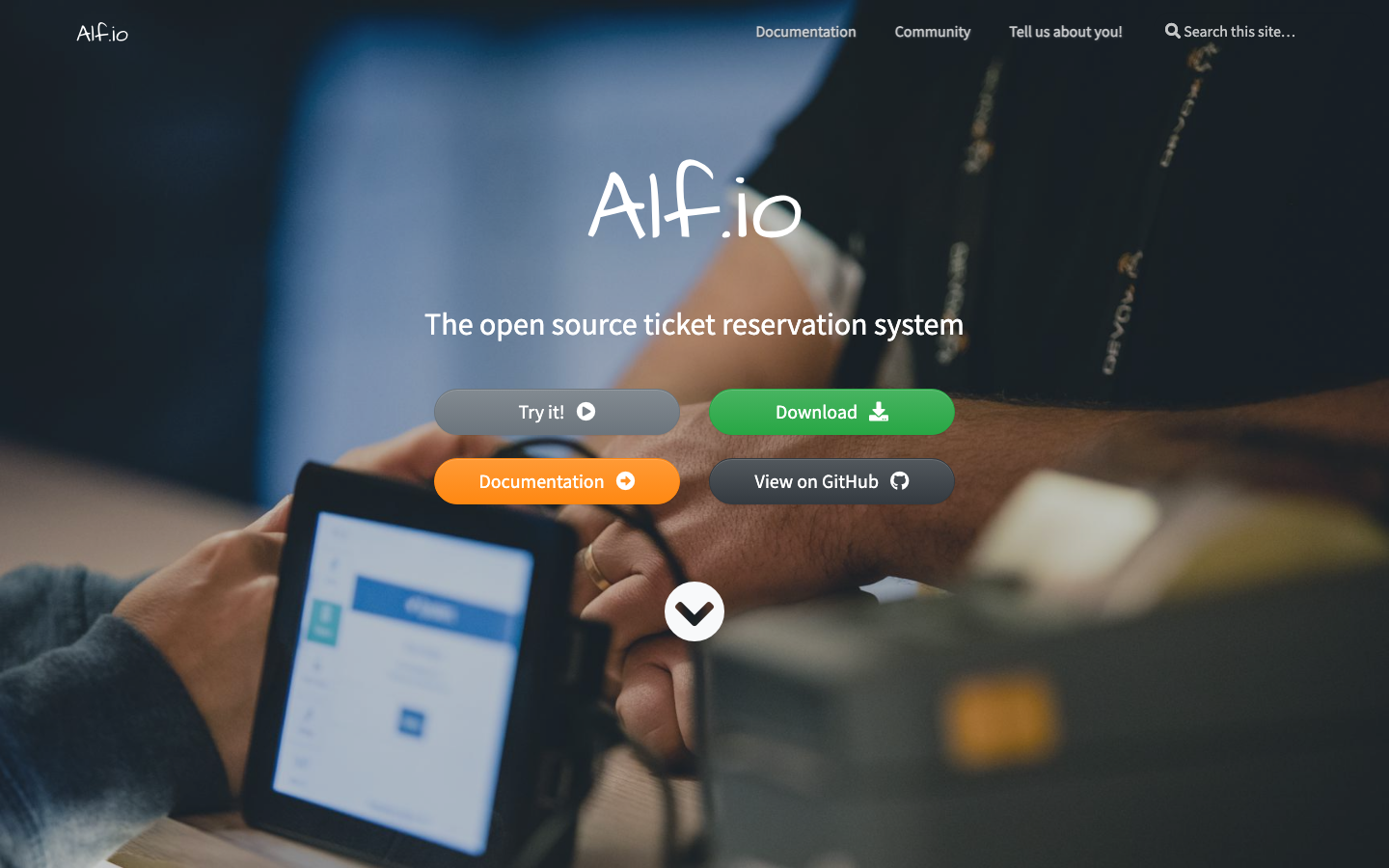
| alf.io | GPL-3.0 | Yes | REST API, extensible architecture | Java | Enterprise deployments, high reliability |
| osem | MIT | Yes | Limited public API | Ruby on Rails | FOSS community conferences, small events |
| pretalx | — | Yes | REST API, plugin system | Python | Conference planning, CfP, speaker workflows |
Top open-source alternatives to Ticket Tailor
Hi.Events
Modern, PHP-based event management and ticketing platform built for concerts, conferences, and general events. Emphasizes ease of deployment and a clean interface for organizers who want to self-host without deep infrastructure expertise.
Pros
- Lowest barrier to entry for self-hosting; PHP runs on most shared hosting and VPS providers
- Active development and growing community (3,600+ stars)
- Built-in event management, ticket customization, and attendee check-in
Cons
- Smaller ecosystem compared to pretix or alf.io; fewer third-party integrations
- Documentation and community support still developing
pretix
Mature, Python-based ticket shop application designed for conferences, festivals, concerts, and large events. Battle-tested at scale with a robust plugin ecosystem and comprehensive REST API.
Pros
- Production-ready; widely deployed at major European conferences and festivals
- Extensive plugin system and webhooks for custom integrations
- Strong payment processor support and multi-currency handling
Cons
- Steeper learning curve for deployment and configuration than Hi.Events
- Requires Python environment; less portable to minimal hosting
alf.io
Java-based open-source ticket reservation system built for conferences, trade shows, and workshops. Designed for reliability and enterprise-grade deployments.
Pros
- GPL-3.0 licensed; strong copyleft guarantees
- Robust, enterprise-ready architecture; handles high-concurrency scenarios
- Comprehensive REST API for deep integrations
Cons
- Requires JVM; higher resource overhead than Python or PHP alternatives
- Smaller community than pretix; fewer public deployments to reference
osem
Ruby on Rails–based open-source event manager tailored specifically to Free and Open Source Software conferences. Lightweight and community-focused.
Pros
- MIT license; permissive and lightweight
- Purpose-built for FOSS conference workflows
- Simpler codebase; easier to fork and customize for niche needs
Cons
- Limited ticketing depth compared to pretix or Hi.Events; weaker payment integration
- Smaller user base; less suitable for high-volume or commercial events
pretalx
Python-based conference planning tool covering call for papers, speaker management, scheduling, and talk organization. Complements ticketing with full event logistics.
Pros
- Solves the full conference planning pipeline—not just tickets, but CfP workflows, speaker communication, and scheduling
- Strong REST API and plugin architecture
- Integrates well with ticketing platforms; can work alongside pretix
Cons
- Primary focus is conference logistics, not general event ticketing; less suitable for concerts or festivals
- Requires more setup and configuration for non-conference use cases
How to choose
Start with event type and scale. If you're selling tickets to concerts, festivals, or one-off events, Hi.Events or pretix are your foundation—choose Hi.Events for simplicity, pretix for scale and plugin depth. If you're running a conference and need speaker management, CfP, and scheduling alongside ticketing, pretalx handles the full workflow (and can integrate with pretix for tickets). For enterprise deployments with high concurrency and strict reliability requirements, alf.io is the hardened choice. If you're organizing a FOSS community conference on a tight budget, osem is purpose-built and lean. In all cases, you're trading managed-service convenience for complete control of data, revenue, and customization.