
















TL;DR
-
Building a headless storefront with modern APIs? Medusa gives you the most flexible architecture (32K stars, TypeScript-first, MIT) to decouple frontend from commerce logic and own your customer experience.
-
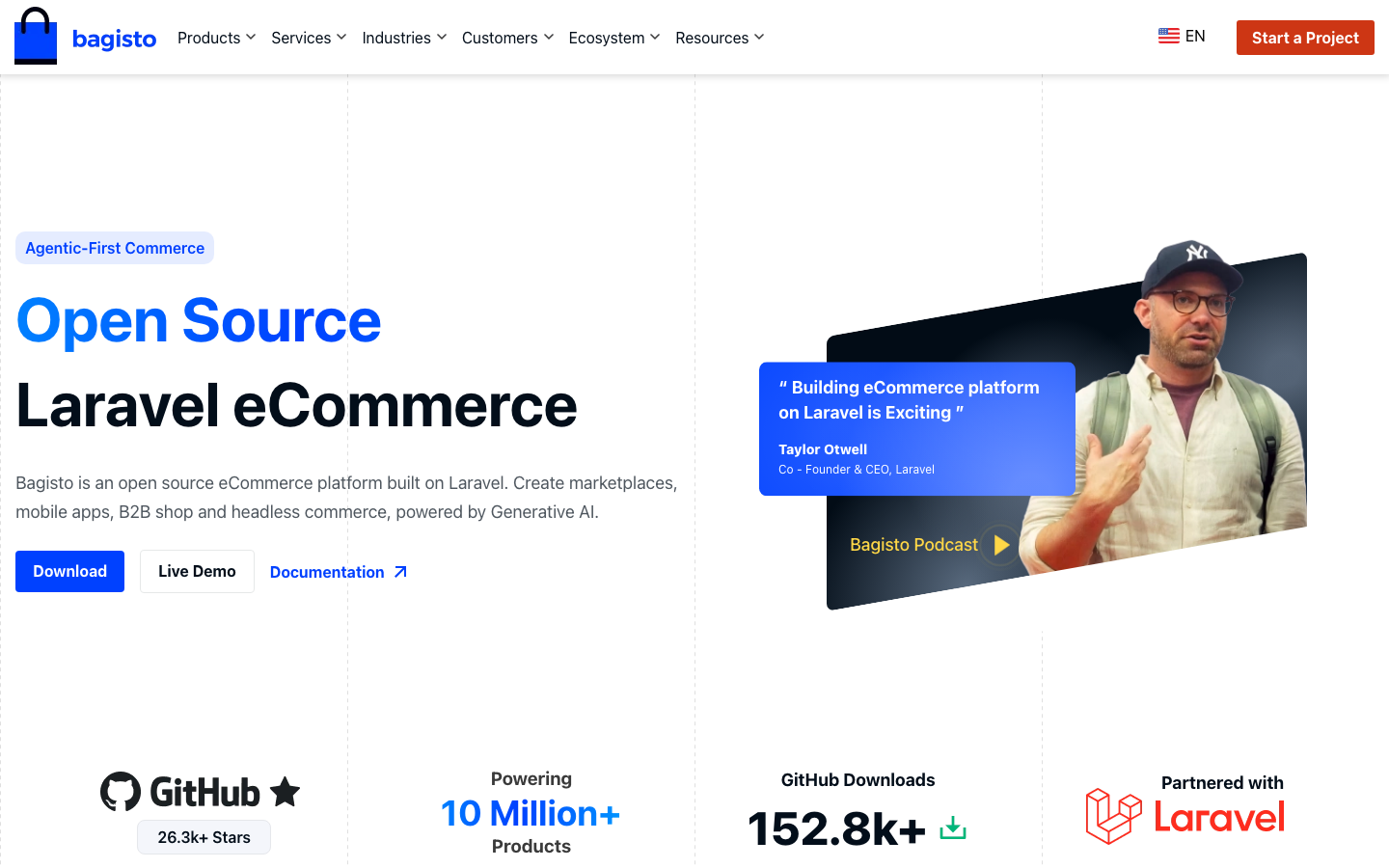
Running a lean Laravel shop without WordPress overhead? Bagisto is purpose-built for PHP teams who want a single, cohesive platform instead of chasing add-on costs and fragmented maintenance.
-
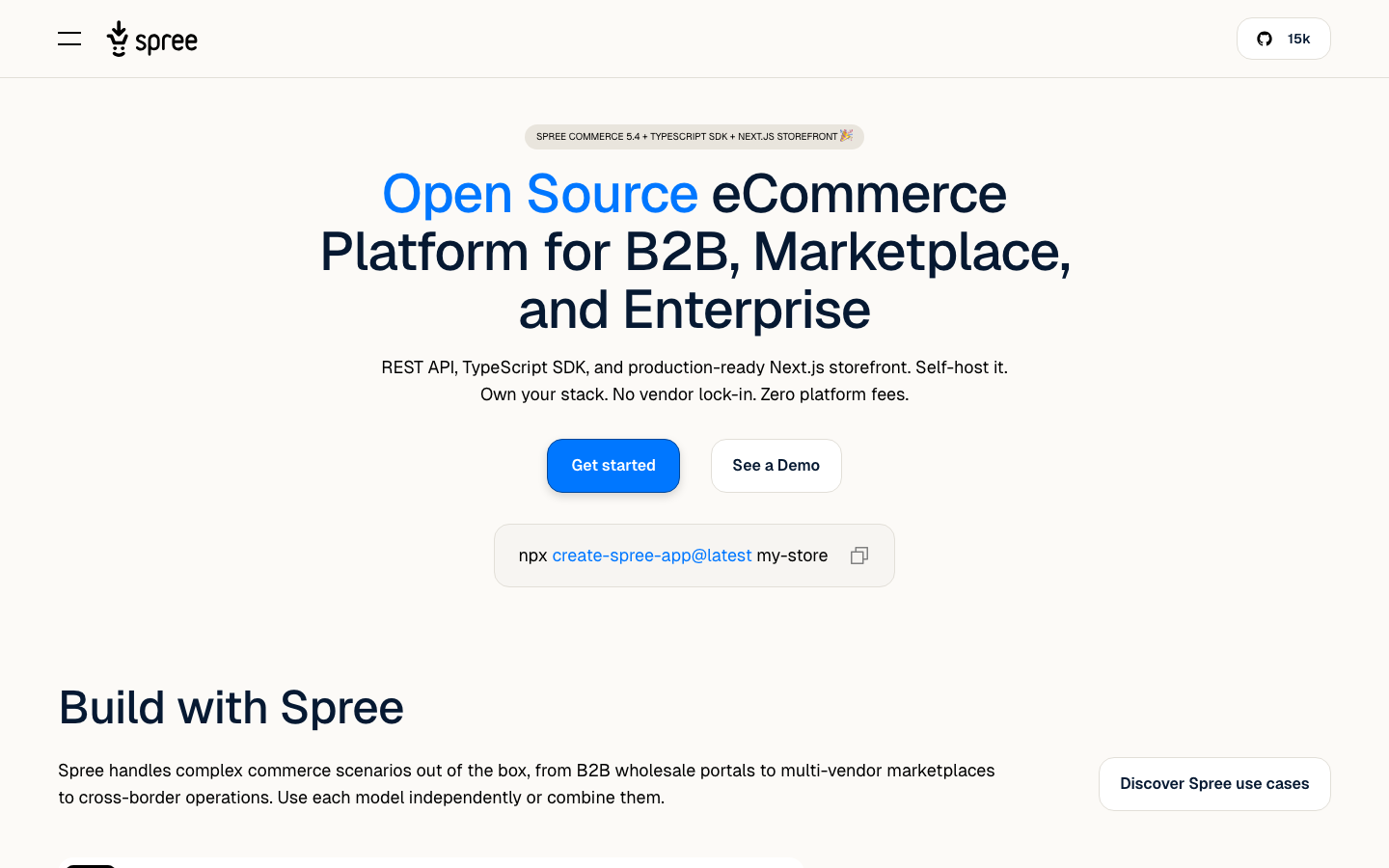
Scaling to marketplace or B2B without transaction-fee bleed? Spree combines a mature REST API, native TypeScript SDK, and Next.js integration so you control payment processing and avoid per-sale leakage to third parties.
Why teams leave WooCommerce
The sticker shock isn't the plugin—it's everything else. WooCommerce charges 2.9% + $0.30 per US card transaction (plus 1% more for international), which compounds relentlessly as order volume grows. A store doing $100K/month in sales bleeds nearly $3K in payment processing alone, every month, with no ceiling.
But payment fees are only the visible cost. Most production stores need paid extensions for shipping logic, checkout customization, subscription management, and marketing automation—each a separate recurring fee, often billed annually. You inherit WordPress's full maintenance and security burden too: core updates, plugin conflicts, theme compatibility, hosting infrastructure decisions that range from $4 to thousands per month depending on scale.
The real trap is lock-in disguised as flexibility. You're building on WordPress, not on commerce infrastructure. Your data lives in MySQL tables managed by a CMS, not a commerce-native platform. SEO and content ownership become entangled with plugin dependencies. Scaling means wrestling with WordPress performance ceilings and paying more for hosting, not upgrading your commerce logic. Teams leave because they want a platform purpose-built for selling, not a CMS with shopping bolted on.
Quick comparison
| Name | License | Self-Hosted | Plugin Ecosystem | Headless / API | Best For |
|---|---|---|---|---|---|
| Medusa | MIT | Yes | Modular plugins | Full REST + GraphQL | Modern, API-first storefronts |
| Bagisto | MIT | Yes | Laravel-native | REST API | Laravel teams, lean ops |
| Saleor | BSD-3-Clause | Yes | GraphQL-first | Full GraphQL | Performance-critical, composable commerce |
| Spree | BSD-3-Clause | Yes | Modular extensions | REST API + TypeScript SDK | B2B, marketplace, Next.js integration |
| Magento 2 | OSL-3.0 | Yes | Adobe ecosystem | REST + GraphQL | Enterprise, complex catalogs |
| Evershop | GPL-3.0 | Yes | Modular plugins | REST API | TypeScript-native, lightweight |
| PrestaShop | License not declared | Yes | Module marketplace | REST API | SMB, familiar admin UX |
| Sylius | MIT | Yes | Symfony/API Platform | Full REST + GraphQL | PHP/Symfony teams, headless-first |
Top open-source alternatives to WooCommerce
Medusa
The world's most flexible commerce platform, built on TypeScript with a modular architecture designed for headless commerce from the ground up. Medusa decouples your storefront from commerce logic, letting you run multiple frontends (web, mobile, PWA) against a single API backend.
Pros
- Native REST and GraphQL APIs; no plugin layer needed.
- Modular plugin system designed for extensibility, not patching.
- Strong TypeScript ecosystem and modern developer experience.
Cons
- Smaller ecosystem of pre-built integrations compared to WordPress-era platforms.
- Requires self-hosting and infrastructure ops (no managed SaaS option).
Bagisto
A free, open-source Laravel e-commerce platform purpose-built for PHP teams who want a cohesive, modern alternative to WordPress + WooCommerce. Bagisto ships as a complete package—no plugin hunting, no fragmented add-on costs.
Pros
- Single, unified codebase; no plugin tax or recurring extension fees.
- Laravel-native, so familiar to PHP/Symfony developers.
- Lightweight compared to Magento, easier to customize and deploy.
Cons
- Smaller community and fewer third-party integrations than WooCommerce.
- Headless API support exists but is less mature than Medusa or Saleor.
Saleor
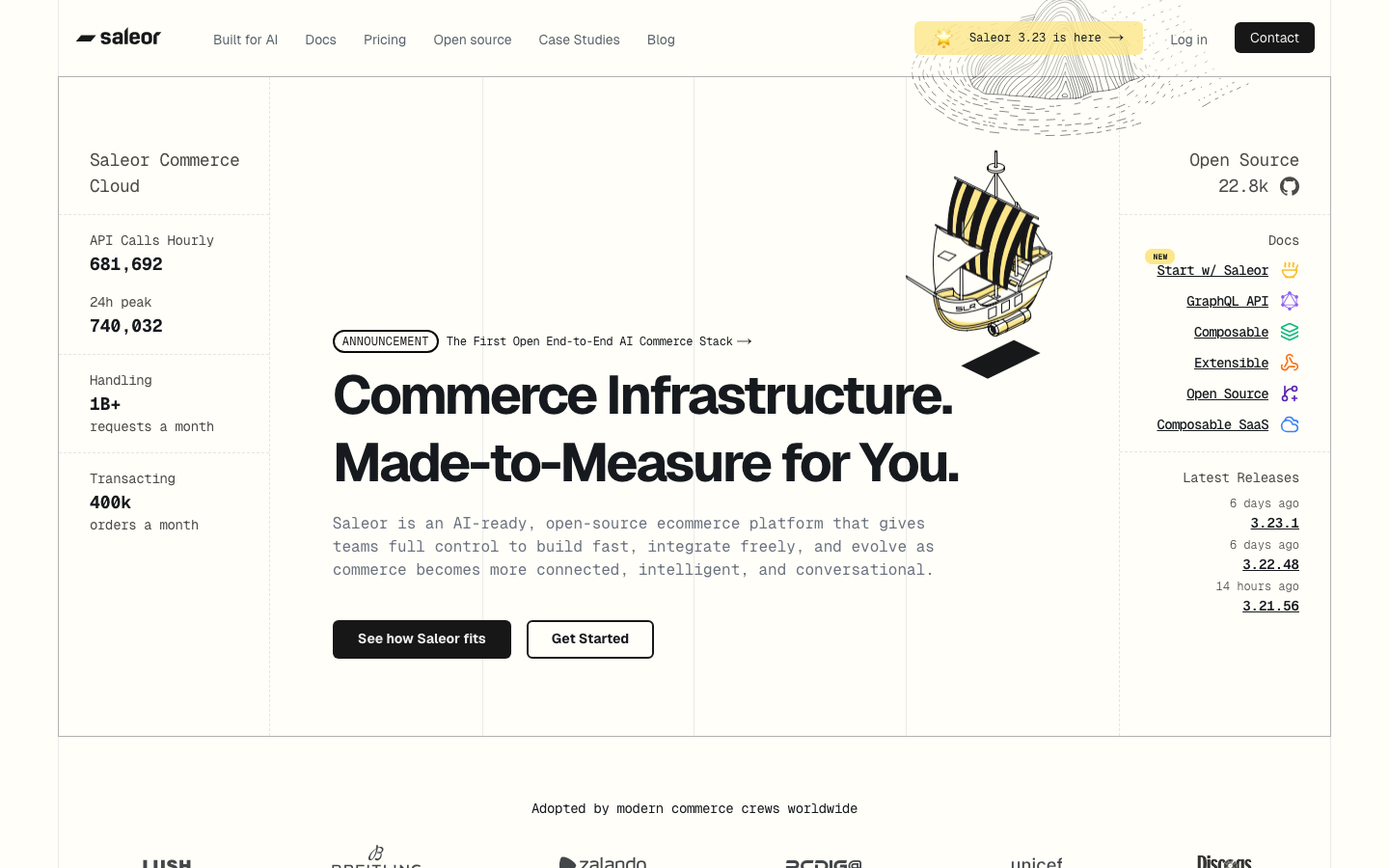
A high-performance, composable commerce API built in Python, designed for headless and composable architectures. Saleor prioritizes GraphQL-first design and scales well for marketplace and multi-vendor scenarios.
Pros
- GraphQL-native with strong performance; ideal for complex queries and real-time data.
- Excellent for marketplace and B2B use cases with multi-vendor support.
- Python backend pairs well with modern frontend frameworks.
Cons
- Steeper learning curve for teams unfamiliar with GraphQL.
- Smaller community than PHP-based alternatives; fewer off-the-shelf modules.
Spree
An open-source headless e-commerce platform with a mature REST API, TypeScript SDK, and first-class Next.js storefront support. Built for cross-border, B2B, and marketplace commerce where control over payment processing and fulfillment is critical.
Pros
- Native TypeScript SDK and Next.js integration reduce frontend friction.
- Battle-tested REST API; mature Ruby backend for stability.
- Strong B2B and marketplace features out of the box.
Cons
- Ruby ecosystem is smaller than PHP or Python; fewer developers in the pool.
- Requires more upfront investment than lightweight alternatives like Bagisto.
Magento 2
A powerful, open-source e-commerce platform (OSL-3.0 license) built in PHP, designed for complex, enterprise-scale catalogs and operations. Magento 2 is the successor to the original Magento and remains the choice for large retailers.
Pros
- Mature ecosystem with extensive third-party extensions and integrations.
- Strong multi-store, multi-language, and complex catalog support.
- REST and GraphQL APIs for headless commerce.
Cons
- High operational overhead; requires significant PHP expertise and infrastructure.
- Steep learning curve and longer implementation timelines than lighter platforms.
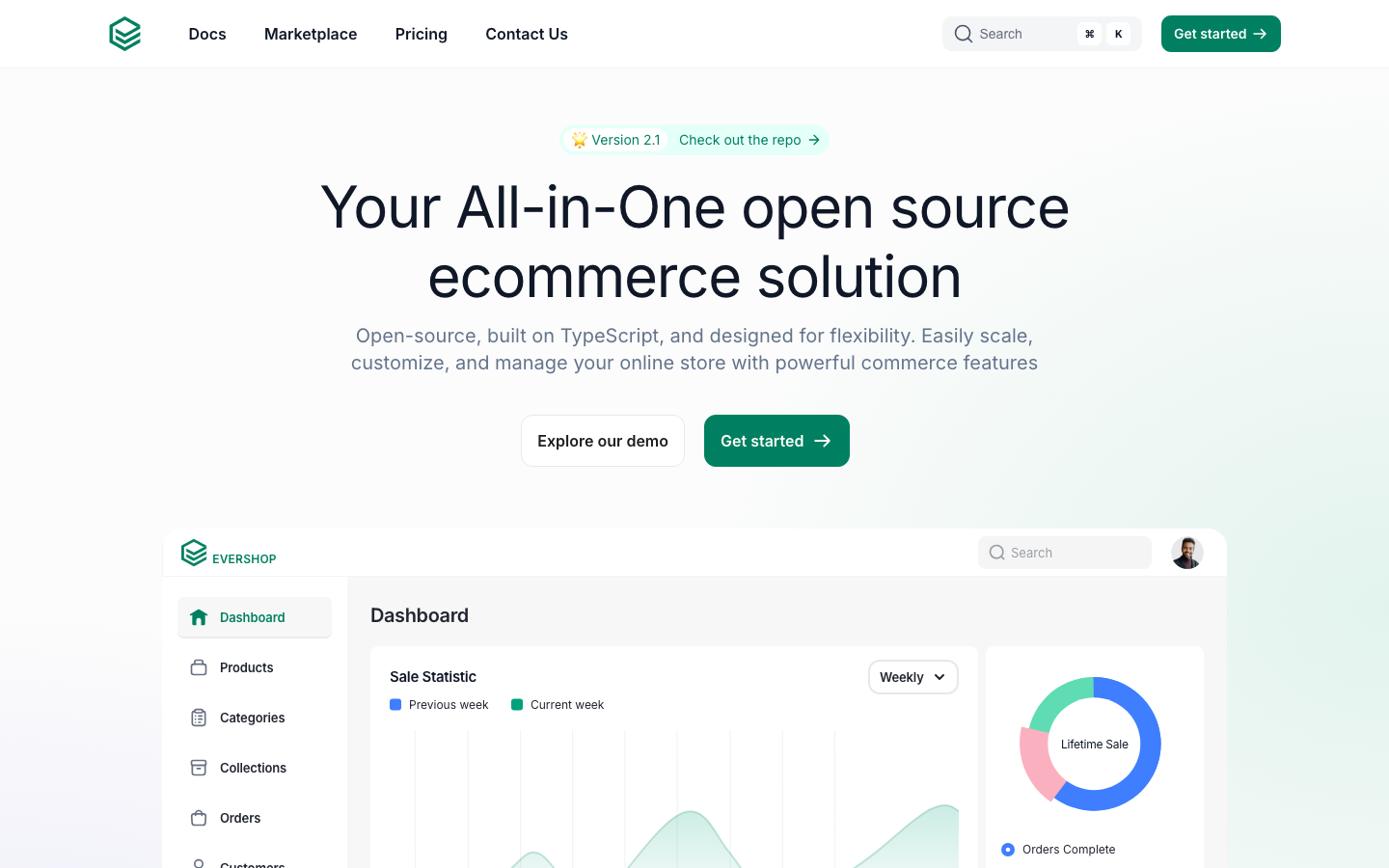
Evershop
A lightweight, TypeScript-native e-commerce platform built for simplicity and rapid deployment. Evershop is a good fit for teams wanting modern developer experience without the complexity of enterprise platforms.
Pros
- TypeScript throughout; modern, familiar tooling for JavaScript teams.
- Minimal dependencies; fast to self-host and customize.
- GPL-3.0 license; fully open and transparent.
Cons
- Newer project with a smaller community and fewer battle-tested integrations.
- Less suitable for complex multi-vendor or marketplace scenarios.
PrestaShop
A widely-adopted, open-source e-commerce platform with a familiar admin interface and a large module marketplace. PrestaShop is popular among small and medium-sized businesses for its ease of use and localization support.
Pros
- Large, active community and extensive module marketplace.
- Intuitive admin UI; low barrier to entry for non-technical users.
- Strong localization and multi-currency support.
Cons
- Monolithic architecture; less suitable for headless or API-first commerce.
- Performance and scalability challenges at high order volumes.
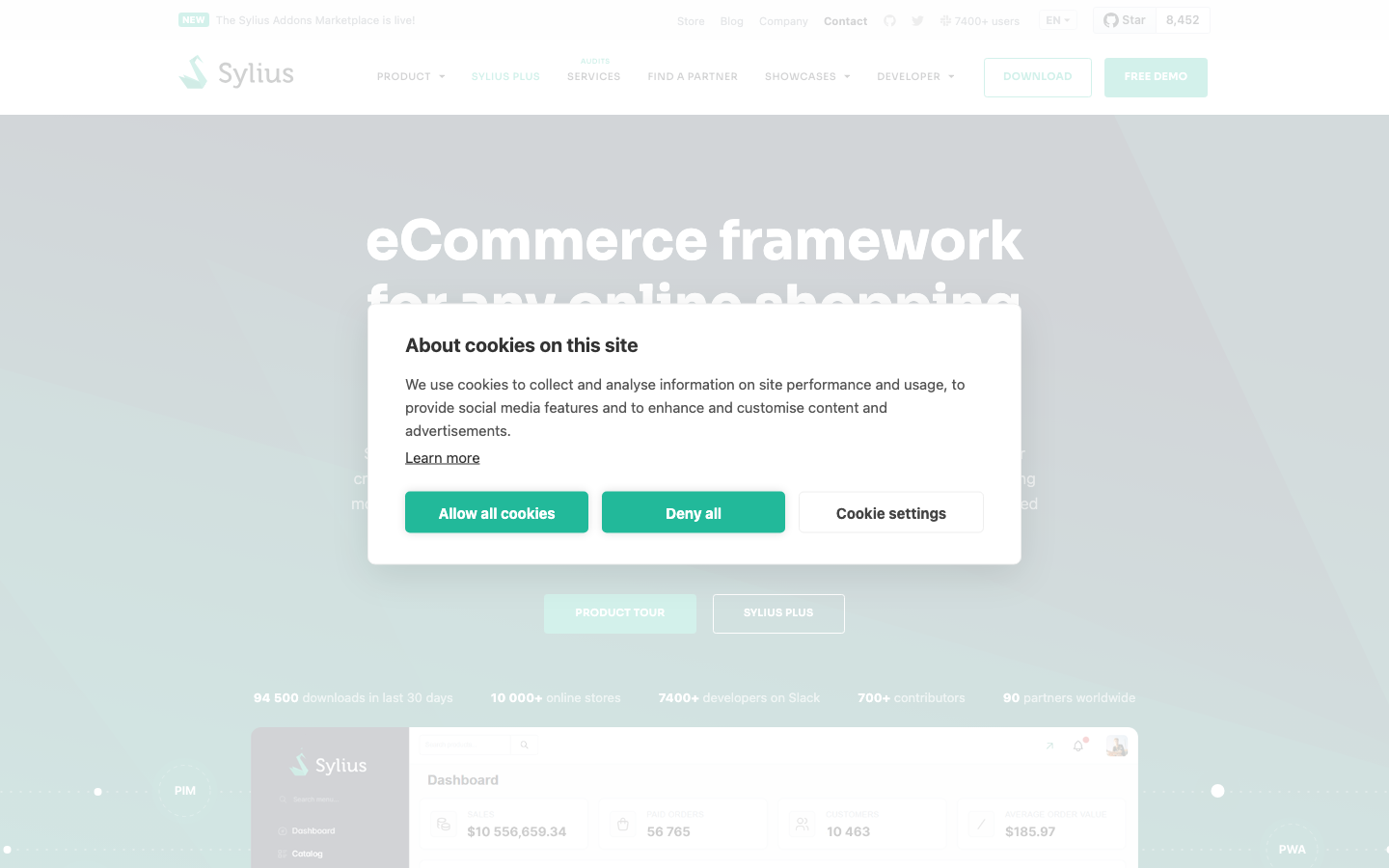
Sylius
A headless, open-source e-commerce platform built on PHP, Symfony, and API Platform. Sylius is architected for flexibility and composability, making it ideal for teams who want a modern, API-first commerce backend without WordPress baggage.
Pros
- API-first design; native REST and GraphQL with strong Symfony foundation.
- Modular architecture; swap components without plugin lock-in.
- Excellent for teams with PHP/Symfony expertise.
Cons
- Smaller ecosystem than Magento or PrestaShop; fewer pre-built modules.
- Requires more technical depth than WordPress-style platforms.
How to choose
Start with your team's language and infrastructure comfort: PHP teams should evaluate Bagisto or Sylius; JavaScript/TypeScript teams should consider Medusa or Evershop; Python shops should explore Saleor. If you're building a headless storefront or marketplace, prioritize Medusa, Saleor, or Spree—all designed for API-first commerce. For enterprise scale with complex catalogs, Magento 2 remains the most mature choice, though it demands significant ops investment. If you want to escape WordPress lock-in and plugin sprawl without sacrificing simplicity, Bagisto or PrestaShop offer cohesive, self-contained platforms. Evaluate hosting and payment processing costs early: all eight projects let you own payment processing and avoid per-transaction leakage, which is the key financial win over WooCommerce.