














TL;DR
- For classroom and institutional webinars: BigBlueButton is purpose-built for virtual classes with unlimited session length and institutional-grade features, eliminating Zoom's 40-minute cap on group calls.
- Teams prioritizing end-to-end encryption and decentralized control: Jitsi Meet offers true E2E encryption by default and can run entirely on your own infrastructure, closing the privacy gap Zoom's 2020 incidents exposed.
- Organizations needing peer-to-peer simplicity without server overhead: MiroTalk delivers WebRTC video conferencing on P2P architecture, removing intermediary access to encrypted streams and scaling without heavy infrastructure costs.
Why teams leave Zoom
Zoom's free tier caps group meetings at 40 minutes—a hard limit that forces even small teams toward paid plans immediately. But cost is only the surface problem. Zoom's per-user pricing ($13.33–$16.99/month for Pro, scaling to $29/month for Business Plus) becomes punishing at organizational scale, and renewal increases in 2024–2025 have made budgeting unpredictable. Beyond pricing, encryption is the core issue: Zoom does not enable true end-to-end encryption by default, meaning Zoom itself can access meeting content. The company's 2020 security incidents—routing data through Chinese servers, unauthorized Facebook data sharing, and widespread Zoombombing attacks—resulted in an $85M settlement and persistent trust erosion. Recent vulnerability disclosures (30 CVEs in 2025, including one critical flaw with CVSS 9.6) underscore that centralized platforms carry inherent risk. Organizations seeking vendor independence, predictable costs, and cryptographic guarantees increasingly see open-source alternatives as non-negotiable.
Quick comparison
| Name | License | Self-Hosted | Federation | E2E Encryption | Best For |
|---|---|---|---|---|---|
| Jitsi Meet | Apache-2.0 | ✓ | ✓ | ✓ (default) | Privacy-first teams, decentralized deployments |
| Element Web | AGPL-3.0 | ✓ | ✓ | ✓ | Matrix-based async + sync collaboration |
| Screego | GPL-3.0 | ✓ | — | ✓ | Developer screen sharing, pair programming |
| BigBlueButton | LGPL-3.0 | ✓ | — | — | Educational institutions, webinars |
| Janus Gateway | GPL-3.0 | ✓ | — | — | Custom WebRTC infrastructure, SFU backends |
| MiroTalk | AGPL-3.0 | ✓ | — | ✓ | P2P video calls, minimal server footprint |
| Jitsi Videobridge | Apache-2.0 | ✓ | — | — | Scalable SFU for large multi-party calls |
| MiroTalk SFU | AGPL-3.0 | ✓ | — | ✓ | SFU-based conferencing, Zoom alternative |
Top open-source alternatives to Zoom
Jitsi Meet
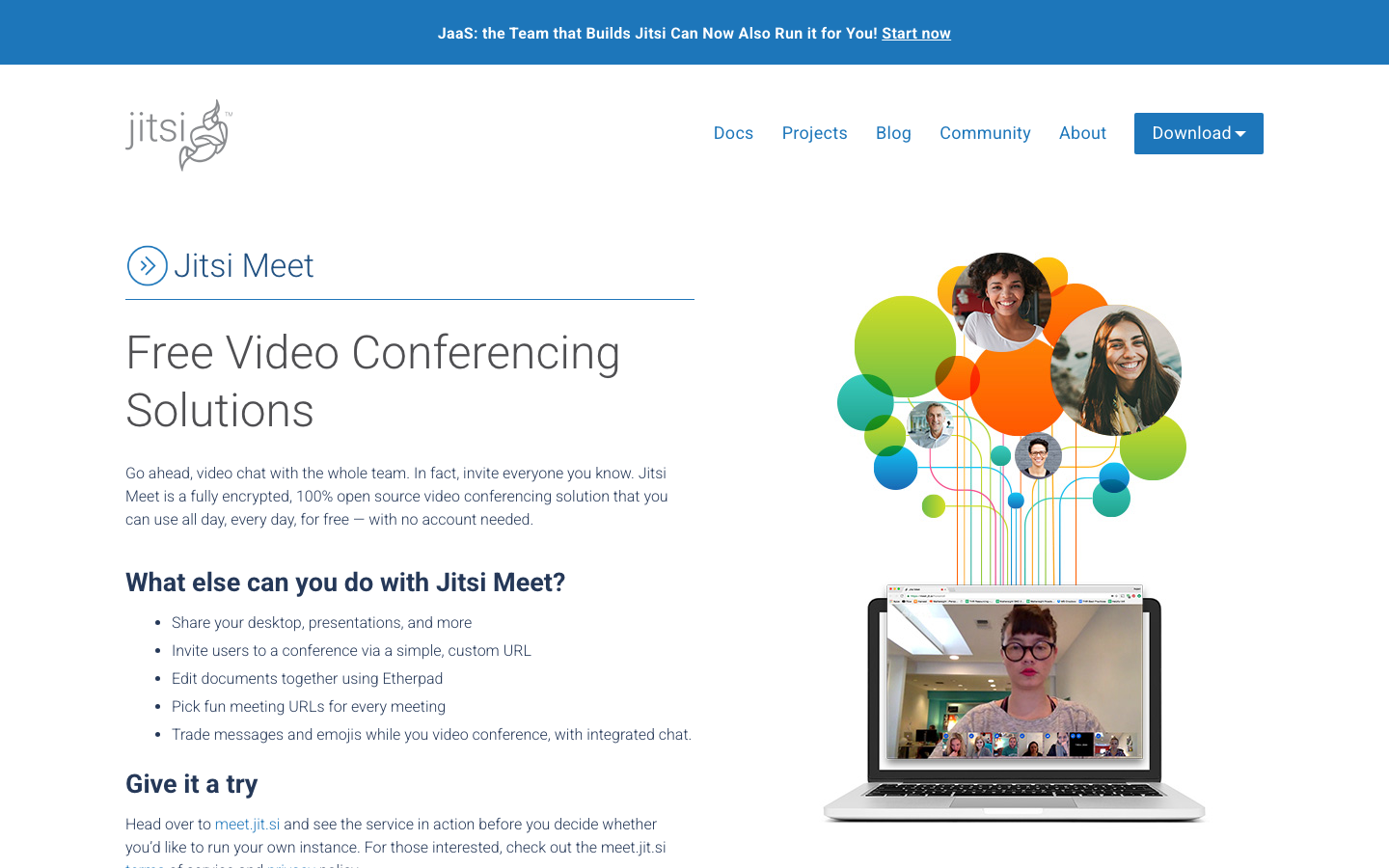
Jitsi Meet is a full-featured video conferencing platform with end-to-end encryption enabled by default, no artificial meeting-duration limits, and a clean web interface that requires no account signup. Deploy it on your own servers or use the public instance; it federates across domains and integrates into web applications.
Pros:
- True E2E encryption out of the box, closing Zoom's privacy gap
- Unlimited meeting duration and participant count on self-hosted instances
- Active development (29k+ stars) with strong community and enterprise support
Cons:
- Self-hosting requires infrastructure management and Linux system knowledge
- Audio/video quality depends on your server capacity and network
Element Web
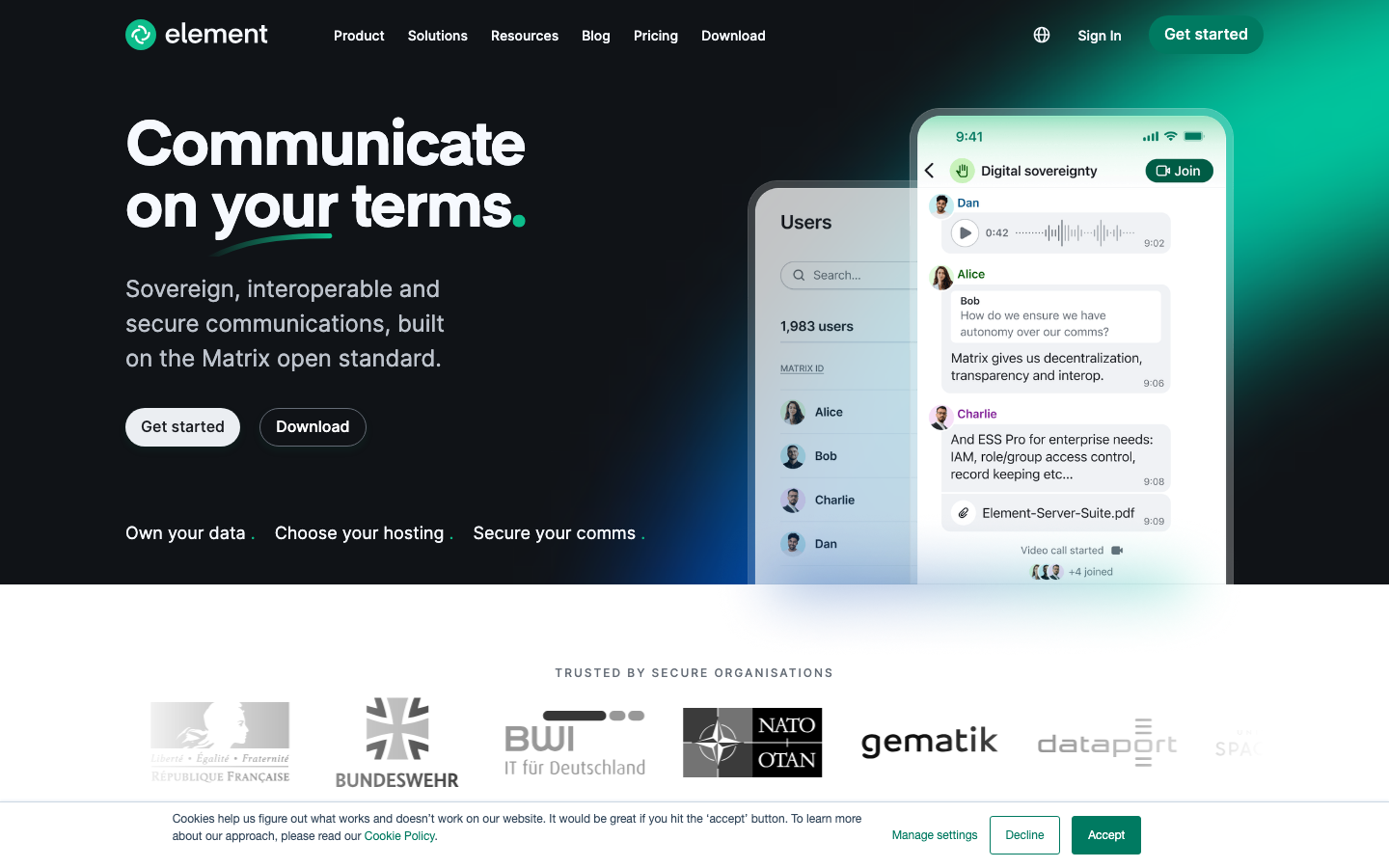
Element is a glossy Matrix client that unifies real-time chat, voice, and video calling on an open, federated protocol. It's not video-first like Zoom, but it's a complete collaboration suite with message history, file sharing, and end-to-end encryption across all communication modes.
Pros:
- Federated protocol (Matrix) means no single vendor lock-in; interoperate across servers
- Full message history and compliance audit trails
- E2E encryption standard for all channels
Cons:
- Steeper learning curve than Zoom; requires understanding of Matrix homeservers
- Video performance is secondary to chat; not optimized for large webinars
Screego
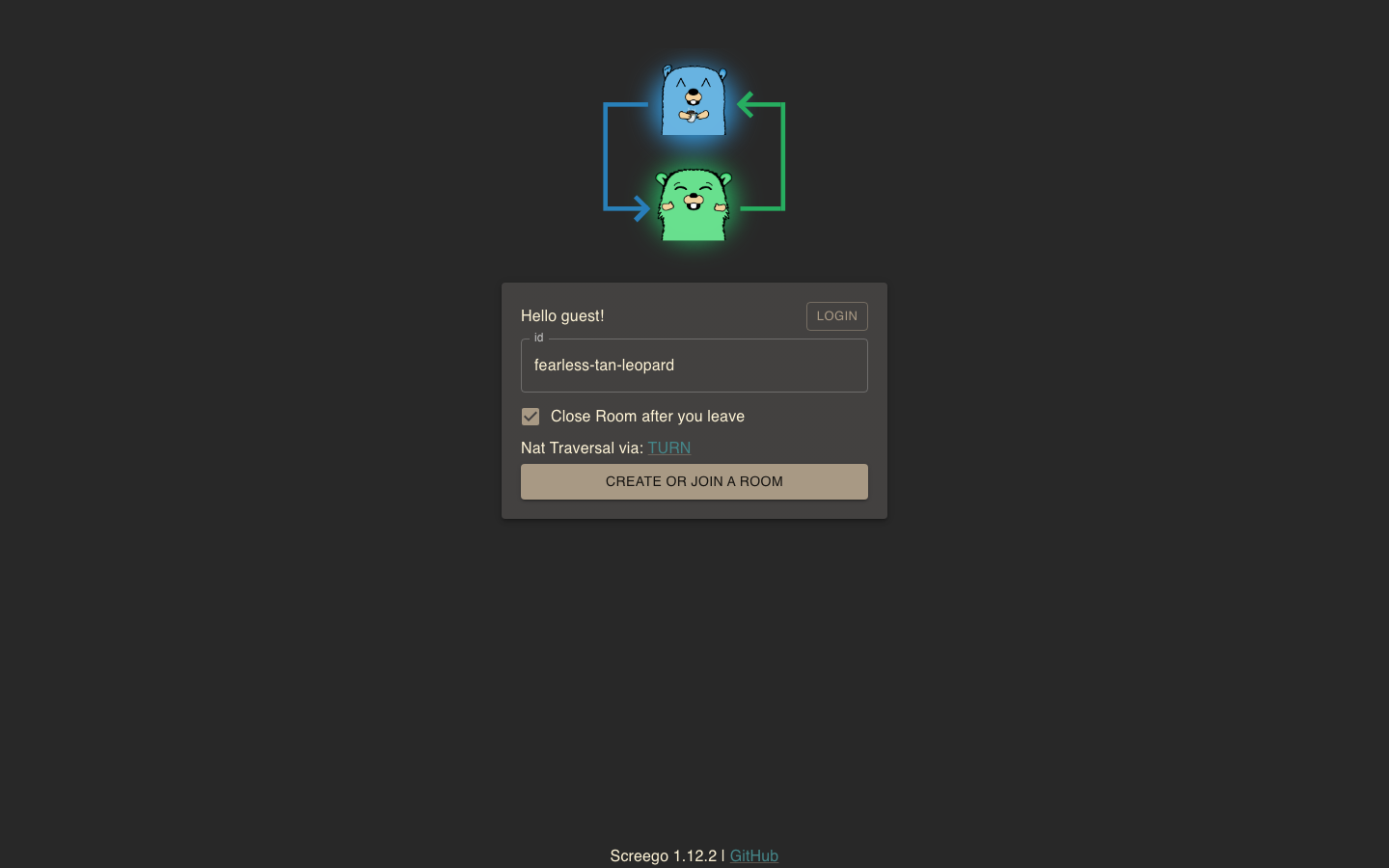
Screego is a lightweight, self-hosted screen-sharing platform built in Go, designed for developers who need fast peer-to-peer sharing without the overhead of a full conferencing suite. Ideal for pair programming, code reviews, and technical support.
Pros:
- Minimal resource footprint; runs efficiently on modest hardware
- P2P architecture reduces latency and server load
- Simple to deploy and operate
Cons:
- Screen sharing focused; audio/video calling is secondary
- Smaller ecosystem compared to full conferencing platforms
BigBlueButton
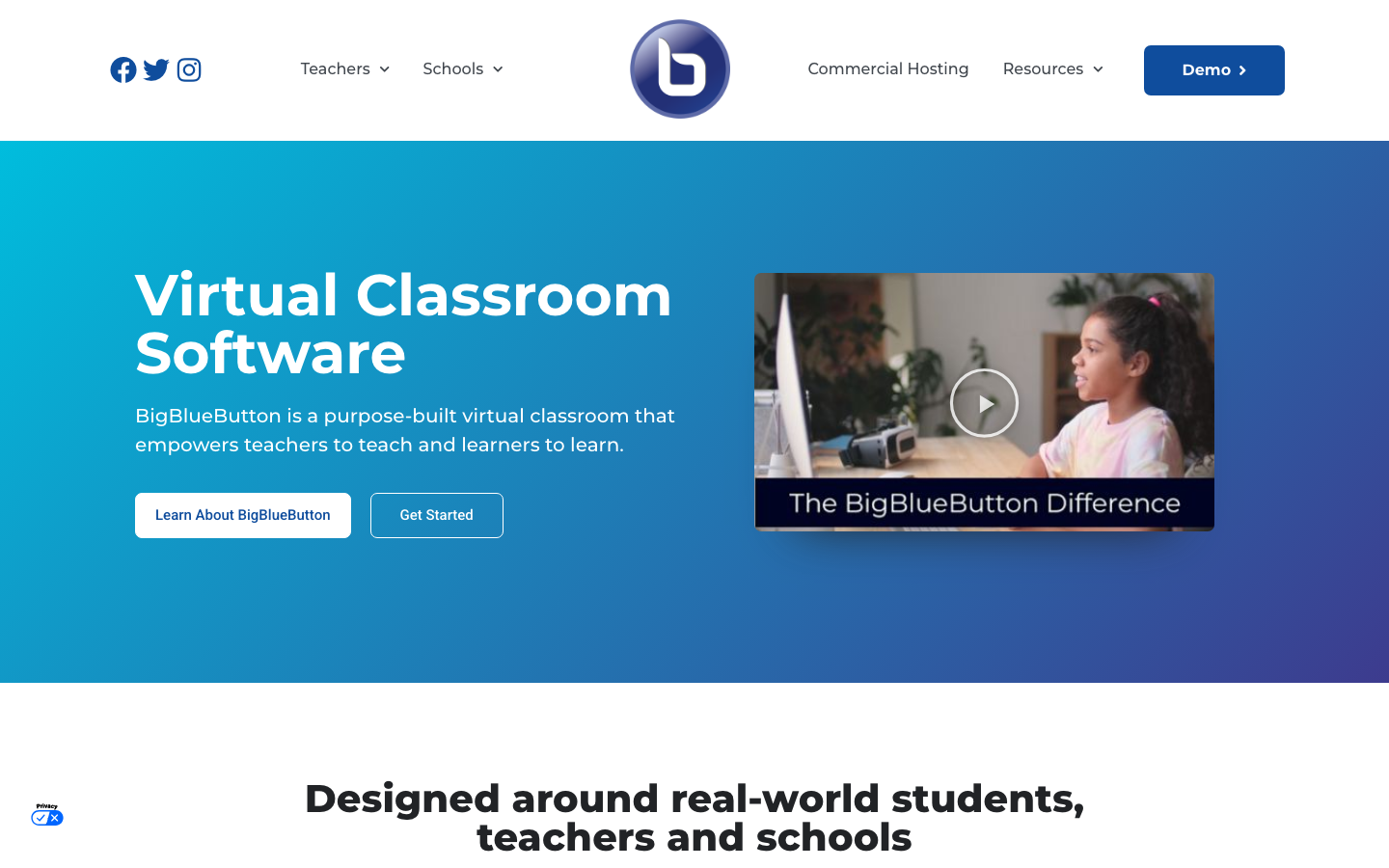
BigBlueButton is a complete web conferencing system purpose-built for education, with features like unlimited session length, interactive whiteboarding, breakout rooms, and recording. It eliminates Zoom's 40-minute cap and is widely deployed in schools and universities.
Pros:
- Unlimited meeting duration and no per-user licensing costs
- Rich pedagogical features (polls, hand-raising, screen annotation)
- Actively maintained with institutional backing
Cons:
- Requires significant server resources; self-hosting demands substantial infrastructure
- No federation; each deployment is isolated
Janus Gateway
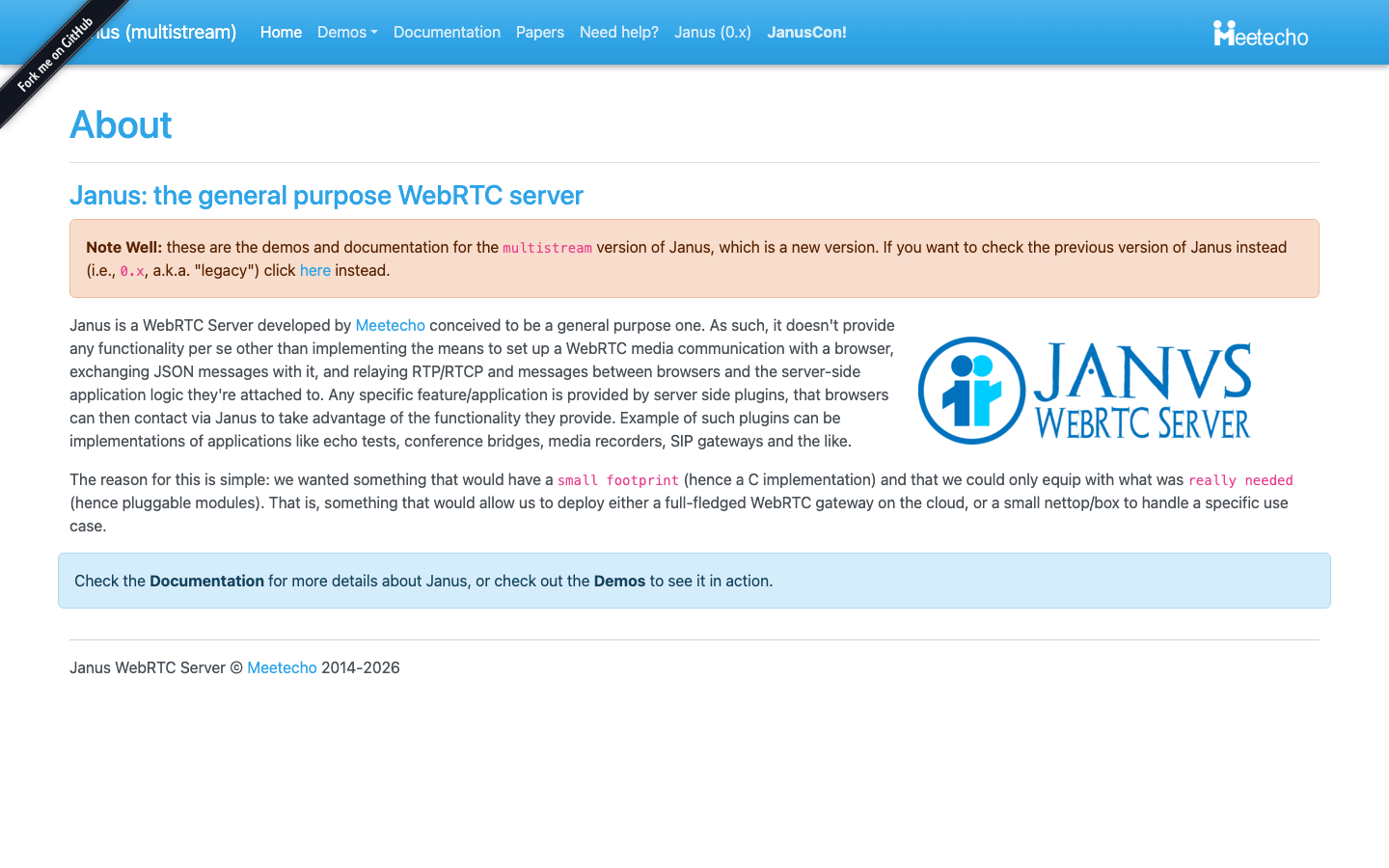
Janus is a general-purpose WebRTC server and SFU (Selective Forwarding Unit) written in C, designed for developers building custom real-time communication infrastructure. It's not a turnkey Zoom replacement but a building block for bespoke conferencing systems.
Pros:
- Extremely flexible; build exactly the feature set you need
- High performance and low latency for large-scale deployments
- Modular plugin architecture
Cons:
- Steep learning curve; requires significant development effort
- Not suitable for non-technical teams seeking a plug-and-play solution
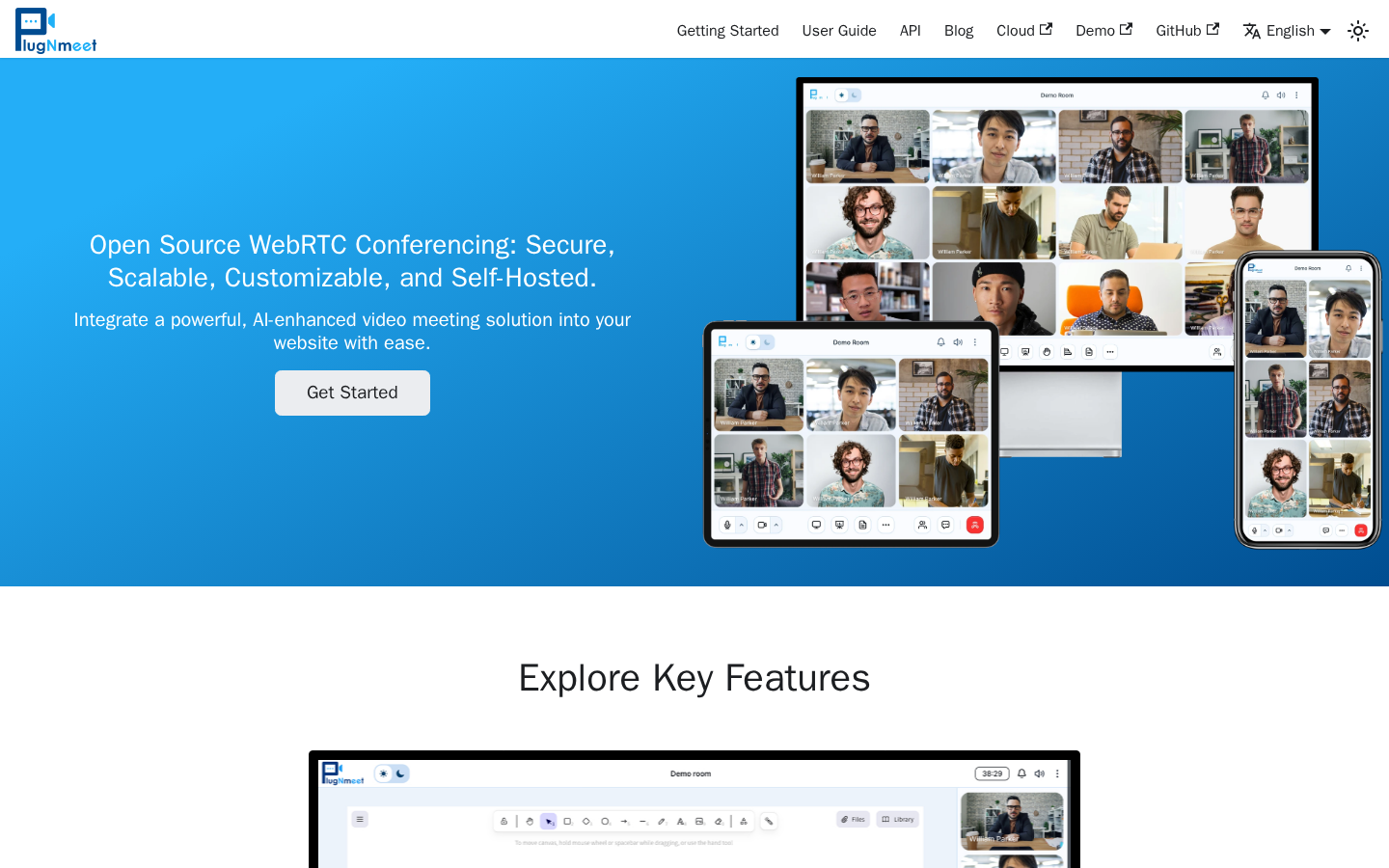
MiroTalk
MiroTalk is a self-hosted WebRTC video conferencing platform built on peer-to-peer architecture, emphasizing fast setup and end-to-end privacy without intermediary access to encrypted streams. No account required; share a link and start calling.
Pros:
- P2P design minimizes server overhead and latency
- E2E encryption with no middleman access to content
- Simple deployment and instant room creation
Cons:
- P2P limits scalability; works best for small to medium group calls
- Fewer advanced features (recording, breakout rooms) compared to Zoom
Jitsi Videobridge
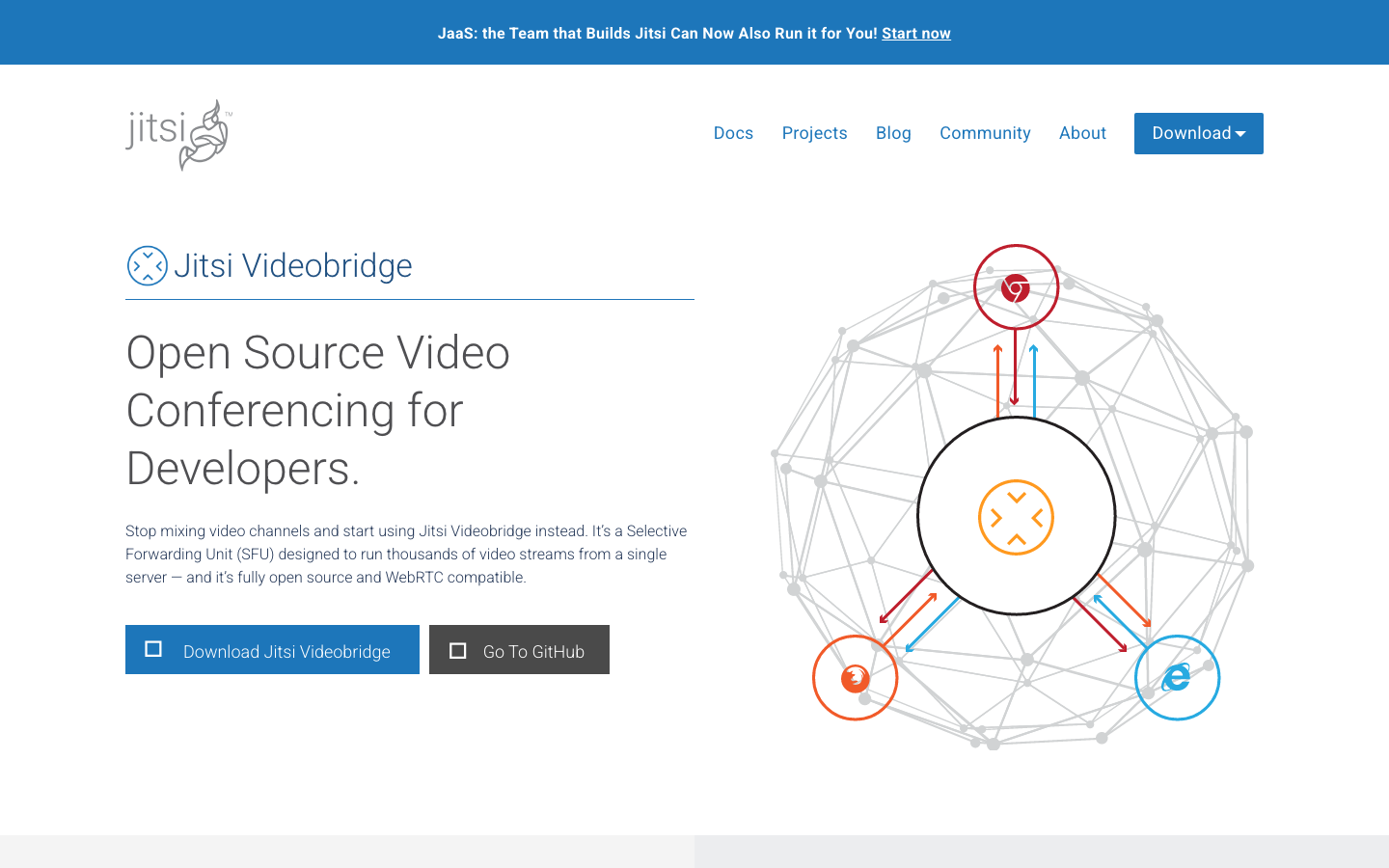
Jitsi Videobridge is a WebRTC-compatible SFU (Selective Forwarding Unit) that routes video efficiently for large multi-party conferences. It's the backbone of Jitsi Meet and can be deployed standalone to build scalable conferencing infrastructure.
Pros:
- Proven at scale; handles hundreds of concurrent conferences
- Efficient bandwidth usage via selective forwarding
- Open-source and vendor-agnostic
Cons:
- Infrastructure component, not a user-facing application
- Requires integration with signaling and client software to be useful
MiroTalk SFU
MiroTalk SFU is a self-hosted, open-source video conferencing platform using Selective Forwarding Unit architecture for scalable real-time communication. It's positioned as a modern Zoom alternative with end-to-end encryption and no artificial limits.
Pros:
- SFU architecture scales better than P2P for larger calls
- E2E encryption with transparent, auditable code
- No subscription fees; full control over data and infrastructure
Cons:
- Smaller community and fewer integrations than Jitsi Meet
- Self-hosting still requires operational overhead
How to choose
For education and webinars, BigBlueButton is purpose-built and eliminates Zoom's 40-minute cap. For privacy-first teams, Jitsi Meet offers the most mature, federatable, E2E-encrypted solution with both public and self-hosted options. For small teams or developers, MiroTalk or Screego provide lightweight, low-overhead alternatives. For large organizations needing infrastructure control, Janus Gateway or Jitsi Videobridge give you the primitives to build custom systems. Start with Jitsi Meet if you want a Zoom drop-in replacement; choose BigBlueButton if education is your use case; consider Janus or Videobridge only if you have engineering resources to integrate and operate them.