






TL;DR
-
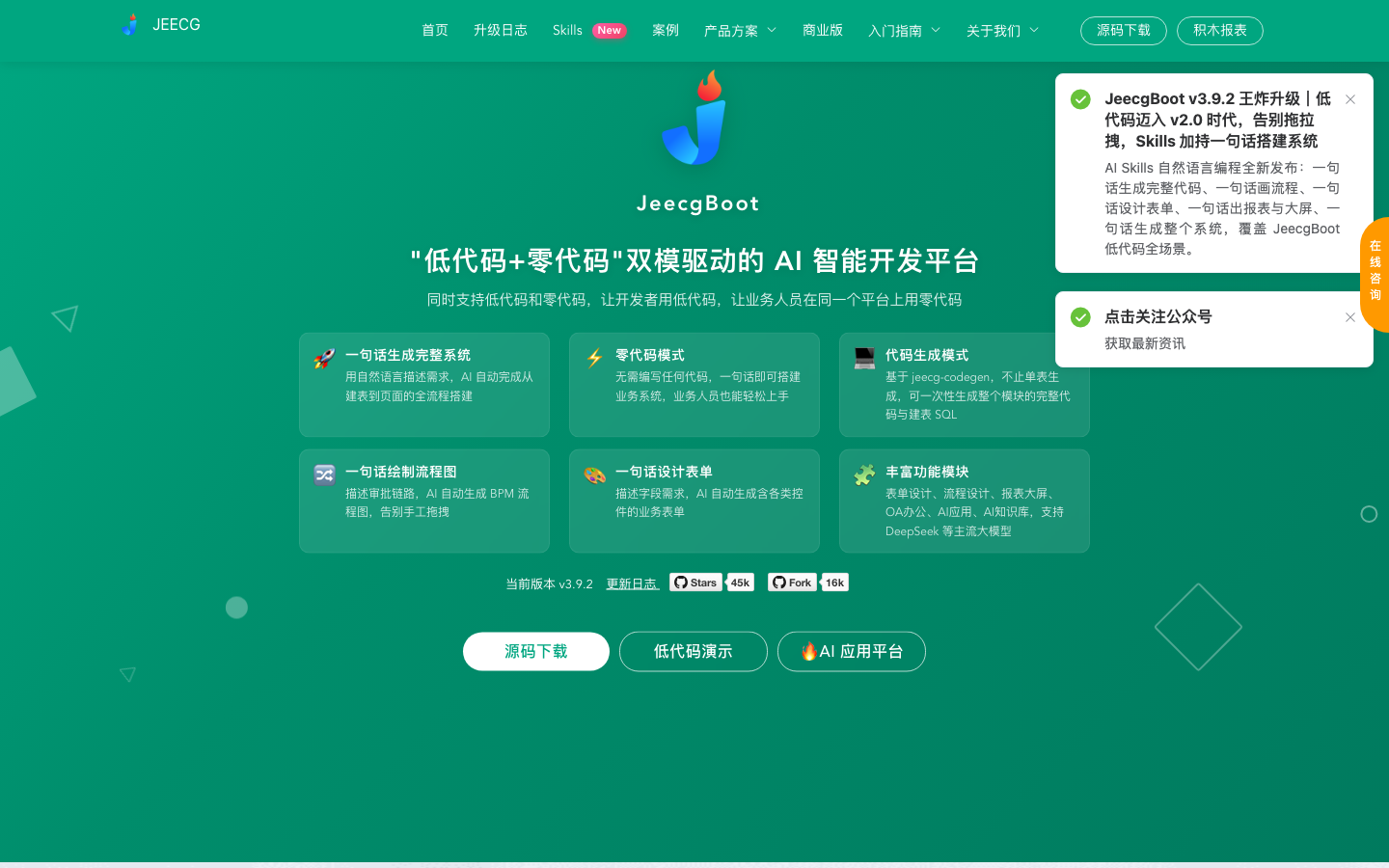
Need AI-assisted code generation and workflow automation? JeecgBoot bridges zero-code UI configuration and full Java backend generation, cutting repetitive scaffolding by up to 80%.
-
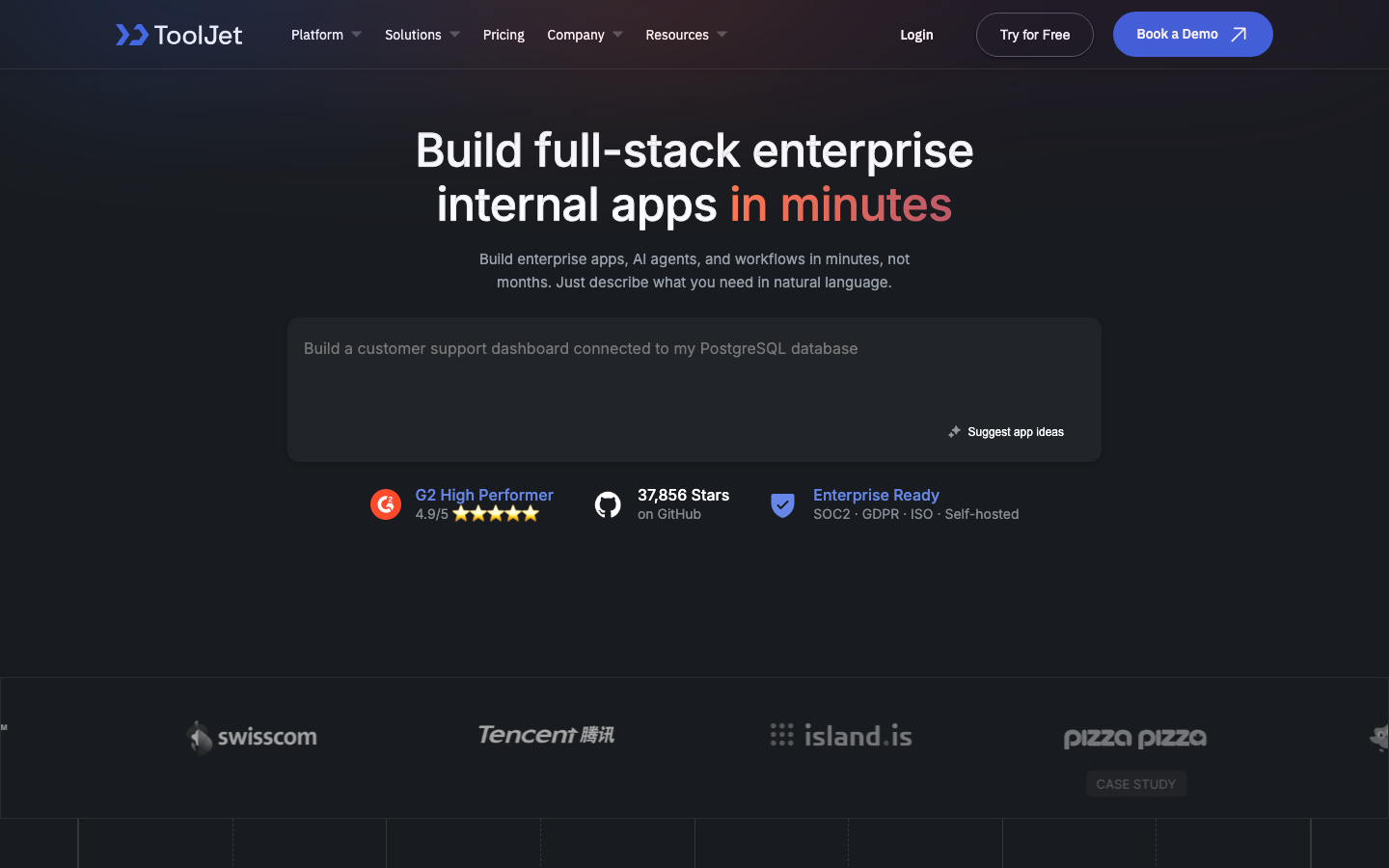
Building dashboards and internal tools for non-technical teams? ToolJet offers the Appsmith-like drag-and-drop experience with a larger active community and built-in AI agent capabilities.
-
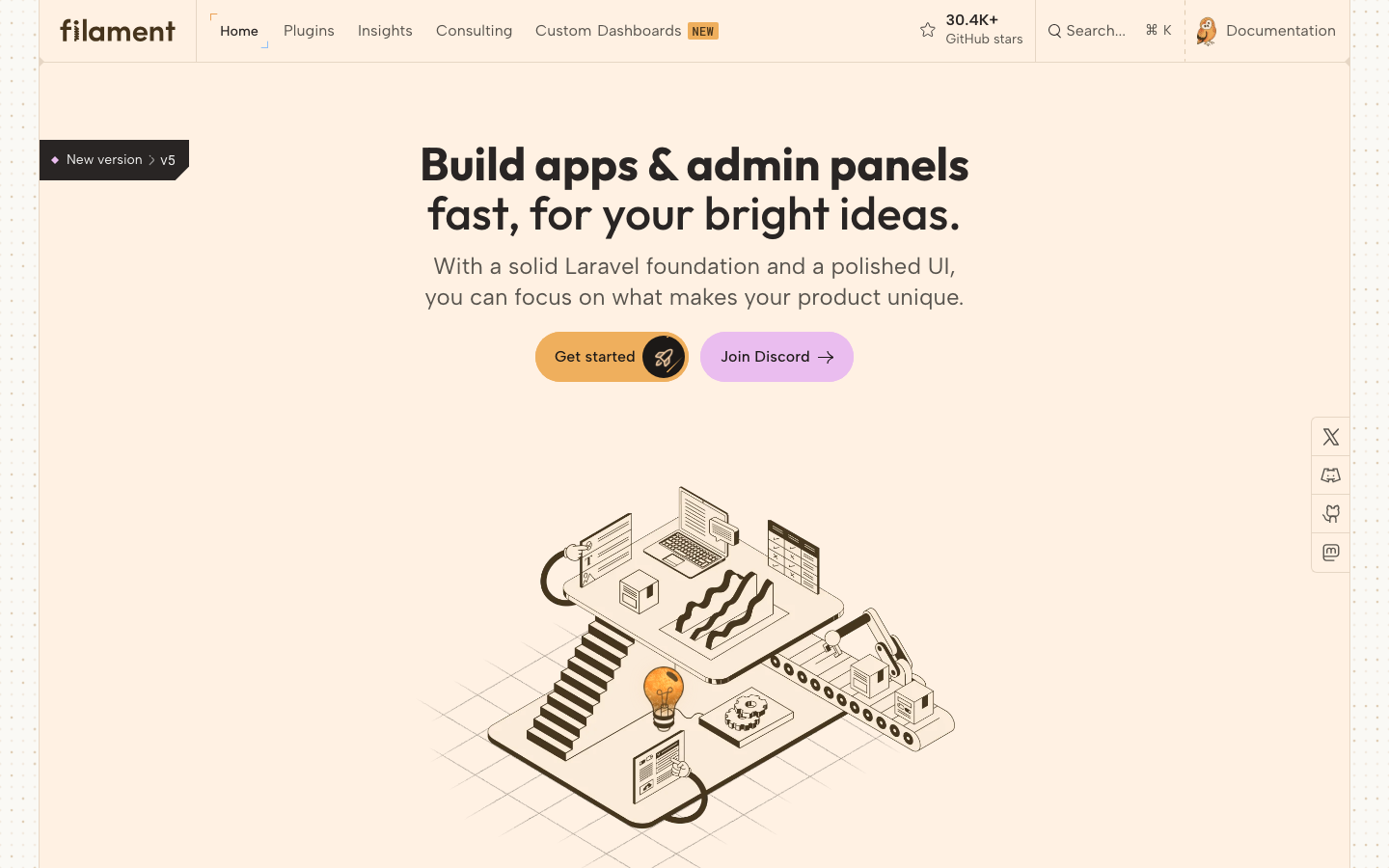
Already invested in Laravel or prefer a lightweight PHP stack? Filament delivers admin panels and business apps through Livewire components without the overhead of a separate platform.
Why teams leave Appsmith
Appsmith's core value proposition—self-hosted, no per-seat licensing, data sovereignty—is also its admission that commercial low-code platforms exploit their customers. Retool and similar proprietary vendors lock essential features (SSO, Git integration, workflow automation) behind expensive Enterprise tiers, then layer on usage-based billing for AI and advanced workflows, creating unpredictable consumption costs that scale with adoption.
The real friction isn't just pricing. It's control. When your internal tools live on someone else's infrastructure with someone else's compliance obligations, you inherit their upgrade schedule, their security incidents, and their business model incentives—which are fundamentally misaligned with yours once you're locked in. Appsmith sidesteps that by letting you host everything yourself, but self-hosting means you also own the operational burden: infrastructure management, database upgrades, patching, and the cognitive load of maintaining another platform.
Teams that outgrow Appsmith typically hit one of two walls: either they need deeper customization and code generation (favoring projects like JeecgBoot), or they want a lighter abstraction that sits closer to their existing stack rather than another black box (favoring Filament for Laravel shops, or ToolJet for teams already comfortable with JavaScript ecosystems).
Quick comparison
| Name | License | Self-Hosted | API / Extensibility | Stack / Language | Best For |
|---|---|---|---|---|---|
| JeecgBoot | Apache-2.0 | ✓ | Code generation, AI plugins, MCP | Java | Java teams; AI-assisted CRUD + workflow automation |
| ToolJet | AGPL-3.0 | ✓ | REST/GraphQL queries, custom components | JavaScript | Appsmith users seeking larger ecosystem; AI agents |
| Filament | MIT | ✓ | Laravel Livewire; full PHP stack access | PHP | Laravel applications; lightweight admin panels |
| Mathesar | GPL-3.0 | ✓ | Native Postgres, SQL-first | Svelte | Data-heavy teams; direct DB access without UI abstraction |
| Corteza | Apache-2.0 | ✓ | Workflow engine, extensible | Go | Workflow-centric internal tools; lightweight deployments |
| Kottster | Apache-2.0 | ✓ | Node.js backend integration | TypeScript | Rapid admin panel prototyping; Node.js-first teams |
| Shaper | MPL-2.0 | ✓ | SQL-driven, DuckDB queries | Go | Analytics and data visualization; SQL-native workflows |
Top open-source alternatives to Appsmith
JeecgBoot
JeecgBoot is an AI-augmented low-code platform for Java teams that combines zero-code UI configuration with one-click full-stack code generation. It ships with built-in AI capabilities—chat, knowledge bases, workflow orchestration, and MCP support—to automate the repetitive 80% of enterprise CRUD and form generation, then hand off to developers for custom logic.
Pros
- Eliminates boilerplate: one-sentence prompts generate data models, forms, and APIs; code-gen pipeline keeps output mergeable with hand-written code.
- Comprehensive AI integration: workflow diagrams, form design, and system scaffolding all AI-assisted without leaving the platform.
- Java ecosystem native: integrates with Spring Boot, existing databases, and enterprise tooling without middleware translation.
Cons
- Steep learning curve for teams unfamiliar with Java or low-code paradigms; documentation is community-driven and unevenly translated.
- Heavy platform; self-hosting requires JVM resources and database setup more complex than lighter alternatives.
ToolJet
ToolJet is the open-source core of the ToolJet AI platform, purpose-built for internal tools, dashboards, workflows, and AI agents. It mirrors Appsmith's drag-and-drop UX but with a larger active community, built-in AI agent scaffolding, and tighter workflow automation.
Pros
- Largest community among open-source low-code platforms (37k stars); more plugins, templates, and third-party integrations than Appsmith.
- Native workflow and AI agent support: move beyond dashboards into automation without context-switching to a separate tool.
- AGPL ensures community contributions flow back; commercial support available without feature gating.
Cons
- AGPL licensing may conflict with proprietary applications; requires careful review in closed-source shops.
- Still requires self-hosting operational overhead; no managed option in the open-source tier.
Filament
Filament is a Laravel-native admin panel and app builder that trades the drag-and-drop abstraction for tight integration with Laravel's Livewire component model. If your application already lives in Laravel, Filament is a framework extension, not a separate platform.
Pros
- Zero platform lock-in: admin panels are Laravel code, fully version-controlled, and deployed with your app; no proprietary export format.
- Minimal overhead: Livewire handles real-time UI updates without JavaScript framework overhead; leverages existing Laravel expertise.
- MIT license: no restrictions; commercial support available but not mandatory.
Cons
- Laravel-specific; not applicable for teams on other stacks (Node, Python, Java).
- Requires developer involvement; not suitable for drag-and-drop-only workflows or non-technical users.
Mathesar
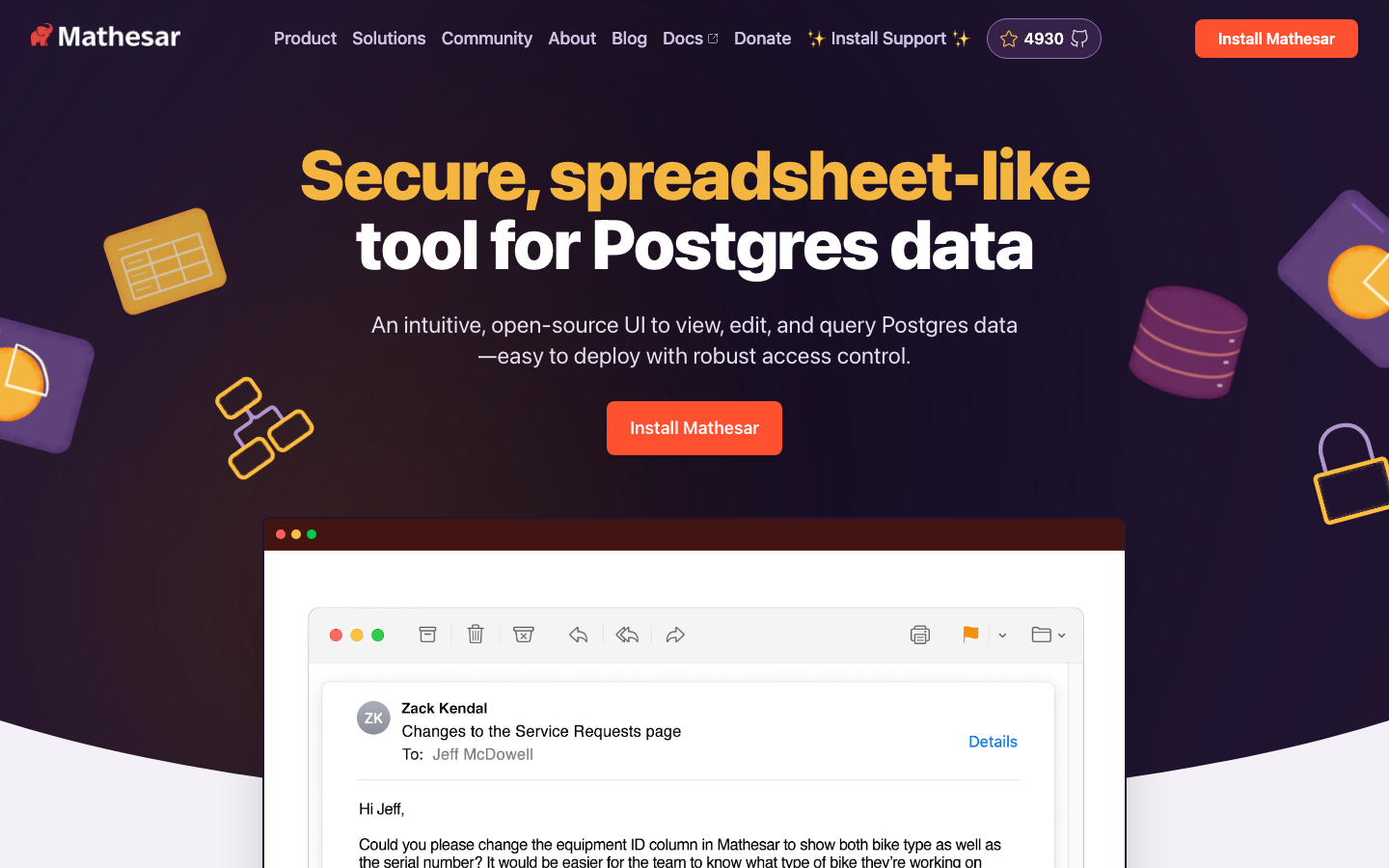
Mathesar is a spreadsheet-like interface over Postgres that lets non-technical and technical users query, edit, and collaborate on data directly. It's not a low-code app builder but a data-first tool that replaces the UI layer with SQL-native access and Postgres-level permissions.
Pros
- No abstraction layer: direct Postgres access control; compliance teams love native database permissions without middleware translation.
- Familiar spreadsheet UX: non-developers can query and edit without SQL knowledge; power users drop to raw SQL.
- Lightweight: minimal infrastructure; runs on modest hardware.
Cons
- Not an app builder: no workflow automation, no form logic, no business process orchestration; pure data access and editing.
- Postgres-only; not applicable for MongoDB, MySQL, or other databases.
Corteza
Corteza is a lightweight, Go-based low-code platform focused on workflow automation and internal tools. It emphasizes a minimal footprint and workflow-first design, trading some UI polish for operational simplicity.
Pros
- Tiny resource footprint: Go binary deploys with minimal dependencies; ideal for resource-constrained environments.
- Workflow engine built-in: automation is first-class, not bolted on; orchestrate complex processes without external tools.
- Apache-2.0 licensed: permissive; no commercial restrictions.
Cons
- Smaller community and ecosystem compared to ToolJet or JeecgBoot; fewer templates and integrations.
- UI/UX less polished than commercial alternatives; steeper learning curve for non-technical users.
Kottster
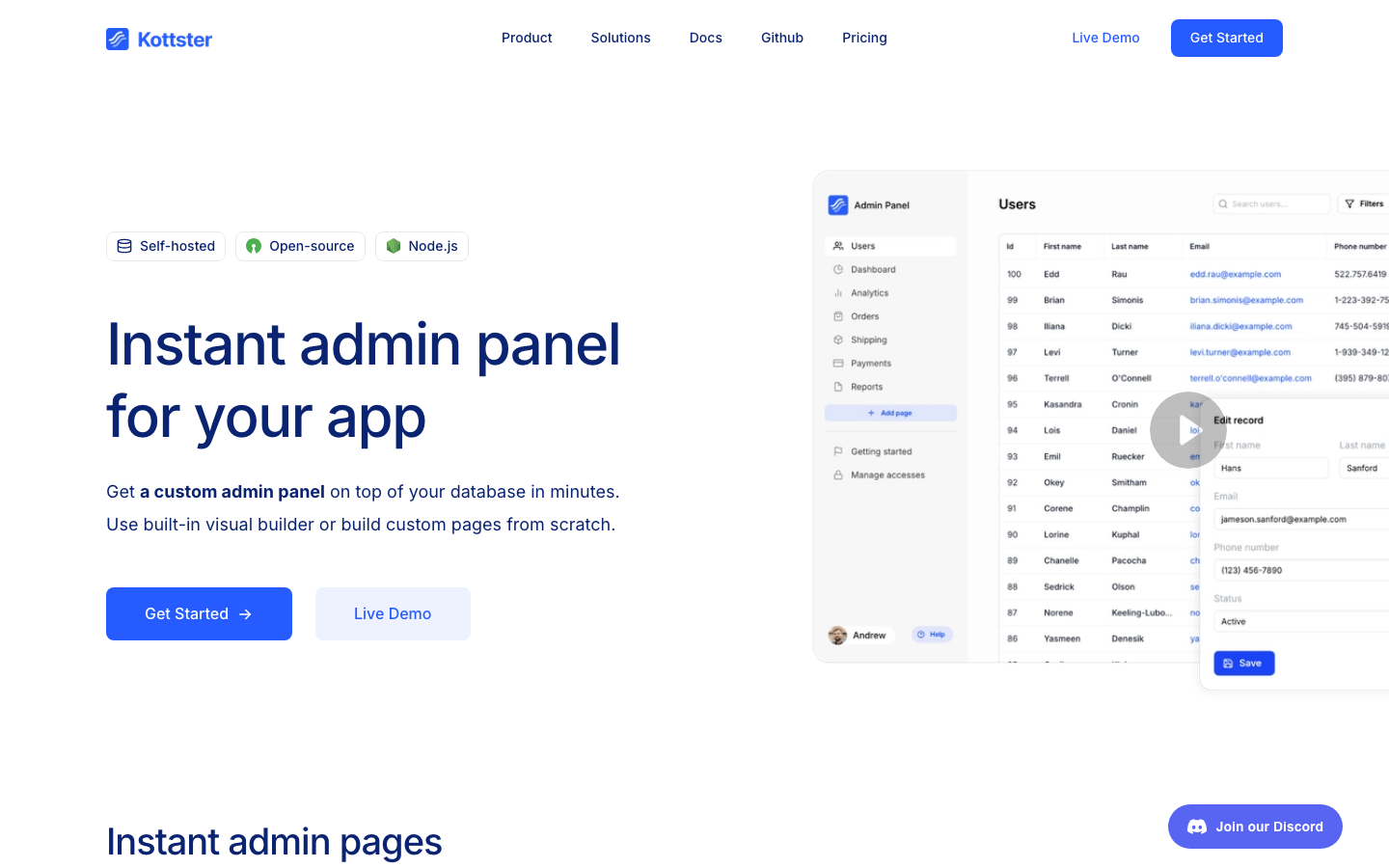
Kottster is a rapid admin panel generator for Node.js applications, emphasizing security and minimal setup. Point it at your database or API, and it scaffolds a functional admin interface in minutes.
Pros
- Instant scaffolding: zero configuration for common CRUD operations; ideal for rapid prototyping.
- Node.js-native: integrates with Express, Fastify, and existing Node backends without translation.
- Lightweight and secure by default: small attack surface; suitable for regulated environments.
Cons
- Minimal customization: designed for quick wins, not complex multi-step workflows or bespoke UI.
- Early-stage project; ecosystem and documentation smaller than established alternatives.
Shaper
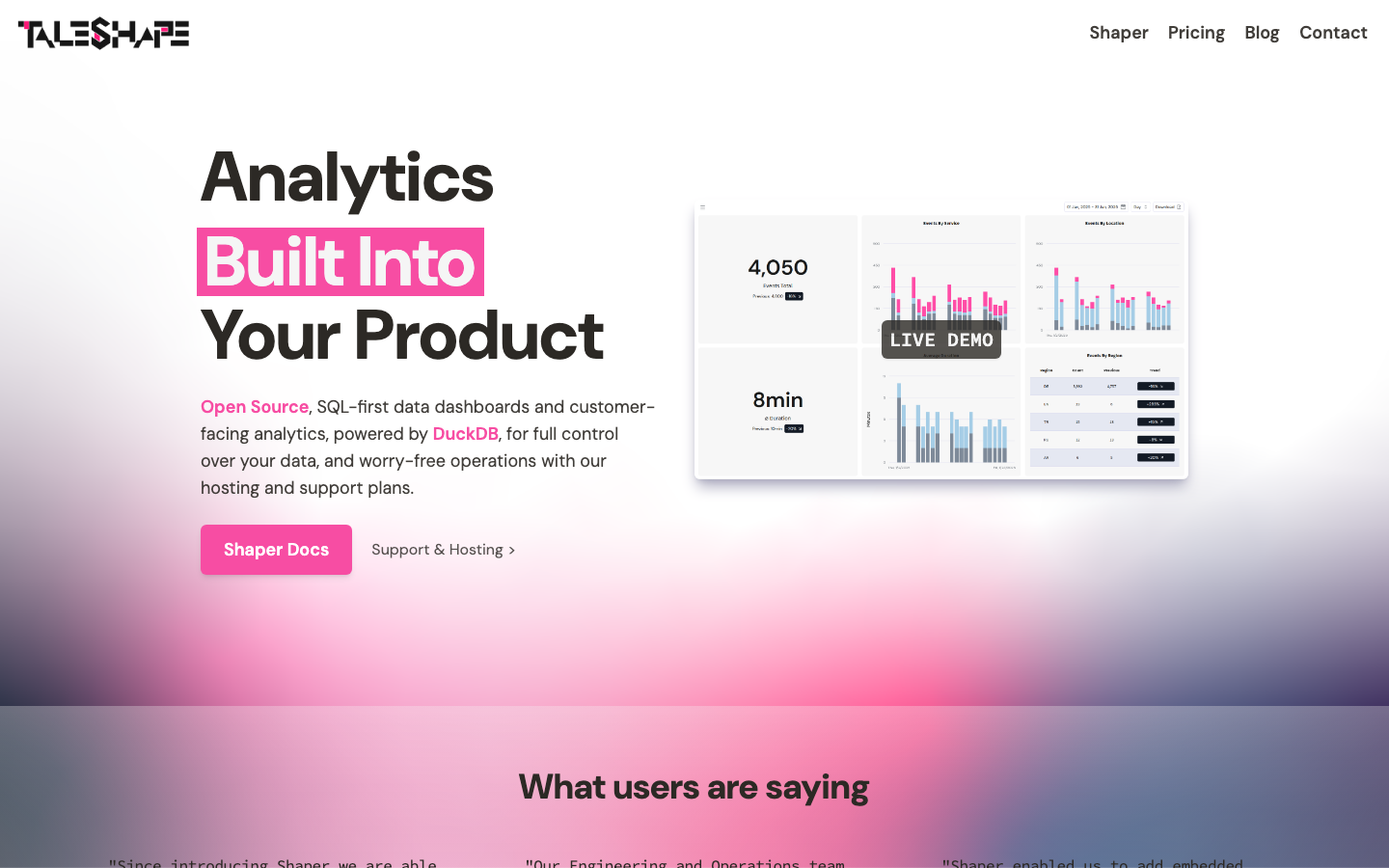
Shaper is a data visualization and analytics tool powered by DuckDB and SQL. It's designed for teams that think in SQL and want to build dashboards and reports without leaving the query layer.
Pros
- SQL-first: no visual query builder; full expressiveness of SQL without UI constraints.
- DuckDB backend: fast analytical queries on CSV, Parquet, and databases; no separate data warehouse required.
- Lightweight and embeddable: Go binary; suitable for integration into larger systems.
Cons
- Not an app builder: no forms, workflows, or business logic; pure analytics and visualization.
- Requires SQL fluency; not suitable for non-technical users or drag-and-drop workflows.
How to choose
For Java teams building enterprise CRUD systems, JeecgBoot is the clear win—its code generation and AI integration eliminate the most tedious 80% of scaffolding while keeping you in the Java ecosystem.
For teams seeking an Appsmith replacement with a larger community and AI workflow support, ToolJet offers the closest feature parity with a more active ecosystem, though AGPL licensing requires review.
For existing Laravel applications, Filament eliminates the platform entirely by making admin panels a native framework concern, cutting operational overhead and lock-in risk.
For data-heavy teams that prioritize compliance and direct database access, Mathesar trades app-building features for zero-abstraction Postgres access and spreadsheet simplicity.
For resource-constrained deployments or workflow-centric use cases, Corteza or Kottster offer lightweight, focused alternatives—Corteza for automation, Kottster for rapid CRUD panels.
For analytics and SQL-native dashboards, Shaper is purpose-built; if you're comfortable writing SQL, it outperforms visual query builders.
The decision ultimately hinges on your stack, team skill level, and whether you're replacing a tool (Appsmith) or rethinking your architecture (Mathesar, Filament). Avoid the trap of picking the most feature-rich alternative; pick the one that fits your stack and operational model with the least friction.