






TL;DR
- Event organizers managing high-volume ticketing should evaluate pretix or Hi.Events to reclaim per-ticket revenue lost to Eventbrite's service fees and regain control of attendee data.
- For teams running conferences or large multi-day events, indico (built at CERN) and alf.io offer mature, feature-rich platforms with speaker management and scheduling baked in.
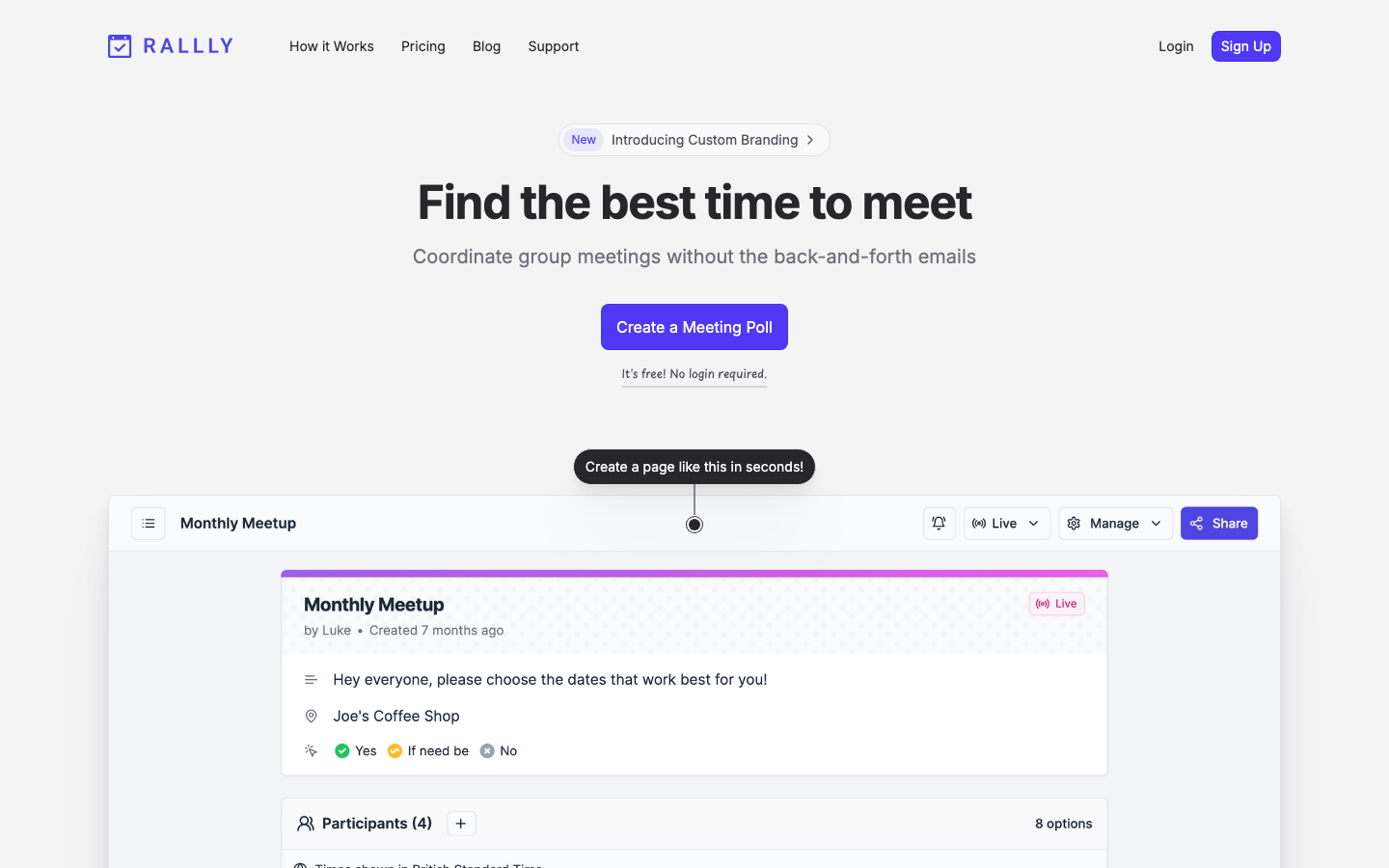
- Meeting and scheduling coordination without ticketing overhead fits rallly, a lightweight open-source alternative for polls, RSVPs, and event logistics.
Why teams leave Eventbrite
Picture a conference organizer halfway through ticket sales: they've sold 500 tickets at $50 each, but Eventbrite's service fee plus payment processing has already taken thousands of dollars. Scale that across multiple events, and the math becomes painful. Worse, the attendee list—email addresses, purchase history, dietary restrictions—lives in Eventbrite's database, locked behind their platform.
The structural problem is usage-based billing at scale. Eventbrite charges per ticket sold, so every transaction that should benefit the organizer instead flows through a hosted platform with no option to self-host or negotiate rates. You're also locked into their checkout flow, payout schedule, and attendee-data silo. There's no API escape hatch that lets you own the relationship with your attendees or integrate ticketing into your own ecosystem without friction.
Open-source, self-hostable alternatives flip this model: you run the software on your own infrastructure (or a cheap VPS), keep 100% of ticket revenue, own the attendee database from day one, and can integrate with your own payment processors and CRM tools. The trade-off is operational overhead—you manage the server, updates, and backups—but for high-volume or recurring events, that cost is trivial compared to Eventbrite's per-ticket tax.
Quick comparison
| Name | License | Self-Hosted | API / Extensibility | Stack / Language | Best For |
|---|---|---|---|---|---|
| rallly | AGPL-3.0 | ✓ | REST API, webhook-ready | TypeScript | Meeting scheduling, quick polls, RSVPs |
| Hi.Events | License not declared | ✓ | Extensible plugin architecture | PHP | Concerts, conferences, festivals, general ticketing |
| pretix | License not declared | ✓ | REST API, plugin system | Python | Conferences, festivals, workshops, tech events |
| indico | MIT | ✓ | REST API, plugin framework | Python | Large conferences, multi-day events, speaker management |
| alf.io | GPL-3.0 | ✓ | REST API, extensible | Java | Conferences, trade shows, workshops, meetups |
| osem | MIT | ✓ | REST API, modular design | Ruby | Free/open-source software conferences |
| pretalx | License not declared | ✓ | REST API, plugin system | Python | Conference planning, call for papers, scheduling |
Top open-source alternatives to Eventbrite
rallly
Rallly is a lightweight scheduling and collaboration tool designed to replace email chains and poll fatigue when organizing events or meetings. It lets attendees propose times, vote on options, and reach consensus without leaving a web interface.
Pros:
- Simple, intuitive UI—no learning curve for attendees
- Self-hosted on minimal infrastructure; AGPL-3.0 license ensures community control
- Fast iteration and low operational overhead for internal or small-group event planning
Cons:
- No ticketing or payment processing; pure scheduling and RSVP
- Limited integrations compared to full event platforms
Hi.Events
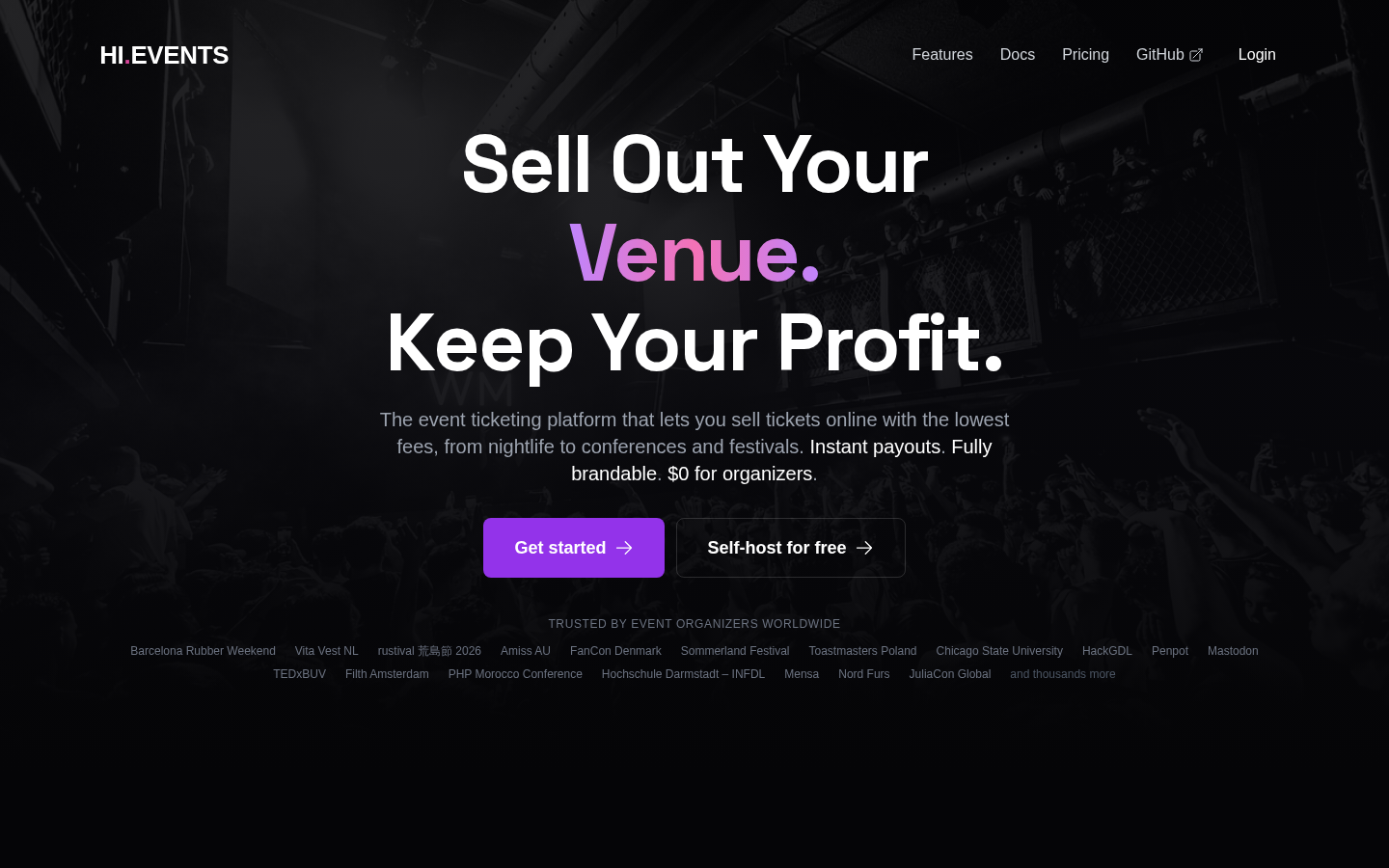
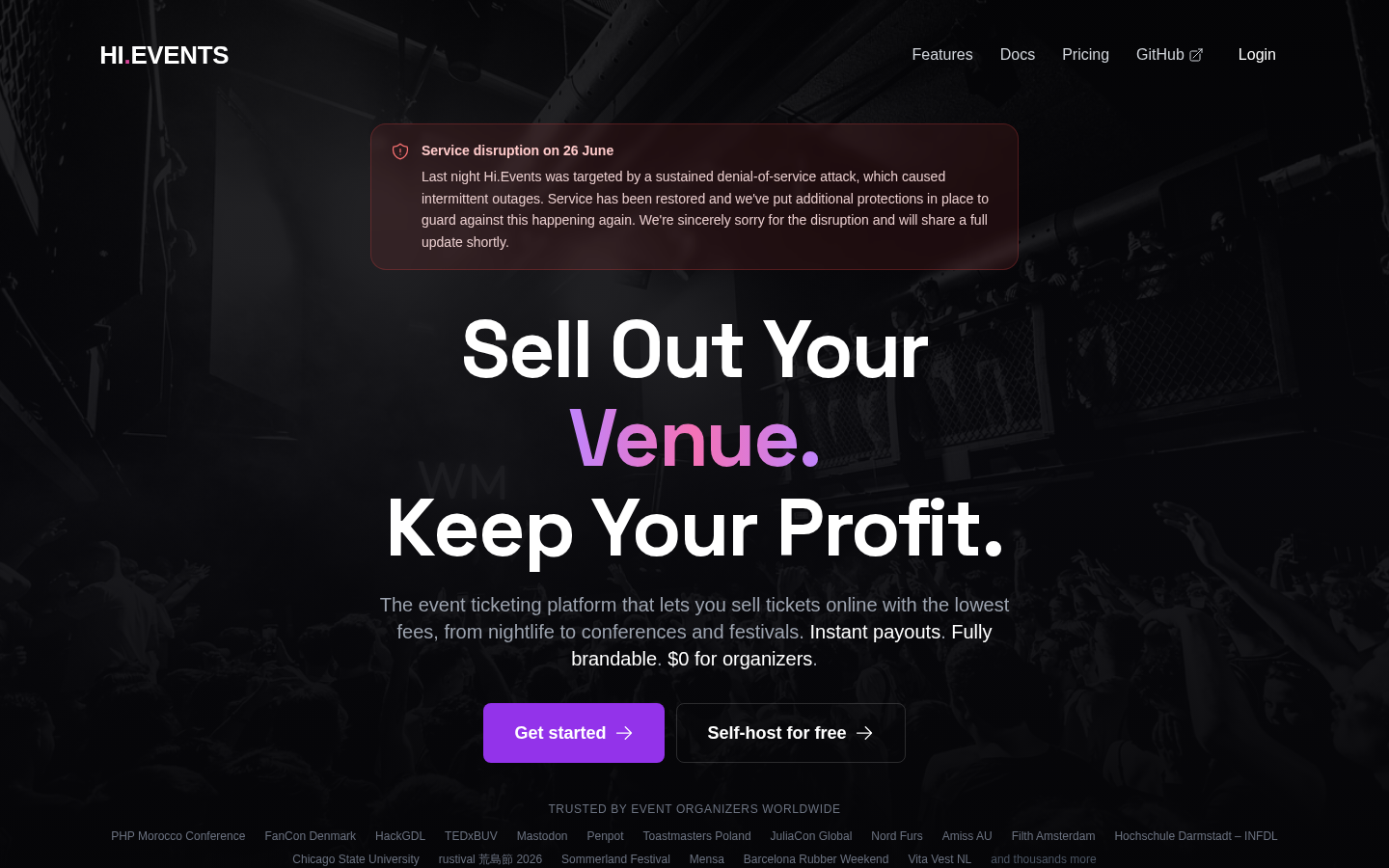
Hi.Events is an open-source event management and ticketing platform built to handle concerts, conferences, and festivals at any scale. It provides a complete ticketing checkout, attendee management, and reporting dashboard.
Pros:
- Full-featured ticketing with flexible pricing tiers and discount codes
- Own your attendee data and payment processing; no per-ticket fees
- Plugin architecture supports custom integrations and workflows
Cons:
- Requires self-hosting and server management
- Smaller community than some alternatives; documentation may be less comprehensive
pretix
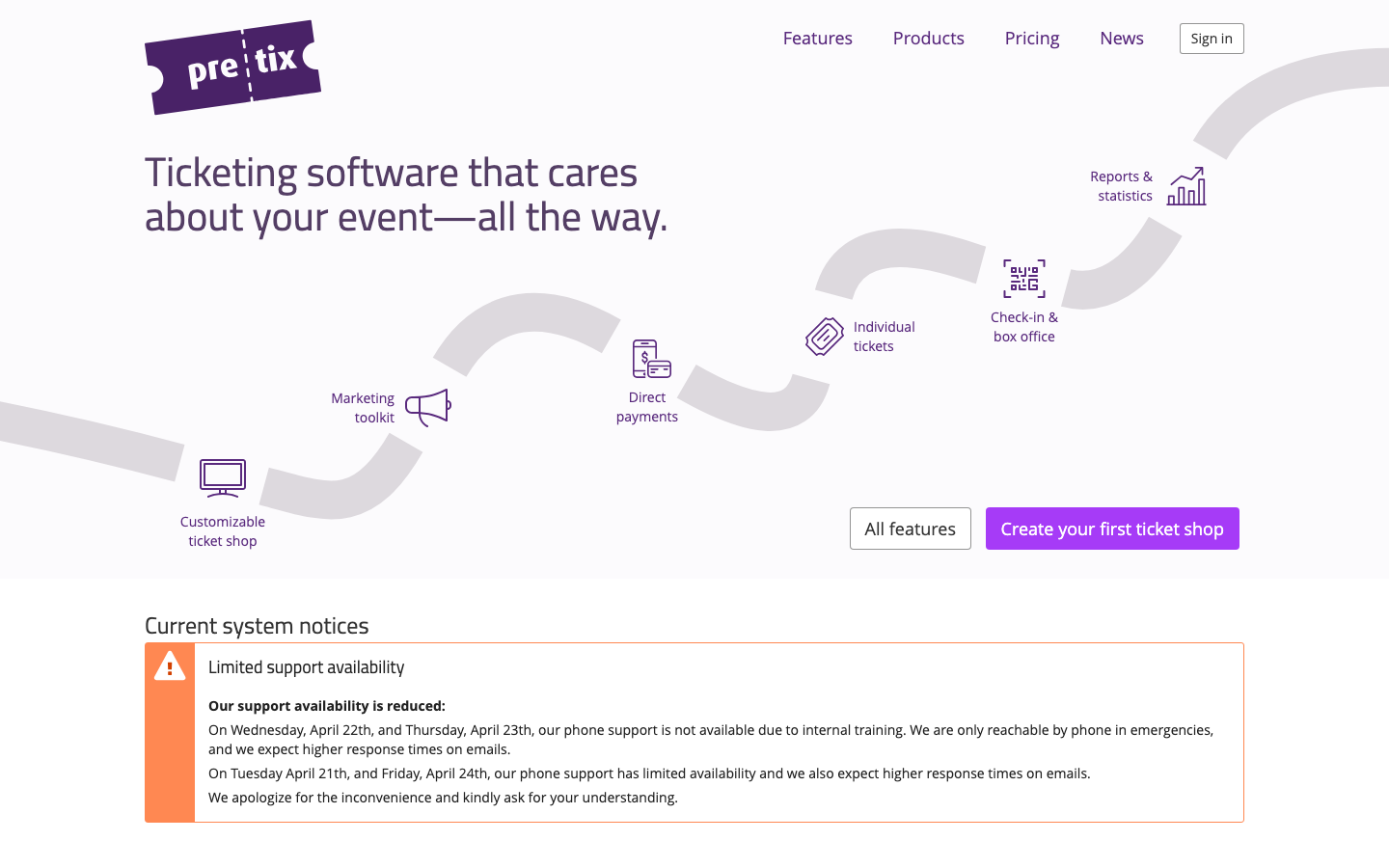
Pretix is a mature, battle-tested ticket shop application used by conferences, festivals, and tech events worldwide. It handles complex ticketing scenarios: variable pricing, seat selection, add-ons, and multi-day passes.
Pros:
- Powerful REST API and plugin system for deep customization
- Excellent support for multi-event organizations and reseller workflows
- Strong community; widely deployed in European conference circuits
Cons:
- Steeper learning curve for initial setup and customization
- Self-hosted infrastructure requires ongoing maintenance
indico
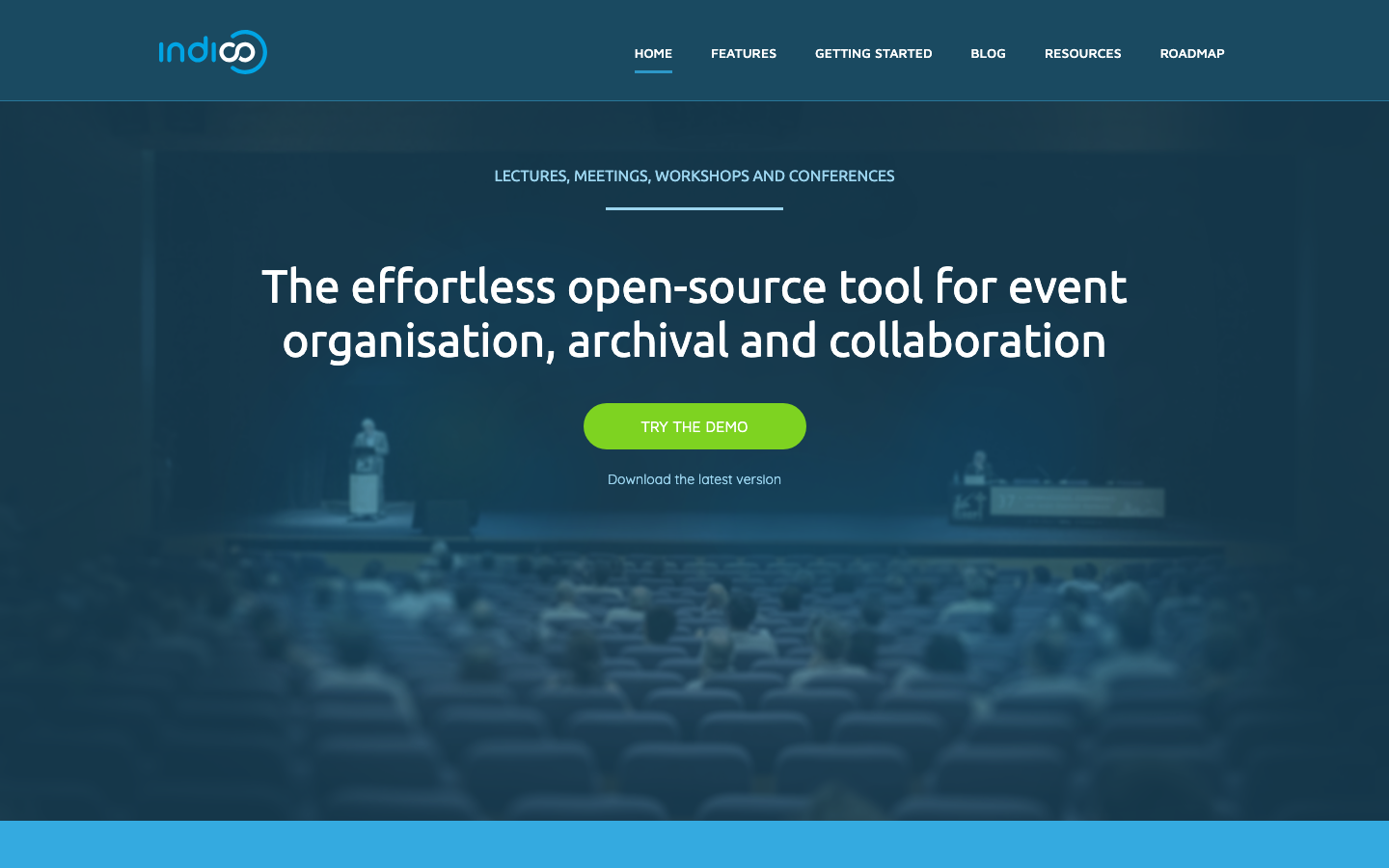
Indico is a feature-rich event management system originally built at CERN for large-scale scientific conferences. It combines ticketing, scheduling, speaker management, and live collaboration in one platform.
Pros:
- Designed for complex, multi-day events with hundreds or thousands of attendees
- Built-in call for papers, abstract review, and speaker communication
- MIT license; mature codebase with long production history
Cons:
- More heavyweight than needed for small events; steeper operational overhead
- Larger deployment footprint; not ideal for minimal-infrastructure setups
alf.io
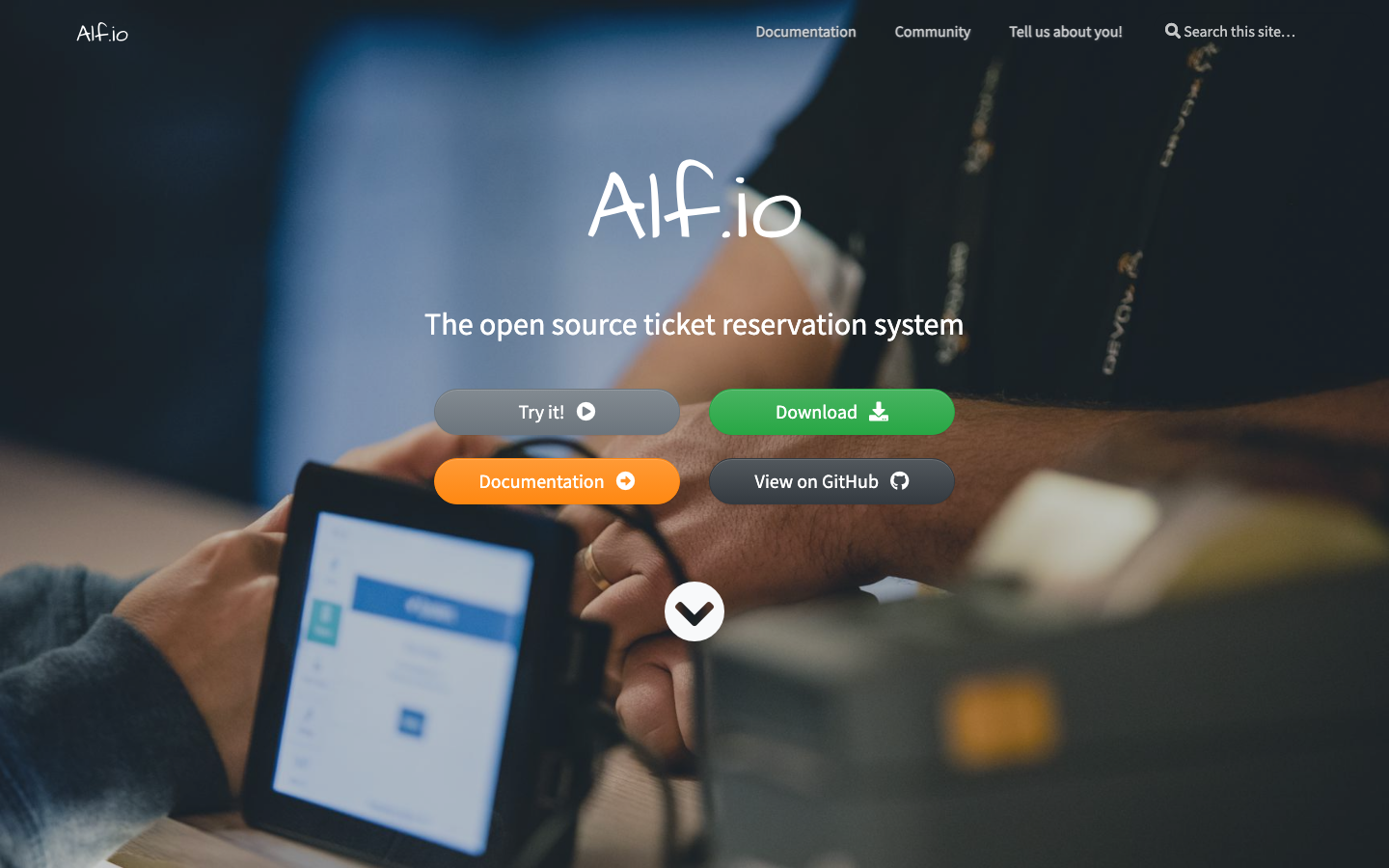
Alf.io is an open-source ticket reservation system focused on conferences, trade shows, workshops, and meetups. It emphasizes simplicity and reliability for mid-to-large events.
Pros:
- Clean, straightforward ticketing workflow with minimal configuration
- Strong REST API for integration with external systems
- GPL-3.0 license ensures long-term openness
Cons:
- Smaller ecosystem of plugins and extensions compared to pretix
- Java-based; requires JVM hosting (may increase infrastructure costs)
osem
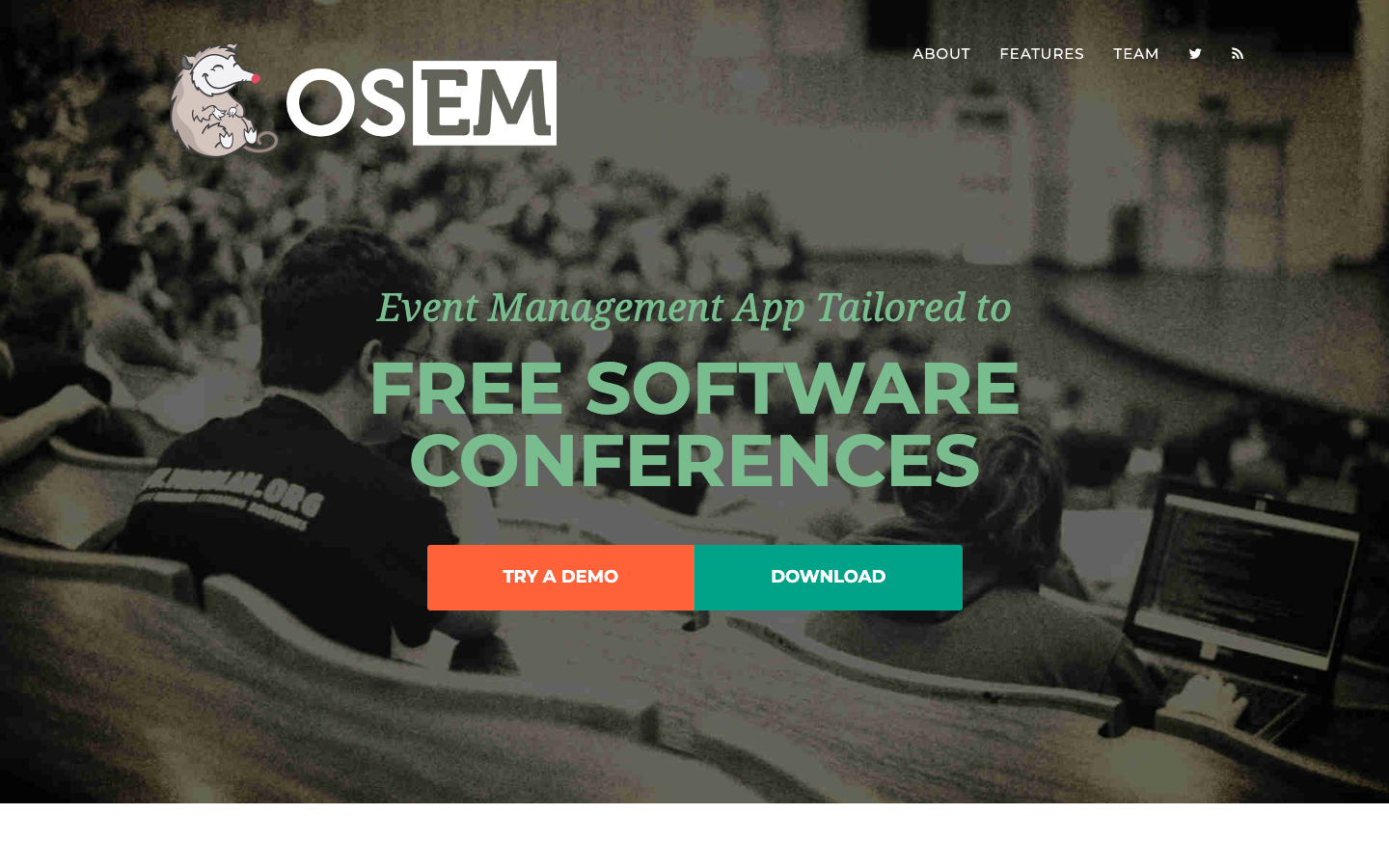
OSEM (Open Source Event Manager) is purpose-built for free and open-source software conferences. It bundles call for papers, scheduling, speaker management, and attendee communication.
Pros:
- Tailored workflow for FOSS conferences; reduces unnecessary complexity
- MIT license; community-driven development
- Lightweight Ruby codebase; easy to self-host and customize
Cons:
- Narrower scope; less suitable for commercial or non-FOSS events
- Smaller user base means fewer third-party integrations
pretalx
Pretalx is a conference planning platform focused on the call for papers, speaker management, and schedule building. It's the go-to tool for conference organizers who need a robust submission and curation workflow.
Pros:
- Excellent call for papers and speaker communication tools
- REST API and plugin architecture for custom workflows
- Lightweight and fast; minimal operational overhead
Cons:
- Ticketing is secondary; better paired with a dedicated ticket platform (e.g., pretix)
- Limited attendee management features outside the speaker/submission pipeline
How to choose
For pure scheduling and RSVPs without payments, start with rallly—it's the simplest to deploy and maintain.
For ticketing-heavy events (concerts, festivals, paid conferences), choose between pretix (most mature, powerful API) and Hi.Events (newer, modern stack). Pretix wins if you need complex pricing or reseller workflows; Hi.Events is faster to set up.
For large, multi-day conferences with speaker management and abstract review, indico is the all-in-one choice, though pretalx + alf.io or pretix is a leaner alternative if you prefer modular tools.
For FOSS-focused events, osem is purpose-built; otherwise, alf.io is a solid, straightforward middle ground for workshops and smaller conferences.