









TL;DR
- Data teams with SQL expertise should evaluate Apache Superset or Redash — both let you query directly without proprietary modeling layers, cutting vendor lock-in and keeping analytics portable.
- Organizations prioritizing ease-of-use over customization will find Metabase the fastest path to dashboards, with no LookML learning curve and no enterprise licensing overhead.
- Teams building AI-driven analytics or exploring unconventional data sources can explore MindsDB to layer AI querying on top of existing databases, or Evidence if you want BI-as-code workflows embedded in your repository.
Why teams leave Looker
A mid-market analytics team hits month six with Looker: they've licensed seats for 50 people, sunk $50,000+ annually into platform fees, and now face a choice. A business unit wants to query a new data source outside Google Cloud, or the data governance team flags that Looker's dependency on Google infrastructure conflicts with data residency requirements. Worse, pivoting analytics logic means rewriting LookML — Looker's proprietary modeling language — making even simple schema changes a bottleneck owned by a specialist few.
The structural problem is lock-in by design. Looker's enterprise pricing model (starting at $3,000–5,000/month with a 10-user minimum, scaling to $36,000–60,000 annually for a 50-person org) makes it the priciest major BI platform, but the real switching cost is architectural. LookML embeds business logic into Looker's closed system; moving analytics to another tool means rebuilding those models from scratch. Add Google Cloud dependency, and teams with multi-cloud or on-premise data strategies find themselves constrained.
Open-source alternatives sidestep both problems: they run anywhere, cost nothing to deploy, and let you own your analytics code. SQL-first tools eliminate the proprietary modeling layer entirely.
Quick comparison
| Name | License | Self-Hosted | Data Ownership | Query Flexibility | Best For |
|---|---|---|---|---|---|
| Apache Superset | Apache-2.0 | ✓ | Full | SQL + visual query builder | Data teams wanting SQL-native dashboards at scale |
| Metabase | — | ✓ | Full | SQL + native queries | Non-technical users and rapid dashboard deployment |
| MindsDB | — | ✓ | Full | SQL + AI-driven querying | Teams integrating AI agents with data pipelines |
| Redash | BSD-2-Clause | ✓ | Full | SQL + multi-source joins | Query-first teams and ad-hoc analysis at scale |
| Datasette | Apache-2.0 | ✓ | Full | SQL (SQLite/DuckDB) | Publishing and exploring datasets with minimal infrastructure |
| Evidence | MIT | ✓ | Full | SQL in markdown | Engineering teams treating BI as code |
| Chartbrew | — | ✓ | Full | SQL + REST APIs + NoSQL | Teams needing multi-source dashboards with AI assistance |
| Shaper | MPL-2.0 | ✓ | Full | SQL (DuckDB-native) | Data analysts favoring simplicity and DuckDB performance |
Top open-source alternatives to Looker
Apache Superset
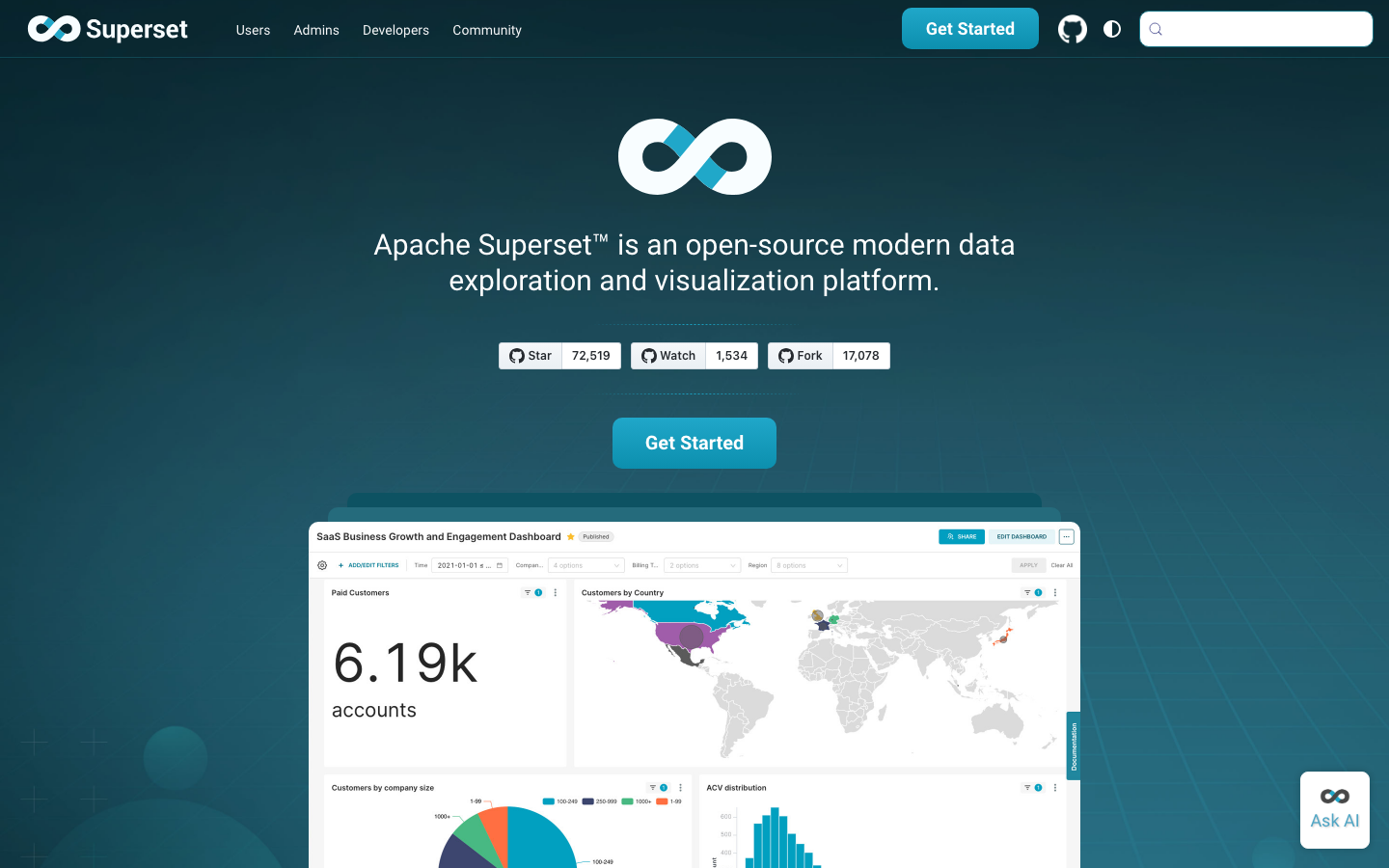
Apache Superset is a data visualization and exploration platform built for SQL-first analytics at scale. With 72k+ GitHub stars, it's the most widely adopted open-source BI tool and supports dozens of database connectors, from PostgreSQL to Snowflake to BigQuery.
Pros:
- No proprietary modeling language; write SQL directly or use the visual query builder
- Scales to large teams and complex dashboards; production-ready with enterprise features
- Rich visualization library and semantic layer support for reusable metrics
Cons:
- Steeper learning curve for non-technical users compared to Metabase
- Requires more hands-on infrastructure management and tuning at scale
Metabase
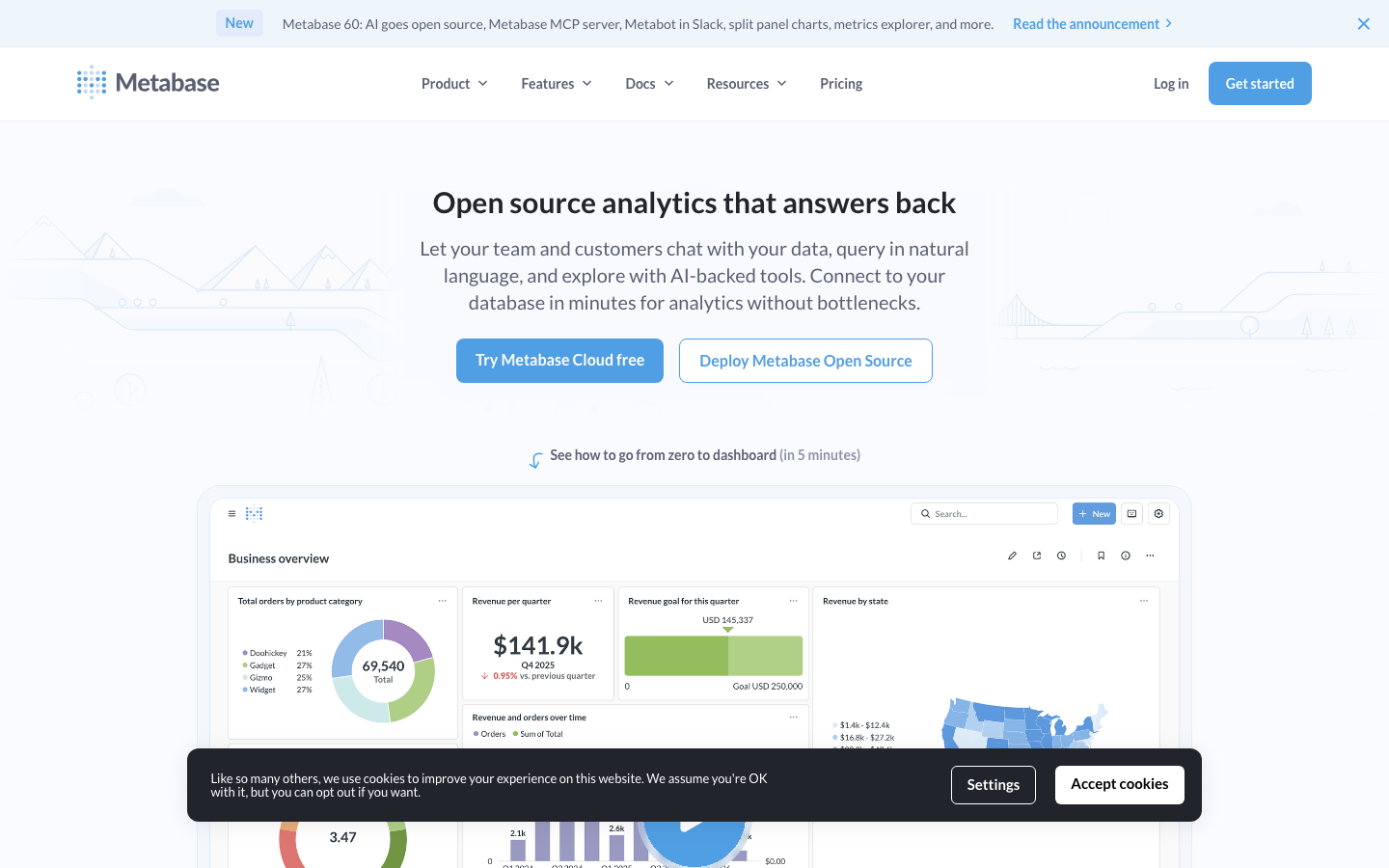
Metabase is a lightweight, self-serve BI tool designed for teams that want dashboards without SQL expertise. It connects to any SQL database and lets business users ask questions in plain language or through a visual query interface.
Pros:
- Easiest onboarding of the group; minimal setup and no modeling language to learn
- Mobile-friendly dashboards and collaborative features built in
- Strong community and straightforward deployment options (Docker, cloud, on-premise)
Cons:
- Less customizable for complex, multi-step analytical workflows
- Limited advanced features compared to Superset or Redash at the same price point
MindsDB
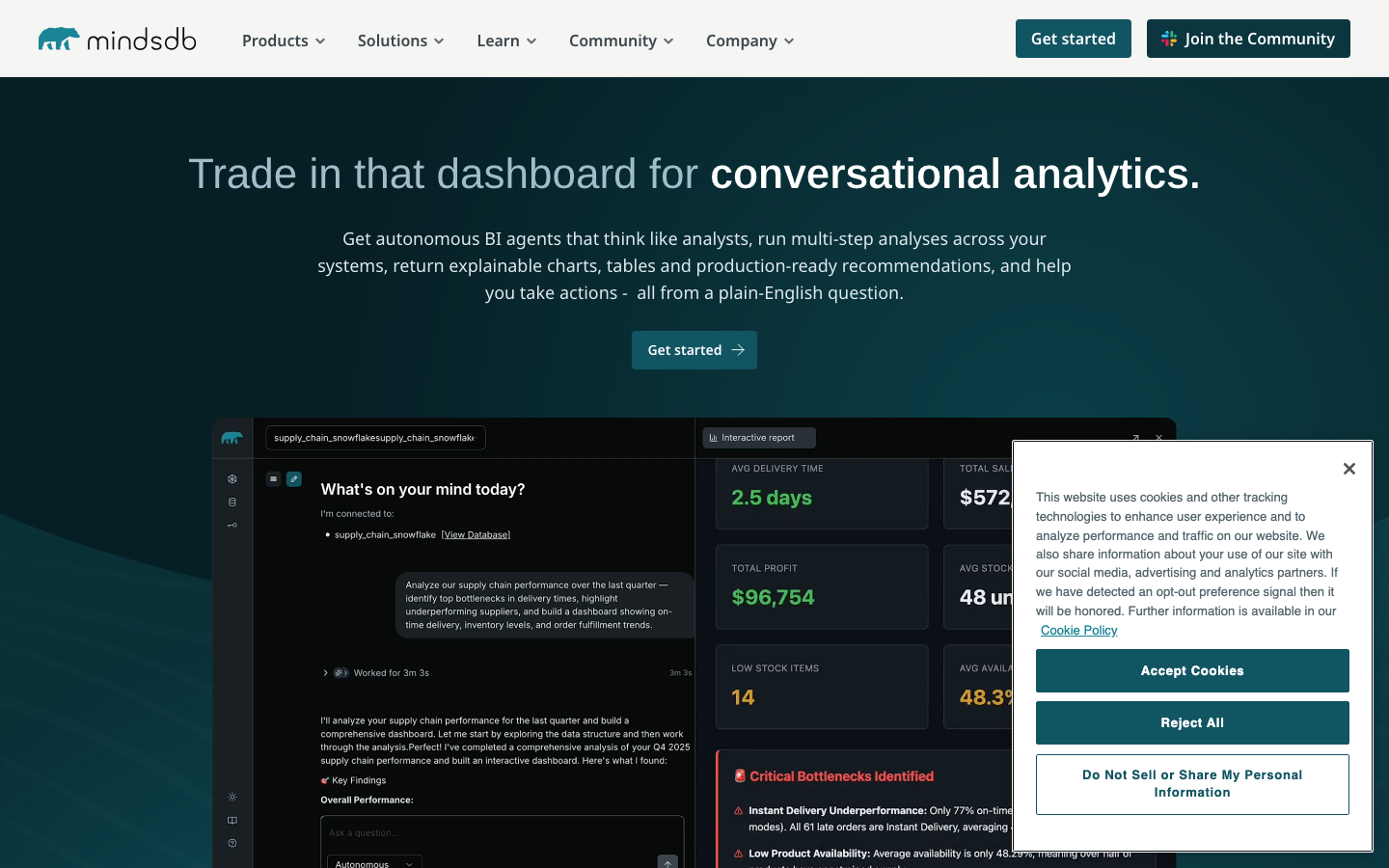
MindsDB positions itself as an AI Data Vault, adding a query engine layer that lets AI agents and applications securely query data from any datasource. It's designed for teams building AI-native analytics workflows.
Pros:
- Native AI integration; query your data using natural language and AI-driven insights
- Multi-datasource federation without moving data
- Strong for teams already investing in AI/ML pipelines
Cons:
- Newer and less battle-tested than Superset or Metabase in traditional BI use cases
- Requires familiarity with AI/agent concepts; not ideal for purely dashboard-focused teams
Redash
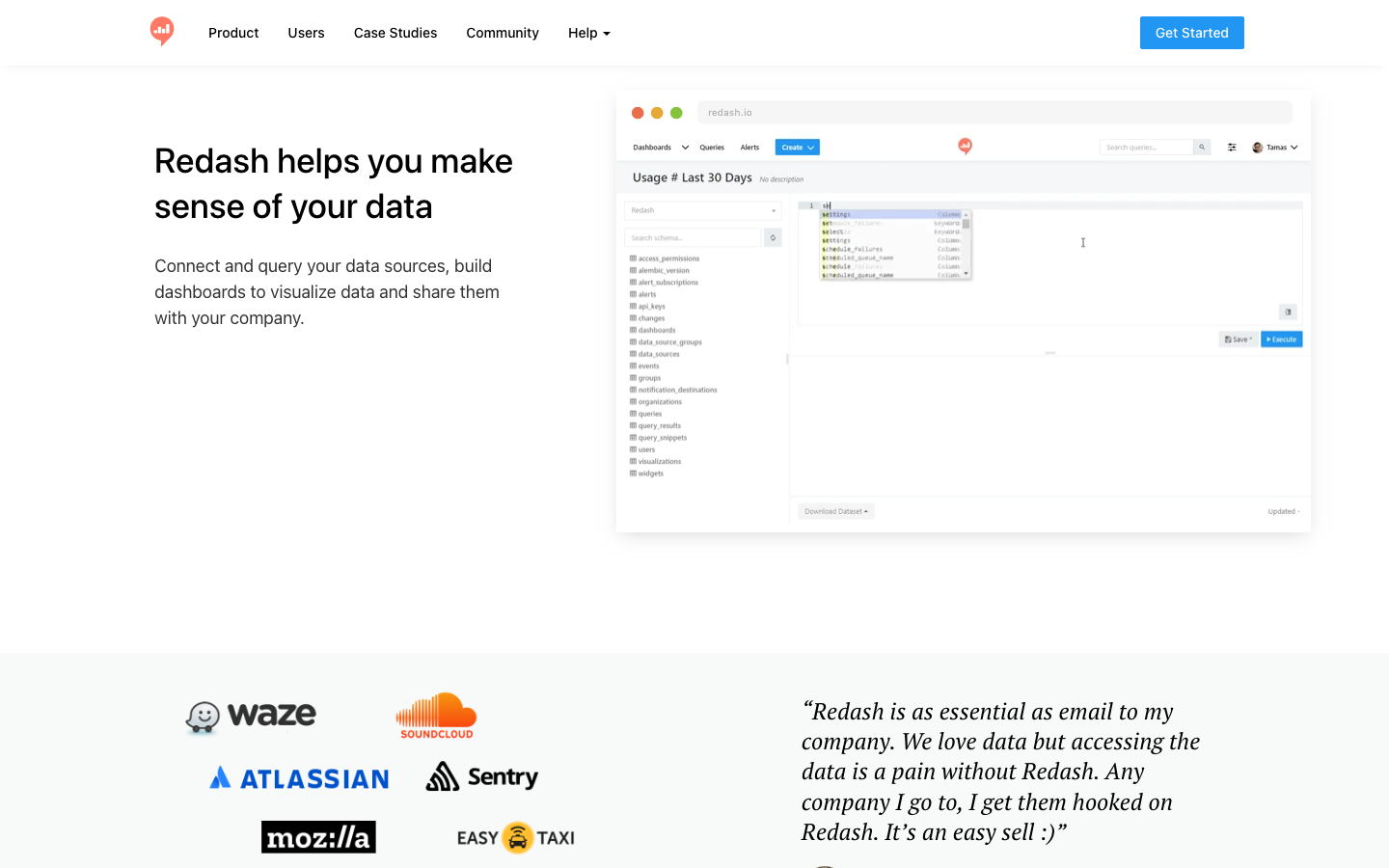
Redash is a query-first platform that treats SQL as the primary interface, with dashboarding as the output. It excels at connecting to multiple data sources, running ad-hoc queries, and sharing results across teams.
Pros:
- SQL-native workflow; powerful for data teams and analysts who live in queries
- Multi-source joins and query sharing reduce data silos
- Lightweight and fast to deploy; lower resource overhead than Superset
Cons:
- Less polished UI for non-technical users; steeper learning curve for business stakeholders
- Visualization options are solid but less extensive than Superset
Datasette
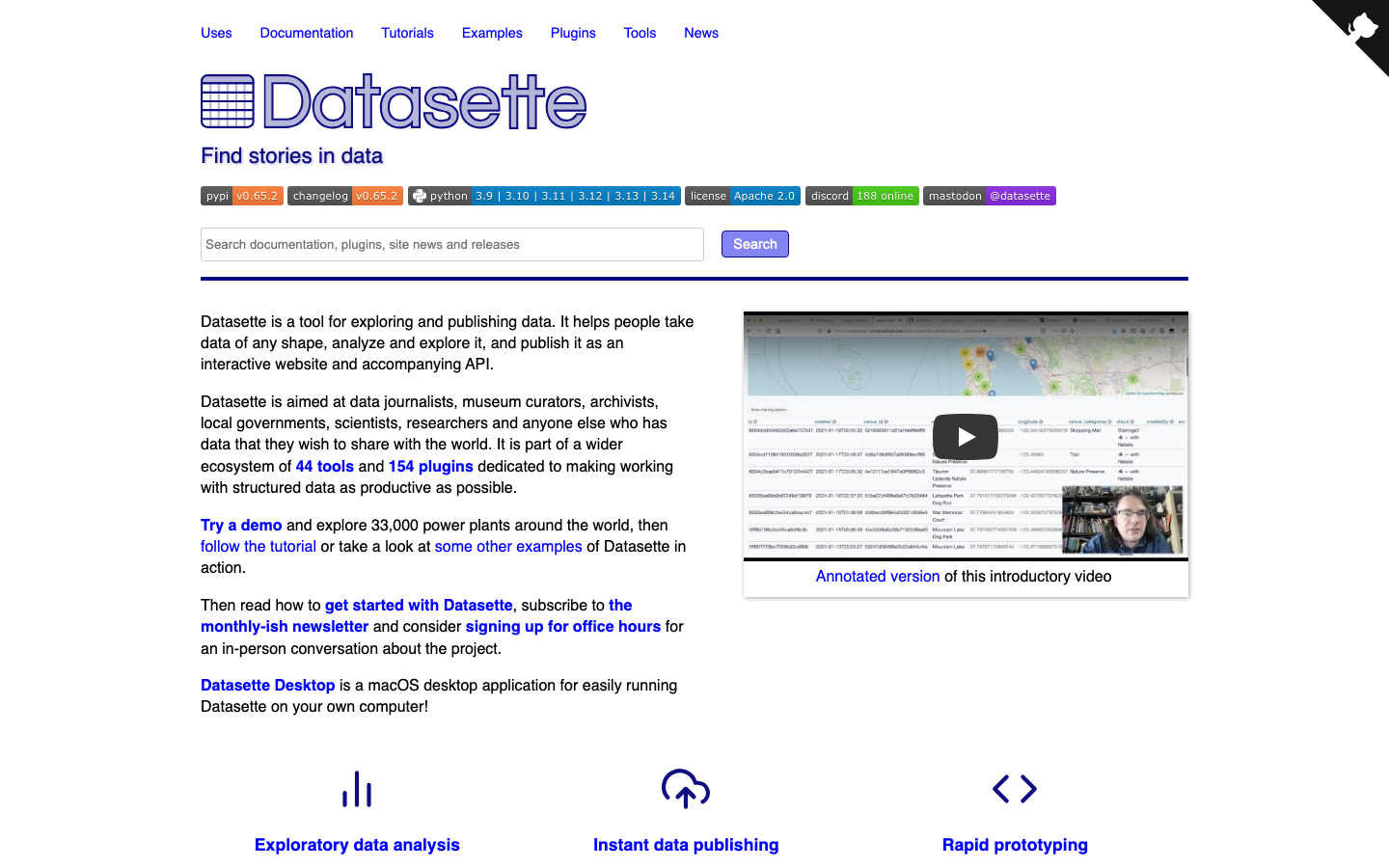
Datasette is a lightweight, single-purpose tool for exploring and publishing datasets. It's optimized for quick inspection, sharing, and querying of CSV, JSON, and SQLite data without heavy infrastructure.
Pros:
- Minimal setup; publish a dataset and start querying in minutes
- Excellent for data journalists, researchers, and teams publishing public datasets
- Instant full-text search and faceted browsing
Cons:
- Not designed for large team dashboarding or real-time operational analytics
- Best suited to static or slowly-changing datasets; less ideal for live operational metrics
Evidence
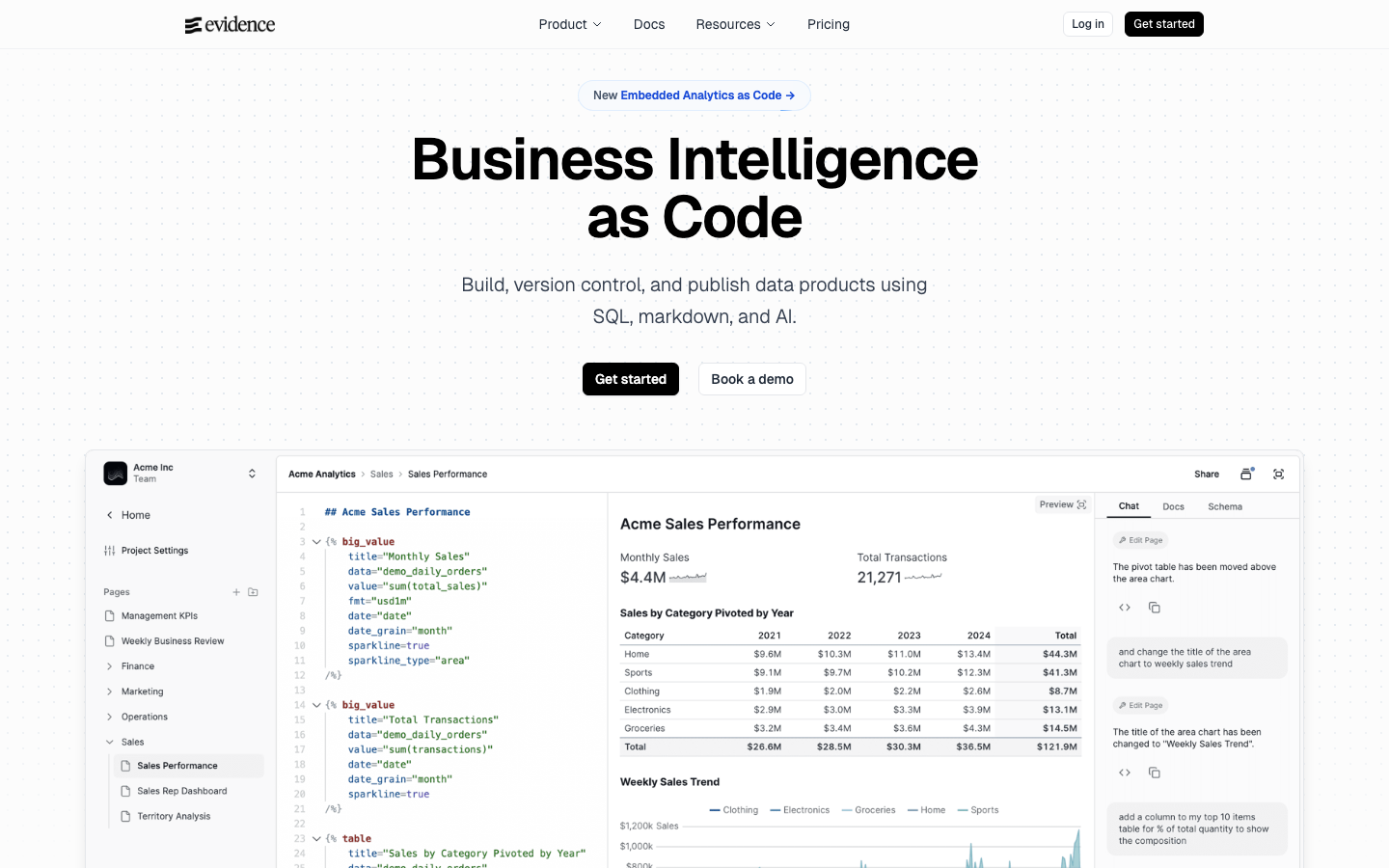
Evidence treats business intelligence as code: you write SQL and markdown in your repository, version-control your analytics, and deploy dashboards as part of your CI/CD pipeline. It's built for engineering-first teams.
Pros:
- BI-as-code model integrates seamlessly with Git workflows and code review
- Fast iteration and reproducibility; analytics live alongside application code
- SQL-native; no modeling layer or proprietary syntax
Cons:
- Requires developer comfort with repositories and markdown; not self-serve for non-technical users
- Smaller ecosystem and fewer pre-built connectors than mature platforms
Chartbrew
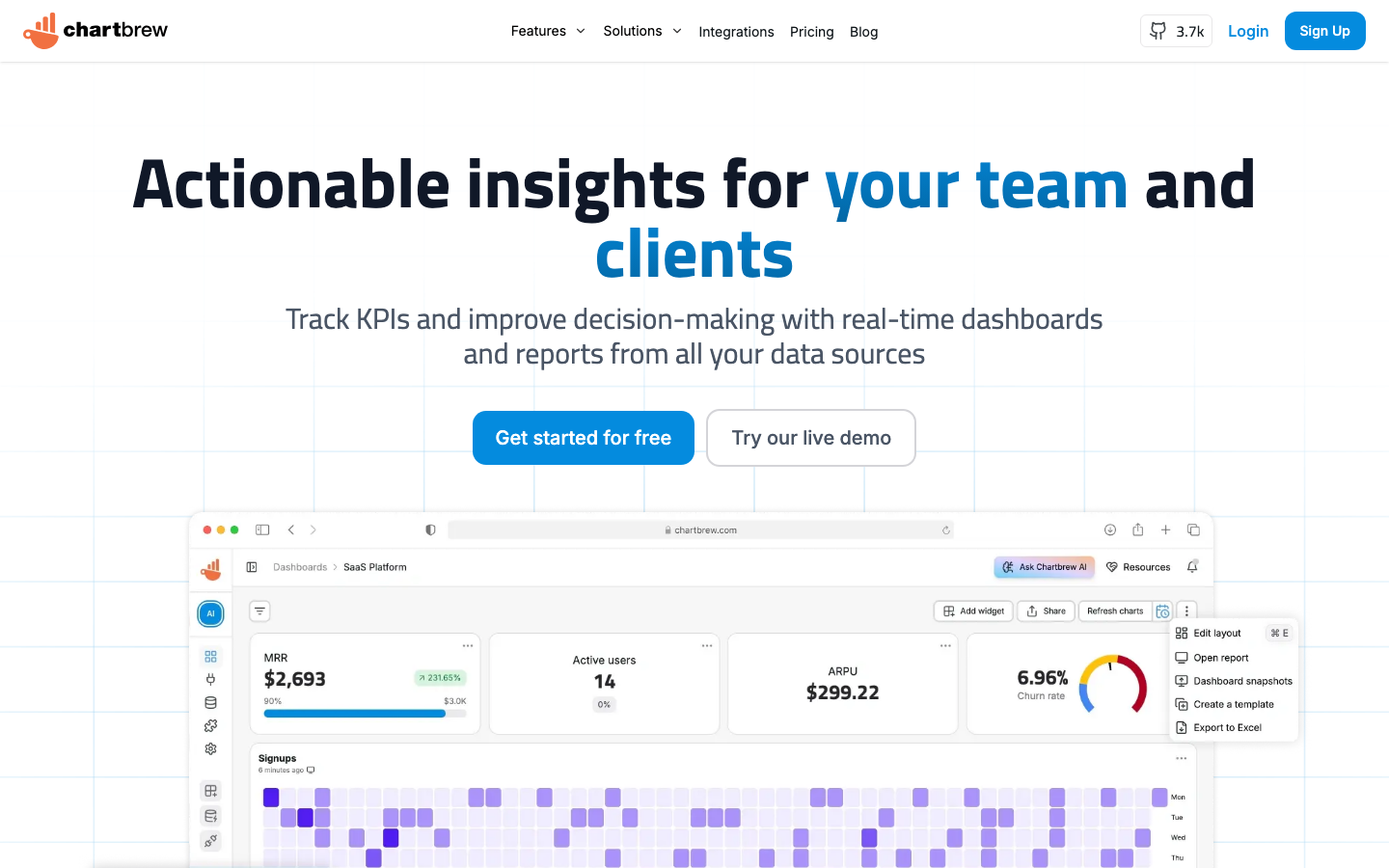
Chartbrew is a reporting platform that connects to SQL, NoSQL, and REST APIs, with an AI assistant to help build dashboards. It supports embedding and scheduling, making it flexible for both internal and customer-facing analytics.
Pros:
- Multi-source flexibility; query SQL databases, MongoDB, and APIs in one dashboard
- AI assistant accelerates chart creation and exploration
- Embeddable charts and scheduled reports for distribution
Cons:
- Smaller community and fewer integrations than Superset or Metabase
- Less mature feature set for advanced analytics use cases
Shaper
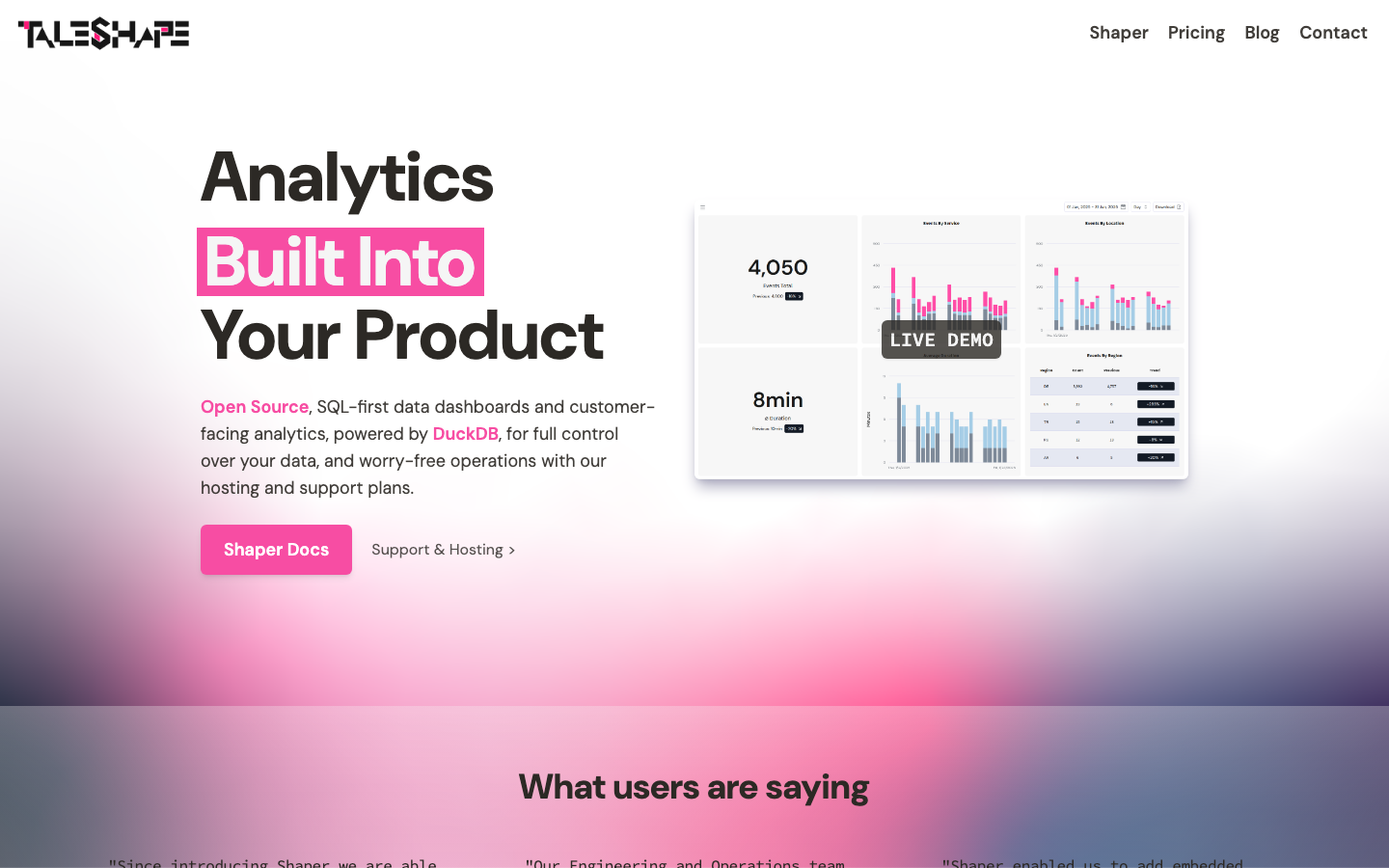
Shaper is a minimalist analytics tool built on DuckDB, optimized for speed and simplicity. You write SQL, visualize results, and share dashboards—all without complex configuration.
Pros:
- DuckDB backend delivers exceptional performance on large datasets
- Extremely lightweight; minimal infrastructure footprint
- Fast, responsive UI for exploratory analysis
Cons:
- Very early-stage; smaller community and fewer features than established alternatives
- Best for individual analysts or small teams; not yet proven at enterprise scale
How to choose
For SQL-comfortable teams at scale, start with Superset or Redash — both eliminate Looker's proprietary modeling tax and let you own your analytics code. For speed and ease, Metabase gets non-technical users to dashboards fastest. For teams with AI or multi-source data strategies, MindsDB or Chartbrew offer specialized paths. For code-first organizations, Evidence integrates BI into your repository workflow. If you're publishing datasets or exploring data ad-hoc, Datasette or Shaper are lightweight wins. Evaluate based on your team's SQL literacy, data sources, and whether you need self-serve dashboarding or analyst-driven workflows — all of these tools eliminate Looker's cost and lock-in, but each excels in different contexts.