







TL;DR
- Privacy-first is non-negotiable: Rybbit strips away the complexity of multi-product billing and cloud lock-in, giving you a lightweight, privacy-respecting analytics engine you control entirely.
- Cost predictability matters at scale: Self-host Litlyx or Aptabase to eliminate per-event metering and avoid surprise bills when your product gains traction.
- Data sovereignty shouldn't be a premium feature: Countly offers a full-featured, self-hostable platform so your user behavior data never leaves your infrastructure.
Why teams leave PostHog
PostHog's free tier is genuinely generous—1M events per month is a real gift for early-stage teams. But as products scale, the cost structure becomes a problem. PostHog charges per event, per session recording, per feature flag, and per survey across its hosted cloud, layering fees on top of each other. A heavily-instrumented product that tracks granular user interactions, captures session recordings, and runs A/B tests can watch the bill climb faster than revenue grows.
The deeper issue is ownership. On PostHog Cloud, your data lives in their infrastructure. You're paying usage-based fees and surrendering data sovereignty. For teams handling sensitive product metrics, behavioral data, or operating under strict data residency requirements, this is untenable. Self-hosting PostHog is an option, but it shifts the operational burden—you're running a complex system on your own hardware.
Lighter, purpose-built open-source alternatives sidestep both problems: they eliminate per-event billing entirely (you pay for compute, not data volume), and they let you own the infrastructure. Once you self-host, scaling from 10M to 100M events costs you CPU cycles, not dollars per event. For teams that need analytics but can't afford PostHog's layered pricing or won't compromise on data residency, the open-source path becomes the only rational choice.
Quick comparison
| Name | License | Self-Hosted | Data Ownership | Query Flexibility | Best For |
|---|---|---|---|---|---|
| Rybbit | AGPL-3.0 | ✓ | Full | High | Teams wanting simplicity and privacy over feature breadth |
| Countly | License not declared | ✓ | Full | High | Enterprise teams needing AI-powered insights and multi-channel tracking |
| Agenta | License not declared | ✓ | Full | High | LLM-focused teams building observability into AI products |
| Litlyx | Apache-2.0 | ✓ | Full | High | GDPR-conscious teams seeking a Google Analytics replacement with AI dashboards |
| Aptabase | AGPL-3.0 | ✓ | Full | High | Mobile and desktop app developers prioritizing simplicity and privacy |
Top open-source alternatives to PostHog
Rybbit
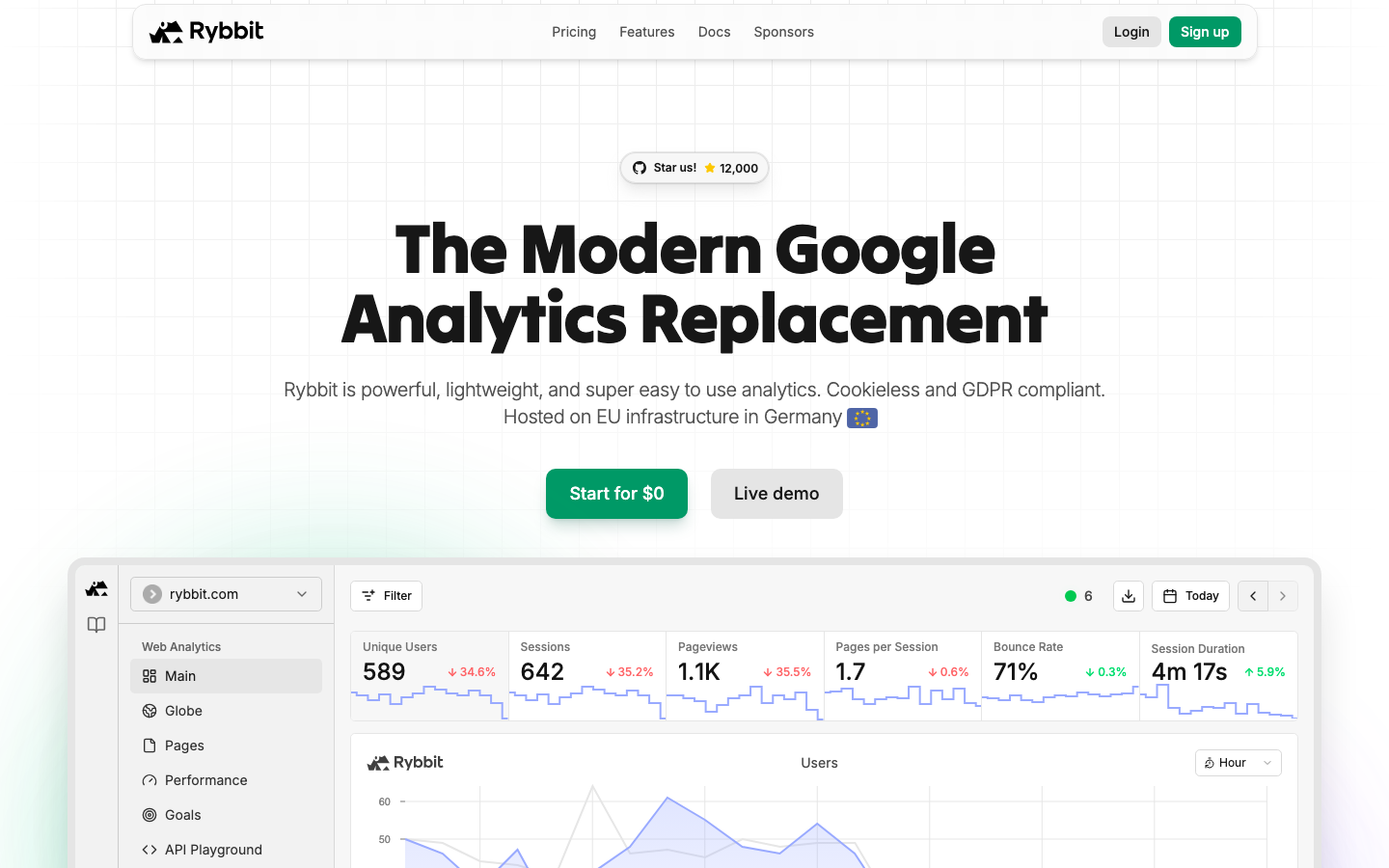
Rybbit is a privacy-friendly, open-source analytics platform designed to be 10x more intuitive than traditional tools. It strips away unnecessary complexity while keeping data in your control. With 12,000 GitHub stars, it's built by teams that reject surveillance capitalism in analytics.
Pros:
- Dead-simple setup and UI—no steep learning curve
- Full data ownership; self-hostable with no cloud dependency
- Privacy-first design; no third-party tracking or data sales
Cons:
- Smaller ecosystem compared to PostHog; fewer integrations
- Less suitable for teams needing advanced segmentation or cohort analysis
Countly
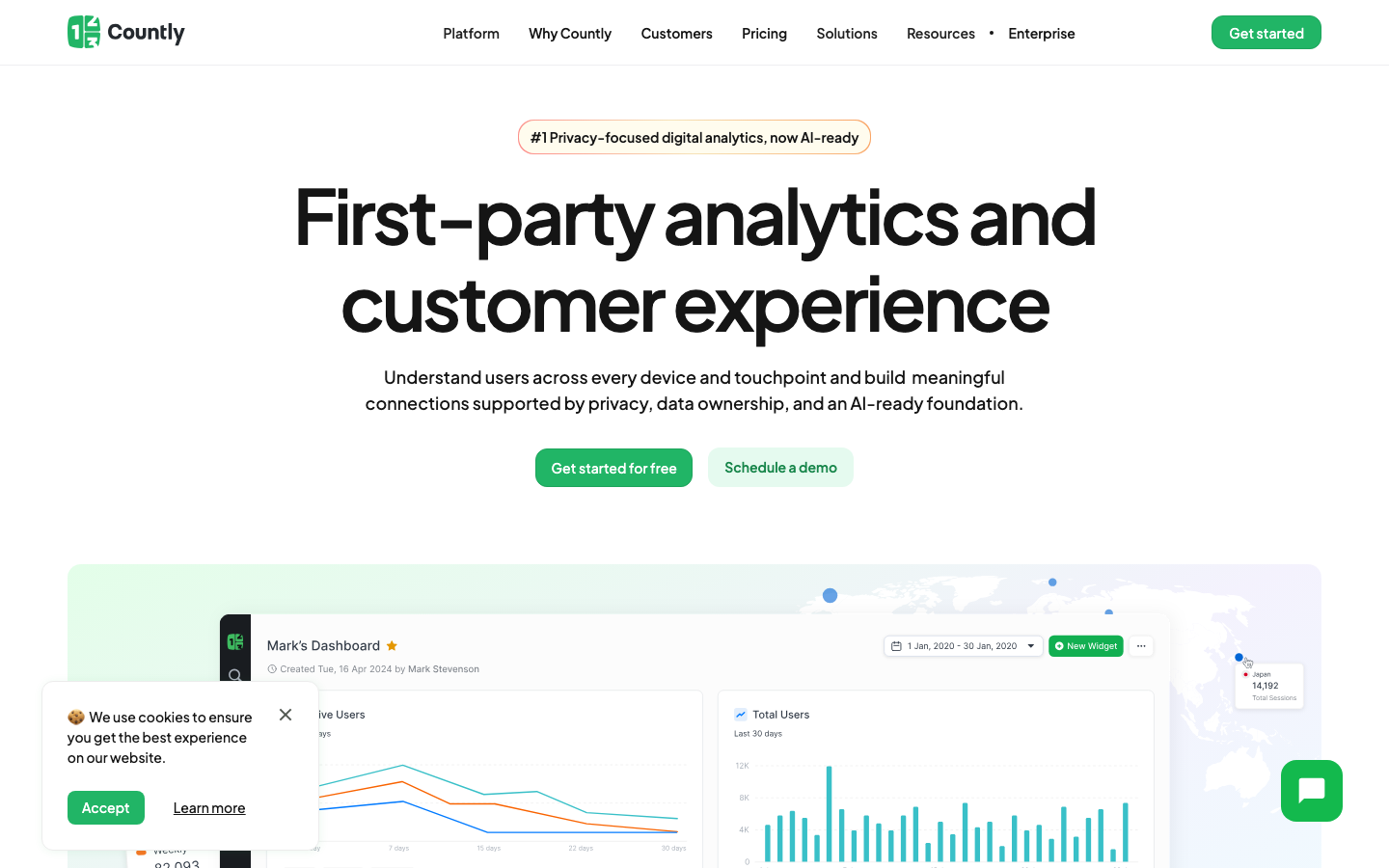
Countly is a privacy-first, AI-powered analytics platform built for understanding customer journeys across mobile, desktop, web, IoT, and connected devices. It combines behavioral analytics with engagement tools, making it a full-stack alternative for teams that need more than event tracking.
Pros:
- AI-powered insights built in; no need to stitch together separate tools
- Multi-channel support (mobile, web, IoT) in a single platform
- Enterprise-grade self-hosting with no per-event fees
Cons:
- Steeper operational overhead than lighter alternatives
- License not publicly declared, which may concern some teams
Agenta
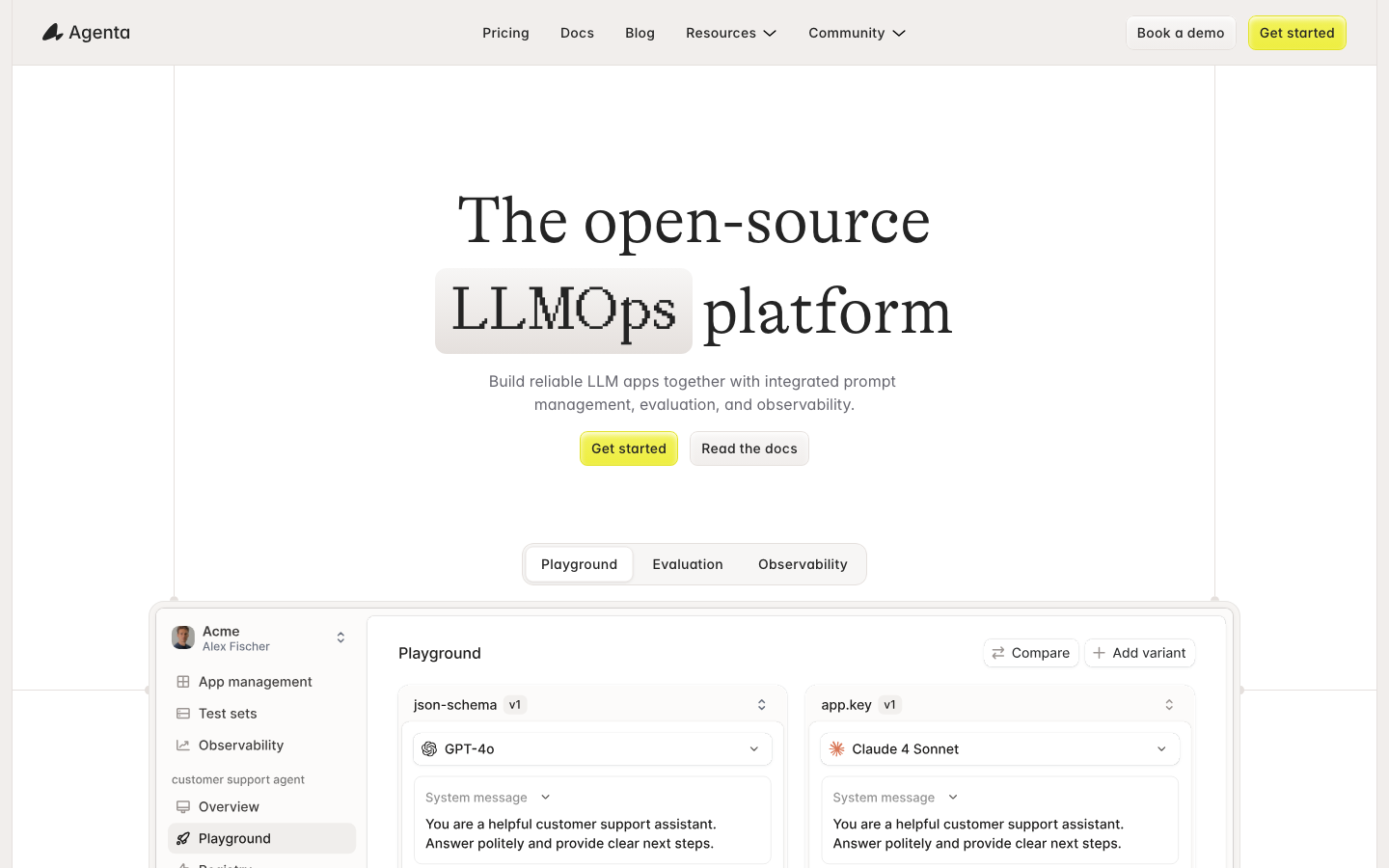
Agenta is an LLMOps platform designed for teams building AI products. It combines prompt playground, prompt management, evaluation, and observability in one place—making it the right choice if your analytics needs are inseparable from LLM monitoring.
Pros:
- Purpose-built for LLM workflows; includes evaluation and observability
- Prompt versioning and A/B testing natively integrated
- Self-hostable with full data control
Cons:
- Narrow focus on LLM products; not a general-purpose analytics tool
- Smaller community than broader analytics platforms
Litlyx
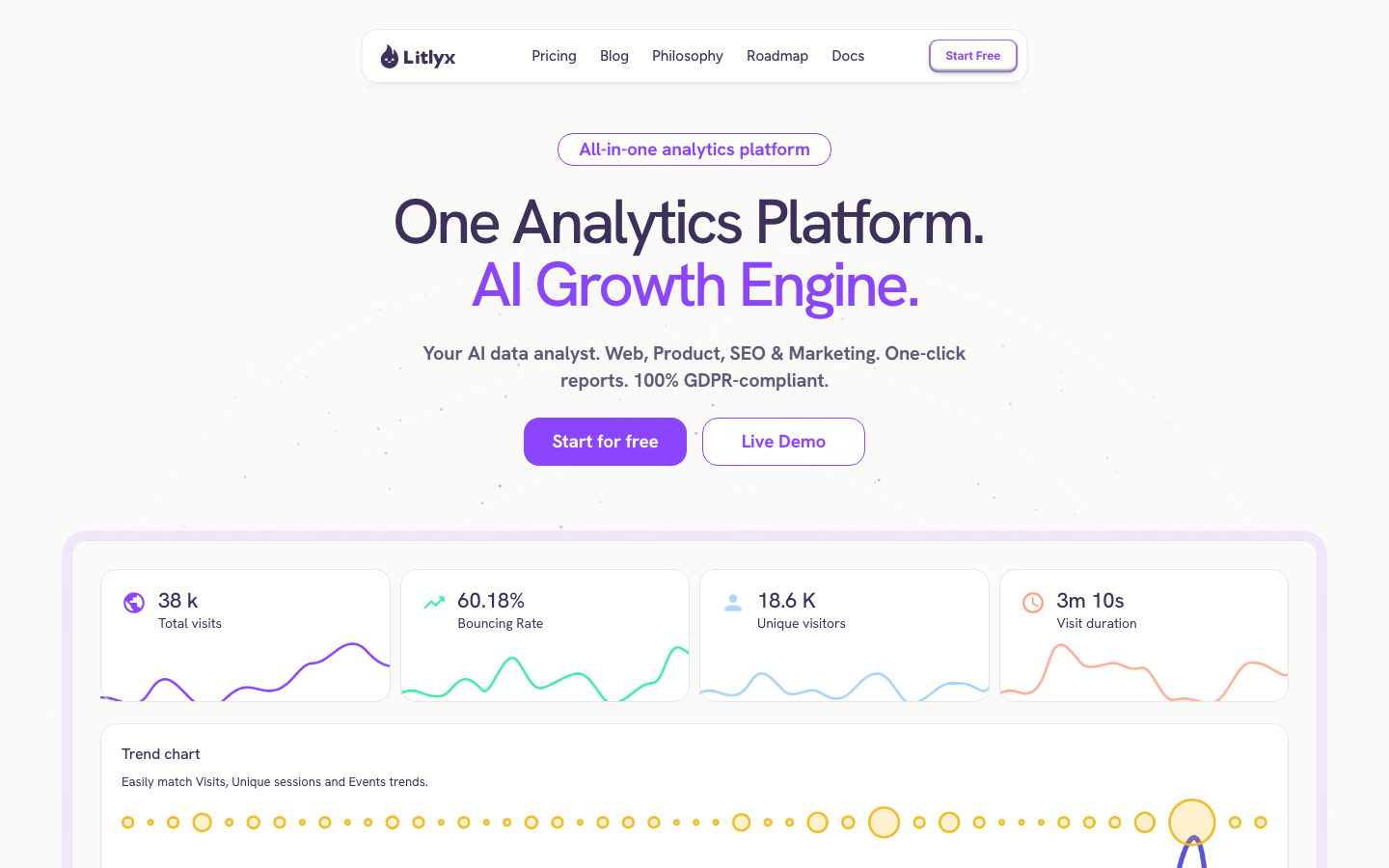
Litlyx is a self-hostable, GDPR-compliant analytics solution that positions itself as an alternative to Google Analytics, Mixpanel, Plausible, Umami, and Matomo. It emphasizes simplicity—setup in 30 seconds—and pairs that with AI-powered dashboards for insight generation.
Pros:
- GDPR-first design; no cookie consent headaches
- AI-powered dashboard generation saves time on manual reporting
- Apache-2.0 licensed and trivially easy to deploy
Cons:
- Smaller feature set than PostHog; limited advanced segmentation
- Newer project with a smaller community for troubleshooting
Aptabase
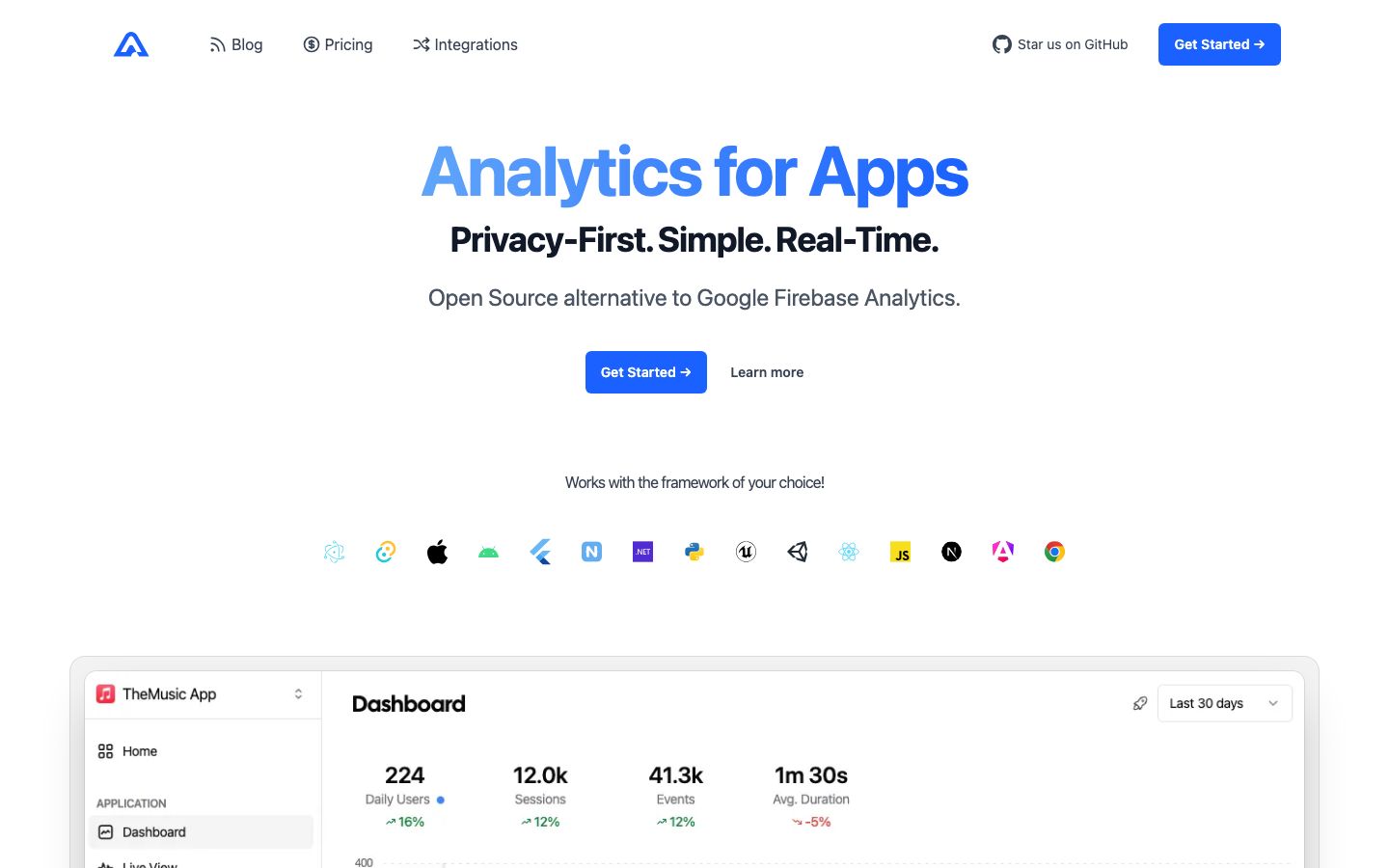
Aptabase is a privacy-first analytics platform built specifically for mobile, desktop, and web apps. It emphasizes simplicity and data ownership, positioning itself as an alternative to tools that monetize user data.
Pros:
- Mobile-first design; excellent for app analytics
- Minimal setup friction and lightweight SDKs
- AGPL-3.0 licensed and fully self-hostable
Cons:
- Smaller feature set compared to PostHog; fewer advanced analytics options
- Limited third-party integrations
How to choose
Early-stage teams (pre-PMF): Start with Rybbit or Aptabase. You need simplicity and cost predictability, not a feature-rich platform you'll outgrow in six months. Both are trivial to self-host and won't surprise you with bills.
Scale-up teams with data sensitivity: Countly or Litlyx if you're handling regulated data or operating under strict residency requirements. You need a mature, self-hostable platform that won't force you into the cloud.
AI/LLM product teams: Agenta if your analytics needs are tightly coupled with prompt engineering and model observability. It's purpose-built for this use case in ways generic analytics platforms are not.
The rule: if you're paying PostHog more than $500/month, self-hosting an open-source alternative almost always makes financial sense. If data sovereignty is a requirement, it's not a choice—it's a necessity.