












TL;DR
- Teams building AI workflows at scale should evaluate Dify — it's production-ready for agentic systems and sidesteps Retool's consumption-based AI billing trap.
- Internal-tool builders tired of per-seat licensing find Appsmith and ToolJet remove the user-count penalty and let you self-host without Enterprise paywalls.
- Organizations seeking a true no-code foundation with extensibility built in often land on NocoBase or JeecgBoot to avoid vendor lock-in entirely.
Why teams leave Retool
Picture a growing startup: three months in, the Retool bill looked reasonable. Standard users at $X/month, a few end-users cheaper. Then the team adds AI features. Suddenly there's a separate consumption meter. Git integration? That's Enterprise only. SSO? Same tier. The finance team balks. The infrastructure bill for self-hosted isn't any cheaper — you've just shifted the pain to DevOps overhead and licensing gates you didn't see coming.
This is Retool's structural problem. The platform pitches simplicity — a flat per-user cost — but the real economics are hidden. Newer capabilities (AI, Workflows) are metered separately, and a pricing shift in September 2025 doubled down on that consumption model. Features that most teams now consider essential — single sign-on, version control integration — live behind an Enterprise tier that starts in five figures. If you need external or client-facing users, the math gets worse. Even self-hosted deployments ($12/standard, $7/end user) hide the true cost: you're now responsible for infrastructure, updates, and DevOps labor.
Open-source alternatives flip that script. You own the code, host it where you want, and add features without hitting a licensing gate. No surprise bills. No vendor lock-in. That's why teams are moving.
Quick comparison
| Name | License | Self-Hosted | API / Extensibility | Stack / Language | Best For |
|---|---|---|---|---|---|
| Dify | — | Yes | Extensive plugin system, REST API, workflow engine | TypeScript | AI agents, agentic workflows, LLM-powered apps |
| Flowise | — | Yes | Node-based visual builder, API-first | TypeScript | Low-code AI agent design, no-code LLM orchestration |
| JeecgBoot | Apache-2.0 | Yes | Code generation, plugin architecture, AI skills | Java | Enterprise Java teams, dual low-code + zero-code workflows |
| Appsmith | Apache-2.0 | Yes | REST/GraphQL/database connectors, extensible widgets | TypeScript | Admin panels, internal dashboards, multi-source data apps |
| Minds Platform | — | Yes | Modular AI framework, production-focused | Python | Teams building controlled, deployable AI systems |
| ToolJet | AGPL-3.0 | Yes | 25+ integrations, plugin SDK, workflow builder | JavaScript | Internal tools, dashboards, business apps, AI workflows |
| Filament | MIT | Yes | Laravel ecosystem, Livewire reactive components | PHP | Laravel developers building admin panels fast |
| NocoBase | — | Yes | Extensible plugin system, visual workflow builder | TypeScript | No-code/low-code business apps, enterprise solutions |
Top open-source alternatives to Retool
Dify
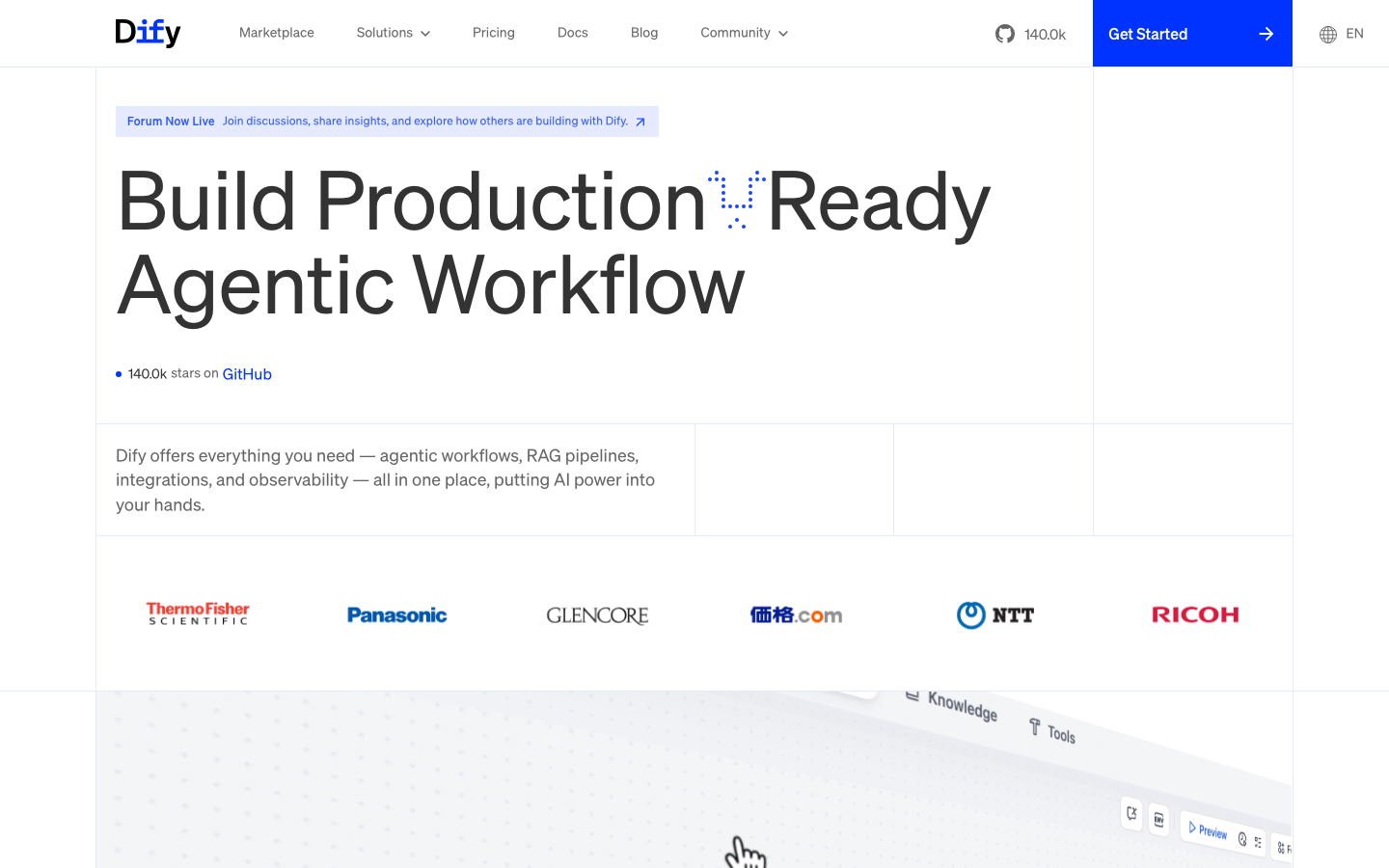
Production-ready platform for building agentic workflows and LLM-powered applications without the consumption-based surprise bills. Dify handles prompt engineering, model orchestration, and workflow automation in a single visual interface, then deploys to your infrastructure.
Pros
- No per-seat or usage-metered fees; self-host and pay only for compute.
- Built-in support for multiple LLM providers and model switching without vendor lock-in.
- Production-grade workflow engine with built-in monitoring and versioning.
Cons
- Steeper learning curve for teams new to agentic systems; not a pure drag-and-drop builder.
- Smaller ecosystem of pre-built connectors compared to enterprise platforms.
Flowise
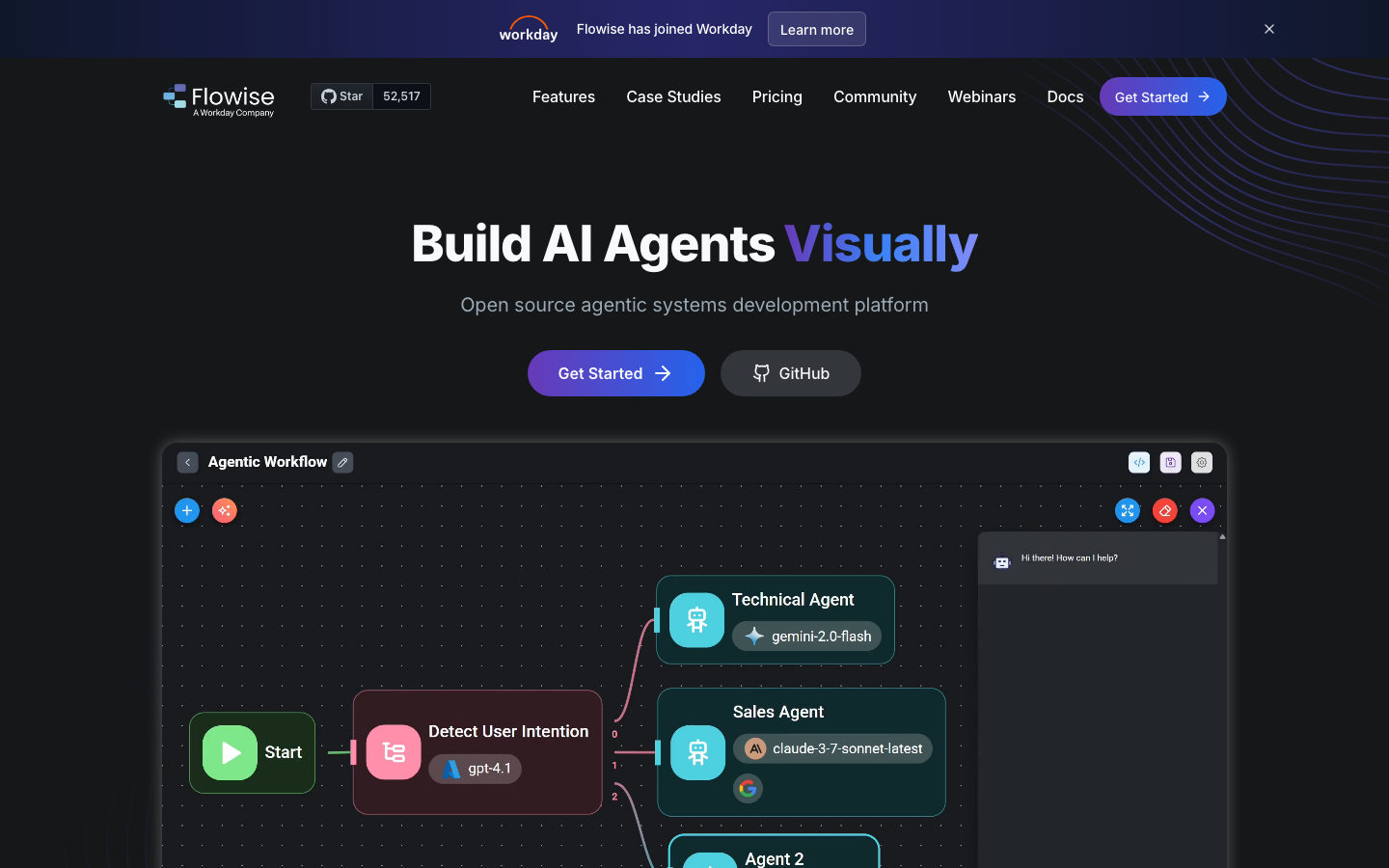
Visual, node-based platform for building AI agents and LLM workflows without writing code. Designed for teams that want to prototype and deploy AI applications quickly, without licensing meters.
Pros
- Intuitive drag-and-drop interface for chaining LLM calls and logic.
- Lightweight and fast to deploy; minimal infrastructure overhead.
- No usage-based billing; one-time setup cost.
Cons
- Narrower scope than full internal-tool platforms; focused on AI workflows, not general dashboards.
- Community-driven; less formal enterprise support than commercial offerings.
JeecgBoot
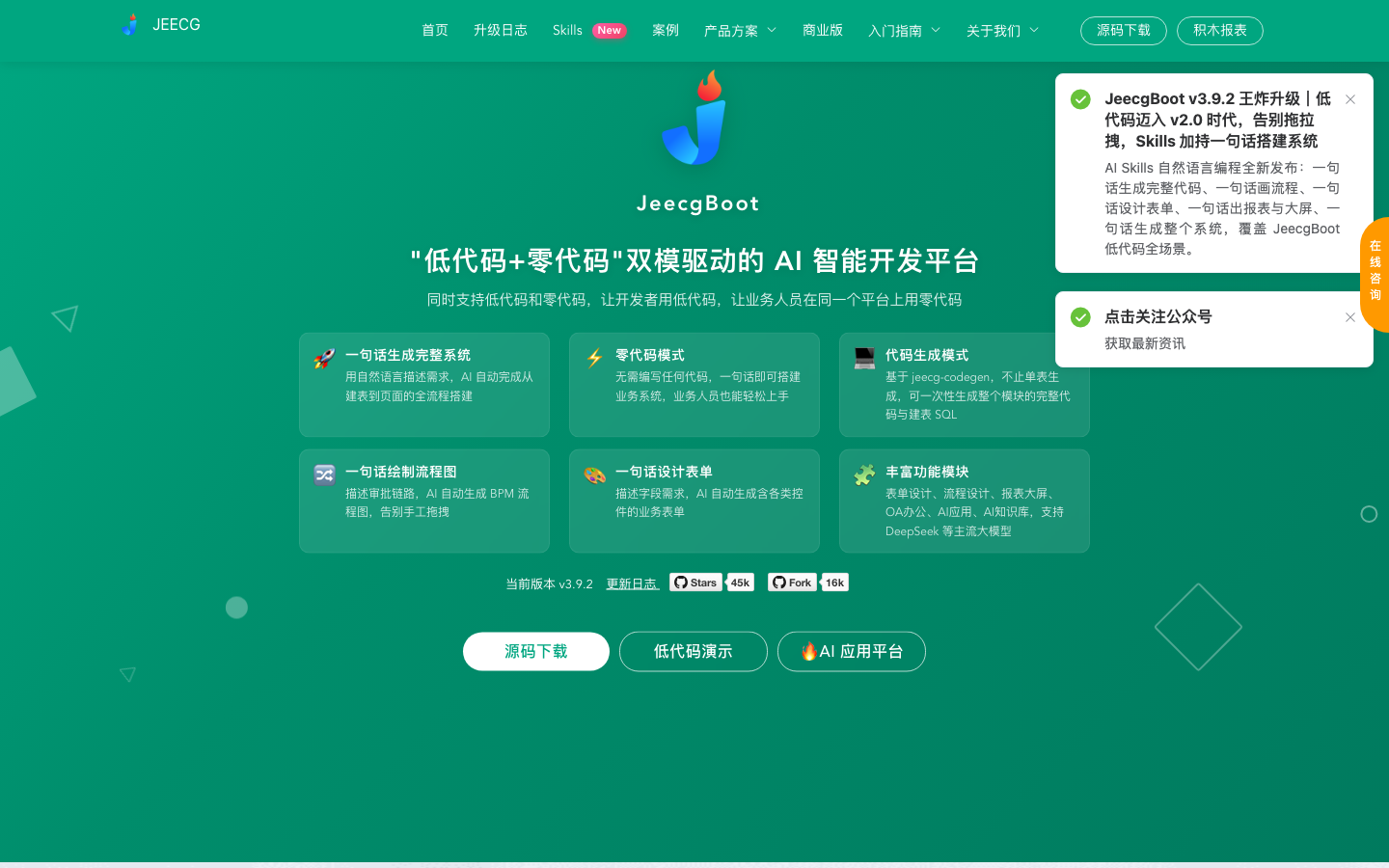
AI-powered low-code platform supporting both zero-code (5-minute system builds) and low-code (code generation) modes. Includes built-in AI applications, knowledge bases, workflow orchestration, and model integration, designed for Java teams.
Pros
- Dual-mode approach: zero-code for rapid prototyping, low-code for customization without losing flexibility.
- Enterprise-grade code generation reduces repetitive Java work significantly.
- Integrated AI skills and MCP support; no separate consumption billing.
Cons
- Primarily Java-focused; less suitable for polyglot teams or non-JVM stacks.
- Documentation and community resources skew toward Chinese-language sources.
Appsmith
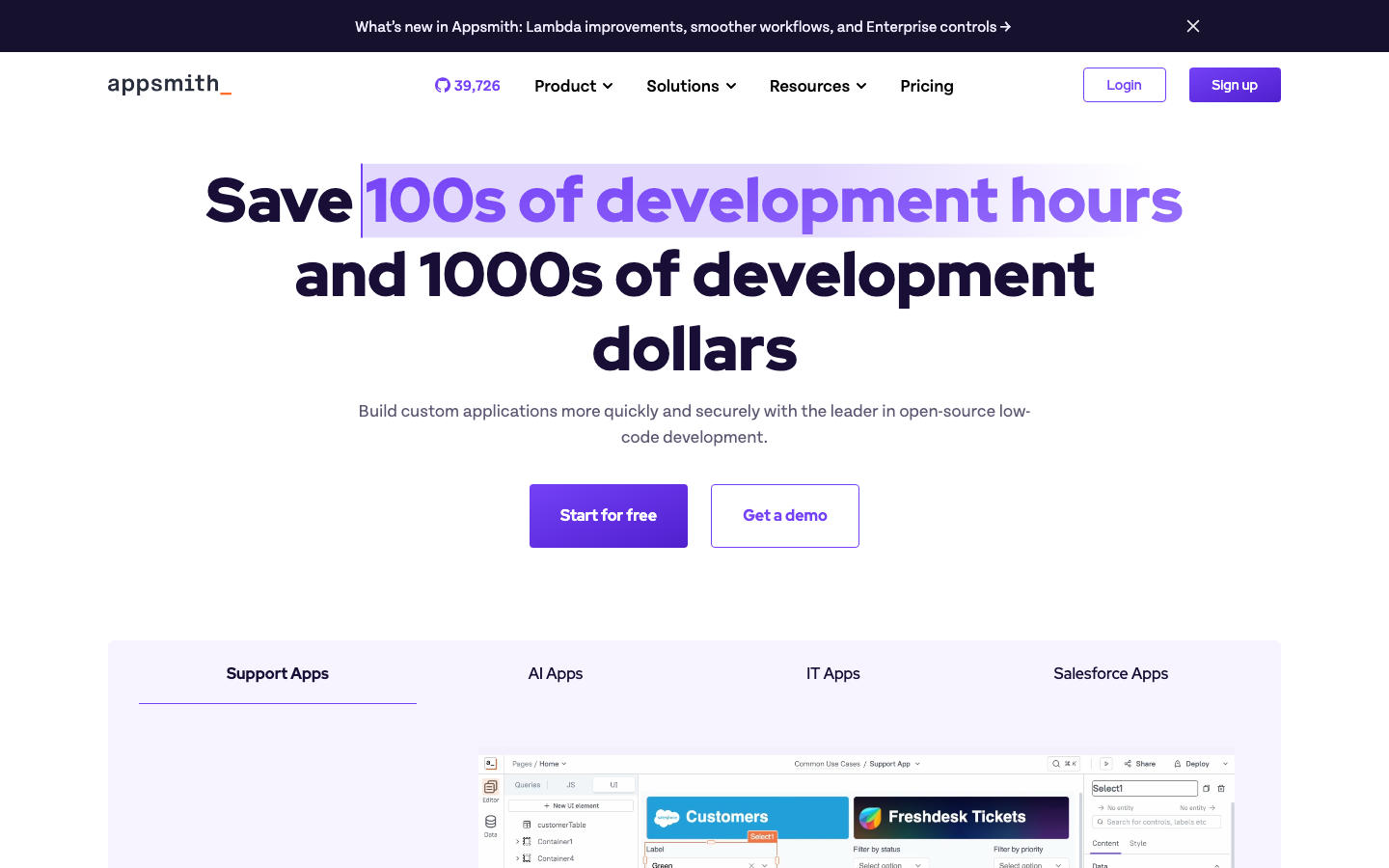
Open-source platform for building admin panels, internal tools, and dashboards by connecting to 25+ databases and any REST/GraphQL API. Self-host without per-user licensing or feature gates.
Pros
- Broad connector ecosystem; works with most databases and APIs out of the box.
- No Enterprise tier for core features; SSO, Git, and multi-tenancy are available in the open-source version.
- Apache 2.0 license; full freedom to modify and deploy.
Cons
- UI customization requires some JavaScript knowledge; not purely visual for advanced layouts.
- Smaller community than Retool; fewer third-party plugins.
Minds Platform
Platform for building production-ready AI systems that teams can control, extend, and deploy anywhere. Focused on applied AI rather than general internal tools.
Pros
- Production-grade architecture; designed for teams shipping real AI systems, not experiments.
- Full control and transparency; no vendor lock-in or usage meters.
- Modular design enables custom extensions and integrations.
Cons
- Narrower scope than full internal-tool builders; best for AI-first applications.
- Smaller community; less pre-built content and templates than broader platforms.
ToolJet
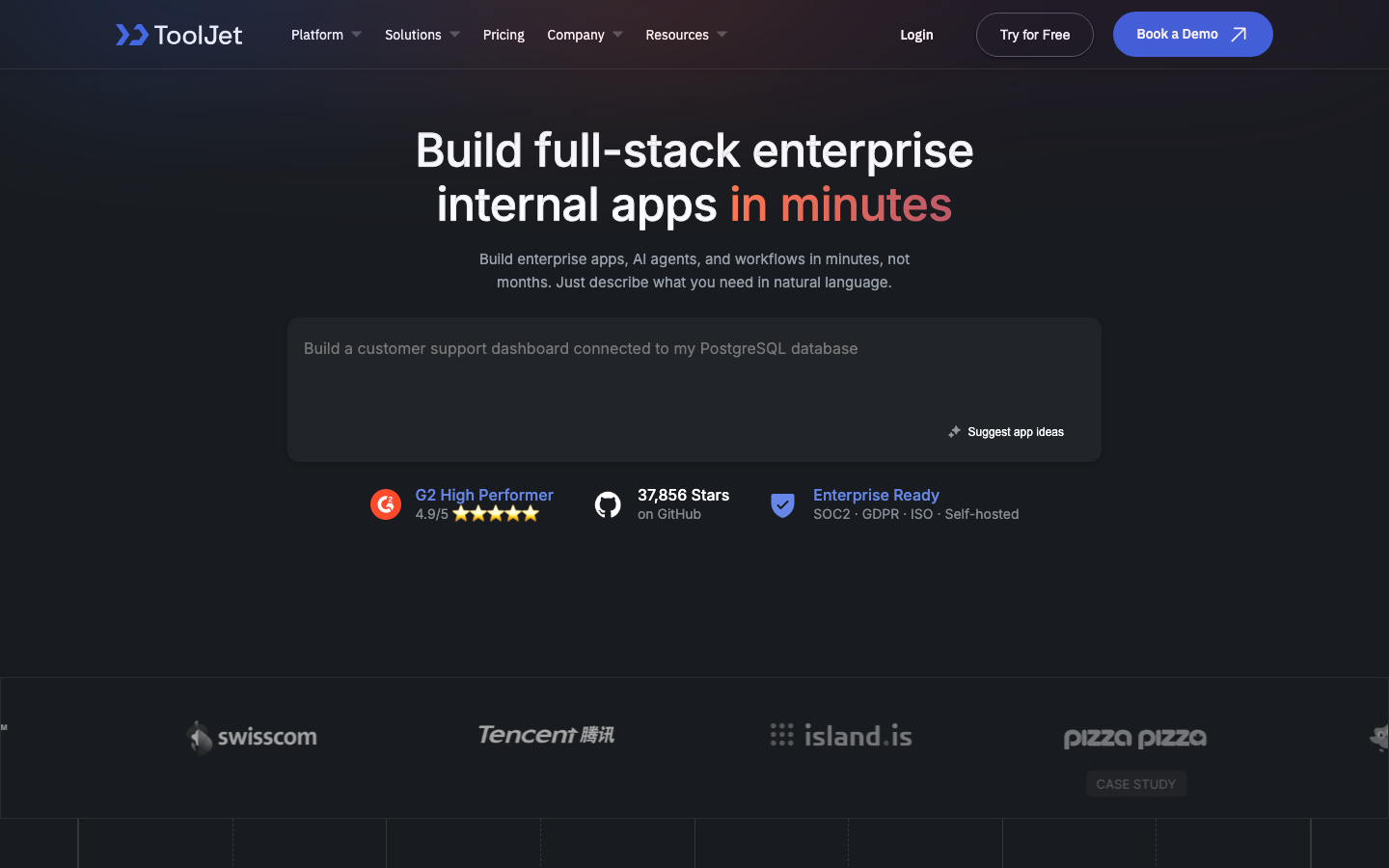
Open-source foundation of ToolJet AI — a platform for building internal tools, dashboards, business applications, and workflows. Integrates with 25+ data sources and supports AI agent workflows.
Pros
- AGPL-3.0 license; full source control and self-hosting without licensing restrictions.
- Unified interface for dashboards, workflows, and AI agents; no separate billing for each.
- Extensive connector library and active open-source community.
Cons
- AGPL license can complicate commercial deployments; requires legal review.
- Smaller enterprise support footprint than Retool.
Filament
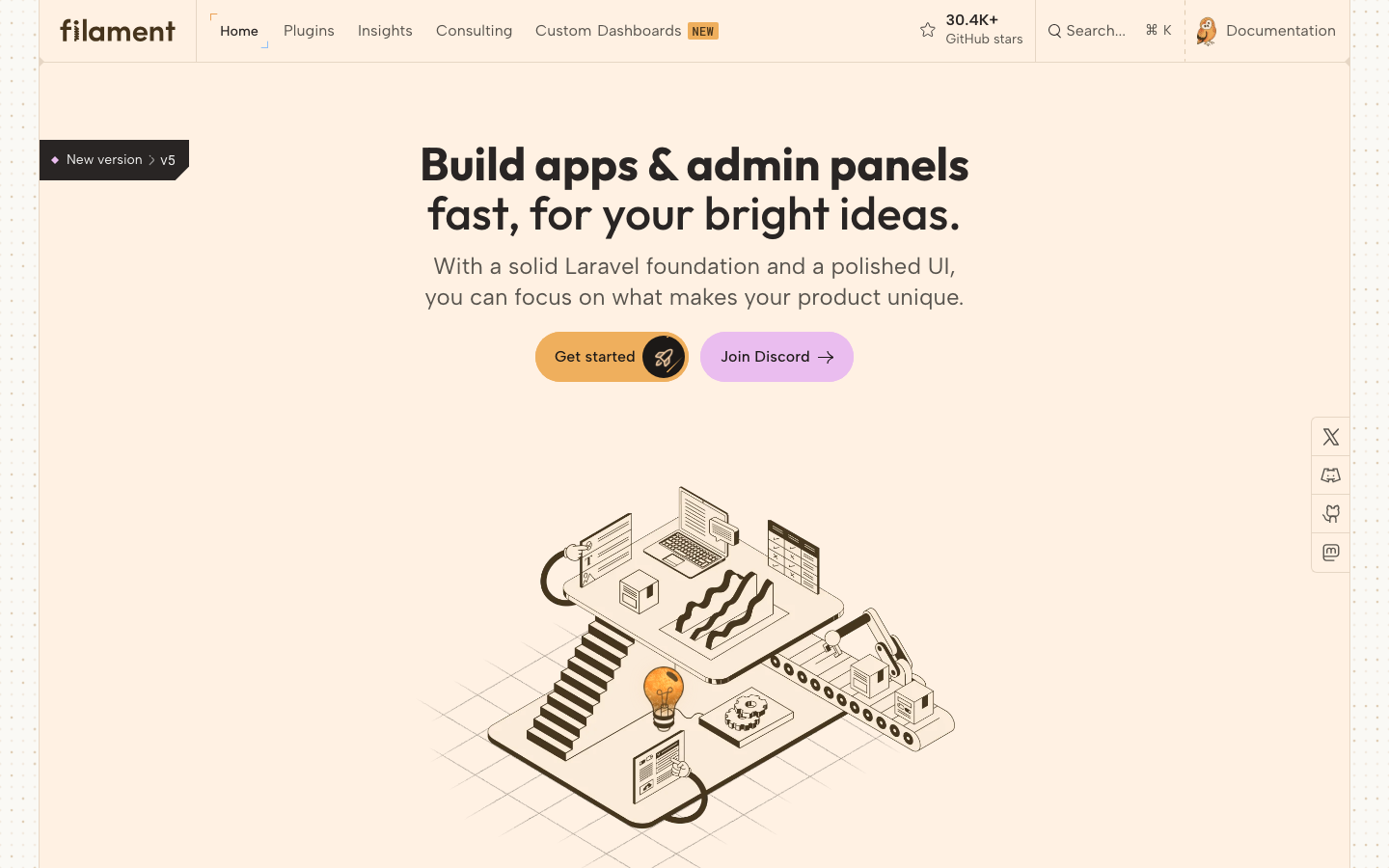
Powerful open-source UI framework for Laravel developers to build admin panels and apps fast using Livewire reactive components. Ideal for Laravel shops that want to avoid external tool vendors.
Pros
- Deeply integrated with Laravel; minimal learning curve for existing Laravel teams.
- MIT license; no licensing restrictions or per-seat costs.
- Fast iteration; reactive components feel responsive without custom JavaScript.
Cons
- PHP/Laravel-only; not suitable for non-Laravel stacks.
- Narrower connector ecosystem than general-purpose internal-tool builders.
NocoBase
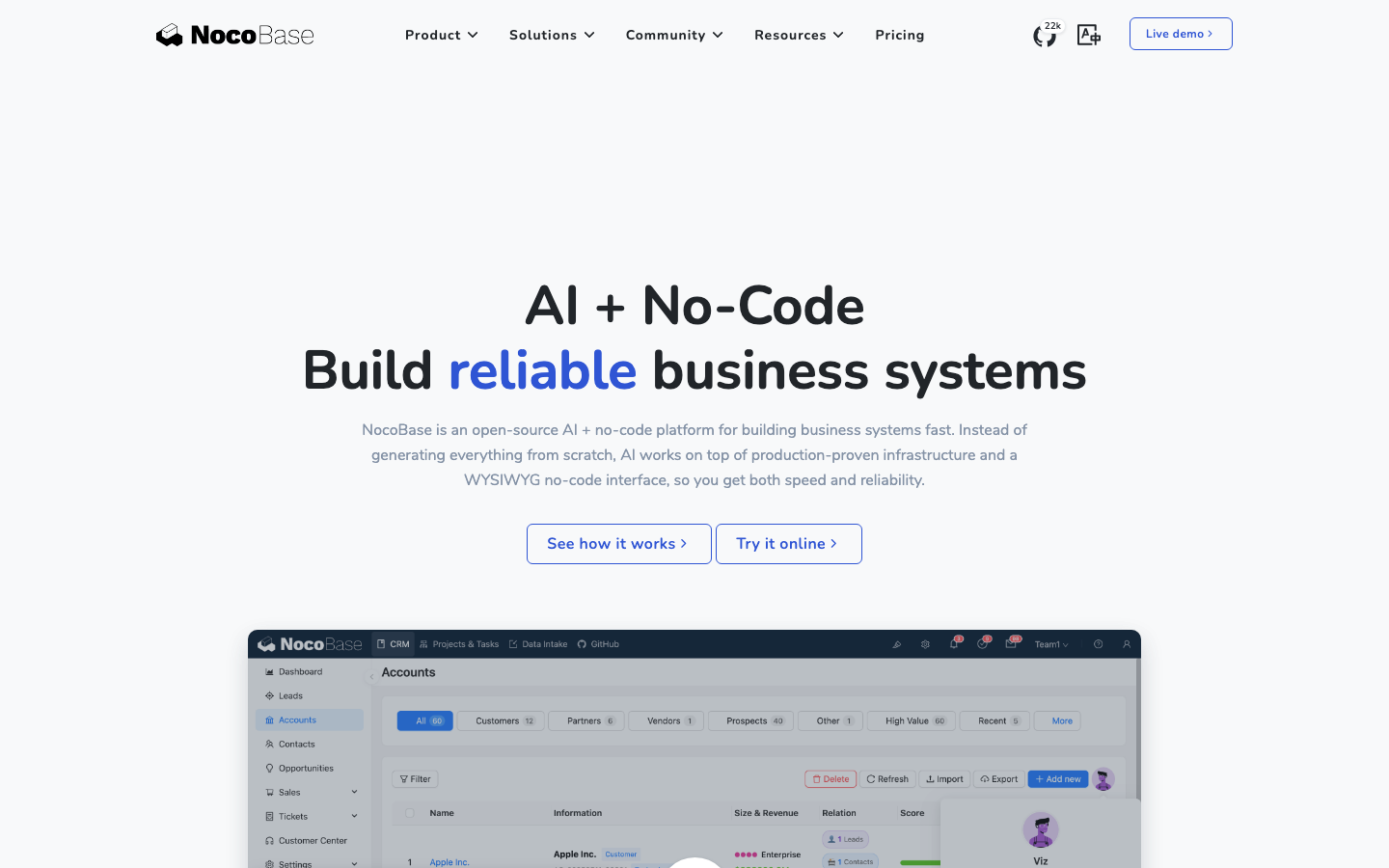
Most extensible no-code/low-code platform for building business applications and enterprise solutions. Emphasizes extensibility and control, with built-in AI capabilities.
Pros
- Highly extensible plugin architecture; teams can build custom features without forking.
- No consumption-based billing; self-host and scale without surprise costs.
- Visual workflow builder and AI integration included; no separate tiers.
Cons
- Smaller community than Retool; fewer pre-built templates and integrations.
- Plugin ecosystem still maturing; custom work may require development effort.
How to choose
Start with your team's primary use case: AI workflows? Dify and Flowise are purpose-built. Internal dashboards and admin panels? Appsmith and ToolJet cover the broadest ground. Enterprise Java shops? JeecgBoot's code generation and dual-mode approach pay dividends. Laravel-first? Filament is the natural fit. For teams that prize extensibility and long-term control over pre-built convenience, NocoBase's plugin architecture justifies the steeper setup. In all cases, the open-source model eliminates Retool's hidden costs — no per-seat creep, no Enterprise paywalls for SSO or Git, and no consumption meters for new features. Self-hosting does require DevOps capacity; if that's unavailable, factor in managed hosting costs. But even with hosting, you'll likely spend less than Retool's five-figure Enterprise tier plus usage overages.