

























TL;DR
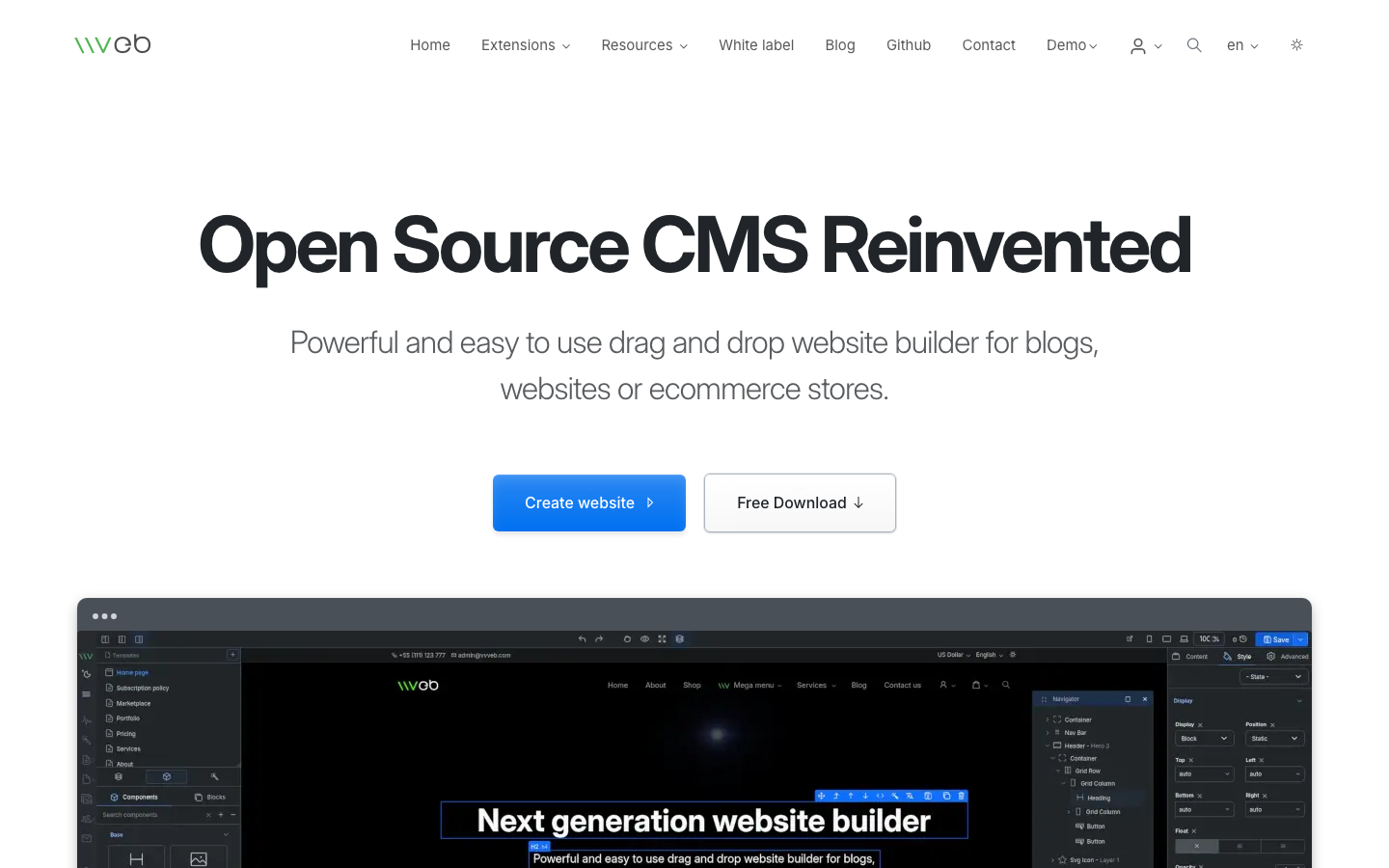
- Need a lightweight, all-in-one site builder with low overhead? Halo bundles blogging, knowledge bases, and storefronts in one GPL-licensed tool.
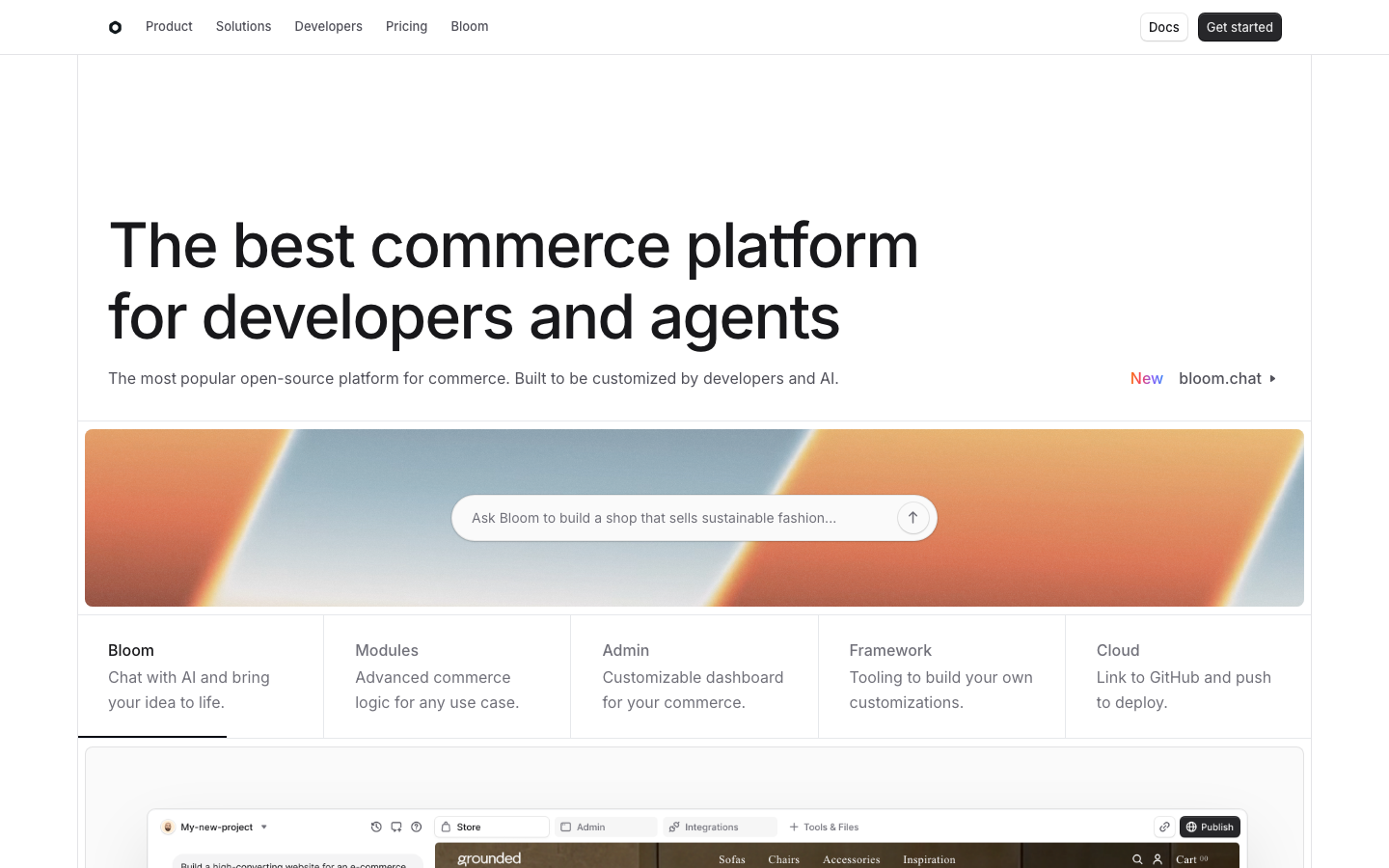
- Building a modern API-first store that scales without vendor lock-in? Medusa and Saleor offer headless architectures designed for flexibility and developer control.
- Running a WordPress site and want native ecommerce without a separate platform? WooCommerce integrates directly into your existing WordPress installation.
Why teams leave Shopify
Shopify's pricing model creates a predictable pain point: the platform is genuinely easy to launch on, but costs compound as you grow. Transaction fees—recently raised from 0.15% to 0.2% on third-party payment processors—take a cut of every sale, making high-volume merchants acutely aware of their per-transaction cost. Monthly plans scale from $5 to $399+, and enterprise-tier Plus renewals jumped from ~$2,000 to $2,300–$2,500/month in 2024, with three-year lock-in offers designed to freeze rates. Beyond pricing, theme and app ecosystems create switching costs: migrating your store design, customizations, and integrations off Shopify is technically and operationally expensive.
For content-heavy merchants, SEO and content ownership matter too. Shopify's template-driven approach can limit how much control you have over your site's structure and metadata. Open-source alternatives give you full ownership of your codebase, database, and content—no surprise fee increases, no vendor lock-in, and no app dependency on a third-party marketplace.
Quick comparison
| Name | License | Self-Hosted | Plugin Ecosystem | Headless / API | Best For |
|---|---|---|---|---|---|
| Halo | GPL-3.0 | Yes | Moderate | REST API | All-in-one sites: blogs, wikis, storefronts |
| Medusa | MIT | Yes | Growing (npm) | Full headless | Developers; custom frontends; B2B/marketplace |
| Bagisto | MIT | Yes | Laravel ecosystem | REST API | Laravel shops; rapid Laravel development |
| Saleor | BSD-3-Clause | Yes | GraphQL-native | Full headless (GraphQL) | Composable commerce; enterprise scale |
| Spree | BSD-3-Clause | Yes | Rails gems | REST API + TypeScript SDK | B2B, cross-border, marketplace ecommerce |
| Magento 2 | OSL-3.0 | Yes | Extensive | REST API | Large enterprise stores; complex catalogs |
| WooCommerce | License not declared | Yes (via WordPress) | Vast (WordPress plugins) | REST API | WordPress-native shops; SMB retailers |
| Evershop | GPL-3.0 | Yes | Growing (npm) | REST API | Modern TypeScript stacks; fast iteration |
Top open-source alternatives to Shopify
Halo
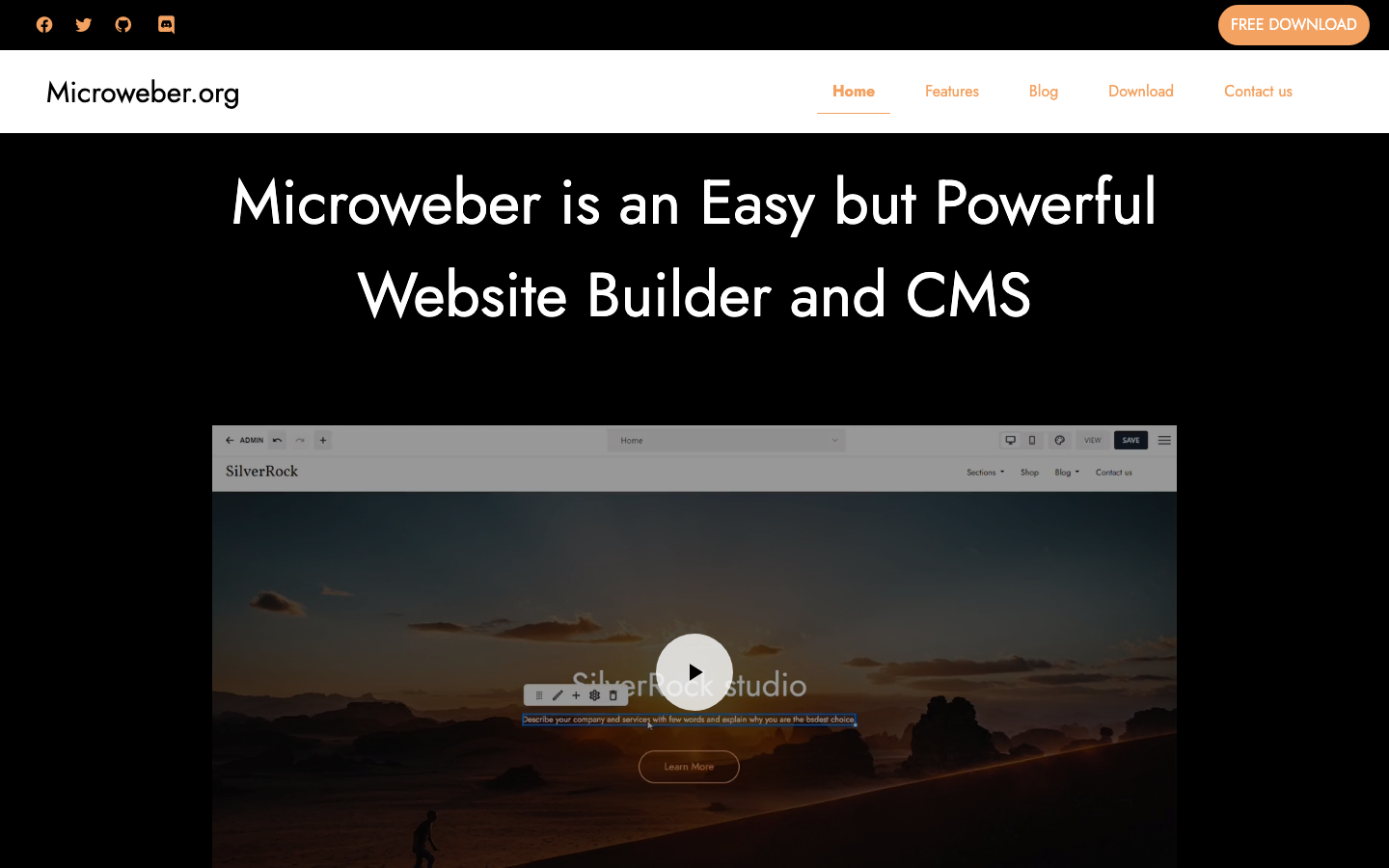
Halo is a unified site builder written in Java, designed to handle blogs, knowledge bases, and ecommerce storefronts from a single codebase. It emphasizes ease of use and quick deployment, making it a strong choice for teams wanting to avoid platform fragmentation.
Pros
- Single tool for content + commerce—no separate systems to integrate
- GPL-3.0 license ensures full transparency and community ownership
- Straightforward setup for small to mid-market stores
Cons
- Smaller ecosystem compared to WordPress or Magento
- Less mature headless/API story than purpose-built commerce platforms
Medusa
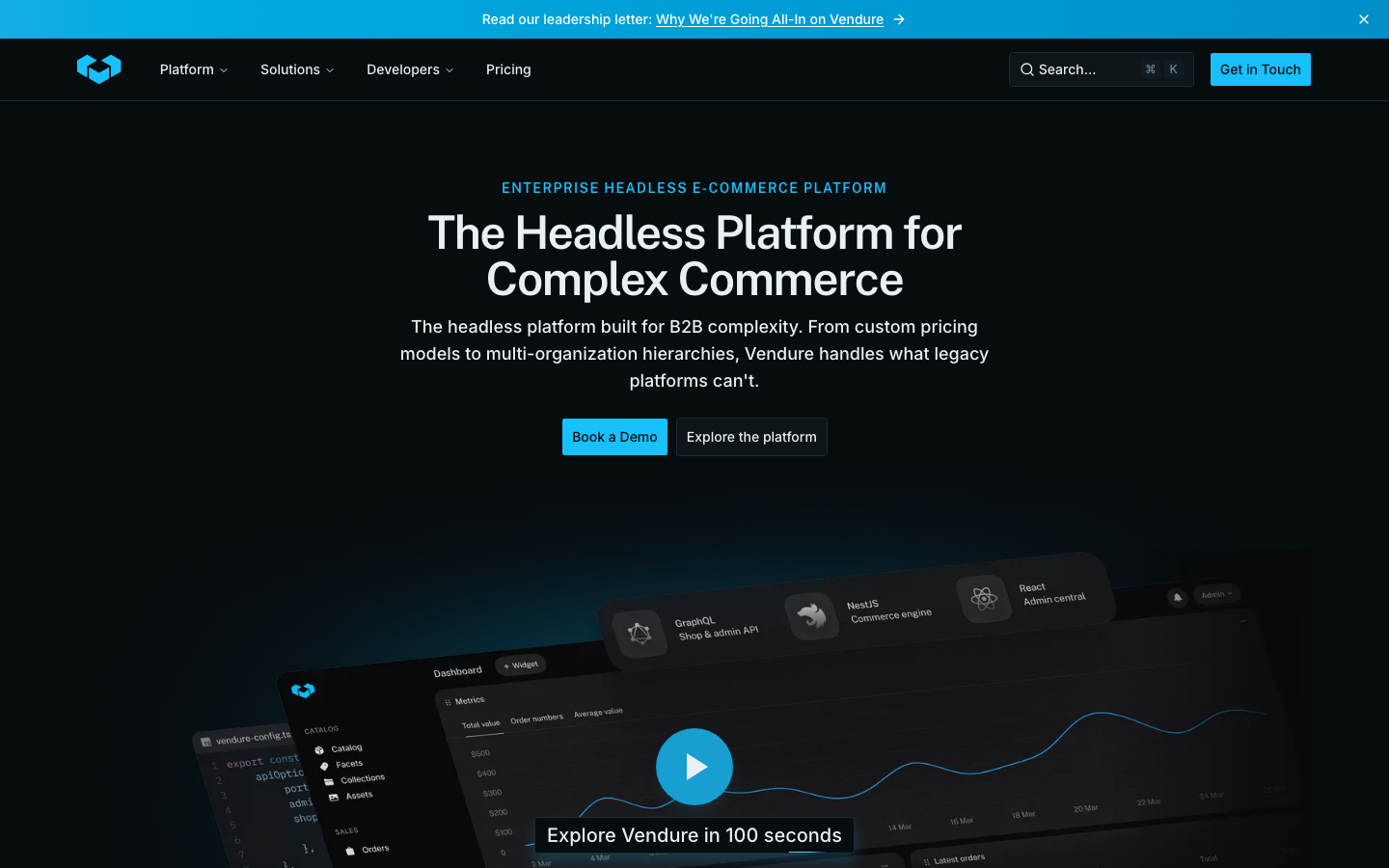
Medusa is a headless commerce API built in TypeScript, purpose-built for developers who want to decouple their backend from their storefront. It ships with a TypeScript SDK and works seamlessly with modern frontends like Next.js.
Pros
- True headless architecture—build any frontend you want
- MIT license and active developer community
- Designed for B2B, marketplaces, and custom commerce logic
Cons
- Requires more upfront development effort than Shopify
- Ecosystem still growing; fewer pre-built integrations than legacy platforms
Bagisto
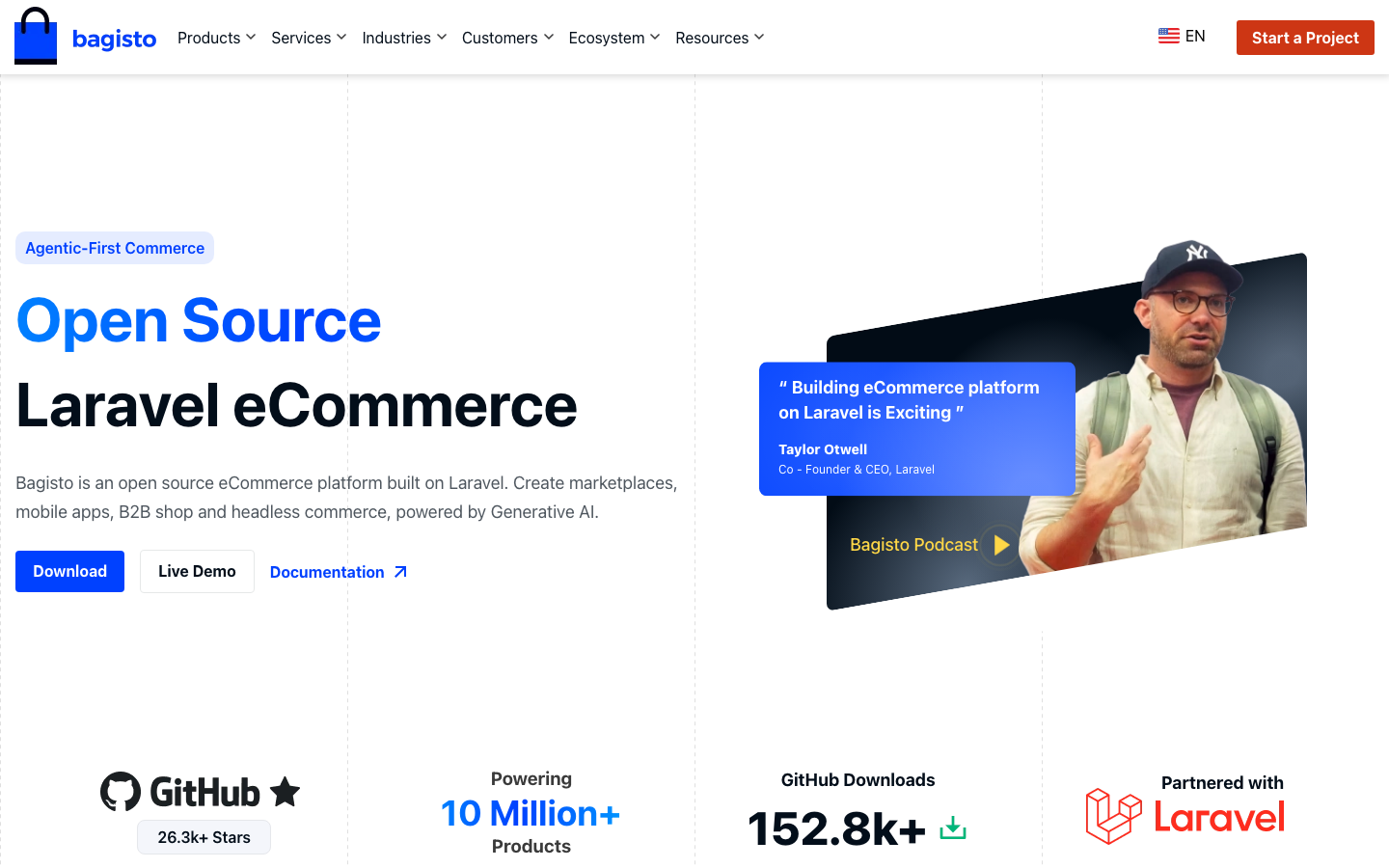
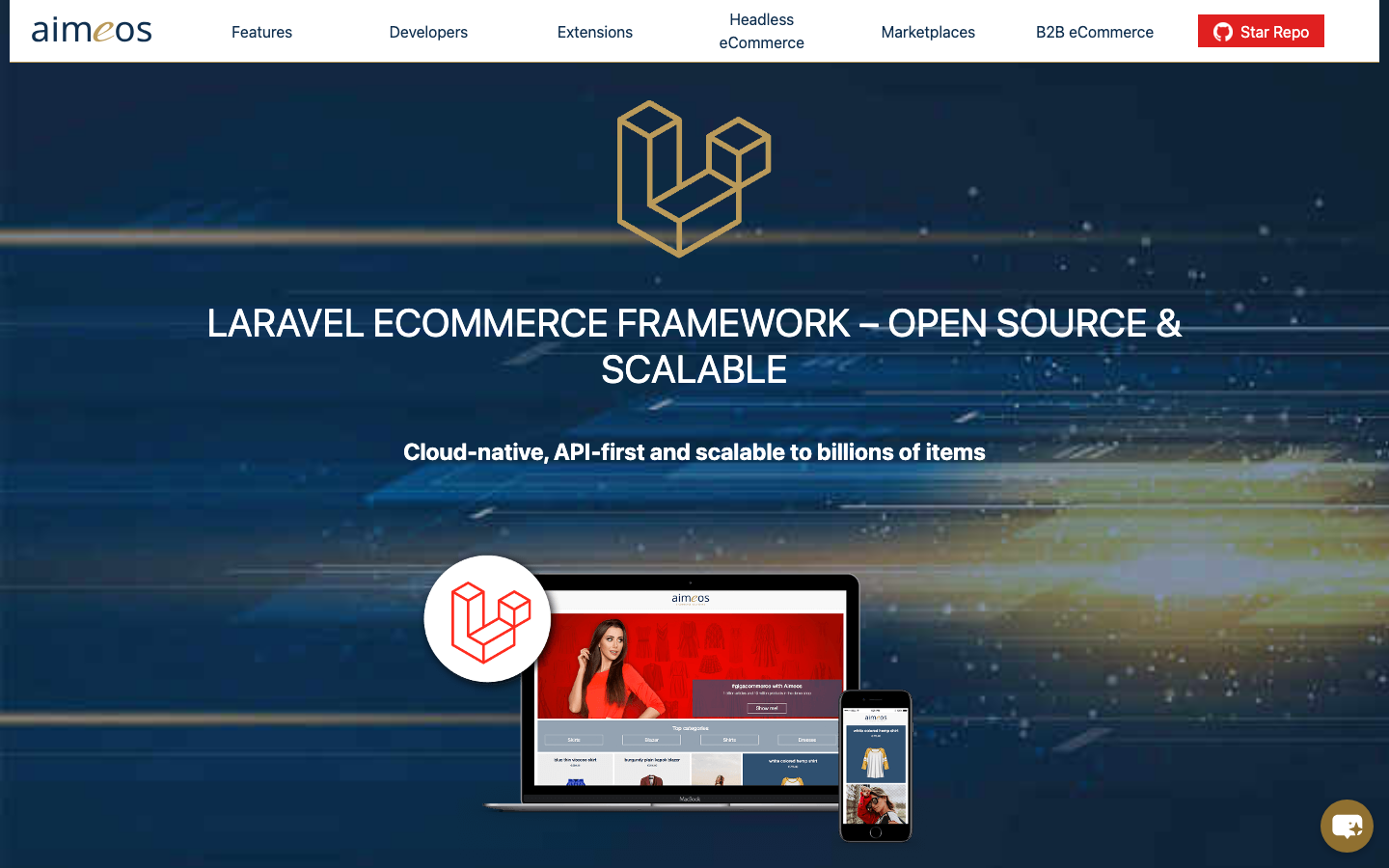
Bagisto is a Laravel-native ecommerce platform, ideal for teams already invested in the Laravel ecosystem. It provides a modern, modular foundation for building custom stores.
Pros
- Native Laravel development—leverage the full Laravel toolchain
- MIT license; lightweight and extensible
- Fast to customize for Laravel shops
Cons
- Smaller user base than WooCommerce or Magento
- Requires Laravel expertise; steeper learning curve for non-Laravel teams
Saleor
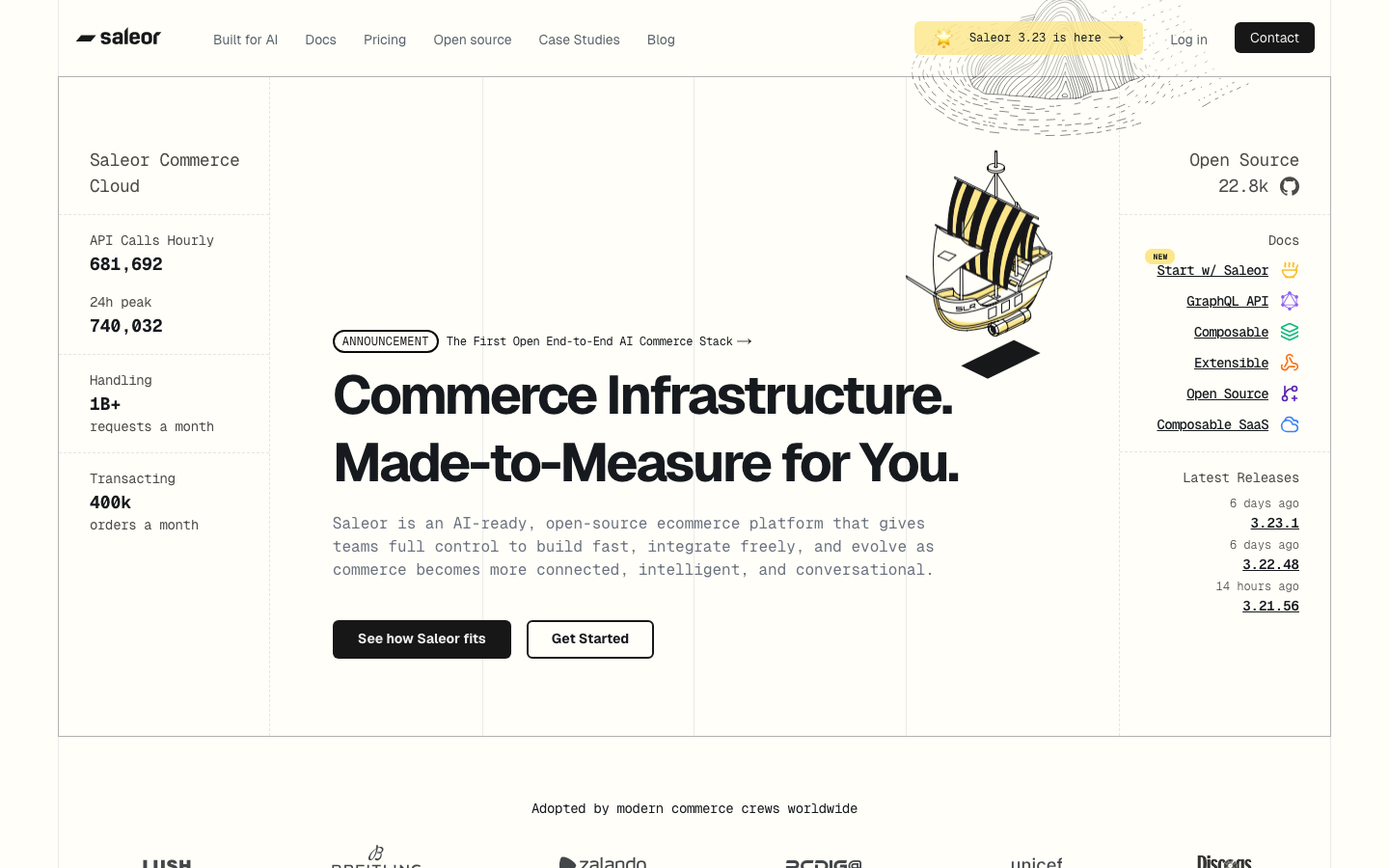
Saleor is a high-performance, composable commerce API with GraphQL at its core. Built for enterprise and mid-market retailers who need scalability, multi-channel support, and a modern API-first architecture.
Pros
- GraphQL API enables efficient, flexible queries
- Designed for enterprise scale and multi-tenant scenarios
- BSD-3-Clause license; strong community backing
Cons
- Headless-only; requires you to build or source a storefront
- Steeper learning curve for teams unfamiliar with GraphQL
Spree
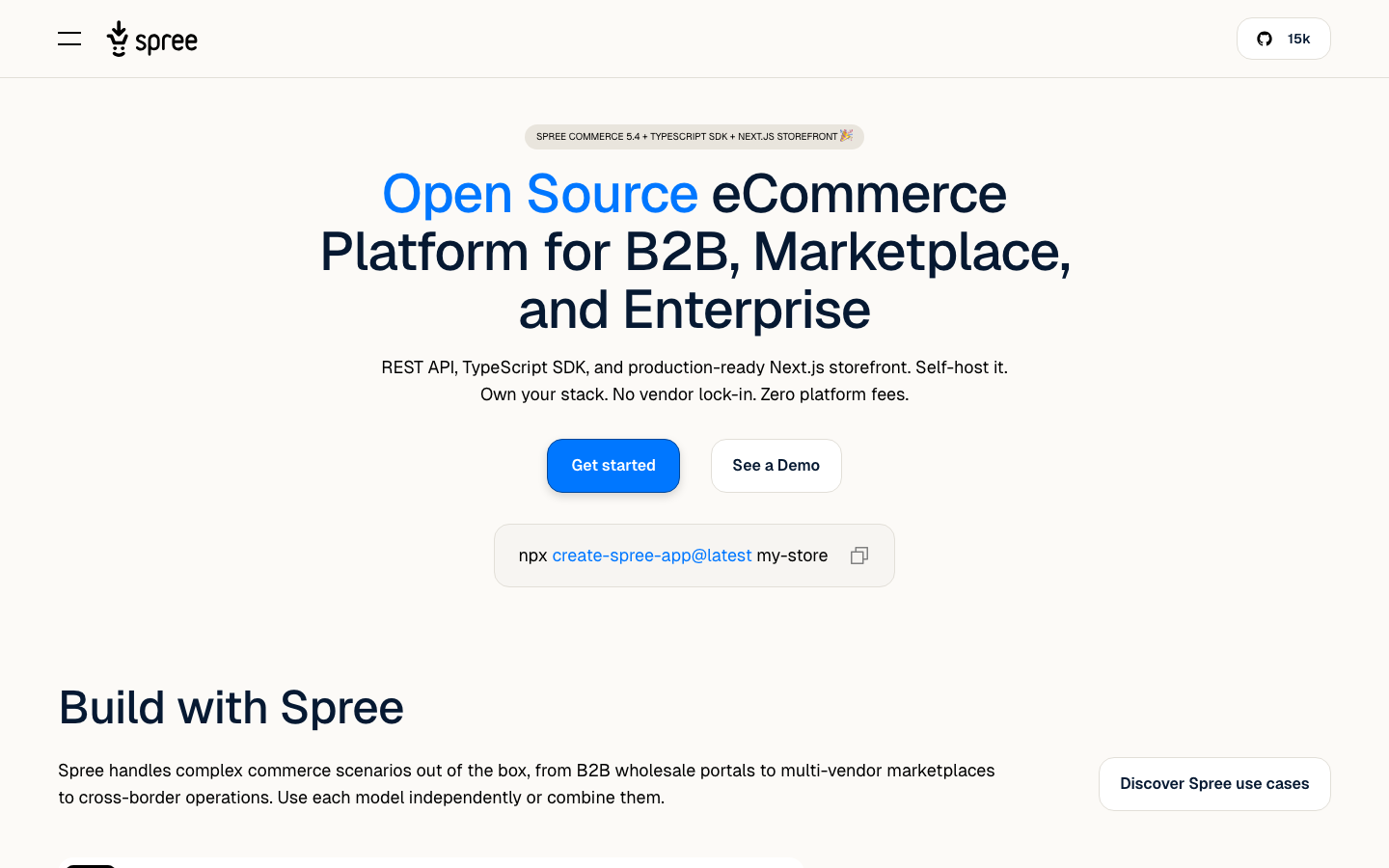
Spree is an open-source, headless ecommerce platform built on Ruby on Rails. It's particularly strong for B2B, cross-border, and marketplace scenarios, with a mature REST API and modern TypeScript SDK.
Pros
- Battle-tested in production; mature codebase
- Excellent for B2B and marketplace logic
- BSD-3-Clause license; strong Rails community
Cons
- Rails expertise required for customization
- Smaller active community than WooCommerce or Magento
Magento 2
Magento 2 is Adobe's open-source enterprise ecommerce platform, used by large retailers worldwide. It offers extensive customization, a vast extension marketplace, and powerful tools for complex catalogs and multi-store operations.
Pros
- Enterprise-grade scalability and feature depth
- Massive ecosystem of extensions and integrations
- Proven at scale for large retailers
Cons
- Steep learning curve and higher hosting/infrastructure costs
- Slower to launch than lightweight alternatives; requires significant PHP expertise
WooCommerce
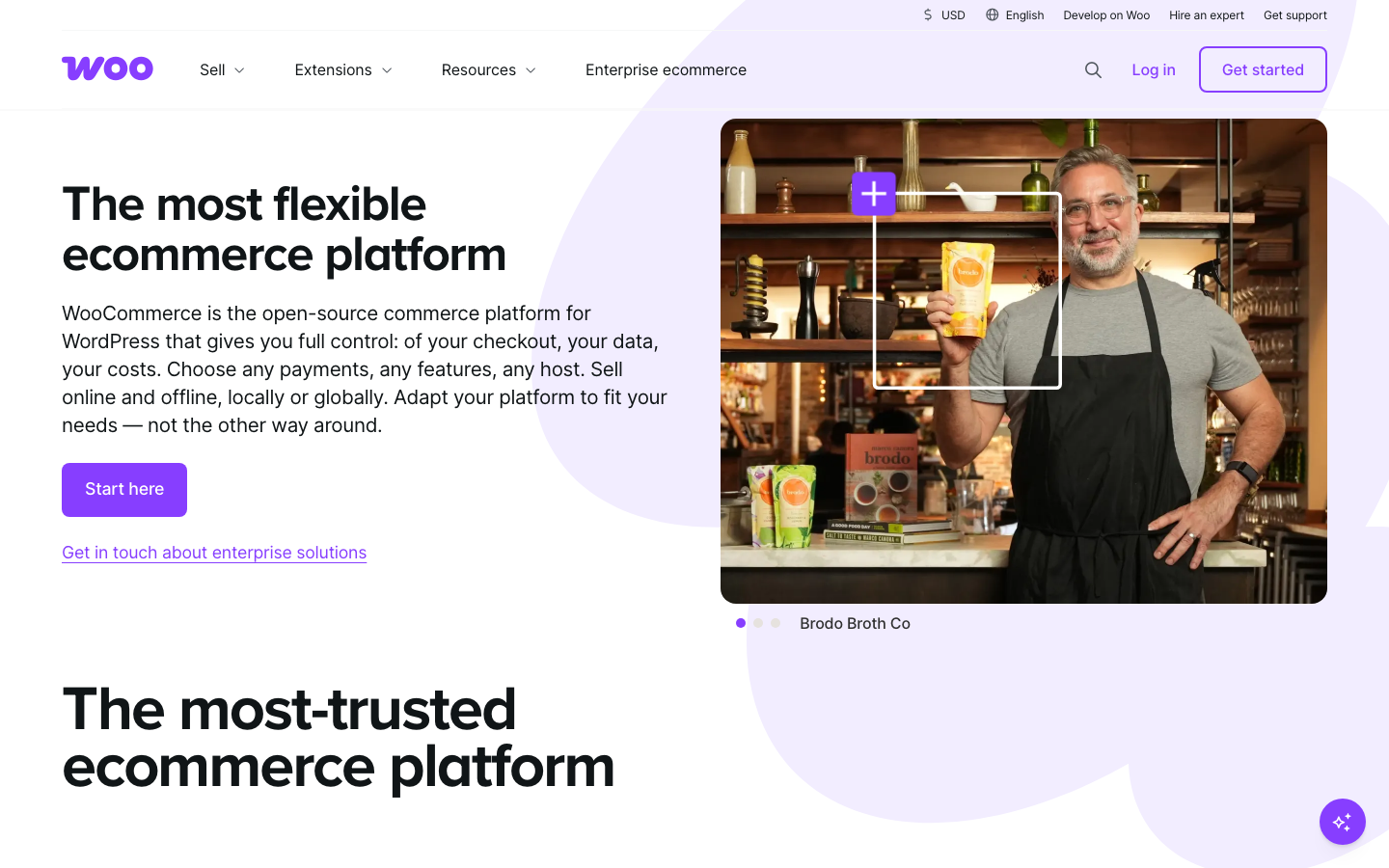
WooCommerce is a WordPress plugin that turns any WordPress site into a fully functional ecommerce store. It's the most popular open-source ecommerce solution by adoption, with a vast ecosystem of themes and extensions.
Pros
- Integrates directly into WordPress—no separate platform
- Enormous plugin and theme ecosystem
- Low barrier to entry for WordPress users
Cons
- Performance can degrade with large catalogs or high traffic without optimization
- Tightly coupled to WordPress; less suitable for headless architectures
Evershop
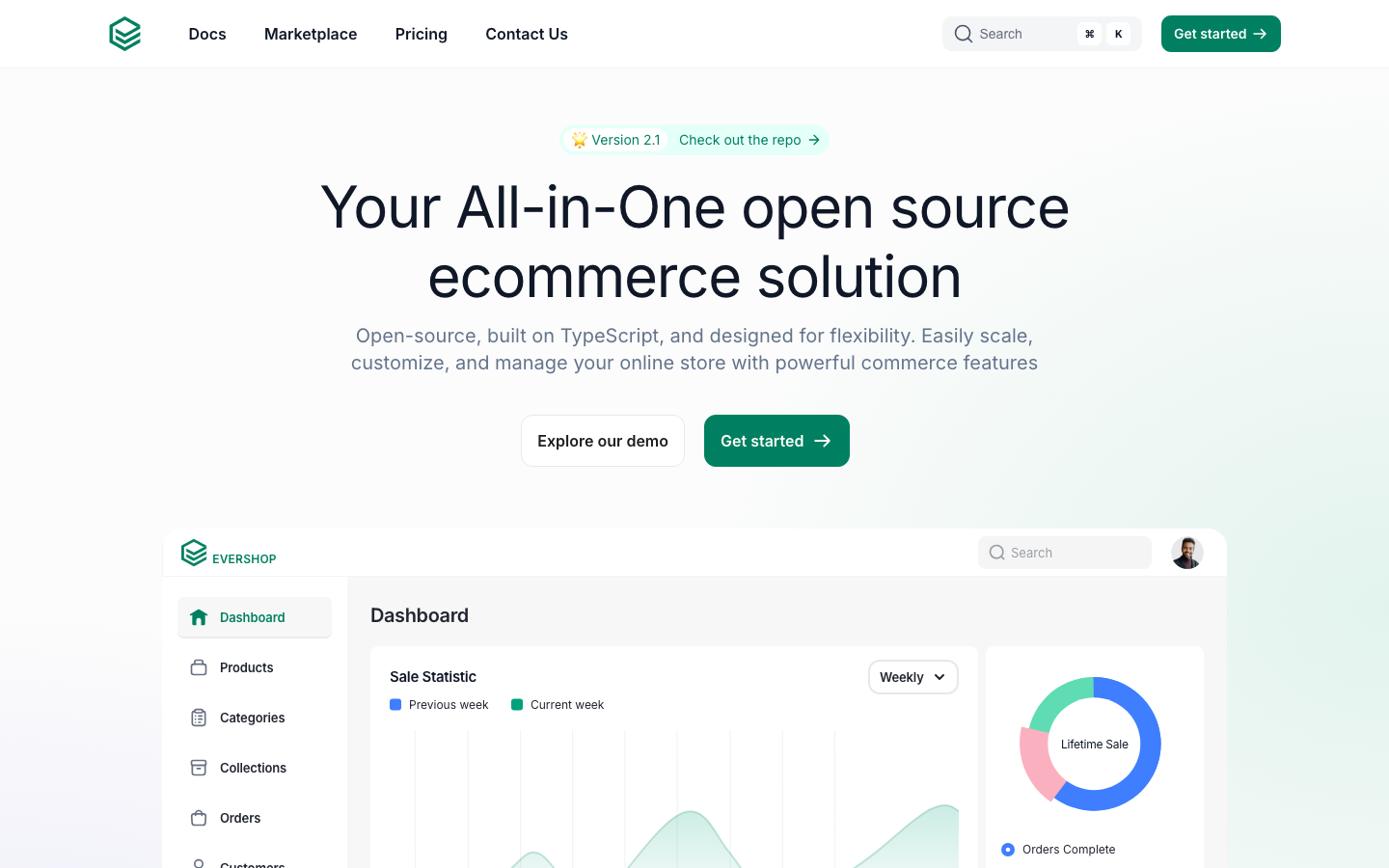
Evershop is a modern, TypeScript-based ecommerce platform built for teams that want a lean, contemporary stack. It emphasizes fast development cycles and clean API design.
Pros
- Modern TypeScript foundation; appeals to contemporary dev teams
- GPL-3.0 license; growing community
- Lightweight and quick to iterate on
Cons
- Youngest project in this list; smaller ecosystem and fewer battle-tested use cases
- Less mature integrations and extensions than established platforms
How to choose
For WordPress shops: Start with WooCommerce—it's native, proven, and has the largest ecosystem. For Laravel teams: Bagisto gives you a modern, modular foundation without leaving the Laravel world. For developers building custom frontends or B2B/marketplace logic: Medusa or Saleor offer true headless APIs and the flexibility Shopify's lock-in prevents. For enterprise scale: Magento 2 or Saleor handle complex multi-store, multi-currency catalogs. For teams wanting everything in one box: Halo bundles content and commerce without fragmentation. Prioritize your team's existing skills and your need for headless flexibility—that choice will drive the lowest total cost of ownership.