





















TL;DR
- Teams frustrated by message deletion and history paywalls should evaluate Rocket.Chat or Mattermost, both offering unlimited searchable history without per-user fees.
- Growing organizations concerned about per-user cost scaling can deploy Zulip on their own infrastructure, eliminating Slack's compounding seat charges.
- Projects needing integrated chat alongside task management benefit from Huly, which bundles team chat with project planning in a single open platform.
Why teams leave Slack
Slack's free plan restricts searchable message history to 90 days, and since August 2024, permanently deletes messages and files older than one year—meaning free teams lose institutional knowledge. Upgrading to a paid plan unlocks full history, but Slack's per-user pricing model (Pro tier raised to $8.75/user/month in 2024) compounds as teams grow; a 50-person team pays significantly more than a 10-person team for the same feature set. Enterprise+ consolidation in August 2024 pushed large deployments toward higher pricing tiers (~$45/user/month).
Beyond cost, teams cite limited data portability: you don't fully own or easily export your message history, creating vendor lock-in and compliance friction for regulated industries. Integration limits on free plans (capped at 10 apps) further restrict workflow flexibility. For organizations prioritizing data sovereignty, compliance, and predictable costs, these constraints drive migration to self-hosted open-source alternatives.
Quick comparison
| Name | License | Self-Hosted | Federation | E2E Encryption | Best For |
|---|---|---|---|---|---|
| Rocket.Chat | — | ✓ | ✓ | ✓ | Mission-critical, regulated, security-first teams |
| Mattermost | — | ✓ | — | ✓ | DevOps, software development, compliance-heavy orgs |
| Huly | EPL-2.0 | ✓ | — | — | Teams needing integrated chat + project management |
| Zulip | Apache-2.0 | ✓ | — | — | Focused async communication, large archives, searchability |
| Hubot | MIT | ✓ | — | — | Chat automation, bot-driven workflows |
| Open IM Server | Apache-2.0 | ✓ | — | — | Lightweight IM, mobile-first deployments |
| Server | — | ✓ | — | — | Real-time WebSocket messaging, minimal footprint |
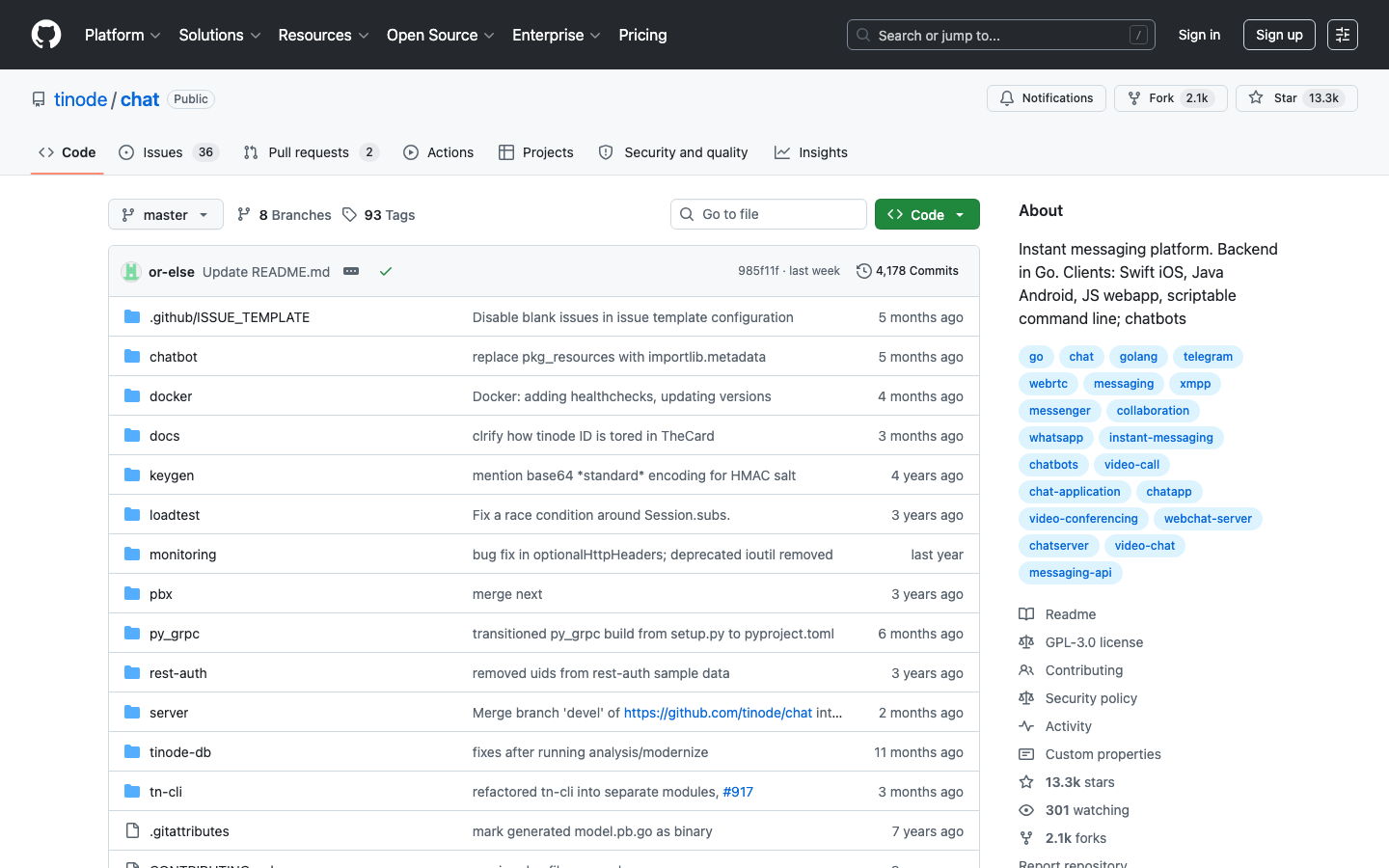
| Chat | GPL-3.0 | ✓ | — | — | Multi-platform (iOS, Android, web, CLI) messaging |
Top open-source alternatives to Slack
Rocket.Chat
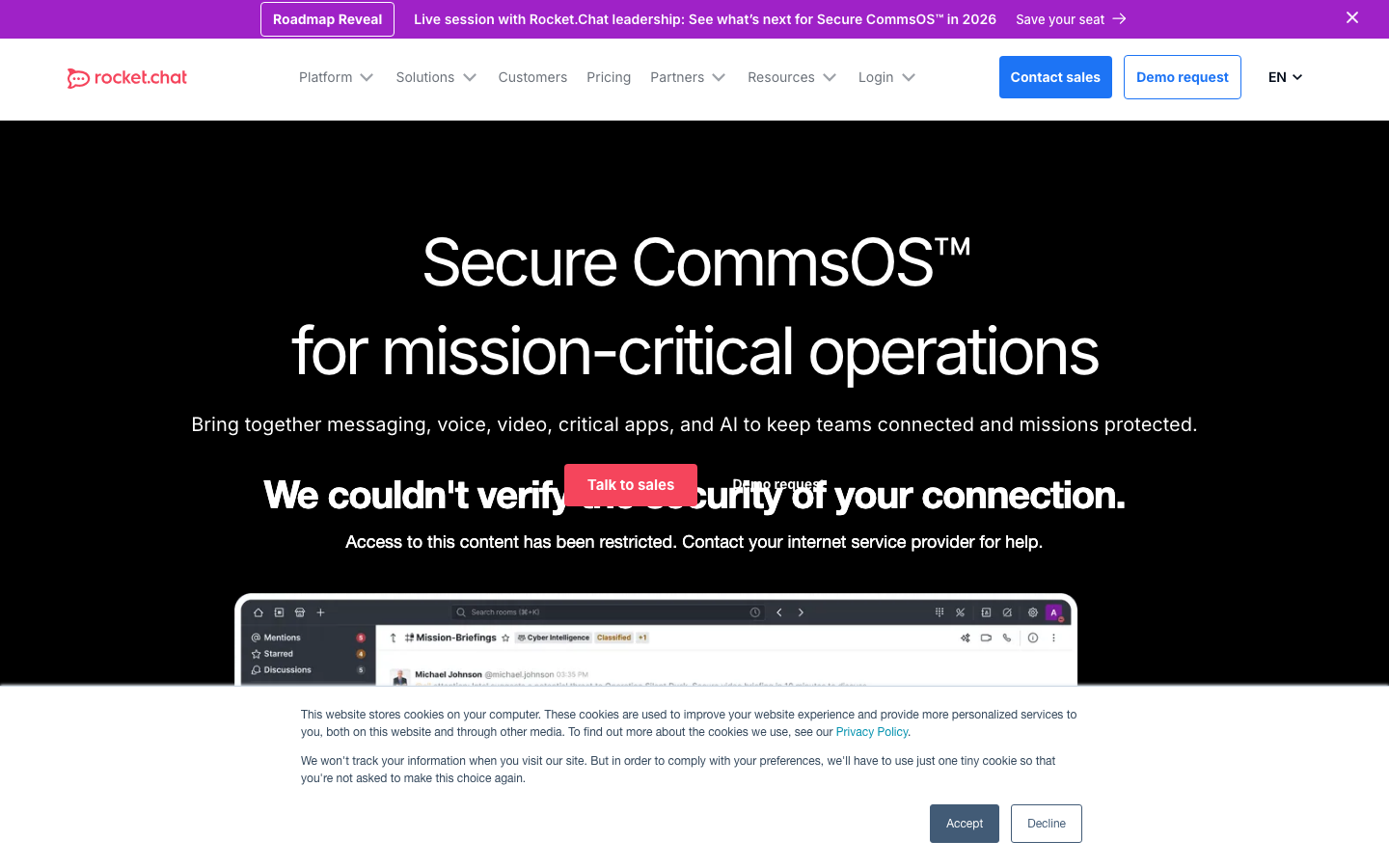
The highest-starred alternative, Rocket.Chat positions itself as a "Secure CommsOS™" for mission-critical operations. It offers unlimited message history, full encryption, federation across instances, and self-hosted deployment—eliminating Slack's deletion timers and per-user fees. Teams retain complete data ownership and can integrate hundreds of apps without caps.
Pros:
- Unlimited searchable message history with no deletion policies
- End-to-end encryption and federation for distributed teams
- No per-user licensing; self-hosted cost is infrastructure-only
Cons:
- Steeper learning curve and resource requirements than lightweight alternatives
- Smaller ecosystem of pre-built integrations compared to Slack
Mattermost
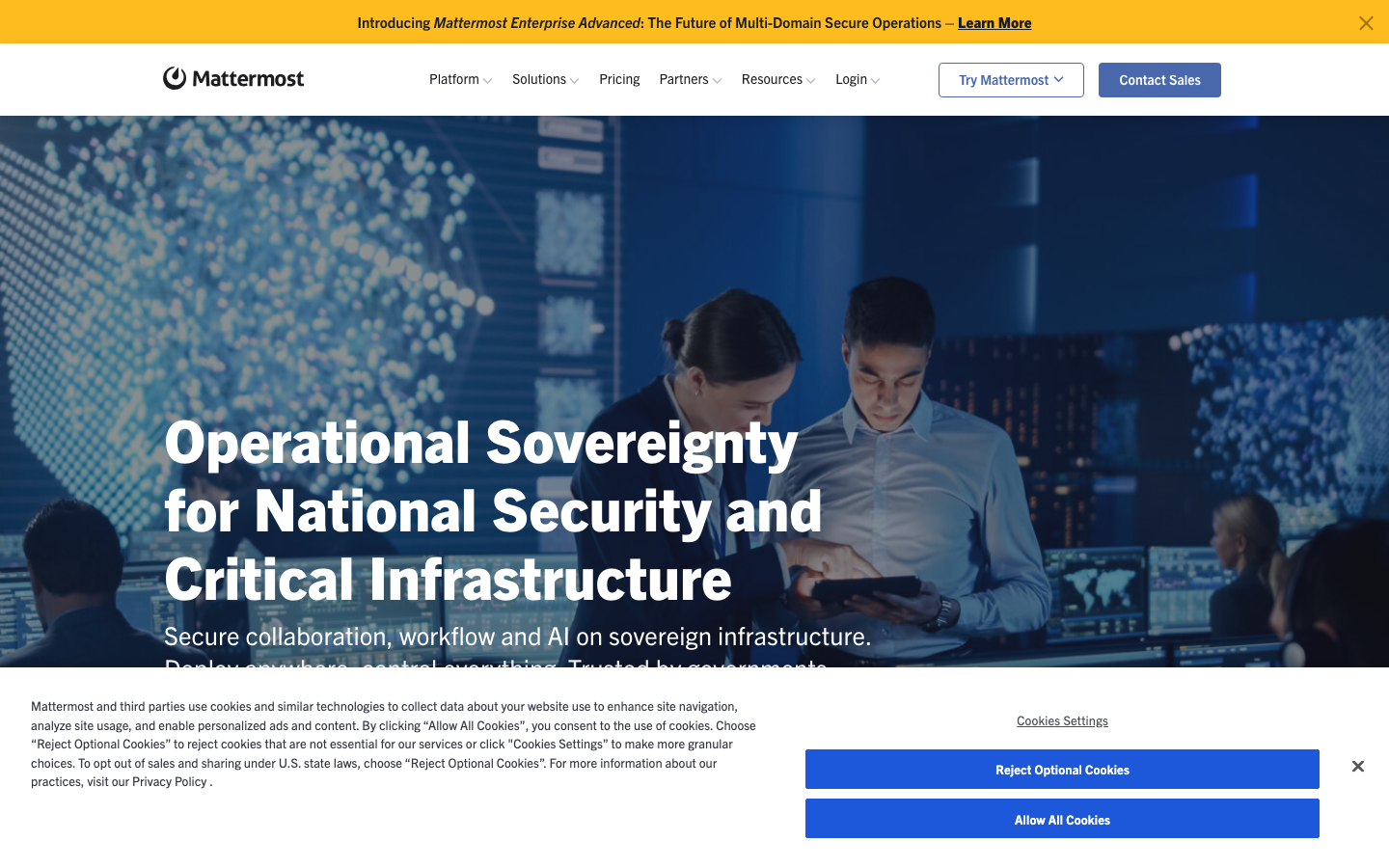
A purpose-built platform for secure collaboration across software development lifecycles, Mattermost emphasizes compliance and DevOps workflows. Like Rocket.Chat, it's self-hosted, preserves all message history, and eliminates per-user pricing—making it cost-predictable for growing teams.
Pros:
- Built-in E2E encryption and compliance controls
- Deep integrations with CI/CD and development tools
- Transparent, single-price licensing model
Cons:
- Smaller community than Slack; fewer third-party integrations available out-of-the-box
- Requires dedicated infrastructure and maintenance
Huly
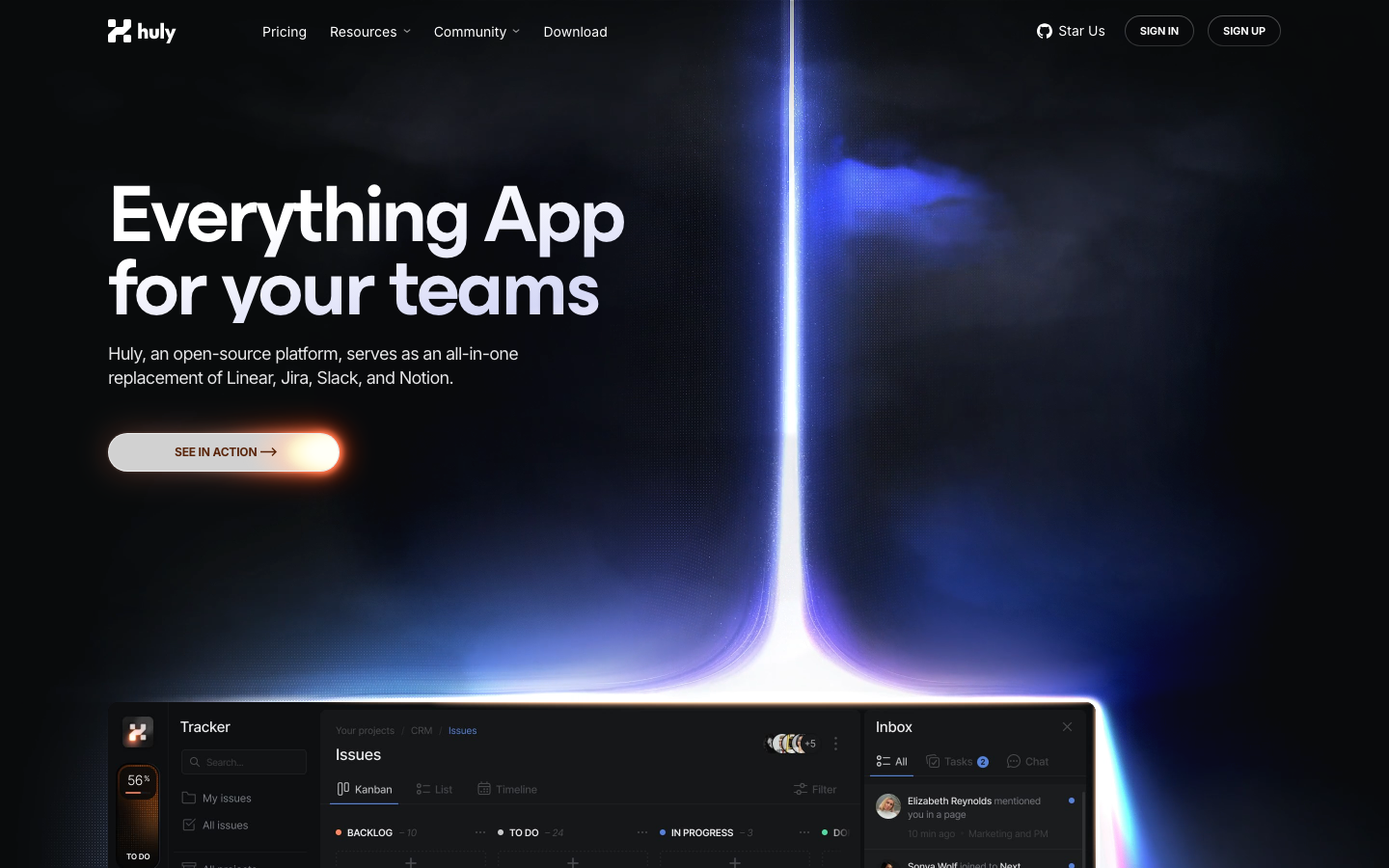
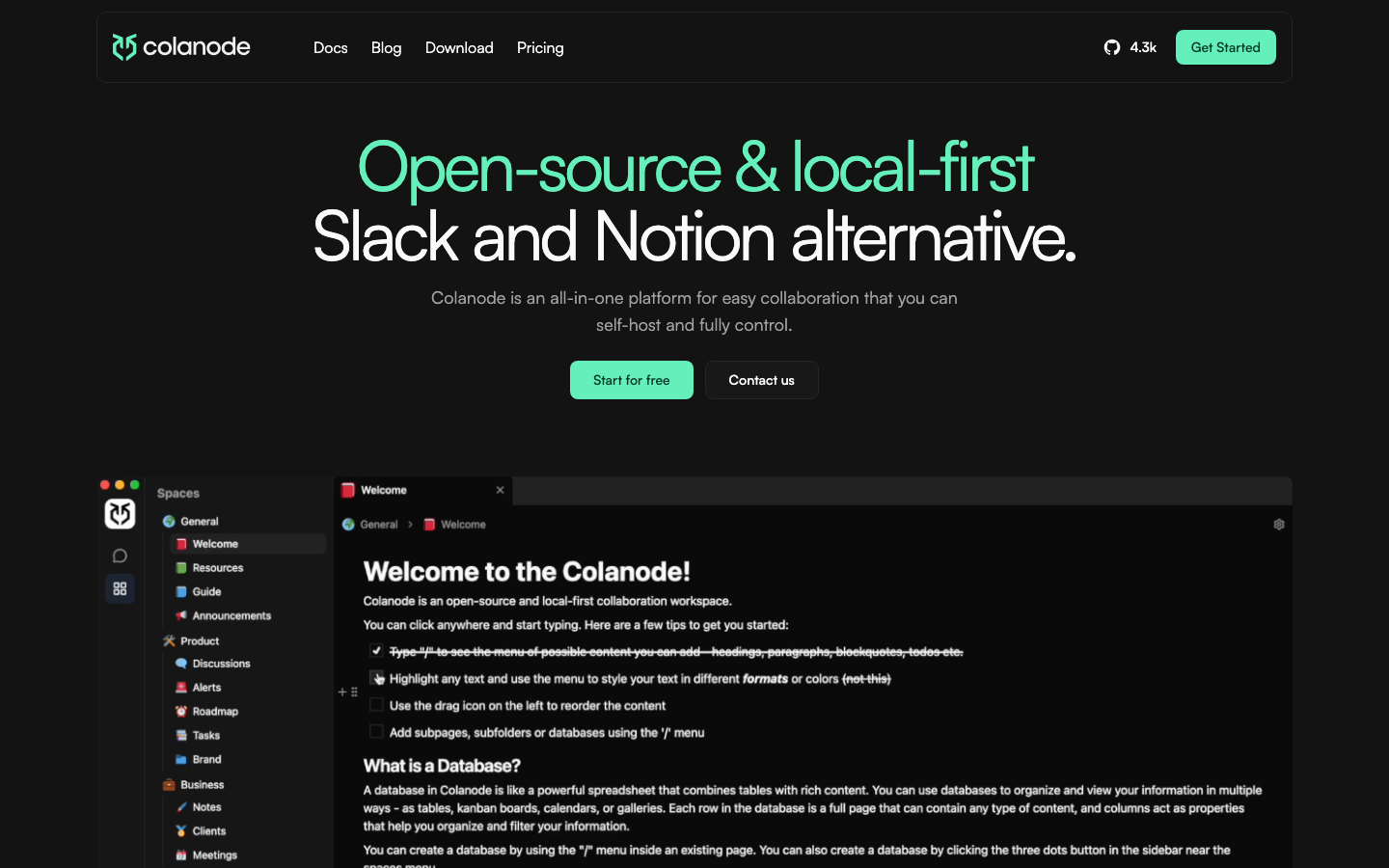
An all-in-one platform bundling team chat, project management, and task tracking in one interface. Unlike point solutions, Huly reduces tool fragmentation by consolidating Slack-like messaging with Linear/Jira-like planning—ideal for small to mid-size teams wanting a unified workspace.
Pros:
- Integrated chat + project management eliminates context-switching
- Modern, intuitive UI designed for collaborative workflows
- Single deployment covers messaging, tasks, and planning
Cons:
- Younger project with a smaller user base and fewer integrations
- Still evolving feature set relative to specialized alternatives
Zulip
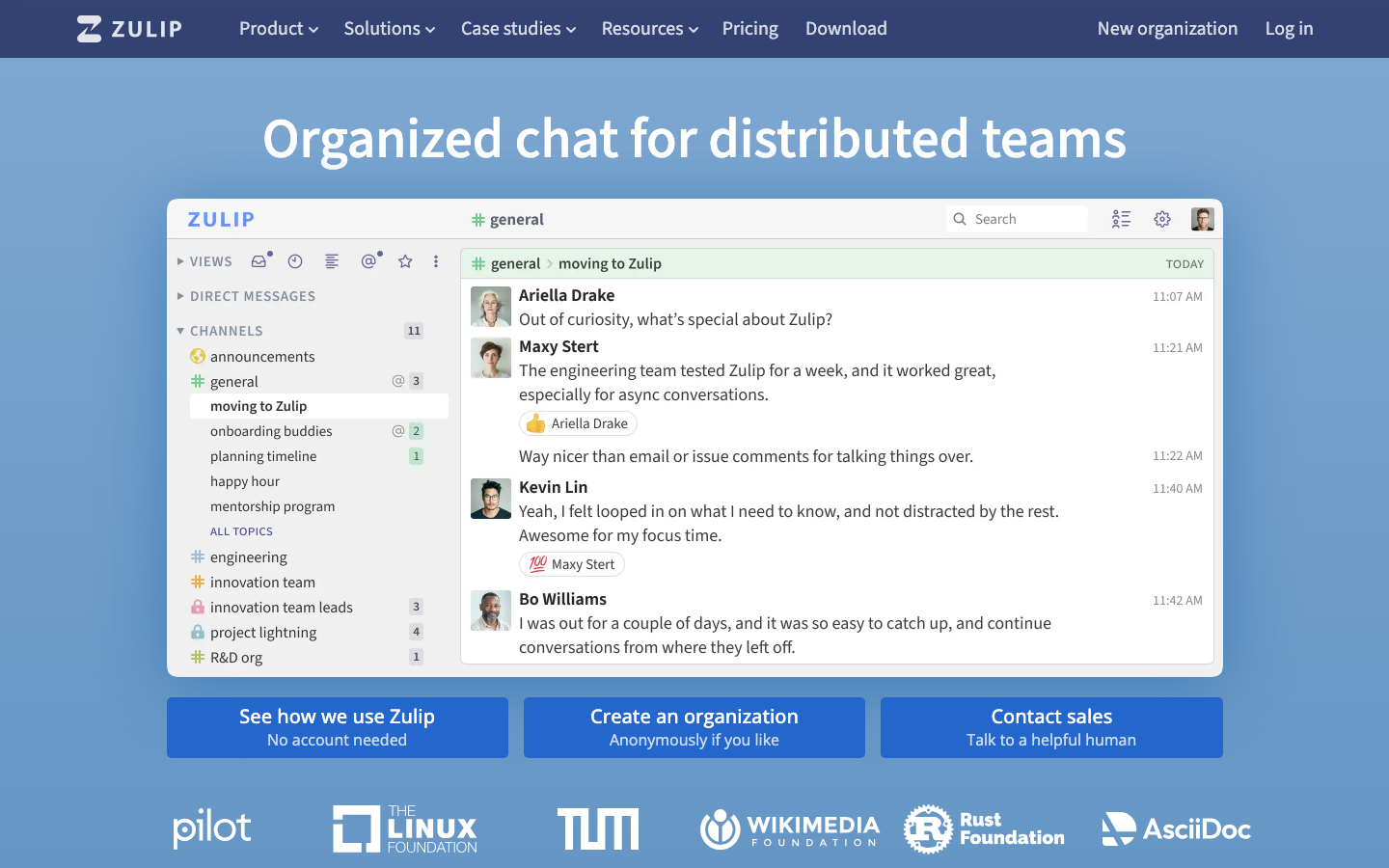
Zulip emphasizes productive, focused team communication through a unique topic-based threading model. Designed for asynchronous work and massive searchable archives, it's ideal for distributed teams and organizations that prioritize information discoverability. Apache-licensed and self-hosted, it avoids Slack's history deletion and per-user costs.
Pros:
- Topic-based threading keeps conversations organized and searchable
- Exceptional archive and search capabilities for large teams
- Lightweight resource footprint compared to Rocket.Chat
Cons:
- Smaller integration marketplace than Slack
- UI paradigm (topics vs. channels) requires user adaptation
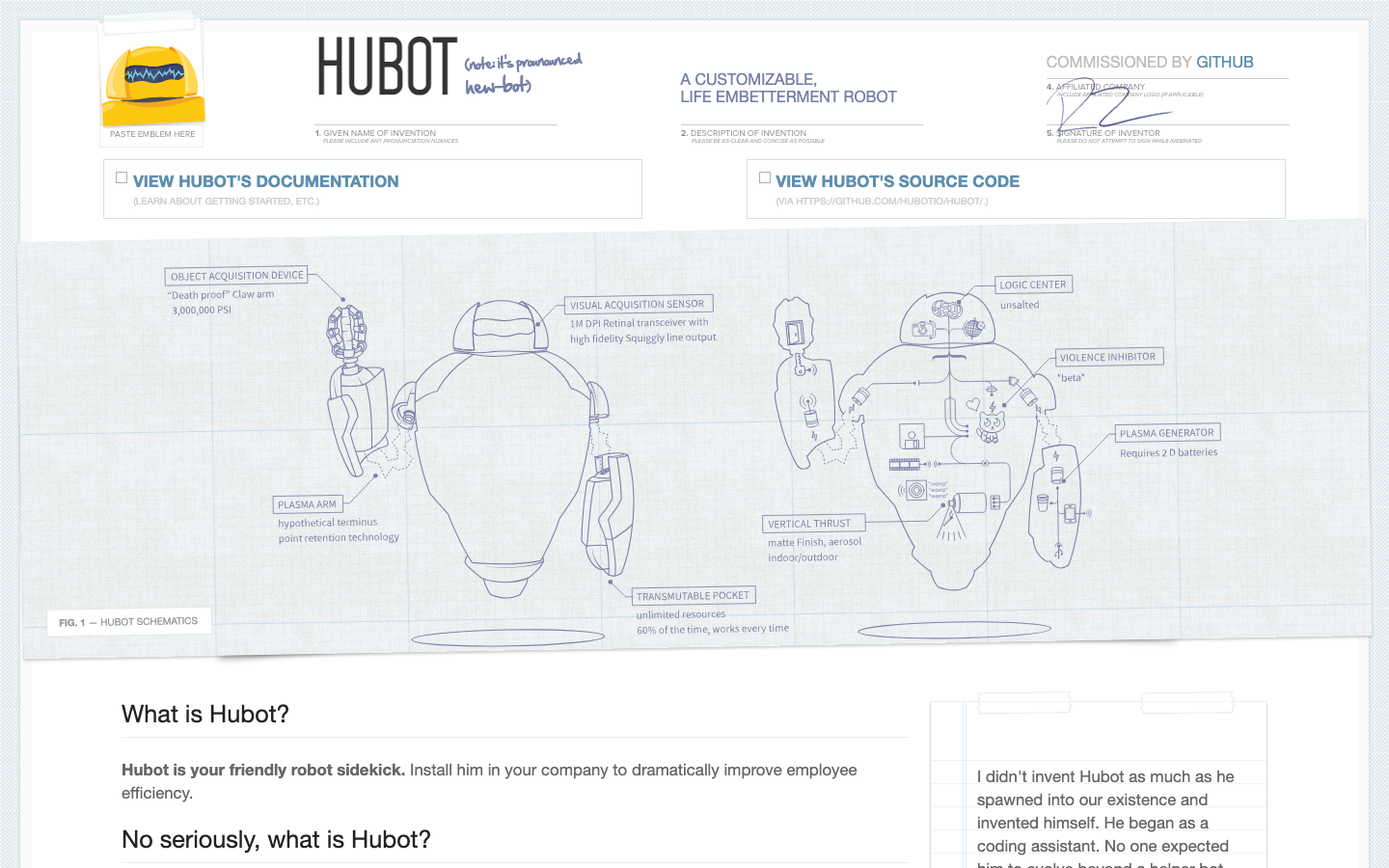
Hubot
A customizable chatbot framework for automating team workflows and responses. Hubot excels at chat-driven automation, allowing teams to build custom bots that integrate with internal systems, CI/CD pipelines, and operational tools without vendor lock-in.
Pros:
- Highly extensible JavaScript-based bot framework
- MIT-licensed with strong community support
- Integrates with any chat backend (Slack, self-hosted, etc.)
Cons:
- Not a standalone chat platform; requires a separate messaging system
- Requires development effort to build and maintain custom bots
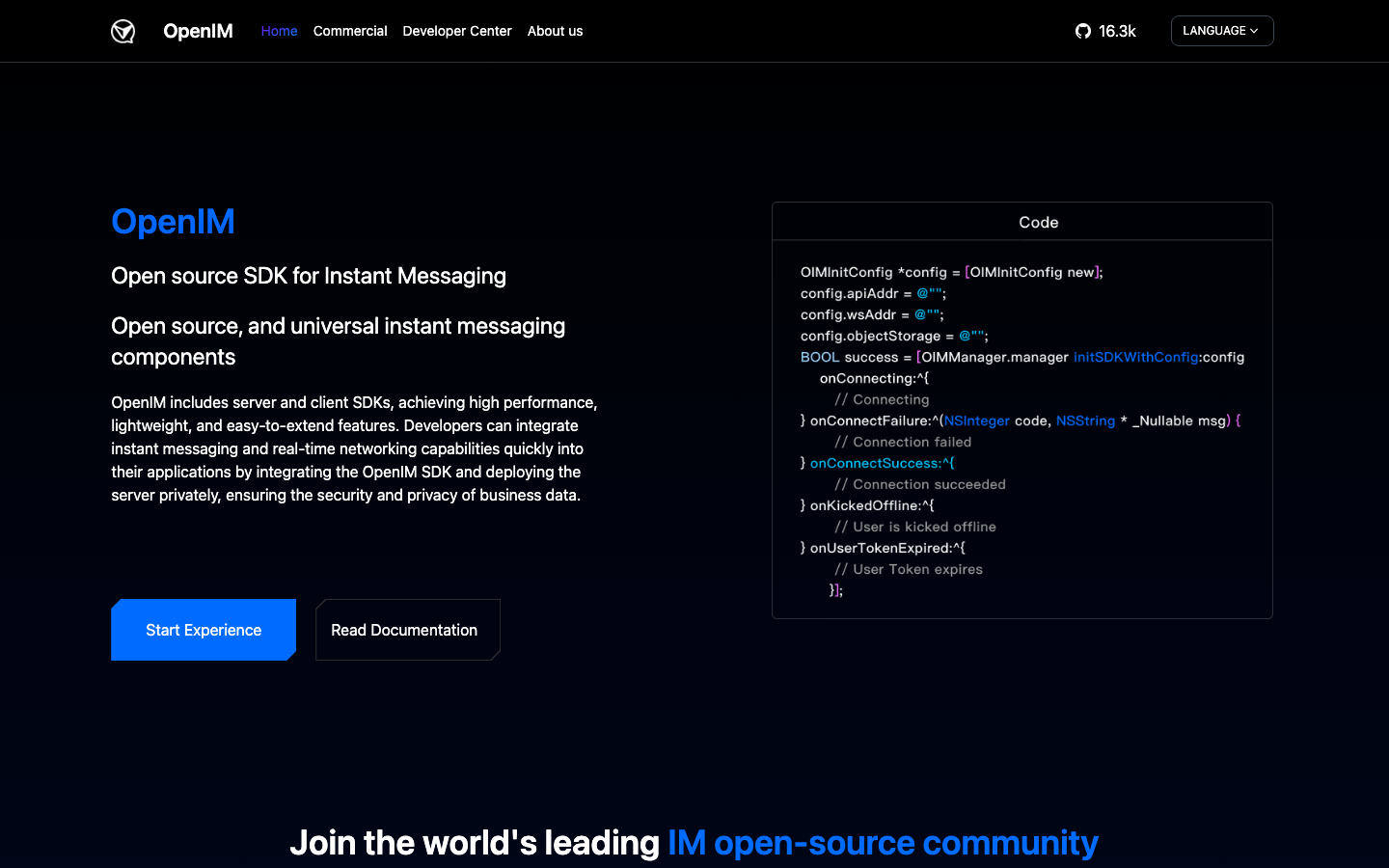
Open IM Server
A lightweight, Go-based instant messaging server designed for mobile-first deployments and real-time communication. Open IM emphasizes simplicity and performance, making it suitable for organizations seeking a minimal, self-contained IM backbone without Slack's overhead.
Pros:
- Lightweight Go implementation with low resource overhead
- Supports iOS, Android, and web clients
- Apache-licensed with clear data ownership
Cons:
- Smaller ecosystem and fewer integrations than larger alternatives
- Limited documentation and community compared to Rocket.Chat or Mattermost
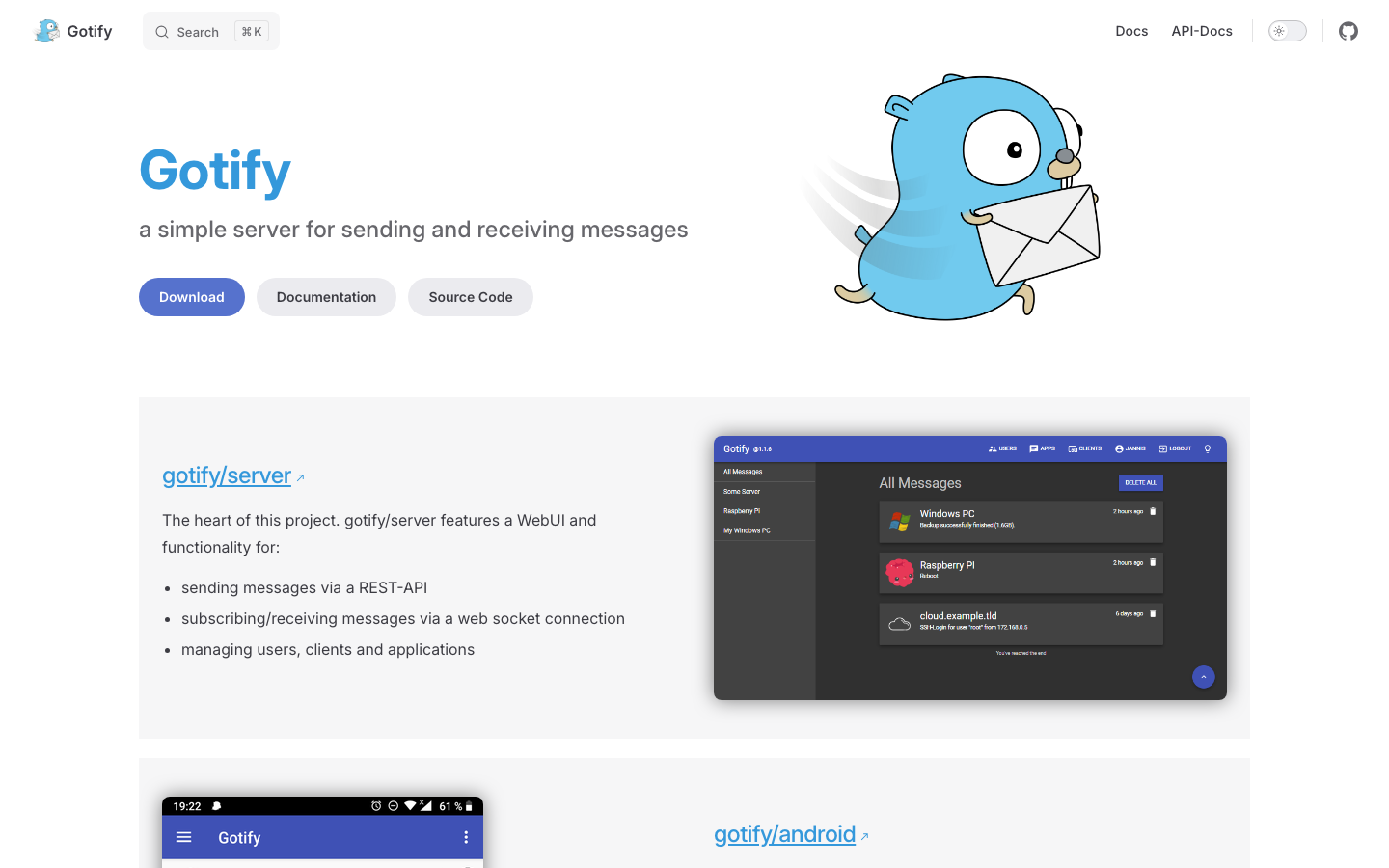
Server
A simple, real-time messaging server built on WebSocket technology with a sleek web UI included. Designed for teams needing fast, lightweight chat without enterprise complexity, Server offers minimal overhead and straightforward deployment.
Pros:
- Minimal architecture and low resource requirements
- Built-in web UI; no separate client needed
- Real-time WebSocket-based messaging
Cons:
- Limited feature set compared to full-featured platforms
- Smaller community; fewer third-party extensions
Chat
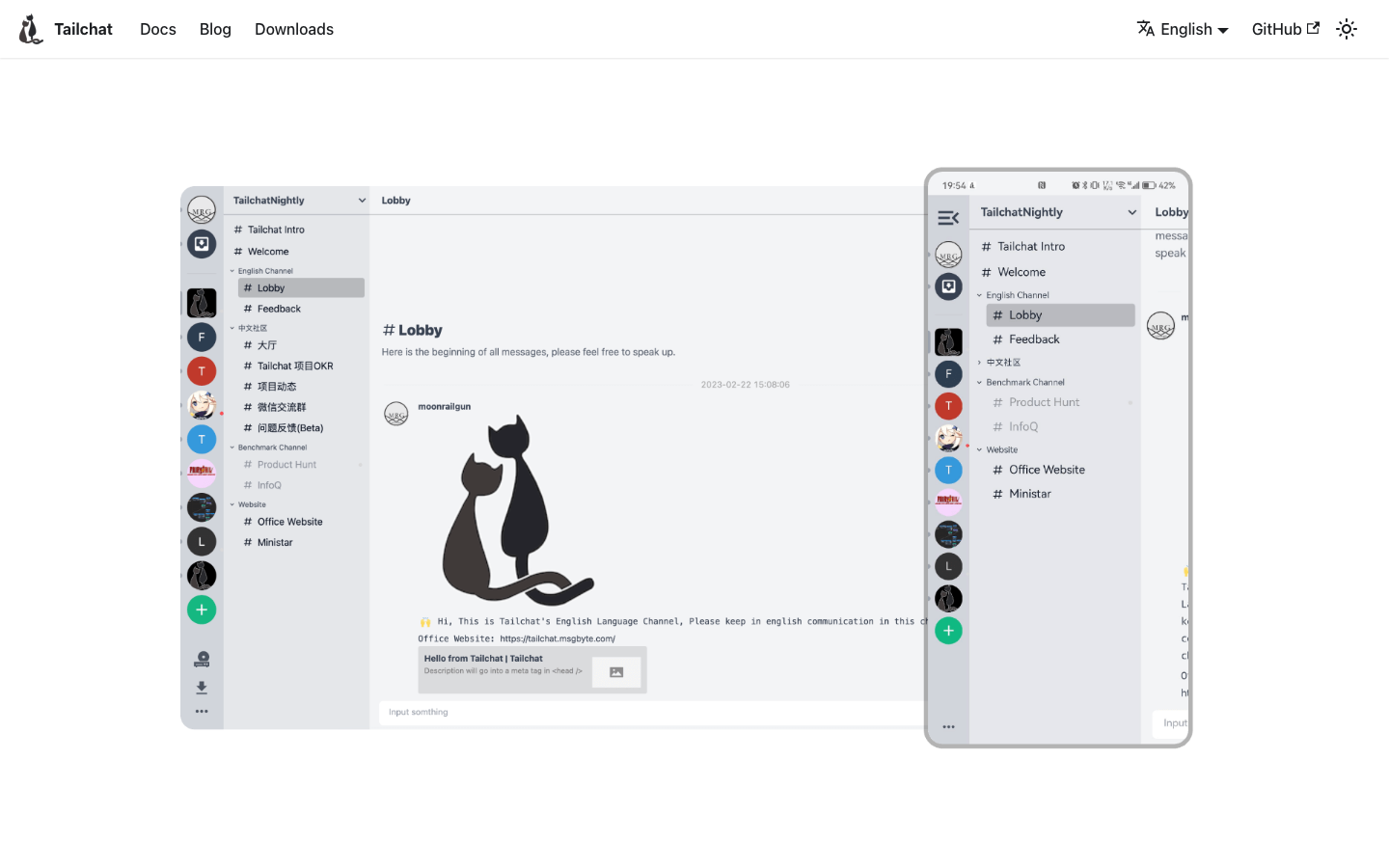
A multi-platform instant messaging platform with native clients for iOS, Android, JavaScript web, and command-line interfaces. Built in Go with GPL-3.0 licensing, Chat prioritizes cross-platform accessibility and scriptable automation for teams needing flexibility across devices.
Pros:
- True multi-platform support (mobile, web, CLI) out-of-the-box
- Scriptable command-line client for automation
- Go backend ensures performance and minimal resource use
Cons:
- Smaller user base and integration ecosystem
- GPL-3.0 licensing may impose restrictions in some enterprise contexts
How to choose
For security and compliance: Choose Rocket.Chat or Mattermost—both offer E2E encryption, federation, and audit trails suited to regulated industries.
For cost predictability and simplicity: Deploy Zulip if your team values searchable archives and async work, or Open IM Server if you need minimal overhead.
For integrated workflows: Select Huly if you want chat bundled with project management, eliminating tool sprawl.
For automation-heavy teams: Start with Hubot to add intelligent bots to any chat system, or choose Chat for multi-platform scripting and CLI integration.
All eight alternatives eliminate Slack's per-user fees, message deletion, and history paywalls—letting your team own its data and control its costs as it grows.