



















TL;DR
- Need real-time chat with full data control? open-im-server and chat let you self-host and own your message history forever.
- Building a community that won't disappear if one company changes its rules? mastodon and diaspora use federation so your community exists independently.
- Want crystal-clear voice without corporate surveillance? mumble specializes in low-latency voice chat with no analytics or ID verification requirements.
Why teams leave Discord
Discord's centralized model creates real friction for teams serious about data sovereignty. The platform caps free file uploads at 10MB—a hard ceiling for teams sharing design assets, recordings, or documents without paying for Nitro. More pressingly, Discord owns your community: if your account gets banned, there's no appeal process and no way to export your server's message history. You're locked in.
Privacy concerns have sharpened recently. Discord's rollout of age verification via facial scan or ID documents in some regions signals a shift toward intrusive identity collection. Combined with Discord's history of data breaches, this creates legitimate compliance and privacy risk for teams in regulated industries or those simply uncomfortable with facial biometric collection.
Self-hosting isn't an option. Discord is proprietary and fully centralized—there's no way to run your own instance, choose your data residency, or guarantee uptime independent of Discord's infrastructure. For organizations that need control over where conversations live, or communities that want to survive independently of any corporation's business decisions, Discord's model is fundamentally incompatible.
Quick comparison
| Name | License | Self-Hosted | Federation | E2E Encryption | Best For |
|---|---|---|---|---|---|
| mastodon | AGPL-3.0 | Yes | Yes | — | Decentralized community microblogging |
| hubot | MIT | Yes | No | — | Chat automation and bot scripting |
| open-im-server | Apache-2.0 | Yes | — | — | Self-hosted instant messaging backend |
| server | License not declared | Yes | — | — | WebSocket-based real-time messaging |
| diaspora | AGPL-3.0 | Yes | Yes | — | Privacy-first distributed social network |
| chat | GPL-3.0 | Yes | — | — | Multi-platform instant messaging (iOS, Android, web, CLI) |
| misskey | AGPL-3.0 | Yes | Yes | — | Decentralized interplanetary microblogging |
| mumble | License not declared | Yes | No | — | Low-latency voice chat |
Top open-source alternatives to Discord
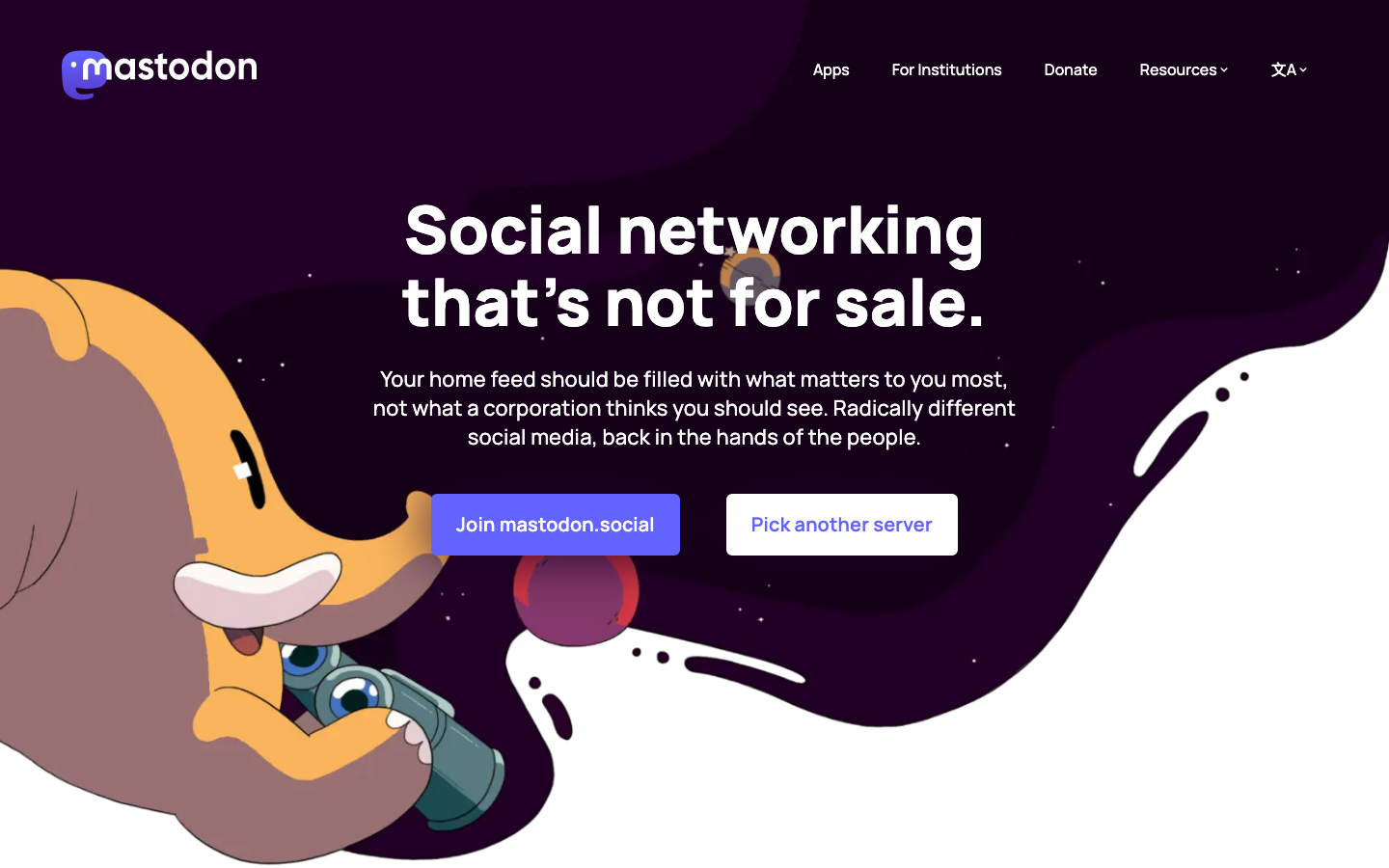
mastodon
Mastodon is a self-hosted, federated microblogging platform where each community runs its own server but can communicate across the network. Think Twitter or X, but owned and operated by the communities themselves, with no central corporation controlling the rules.
Pros:
- Federation means your community isn't isolated; users on other Mastodon instances can follow and interact with your server.
- Full self-hosting: you control the hardware, data location, and moderation policies.
- No paywalls or feature tiers—the software is completely free and open.
Cons:
- Microblogging format (short posts) rather than real-time chat or voice—different UX from Discord.
- Requires server administration knowledge and infrastructure to run reliably.
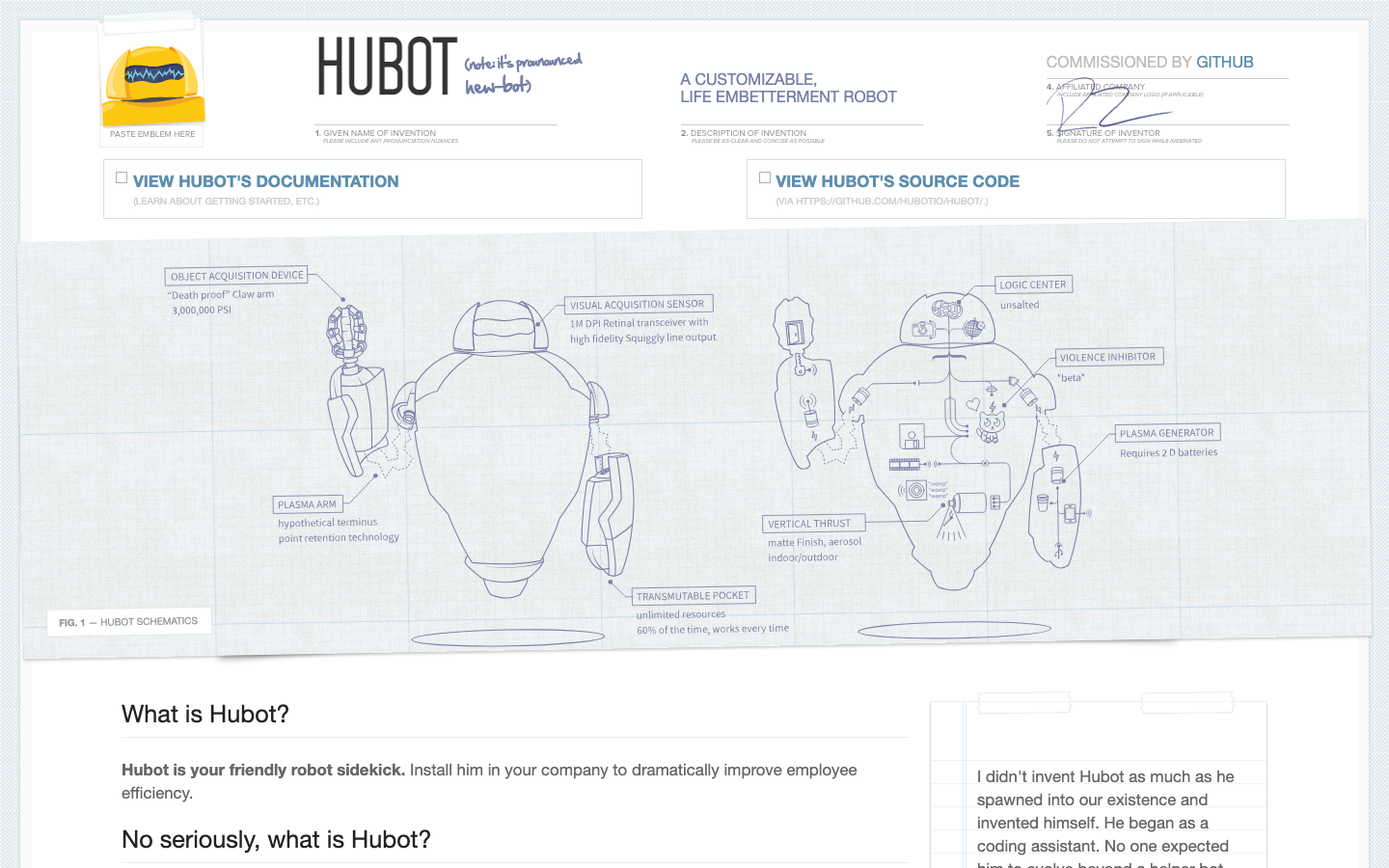
hubot
Hubot is a customizable chatbot framework that integrates with chat systems to automate tasks, run scripts, and respond to commands. It's designed for embedding automation into team communication workflows.
Pros:
- Lightweight and scriptable—write custom bots in JavaScript to extend your chat platform.
- MIT license allows commercial and private use without restriction.
Cons:
- Not a standalone chat platform; requires a separate chat backend (e.g., Slack, IRC, or another messaging system).
- Best suited for teams already familiar with scripting and bot development.
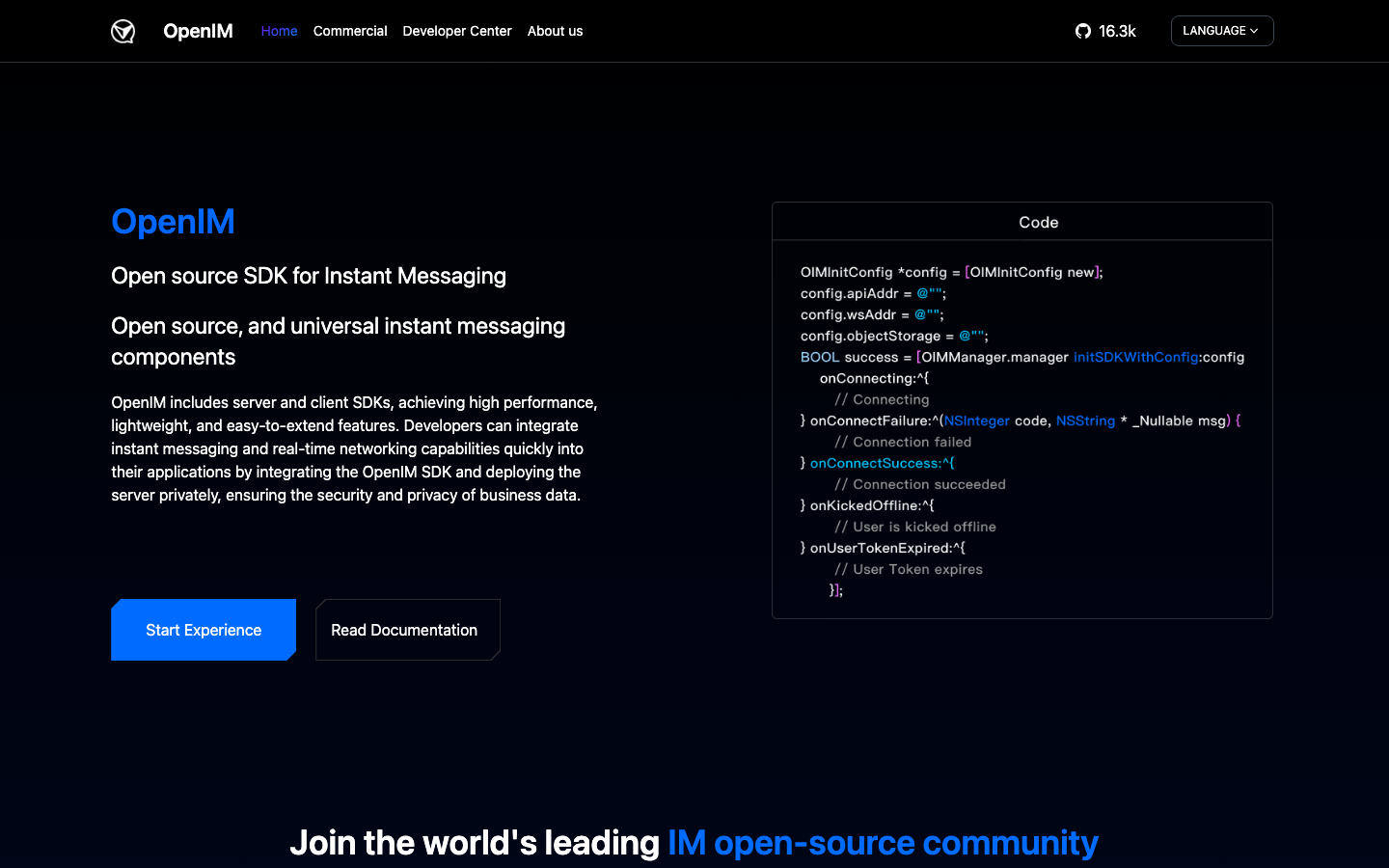
open-im-server
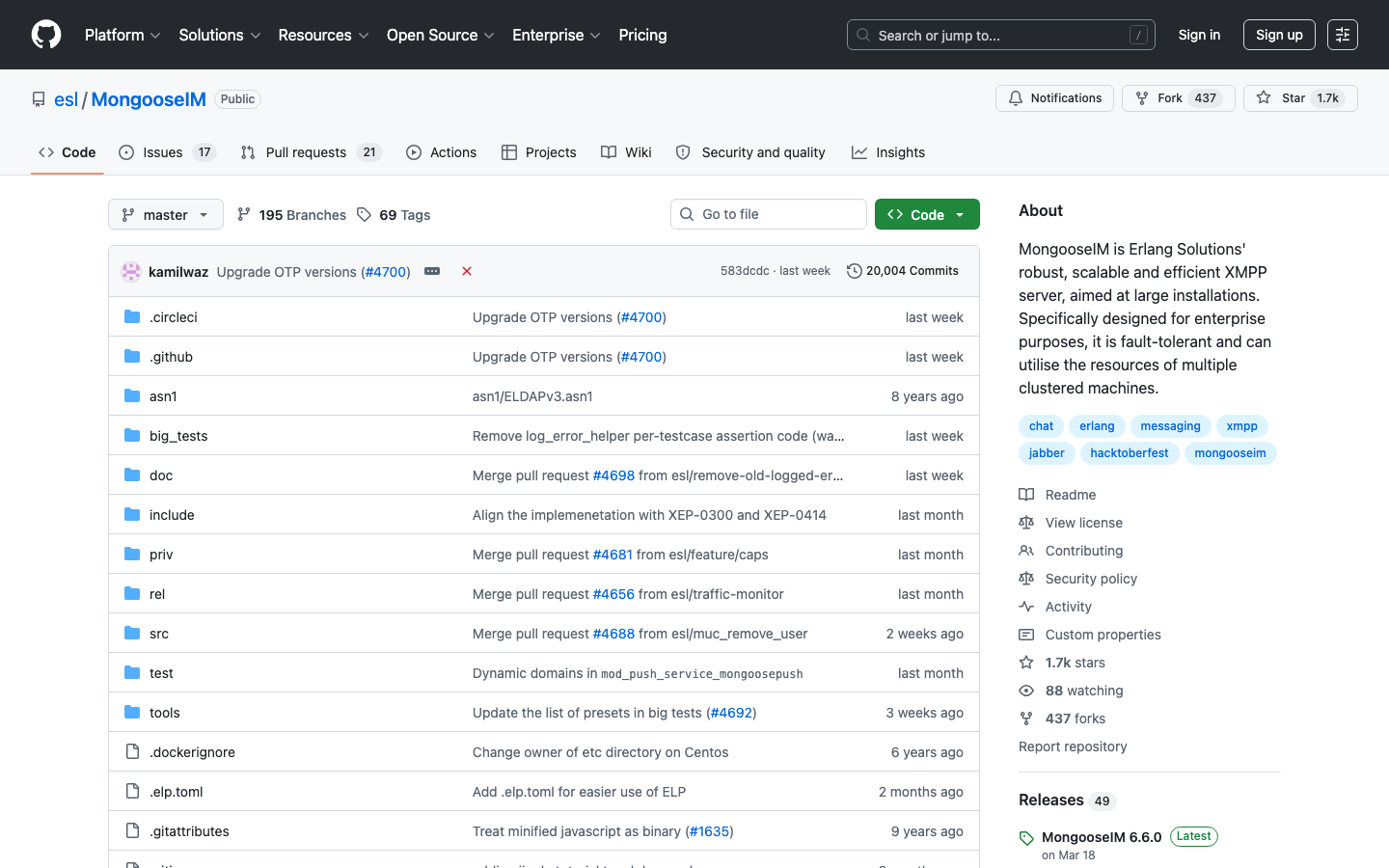
Open-IM-Server is a self-hosted instant messaging backend written in Go, designed for teams that need a complete, controllable chat infrastructure. It provides the server-side engine for real-time messaging without vendor lock-in.
Pros:
- Apache-2.0 license and Go implementation make it lightweight and deployable on modest infrastructure.
- Full control over data—messages live on your servers, not a third party's.
- Suitable for compliance-heavy industries where data residency is non-negotiable.
Cons:
- Requires backend setup and infrastructure management; not a plug-and-play solution.
- You need to build or integrate client applications (web, mobile) separately.
server
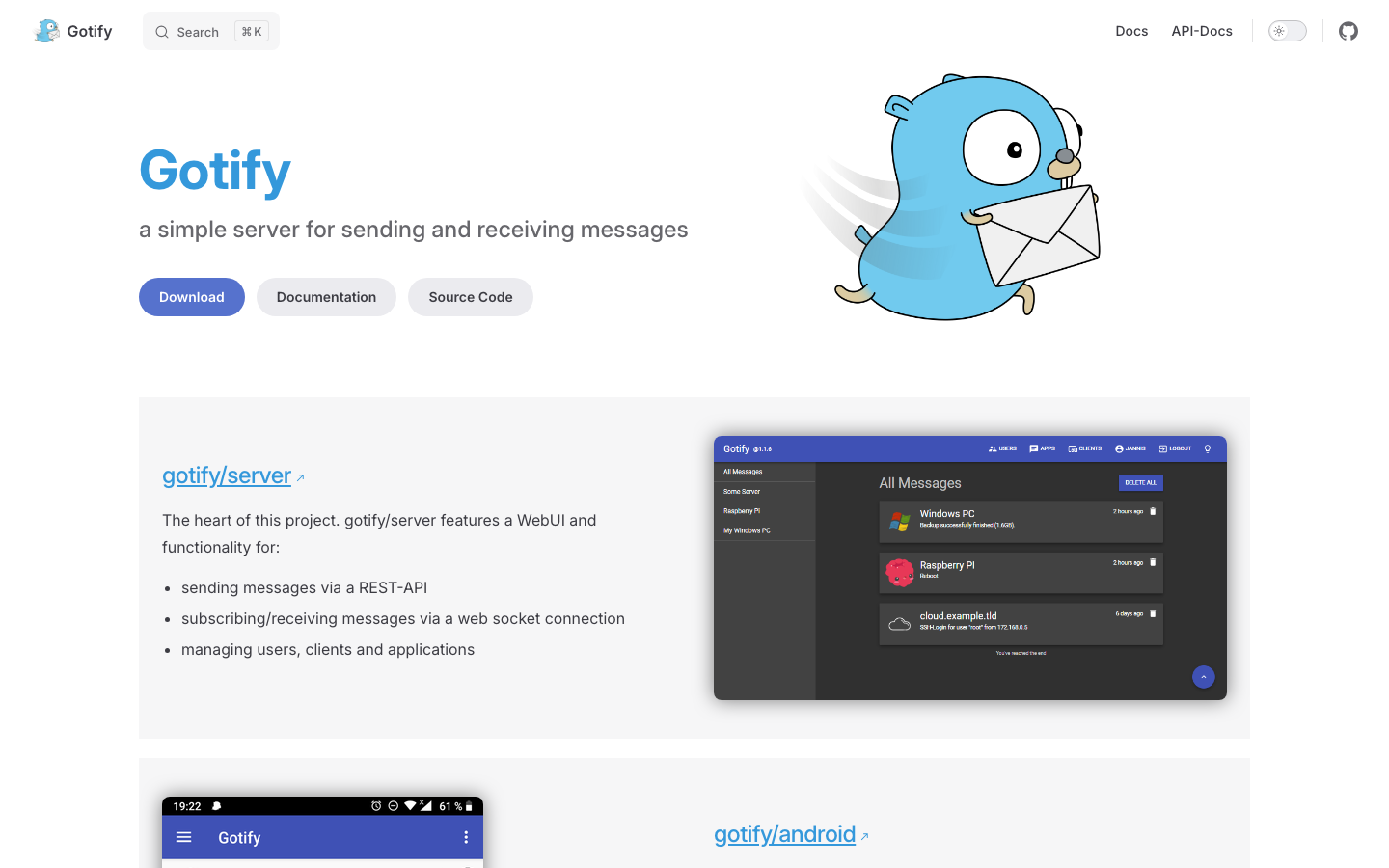
This is a simple, real-time messaging server built on WebSocket technology, with an included web UI for immediate usability. It's designed for teams that want a minimal, self-contained chat platform.
Pros:
- Includes a web interface out of the box—no separate client development required.
- WebSocket-based architecture ensures low-latency message delivery.
- Lightweight and easy to deploy on your own infrastructure.
Cons:
- Limited documentation and smaller ecosystem compared to larger projects.
- No built-in mobile apps; primarily web-focused.
diaspora
Diaspora is a privacy-focused, distributed social network where users own their own data and communicate across independently operated servers. It's built on the principle that social networks should not be owned by corporations.
Pros:
- Fully federated: your server can interoperate with other Diaspora pods and some other social platforms.
- Privacy-first design with no ads, tracking, or data monetization.
- AGPL license ensures the network remains open and community-controlled.
Cons:
- Smaller user base and ecosystem than centralized platforms—network effects are weaker.
- Microblogging and social networking focus, not real-time group chat like Discord.
chat
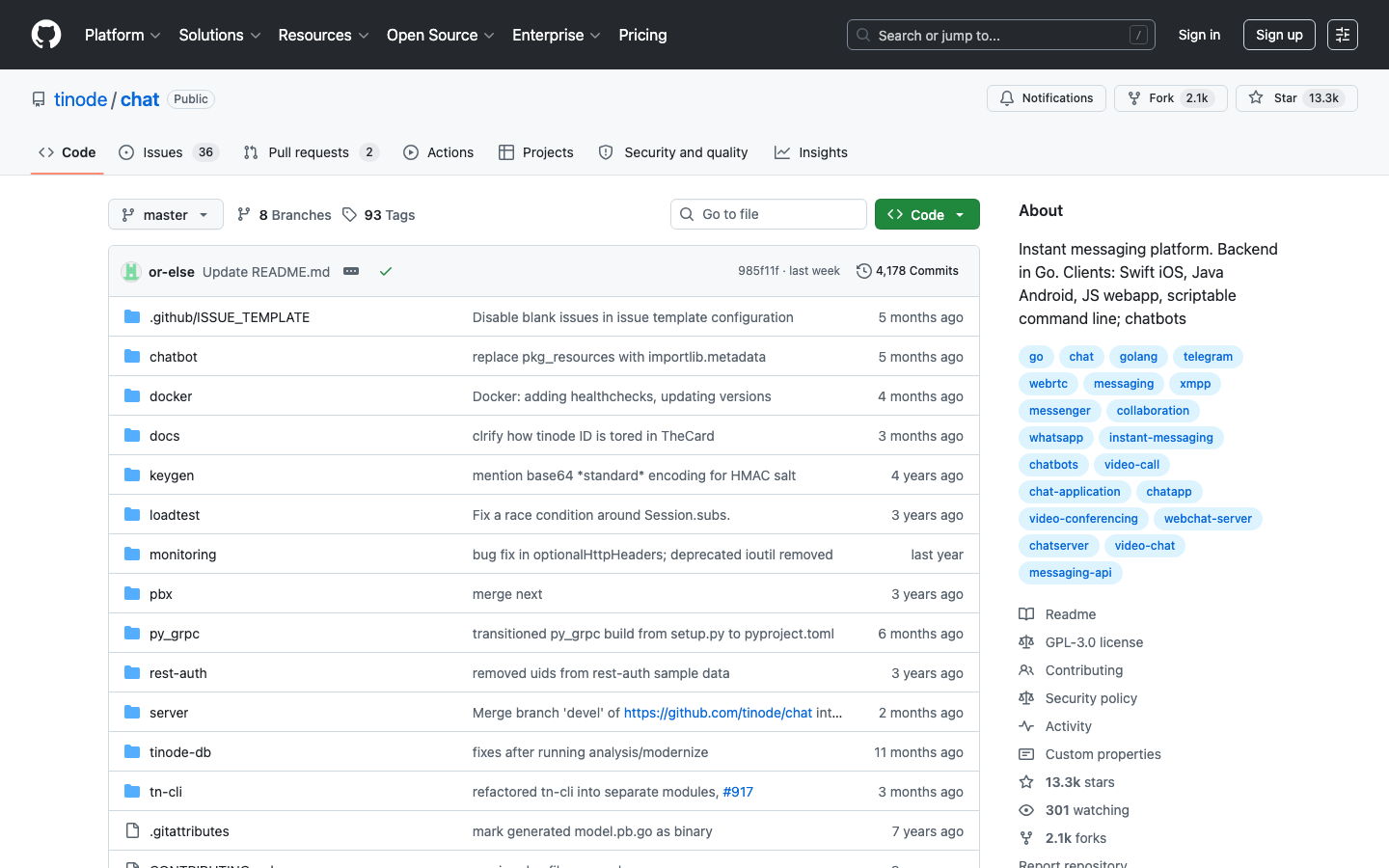
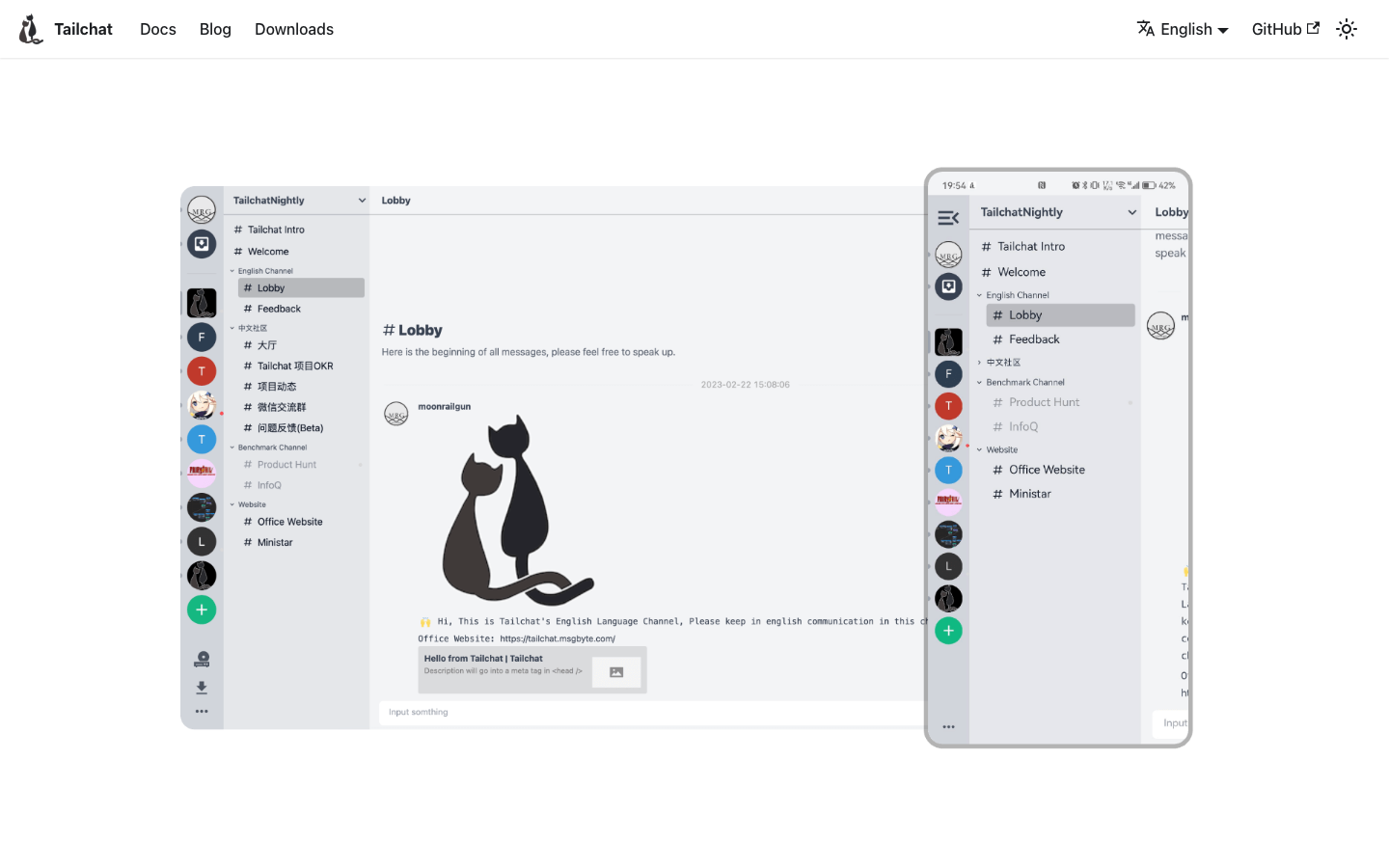
Chat is a multi-platform instant messaging platform with a Go backend and native clients for iOS, Android, a JavaScript web app, and a scriptable command-line interface. It also supports chatbots, making it extensible.
Pros:
- Comprehensive client support across all major platforms (mobile, web, CLI).
- Self-hosted backend means full data ownership and no message limits.
- GPL-3.0 license and bot support enable customization and integration.
Cons:
- Smaller community and fewer integrations than Discord.
- Requires server administration to set up and maintain.
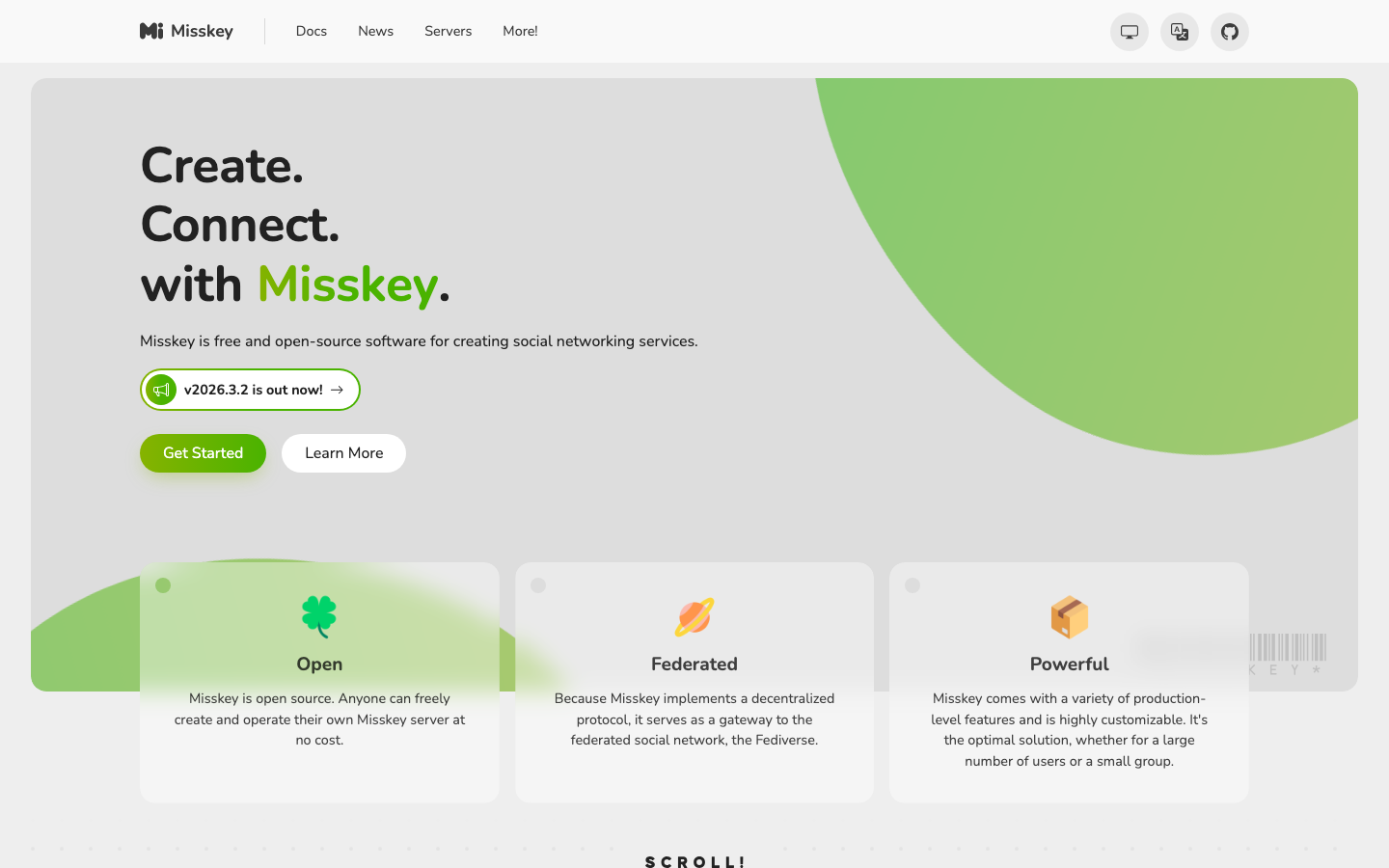
misskey
Misskey is a decentralized, federated microblogging and social platform written in TypeScript. It emphasizes freedom, interoperability, and creative expression across a distributed network of independently operated servers.
Pros:
- Federated architecture means communities can communicate across different Misskey instances.
- Feature-rich UI with customization options and emoji reactions.
- AGPL-3.0 license ensures the platform remains open and non-commercial.
Cons:
- Microblogging format, not real-time chat or voice—different interaction model from Discord.
- Requires server administration and technical setup.
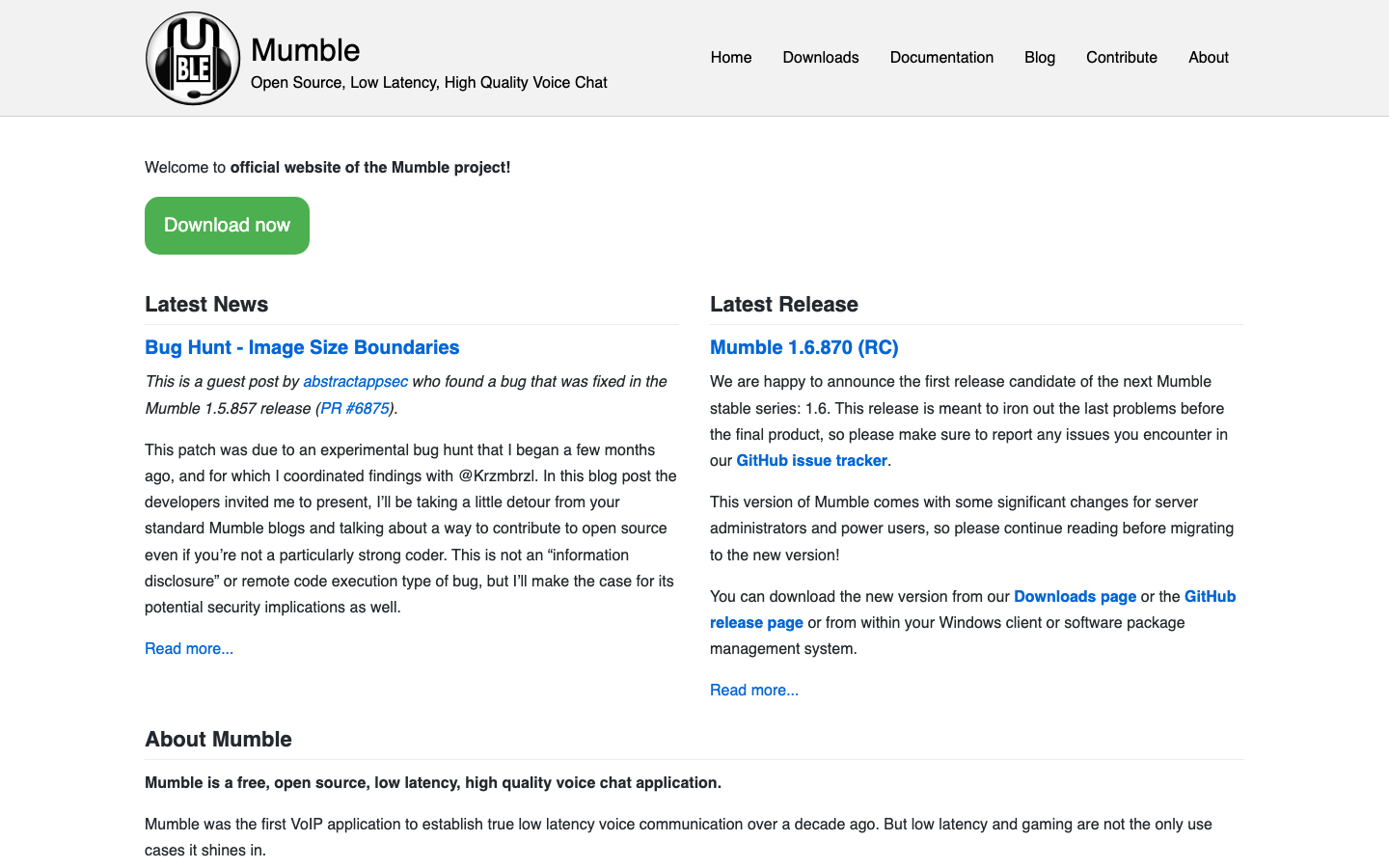
mumble
Mumble is a low-latency, open-source voice chat application optimized for crystal-clear audio communication. It's widely used by gaming communities and teams that prioritize voice quality and privacy.
Pros:
- Exceptional audio quality and minimal latency—purpose-built for voice, not an afterthought.
- Self-hosted servers mean no surveillance, no facial recognition, no corporate data collection.
- Lightweight and runs on modest hardware; no subscription or paywall.
Cons:
- Voice-only; lacks text chat, file sharing, and video features that Discord bundles.
- Smaller ecosystem and fewer integrations compared to Discord.
How to choose
For real-time team chat with full data control: choose open-im-server or chat if you need a self-hosted backend you can manage directly.
For communities that should survive independently of any corporation: choose mastodon, diaspora, or misskey—all use federation so your community isn't isolated on a single server.
For voice-only communication without surveillance: mumble is unmatched; it's battle-tested, low-latency, and completely privacy-respecting.
For automation and bot integration: hubot layers scripting and task automation on top of any chat platform.
Start with your primary need (chat, voice, or social network) and your tolerance for infrastructure management (fully managed vs. self-hosted). Most teams benefit from combining tools—e.g., chat for messaging plus mumble for voice—rather than expecting a single platform to do everything Discord does.