












TL;DR
- Teams wanting drop-in Subsonic client compatibility should start with Navidrome, a lightweight Go server that speaks the Subsonic API and runs on minimal hardware.
- Organizations managing mixed media (music, audiobooks, podcasts) find Audiobookshelf or Ampache more practical than Subsonic, whose podcast and video features sit behind the paid Premium tier.
- Self-hosters prioritizing library metadata and tagging benefit from beets as a foundation layer, often paired with a streaming server, rather than relying on Subsonic's basic music organization.
Why teams leave Subsonic
You've built a music library, bought a Subsonic license, set up remote access—then you want to stream podcasts or audiobooks, or share it with family on mobile, and hit a paywall. Or you notice the last update was November 2019.
Subsonic's pain points are structural. First, the project went closed-source from version 6.0-beta2, halting community contribution and transparency. The last public release (6.1.6, November 2019) is now years old, leaving users on outdated code with no visibility into security patches or feature work. Second, Premium gates the features most people want: the mobile apps, video streaming, podcasts, Chromecast and Sonos playback and DLNA all require Premium ($1 a month, $12 a year or $99 lifetime)—reasonable for a commercial product, but frustrating when the underlying server is stalled. Third, audiobooks have no first-class home, and podcasts and video exist only in Premium, so people with mixed libraries end up running a second service anyway. Finally, the Java footprint and Jetty embedding create deployment friction for users who want something lighter or more portable.
These constraints pushed the community to fork (Airsonic, Libresonic) and build alternatives that either implement the Subsonic API for client compatibility or take a fresh approach to media streaming.
Quick comparison
| Name | License | Server or Player | Client Protocol | Transcoding | Best For |
|---|---|---|---|---|---|
| Navidrome | GPL-3.0 | Server | Subsonic/OpenSubsonic | Yes (per-player Opus) | Lightweight Subsonic-compatible streaming |
| Koel | MIT | Server | Subsonic/OpenSubsonic | — | Modern web UI; optional Koel Plus tier |
| beets | MIT | Library manager | — (tagger, not streamer) | — | Music metadata, tagging, organization |
| Audiobookshelf | GPL-3.0 | Server | Own apps | — | Audiobooks and podcasts; self-hosted only |
| Mopidy | Apache-2.0 | Player daemon | MPD protocol | — | Extensible music daemon; headless play |
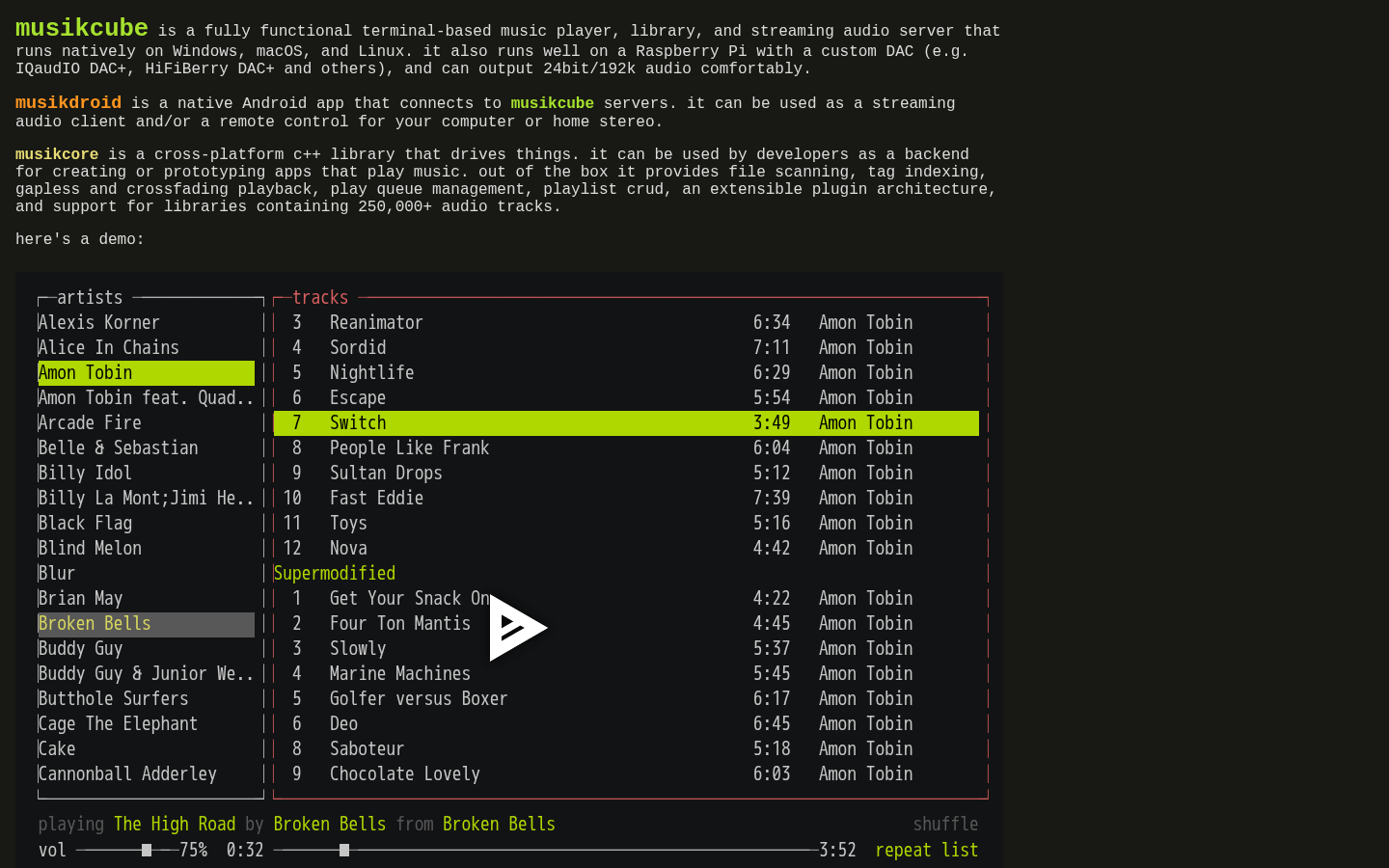
| musikcube | BSD-3-Clause | Server + terminal player | Own apps | — | Terminal UI; cross-platform; bundled server |
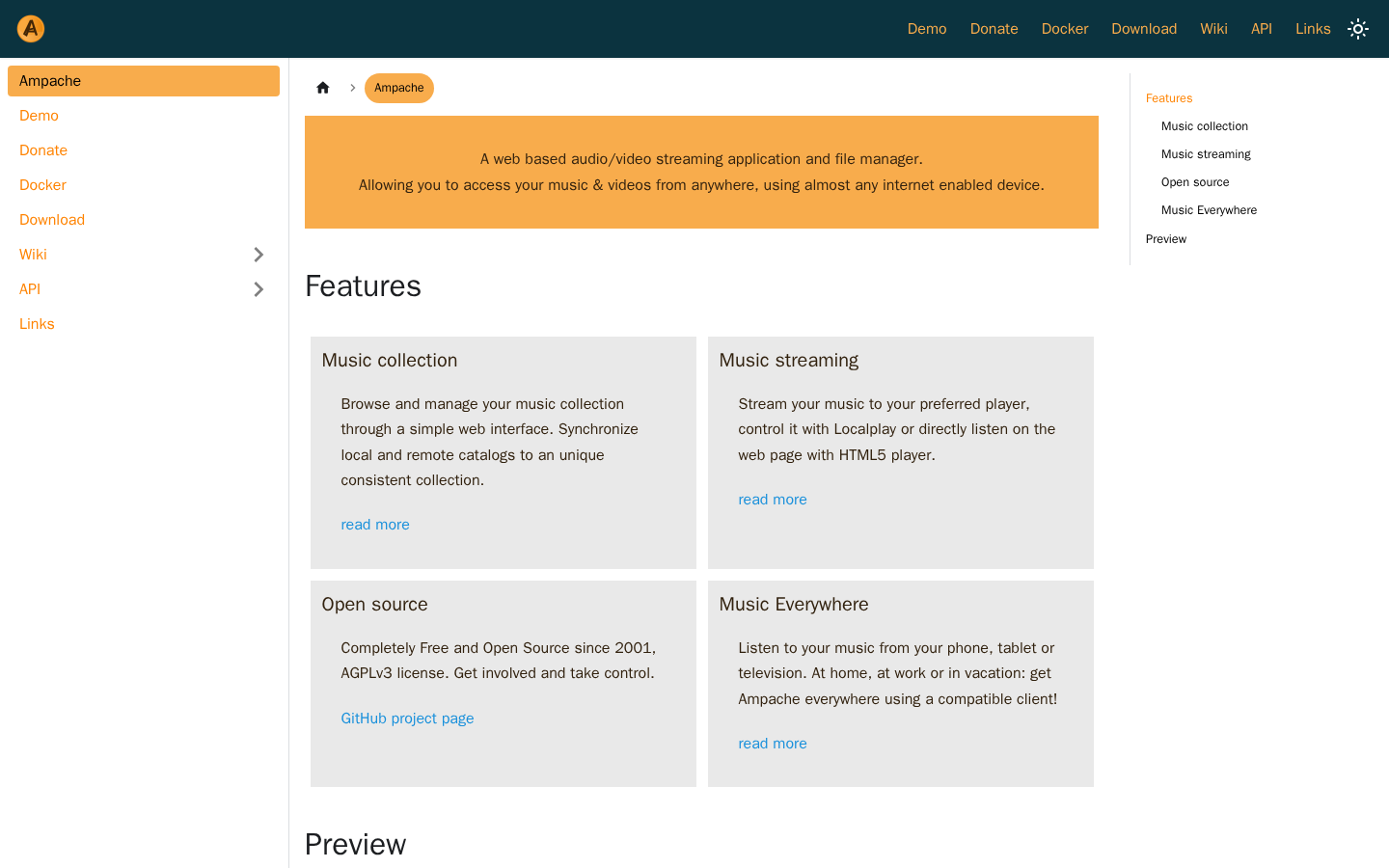
| Ampache | AGPL-3.0 | Server | Subsonic/OpenSubsonic | — | Music, video, podcasts; full-featured backend |
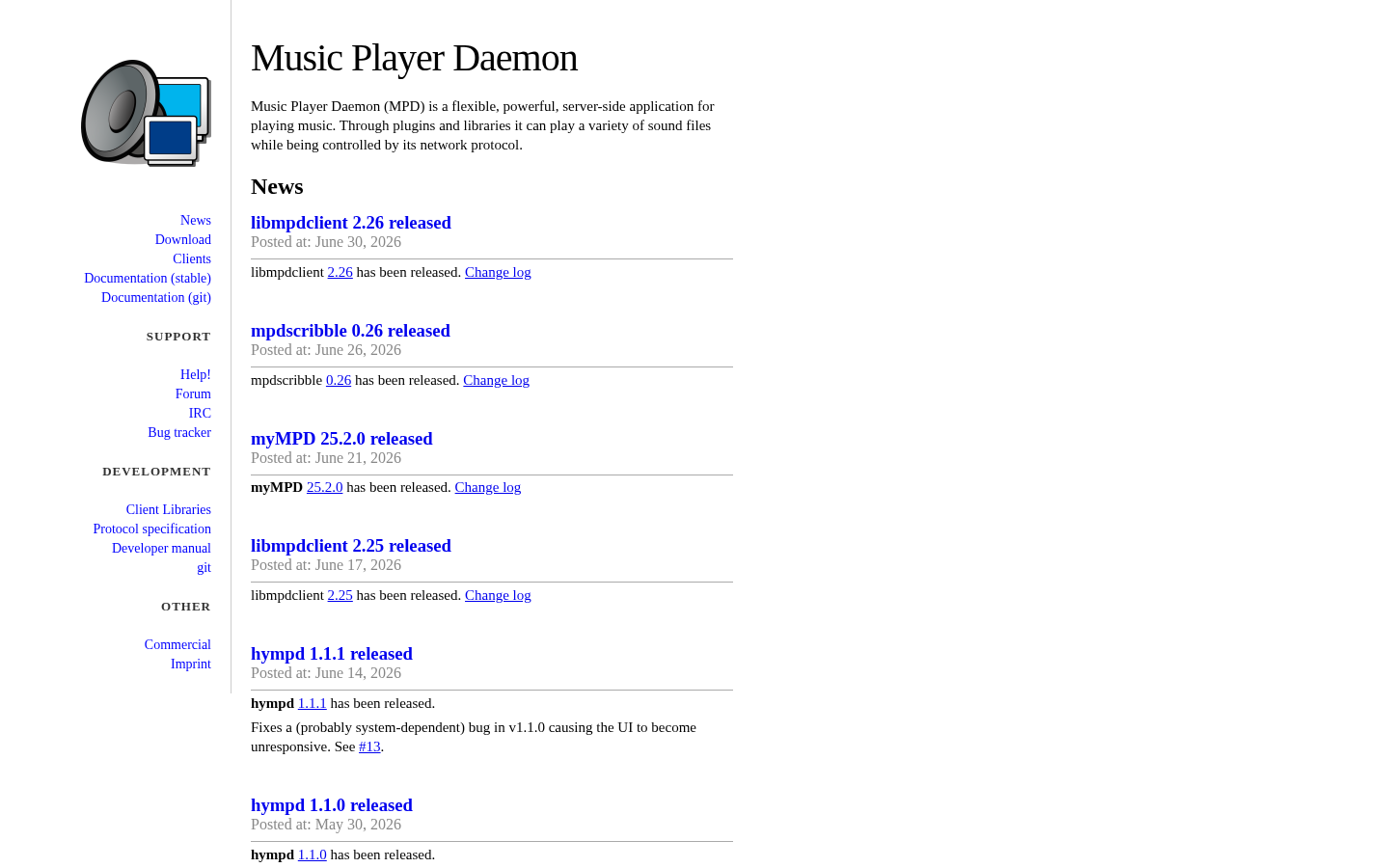
| MPD | GPL-2.0 | Player daemon | MPD protocol | — | Minimal, Unix-philosophy music daemon |
Top open-source alternatives to Subsonic
Navidrome
A lightweight, actively maintained Go-based streaming server that implements the Subsonic and OpenSubsonic APIs. It's designed to run on low-power hardware (Raspberry Pi, NAS) and requires minimal configuration. Your existing Subsonic mobile apps and desktop clients work without modification.
Pros
- Drop-in Subsonic client compatibility; no app switching required
- Small footprint and fast startup; runs on ARM, Docker, or bare metal
- Active development (latest release September 2026) with regular security updates
Cons
- Music-focused; no native audiobook or podcast hosting
- No podcast support yet (requested since 2021)
Koel
A modern PHP-based music streaming server with a polished web interface and Subsonic/OpenSubsonic API support. It emphasizes a sleek user experience; the Community edition is free and Koel Plus (from €19.99 one-time) adds multi-library and SSO features.
Pros
- Beautiful, responsive web UI with modern design
- Full Subsonic and OpenSubsonic backend compatibility
- Optional one-time Plus tier instead of a subscription
Cons
- Requires PHP and a database; heavier than Go/Rust alternatives
- Still primarily music-focused
beets
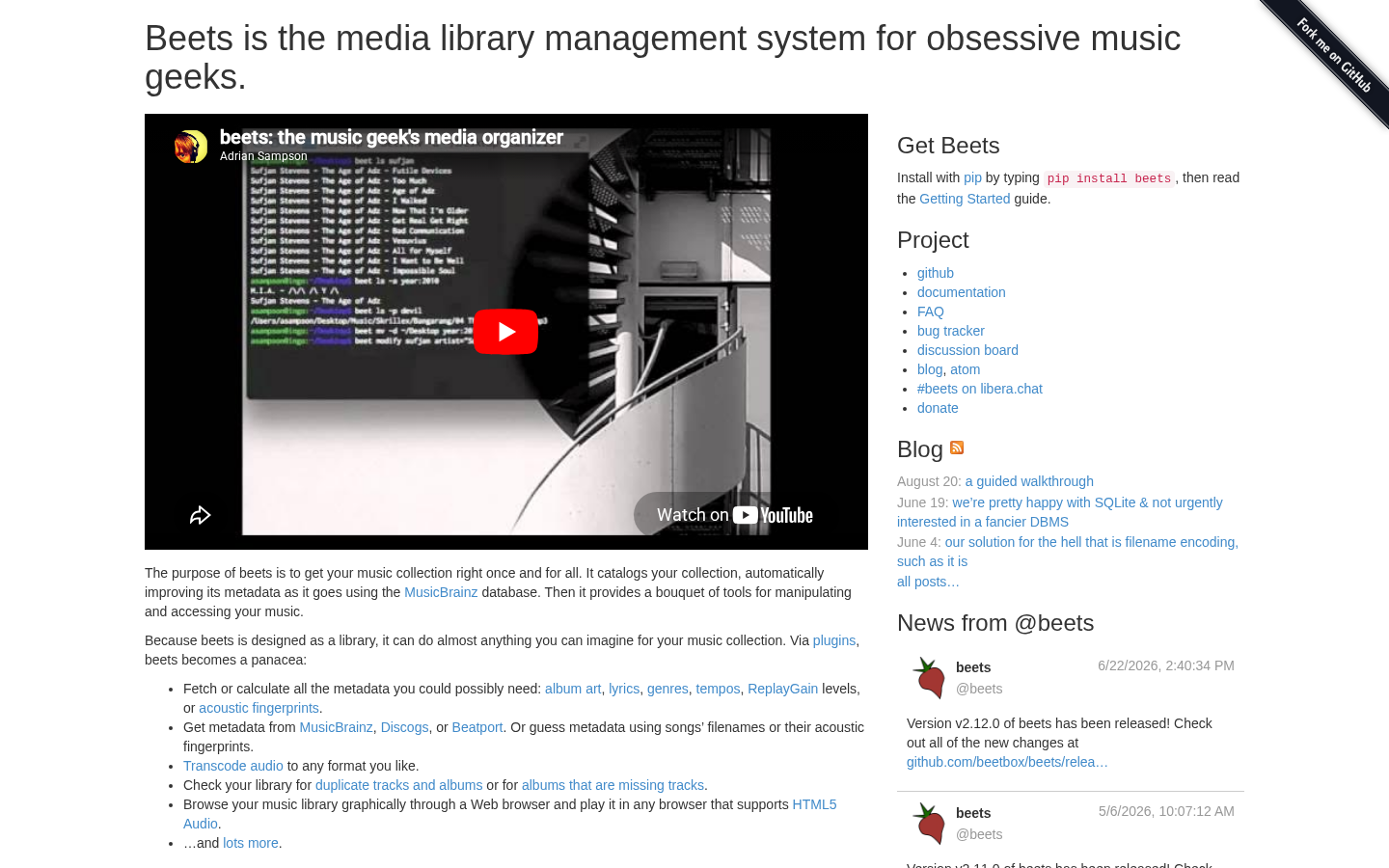
A command-line music library manager that uses MusicBrainz for automatic tagging and metadata correction. It's not a streaming server, but a powerful indexing and organization tool often paired with a separate server.
Pros
- Unmatched accuracy for music metadata and album art via MusicBrainz
- Highly scriptable and customizable for library workflows
- MIT license; mature and stable
Cons
- Not a streaming server; requires a separate streaming application
- CLI-first; steeper learning curve for non-technical users
Audiobookshelf
A self-hosted server purpose-built for audiobooks and podcasts, with a clean web UI and native mobile apps. It handles long-form audio content better than music-only servers.
Pros
- Dedicated audiobook and podcast management; chapters, bookmarks, progress tracking
- Native mobile apps (iOS, Android) included
- Active development and growing feature set
Cons
- Not a music streaming server; separate tool for music libraries
- Requires its own deployment and maintenance
Mopidy
An extensible music server daemon written in Python that speaks the MPD protocol. It's designed as a backend that plays local files and extension-provided sources, controlled by any MPD client.
Pros
- Highly extensible via plugins; connects to many music services
- Lightweight daemon architecture; runs headless
- MPD protocol means broad client ecosystem
Cons
- Not Subsonic-compatible; requires MPD clients
- Steeper setup for beginners; more ops-focused
musikcube
A terminal-based music player with a bundled streaming server and Android app (musikdroid). It offers a unique cross-platform, keyboard-driven UI and is written in C++ for performance.
Pros
- Distinctive terminal UI; efficient for power users
- Includes both player and server; self-contained
- Cross-platform (Linux, macOS, Windows, Pi)
Cons
- Terminal-first interface; not suitable for non-technical users
- Smaller user base and fewer third-party clients
Ampache
A full-featured PHP-based audio and video streaming application with a Subsonic and OpenSubsonic backend. It supports music, video, and podcasts in a single system, making it more versatile than music-only servers.
Pros
- Handles music, video, and podcasts; true multi-media server
- Full Subsonic API compatibility; client flexibility
- Mature project with broad feature support
Cons
- PHP stack; requires more resources than Go or Rust alternatives
- Larger codebase; more complex to deploy and maintain
MPD
The Music Player Daemon is a minimal, Unix-philosophy music server that plays audio and is controlled via network protocol. It's not a full streaming server like Subsonic, but a focused backend for music playback.
Pros
- Extremely lightweight and stable; decades of refinement
- Huge ecosystem of clients and frontends
- Ideal for headless or embedded systems
Cons
- No web UI; requires a separate client application
- Not a streaming solution in the Subsonic sense; local playback focus
How to choose
Start with your primary use case. If you want existing Subsonic clients to keep working without change, Navidrome is the fastest path. If you're managing music alongside audiobooks or podcasts, Ampache or Audiobookshelf eliminate the need for multiple services. For library organization and metadata, beets is unmatched but pairs with a separate server. If you prefer a terminal environment or minimal footprint, musikcube or MPD reward technical users. For most self-hosters seeking a modern web UI and active development, Navidrome or Koel offer the best balance of simplicity and features.