


























TL;DR
- Teams with strict data residency or air-gap requirements should evaluate AppFlowy or Logseq, both of which support self-hosting and keep data under your control.
- Growing teams needing real-time collaboration without per-seat AI paywalls often migrate to Outline, which bundles collaboration into a flat-rate model.
- Knowledge workers prioritizing privacy and markdown portability find Memos or Khoj ideal for quick capture and local-first workflows without vendor lock-in.
Why teams leave Notion
Notion's pricing model has shifted dramatically since 2020, eroding trust through repeated increases. The most significant recent change came in May 2025, when Notion eliminated its standalone AI add-on and bundled unlimited AI exclusively into the Business tier ($20/user/month). This means teams wanting AI assistance now must pay the higher tier across all seats—a cost multiplier for mid-sized teams. The Plus plan ($10–12/user/month) no longer includes advanced permissions, SAML SSO, or audit logs, forcing feature-hungry teams to jump two pricing tiers.
Beyond cost, Notion's proprietary block format creates vendor lock-in. Exporting to Markdown or CSV is lossy: database relations, inline views, toggles, and callouts degrade or vanish entirely. Teams relying on Notion for mission-critical wikis and databases face real friction when migrating away.
Privacy and data sovereignty are growing concerns. Notion stores all workspace data on its servers with no self-hosted or air-gap option, a blocker for regulated industries (healthcare, finance, government) and organizations with strict data residency policies. Combined with repeated pricing changes, this has pushed teams to seek alternatives that offer transparency, portability, and control.
Quick comparison
| Name | License | Self-Hosted | Data Format / Portability | Real-time Collaboration | Best For |
|---|---|---|---|---|---|
| AppFlowy | AGPL-3.0 | ✓ Yes | Open format, clean export | ✓ Yes | Teams wanting AI + full data control |
| AFFiNE | License not declared | ✓ Yes | Open format, markdown-friendly | ✓ Yes | Knowledge bases mixing planning & creation |
| Memos | MIT | ✓ Yes | Markdown-native | Limited | Quick capture, lightweight workflows |
| Logseq | AGPL-3.0 | ✓ Yes | Markdown / EDN, local-first | Limited | Personal & team knowledge graphs |
| Paperless-ngx | GPL-3.0 | ✓ Yes | Document storage, OCR-indexed | — | Document archival & retrieval |
| Outline | License not declared | ✓ Yes | Markdown, clean exports | ✓ Yes | Team wikis & collaborative docs |
| Khoj | AGPL-3.0 | ✓ Yes | LLM-agnostic, local data | — | AI-powered research & Q&A |
| Focalboard | License not declared | ✓ Yes | Open format | ✓ Yes | Project boards & task management |
Top open-source alternatives to Notion
AppFlowy
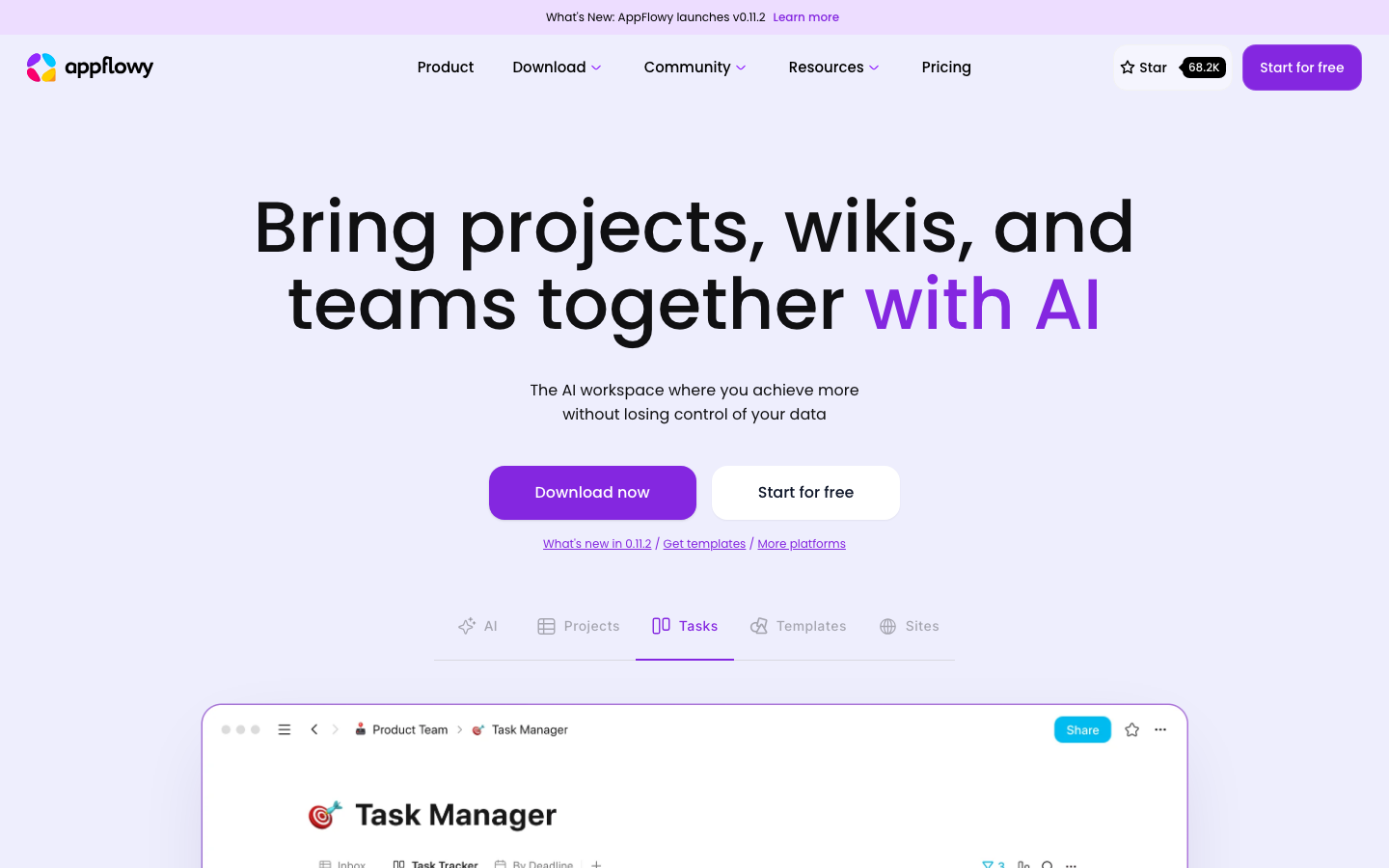
AppFlowy is a self-hosted collaborative workspace combining projects, wikis, and databases with built-in AI, all while keeping your data on your infrastructure. Written in Dart with a focus on performance, it's marketed as the leading open-source Notion alternative and supports real-time team collaboration.
Pros
- Full data ownership via self-hosting; no vendor lock-in.
- AI features included without per-seat paywalls or separate add-ons.
- Real-time collaboration and a modern UI designed for teams.
Cons
- Smaller ecosystem and fewer integrations than Notion.
- Requires infrastructure management if self-hosting.
AFFiNE
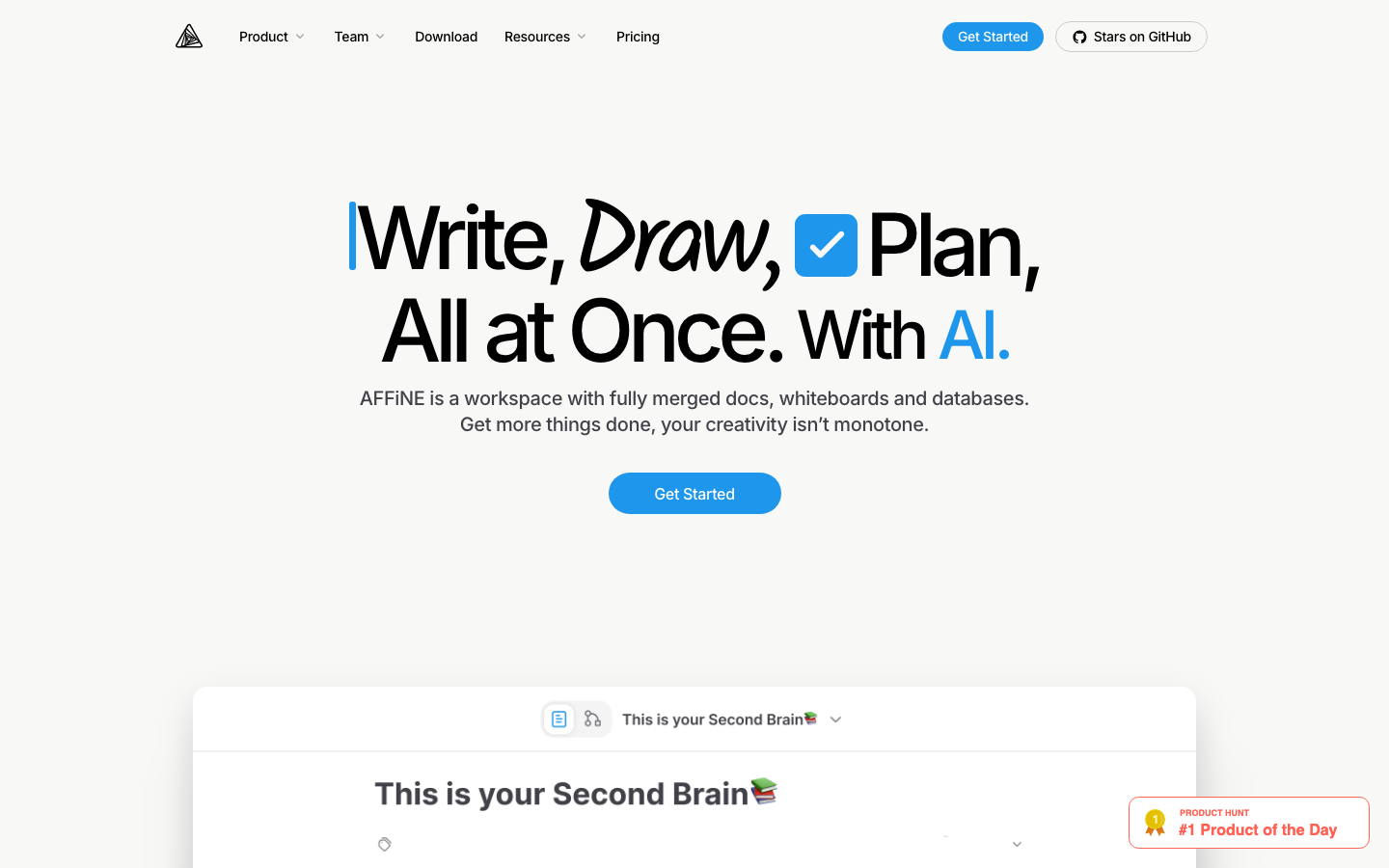
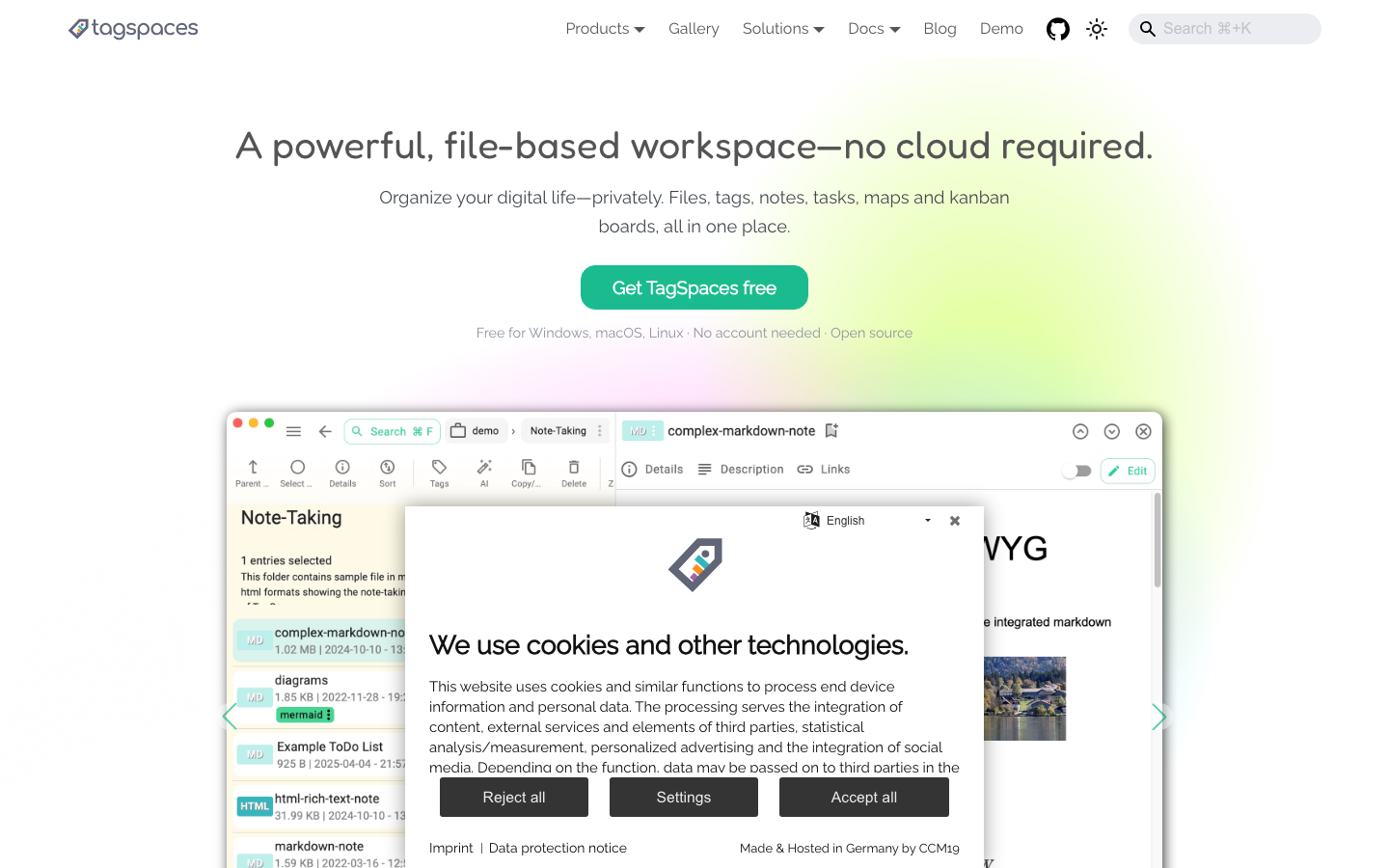
AFFiNE is a next-generation knowledge base that merges planning, sorting, and creation in one privacy-first workspace. Built in TypeScript, it emphasizes customization and works offline-first, with sync when you're ready.
Pros
- Privacy-first design with local data storage options.
- Combines note-taking, planning, and visual creation (Notion + Miro hybrid).
- Customizable and open-source with no vendor lock-in.
Cons
- Smaller user base means fewer templates and community resources.
- Real-time collaboration is available but ecosystem is still maturing.
Memos
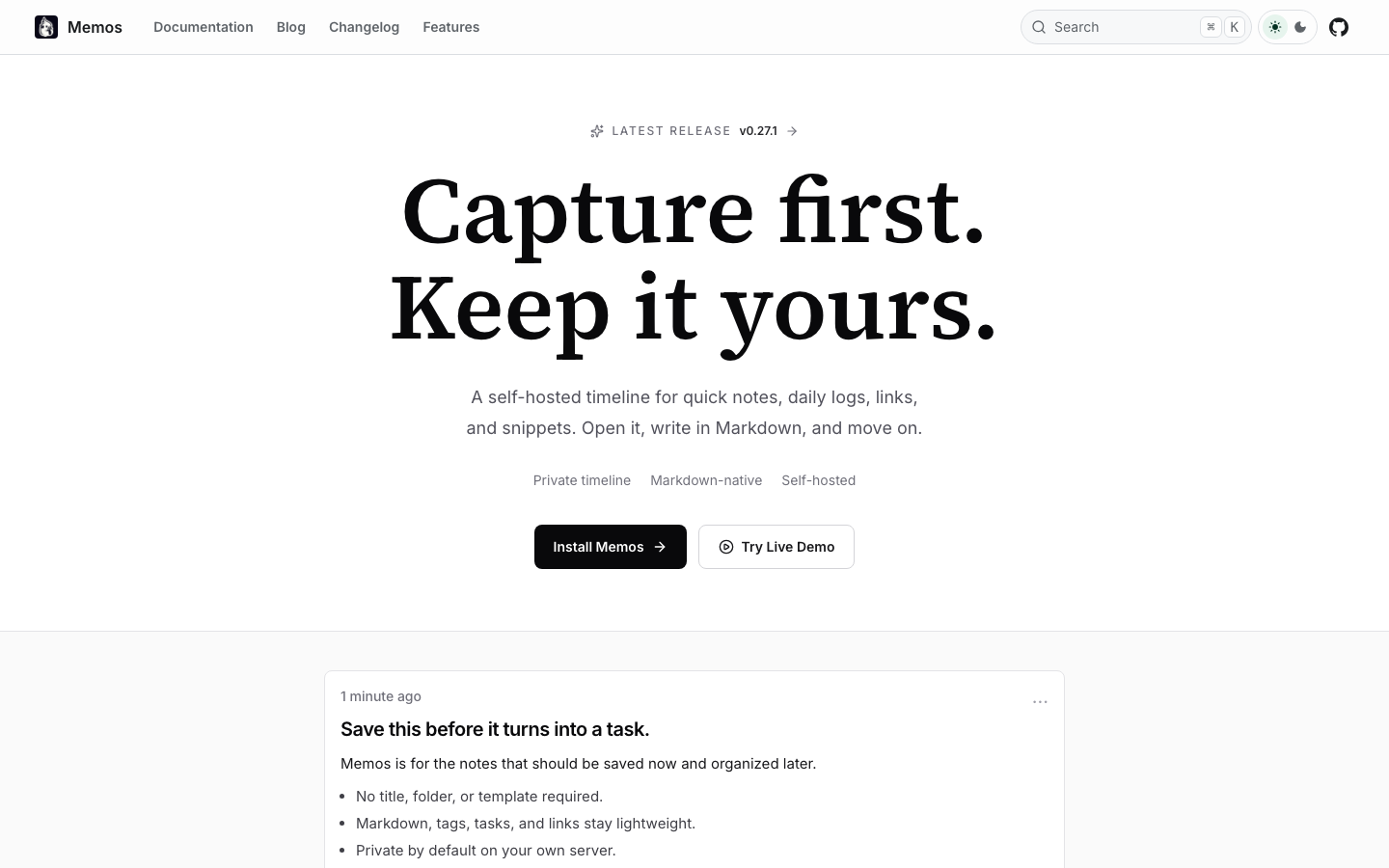
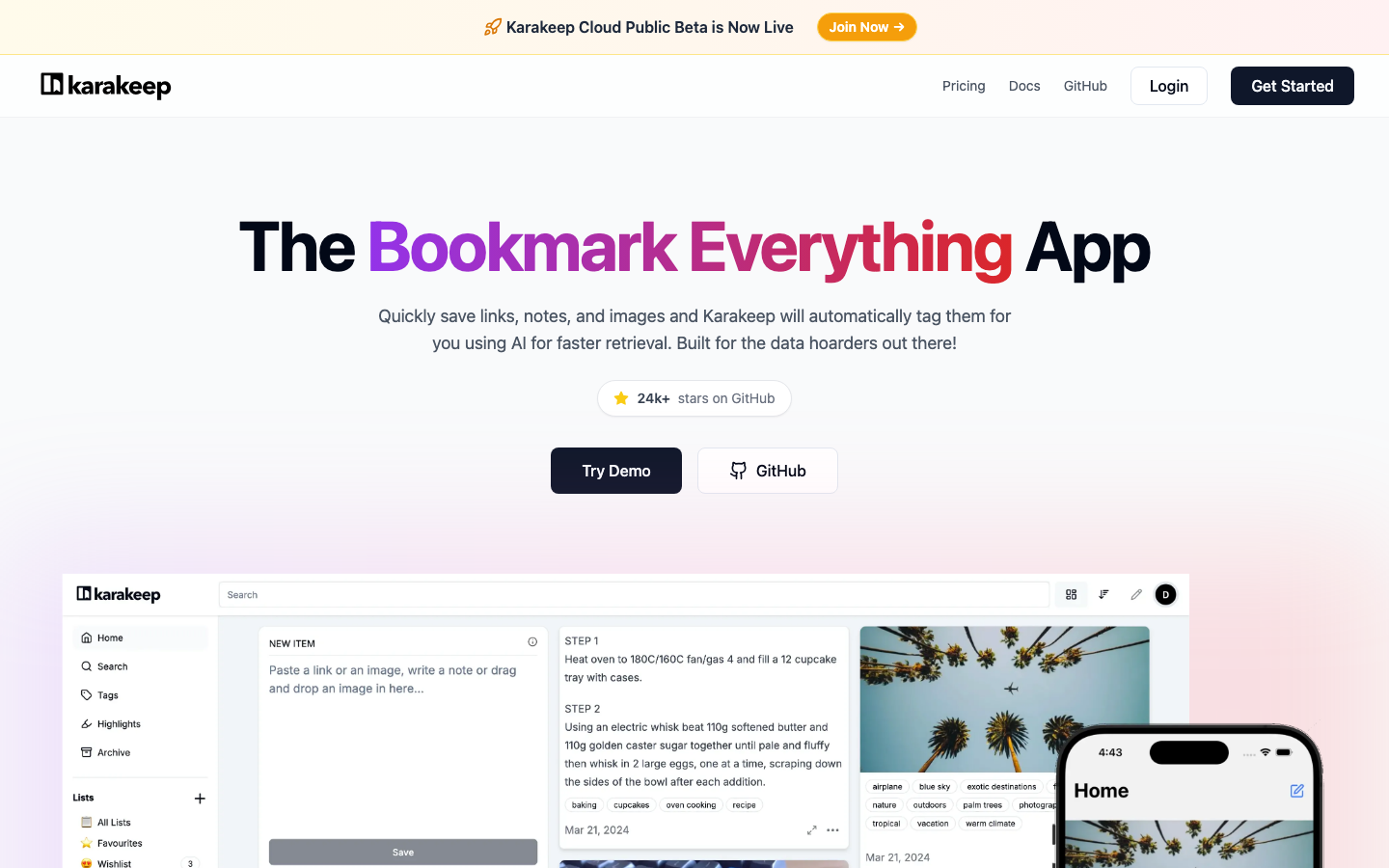
Memos is a lightweight, self-hosted note-taking tool optimized for quick capture. Markdown-native and built in Go, it prioritizes simplicity and speed over feature bloat, making it ideal for individuals and teams who want a no-frills knowledge base.
Pros
- Extremely lightweight and fast; minimal resource overhead.
- Markdown-native ensures portability and future-proofs your notes.
- MIT license and straightforward self-hosting setup.
Cons
- Lacks advanced database features and complex views that Notion offers.
- Limited real-time collaboration; better suited for personal use or async workflows.
Logseq
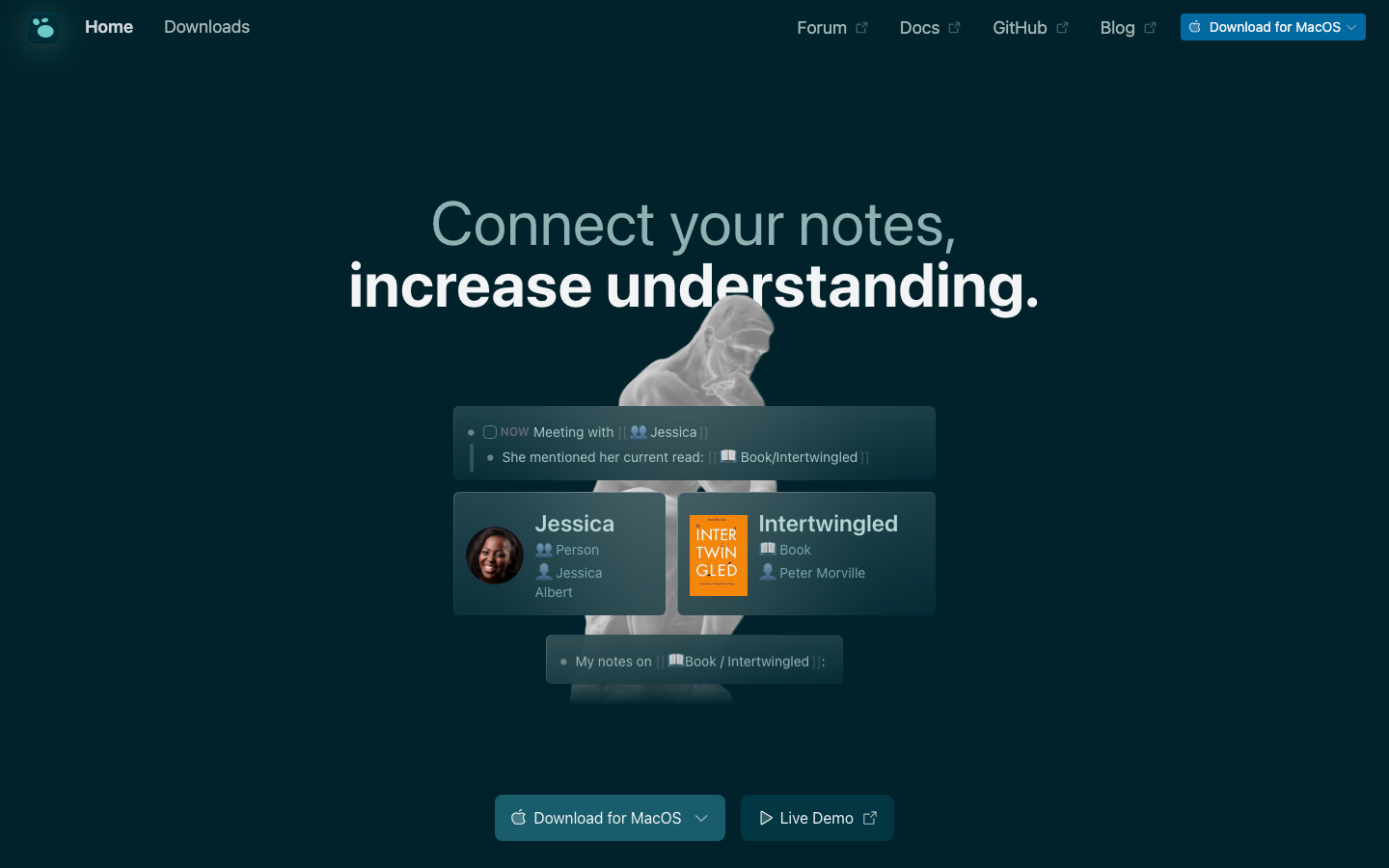
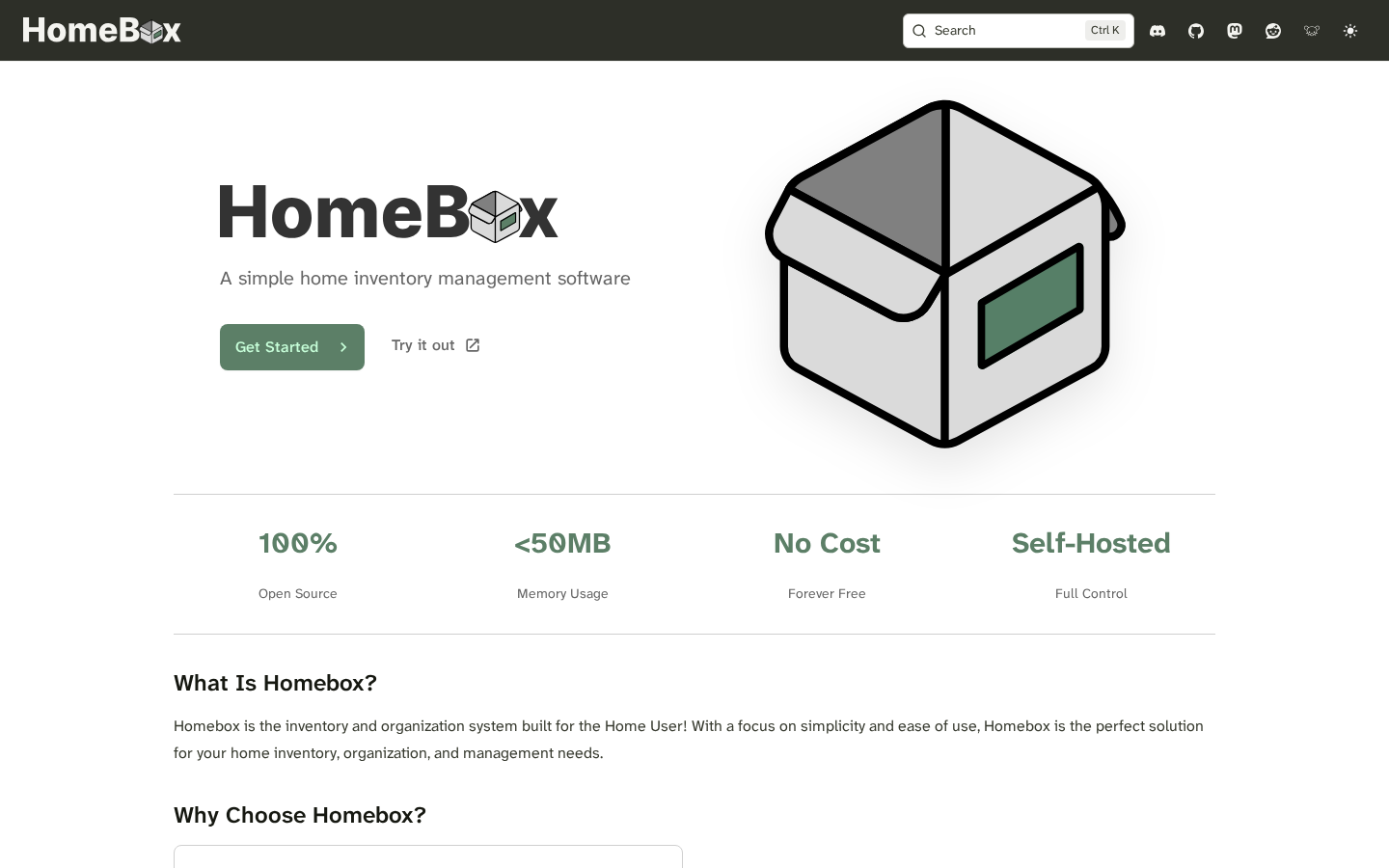
Logseq is a privacy-first, open-source platform for knowledge management built around a local-first model. Written in Clojure, it stores data in Markdown or EDN format on your device, syncing optionally to your own cloud storage.
Pros
- True local-first architecture; your data never touches a cloud server by default.
- Markdown and EDN export ensure long-term portability.
- Strong community and extensive plugin ecosystem.
Cons
- Real-time team collaboration is limited; better for individuals or small teams with async workflows.
- Steeper learning curve for users unfamiliar with graph-based note-taking.
Paperless-ngx
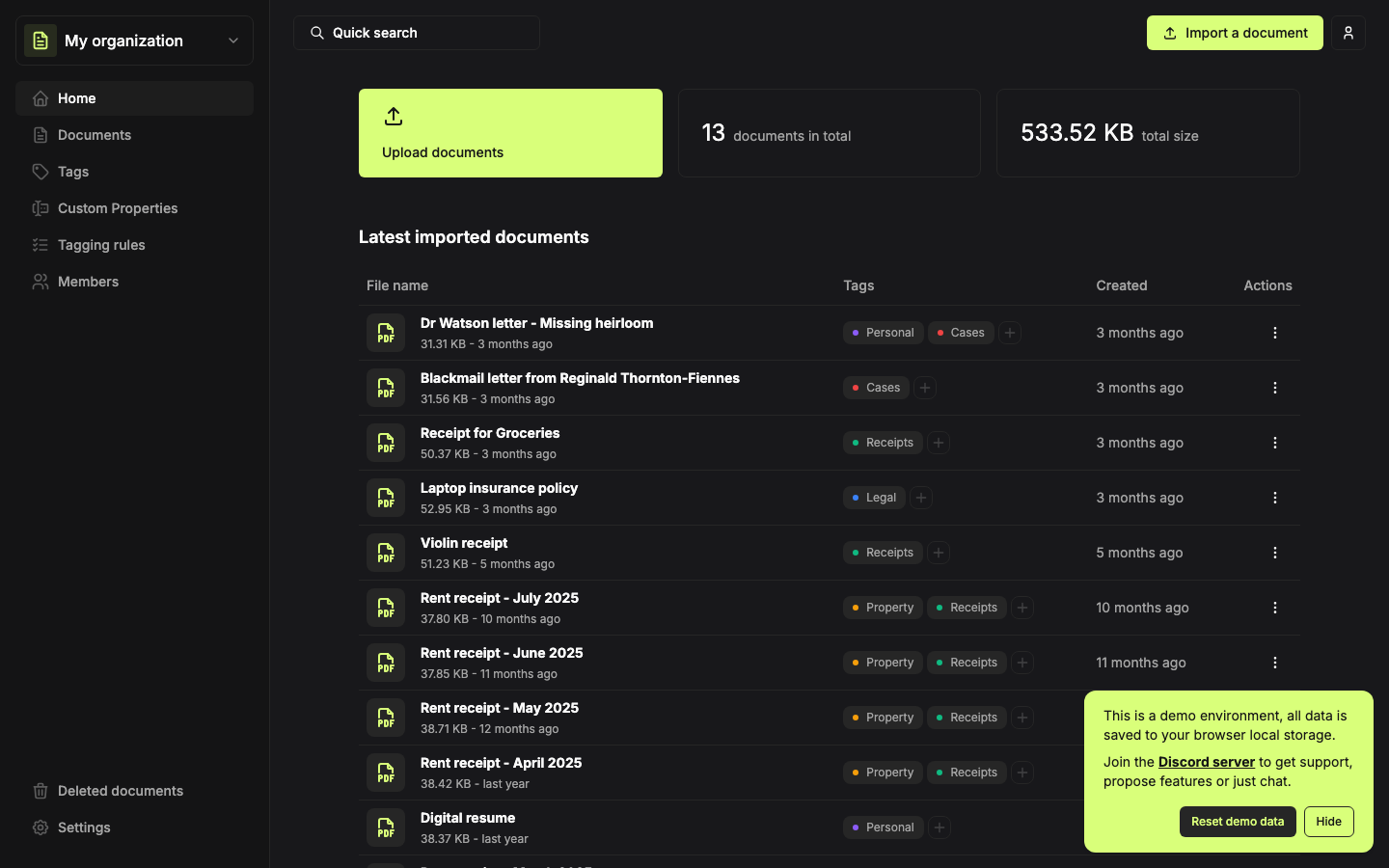
Paperless-ngx is a document management system focused on scanning, indexing, and archiving. It's a community fork of the original Paperless, offering OCR, full-text search, and automated tagging for paper and digital documents.
Pros
- Specialized for document workflows; excellent OCR and indexing.
- Self-hosted and fully open-source with no recurring fees.
- GPL-3.0 license ensures long-term openness.
Cons
- Not a general-purpose notes or wiki tool; focused narrowly on document storage.
- Requires scanner hardware and infrastructure to be useful.
Outline
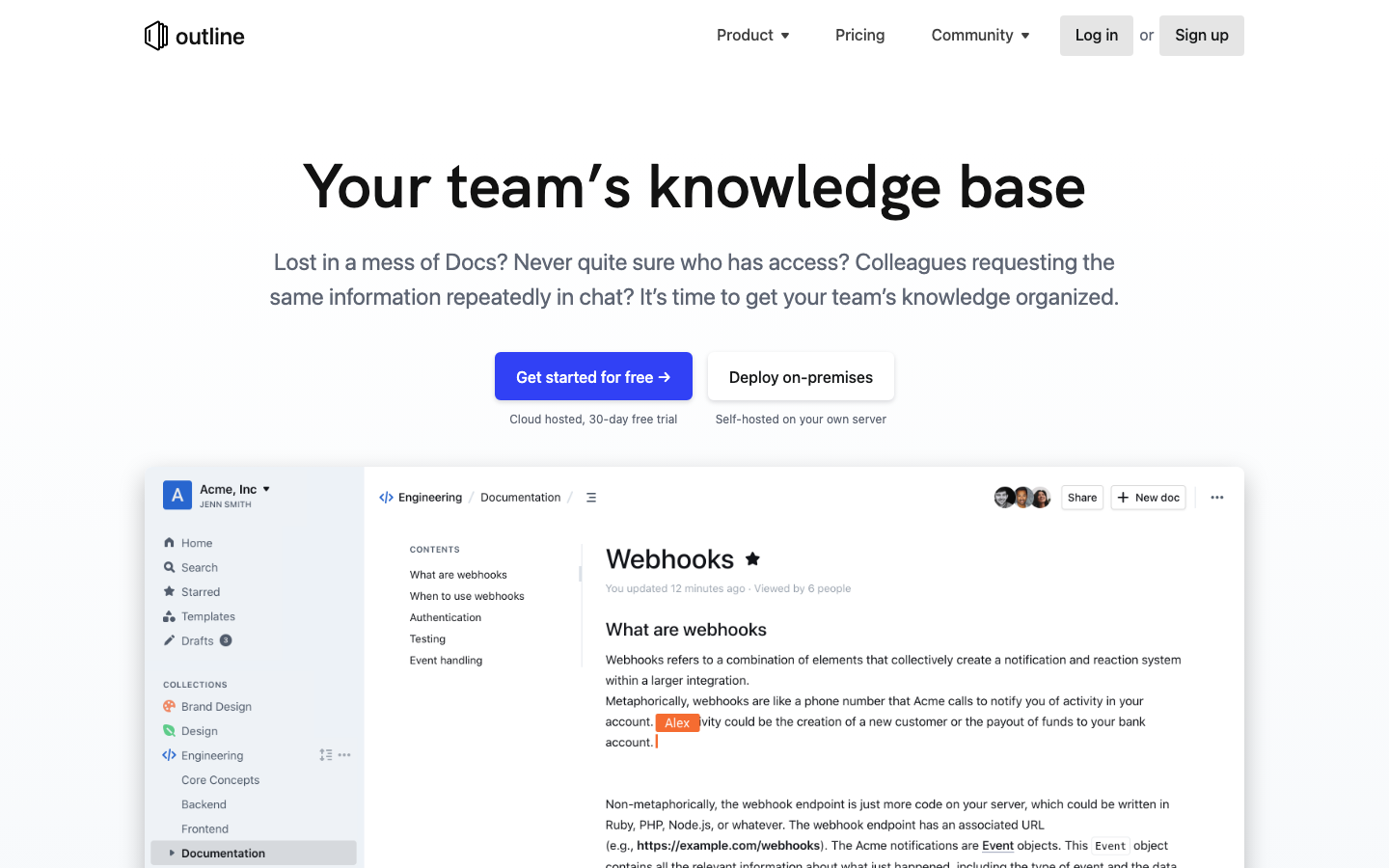
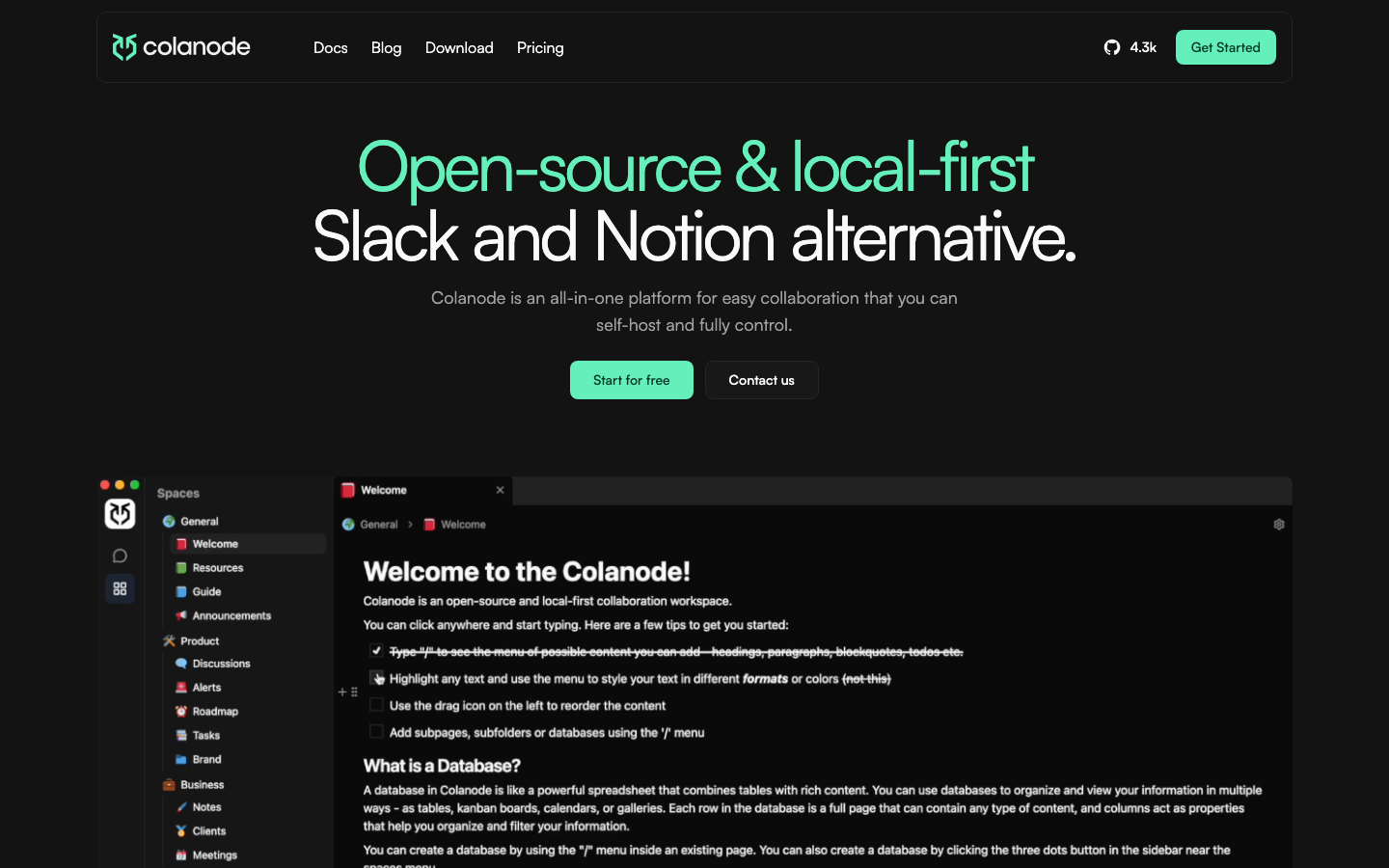
Outline is a fast, real-time collaborative knowledge base designed for growing teams. Built in TypeScript, it emphasizes markdown compatibility, beautiful UI, and seamless teamwork—positioning itself as a modern alternative to Notion's wiki features.
Pros
- Excellent real-time collaboration with a polished, intuitive interface.
- Markdown-compatible with clean exports; easy to migrate away.
- Flat-rate team pricing model avoids per-seat AI paywalls.
Cons
- Lighter on database and structured data features compared to Notion.
- Smaller feature set if you need advanced project management or CRM capabilities.
Khoj
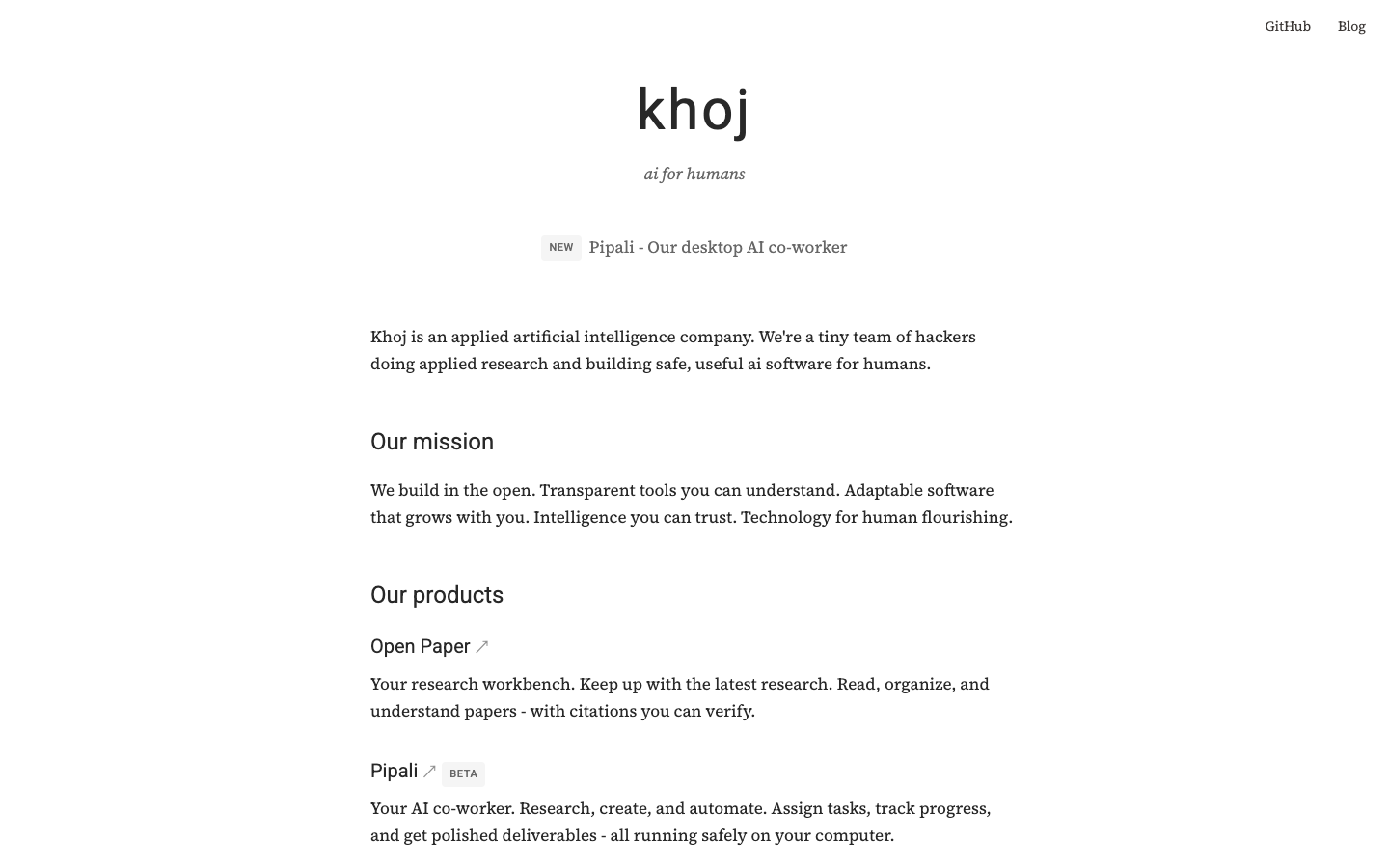
Khoj is a self-hosted AI second brain that answers questions from your documents or the web. It's LLM-agnostic, supporting GPT, Claude, Gemini, Llama, and other models, and focuses on research, custom agents, and deep automation.
Pros
- True data privacy; runs on your own infrastructure with your choice of LLM.
- No per-seat AI licensing; one deployment serves your whole team.
- Powerful for research and knowledge synthesis across your documents.
Cons
- Requires LLM setup and infrastructure; not a turnkey solution.
- Better as a knowledge-search and research tool than a general wiki or note-taking app.
Focalboard
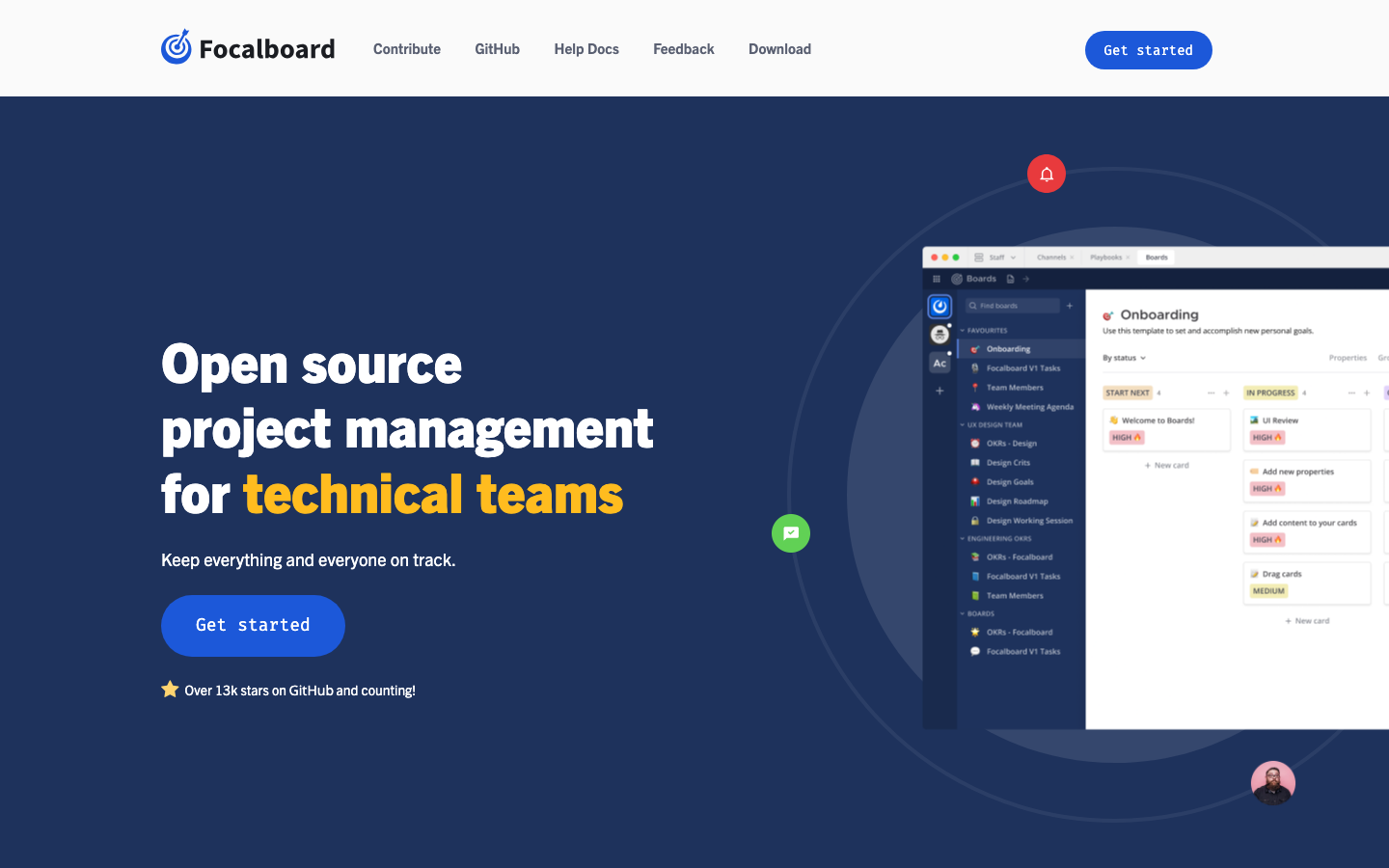
Focalboard is an open-source alternative to Trello, Notion, and Asana, focusing on project boards and task management. Built in TypeScript, it supports self-hosting and real-time collaboration for teams coordinating work.
Pros
- Self-hosted with no vendor lock-in; full control over your data.
- Real-time team collaboration and kanban/board views.
- Covers project management, which Notion does but Focalboard specializes in.
Cons
- Less mature than Notion for complex databases and knowledge bases.
- Smaller ecosystem of templates and integrations.
How to choose
For individuals or small teams prioritizing simplicity, Memos or Logseq are lightweight, markdown-native, and require minimal infrastructure.
For growing teams needing real-time collaboration and wiki features, Outline offers a polished, team-friendly experience without per-seat AI paywalls.
For teams with strict data residency, compliance, or privacy requirements, AppFlowy or AFFiNE provide self-hosted, AI-capable alternatives with no cloud dependency.
For document-heavy workflows, Paperless-ngx specializes in archival and retrieval; pair it with Memos or Outline for notes.
For AI-powered research and knowledge synthesis, Khoj excels when you control your own LLM and want to avoid vendor AI pricing.