
The open and composable observability and data visualization platform. Visualize metrics, logs, and traces from multiple sources like Prometheus, Loki, Elasticsearch, InfluxDB, Postgres and many more.
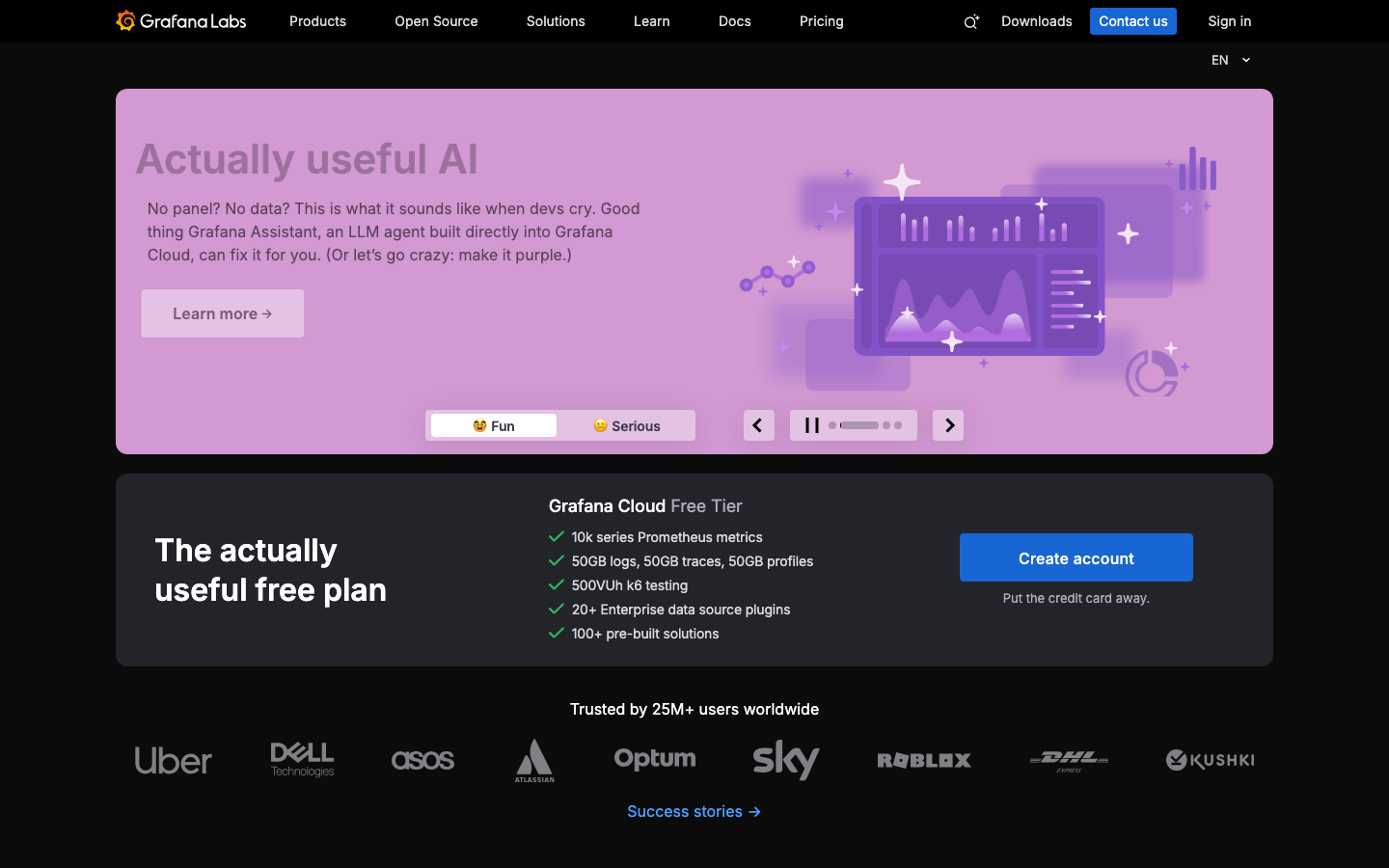
The open and composable observability and data visualization platform that enables teams to query, visualize, alert on, and understand metrics from multiple sources. Grafana supports data sources like Prometheus, Loki, Elasticsearch, InfluxDB, and Postgres, making it a unified solution for monitoring and observability.
Grafana is designed for DevOps engineers, system administrators, site reliability engineers (SREs), and development teams who need to monitor infrastructure, applications, and services. It's ideal for organizations adopting a data-driven observability culture and managing complex, multi-source monitoring environments.

A fancy self-hosted monitoring tool

The fastest path to AI-powered full stack observability, even for lean teams.

The Prometheus monitoring system and time series database.

ClickHouse® is a real-time analytics database management system
Developer-first error tracking and performance monitoring
🦔 PostHog is an all-in-one developer platform for building successful products. We offer product analytics, web analytics, session replay, error tracking, feature flags, experimentation, surveys, data warehouse, a CDP, and an AI product assistant to help debug your code, ship features faster, and keep all your usage and customer data in one stack.

🌐 The Internet Computer! Free, Open-Source, and Self-Hostable.
:hedgehog: PostHog is the leading platform for building self-driving products. Our developer tools – AI observability, analytics, session replay, flags, experiments, error tracking, logs, and more – capture all the context agents need to diagnose problems, uncover opportunities, and ship fixes. Steer it all from Slack, web, desktop, or the MCP.

Infisical is the open-source platform for secrets, certificates, and privileged access management.

A self hosted virtual browser that runs in docker and uses WebRTC.

Weighs the soul of incoming HTTP requests to stop AI crawlers

Kodi is an award-winning free and open source home theater/media center software and entertainment hub for digital media. With its beautiful interface and powerful skinning engine, it's available for Android, BSD, Linux, macOS, iOS, tvOS and Windows.

Ready-to-use Media-over-QUIC / SRT / WebRTC / RTSP / RTMP / LL-HLS / MPEG-TS / RTP live media server and media proxy that allows to read, publish, proxy, record and playback real-time video and audio streams.

Free and Open Source Machine Translation API. Self-hosted, offline capable and easy to setup.

ActivityPub-federated video streaming platform using P2P directly in your web browser

Style and Grammar Checker for 25+ Languages
